Every River We Track, On One Map
605+ gauge sites, 37 states, real-time CFS. Plan your next trip in 30 seconds.
Greg Lamp
April 5, 2026
5 min read
You're sitting at a campsite near Buena Vista, coffee in hand, wondering which rivers are worth checking out today. You could open five browser tabs, search each river by name, and piece together a picture of what's running. Or you could open one map and see it all at a glance.
We just shipped that map. It's at /rivers, and it shows every gauge site we track across the US: 605+ USGS gauge sites across 37 states, with real-time CFS readings, river polylines, and direct links to detailed flow data.
Why We Built This
For a while now, the only way to browse rivers on RiverReports was through state pages or search. That works fine if you already know what river you're looking for. But what about when you're planning a road trip across Montana and want to see which rivers are along the way? Or you're camped in southern Colorado and curious what's flowing within an hour's drive?
We needed a visual way to explore the data. So we built one.
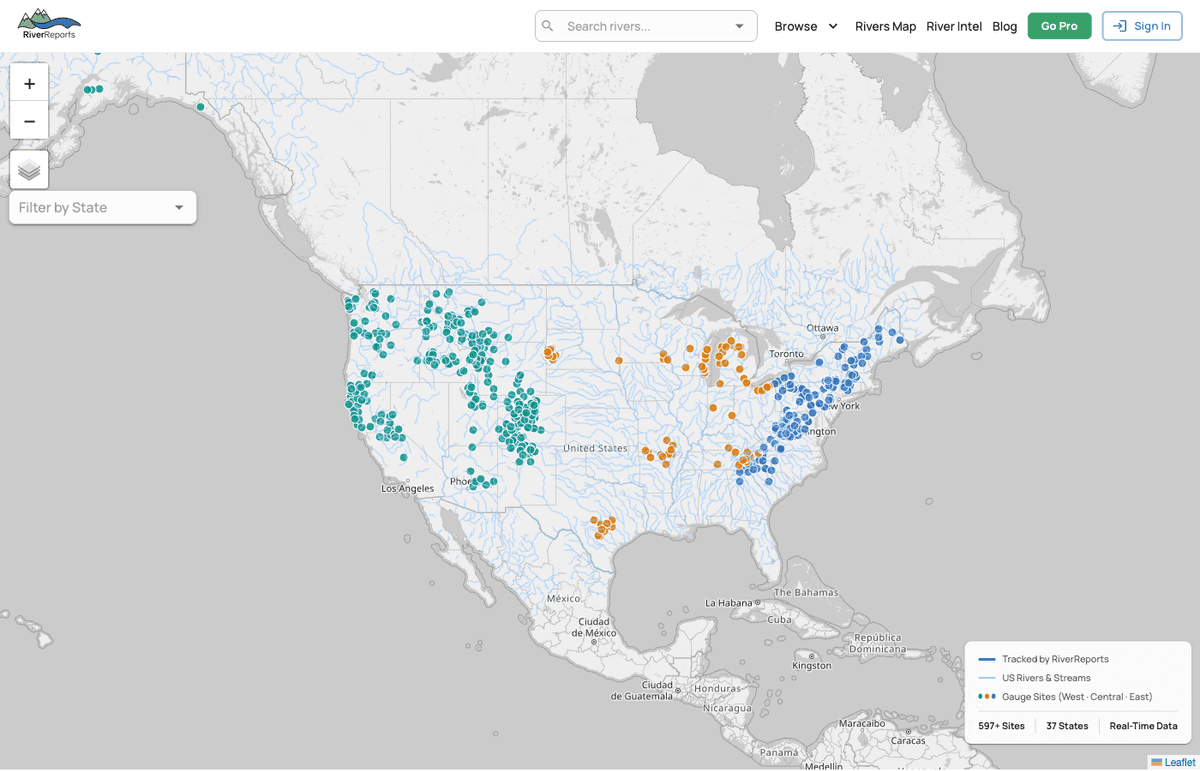
The full national view showing all 605+ gauge sites, color-coded by region: Western (teal), Central (orange), and Eastern (blue)
The Big Picture
The map loads every gauge site we track on a single interactive canvas. At the national level, you get the big picture: clusters of teal dots across the Rockies, orange markers through the Midwest, and blue pins up and down the East Coast. Behind them, 2,382 Natural Earth river and stream segments give the whole US waterway network a light blue outline so you can orient yourself geographically.
Sure, you can look at rivers on Google Maps. But Google won't tell you the Gunnison is flowing at 266 CFS right now. This map puts real-time flow data on top of geography, and every marker links directly to detailed charts and forecasts. That's the difference.
The color coding is simple. Western states (Montana, Colorado, Idaho, Oregon, etc.) are teal. Central states (Minnesota, Missouri, Texas, etc.) show orange. Eastern states (New York, Pennsylvania, Virginia, etc.) display blue. At a glance, you can see where our coverage is deepest. Colorado alone has 111 sites, followed by California (49), Idaho (43), and Montana (41).
Zoom In for the Good Stuff
The national view is useful for orientation, but the real value shows up when you zoom in. As you get closer, two things happen:
- River polylines appear. Thicker blue lines from ArcGIS data trace the exact stretches of river being monitored, giving you geographic context for each gauge.
- Live CFS labels pop up. Each gauge marker displays its current flow reading in cubic feet per second, updated throughout the day.
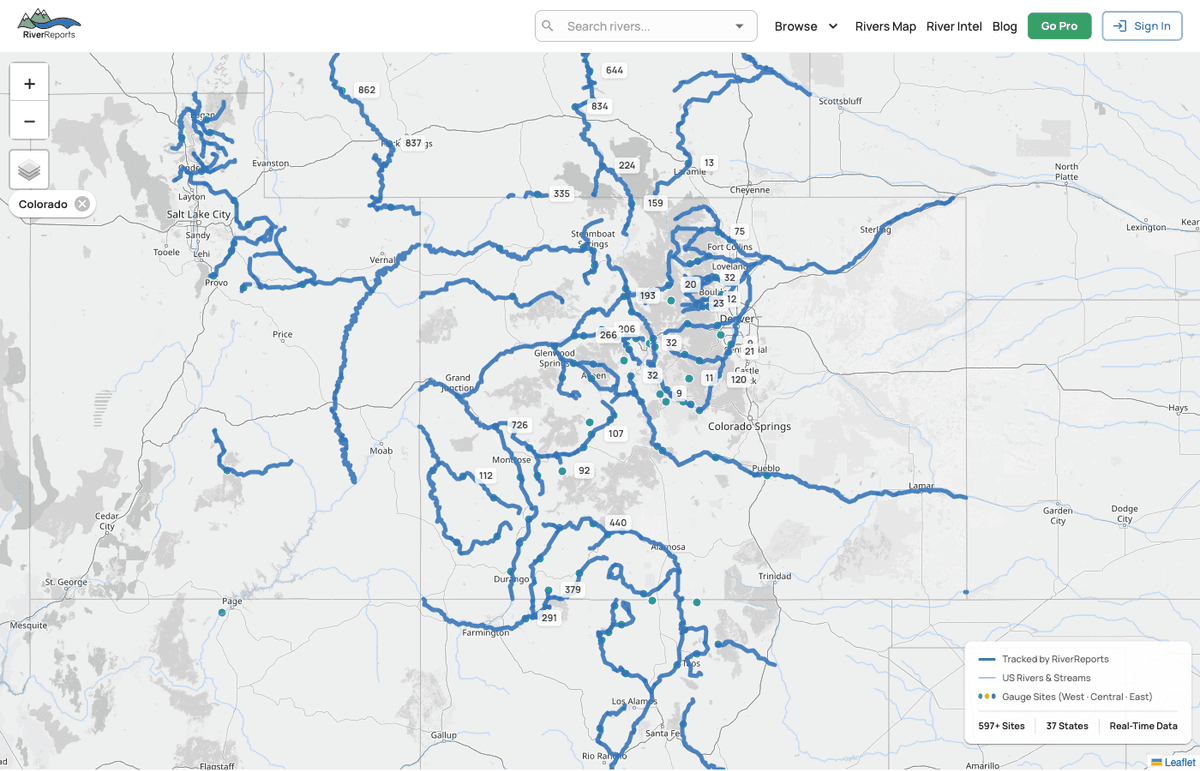
Colorado zoomed view showing 111 gauge sites with live CFS readings and river polylines
Zooming into Colorado, for example, shows the Arkansas at Salida running at 440 CFS, the Gunnison at 266, and the Roaring Fork at 206 near Glenwood Springs. You can immediately compare conditions across a whole region without opening individual pages.
The lighter blue lines underneath are the 2,382 Natural Earth segments covering the broader US river network, so you always have context for how the monitored sections fit into the larger watershed.
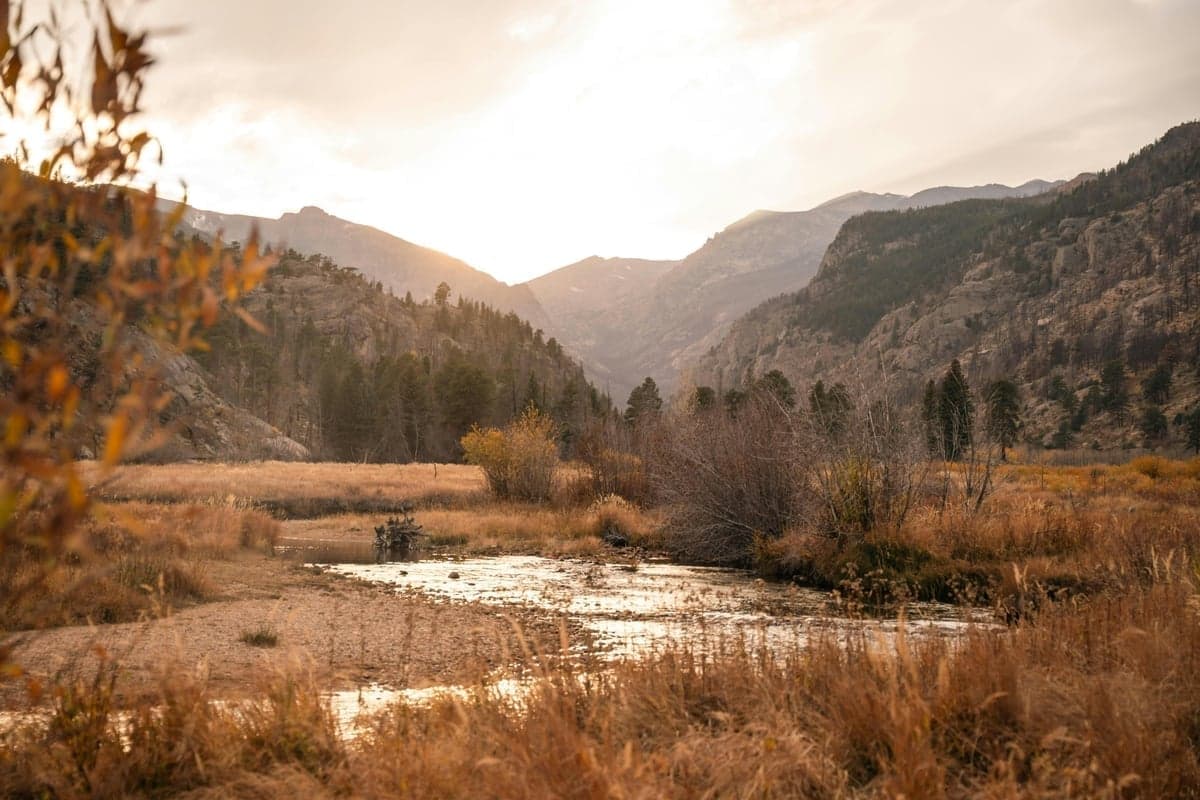
Many of Colorado's best trout streams are tracked in real-time on the new map
Click Any Site for Details
Every gauge marker on the map is clickable. Tap one and you get a popup with the site name, location, current CFS reading, and a trend indicator showing whether flows are rising, falling, or holding steady. From there, a "View Flow Data" link takes you straight to the full site page with historical charts, weather, and fishing reports.
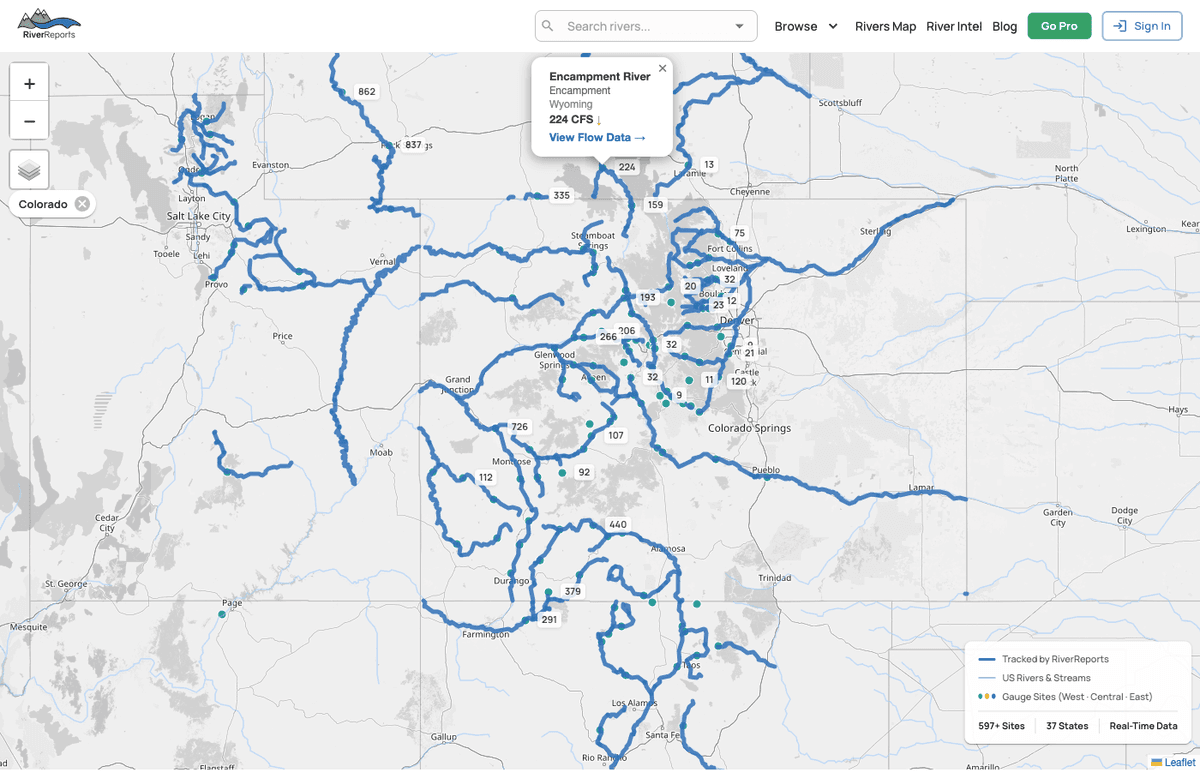
Clicking a gauge marker shows the site name, current CFS, flow trend, and a link to the full data page
Last week I was messing around with the map while planning a weekend in the Gunnison valley. I pulled up the Gunnison at the tunnel, saw it was running at a fishable level, and clicked through to check the forecast. Three clicks, maybe ten seconds. That's the kind of scouting that used to mean opening a half-dozen tabs.
Filter by State
A dropdown in the top-left corner lets you filter the map by state. Select "Colorado" and the map zooms to fit all 111 Colorado sites. Pick "Montana" and you're looking at 41 gauges from the Yellowstone to the Bitterroot.
This works well when you're doing state-specific trip planning. Select your state, scan the CFS readings, and click through to any site that looks interesting. You can also clear the filter to snap back to the national view.
Below the map, a state grid links every state to its own dedicated page on RiverReports. Browse Colorado flows, Montana flows, or any of our 37 state pages to dig deeper into individual river conditions, forecasts, and fishing reports.
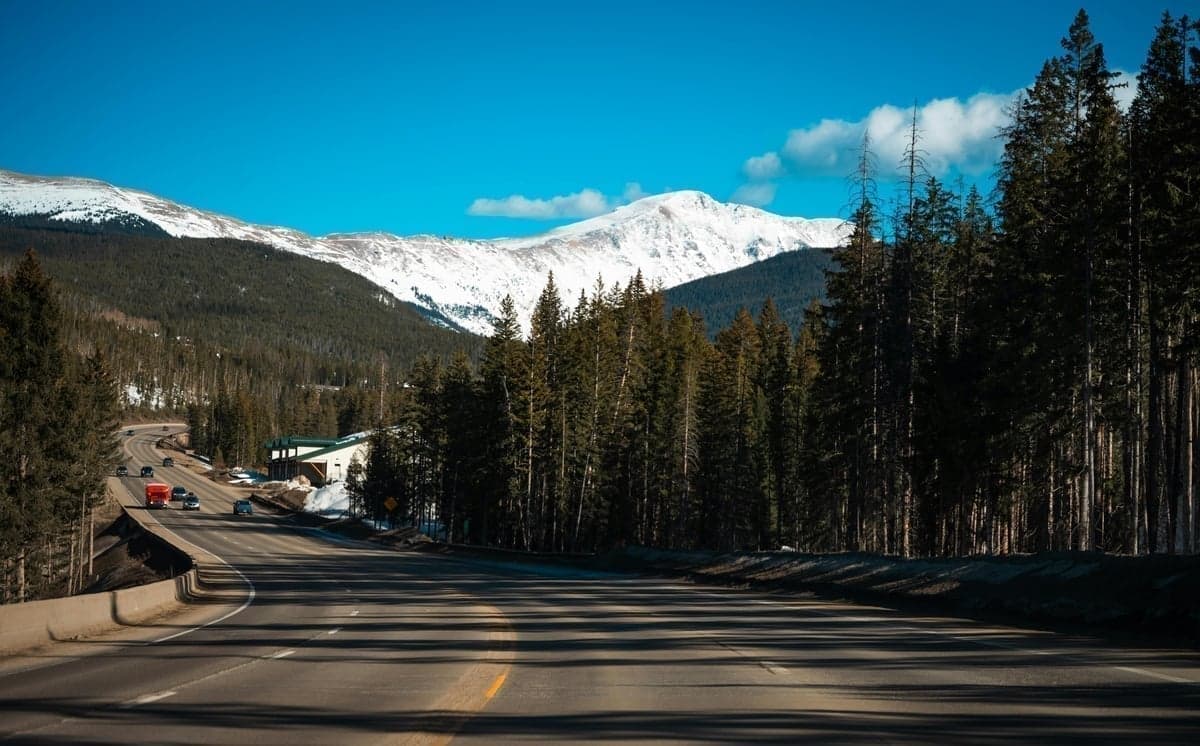
Planning a Colorado road trip? The map shows every tracked river along your route.
You can also toggle between street map and satellite imagery using the layers control. The satellite view is great for spotting access roads and getting a feel for the terrain around a gauge site before you drive out.
What's Next
This is version one. We're already thinking about what comes next:
- Flow-based color coding to highlight which rivers are running high, low, or in the sweet spot
- Hatch overlays showing active insect activity tied to gauge conditions
- Saved map views so you can bookmark your favorite regions
Go explore the map. Drop a pin on your home water and see what's flowing. Or zoom into somewhere you've never fished and see what catches your eye. If you spot something we should add, let us know.
Get River Intel Weekly
Flow updates and fishing intel delivered every Thursday.
River Intel Weekly
Weekly flow updates and fishing intel.
© 2026 RiverReports, Inc.