Quick Reference
| What | When | Key Numbers |
|---|
| Deschutes River | May - October (salmonflies mid-May to June) | 200-600 CFS ideal wading; Lower Deschutes 3,000-5,000 CFS |
| Crooked River | Year-round (best fall and spring) | 50-150 CFS ideal; 4,000-7,000 trout/mile |
| Metolius River | Year-round (best summer) | 1,200-1,500 CFS; fly-only, catch-and-release |
| Fall River | Year-round (PMDs June-August) | 150-300 CFS; fly-only, spring creek |
| Guided trips | Book 2-4 weeks ahead for summer | $400-550/day (1-2 anglers) |
| Local fly shop | Fly and Field Outfitters | (541) 318-1616, 35 SW Century Dr, Bend |
Flow518 CFS
Trendfalling
Clarityclear
Temp59°F
PMD Dries (CDC Comparadun / Sparkle Dun / Film Critic) #16Pale Evening Dun #12-14Mahogany Dun #14-16X-Caddis #16
Flow3,940 CFS
Trendstable
Clarityclear
Temp68°F
Corn-fed Caddis (CDC) Tan #18-20Corn-fed Caddis (CDC) Olive #18-20Egan's GTI Caddis Olive #12-14Parachute Caddis #12 (Glossosoma/saddle-cased caddis)
Flow243 CFS
Trendstable
Claritycrystal-clear
Temp56°F
Parachute Adams #16-18PMD Sparkle Dun #16Split Case PMD #16Trico Spinner #22-24
Flow200 CFS
Trendstable
Claritygin-clear
Temp50°F
PMD Sparkle Dun / Comparadun #16PMD Split Case Nymphs #16-18BWO Sparkle Dun #18-22Parachute BWO #20-22
🎣 TACTICS RIGHT NOWDry FlyCorn-fed Caddis (CDC) Tan #18-20 (Lower Deschutes—top evening caddis pattern)Corn-fed Caddis (CDC) Olive #18-20 (Lower Deschutes)Egan's GTI Caddis Olive #12-14 (Lower Deschutes)Parachute Caddis #12 (Lower Deschutes—Glossosoma/saddle-cased caddis)Dead Caddis / Modified Elk Hair Caddis #14-16 (Lower Deschutes)Purple Haze #12-16 (Lower Deschutes + Middle Deschutes—searching dry)X-Caddis #14-16 (Lower Deschutes + Metolius)Elk Hair Caddis #14-16 (Metolius + Fall River—primary caddis dry)Parachute BWO #20-22 (Lower Deschutes morning window)PMD Sparkle Dun / CDC Comparadun #16 (Metolius afternoonsFall River primary hatchCrooked dominant)Pale Evening Dun #12-14 (Metolius—hatching through August)Trico Spinner / Trico Parachute #22-24 (Crooked—peak month Augustcalm mornings 7-10 AM in slow pools)Parachute Adams #16-18 (Crooked—primary surface pattern)Grasshopper Patterns #8-14 (ALL WATERS—peak terrestrial activity; searching pattern on Crooked and Lower Deschutes)Ants & Beetles #14-16 (Metolius + Fall River + Crooked—peak terrestrial window)Hippie Stompers #12-14 / Rubber Legged PMX #10-14 (Fall River attractor/searching dries)Griffiths Gnat #16-20 (Crooked + Fall River midge clusters)BWO Sparkle Dun #18-20 (Metolius cloudy periods)Olive Caddis #16 (Fall River evening)Soft Hackle Green #14-16 (Metolius—swing through pocket water)
NymphRoza's Violet-Tailed Jig #16-18 (Lower Deschutes—Confluence August 15)Tungsten Rainbow Warrior #14 (Lower Deschutes)Newbury's Alt Rocker #16 (Lower Deschutes—Confluence August 15)Pat's Rubber Legs (tan/brown) #6 (Lower Deschutes)Juju Baetis Tungsten #20-22 (Lower Deschutes morning)Tungsten Split Case PMD #18-20 (Lower Deschutes early morning 6-9 AM)Black Zebra Midge #20-22 (Lower Deschutes)Flashback PT #12-18 (Lower Deschutes + all waters)Soft Hackles (Hungarian partridge/olive/peacock/tan) #12-16 (Lower Deschutes—swing through fast riffles for caddis pupa)Hare's Ear Nymphs (cream/green) #12-16 (Lower Deschutes)Perdigons (brown/olive/purple/pearl/black) #10-18 (top producer across all rivers)Golden Stone Nymphs #6-10 (Metolius—confirmed effective ODFW August 6)Midge Nymphs #18-22 (Metolius)Frenchies #14-16 (Metolius)CDC Hares Ear #18 (Metolius)2 Bit Hookers (tan/red) #16-18 (Crooked—hot fly)Split Case PMD #16 (Crooked)Zebra Midges #18-22 (Crooked + all waters)Serendipity #18-22 (Crooked)RS2 #18-22 (Crooked)Olive Tungsten Midge #20-22 (Crooked)Scuds (tan/olive/orange) #14-18 (Crooked year-round staple)Ray Charles #14-16 (Crooked)Fire Starter Jigs #16-18 (Crooked)Spanish Bullet #16 (Crooked)Rainbow Warriors #16-18 (Crooked + Fall River)Orange Tungsten Eggs (Metolius + Crooked)Walt's Worms #14-16 (Fall River)PMD Split Case Nymphs #16-18 (Fall River—sight-fish in weed-bed channels on 6X)
StreamerLarge Articulated Streamers and Jig Streamers on euro nymph leaders (Metolius bull trout—early mornings best)White Dolly Llama (Metolius bull trout)Sculpzilla / Squirrel Leech / Slum Lord / Jig Minnows (Lower Deschutes—Trout Spey rods with sink tips; swing or strip)Small jig streamersCroston's MinnowSculpzilla on sink tip (Fall River—holdover trout)Pine Squirrel Leeches / Mayer's Mini Leech (lucent) (Crooked—swung for larger fish)Woolly Buggers #8-12 / Small Leeches #10-14 (Crooked—swing for larger fish)Balanced Leeches under indicator (Lake Billy Chinook bull trout and kokanee)
FORECASTGOOD CONDITIONS WITH HEAT MANAGEMENT KEY—CROOKED RIVER STANDOUT, EVENING CADDIS ON LOWER DESCHUTES. Lower Deschutes trout fishing remains productive but requires heat-aware strategy—steelhead and salmon fishing CLOSED since August 15 due to historically weak wild summer returns (only 7,388 wild steelhead passed Bonneville in July vs. 9,900 threshold; reopening now very unlikely per ODFW—season will almost certainly not reopen this year). FIRE ACCESS IMPROVED: BLM reopened Warm Springs to Columbia River corridor August 10; Trout Creek and Mecca launches open; Warm Springs boat ramp still closed for fire operations. Evening caddis hatch remains the highlight with risers starting around 6 PM going steady until dark; nymphing the primary daytime tactic; water temp ~67.8°F at Moody at upper edge of trout comfort zone. Flows at 3,940 CFS (gauge height 2.73 ft)—clear with good wading. Crooked River is THE best fishery in Central Oregon right now—cold 56°F tailwater at 243 CFS from Bowman Dam (ODFW August 25); rated 7.9/10 by local shops; Trico spinners now hatching in peak month—7-10 AM in slow pools; PMDs dominant with strong afternoon emergence; subsurface fishing most reliable but dry fly opportunities developing quickly on slower edges; terrestrials at peak; crystal-clear water with 4,000-7,000 fish/mile confirmed by recent ODFW sampling. Metolius fishing excellent for redbands, whitefish, and bull trout (ODFW August 6) but headwaters near historic lows (Bend Bulletin August 16) and water temp at 59°F notably warmer than typical 46-50°F—fish early and late; PEDs hatching through August; Mahogany Duns building toward September. Fall River stocking continues through September 11; spring-fed 50°F stable temps make it a reliable option even in peak heat; PMDs primary; streamer fishing producing big fish on micro minnows and jig buggers; technical sight-fishing at its best. Nearly 30% of Deschutes County in extreme drought, 70% in severe drought (U.S. Drought Monitor). Expect Mahogany Dun and October Caddis hatches to build through September. Late-summer flow reductions remain a concern across all Central Oregon waters as irrigation demand peaks. All seasonal waters open. Patchy smoke possible from multiple active fires in Central Oregon—check AQI before heading out.Lower Deschutes flows at 3,940 CFS at Moody (gauge height 2.73 ft, USGS August 25); water temp 55.6°F below dam, climbing to 64°F mid-canyon, ~67.8°F at Moody—right at upper edge of trout comfort zone. Air temps 61-88°F with patchy smoke and clear water clarity. FIRE ACCESS UPDATE: BLM reopened Warm Springs to Columbia River corridor August 10; Trout Creek and Mecca launches open; Warm Springs boat ramp still closed for Bench Fire water-draw operations. Some public lands south of Hwy 218 / north of Hwy 26 remain closed within Rowe Creek Complex perimeter. Stage 2 fire restrictions in effect in Jefferson County and Warm Springs. FIRE BAN in effect—no open flames; $1,000 fine; propane BBQs/stoves only. Wildfire smoke, road closures, blue-green algae, and warm water remain ongoing concerns across the region—check AQI and BLM closures before heading out. SAFETY: Rattlesnakes heavily active in grasses and brush. Poison oak/ivy prevalent on both banks of the Lower. Crooked River dam outflows at 243 CFS from Bowman Dam (ODFW August 25); water temp ideal at 56°F; crystal-clear; irrigation-driven summer flows; fish spread through riffles, transition water, and softer seams. Metolius headwaters near historic lows—Oregon Water Resources Dept measured headwaters at just 58 CFS (Bend Bulletin August 16), less than half the 121 CFS recorded in 2015; water temp 59°F—notably warmer than typical 46-50°F spring-fed range; fish early morning and evening to reduce thermal stress. Nearly 30% of Deschutes County in extreme drought, 70% in severe drought (U.S. Drought Monitor). Fall River spring-fed at ~200 CFS—consistent 50°F year-round; stocking continues through September 11. Air temps pushing 88-90°F across Central Oregon—fish the coolest hours on all waters. All seasonal waters open: Fall River below falls, Upper Metolius above Allingham (reopened May 22), Upper Deschutes above Benham Falls. ODFW confirms (August 17) excellent angling opportunities across Central Oregon waters for redband trout and mountain whitefish.
Overview
Bend, Oregon sits at the center of one of the West's most diverse fly fishing regions. Within an hour's drive you can fish technical spring creeks, high-desert tailwaters, and productive steelhead water. The Deschutes River runs through downtown, the Crooked River holds one of the highest trout densities in Oregon (4,000-7,000 fish per mile), and the Metolius offers challenging spring creek fishing in a ponderosa pine cathedral.
What makes Bend work for a buddies trip: quality fishing across multiple water types combined with 30+ craft breweries, excellent tacos, and the option to ski Mt. Bachelor in the morning and fish dry flies in the afternoon during spring. The town has the infrastructure of a mountain resort with the soul of a fishing town.
Drive Times from Bend:
| Destination | Distance | Time |
|---|
| Crooked River (Prineville) | 35 miles | 45 min |
| Metolius River (Camp Sherman) | 35 miles | 45 min |
| Fall River | 25 miles | 30 min |
| Lower Deschutes (Maupin) | 95 miles | 1 hr 45 min |
| Mt. Bachelor | 22 miles | 30 min |
The Rivers
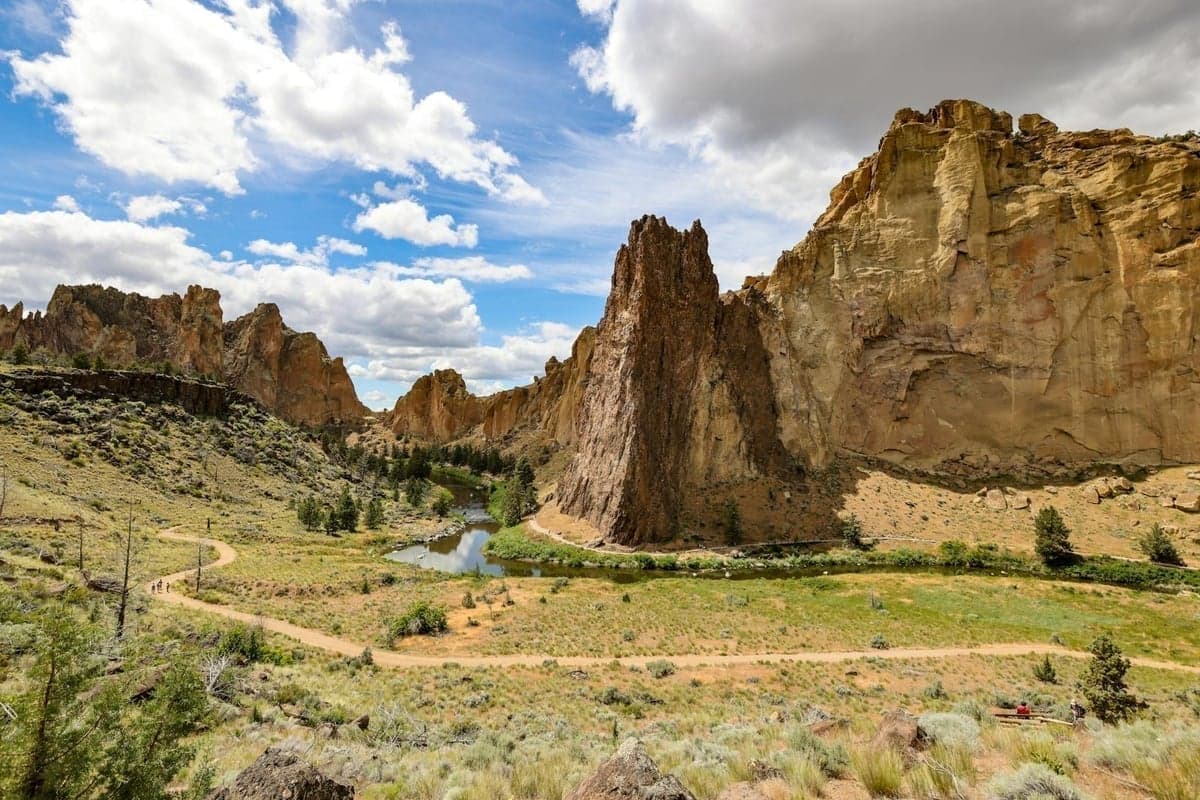
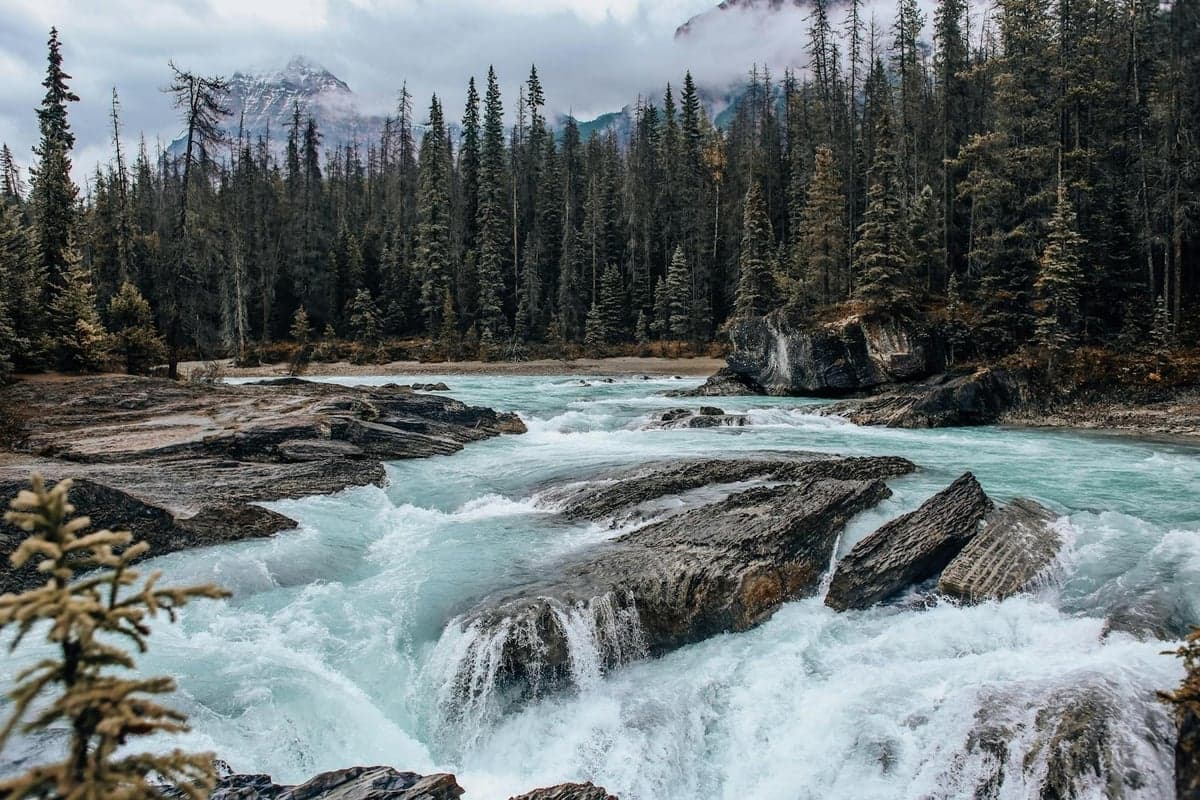
The high desert canyon country near Bend—Smith Rock State Park overlooks the Crooked River
Deschutes River
The Deschutes flows through Bend and offers three distinct fisheries: the Upper Deschutes (above Bend), the Middle Deschutes (through town and below), and the Lower Deschutes (the 100-mile canyon from Pelton Dam to the Columbia that most visiting anglers target).
Upper Deschutes (Wickiup to Bend)
- Brown trout fishery with fish averaging 14-18 inches; 20+ inch fish possible
- Best in fall (September-October) when flows stabilize after irrigation drawdowns
- Fair fishing around Tumalo State Park and above the Old Mill area
- Water temps vary widely based on reservoir releases; summer can hit 65-70°F
- Seasonal closure: Above Benham Falls closes October 1 through May 21
Middle Deschutes (Below Bend to Lake Billy Chinook)
- Rainbow and brown trout averaging 12-16 inches near Steelhead Falls
- Nymphing most effective, dry fly action in mornings
- Less pressure than other waters; good option when Crooked is crowded
- Water temps moderate, typically 55-62°F in summer
Lower Deschutes (Pelton Dam to Columbia)
This is the water most anglers come for. The 100-mile canyon holds wild "Deschutes Redsides" - a unique subspecies of rainbow trout known for their brilliant coloring and aggressive fights. Expect redsides averaging 12-16 inches with 18-20 inch fish possible. Browns run larger (14-20 inches) but are less common. Summer steelhead (typically 6-10 lbs) enter starting mid-July.
Water Temperature: Summer temps run 55-65°F in most sections. The canyon can be brutally hot in July-August (air temps over 100°F), but water stays fishable. Morning and evening sessions are most productive in peak summer.
Flow Windows:
| CFS | Conditions |
|---|
| 3,000-4,500 | Ideal - good wading, best dry fly action |
| 4,500-6,000 | Higher but fishable, some wading limitations |
| 6,000+ | Float-only access, challenging conditions |
Sections and Access (Lower Deschutes):
| Section | Distance | Character | Fish |
|---|
| Warm Springs to Trout Creek | 9 miles | Tribal permit required, less pressure | Best redside density |
| Trout Creek to South Junction | 8 miles | Oak Springs rapids (Class III), good camping | Redsides, some browns |
| South Junction to Locked Gate | 6 miles | Wadeable flats, good dry fly water | Consistent fishing |
| Locked Gate to White River | 5 miles | White River adds volume and color after storms | Mixed |
| White River to Maupin | 7 miles | Most accessible, Maupin town stretch | Pressured but productive |
| Harpham to Sandy Beach | 8 miles | Below Maupin, Class II-III rapids | Good numbers, less pressure than above town |
Named Rapids (Trout Creek to Maupin):
- Oak Springs (Class III): 2 miles below Trout Creek. Scout river left.
- Elevator (Class II): Short drop, straightforward
- Wapinitia (Class III): Just below Harpham Flat, scout river right
- Boxcar (Class III-IV): Technical at higher flows, biggest rapid on this section
Important: A Boater Pass is required to float the Lower Deschutes ($2/person/day or $35 annual). The Warm Springs to Trout Creek section requires an additional Warm Springs Tribal Permit ($30/day or $75/season for non-tribal anglers).
Major Hatches:
| Hatch | Timing | Flies |
|---|
| Salmonflies | Mid-May - early June | Sizes 4-8, Chubby Chernobyl, Stimulators |
| Golden Stoneflies | Late May - July | Sizes 6-10, Norm Woods Special |
| Caddis | May - October | Sizes 14-18, X-Caddis, Elk Hair |
| PMDs | June - July | Sizes 14-18, Sparkle Duns |
| Summer Steelhead | Mid-July - November | Sizes 4-8, floating line swinging |
Steelhead Note: The Lower Deschutes is known for its floating line steelhead fishing. Summer-run fish readily come to swung flies. Fish enter starting mid-July, with prime time September through November. Expect 6-10 lb fish on average with occasional larger specimens.
Crooked River
Forty-five minutes east of Bend, the Crooked River tailwater below Bowman Dam is Oregon's highest-density trout stream. Surveys show 4,000-7,000 redband rainbow trout per mile in the 8-mile tailwater section. Fish average 10-14 inches with occasional 16-18 inch specimens.
Character: Small, clear, technical. The gin-clear water demands light tippets (5X-6X minimum), precise presentations, and patience. High-sticking nymphs practically on your boots produces better drifts than distance casting. The river is 20-40 feet wide in most sections, so a 3-4 weight rod is ideal.
Water Temperature: Tailwater temps stay cool year-round, typically 45-55°F. Fish remain active through summer when other Central Oregon waters warm.
Flow Windows:
| CFS | Conditions |
|---|
| 50-100 | Ideal - excellent sight fishing, technical |
| 100-200 | Good fishing, slightly faster current |
| 200+ | Higher flows, less technical, faster action |
Best Timing: The Crooked fishes year-round. Fall (September-November) and early spring (March-May) offer the best conditions - cooler temps mean better hatches and more surface activity. Winter produces excellent midge fishing. Summer mornings before 10am fish well; afternoons can be slow.
Key Hatches:
| Hatch | Timing | Sizes |
|---|
| Midges | Year-round | 18-24 |
| BWOs | January - May, September - November | 16-20 |
| PMDs | Late May - August | 14-18 |
| Caddis | February - September | 12-18 |
| Mahogany Duns | September - October | 14-16 |
Specific Access Points (Highway 27, upstream to downstream):
| Access | Mile Marker | Notes |
|---|
| Bowman Dam | MM 21 | Upper limit, small parking area, least pressure |
| Chimney Rock Recreation Area | MM 17 | Main access, restrooms, good starting point |
| Cobble Rock | MM 15 | Pullout on river left, walk-in access |
| Lone Pine | MM 13 | Good pullout, productive riffles below |
| Castle Rock | MM 12 | Larger pullout, easy wading access |
| Big Bend | MM 10 | Lower tailwater, still productive |
Where to Focus: The upper 4 miles (Bowman Dam to Chimney Rock) hold the highest fish densities but also the most pressure on weekends. For solitude, try early mornings at Lone Pine or Castle Rock pullouts. The water between Cobble Rock and Lone Pine has consistent riffles and runs that fish well all day.
Key Flies: Zebra Midges (18-22), Pheasant Tail Nymphs (16-20), RS2s (18-22), small BWO dries (18-20), Elk Hair Caddis (14-16), and scuds (14-18) for subsurface work. Carry tan, olive, and orange scuds. The Crooked has a heavy scud population.
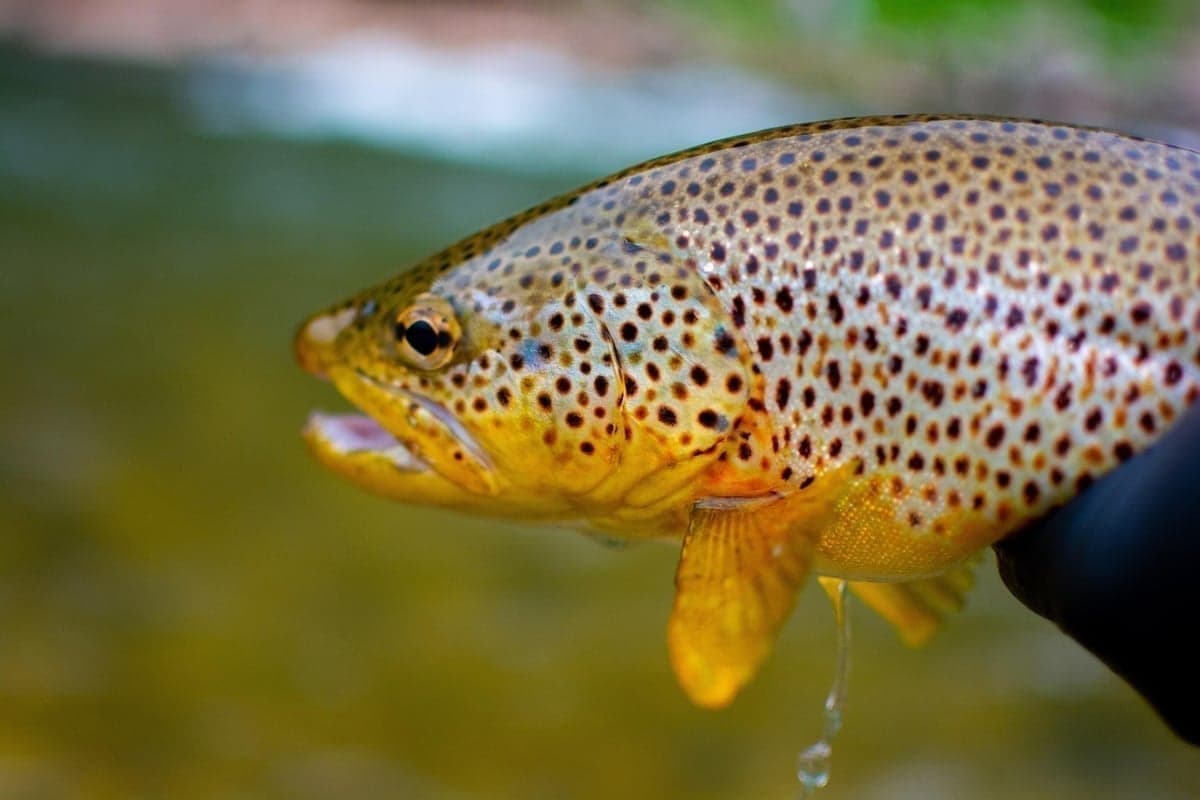
A healthy redband trout—the Crooked River holds 4,000-7,000 trout per mile
Metolius River
Forty-five minutes northwest of Bend, the Metolius is a spring creek of uncommon beauty. Crystal-clear, ice-cold water (42-45°F year-round) emerges from the base of Black Butte and flows through a ponderosa pine forest. Redband rainbows average 10-14 inches with fish to 20 inches possible. Brown trout run 12-18 inches. Bull trout (the trophies) range from 3-15 lbs, with most in the 4-8 lb range.
Important Note: Professional guiding on public water is extremely limited. Only a handful of USFS permits exist, so effectively you're on your own here. The flip side: it's less crowded and more personal.
Character: This is demanding water. The extreme clarity means fish see everything, and the consistent temperature creates predictable but exacting hatches. Long leaders (12+ feet), fine tippets (5X-7X), and precise fly selection are required. A 4-5 weight rod handles most situations; bring a 6-weight if you're specifically targeting bull trout.
Water Temperature: 42-45°F year-round. The cold, consistent temps mean fish feed steadily but aren't as aggressive as warmer-water trout. Slow presentations win.
Flow Windows:
| CFS | Conditions |
|---|
| 1,200-1,500 | Normal range - consistent year-round |
Springs keep flows remarkably stable. Focus on presentation, not flow.
Regulations:
- Fly fishing only from Head of the Metolius to Bridge 99 (first 12 miles)
- Catch-and-release for all trout
- Bull trout: catch-and-release only; if you hook one, minimize handling
Key Hatches:
| Hatch | Timing | Notes |
|---|
| Green Drakes | June | The main event, sizes 10-12 |
| PMDs | June - August | Consistent, sizes 14-18 |
| Caddis | May - September | Evening activity |
| BWOs | Spring and Fall, year-round | Sizes 16-20, cloudy days |
| Golden Stoneflies | June - July | Sizes 6-10 |
Specific Access Points:
| Access | Notes |
|---|
| Head of Metolius | Short walk to where the river emerges, clear but limited space |
| Camp Sherman Bridge | Good access, walk upstream or down, moderate pressure |
| Allingham Bridge | Less crowded, good holding water upstream |
| Canyon Creek Campground | Walk-in access to productive runs |
| Bridge 99 | End of fly-only water, good access |
Where to Focus: The water from Camp Sherman downstream to Allingham holds consistent fish. Look for fish holding in the slower water along undercut banks and behind boulders. The green drake hatch in June concentrates fish in specific feeding lanes. Watch for risers before casting.
Bull Trout: The bull trout run peaks late July through mid-October. These fish follow kokanee salmon upstream to spawn. Fish streamers (sculpin patterns, leeches) in deeper runs and along structure. If you hook one, keep it in the water, handle minimally, and release quickly. They're a protected species.
Where to Get Help: Since guides aren't allowed, local fly shops are your best resource. The Fly Fisher's Place in Sisters knows the Metolius intimately and will set you up with the right flies and tactics. Camp Sherman Store is right on the river and has current conditions.
Spring creek character—the Metolius and Fall River offer technical fishing in forested settings
Fall River
Thirty minutes south of Bend, Fall River is a spring-fed gem - smaller than the Metolius but equally technical. Stocked rainbows run 10-14 inches; wild fish (rainbows, browns, brookies) tend smaller but fight harder. The occasional 16-18 inch brown rewards patient anglers.
Character: Fly fishing only. The gin-clear water and spooky fish demand stealth. Keep a low profile, use long leaders (10-12 feet), and expect refusals. Harry Teel, a local legend, recommends lightweight presentations and patience. A 3-4 weight rod is ideal.
Water Temperature: Spring-fed, typically 48-55°F year-round. Consistent temps mean reliable hatches and active fish even in summer.
Flow Windows:
| CFS | Conditions |
|---|
| 150-300 | Normal range - stable year-round |
Key Hatches:
| Hatch | Timing | Notes |
|---|
| PMDs | Late May - September | The main event, late morning |
| BWOs | Spring and Fall | Sizes 16-20, cloudy days |
| Caddis | Summer | Evening |
| Midges | Year-round | Winter staple |
Specific Access Points:
| Access | Notes |
|---|
| Fall River Headwaters | Short hike in, clear water, sight-fishing |
| Fall River Campground | Easy access, moderate pressure |
| Horseshoe Bend | Classic stretch, walk-in access |
| Fall River Fish Hatchery | Accessible water, some larger fish from hatchery influence |
| Below Fall River Falls | Closed Sept 30 - May 22 to protect spawning |
Where to Focus: The stretch from the campground through the horseshoe bend offers the best combination of access and quality water. Early mornings before other anglers arrive provide the best sight-fishing. The PMD hatch typically starts around 10-11am and can last several hours on cloudy days.
Regulations: Fly fishing only throughout. Most of the river is open year-round except the lower section below the falls, which closes to protect spawning.
A 3-Day Bend Fly Fishing Weekend
Here's how to structure an ideal trip with your buddies:
Day 1: Crooked River (Technical Warmup)
Morning: Drive 45 minutes east to the Crooked River. Arrive early - the morning hours before other anglers show up offer the best sight-fishing. High-stick nymphs through the riffles, focusing on seams and the soft water behind boulders. Expect fish in the 10-14" range with occasional larger specimens.
Afternoon: Work upstream through the canyon. The PMD hatch typically comes off late morning, and caddis activity picks up in the afternoon. Dry-dropper rigs work well once you see surface activity.
Evening: Head back to Bend for dinner and beers. The Crooked is a technical workout - you'll be ready for something cold.
Tacos: El Sancho Taco Shop started as a food cart and now has two locations. The original at Crux Fermentation pairs perfectly with post-fishing beers.
Breweries: Start at Crux Fermentation Project for sunset brews with a view. Then walk to Deschutes Brewery's Bend Public House downtown for classics like Mirror Pond and Black Butte Porter.
Day 2: Lower Deschutes Float (The Main Event)
Morning: Meet your guide at Maupin (1 hr 45 min from Bend) or arrange a half-day wade trip closer to town. If self-guiding, put in at Trout Creek and float to Maupin.
All Day: The Lower Deschutes delivers. Wild redsides averaging 12-16 inches attack dry flies with aggression. If it's salmonfly season (mid-May through early June), prepare for explosive surface takes on oversized stonefly patterns.
Evening Option: Some outfitters offer overnight camping trips on the river. There's nothing quite like cooking dinner by the water and fishing the evening caddis hatch.
After the Float: If you return to Bend, hit GoodLife Brewing for the outdoor Biergarten and well-balanced brews, or Boneyard Beer for hop-forward IPAs (the RPM is a local favorite).
Day 3: Spring Creek Challenge (Metolius or Fall River)
Morning: Choose your adventure:
Option A - Metolius: Drive to Camp Sherman, stop at Camp Sherman Store's fly shop for current intel, and fish the morning hatch. The June green drake hatch draws anglers from across the West, so arrive early for a spot. Expect to work for every fish but remember the takes when they come.
Option B - Fall River: Closer to Bend, Fall River offers similar spring creek challenges. The PMD hatch typically comes off late morning. Sight-fish to rising trout in the clear water.
Afternoon: Fish through the early afternoon hatch, then pack up. If you're heading home, you're already pointed toward the Cascades.
Lunch: In Sisters (on the way back from the Metolius), grab food at one of the local spots before hitting the road.
The Ski + Fish Combo
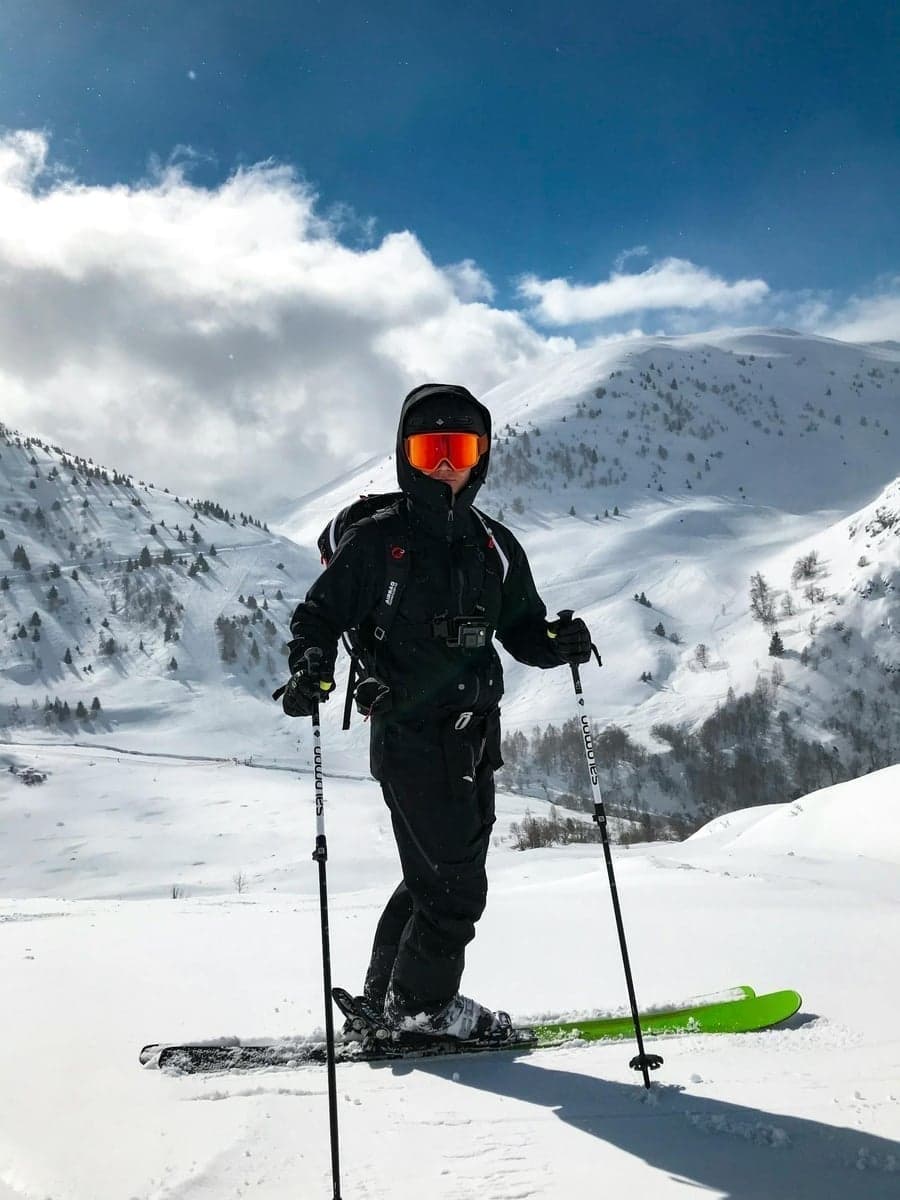
Mt. Bachelor—ski in the morning, fish dry flies in the afternoon
Bend's unique geography makes it possible to ski and fish in the same day, particularly in spring (late April through Memorial Day).
How it works:
Mt. Bachelor operates one of the longest ski seasons in North America, often running into late May. During spring hours (mid-April through May), the lifts operate 8:30am - 1:30pm. That leaves the entire afternoon for fishing.
Sample Schedule:
- 8:30am: First chair at Mt. Bachelor (20 min from Bend)
- 12:30pm: Grab lunch at the lodge
- 2:00pm: Arrive at the Crooked River or Fall River
- 2:30pm - dusk: Fish the afternoon/evening hatches
Best Windows:
- Late April through May offers reliable skiing and fishable water
- Spring runoff can affect freestone rivers, so target the Crooked (tailwater) or Fall River (spring creek) for consistent conditions
- Check flows before committing to a river
Gear Note: Bring both sets of gear in the car. Most fly shops in Bend have storage if you need to stash waders while skiing.
Where to Stay
Budget-Friendly:
- Airbnb/VRBO vacation rentals: Bend has a robust rental market. A house with garage space for waders and gear works well for groups.
- Residence Inn Bend: Extended stay hotel near the Old Mill District. Suites with kitchens for group trips.
Mid-Range:
- Sunriver Resort: 15 minutes south of Bend. Condos and houses with access to the Upper Deschutes. The marina rents kayaks for floating.
Fishing-Focused Lodging:
- Lake Creek Lodge (Camp Sherman): Minutes from the Metolius with a private trout lake for guests.
- House on Metolius: The only property where guided fishing is allowed on the Metolius (on their private water).
- Five Pine Lodge (Sisters): Individual cabins among pine trees with fly fishing packages.
Where to Eat and Drink
Tacos
Breweries
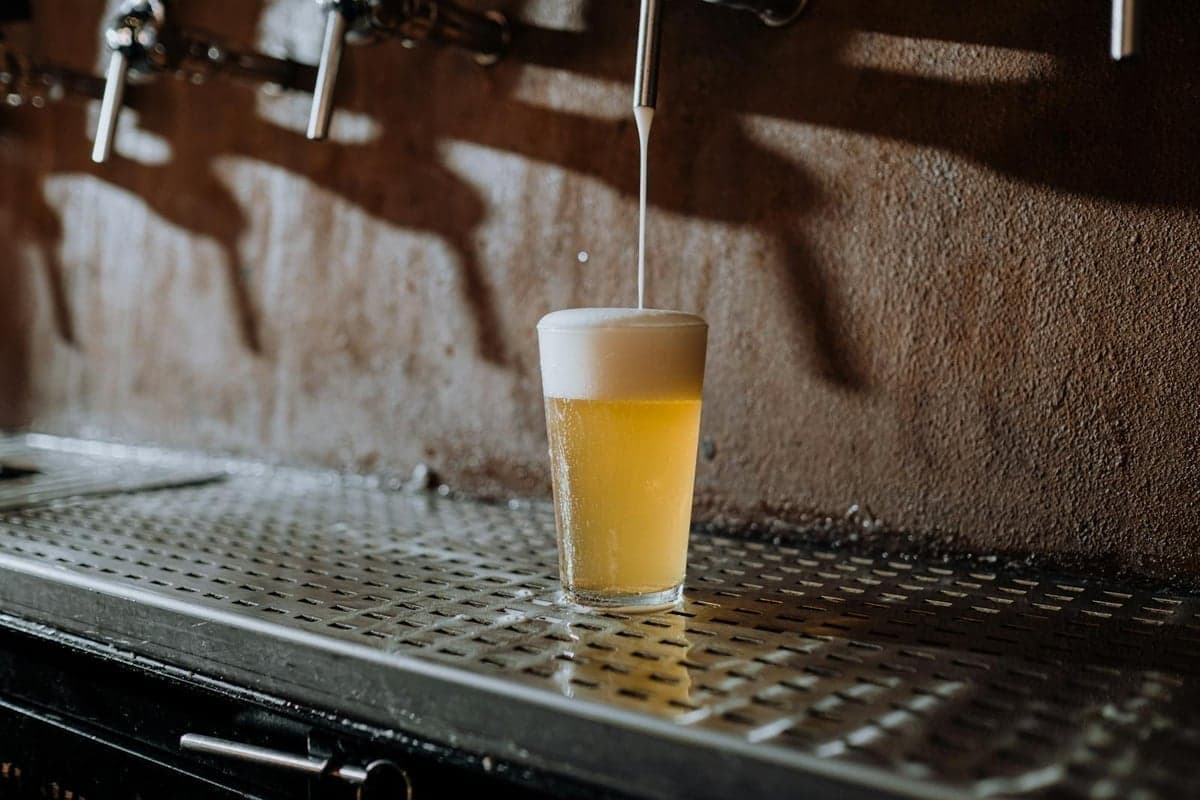
Bend has 30+ craft breweries—perfect for post-fishing comparisons
Bend has 30+ breweries. Here are the essential stops:
The Bend Ale Trail: Pick up a passport at any brewery and get stamps as you visit. It's a fun keepsake and gives structure to an evening crawl.
Local Fly Shops
Floating the Deschutes (In Town)
If you want to experience the river without fishing, Bend offers a classic summer float through town:
The Route: Riverbend Park (Old Mill District) to Drake Park (downtown). 1.5 miles, about 45 minutes.
What to Know:
- The Bend Whitewater Park has man-made rapids - fun but optional. Exit river right before the rapids to portage if you prefer.
- Take out at Drake Park BEFORE the Colorado Street Dam. The dam is dangerous.
- Shuttle service runs June through early September ($3/person)
- Rent tubes, kayaks, or SUPs at Tumalo Creek or Riverbend Park
Whitewater Options: For real rapids, Sun Country Tours and other outfitters run half-day trips on the "Big Eddy Thriller" section between Bend and Sunriver (Class II-III).
Licenses and Regulations
Oregon Fishing License (Non-Resident, 2025):
| License Type | Cost |
|---|
| 1 Day | $21.75 |
| 3 Day | $33.25 |
| 7 Day | $55.00 |
| Annual | $107.00 |
Purchase online at ODFW or at local fly shops.
Additional Permits:
- Lower Deschutes Boater Pass: $2/day or $35/season at boaterpass.com
- Warm Springs Tribal Permit: Required for Warm Springs Reservation waters (Deschutes from reservation boundary to Trout Creek). $30/day or $75/season at Warm Springs Fisheries
Key Regulations:
- Artificial flies and lures only on all Central Oregon streams
- Barbless hooks required for steelhead on the Deschutes
- Metolius: Catch-and-release for all trout, fly fishing only for first 12 miles
- Fall River: Fly fishing only
- Check ODFW regulations for current closures and special restrictions
Seasonal Closures:
- Upper Deschutes above Benham Falls: Closed October 1 - May 21
- Wickiup Reservoir: Closed November 1 - April 21
- Fall River below the falls: Closed September 30 - May 22
Seasonal Timing
| Season | Conditions | Best Bet |
|---|
| Winter (Dec-Mar) | Cold but fishable, midge hatches | Crooked River, Lower Deschutes |
| Spring (Apr-May) | Pre-runoff can be excellent, ski + fish possible | Crooked River, Fall River, Mt. Bachelor |
| Salmonfly Season (Mid-May - Early June) | Peak dry fly fishing of the year | Lower Deschutes, Middle Deschutes |
| Summer (Jul-Aug) | Prime time, all rivers fishable, steelhead arrive | Everything |
| Fall (Sep-Oct) | Best all-around conditions, fewer crowds | Crooked River, Metolius, Lower Deschutes |
Pro Tip: September and October offer arguably the best fishing of the year. Rivers are lower and clearer, hatches are consistent (BWOs, caddis, October caddis on the Deschutes), and crowds thin dramatically after Labor Day.
Safety Notes
Cold Water
All Central Oregon rivers run cold. The Metolius stays 42-45°F year-round. Even summer freestones rarely exceed 60°F. Waders are essential, and hypothermia is possible with extended immersion.
Rattlesnakes
The Lower Deschutes canyon is rattlesnake habitat. Watch where you step, especially in rocky areas and near sagebrush. They're rarely aggressive but deserve respect.
Dam Hazards
The Deschutes has several dangerous dams:
- Colorado Street Dam in downtown Bend: Always portage
- Diversion dams on the Upper Deschutes: Marked but hazardous
- Pelton/Round Butte dam complex: Marks the upper boundary of the Lower Deschutes
Heat and Fire
Central Oregon summers are hot and dry. Fire restrictions may limit campfires. Stay hydrated, especially when fishing exposed canyon water on the Lower Deschutes.
Boater Pass Enforcement
The Lower Deschutes Boater Pass is enforced. Rangers check permits regularly. Buy yours before launching.
Frequently Asked Questions
Is Bend, Oregon good for fly fishing?
Bend is one of the best fly fishing destinations in Oregon, with the Deschutes, Crooked, Metolius, and Fall rivers all within 45 minutes. The Crooked River fishes year-round as a tailwater, while the Deschutes offers world-class salmonfly hatches in June. Central Oregon's diverse water types mean there's always something fishing well regardless of season.
Where to fly fish on the Deschutes River near Bend?
The upper Deschutes near Bend fishes best from Wickiup Dam to Benham Falls, offering wade-friendly access to brown and rainbow trout. The lower Deschutes near Maupin provides premier steelhead and trout fishing in a dramatic canyon setting. Check current Deschutes flows on RiverReports before heading out. The ideal wading range is 1,200-2,000 CFS on the upper river.
Where can I fish in Bend, Oregon?
Top options include the Crooked River at Bowman Dam (year-round tailwater with consistent midge hatches), Fall River spring creek (sight-fishing for large rainbows), the upper Deschutes through town, and the Metolius River near Camp Sherman. Each fishery has distinct character and regulations. The Metolius is barbless, artificial-only with catch-and-release for bull trout.
What is the best time to fly fish near Bend?
Late June through September offers the broadest options, with salmonflies on the Deschutes and hoppers on the Crooked River. But the Crooked River tailwater fishes well year-round, making Bend a true four-season destination. Spring BWO hatches (March-May) are excellent on the Crooked, and fall brings fewer crowds with reliable caddis and blue-winged olive activity.
Using RiverReports
RiverReports helps you plan your Bend trip:
- Check current flows for the Deschutes, Crooked, and other Oregon rivers
- Compare conditions: If one river is blown out, another might be perfect
- Track trends: Rising or falling flows affect fishing strategy
- Historical data: Understand typical conditions for your travel dates
Track all Central Oregon rivers on RiverReports Oregon to compare conditions and find fishable water.