Quick Reference
| What | When | Key Numbers |
|---|
| Arkansas River | Aug 15 - Oct (after rafting flows drop) | 225-300 CFS ideal wade fishing |
| South Platte (Cheesman/Deckers) | Year-round | 150-400 CFS ideal; 6X-7X tippet |
| Upper Colorado float | July - September | 1,500-3,300 CFS ideal |
| Fryingpan River | Year-round (Green Drakes July-Sept) | 80-150 CFS ideal |
| Roaring Fork | Late June - October (Green Drakes late June) | 700-2,500 CFS ideal float |
| Yampa River (Steamboat) | Sept-Oct (fall BWOs/Tricos) | 120-200 CFS ideal wading |
| Guided trips | Book by March for peak season | $500-700/day (1-2 anglers) |
| Fly shops | Fryingpan Anglers, Duranglers | Statewide reports updated weekly |
Flow~280 CFS (stable, prime range)
Trendstable
Clarityclear throughout
Temp54-62°F
Hopper #10-12Elk Hair Caddis #14-16Parachute PMD #16-18PMD Split Case #16-18
Flow145-199 CFS
Trendrising
Clarityclear throughout
Temp42-54°F
Green Drake Sparkledun #10-14Green Drake Cripple #10-14CDC Thorax Green Drake #12-14Comparadun PMD #16-18
Flow196-250 CFS
Trendfalling
Clarityclear throughout all sections
Temp56-66°F
Bionic Hopper Tan #12Bionic Hopper Purple #12Bionic Ant 2.0 Black #16Bionic Ant 2.0 Brown #12
Flow110-290 CFS
Trendrising
Clarityclear throughout
Temp54-64°F
Green Drake #10-14Green Drake Emerger #10-14Hopper #8-12Elk Hair Caddis #14-16
Flow~54 CFS (very low)
Trendstable
Claritycrystal clear (3+ ft viz)
Temp38-52°F
RS2 #18-22WD-40 Chocolate/Black #18-22Thread Midge #22-24Parachute BWO #22
Flow~200 CFS (critically low)
Trendfalling
Clarityclear, 3+ ft visibility
Temp58-68°F
Hopper #8-12Elk Hair Caddis #12-16Duranglers Peacock Caddis #12-16PMD Vis-A-Dun #16-18
Flow~697 CFS (below normal)
Trendfalling
Clarityvaries—clear early, warming afternoons
Temp58-71°F+
Pat's Rubber Legs #10-14 (black/olive)Tungsten Flashback Pheasant Tail #14-20Zebra Midge #18-22Elk Hair Caddis #12-18
🎣 TACTICS RIGHT NOWDry FlyBionic Hopper Tan #12Bionic Hopper Purple #12Hopper #8-12Bionic Ant 2.0 Black #16Bionic Ant 2.0 Brown #12Flying Ant #16-18Green Drake Sparkledun #10-14Green Drake Cripple #10-14CDC Thorax Green Drake #12-14Elk Hair Caddis #12-18Corn-fed Caddis CDC Tan/Olive #14-20Egan's GTI Caddis #12Parachute PMD #16-18Comparadun PMD #16-18PMD Vis-A-Dun #16-18Parachute BWO #18-20Sparkledun BWO #20-22Extended Body BWO #18-22CDC Baetis Dun #18-22Trico #20-24Parachute Adams #12-22Griffith's Gnat #18-22Morgan's CDC Midge #20-24Lawson's No Hackle Baetis #20-22Roy Palm's Fryingpan Emerger #20-22Parachute Caddis #14-18Chubbies #8-14
NymphTwo Bit Hooker #182Bit Hooker #18-20Black Beauty #20-22Sniper Baetis #20JuJu Baetis #20JuJu Baetis Tungsten #22BTS Baetis #20-22Mole Fly #20-22Chocolate Foam Wing Emerger #20-22CDC RS2 #20-22Foam Wing RS2 #18-20Sparkle Wing RS2 #18-22Jerome Baetis #20-22Ultra Bling RS2 Gray #18-20Rainbow Warrior #18Barr's Emerger #18-20Killer Mayfly #18-20PMD Split Case #16-18Tungsten Split Case PMD #20Olsen's Hare's Ear Blowtorch #16-18Olsen's Straggle Stone #12Roza's World Spain Perdigon #16-18Jigged Biot Epoxy Stonefly #12Flashback PT #14-20Tungsten Flashback Pheasant Tail #14-20Golden Stone #14-16Chronic Caddis #14-16Czech Mate Caddis #14-16Caddis Larva #10-16Zebra Midge #18-22Bling Midge #20-24Mysis Shrimp #16-18San Juan Worm #12-18Pat's Rubberlegs #4-8 (black/olive/coffee)BH Hare Golden Stone #10-12Mercer's Poxyback Micro Stone #14-18TDJ Golden Stone #14-18Perdigon #14-18Hare's Ear #10-18Squirmy Worm
StreamerSculpinatorSparkle MinnowDungeons (cream/black/gray)Double Thin MintEbonyHawkins Triple DoubleBaby GongaBarely LegalSculpzillasSlump Buster #2-6Slumpbuster #6-8Articulated GoldieHome InvaderCarlton BanksSkully BuggerDali-LamaGonga variationsThin MintPSLJig BuggerBubble GuppyWhite Woolly Bugger #4-12Woolly Bugger #4-12Leeches (wine/black)
FORECASTThe 2026 drought—the worst in decades by some measures, surpassing 2002 and 2012—has reshaped Colorado fishing this August. Nearly 460 miles of rivers are under voluntary or mandatory fishing restrictions. The Fryingpan (145-199 CFS) remains the top pick statewide: Green Drakes in full swing at sizes 12-14 with the hatch potentially extending into September, ice-cold dam releases keeping temps safe all day, and rated 8/10. South Platte at Cheesman/Deckers (~280 CFS) continues to fish well thanks to deep canyon shade and cold bottom releases—Dream Stream section is under voluntary closure but Cheesman Canyon remains strong. Arkansas (196-250 CFS) has dropped to true low-summer flows and is morning-focused—hopper and terrestrial season is peak right now. Roaring Fork (110-290 CFS) reopening August 20 after CPW lifted the voluntary closure thanks to increased Ruedi Reservoir releases—Green Drakes winding down but still present. Colorado River (~697 CFS) and Animas (~200 CFS) both under voluntary closures with water temps hitting 68-71°F—morning-only fishing at best. Over the next 2-4 weeks: monsoon thunderstorms may deliver some relief but conditions are not expected to meaningfully improve until September cooling. Flows will continue to drop on freestones. Fall BWO season (September-October) typically brings improving conditions as air temps cool, water temps drop, and fish become more active—this year's fall transition will be especially welcome. Tailwaters remain the safest bet through the rest of August.Historic drought conditions dominate Colorado fishing in August 2026. Pat Dorsey Fly Fishing calls this one of the worst water years in decades, worse by some measures than 1975-78, 2002, 2012, 2018, and 2020. All SNOTEL sites long out of measurable snowpack. CPW has enacted voluntary and mandatory fishing closures on nearly 460 miles of river statewide: Colorado River (Red Dirt Creek to Rifle, plus Windy Gap to Williams Fork), Eagle River (Lake Creek to Colorado confluence, peaking at 77°F), Crystal River (flows less than 10% of normal), Animas (noon-midnight closure through Durango), Yampa (mandatory closure below Stagecoach, voluntary on multiple sections—300 dead mountain whitefish found), Gunnison, Rio Grande (hitting 73-75°F), and many others. Roaring Fork closure lifted August 20 after increased Ruedi Reservoir releases. Dream Stream under voluntary closure at 94 CFS (half its normal average). Rivers still fishing safely: Fryingpan (ice-cold dam releases, 42-54°F), Cheesman Canyon/Deckers (deep release + canyon shade), Eleven Mile Canyon, Big Thompson below Lake Estes. Afternoon thunderstorms building daily as monsoon pattern intensifies—some hope for rain relief but not yet meaningful. Water temperature is THE management concern statewide—carry a thermometer, fish mornings, stop at 68°F, handle all fish with extreme care (wet hands, barbless hooks, minimal air exposure). The temperature threshold for trout survival during catch-and-release is 70°F—above that, lactic acid buildup and oxygen depletion make mortality likely.
Overview
Colorado holds some of the finest trout fishing and river floating in the American West. Fed by snowmelt from the Continental Divide, the state's rivers range from technical tailwaters with trophy fish to big-water wilderness runs. Nearly 325 miles of water carry the Gold Medal designation, meaning they hold at least 60 pounds of trout per acre with significant numbers of fish over 14 inches. Eleven rivers and three lakes currently hold this status, spread across the state from the South Platte near Denver to the Gunnison's Black Canyon on the Western Slope.
For anglers, Colorado delivers year-round fishing on tailwaters and seasonal opportunities on freestone streams. For floaters, the Arkansas River alone draws more commercial rafters than almost any river in the country, while quieter stretches of the Colorado and Yampa offer multi-day wilderness experiences.
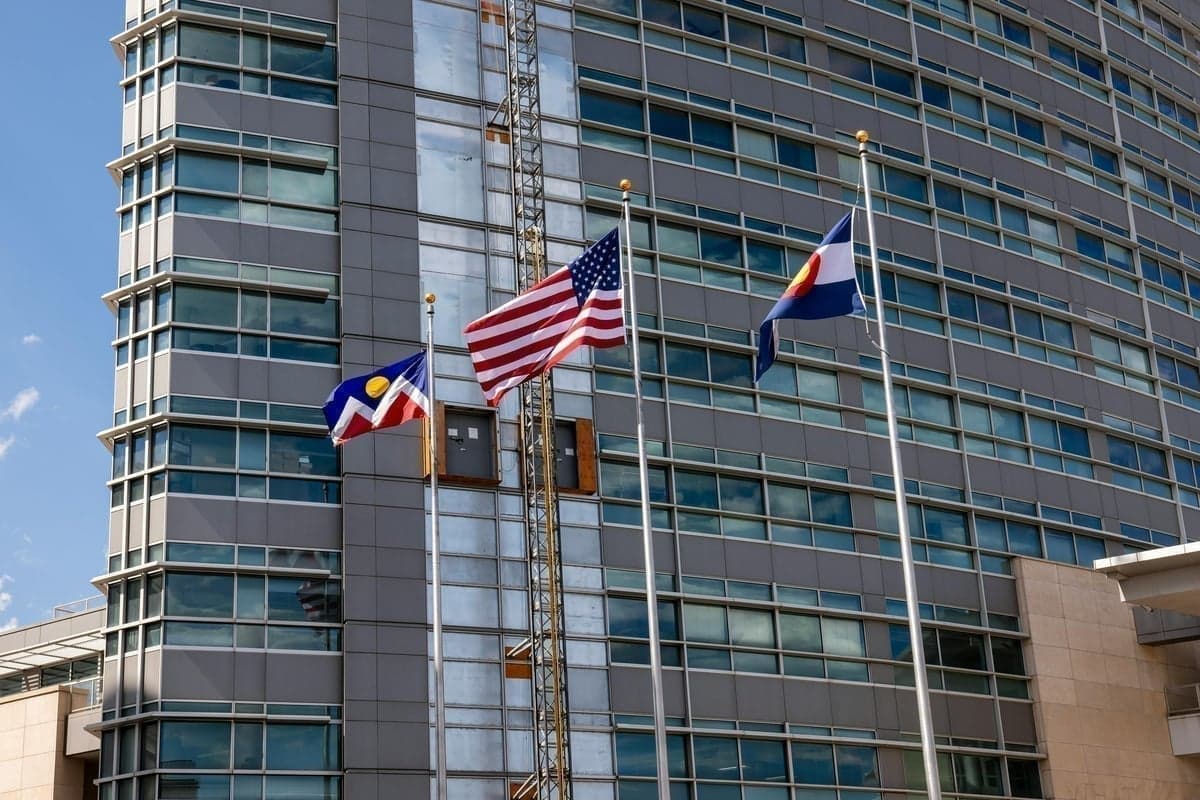
The Colorado state flag flies over one of the West's top fishing and floating destinations
Seasons and Runoff
Colorado rivers follow a predictable annual pattern driven by snowpack:
| Season | Timing | Conditions | Best Bet |
|---|
| Winter | Dec-Mar | Tailwaters fish well, midge hatches daily, uncrowded | Fryingpan, South Platte, Blue |
| Spring | Apr-May | Runoff begins, freestones go off-color | Tailwaters only |
| Runoff | May-Jun | Peak flows, dangerous on freestones | Arkansas rafting, tailwaters for fishing |
| Summer | Jul-Aug | Rivers clear, prolific hatches, prime floating | Everything fishable |
| Fall | Sep-Oct | Best fishing, stable flows, browns aggressive | Freestones and tailwaters |
Key timing notes:
- August 15th is when augmented rafting flows end on the Arkansas, dropping from 1,500+ CFS to under 400 CFS. Wade fishing improves dramatically.
- Green Drake hatches start late June on the Roaring Fork and Fryingpan, running into July and August.
- Fall BWO hatches run through October on most rivers.
- High country streams above 9,000 feet may not clear until late July.
Licensing and Regulations
Colorado Parks and Wildlife manages all fishing regulations statewide. Annual licenses run March 1 through March 31 of the following year. A resident adult annual license costs $44.87; nonresident annual runs $124.01. Youth 15 and under fish free.
The statewide default bag limit is 4 trout daily (8 in possession), covering rainbow, brown, brook, and cutthroat trout. However, many Gold Medal and special regulation waters have stricter rules: catch-and-release only, flies and lures only, or reduced bag limits. Check the eRegulations page for specific waters before you go.
2026 changes to know about: The Blue River between Dillon Reservoir and Hamilton Creek Road has a seasonal closure from September 15 through December 1 to protect spawning fish.
Major River Systems
Arkansas River
The Arkansas drops over 5,000 feet in its first 125 miles through Colorado. Over 102 miles from Leadville to above Royal Gorge carry Gold Medal status, one of the longest Gold Medal stretches in the state.
Flow Windows:
| CFS | Conditions |
|---|
| 225-300 | Ideal wade fishing, can cross to less-pressured side |
| 300-600 | Good fishing, some wading limitations |
| 600-1,500 | Float fishing preferred, commercial rafting season |
| 1,500+ | High water rafting, fishing tough |
For anglers: Browns and rainbows throughout. The stretch near Salida is particularly productive. After August 15th when rafting flows drop, the river becomes very wadeable at 275 CFS with excellent clarity and water temps in the upper 40s to low 50s. The Mother's Day caddis hatch (late April through May) is one of the best dry fly events in the state: clouds of caddis filling the air, trout rising aggressively, and Elk Hair Caddis in sizes 14-16 doing the work. See our Arkansas River spring fishing guide for detailed hatch timing and section-by-section breakdown.
Key flies: Caddis (14-18), Yellow Sallies (14-16), Stoneflies (8-12), Pheasant Tails and Hare's Ears for nymphing.
For floaters:
- Browns Canyon (Ruby Mountain to Hecla Junction): 8 miles of Class III rapids through National Monument. Put in at Ruby Mountain Campground or Fisherman's Bridge (4.5 miles south of Buena Vista on US 285, turn left on CR 301). Take out at Hecla Junction above Salida.
- Bighorn Sheep Canyon: Scenic Class II-III, family-friendly. Multiple outfitters run daily trips from May through September. Arkansas River Tours has been operating here for over 50 years.
- Royal Gorge: Class IV-V between 1,000-foot canyon walls. Commercial trips only for inexperienced paddlers.
Parking: Ruby Mountain and Hecla Junction require a CPW parks pass (daily or annual). Browns Canyon National Monument itself has no entrance fee.
Check current Arkansas River flows on RiverReports before you drive.
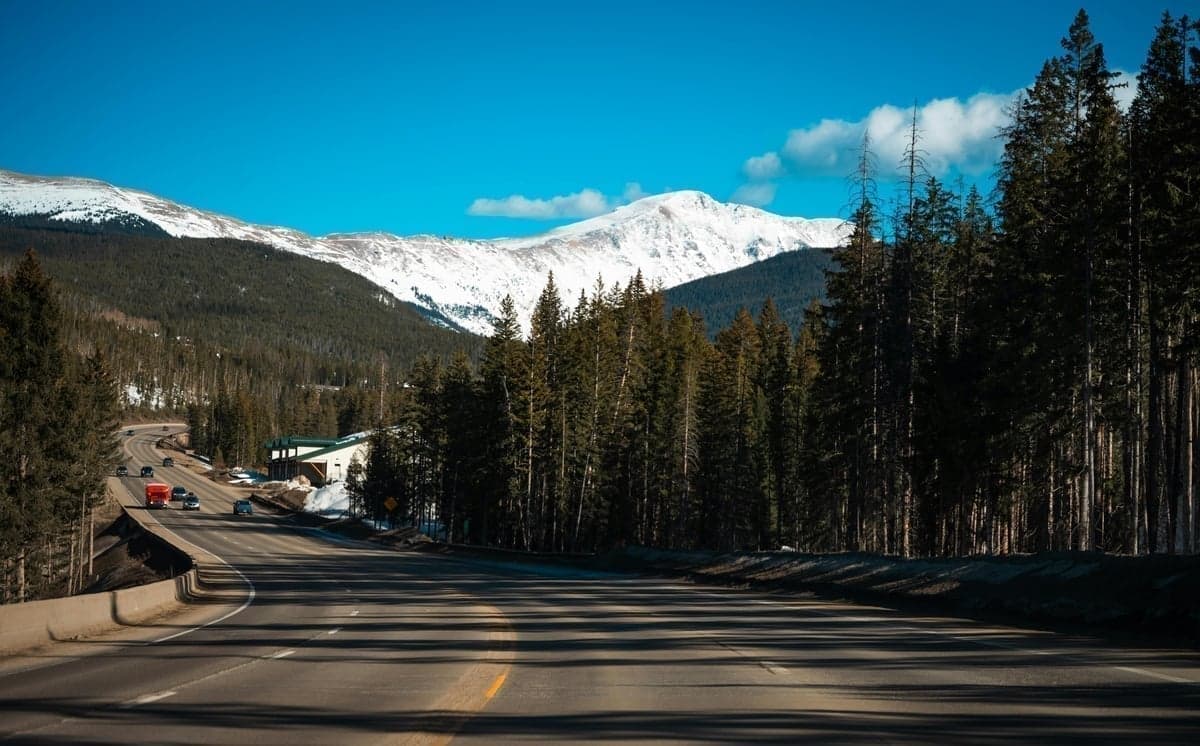
Colorado mountain highways connect Front Range cities to the state's best fishing in under two hours
South Platte River
The most accessible major trout river from Denver, and a staple of Front Range fly fishing. Cheesman Canyon and Deckers are legendary technical fisheries, where educated trout demand long leaders, fine tippet, and small flies. Our South Platte River fly fishing guide covers this water in full detail.
Flow Windows (Deckers/Cheesman):
| CFS | Conditions |
|---|
| 80-150 | Very technical, experienced anglers |
| 150-400 | Ideal range, good wading, active fish |
| 400-600 | Higher but fishable |
| 600+ | Difficult wading, reduced visibility |
Key Sections:
Dream Stream (3.8 miles below Spinney Reservoir to Elevenmile Reservoir)
- Open banks, trophy fish on spawning runs spring and fall
- Easier wading than canyon sections
- Less pressure than Cheesman/Deckers
Cheesman Canyon (below Cheesman Dam)
- Gold Medal, catch-and-release only, flies and lures only
- Crystal-clear water, granite boulders, CPW surveys show 3,000+ trout per mile
- Access: Hike-in only via Gill Trail. Trailhead at 23785 CR 126, Pine, CO. Parking lot holds roughly 20 cars and fills early on weekends. Allow 45 minutes to hike in. Bring hiking boots for the loose gravel. Watch for poison ivy along the riverbanks.
Cheesman Canyon demands a steep hike in, but rewards anglers with 3,000+ trout per mile in gin-clear water
Deckers (below Cheesman Canyon)
- More accessible, but heavily pressured
- Ample parking along Hwy 67 and behind Flies and Lies fly shop
- Pike National Forest land may require a USFS day-use pass
- Warning: Parking fills by 8am on summer weekends
Key flies: This is small-fly water. Zebra Midges (18-24), RS2 (18-24), Mercury Midges, JuJu Baetis (20-24), Trico patterns (20-24). PMDs (16-20) in summer. Griffith's Gnat for midge clusters.
Tip: South Platte trout are notoriously selective. Go lighter on tippet than you think (6X-7X), fish drag-free, and approach slowly. Flow changes from Cheesman Dam releases can shift fishing quickly. Check current South Platte conditions on RiverReports before you go.
The Colorado River starts as a modest creek in Rocky Mountain National Park before growing into one of the West's defining waterways
Colorado River
Running from its headwaters near Granby through Glenwood Canyon, the Colorado offers excellent fishing and floating across distinct sections. Forty miles of the river carry Gold Medal designation in two stretches: 20 miles between Windy Gap Reservoir and Troublesome Creek, and 20 miles from Canyon Creek to Rock Creek near McCoy.
Upper Colorado (Kremmling to State Bridge): The classic summer float. See our Upper Colorado summer guide for detailed flow windows and access, or our June floating guide for early-season planning.
| CFS | Conditions |
|---|
| Under 800 | Low, possible scraping |
| 800-1,500 | Relaxed float, some shallow spots |
| 1,500-3,300 | Ideal, good current, Class II rapids run clean |
| 3,300-5,500 | Faster, more technical |
| Over 5,500 | High water, bridge clearance issues at second bridge |
Put-in: Pumphouse Recreation Site (BLM campground with boat ramp)
Take-out: State Bridge (14 miles, 4-6 hours depending on flow)
Key hazard: Yarmony (Hoyt) Rapid becomes a legit Class III at 2,500+ CFS with a boulder creating a hole that can flip rafts.
Gore Canyon: Expert-only whitewater, Class V+. Dvorak Expeditions (Colorado's first licensed whitewater outfitter, operating since 1979) commercially runs this stretch with portages at Gore Rapid and Tunnel Falls. Not for casual floaters.
Glenwood Canyon: Scenic canyon with good access along I-70. Mix of pocket water and runs. Good fishing access at rest areas.
Kirk's Flyshop in Grand Lake runs guided float trips on the upper Colorado with towering red cliff views, typically from June through October.
Fryingpan River
One of Colorado's finest tailwaters. The 14 miles below Ruedi Dam is Gold Medal water with year-round fishing and some of the most prolific hatches in the state. Taylor Creek Fly Shops maintains a regularly updated fishing report for this water.
Flow Windows:
| CFS | Conditions |
|---|
| 60-85 | Winter flows, very technical |
| 80-150 | Ideal, optimal clarity and wading |
| 150-200 | Still good, manageable current |
| 200+ | Can muddy, difficult wading |
Hatches (this is a hatch-driven fishery):
- Green Drakes (July-September): Sizes 10-14. The signature hatch. Fish Sparkledun Green Drakes, Green Drake Cripples, or CDC Thorax patterns.
- PMDs (June-August): Sizes 14-18
- BWOs (Spring and Fall): Sizes 18-22
- Midges: Year-round, sizes 18-24. Zebra Midges, Mercury Midges
- Mysis Shrimp: Year-round near the dam, sizes 16-20. Tim's Mysis, Craven's Mysis, Will's Epoxy Mysis
Key insight: The upper mile below the dam ("Toilet Bowl" area) has the biggest fish due to Mysis shrimp washing from the reservoir, but also the heaviest pressure. Miles 2-6 offer better solitude with a mix of riffles and deep slots.
Character: This is a presentation fishery, not match-the-hatch. Keep flies drag-free, use fine tippet (5X-6X), and fish from the bank when possible. Trout are well-fed and refuse sloppy drifts.
Access: 8.5 miles of public land and easements. Good pullouts along Fryingpan Road (CR 104) from Basalt. Roaring Fork Anglers / Alpine Angling in Basalt posts detailed hatch updates and can point you to the right section.
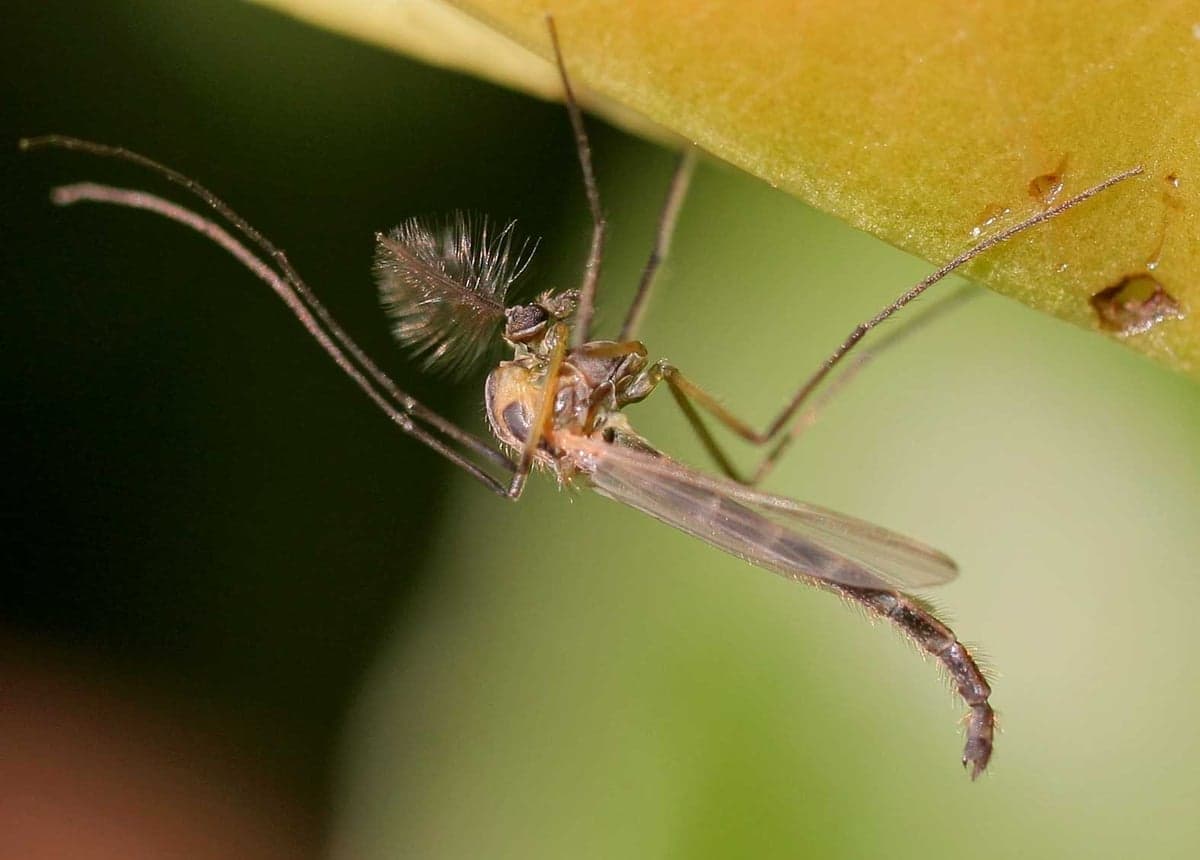
The humble midge (chironomid). Colorado tailwater trout eat millions of these, which is why size 20-24 midge patterns dominate on the Fryingpan, Blue, and South Platte.
Gunnison River
The Gunnison flows through Black Canyon National Park and Gunnison Gorge National Conservation Area, one of the most spectacular and remote fisheries in Colorado. Twenty-seven miles of Gold Medal water run from the Black Canyon through the Gorge to the North Fork confluence.
Flow Windows:
| CFS | Conditions |
|---|
| 300-450 | Low water, excellent wading, hard to float |
| 400-600 | Ideal fishing, wade or float |
| 600-800 | Good drift boat water |
| 800+ | Easy drift boat, wade fishing limited |
Black Canyon Section:
- Demanding hike down from the rim (3+ hours each way)
- True wilderness fishing with trophy rainbow potential (20+ inches)
- Sudden flow changes possible from dam releases
- Worth the effort for solitude and big fish
Gunnison Gorge (below Black Canyon):
- 14 miles of Class II-III water
- Permits required for floating
- Access via 4-mile hike from Chukar Trail or float from upstream put-in
- Less pressure than more accessible rivers
- Stonefly and caddis hatches drive the fishing
Gunnison River Expeditions (970-872-3232) has been running guided float fishing and whitewater trips through the Gorge since 1985. They are the largest outfitter on this stretch, and their guides know where the bighorn sheep, mule deer, river otters, and peregrine falcons hang out along the canyon walls.
Key flies: Golden Stones (8-12), Caddis (14-18), Pheasant Tails, Pat's Rubber Legs
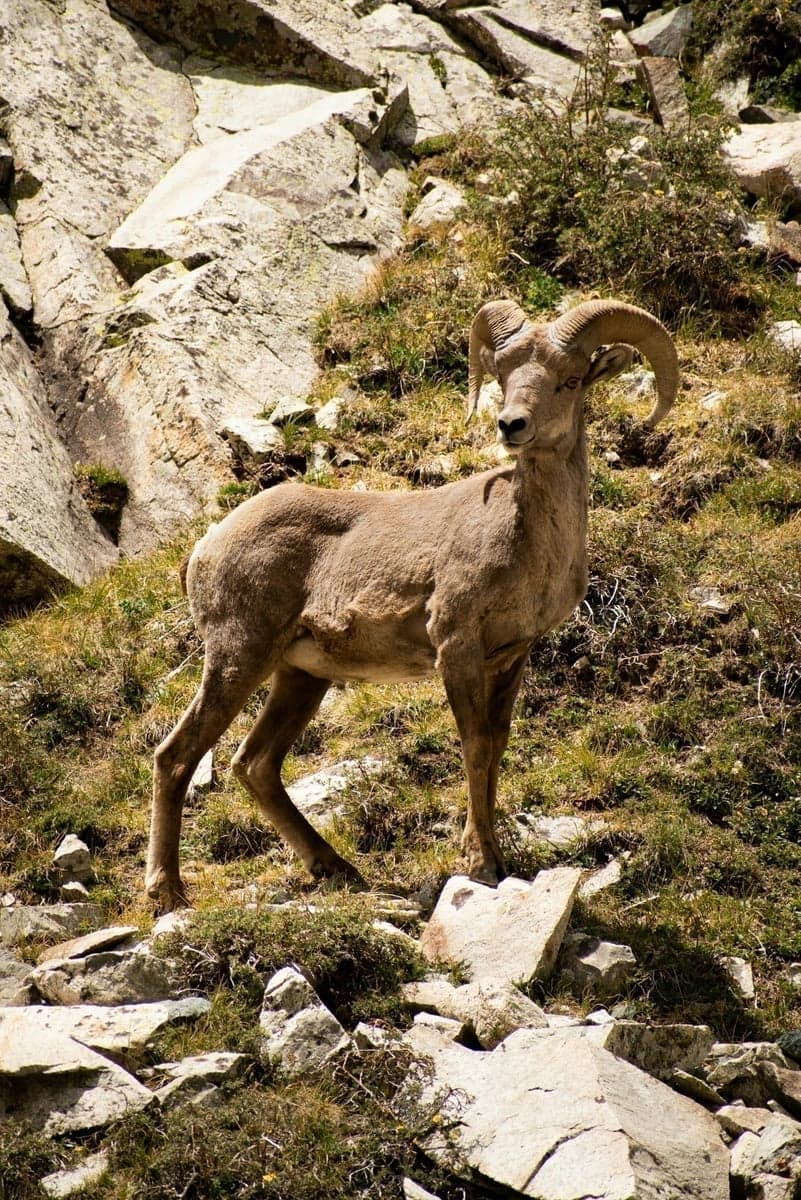
Bighorn sheep are a common sight in the Gunnison Gorge and along the Arkansas through Bighorn Sheep Canyon
The Roaring Fork near Aspen. Green Drake hatches in late June draw anglers from across the country.
Roaring Fork River
Gold Medal water for 22 miles from Basalt to the confluence with the Colorado at Glenwood Springs. A productive freestone with good public access.
Flow Windows:
| CFS | Conditions |
|---|
| 200-350 | Excellent wading, lower river may be too low to float |
| 700-2,500 | Ideal drift boat range |
| 2,500-5,000 | High but floatable for experienced rowers |
| 5,000+ | Runoff conditions, wait it out |
| 13,000+ | Peak runoff on big snow years, unfishable for weeks |
Sections:
Upper (Aspen area): Smaller water, higher gradient, pocket water fishing
Middle (Basalt to Carbondale): 13 miles of Gold Medal water. Popular with float fishermen early season but usually too low to float by late July. Excellent wade fishing at 200-350 CFS. Healthy trout populations, less boat traffic than lower river.
Lower (Carbondale to Glenwood): Bigger water, joins the Fryingpan at Basalt which adds cold, clear flow
Hatches:
- Green Drakes (late June-July): The famous hatch. Anglers travel from across the country for this. Sizes 10-14.
- Caddis, Stoneflies, PMDs through summer
- BWOs in fall
Fly Fishing Outfitters runs guided float trips on the Roaring Fork, Eagle, and Colorado rivers for most of the year.
Key flies: Green Drake dries and emergers (10-14), Elk Hair Caddis (14-18), Stimulators (10-14), Pheasant Tails, Copper Johns
Access: Good public access in Basalt and Carbondale. Several fishing access sites along Highway 82.
Blue River
A tailwater fishery below Dillon Reservoir and Green Mountain Reservoir, offering accessible fishing close to Summit County ski towns. The Blue still holds Gold Medal status on two segments: below Dillon Dam to the Hamilton Creek Road bridge, and below Green Mountain Dam to the Colorado River confluence. (A 19-mile middle section between Silverthorne and Green Mountain Reservoir lost its Gold Medal designation in 2016 due to degraded habitat and low nutrient levels.) Our Blue River Colorado guide covers sections, tactics, and access in depth.
Flow Windows:
| CFS | Conditions |
|---|
| 50-100 | Typical winter flows, very technical |
| 100-200 | Good fishing, manageable |
| 200-400 | Higher flows, nymphing productive |
| 1,600+ | High water, difficult fishing |
Below Dillon (Silverthorne):
- Trophy potential: some of the largest trout in Summit County. Orvis rates this water as capable of producing 20-inch fish on productive days.
- Very cold water (34-38°F) from bottom releases
- Fish concentrate in slower runs and deeper pools
- Best fishing window: 10am-2pm when temps align for feeding
- This is NOT a morning fishery due to cold water
- Year-round fishing but technical conditions
Below Green Mountain:
- More water, consistent fishing
- Less pressure than Silverthorne section
Key flies: Small flies are essential. Mysis Shrimp (18-22), Zebra Midges (20-24), Scuds (16-18), RS2s, JuJu Midges. This is 6X-7X tippet water.
Access: Walk-and-wade from downtown Silverthorne. Parking along Blue River Parkway. The town section is family-friendly and less intimidating than canyon sections of other rivers.
2026 regulation note: The section from Dillon Dam to Hamilton Creek Road bridge is closed September 15 through December 1 to protect spawning kokanee salmon and brown trout.
Tip: Check flows before driving. Denver Water controls releases and levels can fluctuate significantly day to day. Track real-time Blue River conditions on RiverReports.
The Blue River below Dillon Reservoir in autumn. Cold tailwater temperatures keep this a midday fishery year-round.
Animas River
Running through Durango, the Animas provides urban fishing access and some of the state's most challenging whitewater. It is one of the last free-flowing rivers in Colorado.
Flow Windows (Durango section):
| CFS | Conditions |
|---|
| 150-300 | Ideal wading, high clarity, good visibility |
| 300-800 | Fishable but wading limited |
| 800-2,000 | Float fishing, rafting |
| 4,600+ | High summer flows, rafting/kayaking, tough fishing |
Fishing:
- Gold Medal section through downtown Durango (Lightner Creek to Rivera Crossing)
- Big water, nearly 100 feet wide with huge rocks and deep holes
- Browns and rainbows to 20+ inches. A former state-record 23-pound brown trout came from this river.
- The Animas River Trail parallels the river for 7 miles through town, giving easy walk-in access to Gold Medal water.
- Year-round access. Never freezes or gets slushy.
- Best times: Fall through early spring (avoid late April-May runoff)
Key flies: Pat's Rubberlegs (6-10), Elk Hair Caddis (14-18), Parachute Adams (16-20), Stimulators (10-14), Hoppers in summer (8-12), Streamers for big browns. Duranglers Flies and Supplies at 923 Main Avenue in Durango stocks local patterns and posts weekly fishing reports for the Animas and surrounding rivers.
Whitewater:
- Upper Animas (above Silverton): Class IV-V, among the most difficult commercially rafted water in the country. Cold water, continuous rapids, remote. Expert only or guided trips.
Access: Easy access from downtown Durango. Several parks and access points along the river.
Note: The Animas has experienced mine-related water quality issues in the past (the 2015 Gold King Mine spill was the most notable). Orvis reports that fishing remains strong, with plentiful invertebrates supporting large trout.
Rio Grande
South Fork has nearly 17 miles of Gold Medal designation on the Rio Grande, from the CO 149 bridge at South Fork to the Rio Grande Canal diversion structure west of Del Norte. Special regulations apply: artificial flies and lures only, rainbow trout must be released, and the brown trout bag limit is two fish, minimum 16 inches.
Flow Windows:
| Location | Low | Normal | High |
|---|
| Thirty Mile | 85 | 400-700 | 967 |
| Wagon Wheel Gap | 261 | 800-1,200 | 1,950 |
| Del Norte | 350 | 1,000-1,500 | 2,450 |
Below 600 CFS: Float trips take roughly 3 hours, very wadeable
Above 1,500 CFS: Higher flows, faster floating
Character: The river gets bigger between South Fork and Del Norte. Limited public access between the two towns makes float fishing popular for the lower stretch.
Hatches:
- Salmonfly Hatch (mid-June): The signature event. You can follow the hatch upriver through July.
- Stoneflies, Caddis through summer
- Terrestrials (hoppers, beetles) July-September
Genetic treasure: The headwaters of the Rio Grande in the Rio Grande National Forest contain native Rio Grande cutthroat trout (Oncorhynchus clarki virginalis), barriered from hybridization with nonnative species. These are some of the genetically purest cutthroat populations remaining anywhere.
Key flies: Salmonfly patterns (4-8), Sofa Pillow, Bird's Stone, large Stimulators, Hoppers (8-12), Dropper rigs with stonefly dries
Access: Consider hiring a local guide for the float section since bank access between South Fork and Del Norte is limited.
Williams Fork River
A lesser-known tailwater that fishes well when flows are right. Its remote location means less pressure than other Front Range tailwaters.
Flow Windows:
| CFS | Conditions |
|---|
| 15-50 | Very low but fishable |
| 50-100 | Winter flows |
| 100-250 | Ideal, entices fish from Colorado River |
| 250-300 | Still good |
| 300+ | Higher water |
Character: The Williams Fork fishes best when flows are high enough to draw fish up from the Colorado River (100-200+ CFS). When this happens, fishing can be excellent with less competition.
Hatches: Midges, Baetis, Caddis. Summer brings mayflies, caddis, terrestrials, and small stoneflies. Dry fly fishing can be exceptional.
Key flies: RS2 (18-22), Zebra Midges, Pheasant Tails, small Perdigons. Streamers productive.
Access: Two access points, both requiring roughly 20-minute hikes:
- Off Hwy 40 at Parshall, cross the Colorado River
- County Road 3, DOW parking area about 1/3 mile south of the Colorado River
Note: Denver Water Board controls flows from the dam. Levels can change day to day. Check before driving.
Yampa River
The Yampa near Steamboat Springs is one of Colorado's most underrated trout fisheries, and the 71-mile wilderness float through Dinosaur National Monument is one of the premier multi-day river trips in the West. The Yampa is also the last free-flowing (undammed) major tributary in the entire Colorado River Basin.
Fishing (Steamboat Springs area):
The Yampa is not Gold Medal water, but it's classified as a CPW Quality Water and fishes well across several distinct sections.
| CFS | Conditions |
|---|
| Below 85 | Voluntary closure (too warm/low) |
| 120-200 | Ideal wading, clear water, active fish |
| 200-400 | Higher but fishable |
| 400+ | Spring runoff, limited to eddies |
Key Sections:
- Stagecoach Tailwater (below Stagecoach Reservoir): Consistent year-round flows, self-sustaining rainbow fishery. First 0.6 miles below dam is catch-and-release, artificial flies and lures only. Access via County Road 18.
- Chuck Lewis State Wildlife Area (below Lake Catamount): Restored habitat, walk-and-wade. Access via County Road 14 / Gilroy Bridge with paved parking.
- Downtown Steamboat Springs (Walton Creek to James Brown Bridge): Catch-and-release, artificial only. City bike path runs along the river. Shared with tubers and kayakers in summer.
- Hayden Stretch (east of Hayden downstream): 20 miles of floatable water with mixed species including northern pike and smallmouth bass. 2-trout bag limit.
Hatches: Midges year-round, BWOs spring and fall, caddis and golden stoneflies in summer, PMDs, Tricos late summer (prime time), terrestrials July through September.
Best seasons: Fall (September through October) is the sweet spot: Trico and BWO hatches, clear water, fewer people, flows settling into the ideal 120-200 CFS range. The Stagecoach tailwater fishes year-round. Avoid late April through June when runoff makes freestone sections unfishable.
Voluntary closure: The City of Steamboat closes the river when water temperature exceeds 75F for two consecutive days or flows drop below 85 CFS. This typically affects late July and August afternoons.
Track Yampa River flows on RiverReports.
The Yampa cuts through Dinosaur National Monument on a 71-mile wilderness float, the last undammed major tributary in the Colorado River Basin
Dinosaur National Monument Float (71 miles, 4-5 days):
One of the great wilderness floats in the American West. The trip starts at Deerlodge Park in northwestern Colorado and ends at Split Mountain boat ramp near Jensen, Utah, covering about 46 miles on the Yampa and 25 miles on the Green River after the confluence at Echo Park.
- Rapids: Mostly Class II-III with one significant exception: Warm Springs Rapid (Class IV), formed in 1965 when a debris flow dropped thousands of tons of rock into the channel. At flows above 6,000 CFS, the "Maytag hole" at the bottom is a known raft-flipper. Scout before running.
- Permits: Required and competitive. Lottery applications open December 1 through January 31 ($15 application fee). Winners notified February 14, with $185 recreation fee due by March 1. Roughly 10,000 applications compete for about 300 private permits each year.
- Season: Early May through early July, flow-dependent. Recommended flows are 800-6,000 CFS. Below 900 CFS, expect to walk and line boats through shallows.
- Shuttle: River Runners Transport is the only authorized shuttle service (435-781-4919).
- Group size: Maximum 25 persons per noncommercial trip. Trip leader must have Class III+ whitewater experience.
Other Notable Waters
Eagle River (Vail to Dotsero): About 60 miles of fishable water from the headwaters near Camp Hale to the Colorado River confluence at Dotsero. Not officially Gold Medal (that designation belongs to Gore Creek, which flows into it at Vail), but classified as a CPW Quality Water with healthy brown and rainbow trout populations. The upper river near Minturn is small pocket water along Highway 24. The middle section through Avon and Edwards gains volume and depth. The lower river from Wolcott to Dotsero holds the biggest fish and offers the best float fishing during spring and early summer. BLM access points from Wolcott downstream make the lower river surprisingly uncrowded. Ideal wading flows run 100-500 CFS depending on section. Notable hatch: unusually large midges (up to size 14) in March, followed by prolific caddis hatches through summer. I-70 corridor access makes this one of the most convenient fisheries in Colorado.
Gore Creek (Vail): Four miles of Gold Medal water from Red Sandstone Creek to the Eagle River confluence. A paved recreation path runs along the creek, making access easy. Small water that fishes well with dry-dropper rigs.
North Platte River: Five miles of Gold Medal water in Northgate Canyon, from the Routt National Forest boundary to the Wyoming state line. Remote and lightly fished.
Boulder Creek and South Boulder Creek: Accessible urban and foothill streams near Boulder. Not Gold Medal water, but good fishing close to the Front Range. See our Boulder Creek and South Boulder Creek guide for access and hatch details.
Alpine Lakes
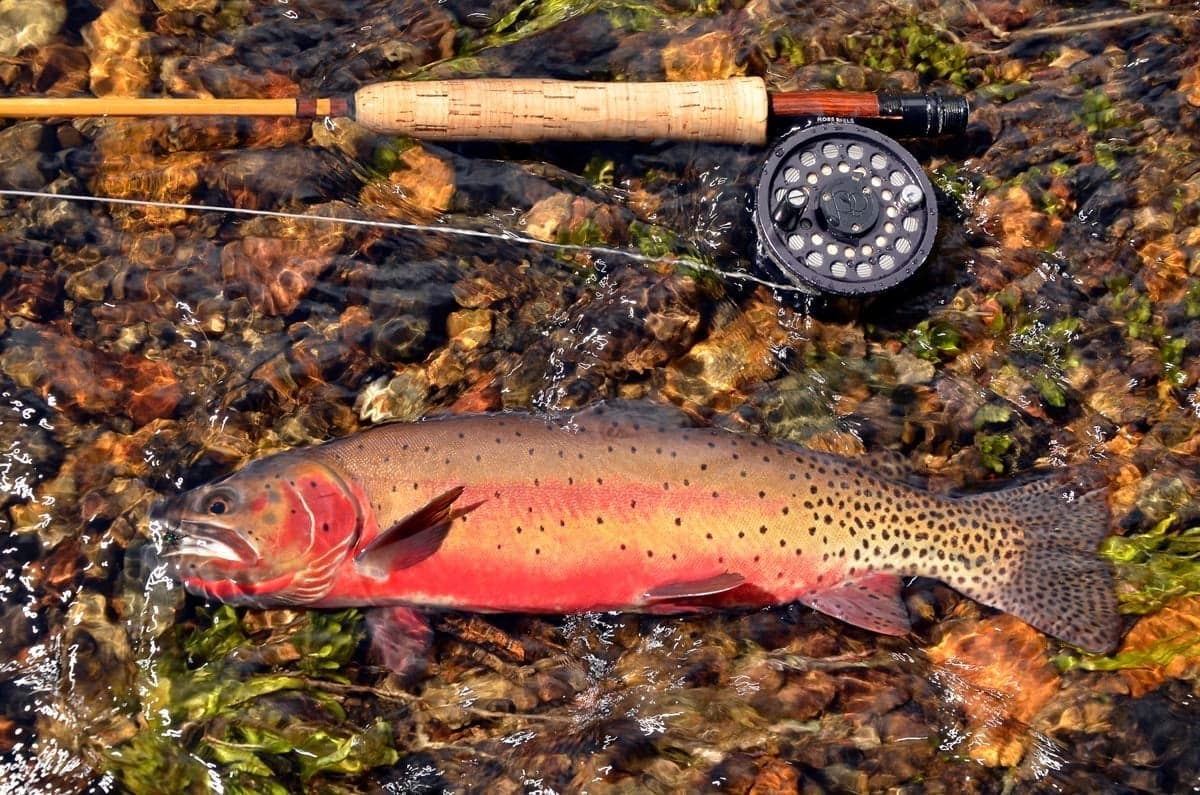
Colorado's high-country lakes hold native cutthroat trout that will eat dry flies all day long
Colorado has hundreds of alpine lakes above 9,000 feet, and many of them hold fish that rarely see a fly. These high-country lakes are home to native Colorado cutthroat and Rio Grande cutthroat trout, two subspecies found nowhere else. The fishing is straightforward: small dry flies (Elk Hair Caddis, Parachute Adams, Stimulators in sizes 14-18) work almost any time the fish are rising, which in summer is most of the day. No need for 6X tippet or size 24 midges up here.
A Rio Grande cutthroat trout. These native trout hold in high-country lakes and streams across southern Colorado.
Most alpine lakes require a hike of 2-10 miles, often gaining 1,000-3,000 feet of elevation. Ice-out typically happens late June at 9,000 feet and not until mid-July above 11,000 feet. The best fishing runs from ice-out through September. No boat needed: fish cruise the shoreline and are easily reached with a short cast from the bank.
CPW manages many of these lakes as native cutthroat conservation waters. Regulations vary by lake, but catch-and-release is common, and some lakes restrict gear to artificial flies and lures only. Check CPW regulations for your specific destination before you hike in.
Gold Medal Waters at a Glance
Colorado currently designates 11 rivers and 3 lakes as Gold Medal. To earn the designation, water must sustain at least 60 pounds of trout per acre with at least 12 fish 14 inches or longer per acre. River segments must be a minimum of 2 miles; lakes must cover at least 50 acres.
| Water | Miles/Acres | Key Regulation |
|---|
| Arkansas River | 102 mi | Varies by section |
| South Platte River | 37 mi (3 sections) | Catch-and-release in Cheesman |
| Colorado River | 40 mi (2 sections) | Standard |
| Gunnison River | 27 mi | Varies by section |
| Roaring Fork River | 22 mi | Standard |
| Rio Grande | 17 mi | Flies/lures only, release rainbows |
| Blue River | 2 sections (19 mi delisted 2016) | Seasonal closure Sep 15-Dec 1 |
| Fryingpan River | 14 mi | Catch-and-release rainbows, 2 browns under 14" |
| North Platte River | 5 mi | Standard |
| Animas River | 4 mi | Flies and lures only |
| Gore Creek | 4 mi | Standard |
| Spinney Mountain Reservoir | 2,500 acres | Flies/lures only, 1 trout over 20" |
| Steamboat Lake | 1,053 acres | Bait fishing allowed |
| North Delaney Butte Lake | 160 acres | Standard |
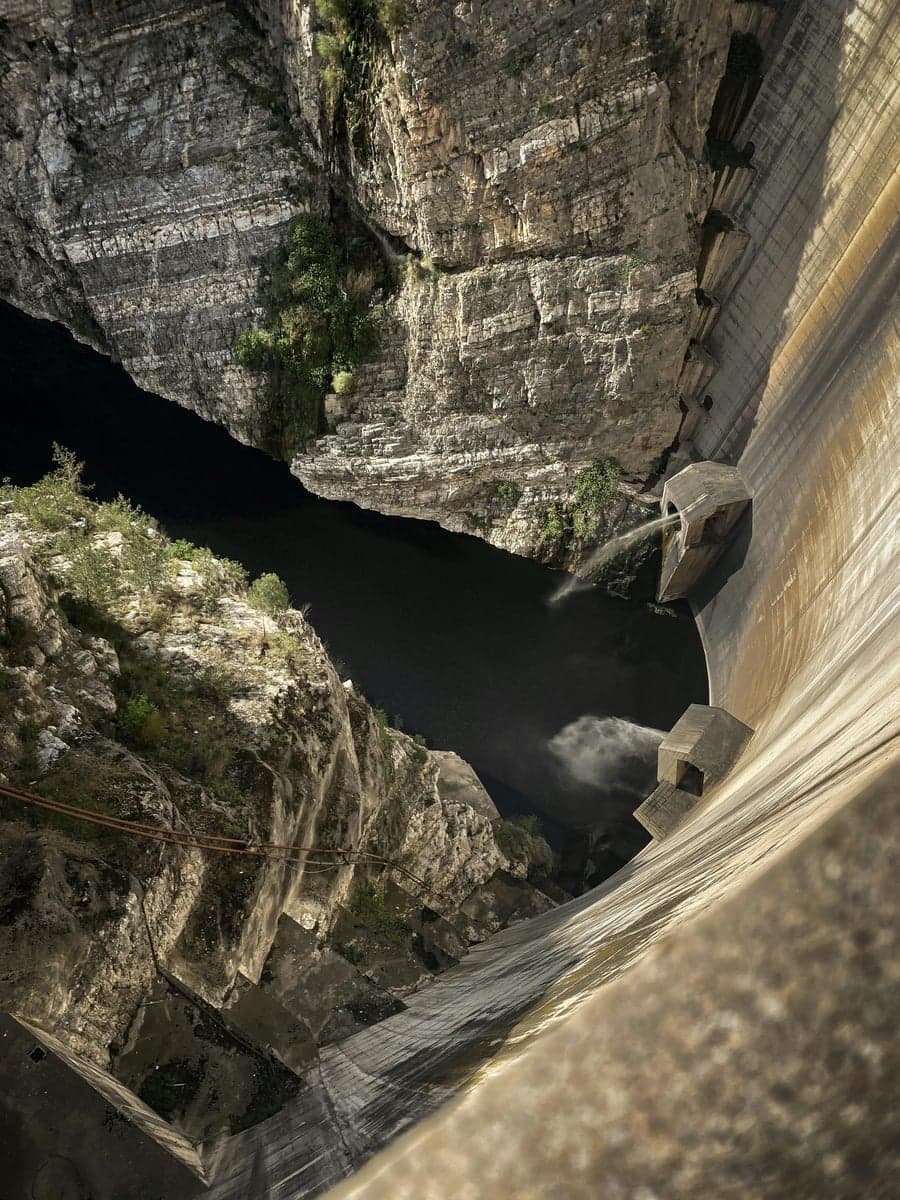
Colorado's tailwater fisheries depend on dam releases that keep water cold and flows consistent year-round
Whitewater and Floating
Colorado's whitewater season typically runs May through September. Snowmelt drives peak flows in May and June (the biggest rapids), while August brings mellower water better suited to families and beginners.
Beginner-Friendly Floats
- Upper Colorado (Pumphouse to State Bridge): Class I-II, wide river, forgiving. Prime July-August. The 14-mile stretch takes 4-6 hours depending on flow.
- Arkansas River (Bighorn Sheep Canyon): Scenic Class II-III rafting. Multiple outfitters run family-friendly trips, including Dvorak Expeditions near Salida and Buena Vista.
- Roaring Fork (Basalt area): Guided inflatable kayak trips suitable for beginners at moderate flows.
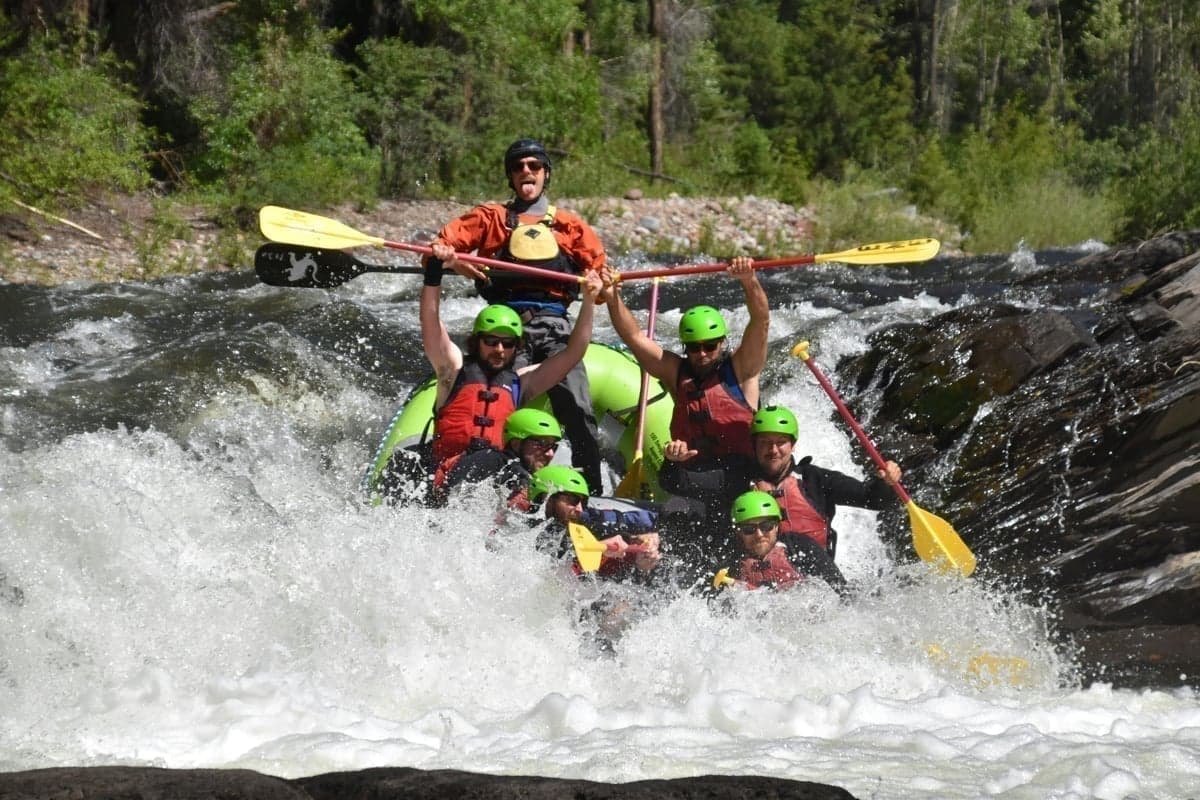
Whitewater rafting on Colorado's rivers. The Arkansas alone draws more commercial rafters than almost any river in the country.
Expert Whitewater
- Gore Canyon (Colorado River): Class V+ with mandatory portages. Widely regarded as some of the most technical whitewater in the state.
- Upper Animas (above Silverton): Class IV-V. Cold water, continuous rapids, remote access.
- Royal Gorge (Arkansas River): Class IV-V between 1,000-foot canyon walls. Commercial trips only for non-experts.
- Arkansas at Granite: Paddling Magazine calls the Granite section "widely considered the best Class IV run in the state of Colorado."
Colorado Whitewater, a volunteer nonprofit, promotes whitewater safety and offers instruction throughout the Rocky Mountain region.
Safety requirements: All paddlers must have Coast Guard-approved PFDs. Vessels 16 feet and longer need a Type IV throwable flotation device.
Beginner-Friendly Fishing
If you're new to fly fishing or just want to catch fish without worrying about 7X tippet and size 24 midges, Colorado has plenty of water where willing trout eat big dries all day.
Small creeks and mountain streams (the fun stuff):
- Boulder Creek: Runs right through town. Small browns and rainbows that aren't picky. Walk from campus, toss an Elk Hair Caddis into the riffles, and you'll catch fish. See our Boulder Creek guide for access.
- Piney River (near Vail): Drive to Piney River Ranch at the end of a dirt road north of Vail, then hike upstream. Beautiful small water with brook trout and cutthroats that eat anything resembling a bug. The ranch also has a private lake. One of the prettiest settings in the state.
- St. Vrain Creek (Lyons/Allenspark): Easy access from Highway 7 heading toward Estes Park. Small, eager brookies and browns in pocket water. Great for kids.
- Clear Creek (Georgetown/Idaho Springs): Right off I-70, 45 minutes from Denver. Small, willing trout in a canyon setting. Pullouts along the highway make access dead simple.
- Lake Fork of the Gunnison (Lake City): Small-town Colorado at its best. Wade the river through town or fish the inlet to Lake San Cristobal. Fish aren't huge but they cooperate.
- Frying Pan tributary creeks: The small feeder creeks above Ruedi Reservoir hold brook trout that will hit a Stimulator or Parachute Adams on every cast. Way less pressure than the main river.
- Bear Creek (Evergreen/Morrison): Another Front Range creek close to Denver. Small water, small fish, but satisfying fishing in a pretty canyon. Evergreen Lake at the top is stocked and kid-friendly.
- Gore Creek (Vail): Gold Medal water running right through the middle of Vail Village. Walk off the bike path and fish pocket water with attractor dries. The fish see some pressure but nothing like the South Platte.
- Tenmile Creek (Breckenridge/Frisco): Flows through Frisco and into Dillon Reservoir. Small, easy to wade, and stocked by CPW. Walk from downtown Frisco. Good option when the Blue River feels too technical.
- French Creek and the upper Blue (Breckenridge): Small feeder streams above town with brook trout in every pool. Hike up from the trailheads south of Breck for solitude and easy fishing.
- Fraser River (Winter Park): Runs through the Fraser Valley right along Highway 40. Small browns and brookies, easy roadside access. Devil's Thumb Ranch has private water if you want a guided experience, but the public stretches fish fine.
- Ranch Creek (Fraser Valley): Tiny meadow stream near Tabernash. Brook trout that eat anything. Feels like you're fishing someone's backyard in the best possible way.
- Hermosa Creek (north of Durango): A beautiful freestone stream off Highway 550. Hike or mountain bike the Hermosa Creek Trail for miles of small wild trout water. Less crowded than the Animas and much less technical.
- Lime Creek (south of Silverton): Small stream along the Million Dollar Highway with cutthroats and brookies. Pull over, scramble down, and fish. The scenery alone is worth the stop.
- Junction Creek (Durango): Starts at Junction Creek Campground just minutes from downtown Durango. Small, shaded canyon water with browns and rainbows. Good afternoon escape after floating the Animas.
- Big Thompson River (Estes Park): Flows through town and Rocky Mountain National Park. Stocked in the lower sections, wild fish upstream. Easy access, cooperative trout, and elk watching from the bank.
Bigger water for beginners:
- Blue River in Silverthorne: Walk-and-wade from town, smaller water, less intimidating than canyons. The paved path and nearby shops make it a good first Colorado tailwater.
- Arkansas near Salida (after Aug 15): Wadeable flows, good access, less technical than tailwaters. Multiple local fly shops offer beginner-friendly guided trips.
- Dream Stream (South Platte): Open banks and bigger fish than most small streams. Easier wading than Cheesman Canyon with clearer sight lines.
Guided instruction and lodges:
Colorado Trout Hunters runs trips near Denver and Colorado Springs on Colorado's most productive public and private waters. Angler's Covey in Colorado Springs holds permits for over 30 fishing locations statewide and offers fully customized trips for all experience levels.
Several lodges combine fly fishing with upscale accommodations: Devil's Thumb Ranch near Winter Park is Orvis-endorsed with 4 miles of private Ranch Creek and a mile and a half of the Fraser River. North Fork Ranch offers trophy trout access on private water just an hour from Denver.
Technical Water
For experienced anglers and paddlers:
Fishing:
- Cheesman Canyon: Sight-fishing to large, selective trout. Requires stealth, 6X-7X tippet, and small flies (20-24).
- Deckers: More accessible than Cheesman with ample roadside parking, but equally technical fish. Check flows before driving. Parking fills by 8am on summer weekends.
- Fryingpan River: Outstanding hatches but demanding presentations. Trout refuse sloppy drifts.
- Gunnison Gorge: Remote wilderness fishing requiring significant hiking. Rewards with solitude and 20+ inch fish.
Paddling:
- Gore Canyon: Class V+ with mandatory portages. Expert-only or guided trips through Dvorak Expeditions.
- Upper Animas: Class IV-V above Silverton. Cold water, continuous rapids, remote access.
- Royal Gorge: Class IV-V. Commercial trips only for inexperienced paddlers.
Apres-River: Where to Eat and Drink
Colorado's river towns double as craft beer destinations. After a day on the water:
- Salida: One of the most charming downtown stretches in Colorado. Multiple breweries within walking distance of the river.
- Durango: Duranglers is steps from Main Avenue's restaurants and brewpubs. Steamworks Brewing and Ska Brewing are local favorites.
- Basalt/Carbondale: The Roaring Fork Valley has grown into a serious food scene. Basalt puts you within minutes of the Fryingpan, Roaring Fork, and some excellent restaurants.
- Silverthorne/Dillon: Summit County ski town dining with easy access to the Blue River. Grab lunch and walk to the water.
Colorado's river towns are also craft beer towns. Salida, Durango, and Basalt all pair good fishing with good drinking.
Safety and Hazards
Cold Water
All Colorado rivers run cold. Tailwater temps rarely exceed 50°F. Hypothermia is possible with extended immersion. The Blue River below Dillon runs 34-38°F year-round.
Spring Runoff
May through mid-June brings dangerous high water. Freestone rivers can run at several times normal volume: cold, fast, and debris-laden. Many rivers are unfishable and unfloatable during peak.
Altitude
Most rivers sit above 6,000 feet; many above 8,000 feet. Acclimate before wading swift water or hiking into canyons. Drink water and pace yourself, especially on first-day hike-in trips like Cheesman or the Gunnison.
Afternoon Thunderstorms
Summer afternoons bring lightning. Plan to be off exposed water by early afternoon, especially above treeline.
River-Specific Hazards
- Arkansas Royal Gorge: Serious Class IV-V. Commercial only for non-experts.
- Upper Colorado: Bridge clearance issues above 5,500 CFS. Yarmony Rapid flips rafts at 2,500+ CFS.
- Gore Canyon: Class V+ with mandatory portages.
- Animas: Past mine-related water quality issues. Check current conditions.
- Gunnison: Sudden flow changes from dam releases.
- Cheesman Canyon: Poison ivy along riverbanks. Steep, loose trail.
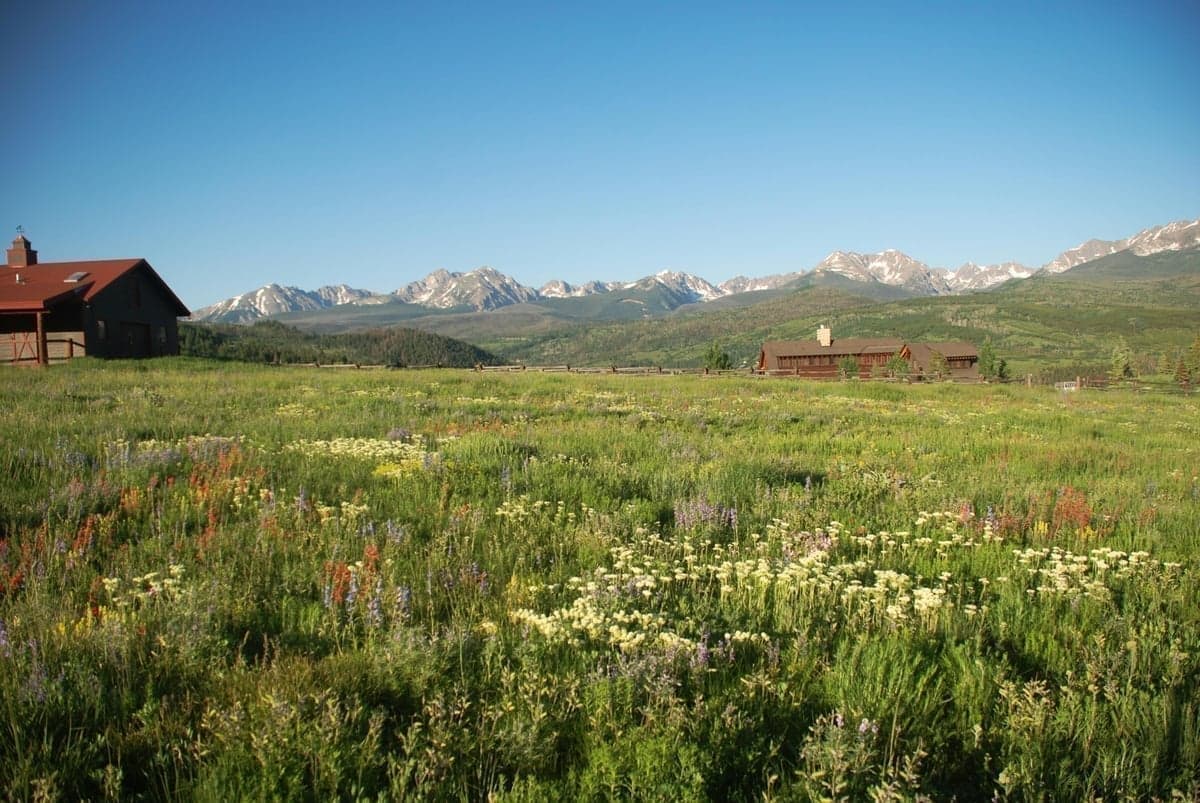
High country wildflowers near Silverthorne signal summer fishing season on the Blue River and surrounding streams
Frequently Asked Questions
Is there good fly fishing in Colorado?
Colorado has some of the best fly fishing in the US with 9,000+ miles of trout streams and dozens of Gold Medal waters. The Arkansas, South Platte, Gunnison, and Fryingpan rivers rank among the top destinations nationally.
What are the best months to fly fish in Colorado?
Mid-June through early August is prime season after spring runoff clears. Fall (September-October) offers excellent dry fly fishing with fewer crowds. Winter tailwater fishing on the South Platte and Fryingpan produces year-round.
What is a Gold Medal water in Colorado?
Gold Medal is Colorado Parks and Wildlife's designation for the state's best trout fisheries: waters that produce large trout at high densities. Colorado has about 322 miles of Gold Medal streams and 12 Gold Medal lakes.
Using RiverReports
RiverReports helps you time your Colorado trip:
- Check current flows against the ideal windows above
- Compare rivers: If your target is blown out, find alternatives in better shape
- Track trends: Rising, falling, or stable matters for trip planning
- Historical data: Understand typical conditions for your travel dates
Key Colorado pages:
Track all Colorado rivers in one place on RiverReports Colorado.