
Little River
Fishable
Flow~220 CFS
Trendfalling
Claritygood
Temp~62°F morning / ~66°F afternoon
Blue-winged Olive #14Cream Cahill #14-16Slate Drake #10-12Yellow Stonefly #14-16
| What | When | Key Numbers |
|---|---|---|
| Little River (Elkmont) | Year-round; best Mar-May, Oct-Nov | Most accessible; water temps 50-65°F; rainbows, browns, brooks above 3,000 ft |
| Abrams Creek | Apr-Oct (avoid summer crowds) | Best rainbow stream; limestone-fed pH 7.0+; larger average fish |
| Hazel Creek | Spring and fall (boat-only) | Bucket-list remote; hire Fontana shuttle ($) |
| Deep Creek | Apr-Jun, Sep-Nov | Best brown trout; wider water, easier wading |
| Brook trout | Above 3,000 ft elevation | Native species - catch and release ONLY |
| Water temps | Ideal: 50-60°F | Above 68°F: move higher or stop fishing |
| License | Either TN or NC valid parkwide | No trout stamp required |
Great Smoky Mountains National Park contains over 700 miles of fishable streams across 500,000+ acres straddling Tennessee and North Carolina. This is small-stream fishing at its finest - pocket water, plunge pools, and freestone runs holding wild, stream-bred trout. No stocking occurs in the park; every fish you catch was born in these waters.
The park protects the last significant populations of Southern Appalachian brook trout, the only trout species native to these southern Appalachian mountains. Rainbow and brown trout were introduced in the early 1900s and now reproduce naturally throughout lower and mid-elevation waters.
What makes the Smokies special isn't trophy fish - you won't find 20-inch trout here regularly. The draw is wild fish in wild water, hundreds of miles of streams to explore, and the chance to catch native brook trout in their ancestral home. A good day means a dozen 7-10 inch fish on dry flies in one of the most beautiful settings in the East.
There's something about stepping into the shade of a rhododendron tunnel, feeling cold water swirl around your legs, and watching wild trout dart from beneath mossy stones. The Smokies deliver that experience mile after mile.
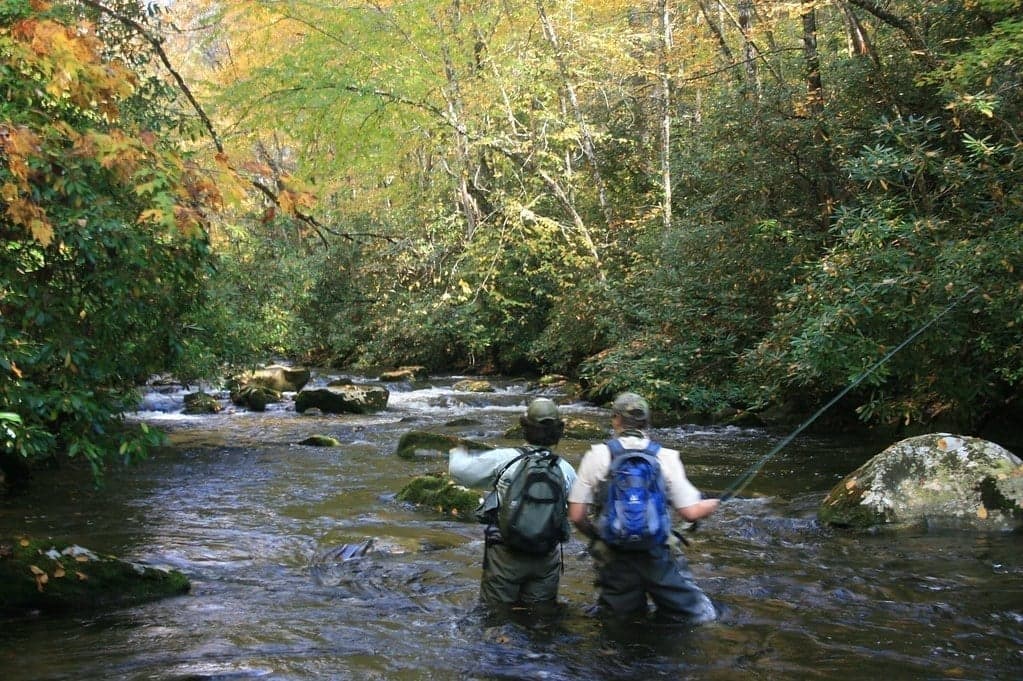
A typical Smokies stream - pocket water tumbling through rhododendron-lined banks with wild trout holding behind every boulder
The Southern Appalachian brook trout is the park's crown jewel - a distinct strain that has lived in these mountains for thousands of years. They survive only in the coldest, highest elevation streams above 3,000 feet, now occupying just 133 miles of their original range after logging devastated their habitat in the early 1900s.
Where to find them: Lynn Camp Prong of the Little Pigeon River, upper reaches of any major watershed, small tributaries above 3,000 feet.
Important: Possession of brook trout is prohibited throughout the park. All brookies must be immediately released. This isn't just a regulation - it's essential conservation of an irreplaceable native species.
What to expect: Small fish, typically 4-8 inches. Don't let size fool you - these fish are gorgeous with vivid orange bellies, blue-haloed red spots, and cream-colored fin edges. They're also aggressive and willing to eat a dry fly.
Southern Appalachian brook trout - vivid orange bellies, blue-haloed red spots, and cream-colored fin edges distinguish this native species
Rainbows are the most abundant and commonly caught trout in the park. They thrive throughout low and mid-elevation streams and are the bread-and-butter fish of Smokies fly fishing.
Where to find them: Little River (especially near Elkmont), lower Abrams Creek, Oconaluftee River, Deep Creek - essentially any accessible water below 3,000 feet.
What to expect: Most rainbows run 6-10 inches. Fish over 12 inches are a good catch. They readily take dry flies during hatches and nymphs when nothing's rising.
Browns are the park's largest trout and the target for anglers seeking bigger fish. They were introduced alongside rainbows and now reproduce naturally, with some individuals reaching 2+ feet by switching to a diet of smaller fish.
Where to find them: Deep Creek near Bryson City is famous for browns. Cataloochee Creek on the park's east side offers excellent brown trout water with room to cast. Lower Little River holds larger browns in deeper pools.
What to expect: Browns are warier than rainbows and often feed at low-light periods. Streamer fishing during fall and winter can produce the park's largest trout.
The most popular and accessible fishing in the park. Little River Road parallels the stream from Sugarlands Visitor Center to Elkmont Campground, providing numerous pullouts and easy walk-in access.
GPS: Elkmont Campground trailhead: 35.6651°N, 83.5819°W
Why fish here: Variety - rainbows dominate the lower stretches, browns inhabit deeper pools, and brook trout appear in upper tributaries above 3,000 feet. The water is diverse, with pocket water, long runs, and plunge pools.
Access: Park at pullouts along Little River Road. Elkmont Campground puts you right on the water - sites D1, D3, D4, D6 and E1, E3, E5, E7, E9 are directly on the river. Site F8 is the most sought-after riverside site - it sits off by itself right on the water. The Little River Trail extends upstream from Elkmont for miles of backcountry fishing.
Water temps: 50-65°F most of the year. Early morning summer temps run low 60s; by afternoon can approach 68°F in lower sections. Head upstream or fish higher tributaries if temps climb.
Crowds: This is the most heavily fished water in the park. Fish weekday mornings or hike upstream past the first mile for solitude. Treat the first couple miles as practice - the better fishing and fewer anglers start beyond.
Best seasons: March-May for hatches, October-November for fall color and reduced crowds.
If one stream in the Smokies approaches "perfect," it's Abrams Creek. Limestone springs feed the creek, raising the pH above typical acidic Smokies streams. The result: more aquatic insects, faster-growing trout, and larger average fish.
GPS: Abrams Falls Trailhead: 35.6006°N, 83.8392°W
Why fish here: The best rainbow trout fishing in the park. Fish here are noticeably bigger than other streams due to the richer food supply. Mayflies, caddis, stoneflies, and midges all thrive in the alkaline water.
Access: From Sugarlands Visitor Center, follow Little River Road to Cades Cove (~24 miles). Follow the Cades Cove Loop Road about 5 miles and turn right just past marker #10 onto the gravel road to Abrams Falls Trailhead. The best fishing is from the trailhead downstream to Abrams Creek Campground.
Cades Cove logistics: Know the gate times - the loop road opens and closes at specific hours (typically sunrise to sunset, varies seasonally). Summer traffic can be brutal - two-hour crawls around the 11-mile loop aren't unusual.
Pro tip: Wednesday and Saturday mornings in summer, the road closes to vehicles until 10am for cyclists and walkers. Camp the night before at Cades Cove Campground and fish Abrams while the road is car-free. You'll have the stream to yourself.
Lower Abrams: Below the campground, access becomes difficult and the stream transitions from trout to smallmouth bass water near Chilhowee Lake. Some anglers paddle upstream from the lake to fish the mouth - this is some of the best smallmouth water in the park.
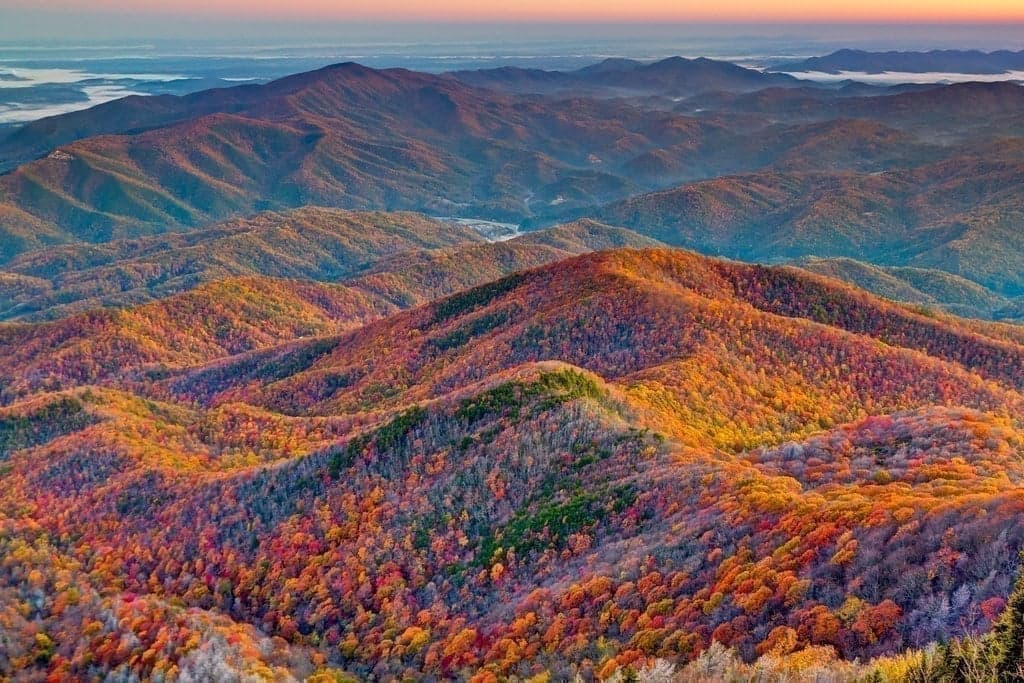
Abrams Creek watershed - limestone springs raise the pH and create the best rainbow trout habitat in the park
The premier brook trout destination on the Tennessee side. This tributary of Little River flows through high-elevation forest where native brookies still thrive.
Why fish here: Reliable brook trout above 3,000 feet. Beautiful stream with classic pocket water and small plunge pools.
Access: Lynn Camp Prong Trail from Tremont (end of Tremont Road off Little River Road). The hike gains elevation quickly - expect to work for your fish.
What to expect: Small fish (4-7 inches) in tight quarters. Short casts, stealth required. The fish are wild and willing but the water is small.
A large freestone creek known for its brown trout population. Deep Creek offers easier wading than many park streams and produces some of the park's bigger fish.
GPS: Deep Creek Campground: 35.4633°N, 83.4297°W
Why fish here: Best brown trout fishing in the park. The creek is wider than typical Smokies streams, giving you casting room. Good pocket water and deep runs hold fish throughout.
Access: Enter the park from Bryson City on Deep Creek Road. Multiple pullouts provide stream access. Deep Creek Campground sits right on the water. From the campground, trails extend upstream into prime water.
Summer note: Deep Creek is popular for tubing in summer - water gets crowded with recreational users mid-day. Fish early morning (before 9am) or late afternoon to avoid the crowds and warm water.
Best seasons: April-June before summer crowds, September-November when browns become aggressive pre-spawn.
The bucket-list stream of the Smokies. Hazel Creek is the wildest, most scenic trout water in the park - and the most difficult to access. This is where you go for solitude, history, and wild trout in true wilderness.
Why fish here: Unrivaled scenery and solitude. Excellent populations of wild browns and rainbows. Historic significance - abandoned settlements and old homesites line the creek. This is the stream Smokies anglers dream about.
Access: Boat only. Hire a shuttle across Fontana Lake to the Hazel Creek trailhead. Fontana Village Marina (828-498-2211) offers shuttle services. Plan for at least a full day; overnight backpacking trips are ideal - backcountry campsites available along the creek with reservations.
What to expect: Worth every bit of effort. Fish are wild and willing, pressure is minimal, and the surroundings are unforgettable. You'll pass abandoned cemeteries, old foundations, and feel the history of communities flooded when Fontana Dam was built.
Planning tip: Book shuttle well in advance for spring and fall weekends. Guided day trips to Hazel Creek available through Fly Fishing the Smokies (828-488-7665) - they handle boat logistics so you can focus on fishing.
The Oconaluftee flows from Newfound Gap at 5,048 feet down through Cherokee. Newfound Gap Road (US 441) parallels the river, providing the easiest fishing access on the North Carolina side.
GPS: Smokemont Campground: 35.5556°N, 83.3125°W | Oconaluftee Visitor Center: 35.5139°N, 83.3061°W
Why fish here: Convenient roadside access at multiple pullouts. Good variety of water types. The upper reaches near Smokemont hold brookies; lower sections offer rainbows and browns.
Access: Pull off at designated areas along US 441. Smokemont Campground provides good base access - you can wade right from camp. Oconaluftee Visitor Center area offers easy wading for beginners. Park boundary is near the visitor center - below that is Cherokee tribal land requiring a separate permit.
Tucked in a remote valley on the park's eastern edge, Cataloochee is often overlooked. That's good news for anglers willing to make the drive.
GPS: Cataloochee Valley entrance: 35.6167°N, 83.0978°W (from I-40 Exit 20)
Why fish here: Excellent brown trout water - some locals call it the best brown trout stream in the park. The lower sections are wider - more of a small river than a typical Smokies creek with room to cast. Less fishing pressure than western streams. Bonus: elk frequently graze in the valley meadows at dawn and dusk.
Access: Take I-40 to Exit 20, follow Cove Creek Road into the valley. The road is winding and partially unpaved - allow 45+ minutes from I-40. Multiple pullouts along Cataloochee Road.
Hurricane Helene impact (2024): Flooding from Hurricane Helene significantly damaged Cataloochee Valley infrastructure. The valley is closed until further notice. Check current conditions with the park (865-436-1200) before planning a trip.
Most anglers visit the Smokies for trout, but the park holds excellent smallmouth bass in lower-elevation streams. If you want a break from tiny brookies or the trout aren't cooperating, bass offer a different experience.
Smallmouth are native to the park and thrive in lower, warmer water than trout occupy.
Best locations:
When to fish: Spring spawning migration (mid-March to mid-June) and fall feeding migration (September through November) produce the best action. During migrations, smallmouth concentrate and fishing can be exceptional.
Regulations: Same as trout - 7-inch minimum, 5-fish daily limit combined with trout. Artificial flies and lures only.
Rock bass are abundant and aggressive. No size limit, 20-fish daily limit in addition to the trout/smallmouth limit. They're everywhere in lower elevation streams and will eat almost anything.
Want to catch a 20-inch trout in the Smokies? The park won't deliver that consistently - but the Cherokee Indian Reservation's trophy waters will.
The Qualla Boundary (Cherokee tribal land) maintains 2.2 miles of trophy trout water on the Raven Fork - fly fishing only, catch and release. This is where Smokies anglers go when they want big fish. Rainbow and brown trout regularly exceed 20 inches, with some fish in the 30+ inch range.
Permit required: You need TWO permits - a general tribal fishing permit ($10/day, $17/2-day, $27/3-day) PLUS a special trophy waters permit ($25 for 1-3 days, $75/year). Neither NC nor TN licenses work here.
Where to buy: Permits available at 23+ authorized vendors in Cherokee including Harrah's Cherokee Casino. Can also purchase online at fishcherokee.com.
Hours: One hour before sunrise to one hour after sunset.
Season: Trophy section open year-round (general waters close for two weeks before last Saturday in March).
Why fish here: This is your best shot at a trophy trout in the Smokies region. The tribal hatchery manages for quality, not quantity. Fish are well-educated but present - it's technical fishing with big rewards.
The Smokies fish year-round, but conditions vary dramatically by season.
The best dry fly fishing of the year. Aquatic insects hatch in numbers not seen at other times, and trout feed aggressively after winter.
Key hatches:
| Insect | Timing | Time of Day | Size | Pattern |
|---|---|---|---|---|
| Quill Gordons | Mar-Apr | Late morning to early afternoon | 12-14 | Quill Gordon dry, Pheasant Tail nymph |
| March Browns | Apr-May | Afternoon | 10-12 | March Brown dry, Hare's Ear nymph |
| Little Yellow Sallies | Mid-Apr - Jul | All day (most prolific hatch) | 14-16 | Yellow Sally dry, Yellow Stimulator |
| Caddis | Apr-Jun | Afternoon into evening | 14-16 | Elk Hair Caddis, X-Caddis |
| Blue-Winged Olives | Mar-May | Cloudy days, overcast afternoons | 18-20 | Parachute BWO, RS2 |
April is prime time - hatches overlap and fish are aggressive. It's not unusual to see fish rising to multiple insects simultaneously. May continues strong with options from lowest to highest elevations.
Where to fish: Start at mid-elevations in March, move higher as water warms. Deep Creek and Straight Fork Creek (NC side) or Little River above the sinks to Elkmont (TN side) are excellent April choices.
Hot, humid conditions push trout into cold pockets and early/late feeding patterns. Most anglers fish early morning before 10am or late evening.
Key flies:
Where to fish: Go high. Mid to upper elevations stay cooler. Brook trout water above 3,000 feet is often more comfortable than sweating in the valleys.
Summer challenge: Weeds grow thick, water levels drop, and fish spook easily in clear, low water. Stealth and early starts matter.
Many experienced anglers consider fall the best season. Crowds thin after Labor Day, water temperatures cool, and browns become aggressive as they stage for spawning.
Key hatches:
| Insect | Timing | Time of Day | Size | Pattern |
|---|---|---|---|---|
| Great Brown Autumn Sedge | Sep-Oct | Evenings (watch for egg-laying flights) | 10 | October Caddis, Stimulator |
| Slate Drakes | Sep-Oct | Afternoon | 10-12 | Isonychia Parachute, Slate Drake nymph |
| Blue-Winged Olives | Sep-Nov | Overcast afternoons | 18-22 | Parachute BWO, Sparkle Dun |
| Little Yellow Quills | Sep-Oct | Afternoon | 14-16 | Yellow Comparadun |
October is the favorite month for many - leaf color is spectacular, hatches continue, and fishing pressure drops. The crowds are gone, the leaves are on fire, and trout are feeding before winter. November through mid-month often provides the best dry fly action of the fall.
Streamer season: Fall and early winter are prime time for big browns on streamers. Strip Woolly Buggers and sculpin patterns through deep pools at dawn and dusk.
The toughest season. Fish slow down, hatches are minimal, and weather can be harsh. But the park is empty and trout still need to eat.
What works: Midges (18-24) on warmer afternoons. Small nymphs dead-drifted slowly. Patience.
December often fishes better than January-February. Mild December days can produce decent afternoon action. January and February are for the dedicated.
You don't need a 9-foot fast-action rod for the Smokies. Most fishing involves short casts in tight quarters.
Recommended: 4-weight rod, 7.5 to 8.5 feet, medium to slow action. This setup handles the small water, protects light tippets, and lets you feel the cast.
Why shorter? Overhanging rhododendron, tight casting lanes, and pocket water that rarely requires casts over 30 feet. A longer rod becomes a liability.
| Situation | Leader | Tippet |
|---|---|---|
| General fishing | 9ft 5X | 5X |
| Low/clear water | 9-12ft 6X | 6X-7X |
| Streamers | 7.5ft 3X | 3X-4X |
| Heavy nymphs | 7.5ft 4X | 4X |
Stock these: 4X, 5X, and 6X in 7.5 and 9 foot lengths. Carry extra tippet spools - you'll shorten leaders with fly changes.
Fluorocarbon offers advantage in very clear water but nylon works fine for most situations.
Dry flies (pack these in sizes 12-18):
Nymphs (sizes 12-18):
Streamers:
Local tip: Walk into Little River Outfitters or Smoky Mountain Angler and ask what's working. Their hand-tied flies are designed specifically for these streams.
The most effective rig for Smokies fishing. A high-floating dry fly with a beadhead nymph dropped 18 inches below covers both bases in the fast pocket water.
Setup: Tie your dry fly to the end of your leader. Add 18 inches of 5X tippet from the bend of the dry fly hook. Tie a beadhead nymph to the tippet.
Why it works: Smokies streams are pocket water - short drifts, complex currents, fish holding in small pockets. The dry-dropper gets flies in front of fish quickly and gives you two chances on every drift.
No need for tungsten - standard brass beadheads punch through the current fine under a dry fly.
Smokies trout are spooky. They see a lot of anglers and live in gin-clear water. Your approach matters as much as your fly selection.
Trout in the wild establish feeding stations - spots where current delivers food while providing cover from predators. Understanding where fish hold is half the battle.
Look for:
Key insight: Size and aggressiveness determine how good a feeding spot a trout can defend. The best lies hold the biggest fish.
Low, warm water requires extra care:
Great Smoky Mountains National Park has simple, consistent regulations:
Non-resident Tennessee license options:
| Type | Price |
|---|---|
| 3-Day All Species | $40.50 |
| 10-Day All Species | $61.50 |
| Annual All Species | $99 |
| Species | Daily Limit | Size Limit |
|---|---|---|
| Brook trout | 0 (catch and release only) | - |
| Rainbow trout | 5 (combined with brown/smallmouth) | 7 inches |
| Brown trout | 5 (combined with rainbow/smallmouth) | 7 inches |
| Smallmouth bass | 5 (combined with trout) | 7 inches |
| Rock bass | 20 | No limit |
Critical: Brook trout possession is prohibited. All brookies must be immediately released. Some streams are closed entirely to protect brook trout restoration areas - check park maps for closures.
Gatlinburg The most popular base, 4 miles from Sugarlands Visitor Center. Walk to restaurants and shops, then hit the park in minutes.
Townsend The "Peaceful Side of the Smokies." No strip of tourist shops, just a quiet town at the park's edge. Best access to Cades Cove and Abrams Creek.
Elkmont Campground Camp right on the water. The largest campground in the park with 220 sites. Sites D1, D3, D4, D6 and E1, E3, E5, E7, E9 are directly on Little River - site F8 is the most sought-after riverside site.
Bryson City A quiet mountain town with easy access to Deep Creek and Hazel Creek boat shuttles. Fly Fishing the Smokies operates their main shop here.
Cherokee Right at the park entrance on US 441. Gateway to Oconaluftee River fishing.
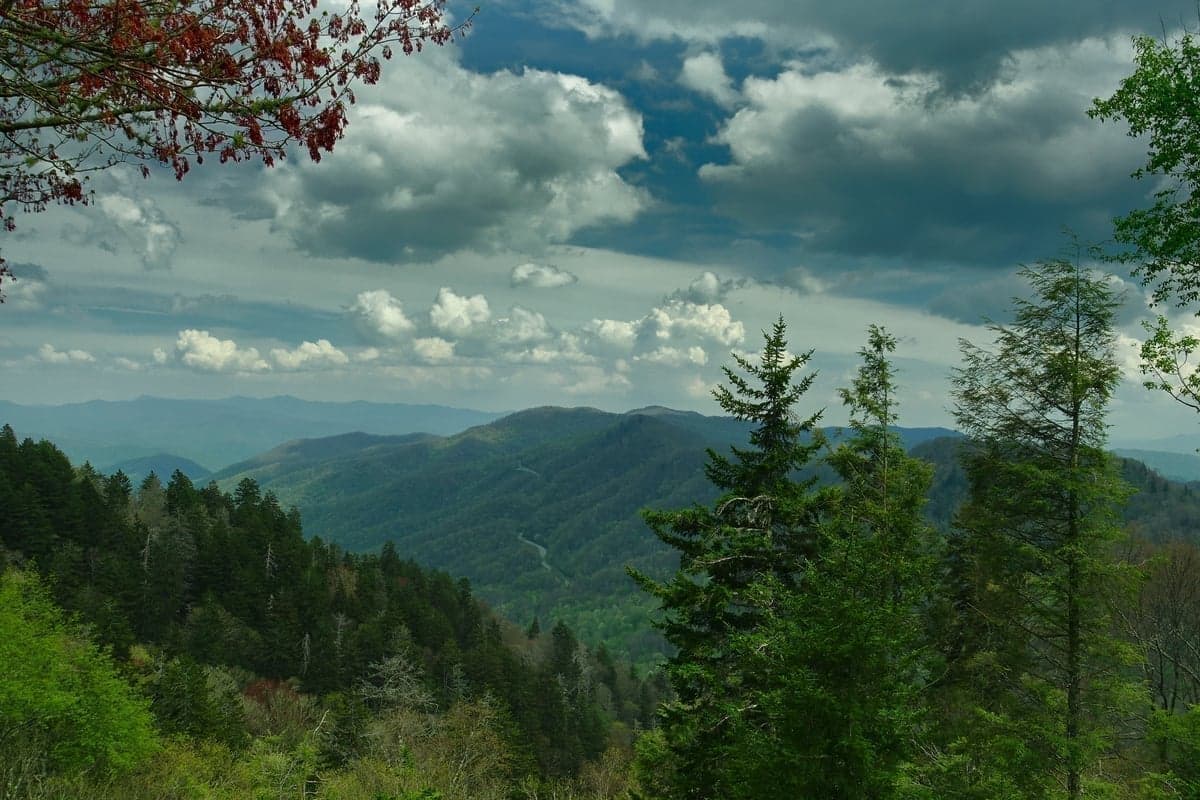
Great Smoky Mountains National Park - 522,000 acres of protected wilderness with over 700 miles of fishable streams
Smoky Mountain Angler (Gatlinburg) The oldest fly shop in Gatlinburg and only outfitter in town. Full service shop with Orvis, Simms, Sage, Redington gear. TWRA license agent. Rental equipment available.
Little River Outfitters (Townsend) Family-owned since 1994. The go-to shop on the "peaceful side" near Cades Cove. Strong local knowledge of Tennessee side streams. Excellent selection of hand-tied flies and fly tying materials.
Fightmaster Fly Fishing Nearly 30 years guiding the Smokies. Former Orvis Endorsed guide. Specializes in park streams - this is a guide who knows the water intimately.
Fly Fishing the Smokies (Bryson City & Gatlinburg) The largest guide service in the region with shops in both states. 7-time winner of Blue Ridge Outdoor Magazine's "Best of Blue Ridge" for guide service (2018-2022, 2024, 2025).
Hookers Fly Shop (Sylva area) Locally owned shop covering western North Carolina including park waters. Permitted to guide in the park and Nantahala National Forest.
The single most dangerous hazard for anglers. Smokies streams can rise feet in minutes during thunderstorms. The steep, narrow watersheds channel rain directly into creeks. In July 2022, the Porters Gap area received 8.7 inches of rain in several hours - the Middle Prong of the Little Pigeon rose so fast that 400 campers had to evacuate to high ground.
Warning signs: Darkening sky upstream, distant thunder, rising water level, water turning murky. If you notice any of these, get to high ground immediately. Don't wait to see if it's "really bad."
2024 note: Hurricane Helene caused significant damage in fall 2024, particularly on the North Carolina side. Cataloochee Valley remains closed until further notice. Check park conditions (865-436-1200) before any trip.
Black bears are common throughout the park - more per square mile than almost anywhere in the eastern United States. Secure food and scented items properly. Make noise when hiking to avoid surprise encounters. If you see a bear, give it space.
Venomous snakes (copperheads, timber rattlesnakes) inhabit lower elevations, especially rocky areas near water. Watch where you step and reach, particularly around log jams and rocky banks.
Afternoon thunderstorms are common in summer. Start early and plan to be off the water by early afternoon (1-2pm).
Temperature swings can be dramatic - pack layers even in summer. Higher elevation streams may be 15-20 degrees cooler than valley towns. A sunny 85°F in Gatlinburg can mean 65°F and drizzle at 5,000 feet.
As of March 2023, parking anywhere in the park for more than 15 minutes requires a parking pass. Purchase online at recreation.gov, at visitor centers, or at gateway town locations before entering. Daily pass: $5. Annual: $40.
If you're visiting the Smokies for the first time:
Day 1: Fish Little River from Elkmont upstream. Start at the campground area, hike the trail to find less-pressured water.
Day 2: Drive to Cades Cove early (avoid mid-day traffic). Fish Abrams Creek from the trailhead downstream. Budget time for the scenic drive.
Be honest with your expectations. The Smokies won't produce 20-inch fish regularly. A great day means:
If you need big fish, book a trip to the San Juan or Madison. If you want wild trout in wild water, tight casting to spooky fish, and the chance to catch a native brook trout in one of the last places they exist - the Smokies deliver.
Bringing the wrong rod. Leave the 9-foot 5-weight at home. A shorter 4-weight handles the tight quarters and rhododendron tunnels far better.
Fishing too fast. Smokies trout spook easily. The angler who catches fish is the one who approaches slowly, stays low, and watches before casting. Rushing through a run puts down every fish in it.
Ignoring water temperature. Summer afternoons can push water temps above 68°F in lower reaches. Trout become stressed and may not survive release. Carry a thermometer and move higher if needed.
Expecting western-sized fish. This isn't Montana. Adjust your expectations and appreciate what these streams offer: wild fish in wild water, native brookies found almost nowhere else, and hundreds of miles to explore.
Skipping the Cherokee trophy waters. If you want a legitimate shot at a 20+ inch trout in this region, the Raven Fork Trophy Section is your answer. The extra permit is worth it.
Not checking conditions. Hurricane damage, flash floods, and road closures can affect access. Call the park (865-436-1200) or check online before driving.
Books:
Online:
Maps:
The Smokies won't give you the biggest trout of your life. They'll give you something better: wild fish in wild water, streams that feel like they haven't changed in a hundred years, and the chance to catch native brook trout in one of their last strongholds on earth.
Stand in the shade of a rhododendron tunnel with cold water swirling around your legs. Watch a wild rainbow dart from beneath a mossy boulder to sip your dry fly. Hike into Lynn Camp Prong and catch a brookie with orange fins and blue-haloed spots - a fish whose ancestors lived in these mountains before humans ever arrived.
That's what the Smokies offer. And it's available 700 miles of streams at a time.
April is widely considered the best month for Smokies fly fishing. Multiple hatches overlap (Quill Gordons, March Browns, Little Yellow Sallies, caddis, and Blue-Winged Olives), creating the best dry fly fishing of the year. Water temperatures are in the ideal 50-60 degree range, and trout feed aggressively after winter. October is the second-best choice: crowds thin after Labor Day, brown trout become aggressive before spawning, and the fall color is spectacular. Avoid mid-summer unless you fish early morning, as water temperatures in lower elevations can exceed 68 degrees and stress trout.
You need either a Tennessee or North Carolina fishing license. Either one is valid throughout the entire park regardless of which side of the state line you are on. No trout stamp is required. Licenses are not sold inside the park, so purchase one in Gatlinburg, Townsend, Cherokee, or Bryson City before entering. If you want to fish the Cherokee Indian Reservation's trophy waters on Raven Fork, you need separate tribal permits (a general fishing permit plus a trophy waters permit), which are available from authorized vendors in Cherokee.
Bring a 4-weight rod in 7.5 to 8.5 feet, shorter than what most anglers use out west, because Smokies streams have tight casting lanes under rhododendron tunnels. For flies, a Parachute Adams (sizes 12-18) is the single best all-around pattern, covering multiple mayfly species. Add Elk Hair Caddis (tan and black), Yellow Stimulators for Little Yellow Sally hatches, Pheasant Tail and Hare's Ear nymphs (sizes 12-18), and a few Green Weenies for good measure. The dry-dropper rig (a high-floating dry with a beadhead nymph 18 inches below) is the most effective setup for Smokies pocket water.
Native Southern Appalachian brook trout survive in the park's coldest, highest-elevation streams above 3,000 feet. Lynn Camp Prong (accessed via the Tremont area on the Tennessee side) is the premier brook trout destination. The upper reaches of any major watershed will hold brookies if you hike high enough. These fish are small (typically 4-8 inches) but strikingly beautiful with vivid orange bellies and blue-haloed red spots. All brook trout must be immediately released; possession is prohibited throughout the park. This is essential conservation of an irreplaceable native species found in fewer than 133 miles of stream.
Weekly flow updates and fishing intel.
© 2026 RiverReports, Inc.