Quick Reference
| What | When | Key Numbers |
|---|
| Dry fly fishing (Holy Water) | Late April - October | 150-350 CFS ideal wading; flies only, catch-and-release |
| Hex hatch (night fishing) | Mid-June - early July | Size #6-8 patterns; biggest browns of the year |
| Steelhead (Foote Dam to Lake Huron) | March - May (peak), Oct - Nov | 7-mile run below Foote Dam |
| Fall salmon | September - November | Chinook, coho, and Atlantic salmon |
| Guided float trips | April - October | $400-600/day (1-2 anglers) |
| Fly shop | Old AuSable Fly Shop | On the river since 1936, Grayling |
| Fly shop | Gates AuSable Lodge | Full-service lodge, guides, restaurant |
GOOD
Late-summer cooldown has the Au Sable fishing well across the system. Grayling at 855 CFS with water temp 60°F — a significant drop from 64°F last week as a cold front moved through; flows stable and elevated above the historical median (647 CFS) but clarity remains excellent thanks to spring-fed character. Mio at 1,050 CFS (down 7% in 24 hours, 10-day average 946 CFS) and receding toward ~919 CFS by month's end — firmly in the ideal float range. The cooldown is the headline: water temps in the low 60s have eliminated any fish handling concerns and opened the full-day fishing window. Trico spinner falls remain the morning marquee (7-10 AM). Isonychia hatches strengthening evenings as the fall transition accelerates. Terrestrials and caddis producing midday through afternoon. Orvis reports dry-dropper mornings and blind-fishing size 12-16 dries evenings as top tactics. Small streamers and mouse patterns after dark — brown trout pre-spawn aggression building. Partly sunny skies, air temps near 79°F. Floating is the primary access method on both sections; edge-wading only on protected banks at these flows.Flow855 CFS
Trendstable
Claritygood
Temp60°F
Trico Spinner #22-24 on 6X tippet during morning spinner falls (7-10 AM) — still the top early pattern. Foam Ant #14-16 and Beetle #14-16 midday through afternoon — terrestrials remain a top producer. Foam Hopper #10-12 along grassy banks in afternoon sun. Fall Isonychia #12-14 strengthening evenings — the marquee evening hatch. Elk Hair Caddis #14-16 evenings and searching through the day. Attractor dries #12-16 blind-fished evenings — Orvis reports this as a primary tactic right now. BWOs #18-20 on overcast afternoons. Pheasant Tail #14-18 and Hare's Ear #14-16 nymphs morning and midday. Dry-dropper rigs (attractor dry #14-16 with Pheasant Tail dropper) the most versatile setup
Flow1,050 CFS
Trendfalling
Claritygood
Temp63°F
Streamers producing through the morning and into midday with the cooler water: Woolly Bugger #4-8 (olive/black)Sculpzilla #4Zoo Cougar #4-6Sex Dungeon #2-4. Mouse patterns after dark — pre-spawn browns hitting aggressively. Trico Spinner #22-24 morning spinner falls in slower pools. Foam Ant #14-16 and Beetle #14-16 midday terrestrial game. Foam Hopper #10-12 and Chernobyl Ant #8-12 along banks in afternoon. Fall Isonychia #12-14 strengthening evenings. Elk Hair Caddis #14-16 evenings and searching. Small streamers (#6-8) swung through runs during afternoon cloud cover. Stimulator #10-14 as a searching dry
🎣 TACTICS RIGHT NOWDry FlyThree-act day: Trico spinner falls from 7-10 AM (size #22-24 on 6Xfish to rising pods in flats and pools)terrestrials from midday through afternoon (Foam Ant #14-16Foam Hopper #10-12 along grassy banksBeetle #14-16 in shade)and fall Isonychia #12-14 strengthening evenings as the primary evening event. BWOs #18-20 appearing on overcast afternoons — a new addition to the daily menu. Blind-fishing attractor dries #12-16 in the evenings is a highlight of this late-August window per Orvis reports. Water temps at 60°F (Grayling) and ~63°F (Mio) mean the full-day dry fly window is wide open — these are ideal trout comfort temps with active surface feeding throughout the day.
NymphWith flows at 855-1050 CFSfish are holding in predictable late-summer lies: shaded banksdeeper poolsspring seepsand behind structure. Pheasant Tail #14-18Hare's Ear #14-16and Rainbow Warrior #16-18 remain the workhorses. Euro rig or indicator setup. Trico nymphs #22-24 fished in the film during spinner falls can outperform dries when fish are keyed on drowned spinners. With water temps in the low 60s across the systemnymphing is productive all day on both sections — no thermal restrictions. Dry-dropper rigs are the most versatile setup right now: an attractor dry (#14-16) with a Pheasant Tail dropper covers a lot of water. The Orvis report confirms dry-dropper mornings as a primary tactic.
StreamerThe late-August cooldown has the streamer window at its widest since spring. Morning remains prime (dawn to 11 AM)and with Mio water temps around 63°Fstreamers now produce well into midday and through the afternoon under cloud cover. Woolly Bugger #4-8 (olive/black)Sculpzilla #4Zoo Cougar #4-6Sex Dungeon #2-4. Mouse patterns after dark — brown trout pre-spawn aggression is unmistakableand mousing is producing well. At 1050 CFS and fallingthe Mio section provides ideal float conditions with excellent boat control. Target shaded bankslogjamsand undercuts. Small streamers (#6-8) swung through runs are a sleeper tactic during afternoon cloud cover. Brown trout pre-spawn feed-up is accelerating — streamers will only get better through September and October.
FORECASTThe summer-to-fall transition is well underway and the late-August cooldown has the system in excellent shape. Flows are elevated but receding: Grayling stable at 855 CFS, Mio at 1,050 CFS and falling (forecast to reach ~919 CFS by August 30). Water temps have dropped into the low 60s across the system — the best thermal conditions since early June. No fish handling concerns. Fall Isonychia are strengthening evenings, mouse patterns are producing after dark, and brown trout pre-spawn aggression is building noticeably. Tricos and terrestrials will continue through early September. BWOs are starting to appear on overcast days — a sign the fall hatch cycle is shifting into gear. Days are getting shorter with dark by about 9:15 PM. Looking ahead, September brings October Caddis, Mahogany Duns, strengthening BWOs, and escalating brown trout aggression as the spawn approaches. Salmon runs below Foote Dam typically begin in September. Streamer fishing on the Mio-to-McKinley stretch gets better every week as water cools further. Book fall float trips now — October dates fill fast.
Overview
The Au Sable River holds a place in American fly fishing that few rivers can match. This is where Trout Unlimited was born in 1959, when sixteen anglers gathered at George Griffith's streamside home near Grayling and decided that wild trout mattered more than hatchery stockers. That decision shaped conservation policy across the country, and the river still reflects it: cold, clear water fed by some of the most stable groundwater springs in North America, flowing through 476 miles of streams that support self-sustaining populations of brown, brook, and rainbow trout.
The mainstream runs 129 miles from Grayling east to Lake Huron near Oscoda, passing through the Huron National Forest and picking up the North Branch and South Branch along the way. The upper sections are narrow, wading-friendly trout water. The middle sections open up into bigger, deeper runs better fished from a drift boat. Below Foote Dam, the river transforms into a Great Lakes tributary carrying steelhead, Chinook salmon, coho, and a newer Atlantic salmon run.
What makes the Au Sable special goes beyond its size or species list. The river's spring-fed character keeps water temperatures in the sweet spot for trout even in July, and the sand-and-gravel bottom supports hatches that rival anything in the West. The Hexagenia hatch in late June is the river's signature event: the largest mayfly in North America, emerging after dark, pulling trophy brown trout to the surface in a way that feels closer to hunting than fishing.
Grayling and the surrounding small towns are the gateway to Au Sable River fishing, with fly shops, restaurants, and lodging within walking distance of the water
Location and Access
The Au Sable originates near the town of Grayling in Michigan's northern Lower Peninsula and flows east to Lake Huron. Grayling sits at the intersection of I-75 and M-72, roughly 3.5 hours north of Detroit and 2.5 hours north of Lansing.
Getting There
- From Detroit/Metro area: I-75 North to Grayling (Exit 254), about 3.5 hours
- From Grand Rapids: US-131 North to M-72 East, about 3 hours
- From Traverse City: M-72 East, about 1 hour
- Nearest airports: Cherry Capital Airport (TVC) in Traverse City, or MBS International near Saginaw
Key Access Points (Upstream to Downstream)
Upper Mainstream (Grayling to Wakeley Bridge):
- AuSable River Park (City Park), Grayling
- Burton's Landing (start of Holy Water)
- Louie's Landing
- Keystone Landing
- Stephan Bridge
- Wakeley Bridge (end of Holy Water)
Middle Mainstream (Wakeley Bridge to Mio):
- White Pine Campground
- Connor's Flat
- Rainbow Bend Campground
- McMaster's Bridge
- Parmalee Bridge/Campground
- Camp Ten Bridge
Lower Mainstream (Mio to Oscoda):
- Comins Flats
- McKinley Bridge
- Alcona Park
Below Foote Dam:
- Foote Dam site (off Rea Road)
- Foote Site Boat Launch
- Whirlpool Angler Access
- Oscoda near river mouth
A detailed access map covers roughly 120 miles of waterway from Grayling to Lake Huron.
River Sections
The Au Sable system has distinct personalities depending on where you fish. Understanding which section matches your skill level and target species is the key to a good trip.
The Holy Water (Burton's Landing to Wakeley Bridge)
This is the most famous stretch: nearly nine miles of flies-only, catch-and-release water that set the standard for special regulation trout streams in the eastern U.S. The river here is 30-50 feet wide, knee to thigh deep in most places, with a sand-and-gravel bottom broken by pools, runs, and riffles.
Regulations: Artificial flies only, catch-and-release. Year-round fishing is open but check Michigan DNR regulations for current seasonal rules.
What to expect: Excellent dry fly water. Consistent hatches from April through October. Wading is straightforward on the gravel bottom, though the current can push you around at higher flows. This stretch gets pressure, especially during major hatches, so weekday fishing or early mornings pay off.
Access: South Down River Road and North Down River Road parallel the river and provide multiple walk-in spots.
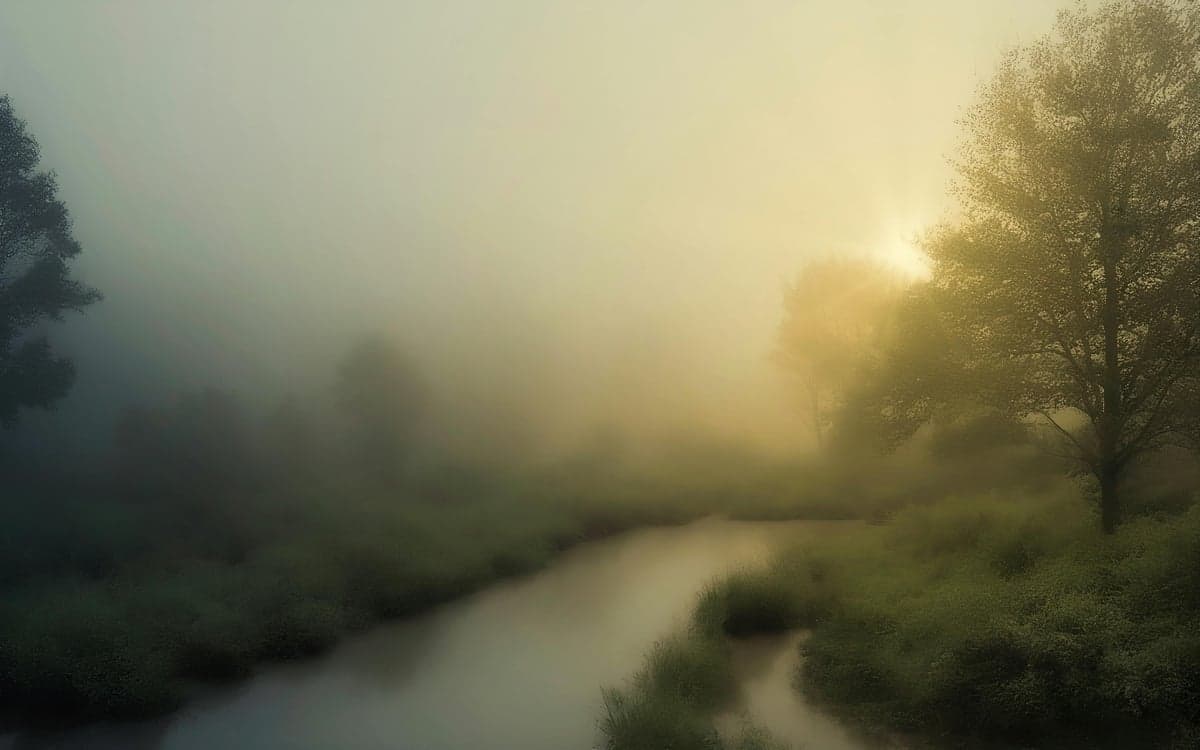
Morning mist lifting off the Au Sable, a common sight on this spring-fed river where cool water meets warm summer air
Wakeley Bridge to Mio
Below the Holy Water, regulations shift to general trout rules (check current Michigan fishing regulations for specific limits and size restrictions). The river gets wider and deeper, with more pronounced pools and less consistent gravel bottom. This is where the character starts to shift from small-stream wading to bigger water.
The stretch from Wakeley Bridge to McMaster's Bridge still offers decent wading in spots, but be cautious with depth. Below McMaster's, the river widens further through Mio Pond.
Highlight: This is prime Hex hatch territory. The deeper pools and slower currents create ideal Hexagenia habitat, and the biggest brown trout in the system feed here after dark during the late-June emergence.
Mio to McKinley Bridge (The "Big Water")
This is trophy water. The mainstream below Mio Dam runs 100-150 feet wide with an average depth of about 4 feet. It holds more large brown trout than most other sections, but wading is difficult and sometimes dangerous. A drift boat is the best way to fish this stretch, and hiring a guide is the smartest way to learn it.
Best methods:
- Streamer fishing from a drift boat (spring and fall)
- Hex hatch night fishing (June-July)
- Nymphing deep runs year-round
According to Streamside Guide Service, this lower mainstream section holds more trophy trout than all other Michigan rivers combined.
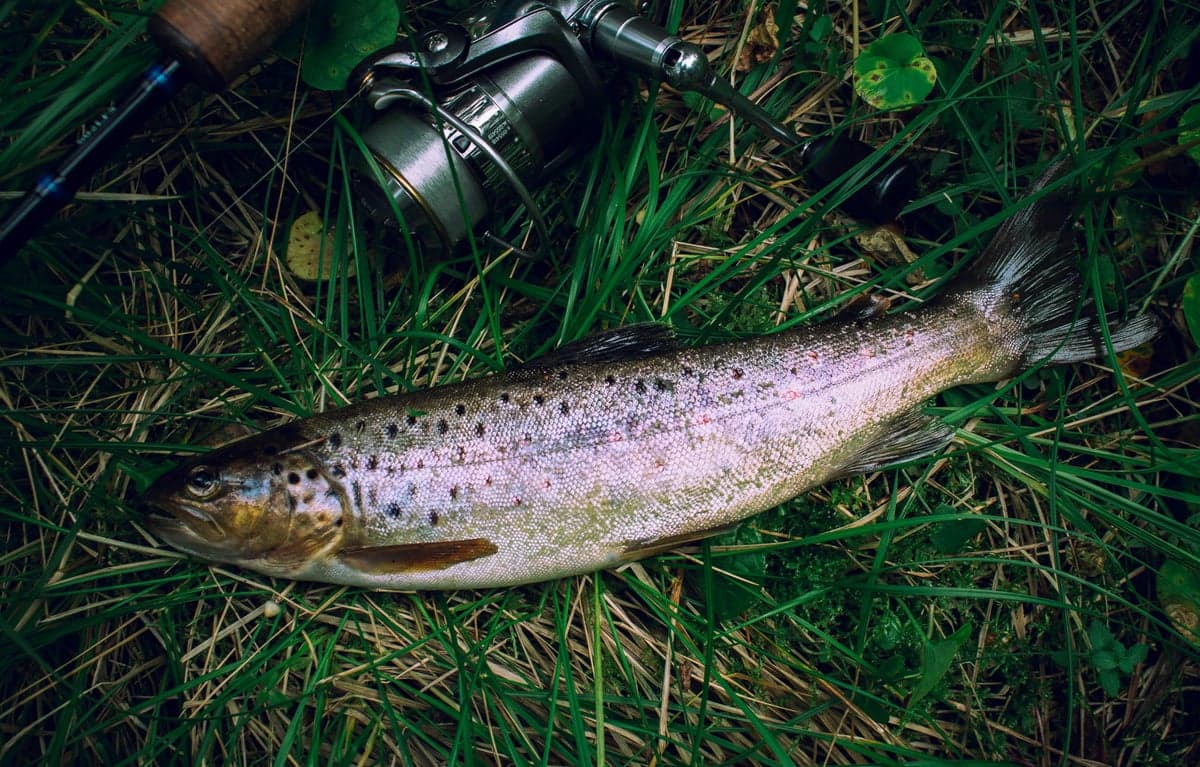
A healthy brown trout from the Au Sable. The river's cold, spring-fed water and strict regulations produce quality fish throughout the system
South Branch
The South Branch flows north from the Houghton Lake area and meets the mainstream below Wakeley Bridge. The Mason Tract Wilderness, a 4,541-acre preserve donated by auto industry pioneer George Mason in the 1950s, protects some of the best water. Mason's conservation ethic helped inspire the founding of Trout Unlimited on these same banks.
Regulations: Artificial flies only, no-kill from Chase Bridge downstream to Lower High Banks.
Character: Narrower and more intimate than the mainstream. Easier wading. Brook, brown, and rainbow trout. Excellent hatches in a more secluded setting. If you want solitude during Hex season, start here.
North Branch
The North Branch flows southeast through the town of Lovells and joins the mainstream downstream of the South Branch. It features slick pools, cedar-lined banks, and quality brown and brook trout.
Regulations: Artificial flies only from Sheep Ranch downstream to the mainstream confluence. Daily possession limit of 2 trout (no more than 1 trout 18 inches or greater), minimum 10 inches for brook and rainbow, 18 inches for brown trout.
Character: A classic small-stream dry fly fishery. The North Branch Outing Club, established in the early 1900s, sits on this water and offers guided trips with access to less-pressured stretches.
The final seven miles transform the Au Sable into a Great Lakes tributary. Big water, strong current, and seasonal runs of steelhead, Chinook, coho, and Atlantic salmon. Streamside Guide Service reports steelhead are present eight months of the year, with peak runs from March through May.
Warning: This water is large and by some standards dangerous. Boat access is strongly recommended. Wade with extreme caution if at all.
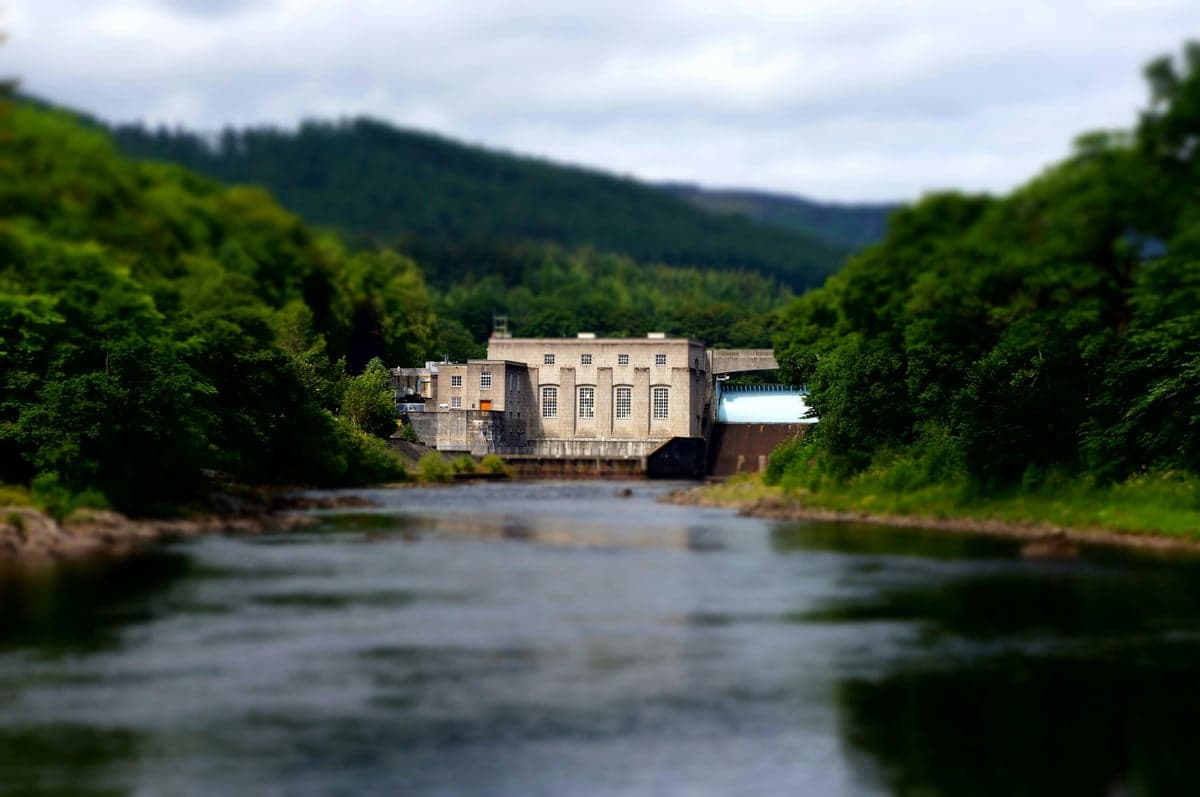
The Au Sable's six hydroelectric dams divide the river into distinct sections, each with its own character and fishery
Hatches and Fly Selection
The Au Sable's groundwater-fed temperatures and clean substrate produce some of the most diverse insect hatches in the Midwest. Matching the hatch matters here more than on most rivers.
Hatch Calendar
| Month | Major Hatches | Key Patterns |
|---|
| March - April | BWOs, Blue Quills, Red Quills, Hendricksons, early caddis | BWO Parachute #18-20, Hendrickson #12-14, Elk Hair Caddis #14-16 |
| May | Grey Drakes, Brown Drakes, March Browns, Sulphurs | Grey Drake #10-12, Brown Drake #10, Sulphur Parachute #16 |
| June | Hexagenia, Isonychia, Light Cahills, Yellow Sallies, stoneflies | Hex pattern #6-8, Isonychia #12, Yellow Sally #14 |
| July | White Flies, Tricos, terrestrials | Trico Spinner #22-24, Foam Ant #14, Beetle #14 |
| August - Sept | Tricos, terrestrials, October caddis | Trico #22, Hopper #10, Elk Hair Caddis #12 |
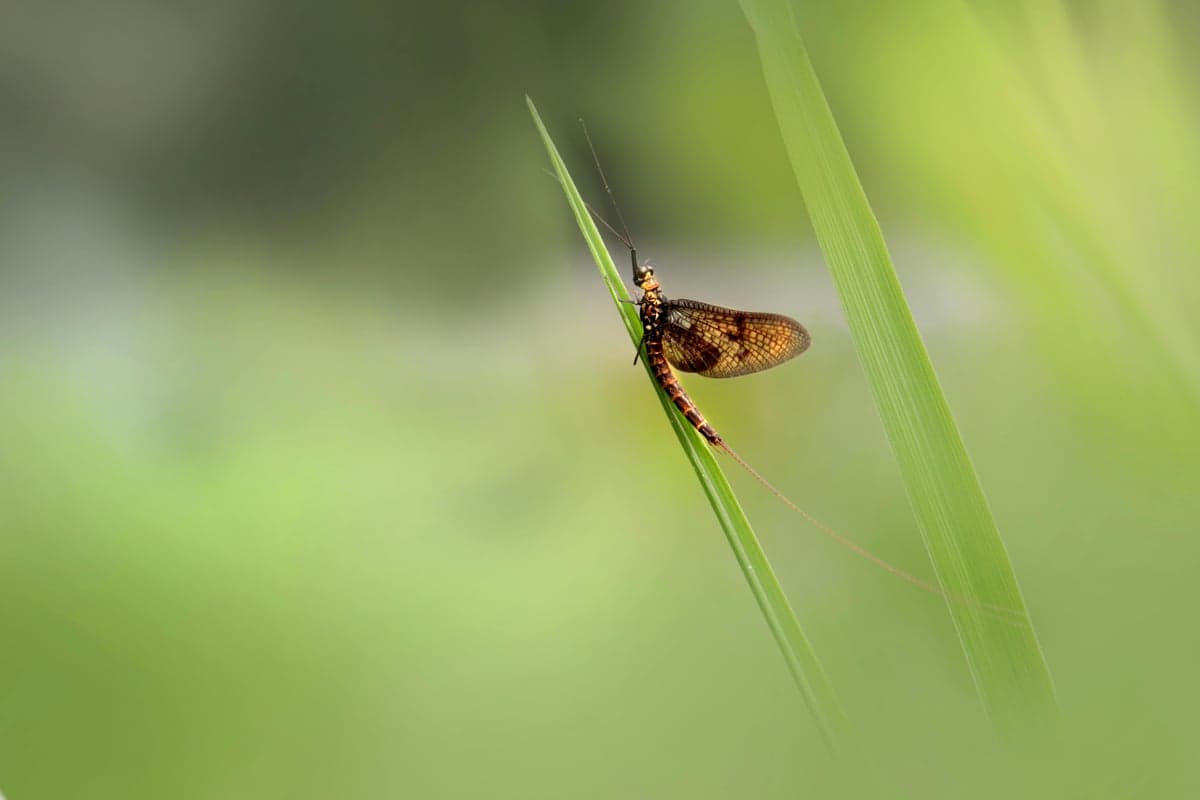
Mayflies are the main event on the Au Sable. The river supports hatches from tiny Tricos to the massive Hexagenia, North America's largest mayfly
The Hex Hatch: What You Need to Know
The Hexagenia limbata hatch is the Au Sable's marquee event, and it deserves its own section. These mayflies are massive (body length up to 2 inches, sometimes locally called "Michigan Caddis" despite being a mayfly) and they emerge after dark, typically from mid-June through early July.
When: Peak activity happens between 10 PM and 1 AM. Plan to be on the water before dark and set up in a known holding spot.
Where: The best Hex water runs from the lower Holy Water downstream through the Wakeley-to-Mio stretch. Deeper pools with silty substrate are prime.
How: Use large dry flies (#6-8), strong tippet (2X-3X), and be prepared to cast to sound rather than sight. When a big brown takes a Hex off the surface, the splash is unmistakable. This is one of the few situations where you'll cast a size 6 dry fly in complete darkness and genuinely expect a 20-inch fish.
Practical tips:
- Arrive before dark and get your bearings. Know where the deep holes and sweepers are.
- Bring a headlamp with a red light setting to preserve night vision.
- Practice your cast during daylight. You will not be able to see your backcast.
- Go with a guide your first time. Gates AuSable Lodge and the Au Sable River Guide Service both run dedicated Hex trips.
Essential Fly Box
A well-stocked Au Sable box should include:
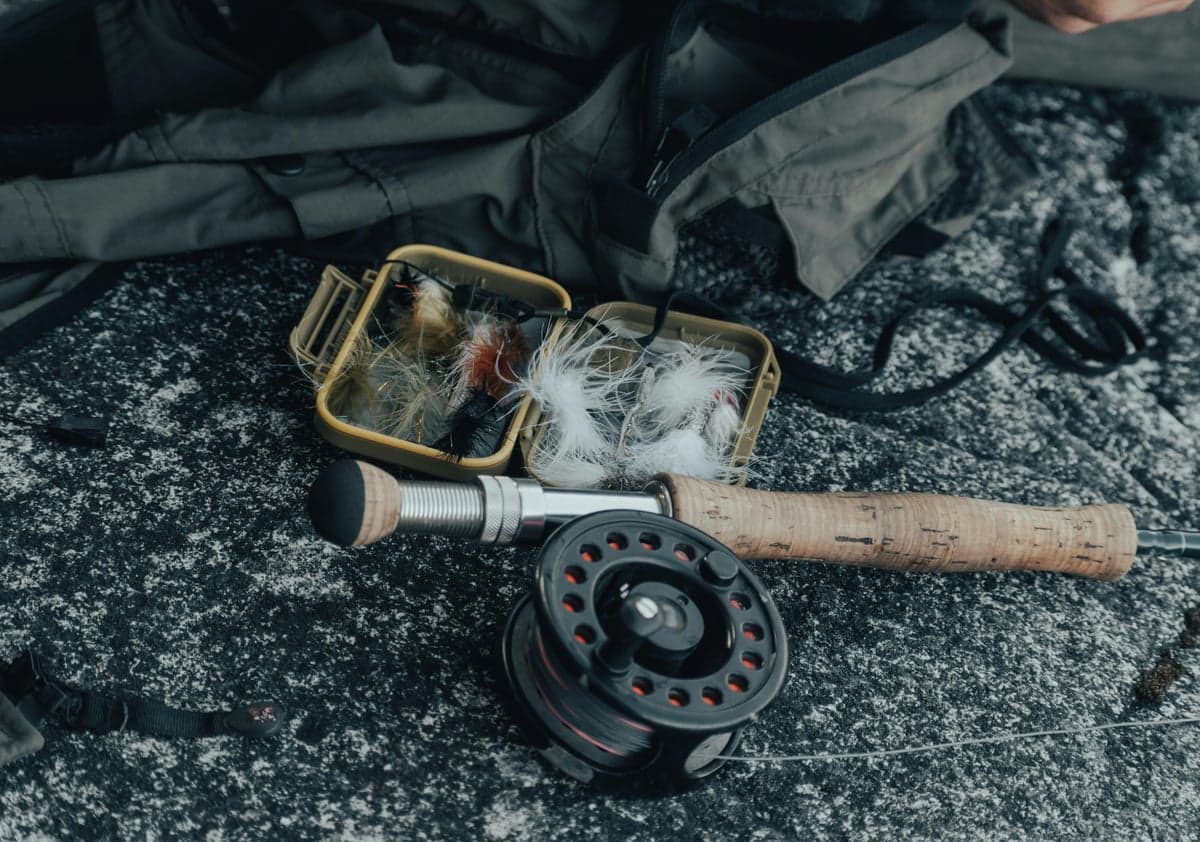
Dry Flies: Parachute Adams #12-22, Elk Hair Caddis #8-16, Hendrickson #12-14, BWO Parachute #18-20, Yellow Sally #12-16, Hex #6-8, Trico Spinner #22-24, Chernobyl Ant #8-12
Nymphs: Pheasant Tail #12-20, Beadhead Hare's Ear #12-20, Rainbow Warrior #14-22, Pat's Rubber Legs #4-12, Copper John #14-18
Streamers: Beadhead Woolly Bugger #2-6 (olive, black, white), Sculpzilla #4, Zoo Cougar #4-6
The right gear for the Au Sable: a 9-foot 5-weight rod covers most situations, with a selection of dry flies, nymphs, and streamers to match the diverse hatches
Flow Windows
The Au Sable's spring-fed character keeps flows more stable than most freestone rivers, but you still need to pay attention to conditions.
Au Sable at Grayling (USGS 04136000)
| Condition | CFS Range | What It Means |
|---|
| Low | 100-150 | Very wadeable but fish are spooky. Long leaders, light tippet. |
| Ideal wading | 150-350 | Sweet spot for the Holy Water. Easy footing, active fish. |
| High but fishable | 350-500 | Pushy current. Stick to inside bends and shallower runs. |
| Too high | 500+ | Usually after heavy rain. Muddy, poor visibility, stay off the water. |
Au Sable at Mio (USGS 04136500)
| Condition | CFS Range | What It Means |
|---|
| Low | 500-700 | Wadeable in some spots but drift boat still preferred. |
| Ideal float | 700-1,200 | Prime drift boat conditions. Good streamer water. |
| High | 1,200-2,000 | Fishable from a boat but be careful. Strong current. |
| Too high | 2,000+ | Stay off the river. |
Track real-time flows on RiverReports before planning your trip. The spring-fed nature of the upper river means it recovers from rain events faster than you might expect, sometimes clearing within 24-48 hours.
Seasons
Spring (March - May)
Spring is when the Au Sable wakes up. Steelhead runs below Foote Dam peak in March through May. On the upper river, the first real dry fly action comes with Hendricksons in late April, building through Grey Drakes and Brown Drakes in May. Water temperatures climb from the upper 30s into the 50s.
Best approach: Nymph early season, transition to dry flies as hatches build. Streamer fishing from drift boats is excellent in April and May on the Mio-to-McKinley stretch.
Summer (June - August)
This is the Au Sable's prime time. The Hex hatch dominates June into early July, and the river fishes well all day with a mix of caddis, sulphurs, and terrestrials. Water temperatures stay in the mid-50s to low 60s thanks to groundwater inputs, keeping trout active when rivers elsewhere in the Midwest are too warm.
Best approach: Dry fly fishing dominates. Plan evening and night sessions during Hex season. Smallmouth bass fishing picks up on the Alcona-to-Foote stretch in July and August.
Fall (September - November)
Many locals consider fall the best time to fish the Au Sable. Crowds thin after Labor Day, brown trout become aggressive ahead of the spawn, and salmon runs draw fish (and anglers) to the lower river. October caddis hatches provide some of the last dry fly action of the year.
Best approach: Streamers for big browns on the mainstream. Egg patterns and nymphs below Foote Dam for salmon and steelhead. The Mio-to-McKinley section fishes exceptionally well in October.
Fall on the Au Sable brings golden foliage, fewer crowds, and aggressive brown trout. Many regulars consider September and October the best fishing of the year
Winter (December - February)
Winter fishing is legal on some sections with catch-and-release, artificial-lure regulations. It is cold, challenging, and rewarding for those who make the effort. Steelhead below Foote Dam are available in early winter. Trout on the upper river slow down but still eat nymphs, especially during the warmest part of the day.
Best approach: Small nymphs (midges, BWOs) fished deep and slow. Dress for the weather. Felt-soled waders are treacherous on ice, so use studded rubber soles.
Paddling and Floating
The Au Sable was voted Michigan's most popular river for paddling by the Michigan DNR in 2015, and for good reason. The upper sections offer gentle currents through northern forest scenery, while the lower sections provide longer wilderness float options.
Paddling Sections
Grayling to Stephan Bridge (13 miles, ~4 hours): The most popular day float. Easy Class I water through the AuSable State Forest. Sand and gravel bottom, gentle current. Perfect for beginners and families.
Grayling to Wakeley Bridge (18 miles, ~5.5 hours): A longer day trip that takes you through the Holy Water. Slightly more committed but still easy paddling.
Wakeley to McMaster's Bridge (26 miles total from Grayling, ~8.5 hours): A full-day or overnight option. The river widens and the surroundings become more remote.
Mio to Oscoda (71 miles): Multi-day wilderness float through the Huron National Forest. Six hydroelectric dams require portages. The stretch from Mio to Oscoda is more remote and scenic but slower moving with significant flat water between dams.
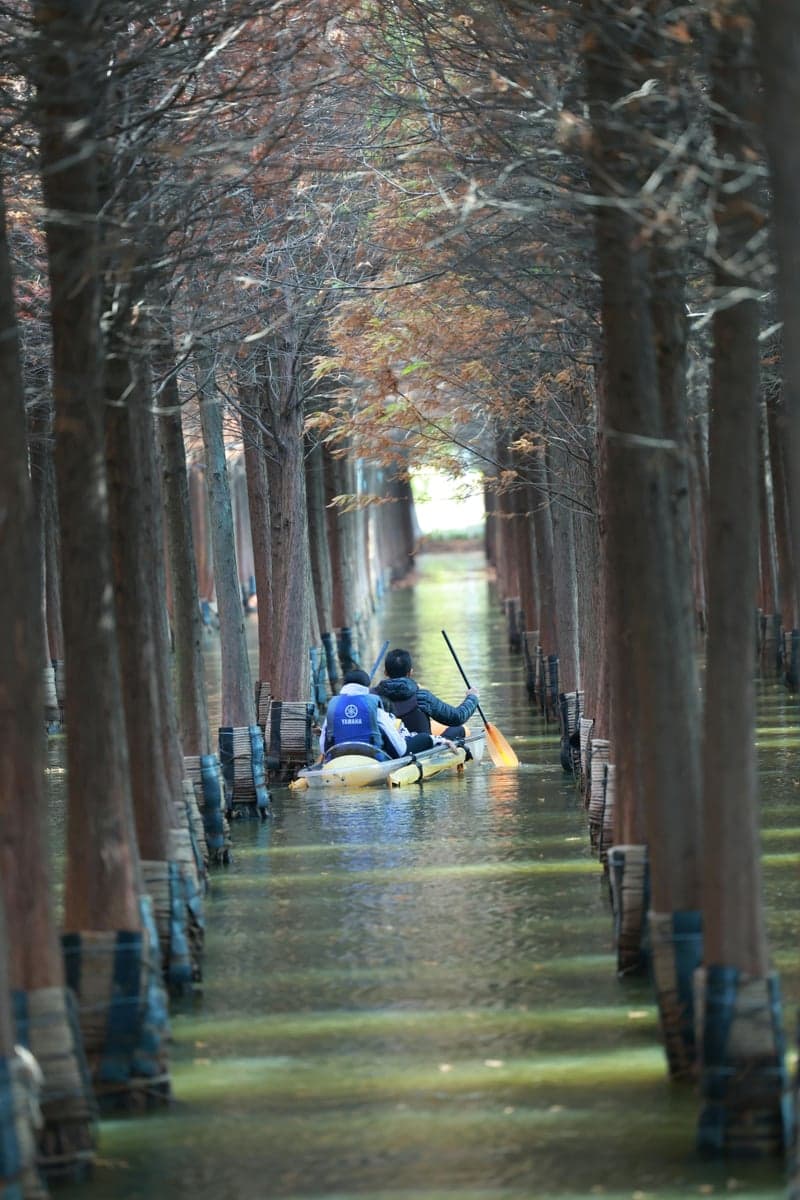
Canoeing the Au Sable through fall colors. The upper sections from Grayling offer gentle, family-friendly paddling through the state forest
Canoe Liveries and Rentals
Several outfitters in Grayling provide canoe and kayak rentals with shuttle service:
The AuSable River Canoe Marathon
Every July since 1947, the AuSable River Canoe Marathon sends competitors on a 120-mile, non-stop overnight race from Grayling to Oscoda. It is the longest non-stop canoe-only race in North America and carries over $55,000 in prizes. The LeMans-style start (competitors sprint four blocks through downtown Grayling carrying their canoes before launching) draws thousands of spectators.
Conservation and History
The Birth of Trout Unlimited
In 1959, sixteen fishermen gathered at the streamside home of George Griffith near Grayling. They were frustrated with Michigan's put-and-take stocking program, which dumped hatchery-raised trout into rivers that already supported wild populations. That meeting produced Trout Unlimited, now the nation's largest coldwater conservation organization.
George Mason, a president of Nash-Kelvinator (later American Motors Corporation), had donated 1,400 acres along the South Branch in the 1950s before TU's founding. Now known as the Mason Tract, it remains some of the best-protected trout water in the state and helped catalyze the conservation movement that produced TU. By 1962, TU had persuaded the Michigan DNR to curtail put-and-take stocking and begin managing for wild trout and healthy habitat.
The Grayling Story
The town of Grayling was named for the Arctic grayling, a native coldwater fish that once thrived in the Au Sable. Logging operations in the late 1800s destroyed habitat through siltation and warming, and the Michigan grayling was extinct by the early 1900s. The loss of the grayling became a cautionary tale that helped motivate the conservation movement on the river, including TU's founding decades later.
Wild and Scenic Designation
In 1984, 23 miles of the Au Sable mainstream from Mio Pond to Alcona Pond received National Wild and Scenic River designation under Public Law 98-444. The designation recognized five outstanding values: fish, history, recreation, scenery, and wildlife. The stretch is managed by the Huron-Manistee National Forest (U.S. Forest Service).
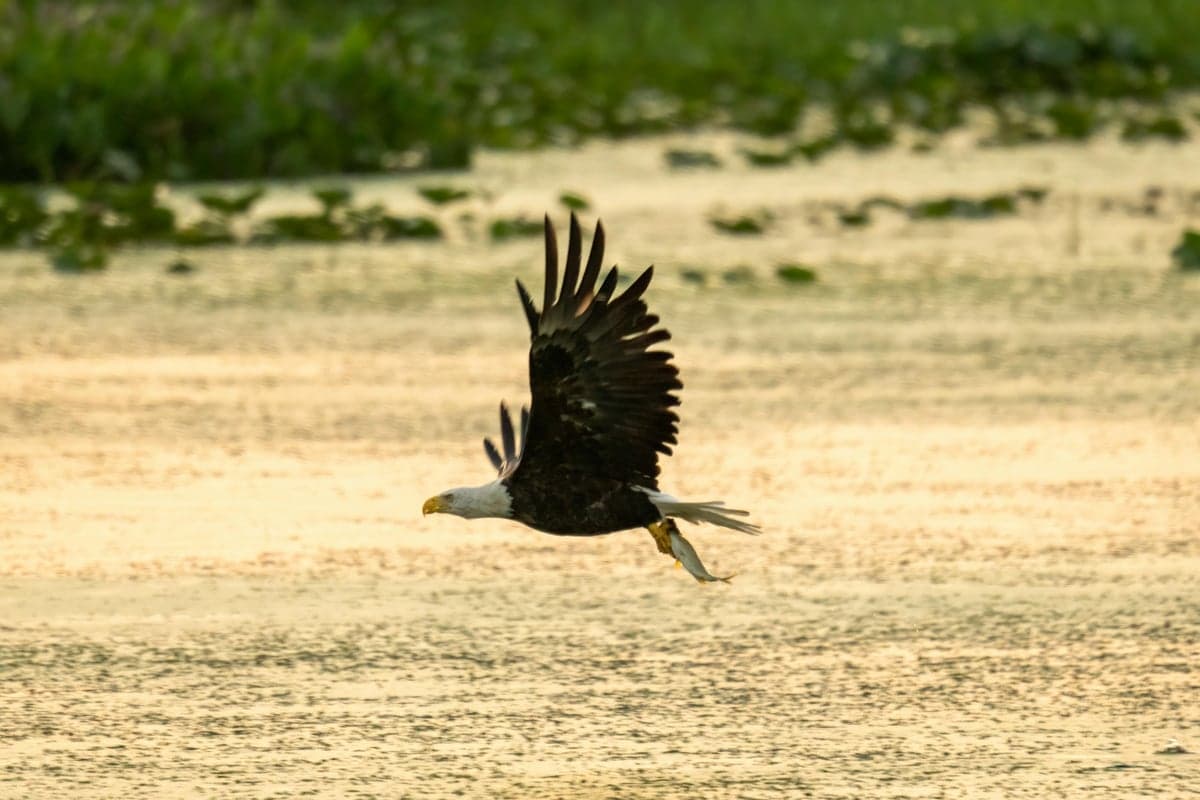
Bald eagles are a common sight along the Au Sable, especially on the Wild and Scenic designated stretch through the Huron National Forest
Fly Shops, Guides, and Lodging
Fly Shops
Old AuSable Fly Shop has operated on the banks of the Au Sable since 1936, making it one of the oldest fly shops in the country. Full pro shop, guide service, and a lodge that sleeps six above the shop.
Gates AuSable Lodge combines a well-stocked fly shop with riverside lodging and a noted restaurant. Their guide staff is one of the most experienced on the river.
Drake's Fly Shop in downtown Grayling offers flies, gear, and current condition reports.
Skip's Sport Shop is a full-service outdoor outfitter with fishing supplies and general outdoor gear.
Guide Services
Guided float trips typically run $400-600 per day for 1-2 anglers. Book Hex trips by March, as June dates fill fast.
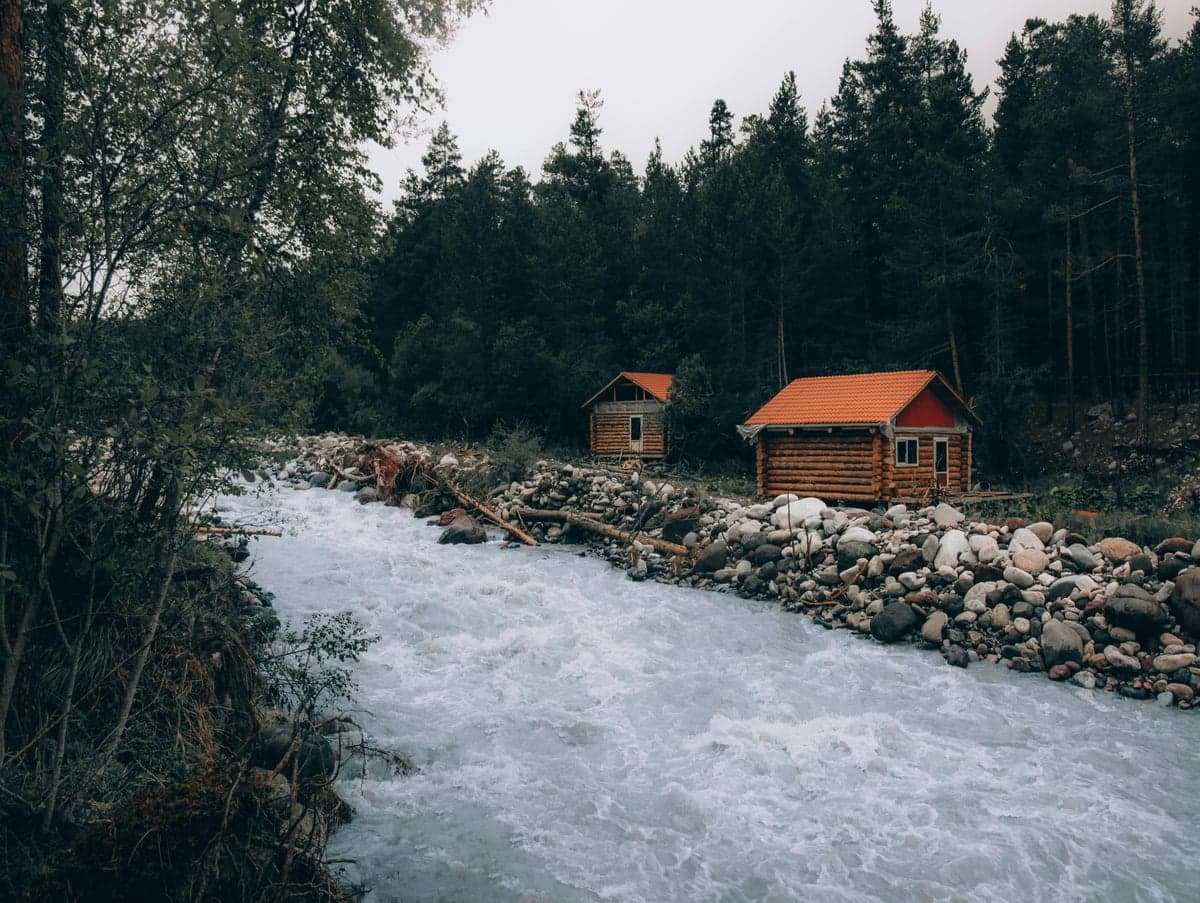
Riverside cabins and lodges near Grayling put you within minutes of the best fishing water
Lodging
Grayling is the primary base for Au Sable fishing, with options from riverside lodges to campgrounds:
- Gates AuSable Lodge for the full fly-fishing lodge experience
- Old AuSable Fly Shop Lodge for a small-group river house
- North Branch Outing Club for historic lodge access on the North Branch
- Hartwick Pines State Park and AuSable State Forest campgrounds along the river for tent and RV camping
- Hotels and vacation rentals in Grayling, Mio, and Roscommon
Hazards and Safety
The Au Sable is generally a safe river, but a few things warrant attention:
Wading hazards: The sand bottom can be deceptive. What looks shallow sometimes drops into deep pools with soft substrate. Use a wading staff, especially on unfamiliar water. Below Mio, the river is large enough that wading can become dangerous at higher flows.
Hydroelectric dams: Six dams divide the river between Grayling and Lake Huron. Stay well upstream of dam structures, and follow posted portage routes when paddling.
Night fishing: If you fish the Hex hatch, know the water before it gets dark. Scout during daylight, mark hazards mentally, and bring a headlamp with a red light. Trees and sweepers are harder to see and easier to walk into at night.
Cold water: The river's spring-fed nature means water temperatures stay cool even in summer. Hypothermia is possible during extended wading, especially early and late season. Neoprene waders or a good wading layer make a difference in spring and fall.
Lower river caution: The Foote Dam to Lake Huron stretch is large, fast, and unforgiving. Boat access is strongly recommended. If you wade, use extreme caution and go with someone who knows the water.
Gear Recommendations
Rod: A 9-foot, 5-weight covers 80% of Au Sable fishing. Bring a 3-weight for delicate dry fly work on the North or South Branch, and a 7- or 8-weight for streamers on the big water or steelhead/salmon below Foote Dam.
Line: Floating line for most situations. A sink-tip line for streamer fishing from a drift boat.
Leader/Tippet: 9-foot tapered leaders. 4X-5X for most dry fly work, 6X for Tricos, 2X-3X for Hex patterns and streamers.
Waders: Breathable waders with rubber-soled boots (studded for the slick lower river). The sand bottom of the Holy Water is forgiving, but rubber soles grip better on the gravel sections.
Night fishing gear: Headlamp with red light, hemostats on a zinger (you'll be releasing fish in the dark), and a heavy tippet spool you can find by feel.
Frequently Asked Questions
Where is the best place to fish the Au Sable River?
The Holy Waters section near Grayling offers catch-and-release, flies-only fishing for wild brown and brook trout. For trophy browns, fish the stretch from Mio to McKinley with streamers. Below Foote Dam targets steelhead runs in spring and fall.
When is the Hex hatch on the Au Sable River?
The Hexagenia limbata hatch runs mid-June through early July, typically peaking the last week of June. Hatches happen after dark. Fish size #6-8 patterns on 2X-3X tippet. Water temps crossing 65°F signal the hatch is imminent.
How deep is the Au Sable River?
The Au Sable averages 2-4 feet deep with some holes reaching 30 feet in the lower sections. The Holy Waters near Grayling are wadeable at typical flows of 150-350 CFS. Check current depth and flow conditions on RiverReports before heading out.
What is the best time to fly fish the Au Sable?
Spring (late April-May) brings BWO and Hendrickson hatches. Summer peaks with the Hex hatch in late June. Fall offers salmon runs below Foote Dam and excellent streamer fishing. Track seasonal flows on RiverReports to time your trip.
Using RiverReports
Track Au Sable River flows on RiverReports to plan your trip and pick the right section for current conditions.
Before your trip: Check flows at the Grayling gauge for Holy Water conditions, and the Mio gauge for the big water downstream. Compare current flows to historical averages for the date. If flows are near the historical median, conditions are likely normal.
During hatches: Rising water temperatures in May and June are a strong signal for hatch timing. When you see water temps crossing into the mid-50s, the major hatches are approaching.
Choosing your section: Low flows (under 200 CFS at Grayling) mean ideal wading in the Holy Water but potentially sluggish fishing elsewhere. Higher flows push fish into predictable feeding lanes and make the Mio-to-McKinley section come alive for drift boat streamer fishing.
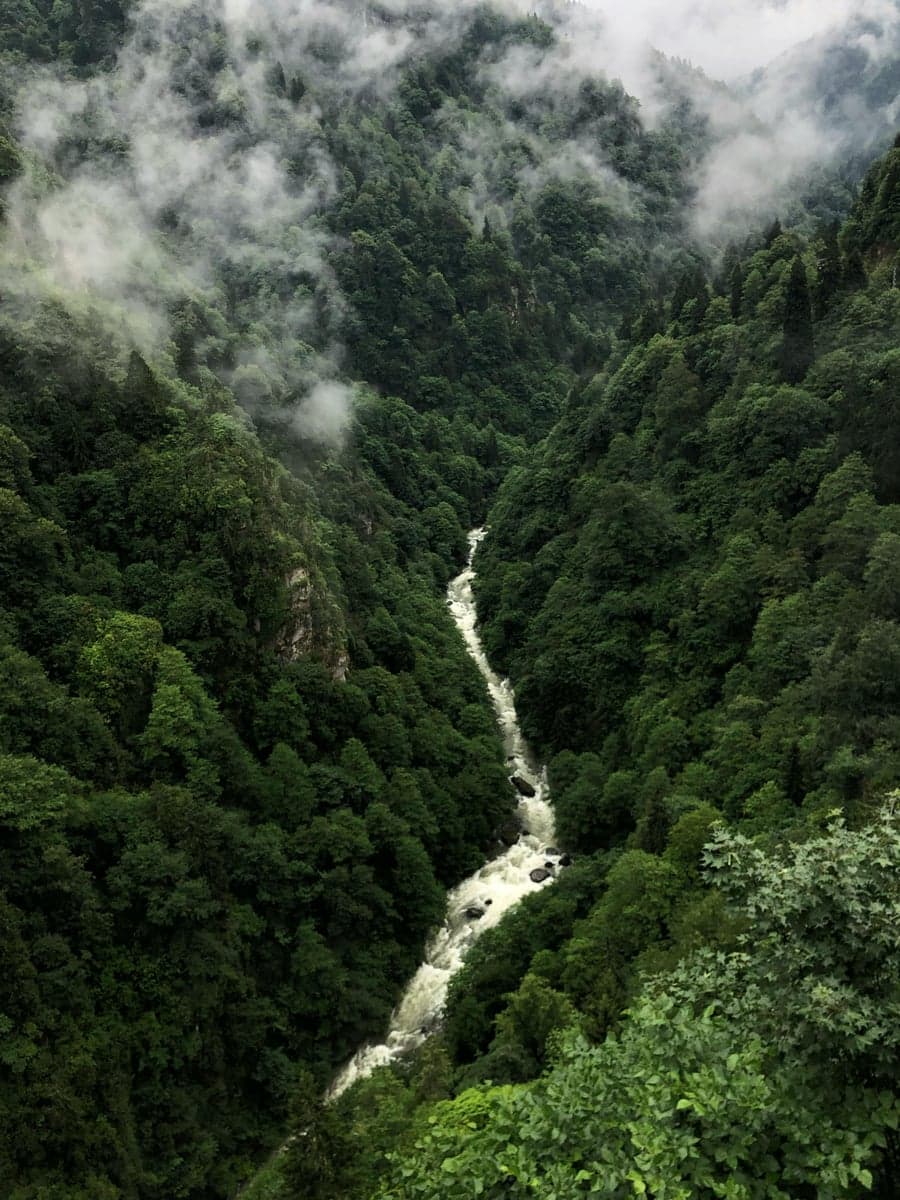
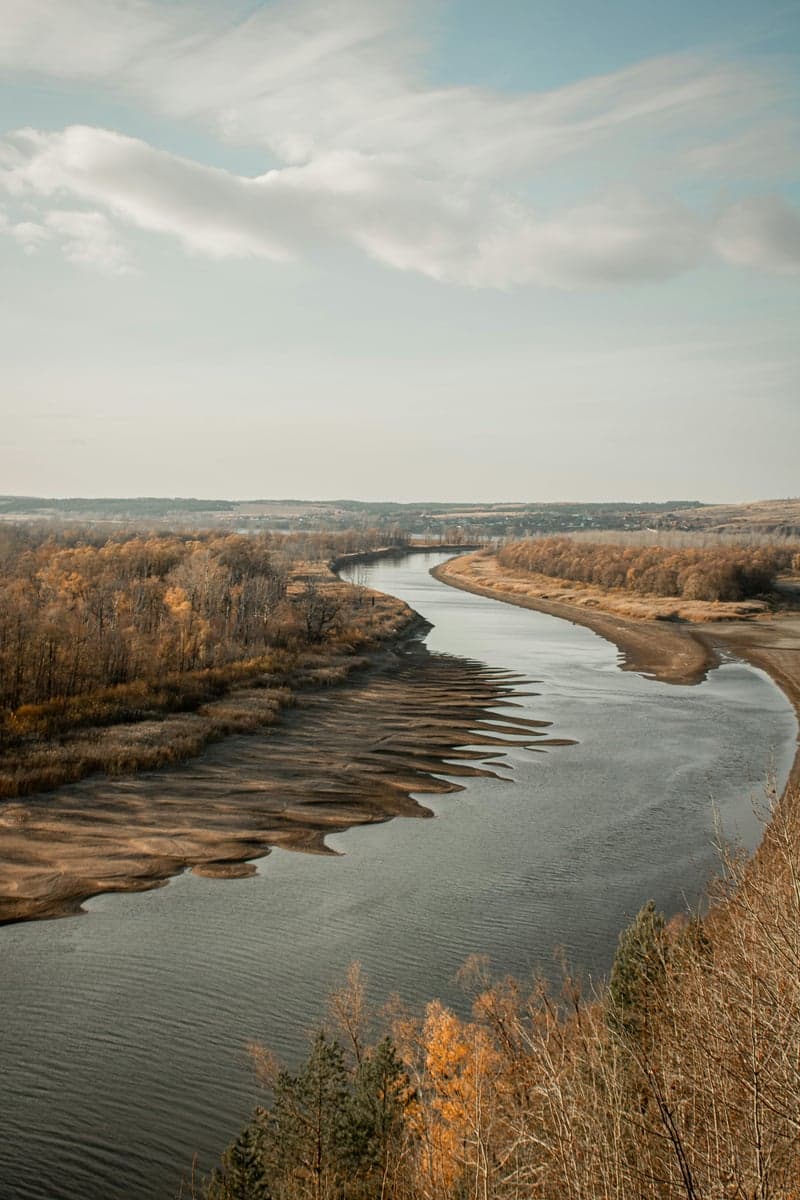
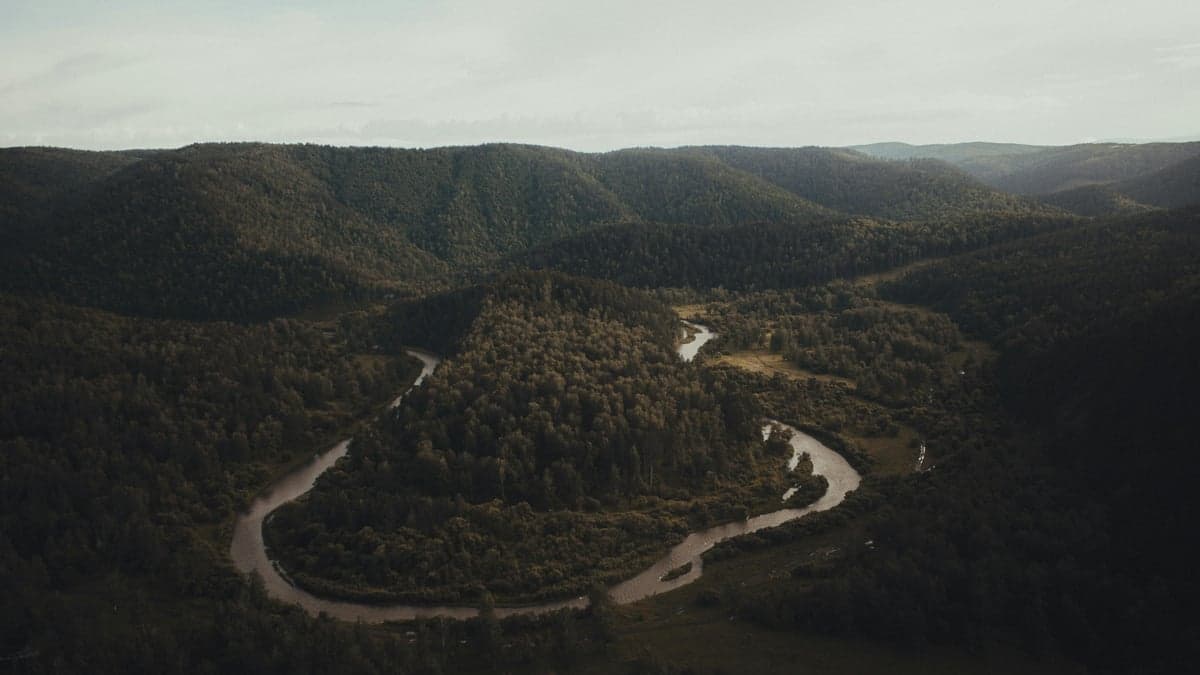
The Au Sable winds through miles of protected forest. Track flows on RiverReports to pick the right day and section