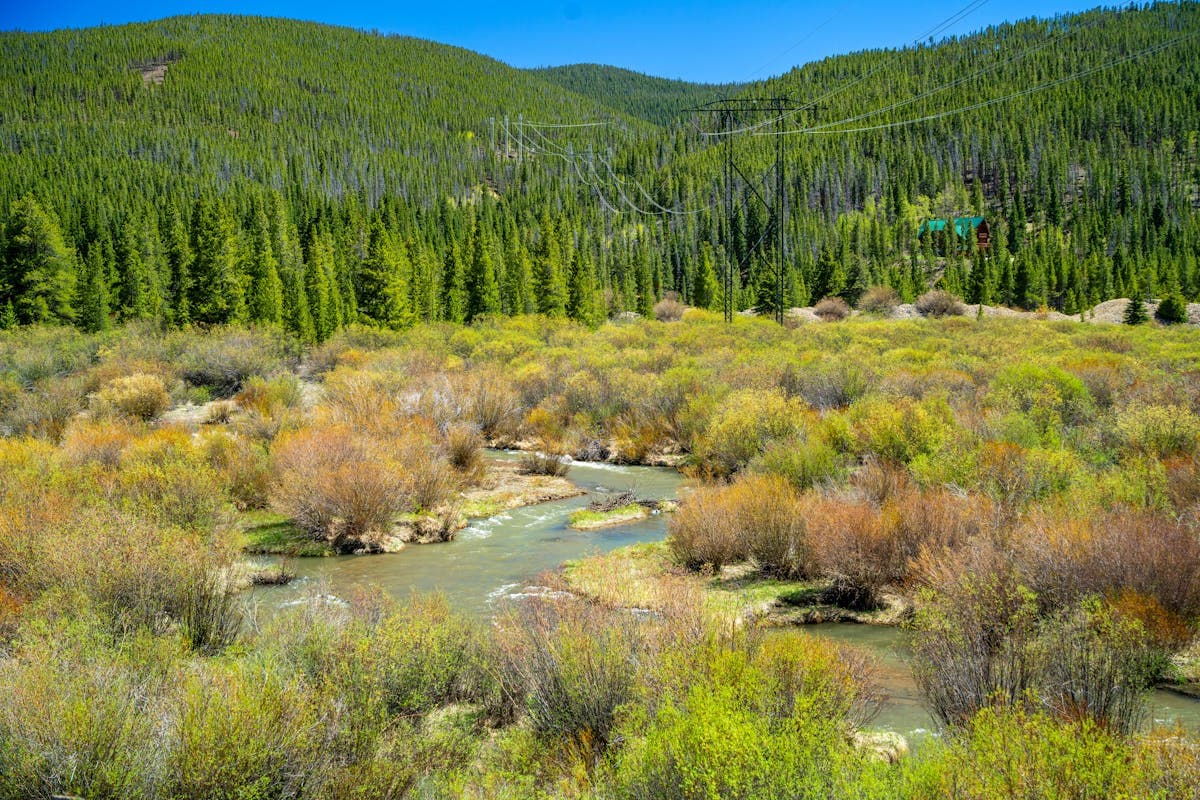
South Platte at Deckers
Fishable
Flow~130 CFS
Trendfalling
Clarityclear with heavy algae
Temp52-64°F
Trico Spinner #20-24Parachute PMD #16-18Elk Hair Caddis #14-18Chubby Chernobyl #8-14
| What | When | Key Numbers |
|---|---|---|
| Cheesman Canyon | Year-round (avoid summer weekends) | 75-150 CFS ideal; 1.5 mi hike in; catch-and-release only |
| Deckers | Year-round | 80-200 CFS ideal; roadside access; 2 fish limit (16" min) |
| Dream Stream | May-Oct best | 80-150 CFS; state park fees apply; big fish potential |
| Eleven Mile Canyon | Year-round | 75-200 CFS ideal; $5 day pass; upper 2 mi catch-and-release |
| Blue River (Silverthorne) | Year-round | 50-150 CFS ideal; Mysis shrimp patterns; Gold Medal water |
| Clear Creek | Apr-Oct | 200-400 CFS; 20+ miles of access along I-70 |
| Guided trips | Book 2-4 weeks ahead | $475-795/day; Blue Quill Angler (Evergreen) |
| Fly shop | South Platte Fly Shop | (719) 687-0432; Woodland Park |
If you're visiting from out of state or just getting into tailwater fishing, start at Deckers, specifically the Trumbull pullouts area, about 2 miles downstream from Deckers Bridge.
Why Deckers first:
Your first trip checklist:
Once you're comfortable sight-nymphing at Deckers, graduate to Cheesman Canyon. The hike filters out crowds, but the fish are significantly harder. Save it until your small-fly game is dialed in.
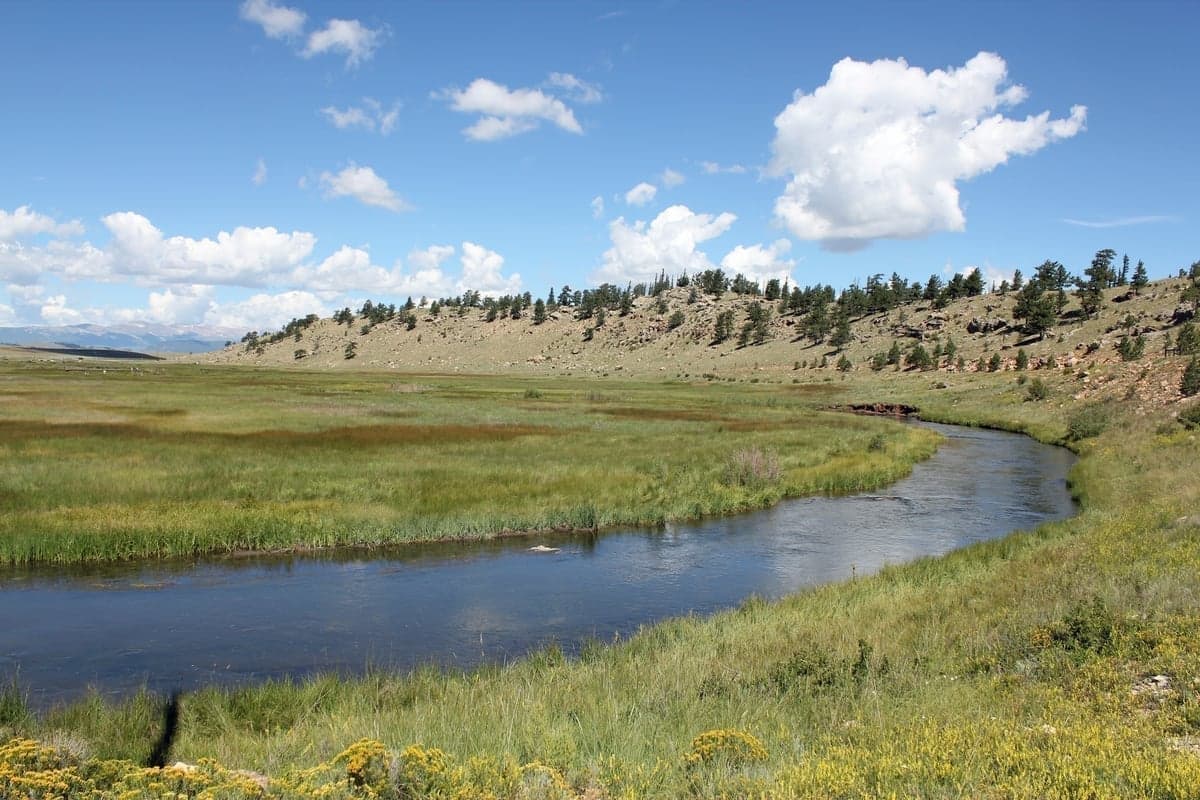
The South Fork of the South Platte—a quieter alternative to the main stem
The Front Range offers what many consider the best technical tailwater fishing in the American West, all within an hour or two of Denver's 3 million residents. The South Platte River system dominates, with multiple Gold Medal sections holding fish counts that regularly exceed 5,000-7,000 trout per mile. These aren't stocked fish waiting to be caught; they're wild, wary browns and rainbows that have been educated by a steady stream of anglers.
What makes the Front Range special: you can fish Cheesman Canyon in the morning, arguably the most technical dry fly water in the country, and hit Clear Creek's pocket water on the drive home. From high-alpine freestones in Rocky Mountain National Park to the midge factories below Cheesman Dam, the diversity is remarkable for such a compact area.
The trade-off: crowds. These rivers see heavy pressure, especially on weekends from May through September. Weekday mornings, winter fishing, and willingness to hike past the first pullout separate successful trips from frustrating ones.
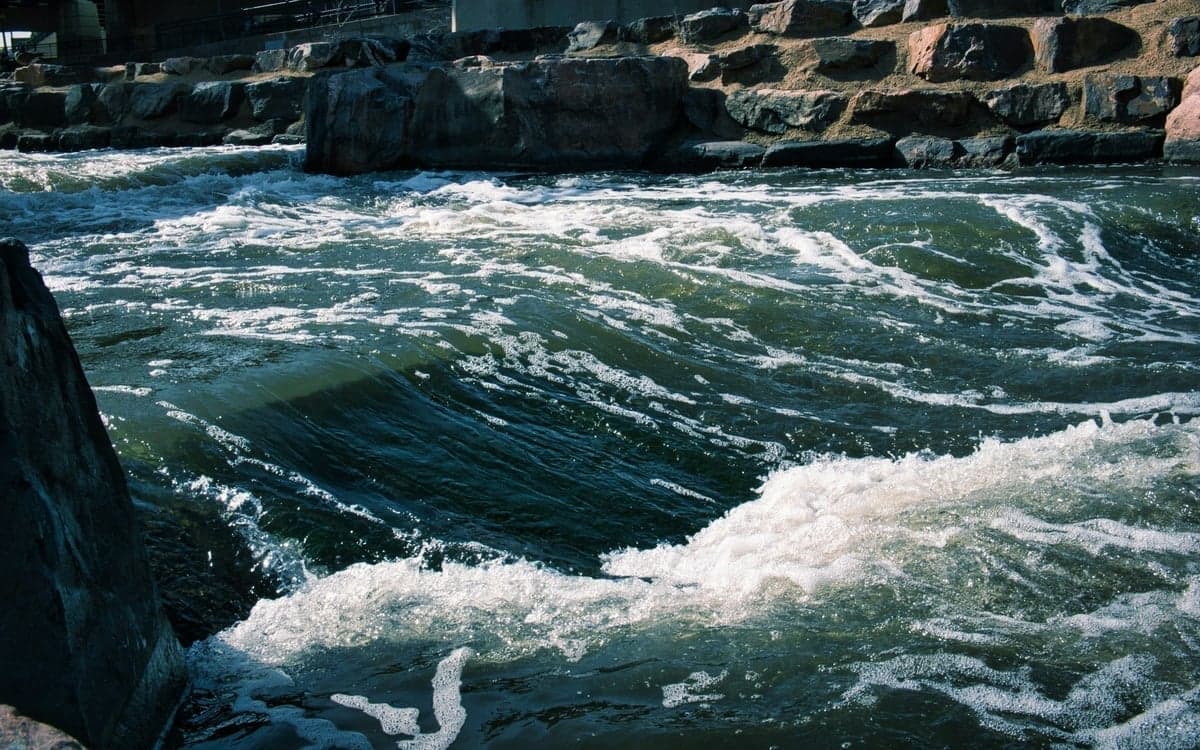
The South Platte River near Denver—technical tailwater fishing within reach of the city
The South Platte is the backbone of Front Range fishing. Four main sections (Dream Stream, Eleven Mile Canyon, Cheesman Canyon, and Deckers) offer distinct experiences, all fed by dam releases that create classic tailwater conditions.
Location: Between Spinney Mountain Reservoir and Eleven Mile Reservoir, about 90 minutes from Denver.
Character: Nearly 3 miles of meandering meadow stream through open high-desert prairie at 8,600 feet elevation. No overhanging trees to tangle your backcast, just knee-deep runs, undercut banks, and fish that cruise the flats like bonefish.
Why it's different: The reservoirs on either end are trophy fisheries. Fish migrate into and out of the Dream Stream, which means you're not just catching residents; you're intercepting fish that grow fat on scuds and Mysis shrimp in the reservoirs. Browns to 10 pounds and rainbows to 8 pounds are caught here regularly.
Flow windows:
| Flow (CFS) | Conditions |
|---|---|
| Under 50 | Low but fishable; fish spooky; best early/late |
| 50-100 | Good fishing; easy wading |
| 80-150 | Ideal range |
| 150-250 | Higher water; fish spread out |
| Over 250 | Post-runoff; wait for it to drop |
Access: Enter through Spinney Mountain State Park ($10 vehicle day-use fee) or Eleven Mile State Park ($10). The section between the parks is public water.
Best times: Late May through October. Summer afternoons can be windy, classic high-plains gusts that make casting difficult. Early mornings and evenings fish best.
What to bring: Scud patterns (#14-18), Mysis Shrimp imitations (#18-20), RS2s (#20-24), and streamers for aggressive browns. Leader: 12 feet minimum with 5X-6X tippet.
Location: 10 miles of river between Eleven Mile Dam and the town of Lake George. About 75 minutes from Denver via US-24.
Character: Granite-walled canyon with boulder-strewn pocket water, deep plunge pools, and consistent riffles. The upper two miles below the dam are catch-and-release, artificials-only. Gold Medal water with the highest fish densities on the system.
Flow windows:
| Flow (CFS) | Conditions |
|---|---|
| Under 50 | Very low; fish concentrated in pools |
| 75-200 | Ideal range; good pocket water fishing |
| 200-300 | Fishable but more difficult wading |
| Over 300 | Tough conditions; wait for it to drop |
Access requirements: Rocky Mountain Recreation manages the canyon. Day-use passes cost $5 at the entrance gate. Five campgrounds (Blue Mountain, Riverside, Springer Gulch, Cove, Spillway) offer overnight options.
Regulations: Upper 2 miles (dam to Springer Gulch Bridge) are catch-and-release, artificials-only. Below the bridge: 4-fish daily limit, though most anglers practice catch-and-release.
Key hatches:
The Trico hatch (detailed): This is Eleven Mile's signature event, running mid-July through September. The timing shifts as the season progresses:
Important note: Eleven Mile Canyon has been significantly impacted by New Zealand Mud Snails, an invasive species that competes with the aquatic insects trout depend on. Clean your gear thoroughly after fishing here. Soak waders and boots in a 50% Formula 409 solution for at least 5 minutes.
Location: 5-mile stretch of the South Platte below Cheesman Dam, about 65 miles southwest of Denver.
Character: This is the test piece. Crystal-clear tailwater flows through a steep granite canyon, holding some of the most educated trout in the country. The 1.5-mile hike from the parking lot on County Road 126 down to the river filters out casual anglers, but the regulars here are skilled, and the fish have seen it all.
Cheesman Canyon was Colorado's first catch-and-release section. The regulations have created a population of large, selective fish that demand perfect presentations. This is primarily sight-nymphing water, though dry fly opportunities exist during hatches.
Flow windows:
| Flow (CFS) | Conditions |
|---|---|
| Under 60 | Very low; fish ultra-spooky |
| 75-150 | Ideal range; typical winter/fall flows |
| 150-250 | Good fishing; slightly off-color at higher end |
| Over 250 | Post-runoff; visibility decreases |
The hike: 1.5 miles from parking to water. At the river, the trail splits, the high trail and low trail run approximately 5 miles upstream to the dam. The Wigwam Club marks the downstream boundary (private water, posted signs).
What makes it hard:
Where fish hold (seasonal patterns):
Winter (Nov-Mar): Fish congregate in slower, deeper pools, traditional wintering lies. Look for dark shapes against the sandy bottom in water 3-5 feet deep. The fish stack up, sometimes 10-15 trout in a single pool. Focus your efforts on tailouts and the slow inside seams of bends rather than the fast pocket water.
Summer (Jul-Sep): Fish spread into faster, broken water: seams between boulders, undercut banks, and the heads of runs where oxygen levels are highest. They're more willing to move for food but also spookier due to lower flows and increased visibility.
Year-round: The boulders here range from minivan to house-sized. Most fish hold tight to these structures, especially where current creates soft pockets behind and alongside rocks. Look for subtle current breaks and transition zones where fast water meets slow.
Recommended setup: 9-12 foot leaders with 5X-6X tippet (some locals go to 7X). Top nymphs include RS2s (#20-24), Mercury Black Beauty (#20-22), and Pheasant Tails (#20-22). Dry flies: Mole Fly and Smokejumper (baetis imitations) in #22-24.
Best strategy: Arrive early. The canyon faces east, so morning light helps with sight-fishing. Adjust your presentation before changing flies, the drift usually matters more than the pattern. In winter, expect to slow down and really work individual pools. In summer, cover more water but approach each likely spot with maximum stealth.

Cheesman Dam—the tailwater below holds some of the most technical trout fishing in Colorado
Location: Section from the Wigwam Club downstream to Scraggy View, accessed along County Road 126. About 60 miles from Denver.
Character: More accessible than Cheesman with roadside parking and easier wading. The water is less technical, wider with more room to maneuver, but still holds quality fish. Deckers fishes well year-round and is the go-to option when Cheesman feels intimidating.
Flow windows:
| Flow (CFS) | Conditions |
|---|---|
| Under 60 | Low but fishable |
| 80-200 | Ideal range |
| 200-350 | Good fishing; heavier nymphing rigs work |
| Over 350 | Off-color; tougher wading |
Regulations: Artificials-only. Bag limit: 2 fish, minimum 16 inches. (Wigwam Club to Scraggy View section.)
Why locals like it: During spring runoff when higher sections are blown out, Deckers often remains fishable, the reservoir upstream moderates flows. It's also the best bet for beginners who want to experience South Platte tailwater fishing without the Cheesman learning curve.
Key access points (upstream to downstream):
Best water at low flows: Focus on the deeper runs between Lone Rock and the bridge. At high flows (over 200 CFS), the Trumbull area fishes better as fish spread into the riffles.
Colorado Trout Hunters runs guided trips through this section. Rise Beyond Fly Fishing publishes regular Deckers fishing reports with current conditions.
Location: Flows approximately 10 miles east from Buffalo Creek to the confluence with the main South Platte. Access via Foxton Road off US-285 near Conifer. About 45 minutes from Denver.
Character: Faster, pocket-water stream with shallow riffles, runs, and tight seams. Deep pools are uncommon. The North Fork doesn't get the press of the main stem, but it offers a change of pace from tailwater fishing, more of a freestone feel with similar drive time from Denver.
Flow windows:
| Flow (CFS) | Conditions |
|---|---|
| Under 20 | Very low; fish in deeper pockets only |
| 30-80 | Ideal range; good pocket water fishing |
| 80-150 | Fishable but faster |
| Over 150 | Runoff; tough wading |
Access points:
Fishing approach: Short-line nymphing works best in the tight quarters. Heavy brush and quick seams are key holding areas. In winter, when water temps drop into the high 30s, fish concentrate in the few deeper pools, egg and midge combinations work well. In summer, attractor dries with beadhead droppers cover water efficiently.
Realistic expectations: Fish here run 8-14 inches, with the occasional larger brown in deeper holes near structure. The population density isn't as high as the main stem, but you'll likely have more water to yourself. This is a good option when South Platte tailwaters are crowded or when you want the rhythm of pocket water fishing.
Location: Runs from the Continental Divide near Loveland Pass east through Georgetown, Idaho Springs, and Clear Creek Canyon to Golden. Multiple sections accessible within 30-45 minutes of Denver.
Character: True freestone pocket water with a steep gradient. Clear Creek fishes differently than the South Platte: quick reads, short drifts, and a dry-dropper approach cover water efficiently. Brown trout dominate, with rainbows, cutthroats, and brookies mixed in depending on elevation.
Flow windows:
| Flow (CFS) | Conditions |
|---|---|
| Under 100 | Low; fish concentrated |
| 100-200 | Good fishing flows |
| 200-400 | Ideal range for fly fishing |
| 400-700 | Fishable but strong; kayakers appear |
| Over 700 | High water; runoff conditions |
Clear Creek typically runs May through mid-July at higher flows, with the best fly fishing windows occurring March-May (pre-runoff) and late July-October (post-runoff).
Key sections:
Georgetown area: A mini-tailwater below Georgetown Lake with pullouts along the old Highway 6 frontage road. Mostly private directly below the dam, but good access downstream.
Canyon section: 20 miles of pocket water from Idaho Springs to Golden. Jefferson County Open Space has improved access significantly. The canyon sees hatches of midges, baetis, caddis, stoneflies, PMDs, and an epic Green Drake emergence in summer.
Golden Mile: Runs through town and includes Clear Creek Whitewater Park. Heavily pressured in summer due to tubers and crowds, but fishes well in cooler months.
Access: Exit I-70 at Georgetown, Downieville, or Dumont and take the frontage road (old Highway 6) instead of the interstate. Numerous pullouts. The Golden section is accessible via city parks and the Clear Creek Trail.
Best approach: Pick pockets with a dry-dropper rig (Chubby Chernobyl, Hippie Stomper, or stimulator on top; beadhead nymph below). Fish move aggressively to take flies in the broken water. Presentation matters more than pattern selection here.
Location: Originates in Rocky Mountain National Park, flows through Estes Park and Lake Estes, then drops through Big Thompson Canyon along Highway 34 to Loveland. About 70 miles from Denver.
Character: Two distinct fisheries. The section above Lake Estes flows through Moraine Park in RMNP: open meadow water holding browns, rainbows, brookies, and the occasional greenback cutthroat. Below the lake, 9 miles of catch-and-release canyon water run along Highway 34 with easy roadside access.
Flow windows (below Lake Estes):
| Flow (CFS) | Conditions |
|---|---|
| Under 30 | Winter lows; fish pods holding deep |
| 40-80 | Good fishing flows |
| 80-150 | Higher water; faster fishing |
| Over 200 | Runoff; tough conditions |
Regulations: Below Lake Estes to Waltonia Bridge: catch-and-release, artificials-only. RMNP requires a $25 day pass.
Best times: May through October for consistent fishing. Winter brings steady midge hatches in the lower canyon. Summer and fall see caddis, PMDs, BWOs, and stoneflies.
RMNP section (Moraine Park): Wild fish in an alpine setting, but smaller on average. The safest access is definitely Moraine Park, upstream trails and tributaries hold cutthroats and brookies. Kirk's Flyshop in Estes Park provides current conditions and guided trips.
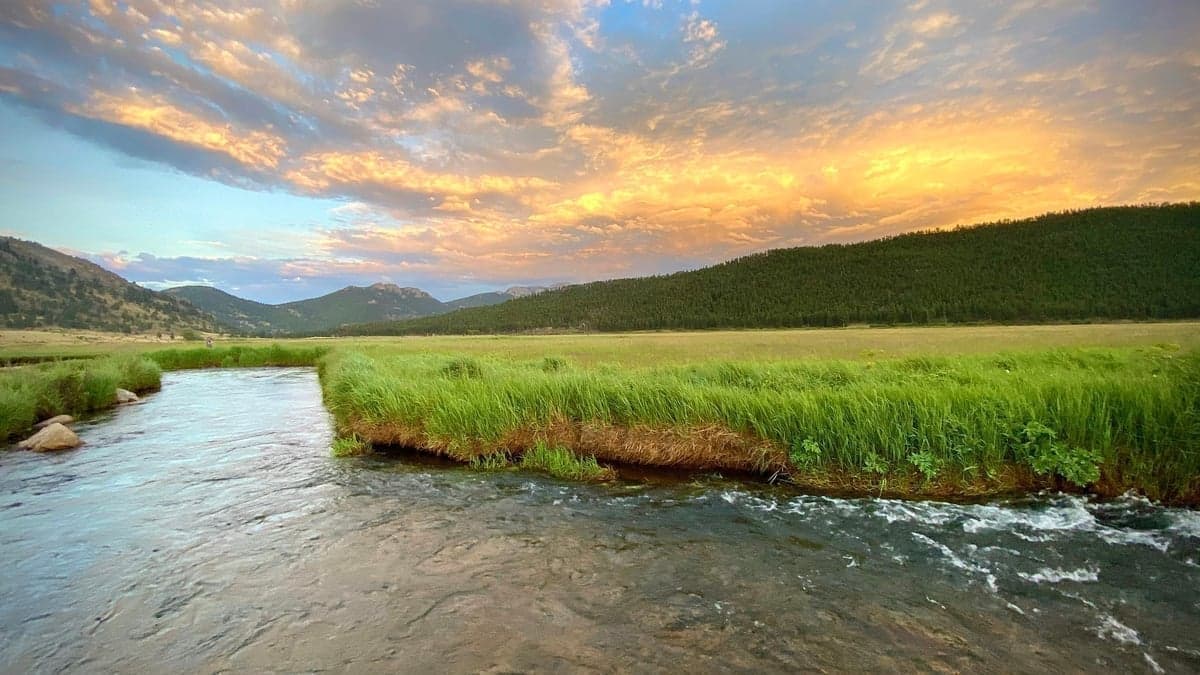
Meadow water in Rocky Mountain National Park—where browns, brookies, and cutthroats roam
Location: Below Dillon Reservoir in Silverthorne, about 70 miles west of Denver via I-70. A different drive than the South Platte, but worth knowing when you want variety or if you're headed to the mountains anyway.
Character: Gold Medal tailwater flowing right through town. The fish here are technical and picky; they've seen every fly in the box, but the Mysis shrimp from Dillon Reservoir grow them large. Trout over 20 inches are common; fish over 25 inches are seen but rarely landed.
Flow windows:
| Flow (CFS) | Conditions |
|---|---|
| Under 40 | Very low; fish ultra-spooky |
| 50-150 | Ideal range; technical dry fly and nymphing |
| 150-400 | Higher but fishable |
| Over 400 | Difficult; runoff conditions |
| Over 1,600 | Unfishable; peak runoff |
Winter flows typically run 50-80 CFS. Summer flows can spike during reservoir operations.
The Mysis factor: Dillon Reservoir contains Mysis shrimp, small freshwater crustaceans that get flushed through the dam. The trout line up below the outlet to gorge on this protein-rich food source. Mysis patterns (#16-20, white/clear) are essential in the first mile below the dam, especially in winter and early spring.
Regulations: From the dam downstream to the northern limits of Silverthorne (about 3 miles): catch-and-release only, artificials only. Below that: 2 fish limit, 16-inch minimum.
Access: Highway 9 parallels the river with numerous pullouts. Eagles Nest, Sutton Unit, and Blue River Campground offer easy access. The first mile below the dam is the most technical and most crowded.
Essential patterns: Mysis Shrimp (#18-20), Mercury Midge (#20-24), Zebra Midge (#20-22), small scuds (#18-20). In summer, add PMDs and caddis. Fluorocarbon tippet (6X-7X) is standard, the water is extremely clear.
Guided options: Mountain Angler in Breckenridge and Cutthroat Anglers specialize in Blue River fishing.
Two additional Front Range options worth knowing about, especially for anglers based in Boulder or seeking variety.
Location: Flows from the Continental Divide through Boulder Canyon and the city of Boulder itself. About 35 minutes from Denver.
Character: A tale of two fisheries. The canyon section runs fast pocket water through Boulder Canyon along Highway 119. Below the canyon, South Boulder Creek flows through open space before entering the city.
Key section. Walker Ranch: This 2,880-acre Boulder County Open Space offers the best fishing. As a tailwater below Gross Reservoir, the creek stays ice-free year-round with healthy midge populations. The catch: access requires a 2+ mile hike on the Walker Ranch Loop. But that hike filters out crowds and puts you on water that sees far less pressure than Cheesman or Deckers.
Flow windows:
| Flow (CFS) | Conditions |
|---|---|
| Under 30 | Low; fish concentrated |
| 40-100 | Ideal range |
| 100-200 | Higher but fishable |
| Over 200 | Runoff; tough wading |
Hatches: Green Drakes in summer are the highlight, an epic hatch worth planning around (typically late June through July). Year-round midges, baetis, stoneflies, caddis, PMDs, and terrestrials in warmer months.
City section: Yes, you can fish through Boulder itself. Brown trout hold in surprisingly good numbers, even near the Boulder Public Library. Winter midge fishing can be productive when the mountain streams are frozen. Just watch for tubers and swimmers in summer.
Shops: Rocky Mountain Anglers and Front Range Anglers in Boulder have fished these waters for decades.
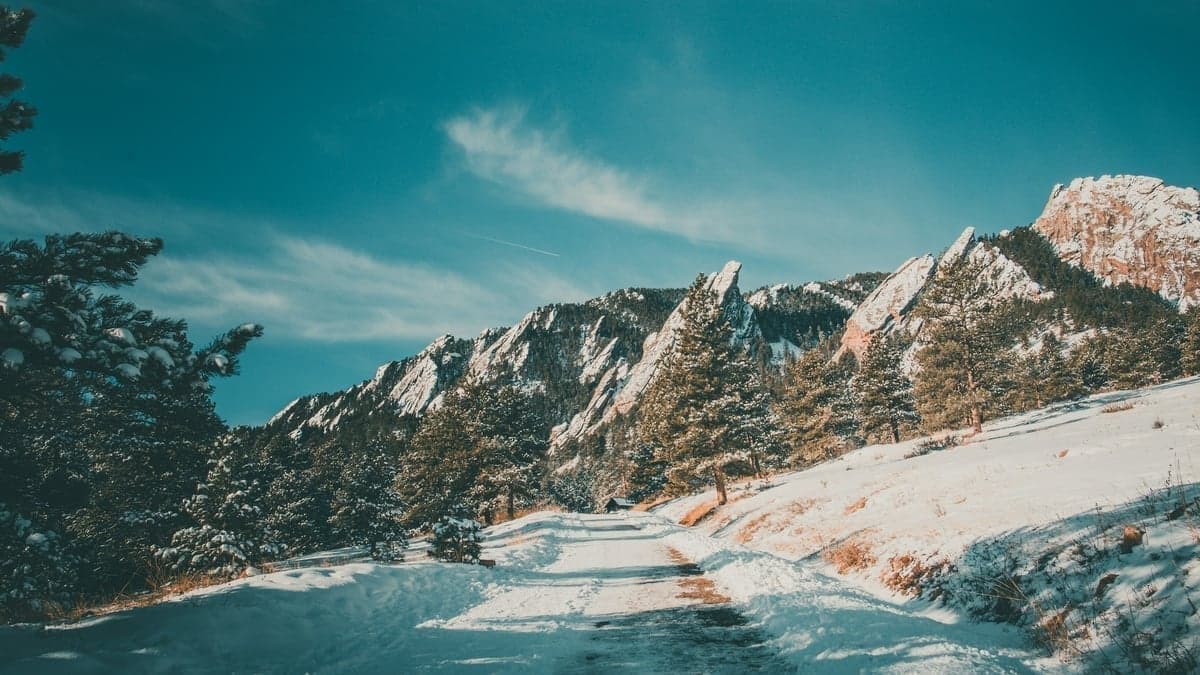
Boulder Creek canyon—pocket water and Green Drake hatches within 35 minutes of Denver
Location: Three forks (North, Middle, South) converge near Lyons, about 45 minutes north of Denver.
Character: All four trout species present: browns and rainbows lower, brookies and cutthroats higher. The North Fork runs through Wild Basin in RMNP and Button Rock Nature Preserve. The town of Lyons has a fishable section, though urban pressures apply.
Button Rock Preserve: This is the hidden gem of the St. Vrain system. The City of Longmont manages roughly 650 acres around Ralph Price Reservoir, with the North St. Vrain flowing through on a 2-mile creekside trail. It's a tailwater fishery: cold, steady flows from the reservoir support healthy populations of rainbow, brown, and cutthroat trout. Catch-and-release, artificials only.
Access:
Best approach: Short casts on narrow water. Hopper-droppers (#12-16 Chubbies or Hippie Stompers with #16-20 beadhead droppers) work well through town. At Button Rock, standard tailwater tactics apply: small midges, baetis patterns, and nymphs. Higher in Wild Basin, switch to attractor dries and small nymphs.
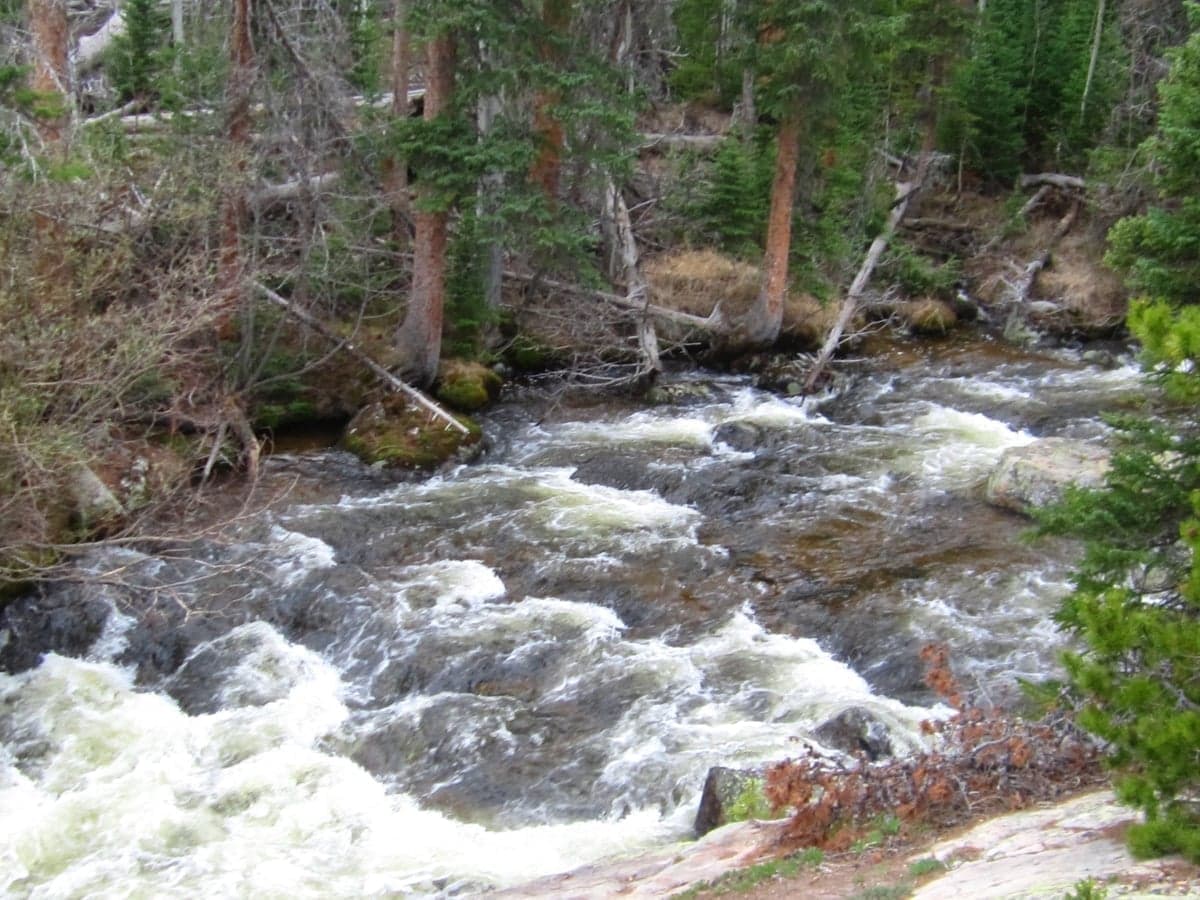
The St. Vrain near Lyons—three forks converge with all four trout species present
Location: Colorado's only Wild and Scenic River. Flows from Rocky Mountain National Park's Poudre Lake, through Poudre Canyon along Highway 14, into Fort Collins. About 90 minutes north of Denver.
Character: 65+ miles of fishable freestone water with brown trout dominating, plus rainbows, cuttbows, and cutthroats at higher elevations. Access is excellent. Highway 14 parallels the river with trailheads, campgrounds, picnic areas, and pullouts throughout.
Flow windows:
| Flow (CFS) | Conditions |
|---|---|
| Under 100 | Winter lows; nymph deep |
| 100-200 | Good fishing |
| 150-300 | Prime range |
| Over 400 | Runoff; tougher wading |
Best times: Late spring through early fall for the full hatch menu: baetis, caddis, stoneflies, PMDs, hoppers. Winter midge fishing can be productive in lower canyon sections near Fort Collins, with the prime window from 11 AM to 3 PM.
Local shop: St. Peter's Fly Shop in Fort Collins provides Poudre-specific reports and guided trips.
The South Platte tailwaters fish year-round. Cheesman, Deckers, and Eleven Mile remain open when freestones freeze. Fish pod up in slower pools, eating midges almost exclusively. Size #20-24 patterns are standard: Zebra Midges, Mercury Black Beauties, Top Secret Midges.
Best bet: Deckers offers easier access and slightly more forgiving fishing than Cheesman in cold conditions.
Timing: Fish the warmest part of the day, typically 10 AM to 3 PM. Expect slow starts until water temperatures rise a few degrees.
BWOs emerge in March, triggering the first dry fly opportunities. The window between snowmelt runoff and ice-off on high lakes is prime time for tailwaters. By late May, freestones start blowing out.
March–April: Tailwaters fish well; midges and early BWOs. Stonefly nymphs become active.
May: Runoff begins on freestones. Tailwaters can handle higher flows but may get off-color. Mother's Day Caddis hatch on Clear Creek (typically mid-May) is worth planning around.
Runoff typically peaks in June. By July, most rivers have dropped into fishable ranges.
July: PMDs on tailwaters; Tricos start. Golden Stoneflies on freestones. Best dry fly month.
August: Hopper season. Terrestrials produce along grassy banks. Tricos peak on Eleven Mile. Evening caddis hatches on most waters.
Water temperature, when to stop fishing:
This matters. Trout are cold-water fish that function best in 50-60°F water. When temperatures climb, they struggle to get enough oxygen and become increasingly stressed: even with careful handling, released fish may not survive.
| Temperature | What's Happening | What You Should Do |
|---|---|---|
| Under 55°F | Optimal | Fish normally |
| 55-63°F | Good | Fish normally; be gentle with handling |
| 63-65°F | Caution zone | Minimize fight time; keep fish wet |
| 65-68°F | Stress begins | Consider stopping; fish early mornings only |
| 68°F+ | Stop fishing | Trout mortality risk is real, go home |
| 75°F+ | Lethal | Extended exposure can kill trout |
Practical guidance:
The return of BWOs and continued midge activity make fall one of the best seasons. Brown trout become aggressive as spawn approaches. Crowds thin significantly after Labor Day.
Streamers: Become increasingly effective for browns. Woolly Buggers (#6-10), Slumpbusters, and articulated patterns.
Fall colors: Peak around late September through mid-October. The Dream Stream meadow turns gold; Clear Creek Canyon lights up with aspens.
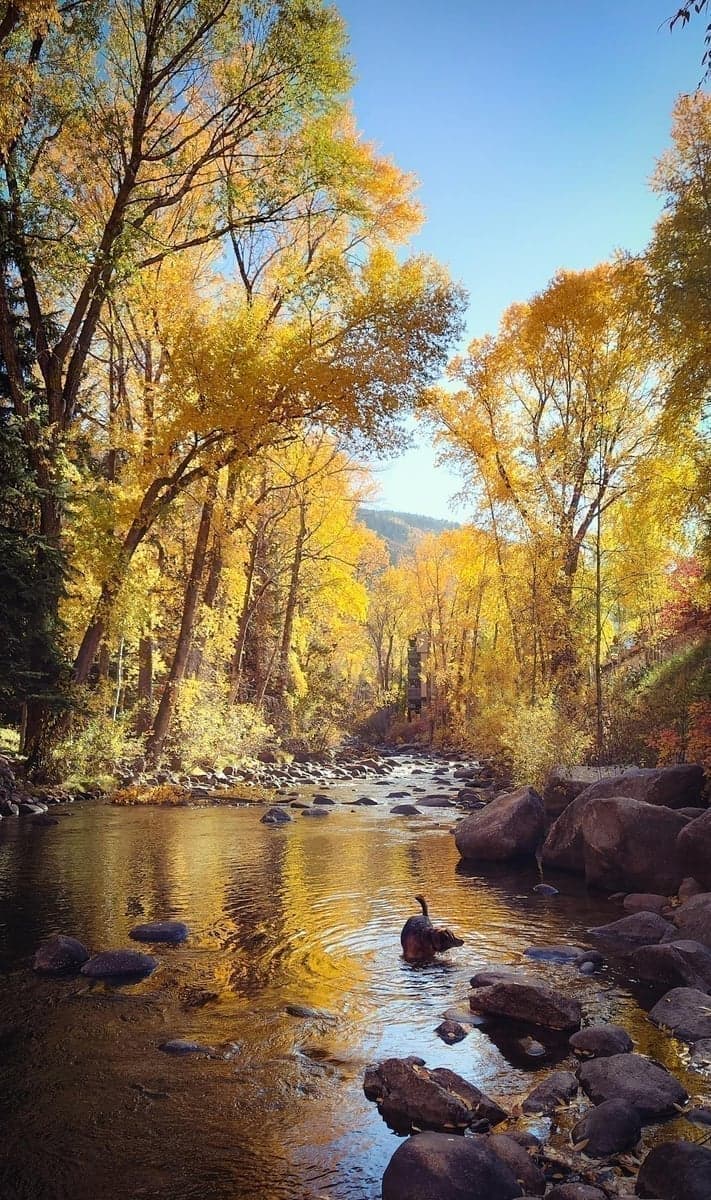
Fall on the Front Range—golden aspens, cooling water, and aggressive brown trout
| Month | Primary Hatches | Sizes | Notes |
|---|---|---|---|
| Jan–Feb | Midges | #20-26 | All tailwaters; best 11 AM–3 PM |
| Mar–Apr | Midges, BWOs | #18-24 | BWOs start mid-March |
| May | BWOs, Caddis, Yellow Sallies | #14-20 | Mother's Day Caddis on Clear Creek |
| Jun | Golden Stones, PMDs, Caddis | #8-18 | Post-runoff prime time |
| Jul | PMDs, Tricos, Caddis, Hoppers | #8-24 | Tricos peak at Eleven Mile |
| Aug | Hoppers, Tricos, Caddis | #8-24 | Terrestrials dominate |
| Sep | BWOs, Hoppers, Midges | #16-24 | Fall baetis return |
| Oct | BWOs, Midges | #18-26 | Streamers for browns |
Rod: 9-foot 5-weight covers most situations. A 4-weight is better for technical dry fly work on tailwaters; 3-weight for small freestones.
Leader: 9-12 feet with 5X-6X tippet on tailwaters. Cheesman regulars often use 7X. Freestones are more forgiving, 9 feet, 4X-5X.
Waders: Necessary year-round except for warm summer days when wet wading is an option.
Accessories: Stream thermometer, polarized sunglasses, and a net with rubber mesh.
Blue Quill Angler (Evergreen), 25 minutes from Denver. Pat Dorsey operates out of this shop, one of the most respected South Platte anglers in the state. Winter walk-wade trips start at $475 for 1-2 anglers.
Mile High Angler:Half-day trips from $595 (1 person) to $695 (2 people). Full-day trips include lunch, $695-$795.
5280 Angler:Full-day floats $695-$750; half-day $525-$625. Year-round guiding across Front Range waters.
South Platte Fly Shop (Woodland Park). Located equidistant from Eleven Mile, Dream Stream, and Deckers. Current fishing reports and local expertise.
Colorado Trout Hunters:Guided trips on Deckers, Dream Stream, and Cheesman. Permitted on Denver Water property.
Angler's Covey:One of only two outfitters permitted to guide in Cheesman Canyon. Orvis-endorsed.
Rocky Mountain Anglers:Boulder's trusted shop since 1989. Boulder Creek and St. Vrain expertise.
Front Range Anglers:Operating since 1982. Guided trips and lessons on local waters.
The Front Range is home to 3+ million people, and these rivers show it. Weekend pressure from May through September is intense, especially at obvious pullouts. Strategies for better fishing:
Most Front Range rivers sit between 6,000-9,000 feet elevation. If you're visiting from lower elevations, altitude effects (headache, fatigue, shortness of breath) can impact your day. Drink extra water and take it easy on the hike into Cheesman.
Afternoon thunderstorms are common June through August. Lightning is the primary danger, get off the water if you see or hear storms building. Check forecasts and plan to fish mornings.
Always check flows before driving. Spring runoff can blow out rivers within hours. Tailwaters are more stable but still fluctuate. Conditions that look good Monday might be unfishable by Friday.
What month is best for fly fishing in Colorado?
September and October are the top months for Front Range fly fishing, with stable flows, active fall BWO hatches, and fewer crowds. Spring (April-May) brings excellent midge and BWO dry fly fishing on tailwaters like Cheesman Canyon. Summer is prime on freestones once runoff clears, typically by late June.
What is the best river in Colorado for fly fishing near Denver?
The South Platte River system, particularly Cheesman Canyon and Deckers, is the premier fly fishing destination within 90 minutes of Denver. For trophy trout, the Dream Stream section below Spinney Mountain Reservoir is hard to beat. Clear Creek offers quick access from the metro area, while the Big Thompson provides scenic mountain fishing about 75 minutes north.
What size flies work on Front Range rivers?
Front Range trout see heavy pressure and feed primarily on small insects. Carry midges (#20-26), BWOs (#18-22), and PMDs (#16-18) for dry fly fishing. Subsurface, RS2s, mercury midges, and small pheasant tails (#18-22) are staples. Use 5X-6X tippet for the clear, technical water.
Everything this river feeds, by month. Filter by bug, category, or fly size, and switch the axis to see what comes off at what time of day. Pulled from our western hatch and forage guide.
Plan your trips with real-time flow data:
The South Platte tailwaters are dam-controlled, so flows tend to be more predictable than freestones. Still, reservoir operations can change releases, check within 24 hours of your trip.
For fishing west of the Continental Divide, see our Upper Colorado Summer Guide. For statewide conditions, visit Colorado rivers.
Weekly flow updates and fishing intel.
© 2026 RiverReports, Inc.