Box Canyon
Fishable
Flow718 CFS
Trendfalling
Clarityclear
Temp52°F
Tungsten Split Case PMD Nymph #20 (top subsurface producer)Stealth Link Mercer PMD #20Pheasant Tail #14-18Perdigon Olive #16-18
| What | When | Key Numbers |
|---|---|---|
| Box Canyon nymphing | Year-round (best May-Oct) | 800-1,200 CFS ideal; 4,924 rainbow/mile (2019 IDFG survey) |
| Ranch dry fly | June 15-Nov 30 (open season) | 400-700 CFS; catch-and-release only, barbless hooks |
| Lower river float fishing | May-October | 1,000-2,000 CFS; salmonfly hatch starts May near Ashton |
| Guided trips | Book by March for summer | $750-850/day (1-2 anglers); lodge packages from $2,640 (3 nights) |
| Fly shop | TroutHunter | (208) 558-9900, 3327 N Hwy 20, Island Park |
| Fly shop | Henry's Fork Anglers | (208) 558-7525, Last Chance, Island Park |
The Henry's Fork of the Snake River flows roughly 127 miles from its headwaters at Henry's Lake and Big Springs through the high plateau of eastern Idaho before joining the South Fork near Rexburg. The watershed covers 1.7 million acres and drains more than 3,000 miles of rivers and streams.
What makes this river special is the sheer variety of water it offers. Within a 30-mile stretch you can nymph pocket water in a narrow lava canyon, sight-cast to rising rainbows on a spring-creek flat, dodge Class III rapids through volcanic gorges, and drift streamers past aggressive brown trout in farm-country riffles. Each section demands a different approach, and the trout reflect it: Box Canyon fish eat aggressively in fast current, while Ranch fish inspect every fly like they have a graduate degree.
Idaho Fish and Game manages the river with a patchwork of regulations that vary significantly by section. Take the time to understand the rules for wherever you plan to fish.
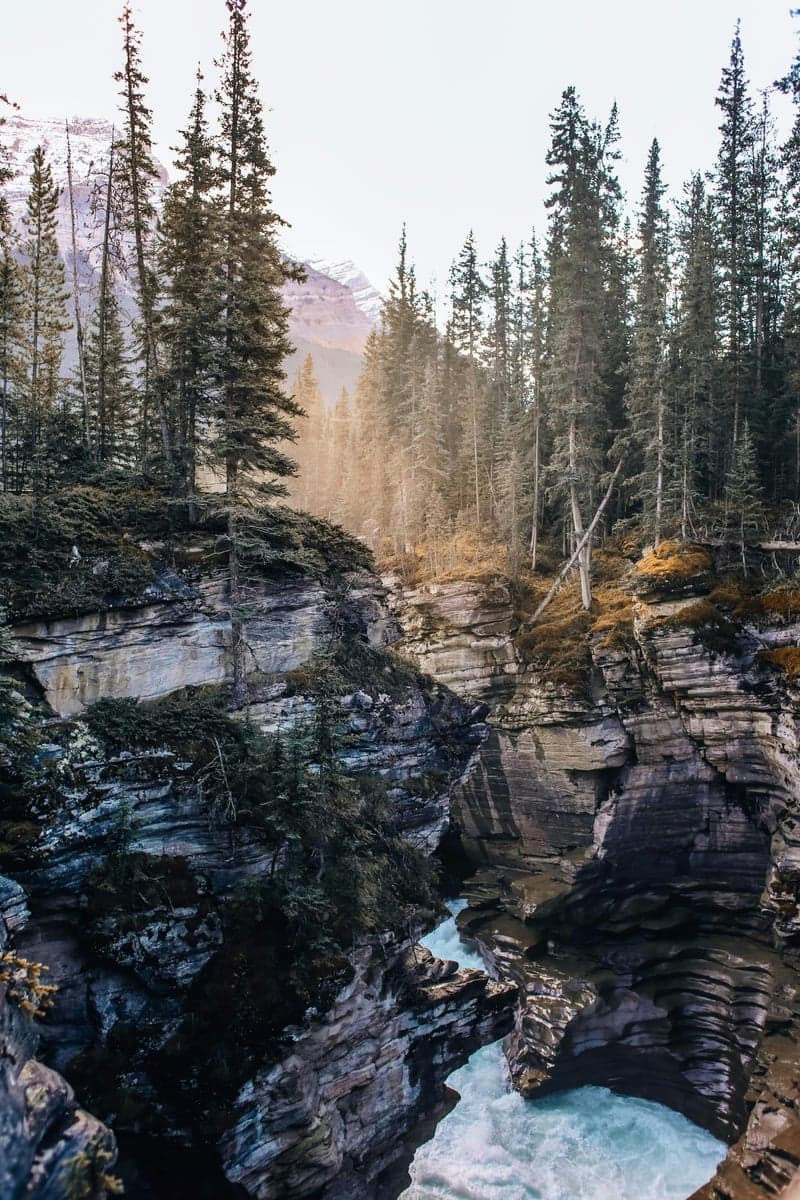
Rocky canyon water like this defines the Box Canyon section, where lava boulders create holding lies
The Henry's Fork runs through Fremont and Madison Counties in eastern Idaho, with the primary fishing hub at Island Park (about 28 miles south of West Yellowstone, Montana). Idaho Falls Regional Airport (IDA) is about 80 minutes south and is the closest commercial airport. West Yellowstone's airport handles seasonal commuter flights.
The Henry's Fork Foundation maintains a detailed interactive map with every access point, float distances, and parking information.
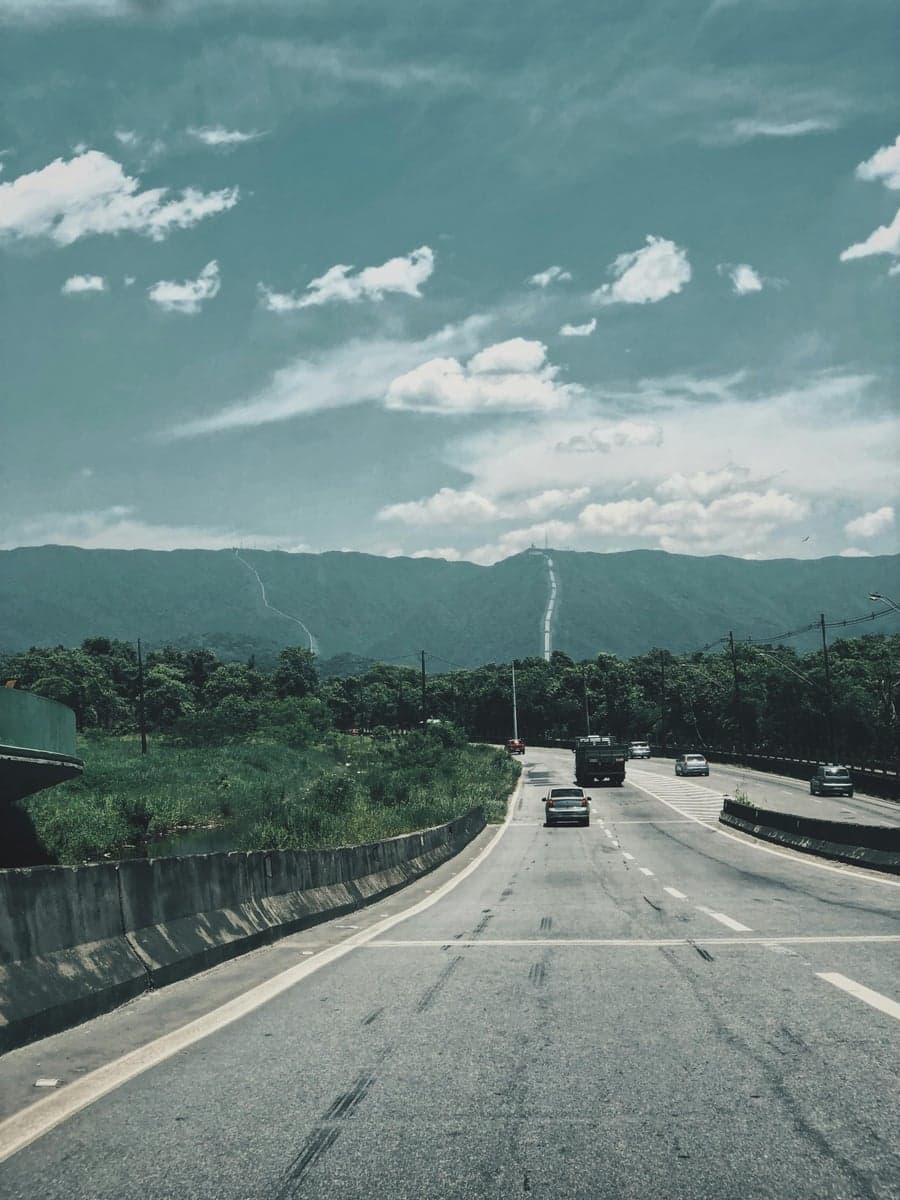
The drive into Island Park country, with mountain views stretching in every direction
Distance: 5.5 miles | Access: Float or wade | Difficulty: Class II
This narrow canyon, carved through volcanic rock, ranges from 50 to 100 feet wide and is lined with lodgepole pines. Undulating lava boulders create deep slots, pocket water, and swift runs that hold large rainbow trout.
IDFG electrofishing surveys documented 4,924 rainbow trout per mile (fish over 6 inches) in 2019, well above the 1994-2017 average of 3,034. Mountain whitefish numbered 3,201 per mile. Fish to 20 inches are present, with two strong size classes near 6 inches and 12 inches indicating healthy recruitment.
Tactics: Nymphing dominates here. Pat's Rubber Legs, Zebra Midges, stonefly nymphs, and Copper Johns fished deep through pocket water produce consistently. During the salmonfly hatch (late May through June), switch to a heavy 6-weight rod and big dry flies. As Hatch Magazine puts it, trout in fast current "don't have much time to make up their minds" and feed aggressively compared to the selective risers downstream.
Tip: Get on the water early. Drift boat traffic builds quickly through midday. A walking trail along river left gives wade anglers access to the entire section without a boat.
Distance: 6.0 miles | Access: Wade only | Difficulty: Advanced
This is the section that made the Henry's Fork famous. The river slows into a broad, glassy meadow stream beneath the Centennial Mountains and the distant Tetons. Large wild rainbows cruise weed-lined channels, sipping tiny mayflies off the surface with maddening selectivity.
Open season: June 15 through November 30 only. Fly-fishing only, catch-and-release with barbless hooks. No bait, no boats.
Tactics: Standard spring creek approach. Long leaders (12-15 feet), fine tippet (5X-7X), and downstream presentations. Comparaduns, no-hackle duns, and CDC emergers in the right size are more important than pattern name. Expect to change flies often.
Tip: Study a fish's feeding rhythm before casting. Rushed presentations spook these trout faster than the wrong fly pattern. This is genuinely challenging fishing, and blank days are normal, even for experienced anglers.
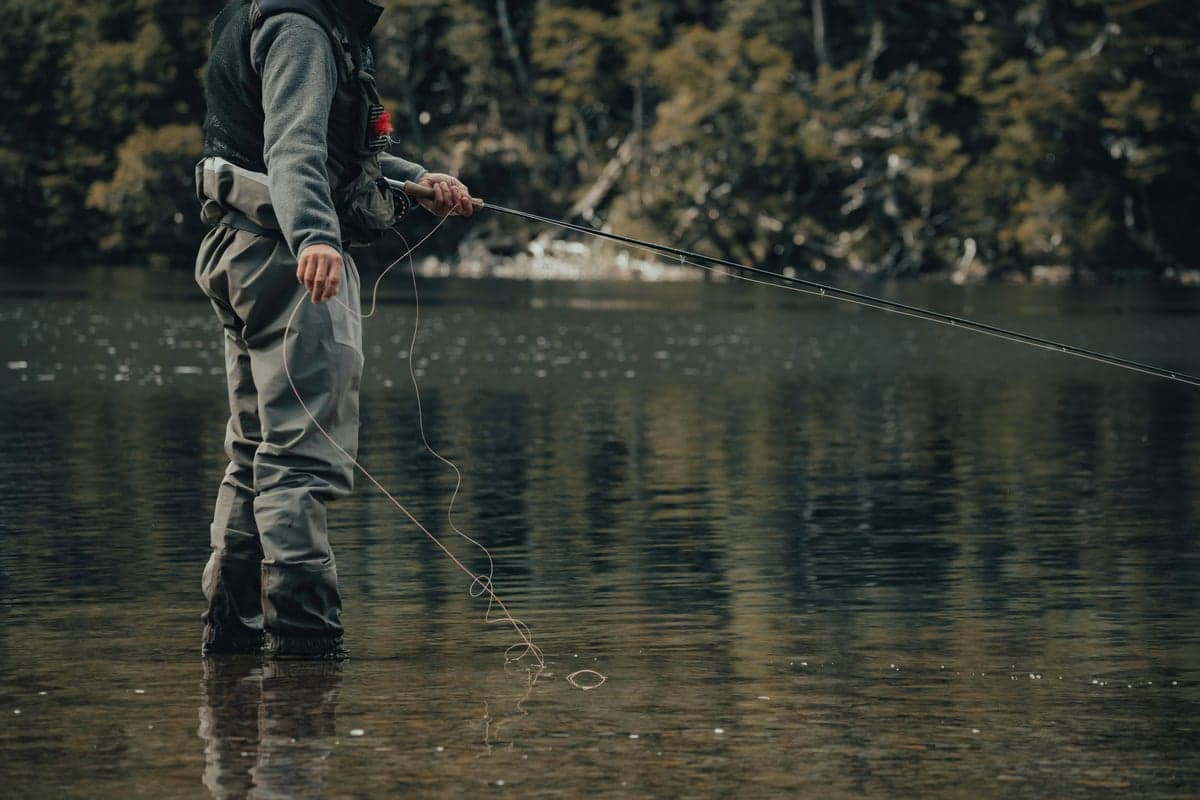
Wading the Henry's Fork demands patience, long leaders, and precise presentations
Distance: 6.3 miles | Access: Float or wade | Difficulty: Intermediate
Below Harriman, the river picks up speed through a canyon with boulder fields and choppy runs. This transition zone mixes the pocket water tactics of Box Canyon with longer glides that reward dry fly anglers. Both rainbows and browns hold in this stretch.
Distance: 5.3 miles | Access: Float (expert only) | Difficulty: Advanced
Remote and technical, with almost continuous rapids. Upper and Lower Mesa Falls (114 and 65 feet respectively) are downstream and represent an absolute portage-or-die boundary. This section is for experienced boaters only.
Distance: 6.7 miles | Access: Rafts only | Difficulty: Class III
Named for its heart-pounding rapids, this section starts with Surprise Falls about three-quarters of a mile in. Fast rock gardens alternate with calm pools. Brown trout become more common here. American Whitewater provides detailed rapid descriptions for this reach.
Distance: Variable | Access: Float and wade | Difficulty: Beginner-friendly
The river settles into agricultural country below Ashton Dam. Browns dominate this section, IDFG surveys documenting 96% brown trout composition near St. Anthony, with fish reaching 25 inches. Road access at Vernon and Chester makes this the most accessible stretch on the river. Two-fish limit with no cutthroat harvest.
Tactics: The salmonfly hatch arrives here first (early May) and moves upstream over several weeks, providing some of the easiest dry fly fishing on the system. Streamers are productive year-round for browns.
Idaho's dramatic waterfalls are a reminder of the volcanic landscape the Henry's Fork cuts through
The Henry's Fork is a hatch-driven fishery. Matching the current insect activity matters more here than on most western rivers, especially on the Ranch section.
Early Season (April-May)
Prime Season (June-August)
Late Season (August-October)
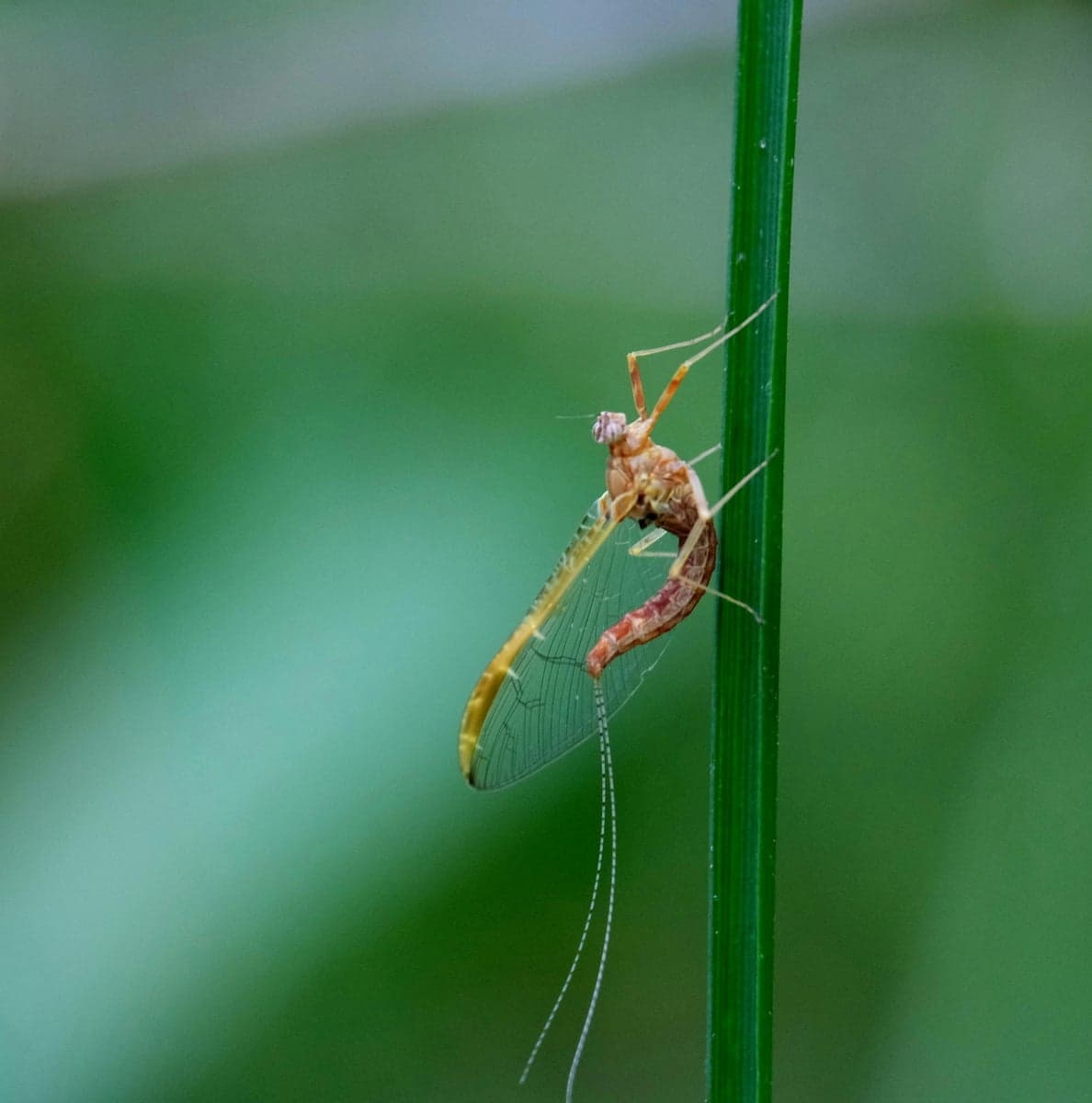
Mayflies like this PMD drive the Henry's Fork's legendary dry fly fishing from June through August
| Category | Patterns | Sizes |
|---|---|---|
| Dry flies | Comparadun, Sparkle Dun, Parachute Adams, No-Hackle Dun, CDC Emerger | #14-22 |
| Nymphs | Pheasant Tail, Zebra Midge, Copper John, Hare's Ear, Pat's Rubber Legs | #8-22 |
| Stoneflies | Salmonfly (Sofa Pillow, Chubby Chernobyl), Golden Stone | #4-8 |
| Streamers | Woolly Bugger, Sculpzilla, Zoo Cougar | #4-8 |
| Terrestrials | Dave's Hopper, Beetle, Fur Ant | #6-16 |
Flows on the Henry's Fork vary significantly by section because Island Park Dam and Ashton Dam regulate releases. Irrigation demand drives summer drawdowns, especially on the lower river.
| Condition | Box Canyon (Island Park gauge) | Lower River (Ashton gauge) |
|---|---|---|
| Low/winter | 150-300 CFS | 800-1,200 CFS |
| Ideal fishing | 800-1,200 CFS | 1,200-2,000 CFS |
| High but fishable | 1,200-1,800 CFS | 2,000-3,500 CFS |
| Too high/unsafe | 2,000+ CFS | 4,000+ CFS |
The Ranch section's flow is essentially unregulated between the dam and the meadow, influenced by springs and tributaries. It fishes best at moderate, stable flows.
Track real-time flows on RiverReports before you drive. Conditions can shift quickly during spring runoff, and dam releases change without much notice.
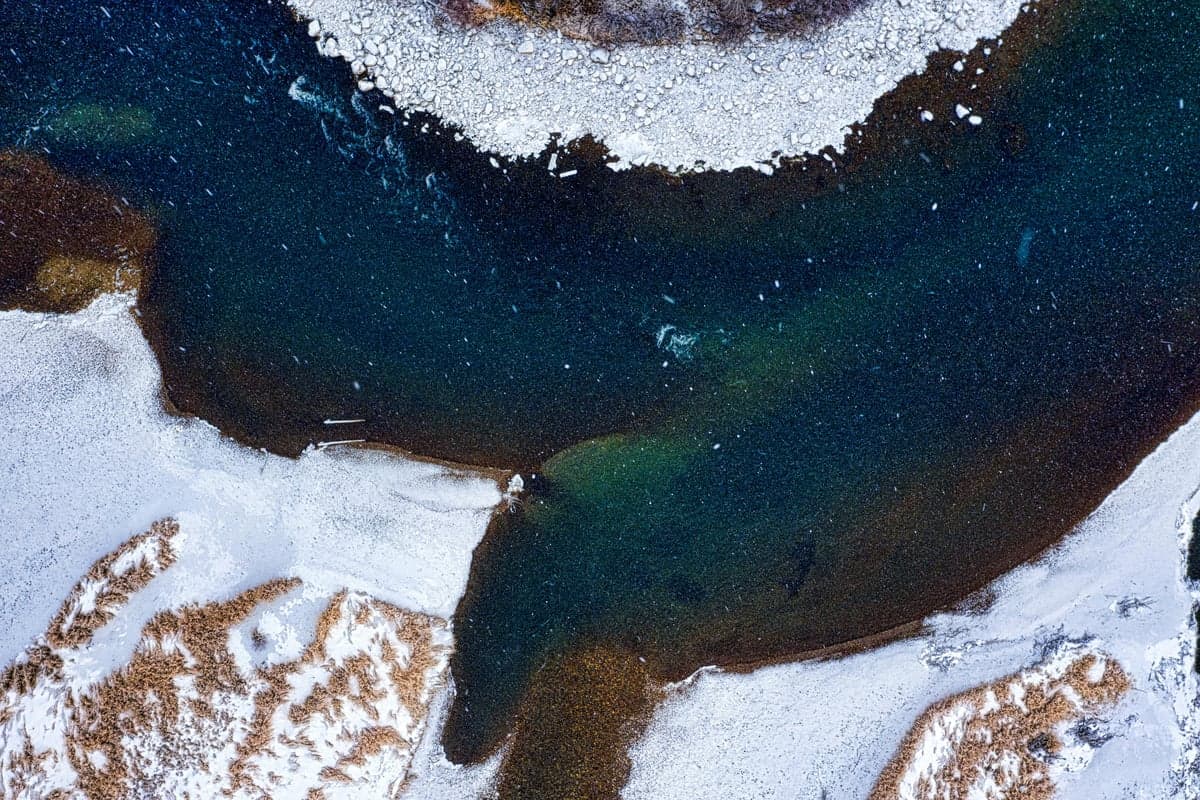
Winter flows on the upper Henry's Fork, with ice-lined banks and cold, clear water
Snowmelt and dam operations create rising, variable flows. Nymphing in Box Canyon is productive even during higher water. The salmonfly hatch starts on the lower river in early May and is worth planning around. The Ranch remains closed until June 15.
Prime time. The Ranch opens June 15 and the PMD hatch kicks off within days. Multiple hatches overlap through July and August, creating complex but rewarding dry fly conditions. Expect crowds in Box Canyon and on the Ranch, especially on weekends.
The best-kept-secret season. BWOs return, brown trout become aggressive as spawning approaches, and crowds thin significantly. The lower river produces large browns on streamers. Water temperatures cool and fishing improves throughout the day.
Box Canyon and the lower river remain open and fishable through winter, though access can be limited by snow. Midges and nymphs are the primary game. Fish respond best during the warmest part of the day. The Ranch closes December 1.
Recent IDFG electrofishing surveys confirm healthy trout populations across the system:
| Section | Species | Density | Avg Size | Trend |
|---|---|---|---|---|
| Box Canyon (2019) | Rainbow trout | 4,924/mile | 6-12" (two strong cohorts) | Up 76% from 2018 |
| Box Canyon (2019) | Mtn. whitefish | 3,201/mile | N/A | Stable |
| St. Anthony (2020) | Brown trout | 96% of catch | Up to 25" | Increasing since 2010 |
| St. Anthony (2020) | Mtn. whitefish | 685/mile | Multiple age classes | Stable |
The Box Canyon's long-term average (1994-2017) of 3,034 rainbow trout per mile makes it one of the most productive tailwater reaches in the Rocky Mountain West.
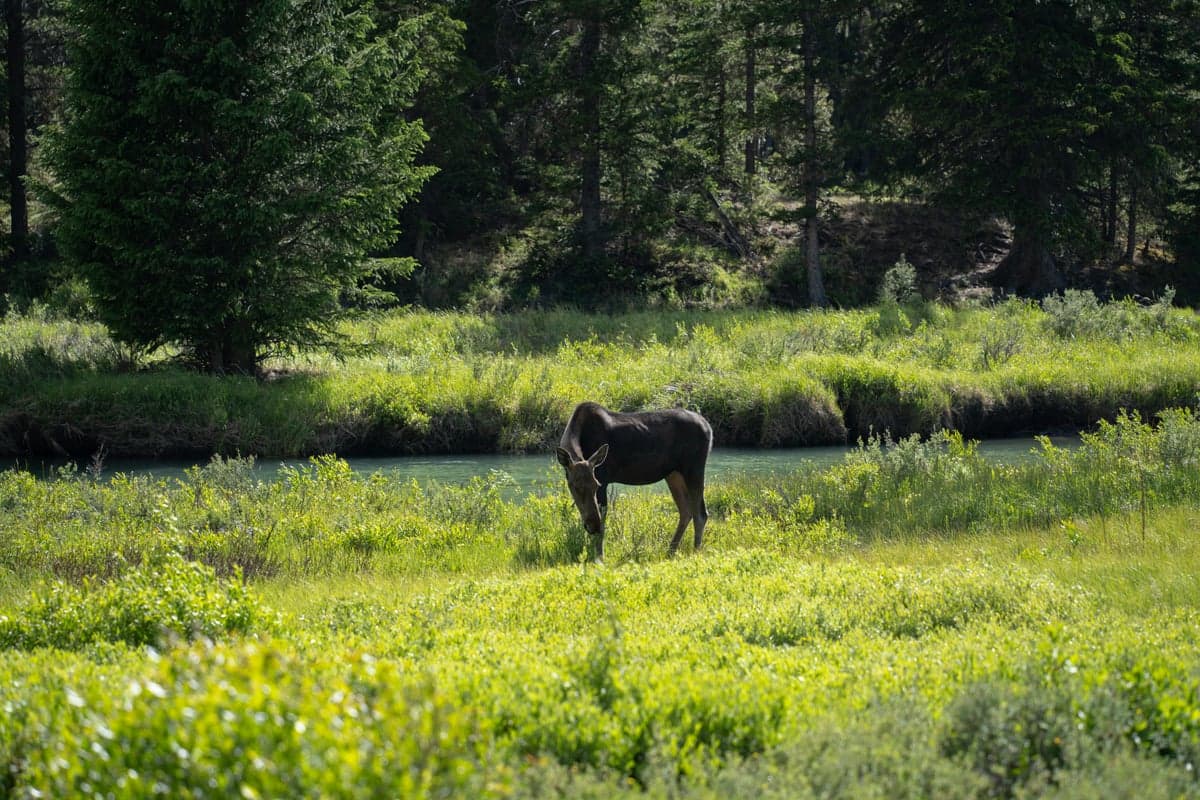
Moose are common along the Henry's Fork corridor, especially in the Island Park and Harriman areas
The Henry's Fork has section-specific regulations. This is a simplified overview, but always verify current rules with Idaho Fish and Game.
| Section | Season | Limit | Special Rules |
|---|---|---|---|
| Big Springs to Henry's Lake Outlet | Closed | No fishing | Protected headwater |
| Upper Henry's Fork to Island Park Dam | Year-round | Catch-and-release (except brook trout) | No bait, barbless hooks |
| Box Canyon | Year-round | 2 trout, no cutthroat | Check for gear restrictions |
| Railroad Ranch (Harriman) | June 15 - Nov 30 | Catch-and-release | Fly-only, barbless hooks, no boats |
| Ashton Dam to Vernon Bridge | Dec 1-Memorial Day: catch-and-release; remainder: 2 trout | No cutthroat harvest | Check current year regs |
| Vernon Bridge to St. Anthony | Year-round | 2 trout | No cutthroat harvest |
License: A valid Idaho fishing license is required. Non-resident licenses are available online through IDFG. Steelhead and salmon permits are separate and not needed for Henry's Fork trout fishing.
Two shops in Island Park serve as the nerve center for Henry's Fork intel:
Guide rates typically run $750-850 per day for one to two anglers, covering boat, gear, lunch, and a full day on the water.
The Island Park area has cabins, campgrounds, and vacation rentals at every price point. Mack's Inn and Last Chance are the closest bases for the upper river. Ashton works well for the lower sections.
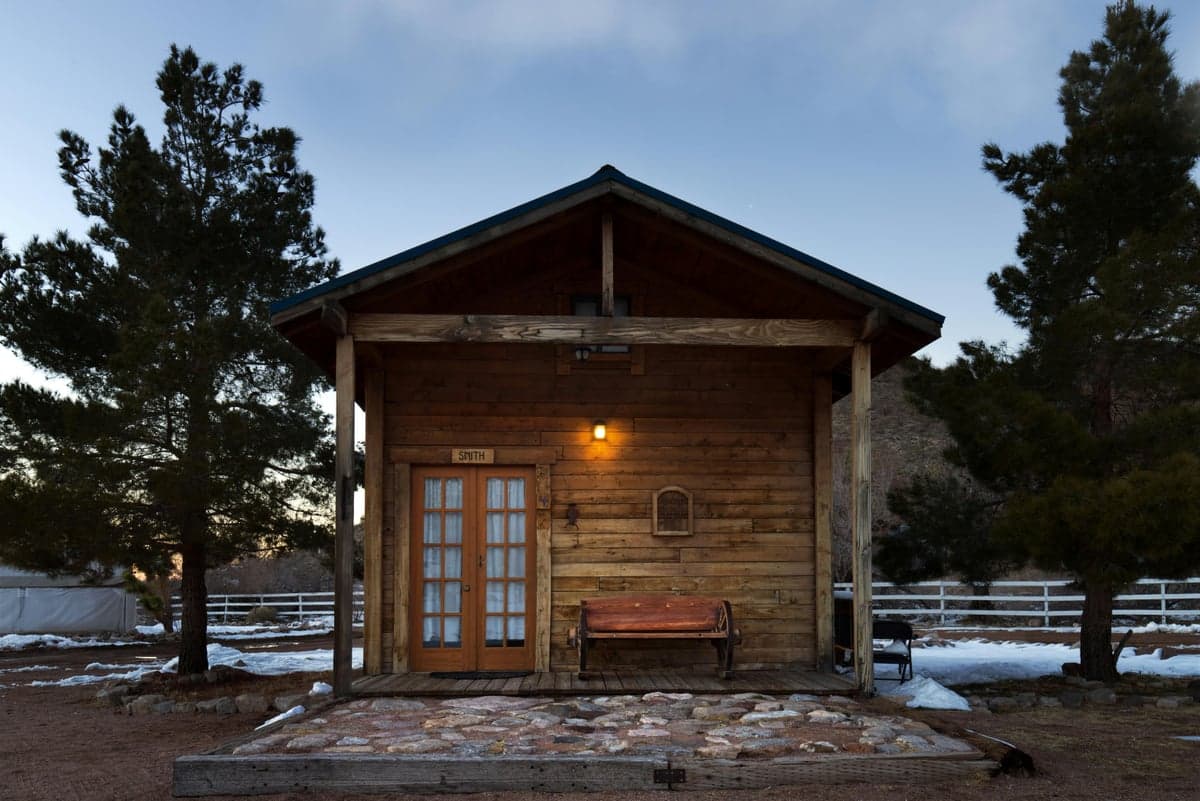
Cabin lodging in the Island Park area puts you within minutes of multiple Henry's Fork sections
The Henry's Fork offers float options from gentle family-friendly stretches to expert-only whitewater.
| Section | Class | Distance | Best For |
|---|---|---|---|
| Big Springs to Mack's Inn | I | 3.9 miles | Families, beginners, SUP, canoes |
| Box Canyon | II | 5.5 miles | Drift boats, experienced paddlers, fishing |
| Osborne to Riverside | II | 6.3 miles | Drift boats, fishing |
| Riverside to Hatchery Ford | III-IV | 5.3 miles | Expert kayakers only |
| Cardiac Canyon | III | 6.7 miles | Rafts, experienced paddlers |
Mack's Inn Float Trips rents kayaks, canoes, and tubes for the gentle upper section. For the whitewater runs, bring your own gear or hire a guide.
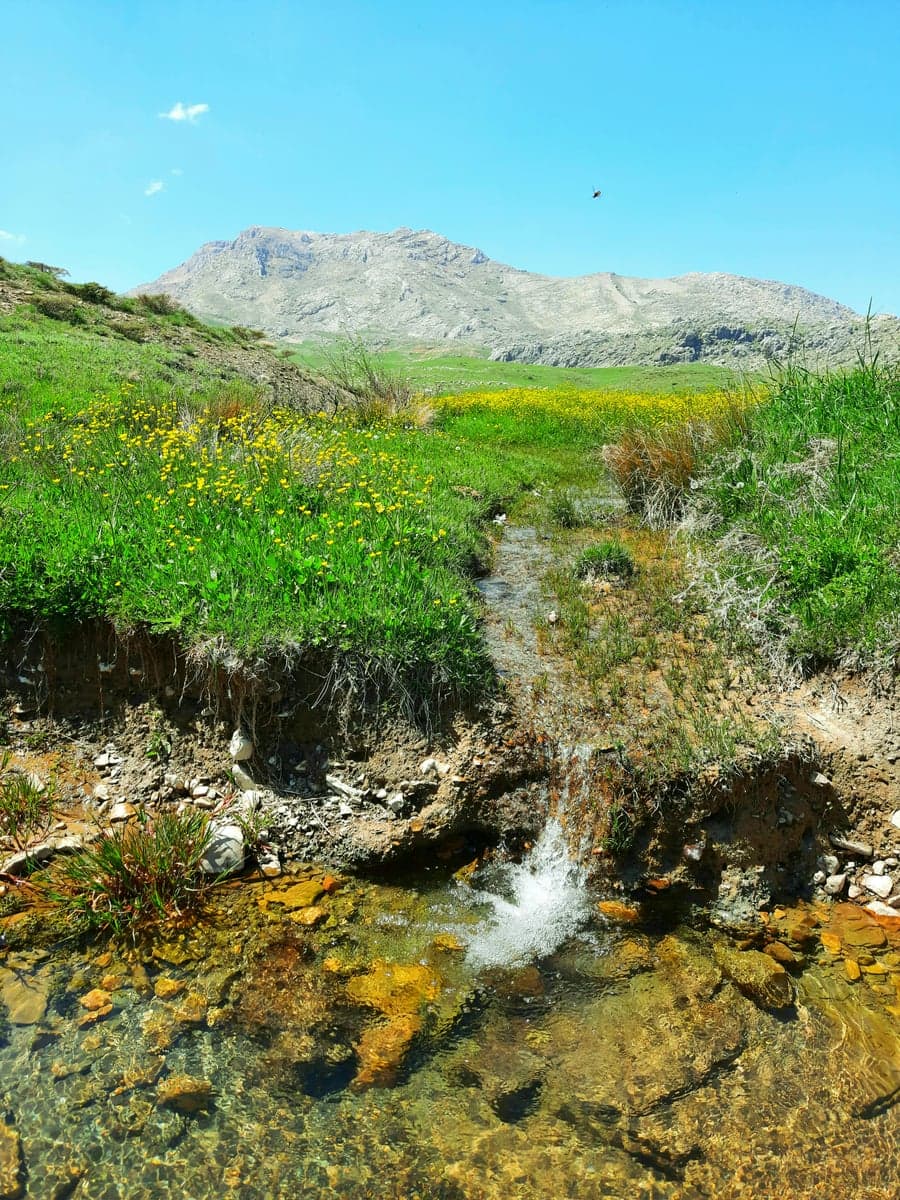
Mountain wildflowers line tributaries feeding the Henry's Fork watershed
The Henry's Fork Foundation has been the river's primary conservation advocate since 1984. They operate a real-time water quality monitoring network tracking temperature, turbidity, and dissolved oxygen with trout stress thresholds built into the dashboard. Their daily water supply reports (published Monday through Friday) are essential reading during irrigation season when dam operations directly affect fishing conditions.
The foundation also coordinates habitat restoration, supports IDFG population monitoring, and advocates for flow management that balances agricultural needs with fishery health. If you fish the Henry's Fork, consider supporting their work.
Where is the best place to fish at Henry's Fork?
The Harriman Ranch section offers exceptional dry fly fishing from June 15 through November 30 with 400-700 CFS ideal flows. Box Canyon provides year-round nymphing with 4,924 rainbow trout per mile. Check current flows on RiverReports to pick the right section for conditions.
What flies to use on Henry's Fork?
Match the hatch: Green Drakes and Brown Drakes (#10-12) in June, PMDs (#16-18) through summer, Callibaetis on flat water, and BWOs (#18-22) in fall. For Box Canyon, stonefly nymphs and Woolly Buggers produce year-round.
What fish are in Henry's Fork?
Henry's Fork holds rainbow trout (dominant), brown trout, cutthroat trout, brook trout, mountain whitefish, and cutbow hybrids. The Harriman Ranch is known for large selective rainbows averaging 16-20 inches.
When is the best time to fly fish Henry's Fork?
Peak dry fly season runs June through September, with the legendary Green Drake hatch in mid-June. Box Canyon fishes well year-round. Check RiverReports flow data to time your trip around stable conditions.
Everything this river feeds, by month. Filter by bug, category, or fly size, and switch the axis to see what comes off at what time of day. Pulled from our western hatch and forage guide.
Track Henry's Fork conditions on RiverReports to check flows at Island Park, Ashton, and St. Anthony before you head out. Compare current flows to historical averages to gauge whether the river is running high, normal, or low for the time of year.
Key things to watch:
Check conditions regularly during spring runoff (April through June) when flows can change dramatically day to day. During summer irrigation season, watch for sudden drops that can strand boats and concentrate fish.
Weekly flow updates and fishing intel.
© 2026 RiverReports, Inc.