Madison River Fly Fishing Report: Flows, Hatches & Access
Quick Reference
| What | When | Key Numbers |
|---|---|---|
| Salmonfly hatch | Mid-June to early July | Sizes 4-8; starts lower river, migrates upstream |
| Mother's Day Caddis | Early to mid-May | Sizes 14-16; warmest hours of the day |
| PMD hatch | Late June through July | Sizes 14-16; upper river riffles |
| Ideal wading flows | Year-round when stable | 900-1,500 CFS at Kirby Ranch |
| Float fishing | June through October | Lyons Bridge to Ennis; 1,000-1,200 CFS ideal |
| Guided trips | Book by March for summer | $550-750/day for 1-2 anglers |
| Fly shop | Madison River Outfitters | (406) 646-9644, West Yellowstone |
| Fly shop | The Tackle Shop | (406) 682-4263, Ennis |
FISHABLE
Overview
The Madison River is one of the most recognized names in western fly fishing. It runs roughly 140 miles from its origin at Madison Junction in Yellowstone National Park, where the Firehole and Gibbon Rivers merge, to Three Forks, where it joins the Jefferson and Gallatin to form the Missouri River.
What makes the Madison productive is its character: miles of wide, readable riffles with consistent pocket water that holds fish throughout. The famous "Fifty Mile Riffle" section between Lyons Bridge and Ennis holds roughly 2,000 trout per mile, mostly 10 inches or larger, a mix of rainbow and brown trout that respond to dries, nymphs, and streamers depending on the season.
The river is entirely wild trout water. No stocking. That means the fish are healthy, wary, and adapted to the river. Browns tend to dominate the lower sections with their undercut banks and deeper structure. Rainbows are more common in the upper riffles. Mountain whitefish are abundant throughout and will hit nymphs all day.
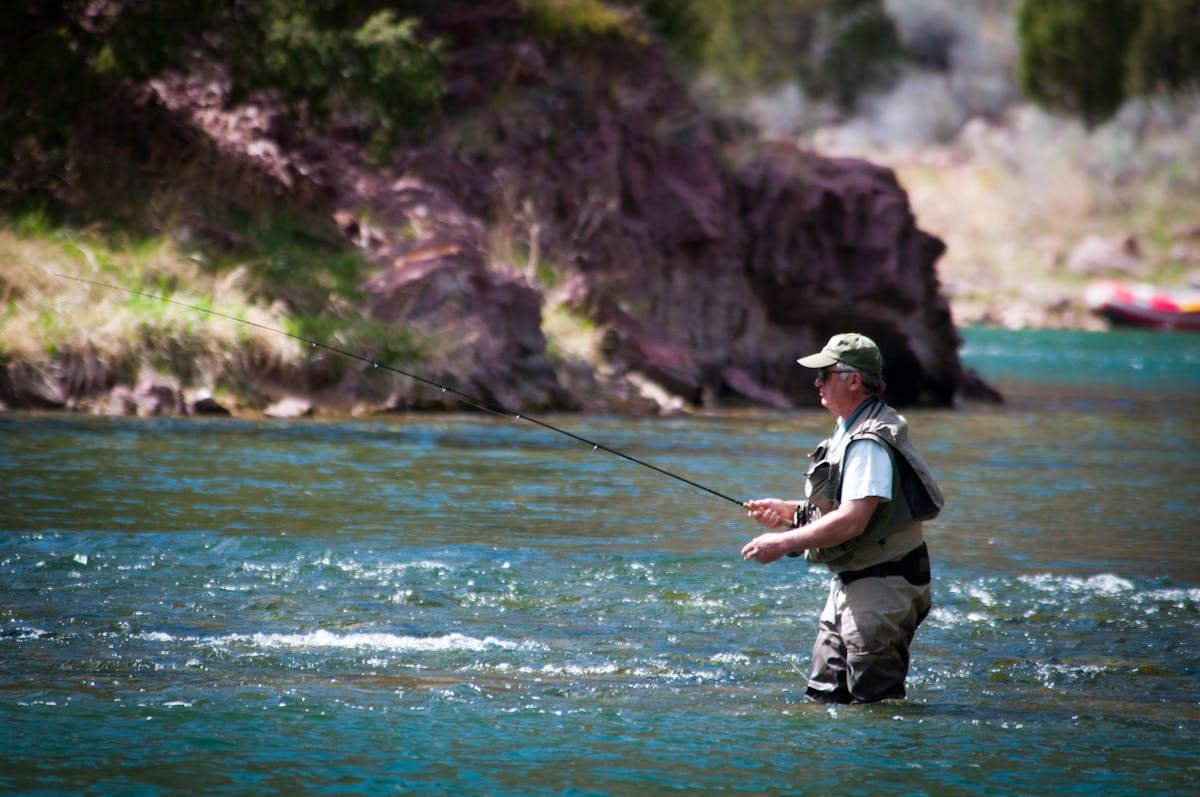
Fly fishing the Madison's signature riffle water, where long drifts and careful presentation pay off
Location and Access
The Madison flows through southwestern Montana between two mountain ranges: the Madison Range to the east and the Gravelly Range to the west. Ennis is the primary staging town, positioned in the heart of the best fishing water. West Yellowstone provides access to the upper river near the park boundary.
Key Fishing Access Sites (upstream to downstream)
Upper River (Quake Lake to Lyons Bridge)
- Raynolds Pass: Wade access to fast pocket water below Quake Lake. No boats allowed in this stretch.
- Lyons Bridge FAS: Two concrete ramps on the west bank with a large parking area. This is where the float section begins.
Middle River (Lyons Bridge to Varney Bridge)
- Windy Point FAS: BLM-managed site on the east bank with two concrete ramps, overflow parking, and restrooms. Good put-in for the upper float.
- Palisades FAS: Well-maintained concrete ramp, large parking lot, and campgrounds along the river.
- McAtee Bridge FAS: Concrete ramp on the west side. The McAtee-to-Varney stretch is popular for half-day floats.
- Varney Bridge FAS: River right, just above the bridge. The ramp is concrete but steep, and the area can run shallow. Expect some gravel dragging.
Lower River (Varney to Ennis Lake)
- Ennis Bridge: Town access in Ennis.
- Valley Garden FAS: Two miles downstream of Ennis. Limited access below here until the channels reach Ennis Lake.
Below Ennis Lake
- Warm Springs BLM day-use area: Access to the lower Madison.
- Black's Ford Access: Seven miles downstream from Warm Springs, with a high concentration of trout in this stretch.
Most boat ramps are well-maintained concrete. The Madison is one of Montana's best-maintained access systems for a popular river.
Flow Windows
Track Madison River flows in real time on RiverReports before planning your trip.
| Flow (CFS at Kirby Ranch) | Conditions |
|---|---|
| Below 700 | Low water. Fish stack in deeper runs. Wading easy but spooky fish. Early morning and evening best. |
| 900-1,500 | The sweet spot. Comfortable wading, excellent floating, fish spread throughout the riffles. |
| 1,500-2,500 | High but fishable. Wading limited to edges and shallower riffles. Floating still productive. |
| Above 2,500 | Runoff conditions. Fast water, reduced visibility. Fish pushed to banks and eddies. Streamers and heavy nymphs along structure. |
| Above 4,000 | Unsafe for most. Experienced boaters only. Not productive fishing. |
Spring runoff typically peaks in late May to mid-June, depending on snowpack. By late June, the river usually drops back into the fishable range and stays there through fall.
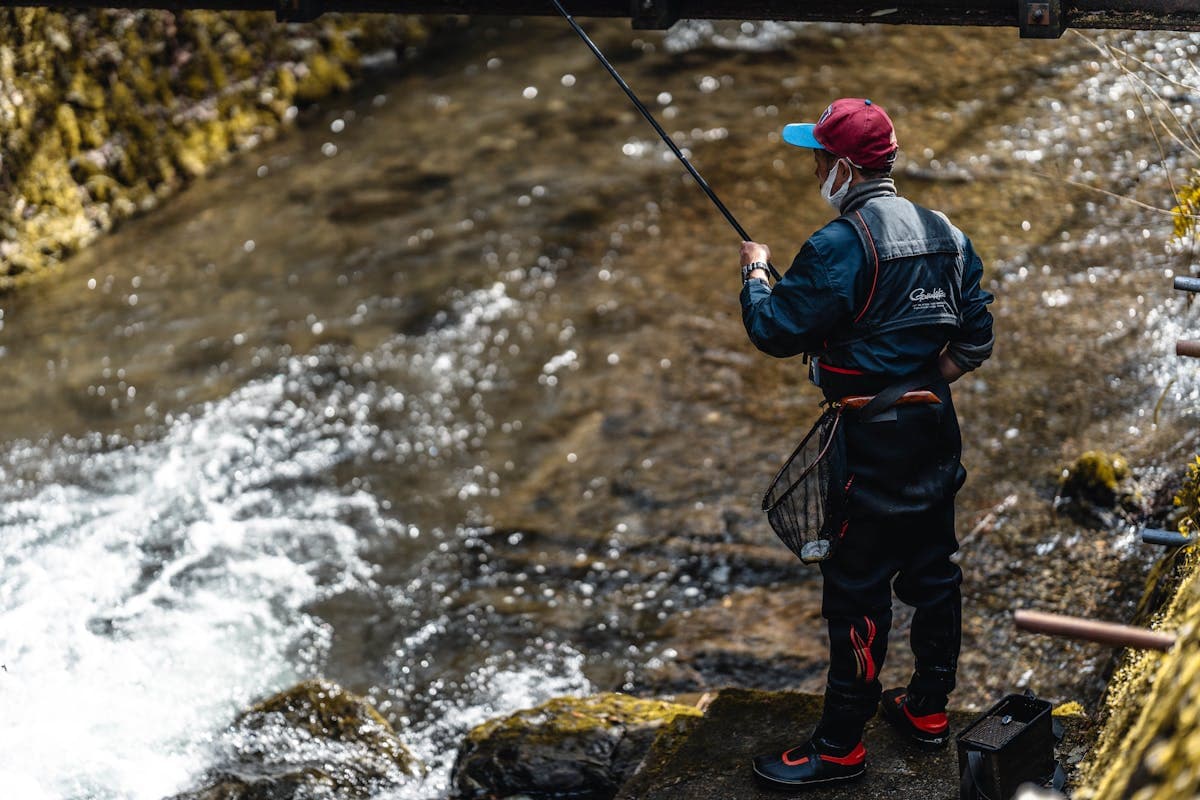
Casting on a sunny stretch of riffle water, the bread-and-butter of Madison River fishing
Key Sections
Yellowstone Park to Hebgen Lake (19 miles)
The uppermost section flows through Yellowstone's meadows, resembling a large spring creek. Fish average 10-14 inches with occasional 20-inch fish. Fly fishing only in the park. Technical dry fly and nymph water that rewards delicate presentation. October is considered the premier month here, when large browns move upstream and fewer anglers crowd the banks.
The Slide (Quake Lake to Raynolds Pass)
Created by the 1959 earthquake that dammed Earthquake Lake, this section features large-boulder pocket water with very high trout density and above-average fish size. The trade-off: wading is genuinely challenging. Bowling-ball-sized rocks and fast current demand felt soles and a wading staff. The river here fishes best once flows drop below 1,300 CFS, usually by late June. Fall fishing is excellent for big browns on streamers.
Raynolds Pass to Lyons Bridge
A wade-only section (no float fishing allowed) that transitions from canyon pocket water to classic large riffles. Fish are less pressured here than in the float section. During summer, Elk Hair Caddis (#14-16), Blue Winged Olives, and Pale Morning Duns work well.
Lyons Bridge to McAtee Bridge (The Upper Float)
The beginning of the famous "Fifty Mile Riffle." Outstanding trout habitat with very high catch rates. Nymphing, dry fly, and streamer fishing all produce depending on the season and time of day. This section sees the heaviest guide traffic from mid-June through September.
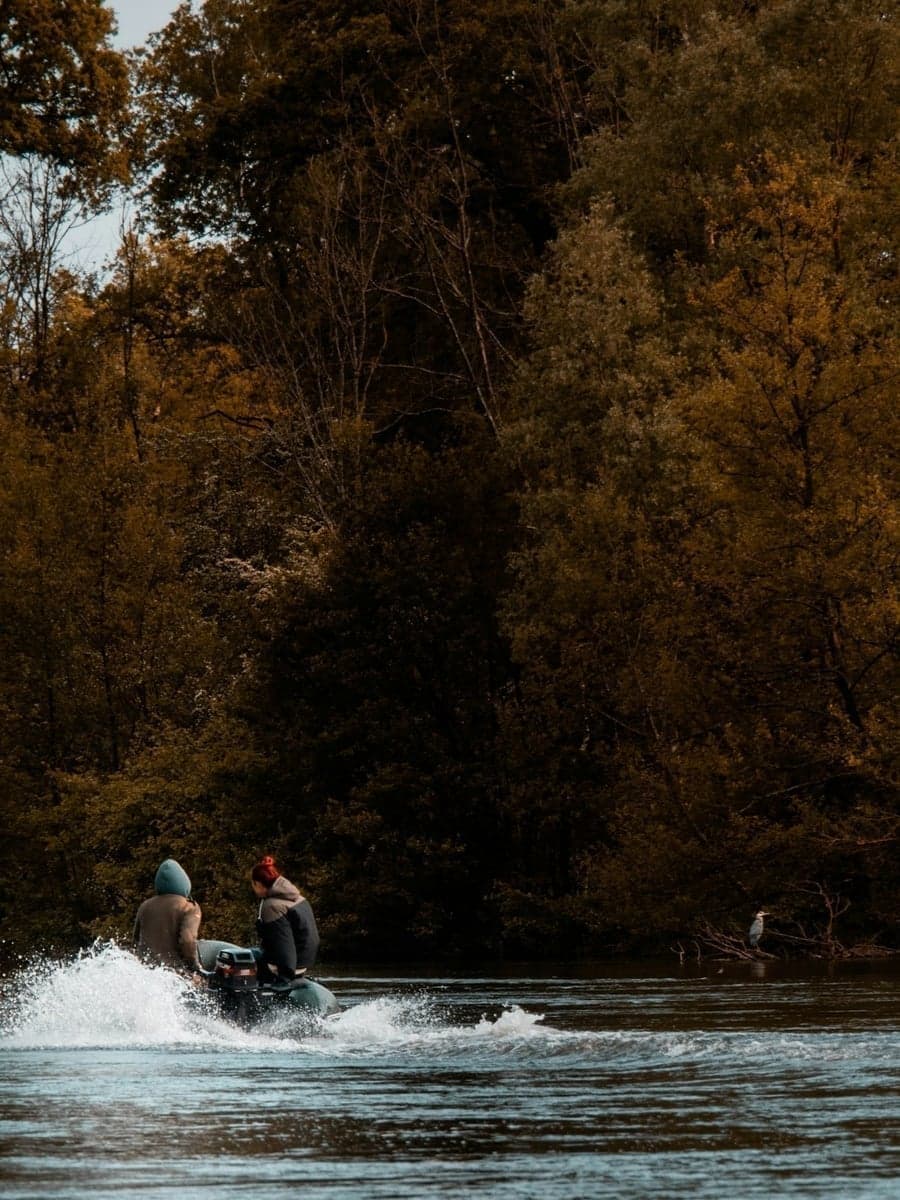
Drift boats are the standard way to cover water on the Madison's float sections
McAtee to Varney Bridge
More subtle water than the upper float. The river is more uniform in character, requiring experienced reading of the water. Montana Angler considers this some of the best dry fly fishing on the Madison. A good option for anglers who want fewer boats around them.
Varney Bridge to Ennis
This stretch holds the largest brown trout on the river. Deep runs, cut banks, and gravel depressions concentrate fish. Shorter floats work well here because the structure is concentrated and rewards thorough coverage of each spot. Barbless, single-pointed hooks required from Varney Bridge to Ennis Lake.
Bear Trap Canyon (Below Ennis Lake)
After the river pools in Ennis Lake, it enters Bear Trap Canyon, a remote, roadless wilderness canyon managed by the BLM. This is both a whitewater destination (Class III-IV with the notorious Kitchen Sink rapid) and productive fishing water. Access is by hiking or floating only. Salmonfly, Mother's Day Caddis, PMD, and baetis hatches are all strong in the canyon. Crayfish patterns work well for the browns that hold in the deeper pools. See the "Bear Trap Canyon: Whitewater" section below for floating details.
Lower Madison (Warm Springs to Three Forks)
A spring and fall fishery only. Summer water temperatures get too warm to ethically fish from roughly late July through mid-September. Massive weed beds concentrate trout in specific channels and runs. February through early July and mid-September through December are the productive windows. Less pressured than the upper river.
Hatches and Fly Selection
The Madison is a hatch-driven river from spring through fall. Matching what's on the water makes a meaningful difference in catch rates.
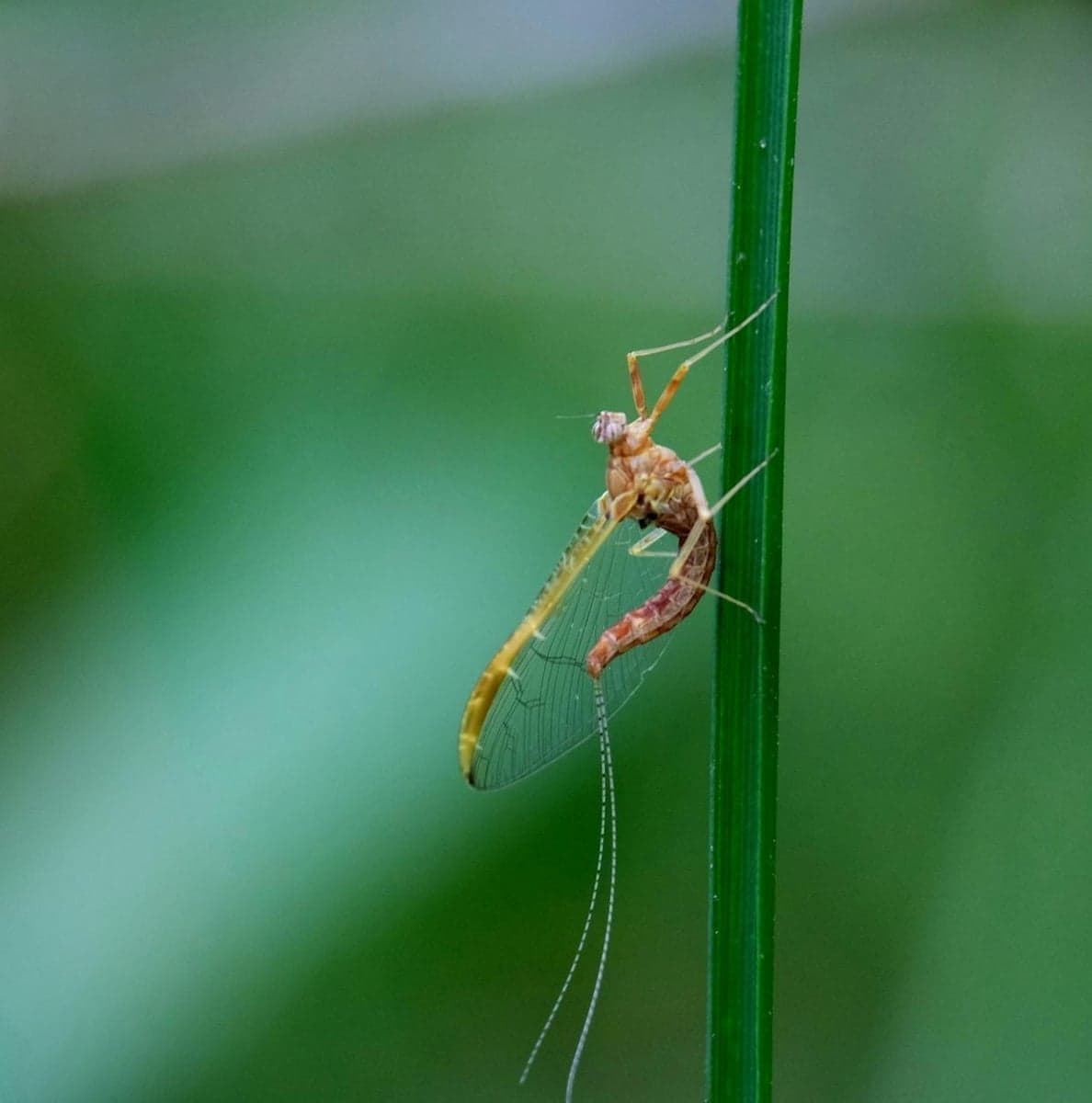
A mayfly rests on a stem, part of the prolific hatches that drive Madison River fishing
Hatch Calendar
| Hatch | Timing | Sizes | Notes |
|---|---|---|---|
| Blue Winged Olives | Late March-May, Sept-Nov | 14-22 | Spring sizes 14-16; fall sizes 16-22. Best on overcast days. |
| March Browns | Late April-mid May | 10-14 | Size 12 most common. Short but productive hatch. |
| Mother's Day Caddis | Early-mid May | 12-20 | Sizes 14-16 most prevalent. Warmest hours of the day. |
| Salmonflies | Mid-June-early July | 4-8 | The signature hatch. Starts lower, migrates upstream. Draws crowds. |
| Golden Stoneflies | Late June-July | 8-12 | Follow right behind the salmonflies. Less chaotic than the salmonfly hatch. |
| PMDs (Pale Morning Duns) | Late June-July | 14-16 | Guides' favorite hatch. Consistent and productive, especially in upper riffles. |
| Yellow Sallies | June-early August | 8-16 | Sizes 10-12 most common. Reliable summer hatch. |
| Spruce Moths | Mid July-mid August | 14-16 | Terrestrial. Particularly good above Ruby Creek. |
| Grasshoppers | Mid July-October | 8-16 | Dominant summer pattern once established. Fish crush hoppers. |
| Tricos | August-September | 18-24 | Early morning spinner falls on quieter water. |
Essential Fly Box
Dry Flies: Salmonfly (#4-8), Chubby Chernobyl (#8-12), Elk Hair Caddis (#14-16), Parachute Adams (#14-18), PMD (#14-16), BWO (#16-20), Dave's Hopper (#8-12), Stimulator (#8-14)
Nymphs: Pat's Rubber Legs (#6-10), Stonefly nymph (#6-8), Pheasant Tail (#14-18), Hare's Ear (#12-16), Copper John (#14-18), Zebra Midge (#18-22), Perdigon (#14-18), San Juan Worm (#12-14)
Streamers: Woolly Bugger (#4-8 in olive, black, brown), Sculpzilla (#4-6), Slumpbuster (#4-6), Zonker (#4-8), Muddler Minnow (#6-10)
Double Nymph Rig
The most productive year-round technique on the Madison is a double nymph rig: something large on top (stonefly nymph, large caddis nymph, or small streamer) above something small (perdigon, pheasant tail, small caddis, or zebra midge). A 9-foot 5-weight rod handles most situations. Move to a 6-weight with sink-tip for streamers.
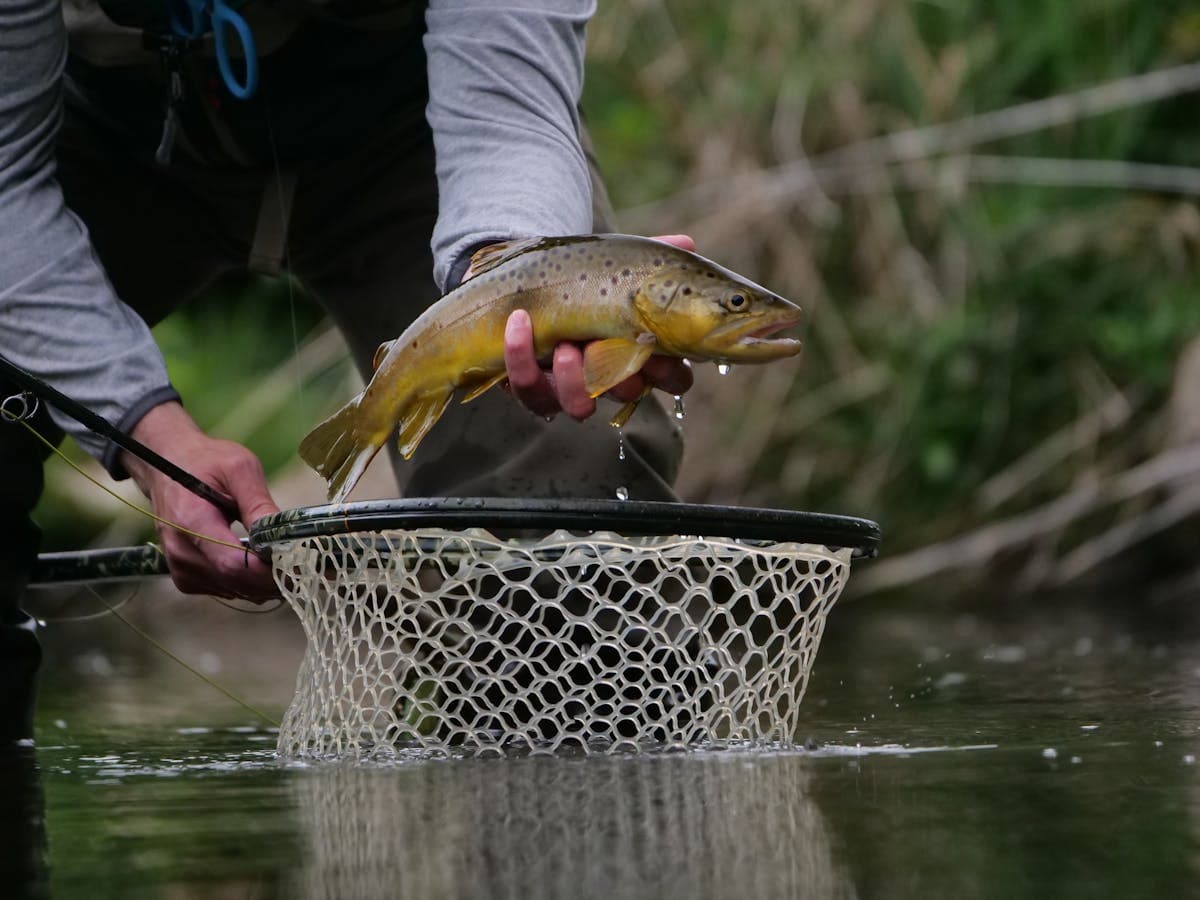
A brown trout brought to the net, the reward for reading Madison River water correctly
Seasonal Fishing Calendar
Early Spring (March-April)
Blue Winged Olives kick off the dry fly season on overcast days. Nymph deep runs with egg patterns, San Juan Worms, and crayfish nymphs. Brown trout are post-spawn and hungry. Fish are concentrated in slower, deeper water. Dress warm and target the 11am-3pm window when water temperatures rise a few degrees.
Late Spring (May)
Mother's Day Caddis brings the first consistent dry fly action. San Juan Worms, eggs, and sculpin patterns still work well subsurface. Runoff can start early depending on snowpack, so watch flows on RiverReports closely. The Slide section becomes accessible as flows drop.
Early Summer (June-July)
This is why people come to the Madison. The salmonfly hatch begins mid-June on the lower river and migrates upstream through early July. Golden stoneflies follow close behind. PMDs blanket the upper riffles starting late June. This is the highest-pressure period on the river. If you want solitude, the McAtee-to-Varney section sees fewer boats than the upper float.
Late Summer (July-September)
Terrestrials take over. Grasshoppers, ants, and beetles are the go-to dry flies from mid-July forward. Spruce moths provide a bonus hatch above Ruby Creek in July and August. Streamer fishing picks up for anglers targeting larger browns. Late summer is when hoot-owl restrictions may take effect: when water temps hit 73 degrees for three consecutive days, fishing is closed from 2pm to midnight. This typically affects the lower Madison from late July through August.
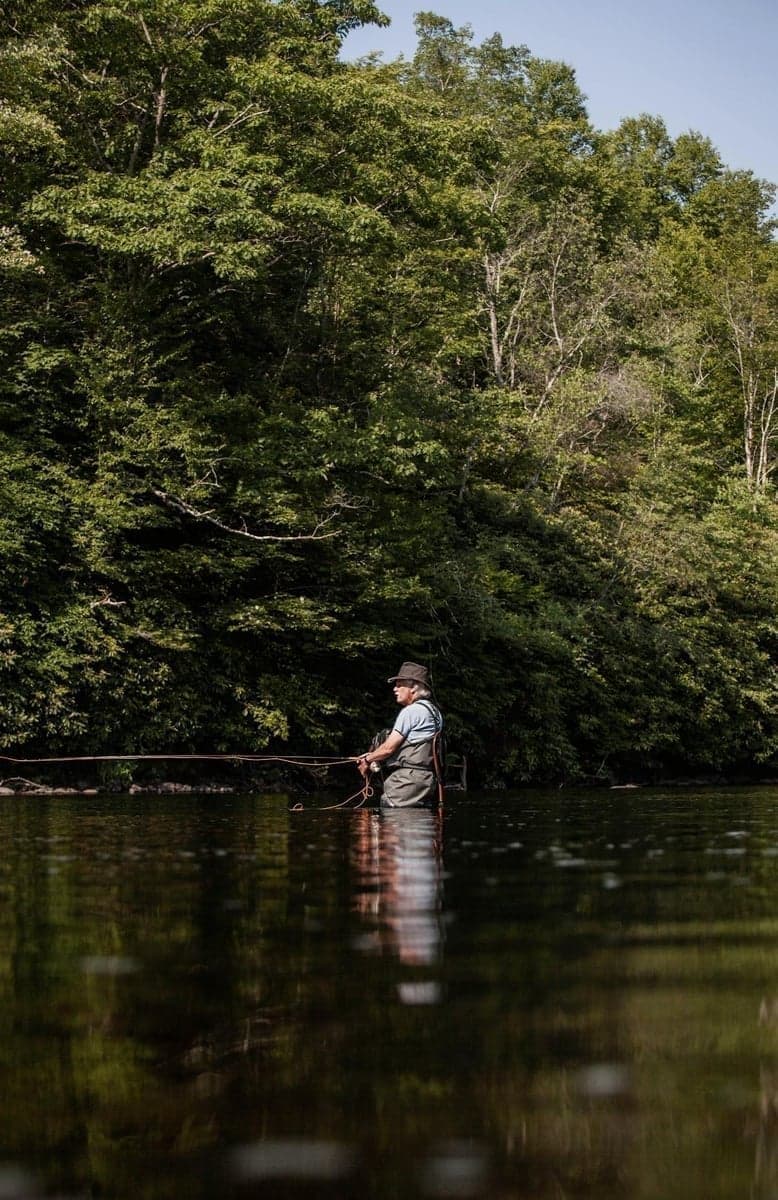
Summer on the Madison means hopper fishing, warm evenings, and peak-season crowds
Fall (September-November)
Baetis hatches return, and streamer fishing becomes very productive as brown trout enter pre-spawn mode and become aggressive. October is the insider's favorite month: large fish, fewer anglers, and reliable BWO hatches. Hopper fishing can extend into early October depending on weather. The upper river in Yellowstone produces its biggest fish of the year.
Winter (December-February)
Nymphing with egg patterns, San Juan Worms, crayfish, and small midges. Target deeper runs where fish hold through cold months. The lower Madison (Warm Springs to Three Forks) reopens in February and can produce well before spring crowds arrive.
Fish Population Data
Montana Fish, Wildlife and Parks monitors the Madison at index sections including Pine Butte and Varney. The FWP abundance management goals target 2,300 fish/mile at Pine Butte and 1,200 fish/mile at Varney for trout 10 inches or larger.
Recent surveys show mixed results. The 2023 monitoring report indicated that abundance goals were not met for any of the three sections. The Pine Butte section estimated roughly 1,200 trout per mile (10 inches and above), about half the management goal and on a downward trend since 2018. The biggest factor was a decline in rainbow trout between 6 and 10 inches.
Despite these numbers, the Madison remains highly productive compared to most western rivers. Average fish size is healthy, and the river produces consistent 14-16 inch fish with regular opportunities at 18-20 inch browns, particularly in the Varney to Ennis section and Bear Trap Canyon.
Bear Trap Canyon: Whitewater
Bear Trap Canyon offers a unique combination of Class III-IV whitewater and excellent trout fishing in a wilderness setting below Ennis Lake.
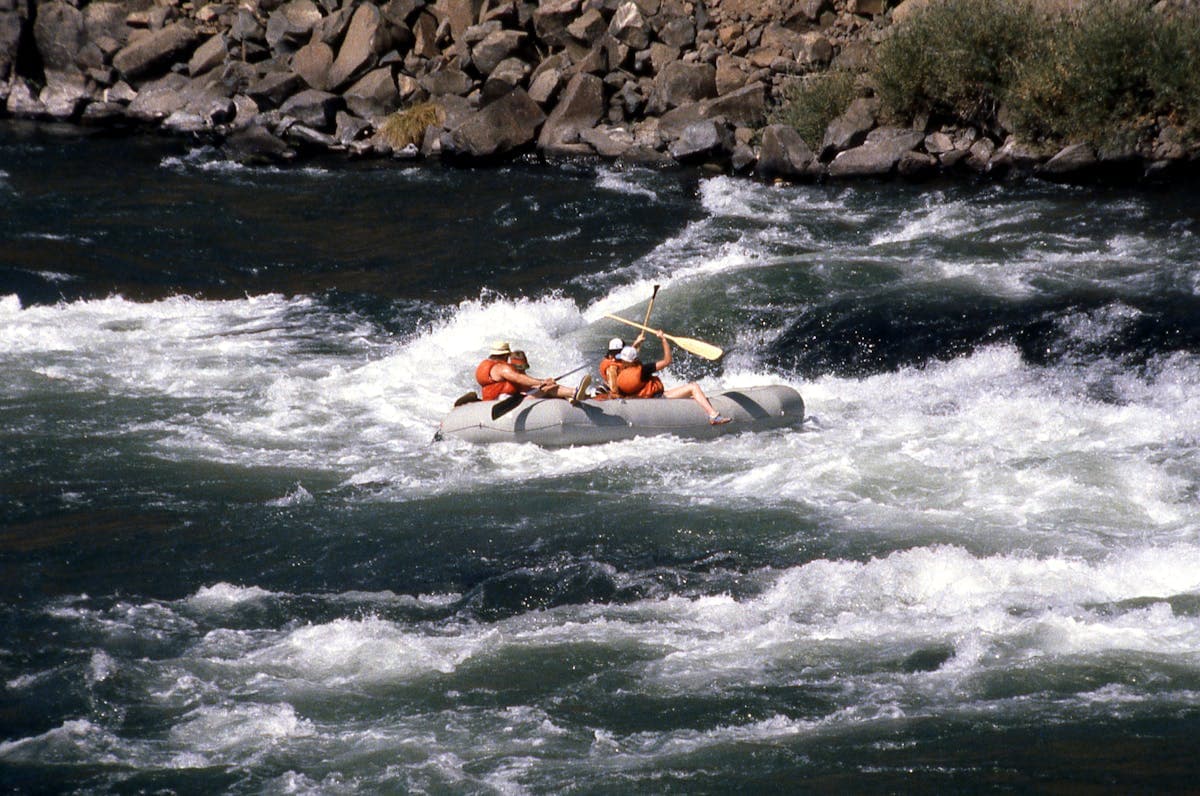
Whitewater rafting through a canyon, similar to the Bear Trap Canyon experience on the Madison
The Run
The run is roughly 10 miles from Madison Dam (put-in) through the canyon. The first few miles feature Class III rapids as warmup water, followed by scenic flatwater, then the main event: Kitchen Sink, a technical Class IV rapid that becomes Class V at higher flows. Montana Whitewater runs guided trips through the canyon under a BLM special-use permit, with small groups of 2-3 boats.
Flow Considerations
| Flow (CFS) | Difficulty |
|---|---|
| 1,100-2,000 | Moderate. Good introductory flow for experienced paddlers. |
| 2,000-3,000 | Serious whitewater. Kitchen Sink gets technical. |
| Above 3,000 | Full-on. Kitchen Sink approaches Class V. Only for experts. |
| Above 4,000 | Dangerous. Not recommended. |
The river typically runs at 1,100 CFS or higher. Rafters must be 16 or older to run Kitchen Sink, and outfitters may require guests to walk around the rapid at higher water levels. Sign in at the registration box before launching, and do not use watercraft shorter than 14 feet.
Regulations
Montana fishing regulations for the Madison include several section-specific rules. Always verify current rules through Montana FWP before your trip.
Key rules for 2025-2026:
- Varney Bridge to Ennis Lake: Barbless, single-pointed hooks required.
- Inside Yellowstone Park: Fly fishing only with park-specific regulations.
- Float fishing restrictions: No fishing from a moving human-powered boat on certain sections (Quake Lake to Lyons Bridge, Hwy 287 bridge to Ennis Lake).
- Catch-and-release: Much of the river is catch-and-release for trout with artificial lures only.
- Hoot-owl closures: During hot summer periods, fishing may be restricted from 2pm to midnight on specific stretches when water temperatures exceed 73 degrees for three consecutive days.
A Montana fishing license is required for all anglers age 12 and over. Nonresident licenses are available through the Montana FWP online licensing system.
Guides and Outfitters
The Madison supports a large guide community based primarily in Ennis and West Yellowstone.
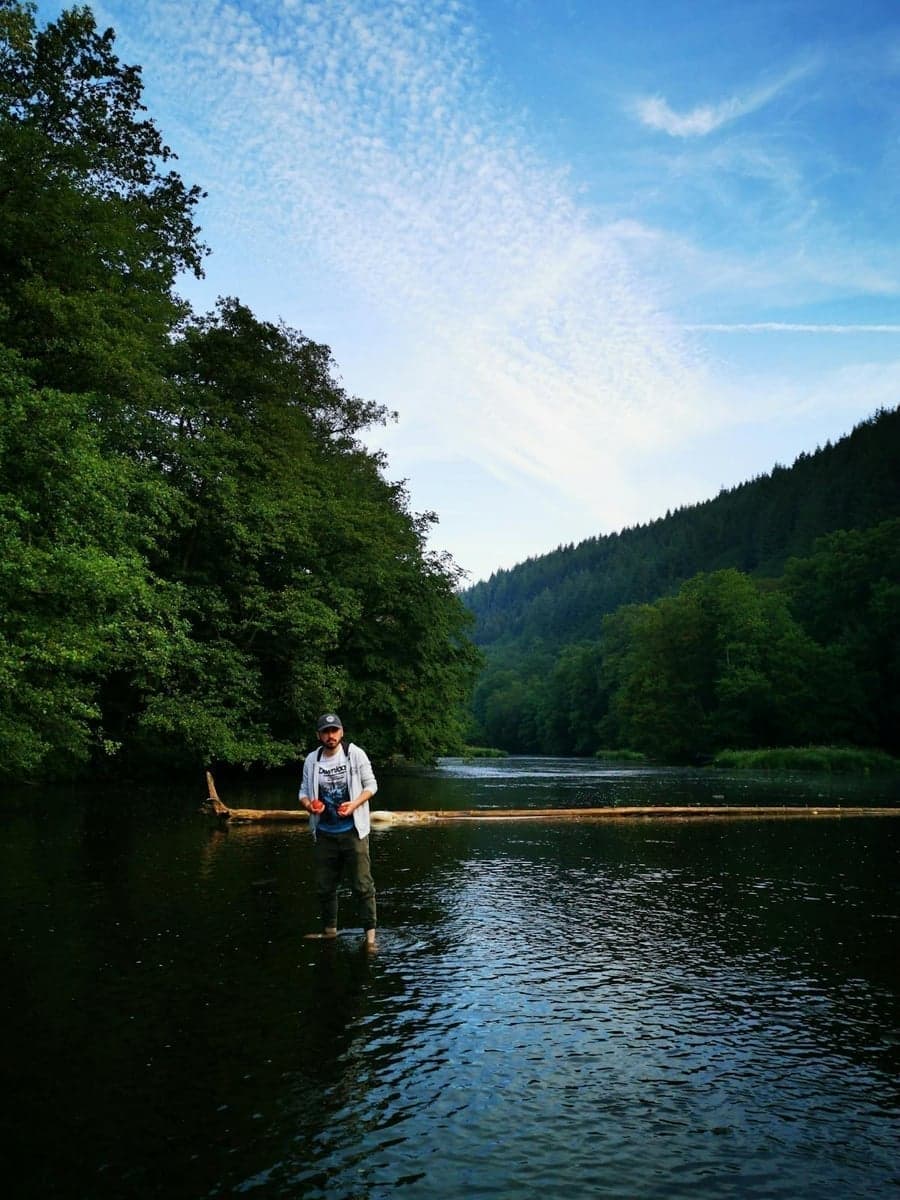
Wade fishing a quiet section, the kind of water where a careful approach pays dividends
Madison River Outfitters in West Yellowstone has been operating since 1981. Full-day float trips run $750 for 1-2 anglers, including guide, McKenzie-style drift boat, lunch, beverages, and rental gear if needed. Trips start at 8am and cover roughly 8 hours of fishing. Evening float options available July and August.
Hooked Outfitting in Ennis offers float trips on the Madison, Yellowstone, Jefferson, and Missouri Rivers. Ennis-based operation with local knowledge of the middle and lower Madison sections.
Madison River Fishing Company runs drift boat trips at $700 for a full day (1-2 anglers) and $550-585 for half days. Includes flies, tackle, lunch, and beverages.
Montana Angling Company offers both float and wade options with high-end drift boats and rafts outfitted for fly fishing.
Book guided trips by March for peak summer dates (June-July). Shoulder seasons (May, September-October) are easier to book and often produce better fishing with fewer crowds.
Safety and Hazards
The Madison is a powerful river. Respect it.
- Wading: The water often looks shallower than it is. The bottom is large cobble that shifts underfoot. Use felt soles or studded boots and bring a wading staff, especially in The Slide section. Wade in pairs when possible.
- Cold water: The Madison runs cold year-round from dam releases. Dress in layers and carry emergency warmth even in summer. Hypothermia is a real risk if you take a swim.
- High water: Spring runoff (late May through mid-June) creates fast, powerful currents. Floating during runoff requires experience. Do not wade in water above your thighs during high flows.
- Hoot-owl restrictions: These exist to protect fish during thermal stress. When water temperatures exceed 73 degrees (typically late July through August), handling fish becomes dangerous for their survival. Respect the restrictions.
- Bear Trap Canyon: Class IV-V whitewater in a roadless canyon. Portage Kitchen Sink if you are uncertain. No cell service. Self-rescue skills required for private boaters.
Frequently Asked Questions
Is fly fishing the Madison River good?
The Madison River is consistently ranked among the best trout rivers in the world. With over 3,000 trout per mile in the upper sections, it offers excellent dry fly, nymph, and streamer fishing year-round. The salmonfly hatch in June is one of the most legendary events in Western fly fishing.
Where is the best place to fish the Madison River?
The upper river between Quake Lake and Ennis offers the highest trout densities and best wade access. The float section from Lyons Bridge to Ennis is the most popular guided stretch. For solitude, try the wade-only water near the Slide Inn or the channels below Varney Bridge.
What is the best month to fish the Madison River?
Late June through early July offers the most exciting fishing during the salmonfly hatch. September and October provide excellent dry fly fishing with smaller crowds and cooler temperatures. May brings the Mother's Day caddis hatch with good numbers of rising fish.
What's on the menu
Everything this river feeds, by month. Filter by bug, category, or fly size, and switch the axis to see what comes off at what time of day. Pulled from our western hatch and forage guide.
Using RiverReports
Check current Madison River flows on RiverReports before every trip. The key gauges to watch:
- Madison at Kirby Ranch (06038800): The primary gauge for the upper float section. Your target is 900-1,500 CFS for ideal conditions.
- Madison near Cameron (06040000): Covers the middle river near the popular float sections.
- Madison below Ennis Lake (06041000): Monitors flows entering Bear Trap Canyon and the lower river.
Compare current flows to historical averages to understand whether the river is running high, low, or at its seasonal norm. During spring runoff, check gauges daily since conditions can change fast. In summer, watch for hoot-owl restriction announcements through Montana FWP.
The Madison rewards preparation. Know your flows, match the hatch, and pick the right section for the conditions. It has been drawing anglers from around the world for decades, and for good reason: the fishing is consistently excellent across all four seasons.
River Intel Weekly
Weekly flow updates and fishing intel.
© 2026 RiverReports, Inc.