Grey Reef
Fishable
Flow500 CFS
Trendstable
Clarityrain-stained downstream; cleanest water is up near the dam
Temp62-65°F
Sparkle Wing RS2 #18Poxyback PMD #18Sparkle Worm Red #10Pine Squirrel Leech #10
| What | When | Key Numbers |
|---|---|---|
| Grey Reef fishing | Year-round (spring best for numbers) | 500-1,500 CFS ideal; 3,500+ trout/mile (WGFD) |
| Miracle Mile fishing | Year-round (spring rainbows, fall browns) | 400-1,200 CFS ideal wading; 3,200+ trout/mile |
| Guided float trips | Book by February for spring | $550-700/day (1-2 anglers) |
| Fall trophy browns | Mid-October through November | 20-30" spawners; streamers and egg patterns |
| Fly shop | Platte River Fly Shop | 7400 State Hwy 220, Casper, WY |
| Regulations | Single-point barbless hooks required (2026) | Artificial flies/lures only at Grey Reef |
Two very different fisheries share this river, and the one you should pick depends on whether you have a boat.
The North Platte River in central Wyoming holds two of the most productive tailwater fisheries in the Rocky Mountain West. The Miracle Mile, a 5.5-to-8-mile stretch between Kortes Dam and Pathfinder Reservoir, and Grey Reef, the 40-mile tailwater below Grey Reef Dam south of Casper, consistently rank among the top trout waters in the lower 48.
These are not scenery-first rivers. The landscape is high desert: sagebrush flats, sparse cottonwoods, and wind that will test your casting stroke. What they lack in postcard beauty they make up for in sheer biomass. Wyoming Game and Fish Department electrofishing surveys show 3,200 trout per mile at the Miracle Mile and up to 8,000 per mile in the upper Grey Reef. Fish average 16 to 20 inches, with legitimate shots at 10-pounders throughout the year.
Both fisheries owe their productivity to dam-controlled releases that keep water temperatures stable and nutrient-rich. Cold, oxygenated water from deep reservoir outlets creates ideal growing conditions for rainbow and brown trout, producing the kind of fish densities that draw anglers from across the country.
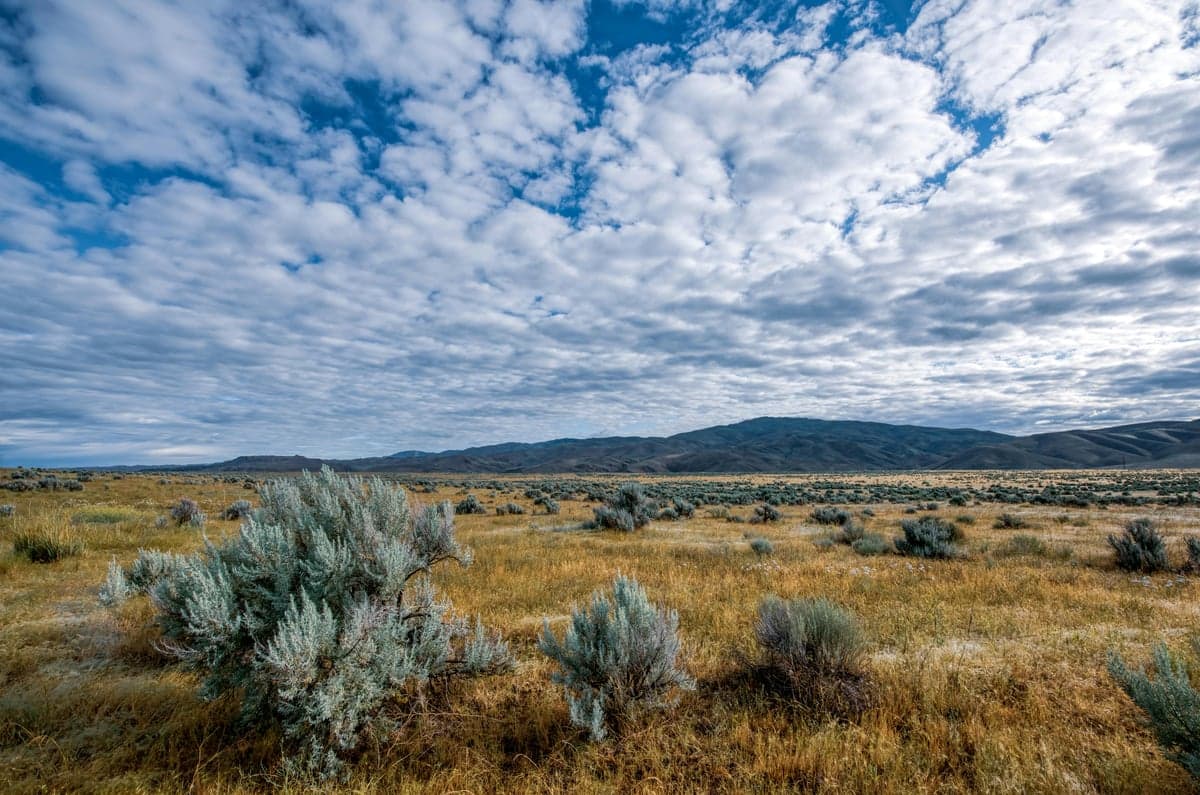
The high desert terrain surrounding the North Platte: sagebrush, rolling hills, and wind
The Miracle Mile and Grey Reef sit roughly 35 to 50 miles southwest of Casper along Wyoming Highway 220. Casper is the nearest city with full services, including fly shops, lodging, and restaurants.
The Miracle Mile sits between Kortes Dam and Pathfinder Reservoir. Two main parking areas provide access:
The access road is unpaved and notorious for becoming impassable when wet. Plan on bringing a vehicle with decent clearance, and check road conditions before committing to the drive. Cell service is nonexistent along most of the Mile. This is remote water, so bring everything you need.
Winter note: Wyoming Game and Fish does not plow the access road or parking areas in winter.
Grey Reef has more boat ramps but less walkable bank than its reputation suggests. Public foot access in the famous upper river is concentrated at the Gray Reef Access Area at the dam, Trapper's Route, and the Lusby Public Access Area. Everything between them is private ranch land, where Wyoming law gives you the water but not the banks, so you float through rather than beach and wade.
Full detail: Grey Reef access areas, float stretches, and mileages.
Both sections are tailwaters, meaning dam operators control flows. This is good news: you rarely deal with the unpredictable blowouts common on freestone rivers. The bad news is that flow changes can happen with little warning.
Grey Reef runs on a Bureau of Reclamation release calendar rather than on weather. Winter base flow sits near 500 CFS, a ten-day flushing cycle runs every March, and irrigation releases push the river to 2,000-3,000 CFS through most of the summer before dropping back near 500 CFS in October. Roughly 500 to 1,500 CFS is the range most anglers want.
Full detail: the Grey Reef release schedule and what each flow level means.
| Flow (CFS) | Conditions |
|---|---|
| 400-800 | Low but fishable. Great wading water |
| 800-1,200 | Sweet spot. Both wading and floating work |
| 1,200-2,500 | Higher flows. Wading gets dicey; floats are productive |
| 2,500+ | Experienced guides only. Flows have historically hit 10,000+ CFS |
Track conditions in real time on RiverReports before making the drive, especially for the Miracle Mile. Burning an hour of dirt road only to find blown-out water is a hard lesson.
Despite the name, the Miracle Mile stretches roughly 5.5 miles from Kortes Dam downstream to the upper reaches of Pathfinder Reservoir. When Pathfinder is low, the fishable stretch can extend to 12 or even 15 miles.
Kortes Dam to the Bridge (2 miles): The steepest gradient on the Mile. Fast water pours through a canyon with pocket water, boulders, and defined pools. This is where the biggest fish tend to stack up, particularly near the dam outlet. Expect white-water conditions that require an experienced oarsman if you're floating.
Bridge to Chalk Bluffs (2 miles): The river widens into a series of large shelves followed by deep runs. Classic nymphing water. Wade anglers do well here because the structure is readable and the bank access is decent.
Chalk Bluffs to Pathfinder (variable): How much river is fishable here depends on the reservoir level. In low-water years, this section opens up miles of additional water. The terrain flattens into sagebrush prairie, and the river character changes to slower, deeper runs. Productivity varies season to season.
The Grey Reef tailwater runs roughly 40 miles from Gray Reef Dam downstream through and past Casper, and the upper reaches hold the highest fish densities. The signature float is Gray Reef Dam to Lusby, about 8.4 miles and a full day with fishing. Below that, Lusby to Government Bridge, Government Bridge to Whitetail, Whitetail to Sechrist, and Bessemer Bend to Robertson Road each fish differently, with the Bessemer Bend run becoming a fall favorite as brown trout move up to spawn.
Full detail: the Grey Reef guide covers every float stretch with mileage, the three public wade areas, why the fish grow so large, and the current fishing report.
Spring is the marquee season for numbers. On the Grey Reef, Baetis hatches build from March through May, with dry fly windows on overcast afternoons.
On the Miracle Mile, spring means spawning rainbows. Fish in the 24-to-30-inch class run upstream from Pathfinder Reservoir starting in March. These are the biggest fish of the year, and they're focused on feeding heavily. Primary food sources include midges, leeches, scuds, and crayfish.
Spring also means wind. Persistent 15-to-25 mph gusts are the norm across this high desert country. Bring a 7-weight for wind management and a jacket that blocks it.
Important 2026 regulation: Two reaches of Grey Reef close April 1 through May 15 for the rainbow spawn, one just below the dam and one from Ledge Creek down to S Gulch. See the Grey Reef guide for exact boundaries.
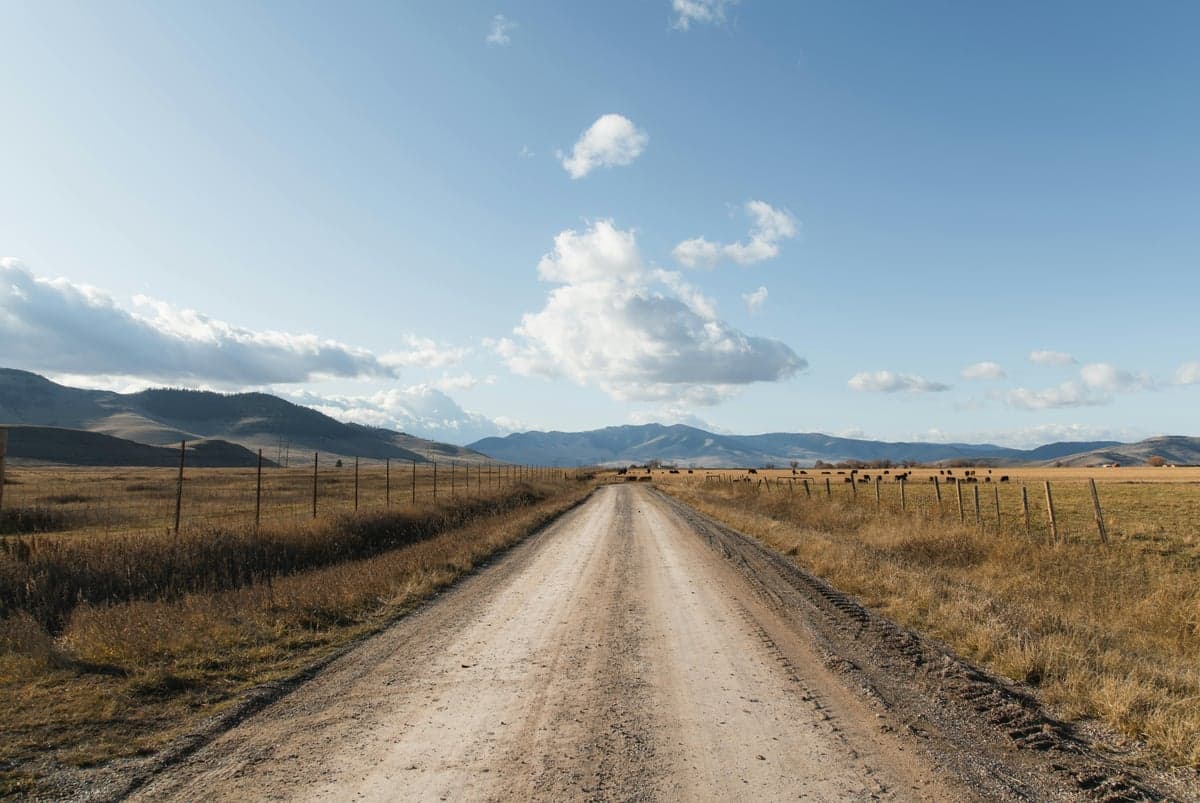
A gravel ranch road through open range. The drive in to the Miracle Mile is this kind of road, so check conditions before committing to it
Summer brings the best dry fly fishing of the year. The Miracle Mile's golden stonefly hatch (roughly Memorial Day through late June) produces explosive surface takes. Stimulators, Sofa Pillows, and Pat's Rubber Legs in sizes 6-10 all produce. After the stones taper off, caddis and PMD hatches carry the dry fly action into July.
On the Grey Reef, irrigation releases push flows to 2,000-3,000 CFS and most anglers switch to a boat. Overlapping PMD, Yellow Sally, Trico, and caddis hatches keep it interesting.
Fall is trophy season for brown trout on both waters. Streamer fishing peaks in late October and the first two weeks of November. Bring a 7-weight and a box of oversized patterns: Circus Peanuts, Woolly Buggers, Bunny Leeches, and Sculpzillas in olive, black, and white. Egg patterns produce as browns and whitefish begin spawning.
On the Miracle Mile, brown trout from Pathfinder Reservoir make their annual spawning run upstream in November and December. The same aggressive streamer tactics apply.
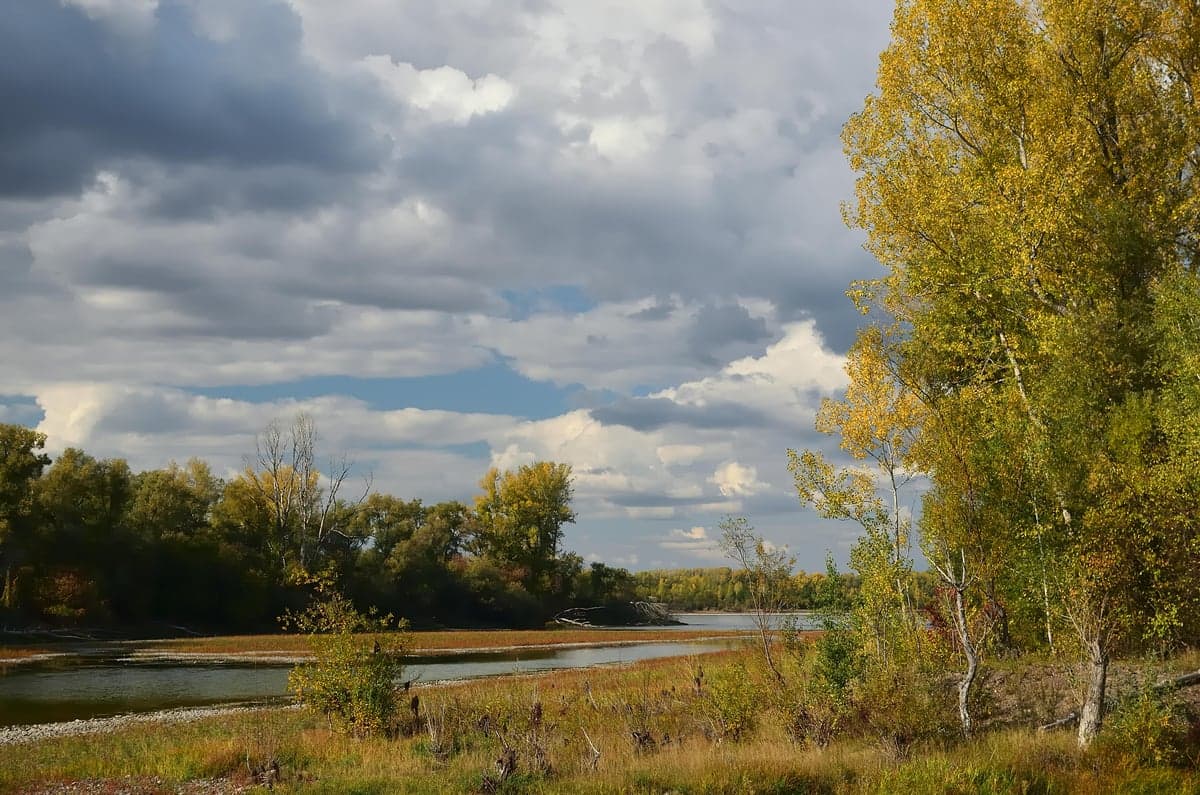
Fall on the river: cottonwoods turn gold as brown trout move into spawning lies
Both fisheries remain open year-round, and winter fishing can be surprisingly productive for anglers willing to deal with cold temperatures and short days.
Grey Reef sits at 500 CFS base flow, which concentrates fish and gives the best wading of the year. Midges hatch daily and the productive window runs roughly 11am to 3pm.
The Miracle Mile is more challenging in winter. The unpaved access road may be impassable, and the remote location means no bailout options if weather turns. Come prepared for self-sufficiency.
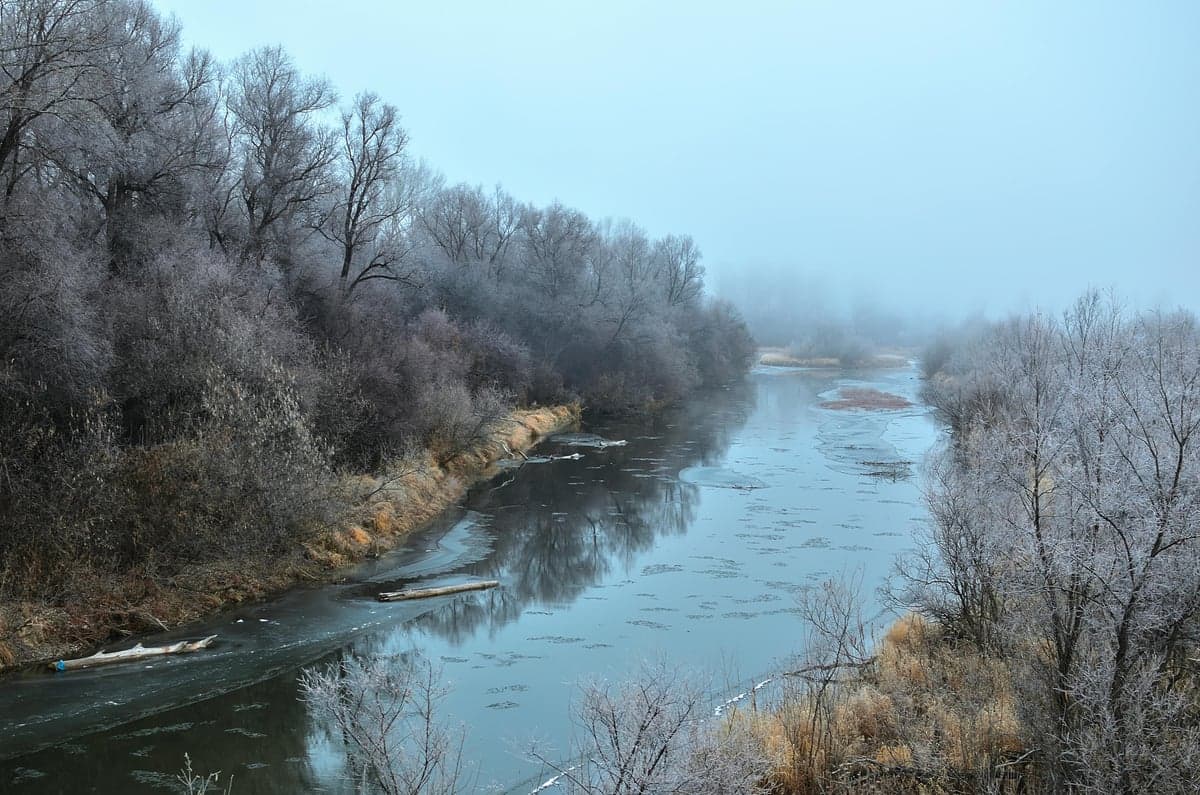
Winter tailwater conditions: cold air meets warmer dam releases, creating frost and mist along the banks
Winter (December through February)
Spring (March through May)
Summer (June through August)
Fall (September through November)
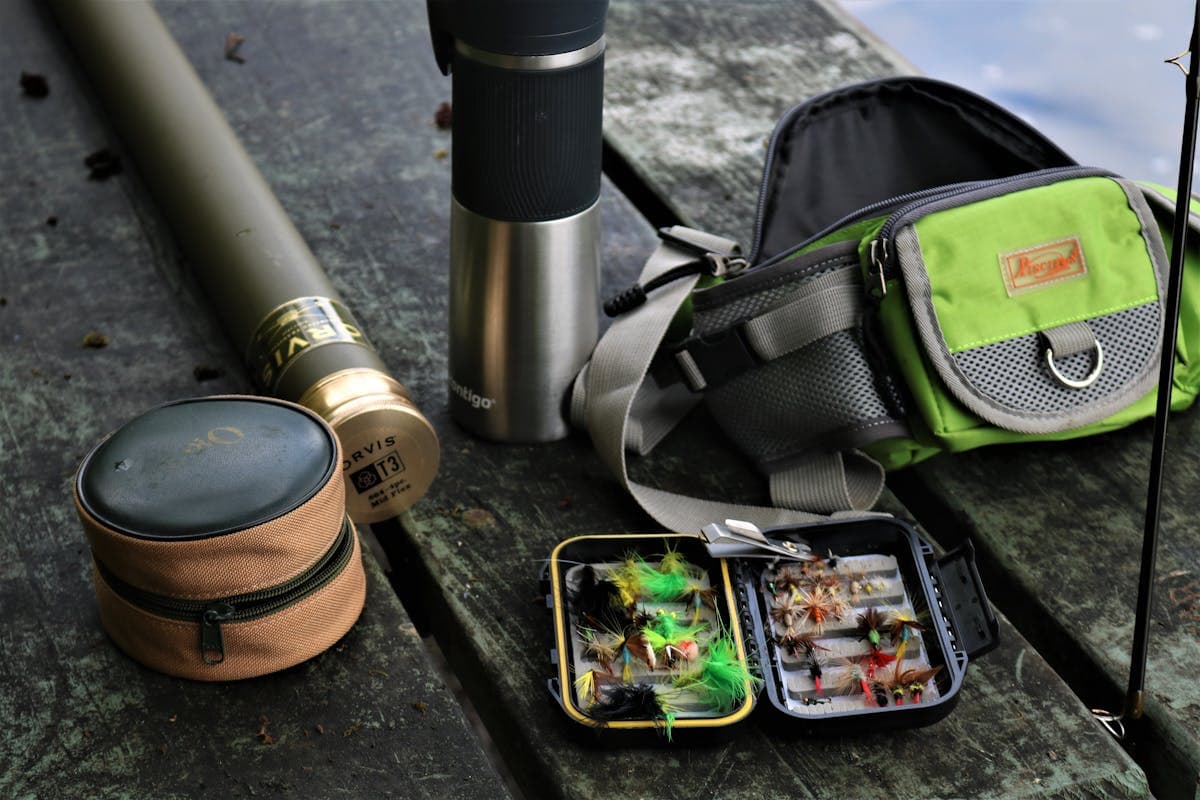
A well-stocked fly box for North Platte tailwaters: midges, BWOs, stonefly nymphs, and streamers
Two flies originated on the North Platte and still produce consistently:
Ask for these at any of the local fly shops. They'll steer you toward the right sizes and colors for current conditions.
Wade fishing works best during lower flows (under 1,000 CFS) and on sections with public bank access. The Miracle Mile offers the most consistent wade fishing because much of it crosses public land. On the Grey Reef, wade access is limited to the public areas at the dam, Lusby, Government Bridge, and a few other access points.
Bring felt-soled boots or studded rubber soles. The cobble bottom gets slippery, and the cold tailwater temperatures mean a swim is more than just uncomfortable.
Float trips are the most productive way to fish the Grey Reef. A drift boat covers 8 to 16 miles of water in a day, giving you access to holding lies that wade anglers never reach. Most guided trips use StealthCraft drift boats that seat two anglers and a guide.
On the Miracle Mile, floating is feasible but more technical. There are no formal boat ramps, and the upper section below Kortes Dam has genuine whitewater. This is not water for a novice oarsman. Grey Reef Anglers and other experienced guides know the put-in spots and how to handle high-water conditions.
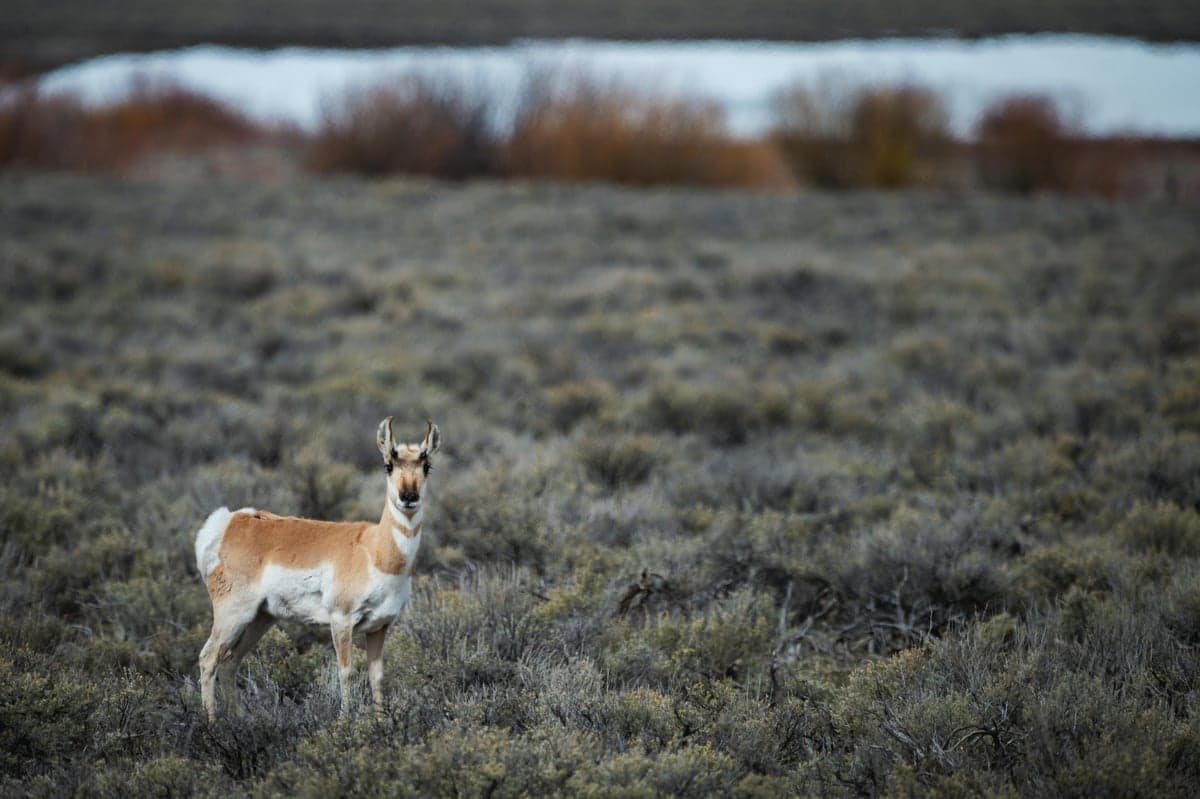
Pronghorn are a common sight along the drive to the Miracle Mile through Wyoming's open range
The Wyoming Game and Fish Department implemented new regulations for 2026 that anglers need to know:
A 2023 Wyoming Game and Fish study found that 21.4% of trout in the Miracle Mile showed visible hooking injuries. The barbless requirement aims to reduce damage to catch-and-release fish.
Two reaches of Grey Reef are closed to fishing April 1 through May 15 to protect spawning rainbow trout: the short section between the gauge cable crossings roughly 700 yards below the dam, and the 1.2 miles from the Ledge Creek confluence down to S Gulch. Both are new for 2026 and both are signed. Full closure boundaries and the rest of the Grey Reef regulations.
The artificial-flies-and-lures-only section at Grey Reef has been extended downstream to Government Bridge.
Wyoming now requires all commercially guided fishing vessels to register annually ($325 fee), with visible registration documentation while operating.
Miracle Mile: 3 trout daily, no more than 1 over 16 inches. Grey Reef area: check current Wyoming eRegulations for specific limits by section.
Rods:
Leaders and Tippet:
Other Essentials:
Platte River Fly Shop (Casper): Operating since 1994, the longest-running fly shop and Grey Reef outfitter in the area. Located at 7400 State Hwy 220. Open Mon-Fri 8am-5pm, Sat 8am-noon.
The Reef Fly Shop (North Platte Lodge): The first permitted outfitter on the Grey Reef (since 1998). Located right on the river with lodging on-site.
Ugly Bug Fly Shop (Casper): Run by Crazy Rainbow Fly Fishing Guide Service. Full-service shop with guides for both Grey Reef and Miracle Mile.
Grey Reef Anglers: Experienced guides on both the Grey Reef and Miracle Mile. Float trips on StealthCraft drift boats.
Four Seasons Anglers: Guides the upper North Platte, Miracle Mile, and Grey Reef. Detailed hatch charts and fishing reports on their website.
High Plains Fly Fishing: Operates primarily on the upper North Platte and Miracle Mile. Float and wade trips available. Contact: 307-399-9464
Trout On Inn: Lodging and guiding combined, located 100 feet from the Grey Reef at Lusby. Offers drift boat rentals and shuttle service. Contact: 307-462-1917
Book guided trips and lodging well in advance for spring (March-May) and fall (October-November). These are the prime seasons, and the best guides fill up months ahead.
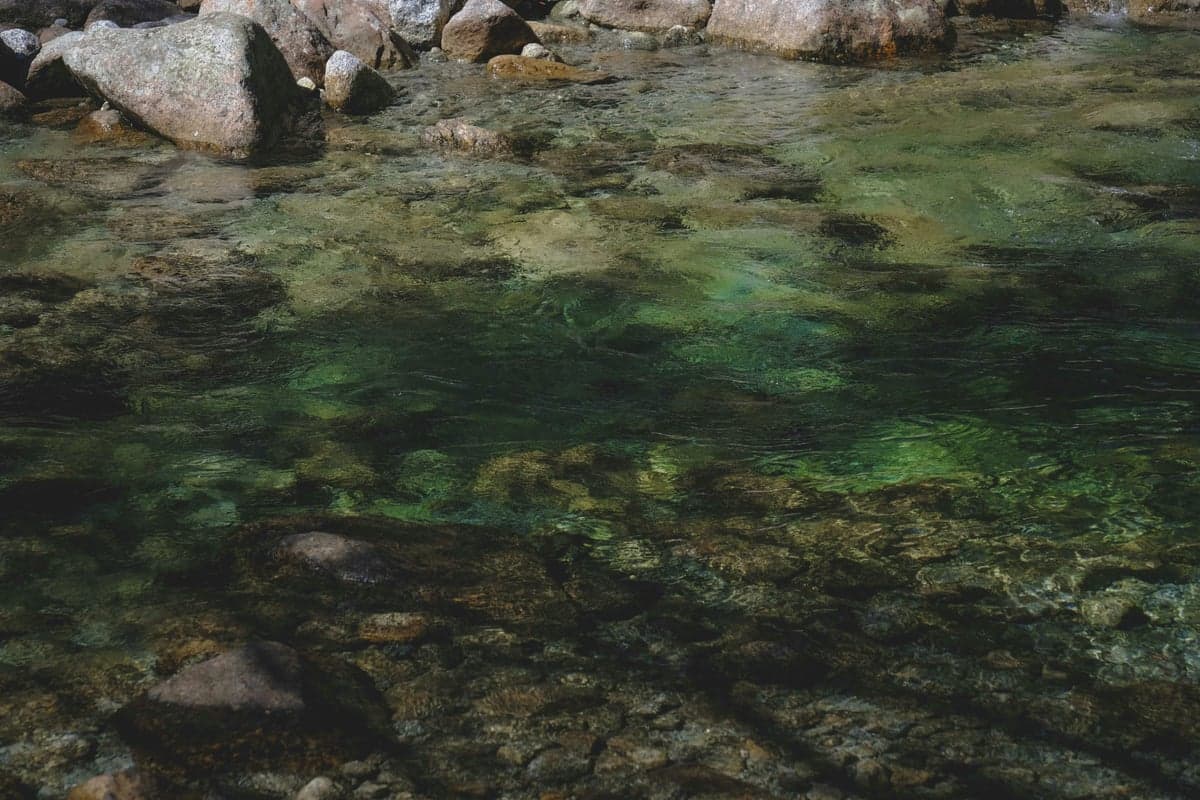
Clear water over rocky cobble, the kind of readable structure that makes wade fishing productive
Wind: The single biggest hazard on both waters. Sustained 20+ mph winds are common, and gusts can reach 40-50 mph. This affects casting, wading stability, and hypothermia risk. Don't underestimate it.
Cold water: Tailwater temperatures stay in the 38-46°F range year-round. A wading slip in winter is a genuine emergency, especially at the Miracle Mile where help is far away.
Remote access (Miracle Mile): No cell service, no paved road, no nearby services. Carry emergency supplies, a first-aid kit, and let someone know your plan.
Spring spawning closure: Respect the new April 1 through May 15 closure on the upper Grey Reef. Fishing in closed areas puts the resource at risk and carries stiff penalties.
Private land: Stay in the water or at public access points. Wyoming trespass laws are enforced along the Grey Reef corridor.
The Miracle Mile is a 5.5-mile stretch of the North Platte River between Seminoe and Pathfinder reservoirs in central Wyoming. It holds over 3,200 trout per mile, including rainbow and brown trout exceeding 20 inches. The name comes from the exceptional concentration of trophy fish in a short section of river, fed by cold, nutrient-rich reservoir releases.
The best access is from Miracle Mile Road off Highway 220 between Casper and Rawlins. Key spots include the Miracle Mile Bridge access, the Pathfinder Reservoir inlet, and several pulloffs along the dirt road. Wade carefully -- the bottom is rocky and uneven. Flows between 400 and 1,200 CFS are ideal for wading; above that, consider a drift boat.
Spring (March through May) is prime for rainbow trout on egg patterns and midges. Fall (October through November) brings the brown trout spawn with trophy fish on streamers. Summer offers consistent dry fly fishing with PMDs and caddis. Winter fishing is productive but demands cold-weather preparation -- the remote location has no services.
Everything this river feeds, by month. Filter by bug, category, or fly size, and switch the axis to see what comes off at what time of day. Pulled from our western hatch and forage guide.
Check current North Platte River flows on RiverReports before every trip. The tailwater character of both sections means flows can change based on dam operations, sometimes with limited notice.
What to watch for:
For Grey Reef flows, the release calendar, and what each level means, see the Grey Reef guide.
The flow data updates continuously, so you can make real-time decisions about which section to fish and whether to wade or float.
Weekly flow updates and fishing intel.
© 2026 RiverReports, Inc.