Quick Reference
| What | When | Key Numbers |
|---|
| Smith River | Dec-Apr (peak Jan-Mar) | 1,500-4,000 CFS; fish to 20+ lbs; CA state record water |
| Trinity River | Sep-Apr (summer & winter runs) | 300-1,000 CFS; most consistent option; 4-8 lb avg |
| Klamath River | Jul-Feb (middle river Sep-Nov) | Under 2,500 CFS; good numbers; dry fly steelhead |
| Eel River | Dec-Mar | 2+ ft visibility; 8-10 lb avg; historic spey water |
| Guided trips | Book ahead for prime season | $500-650/day for 1-2 anglers |
| License | CA license + Steelhead Report Card | $9.98 report card; record catches immediately |
Flow457 CFS at Lewiston — summer baseflow holding steady, ticking up slightly from 445 CFS 10-day average
Trendsteady
Clarityexcellent — crystal clear at baseflow
Temp51.8°F at dam, warming to 62°F at Douglas City, 74°F+ at Hoopa
FISH EARLY — Pat's Rubberlegs #4-8Clown Eggs #4-10Ho-bo Spey #6Beaded Assassins #6
Flow1,320 CFS at Orleans — holding near 10-day average of 1,350 CFS, well below seasonal normal
Trendsteady
Claritygood — clear water at summer baseflow
Temp70-71°F — right at the upper comfort threshold for trout
FISH THE EDGES OF THE DAY — Pat's Rubber Legs #4-8Olsen's Straggle Stone #6-8CDC Caddis (tan/olive) #14-16Coffey's Sparkle Minnow Sculpin #4-6 for redbands; spinner blade rigs with anchovies for Chinook in the estuary
Flow214 CFS — nearing annual minimum, well below seasonal median
Trendfalling slowly
Claritycrystal clear — full visibility
Temp65°F, pushing toward shade and cooler seams during midday heat
OPEN — barbless artificials only through August 31 — Elk Hair Caddis #14-16Stimulators #12-14Pheasant Tails #14-18Prince Nymphs #12-16
Flow74 CFS at Scotia — extreme summer lows at just 36% of median flow, approaching annual minimum
Trendfalling slowly
Clarityclear but irrelevant — too low and warm to fish
Temp74-78°F (based on seasonal patterns at these flows)
SKIP the main stem entirely — South Fork tributaries only: Elk Hair Caddis #14-16Pheasant Tails #14-18Stimulators #12-14 in shaded headwater sections before 8 AM
🎣 TACTICS RIGHT NOWNymphHeat management is the game right now. The Trinity at 457 CFS is the best nymphing option — fish the upper river from Lewiston Dam to Bucktail before 9 AM. Dam temp 51.8°Fideal. Pat's Rubberlegs #4-8Clown Eggs #4-10Mercer's Psycho Prince #12-16Black Rubber Legs #4-8Vinci's Depth Charge Bird's Nest #12. Egg patterns as a dropper near holding salmon are particularly effective — fall Chinook season opens September 1. Douglas City gauge reads 62°F — fishable but carry a thermometer and stop if temps exceed 65°F. Stay above Steiner Flat where temps hold manageable. The Klamath at 1320 CFS at Orleans — water temp 70-71°Fright at the threshold. Nymphing only viable at dawn (6-9 AM) in shaded seams: Pat's Rubber Legs #4-8Straggle Stone #6-8. Fish tight to bank structure and shaded runs. Skip midday entirely. Smith at 214 CFS — near annual minimum but crystal clearwater temp 65°F. Sight-nymphing with Pheasant Tails #14-18 and Prince Nymphs #12-16 in concentrated pools. Extremely spooky fish at these flows — long leaderslight tippetstealthy approaches. Mornings and evenings only. Eel at 74 CFS — skip the main stem. Period.
StreamerSwinging is a dawn-and-dusk game right now — water temps are the limiter on every North Coast river. The Trinity at 457 CFS still has grabby steelhead 18-22 inches from Lewiston downstream. The Fly Shop confirms 'fish are pretty grabby right nowit is a good time to swing and skate.' Ho-bo Spey #6 and Beaded Assassins #6 remain the go-to patterns. Fish the upper river above Steiner Flat before 9 AM — dam temp 51.8°F is coldDouglas City at 62°Fabove North Fork hits 70°F+Hoopa at 74°F. The Klamath at 1320 CFS at Orleans is technically wadeable swing waterbut 70-71°F water temps mean you MUST fish edges of the day only. Coffey's Sparkle Minnow Sculpin #4-6 for aggressive redbands in shaded bank structure at dawn. Steelhead and half-pounders spread throughout the river. For salmon: the lower Klamath estuary is the hot play — fall Chinook season opened August 15 with excellent returnsspinner blade rigs producing multiple hookups per trip. Eel at 74 CFS — not fishable. Smith at 214 CFS — streamers not productive at these summer lows; stick to nymphs and small dries.
FORECASTPeak summer heat remains the dominant factor across all North Coast rivers. Flows are at or near annual minimums on every system. The Trinity at 457 CFS is holding steady (10-day average 445 CFS) with grabby summer steelhead still present in the upper river — but lower river temps 74°F+ mean fish only above Steiner Flat before 9 AM. Fall Chinook season opens September 1 on the Trinity (quota 1,072 adults) — expect flows to hold in the 430-460 CFS range through September. The Klamath at 1,320 CFS at Orleans (forecast to hold near 1,300 CFS through August 30) is the big story: fall Chinook season opened August 15 with excellent estuary returns. Basin-wide quota: 3,248 adult kings. Lower river salmon fishing is the best play on the North Coast right now — boats trolling spinner blade rigs with anchovies securing multiple hookups daily. Steelhead and half-pounders spread throughout the river. Upper river trout/steelhead fishable only at dawn and dusk — 70-71°F water temps limit midday. Smith at 214 CFS (forecast to ~201 CFS by August 30) — at annual minimum, crystal clear, water temp 65°F. Trout fishing at dawn and dusk only, no steelhead until December. Fall-run Chinook now entering the system. Eel at 74 CFS, just 36% of median flow (forecast to ~68 CFS by August 30) — effectively done until fall rains. Looking ahead: the turn happens with the first sustained fall rains, typically October-November. That's when flows rise, temps drop below 55°F, and steelhead begin entering coastal systems. Three plays ranked: (1) Klamath estuary salmon fishing — HOT right now. (2) Trinity upper river steelhead before 9 AM. (3) Smith for dawn/dusk trout. Everything else is a skip until fall.
Before You Go
Northern California's North Coast rivers are where the story of West Coast steelhead fly fishing began. These waters - the Smith, Trinity, Klamath, Eel, and Mad - flow through ancient redwood forests and rugged canyons, holding runs of wild steelhead that can reach 20 pounds or more. Track all California river flows on RiverReports to time your trip around storm cycles.
This isn't tailwater fishing with 15,000 fish per mile. It's anadromous fishing, where you might spend hours swinging flies through a run before a fish materializes from the depths and grabs. The reward is a chrome-bright ocean-run rainbow that fights harder than anything in fresh water.
If you're coming from trout fishing, be prepared for a different game. Steelhead don't feed in fresh water - they strike from aggression or instinct. Your job is to cover water efficiently, present your fly at the right depth, and be ready when that grab comes.
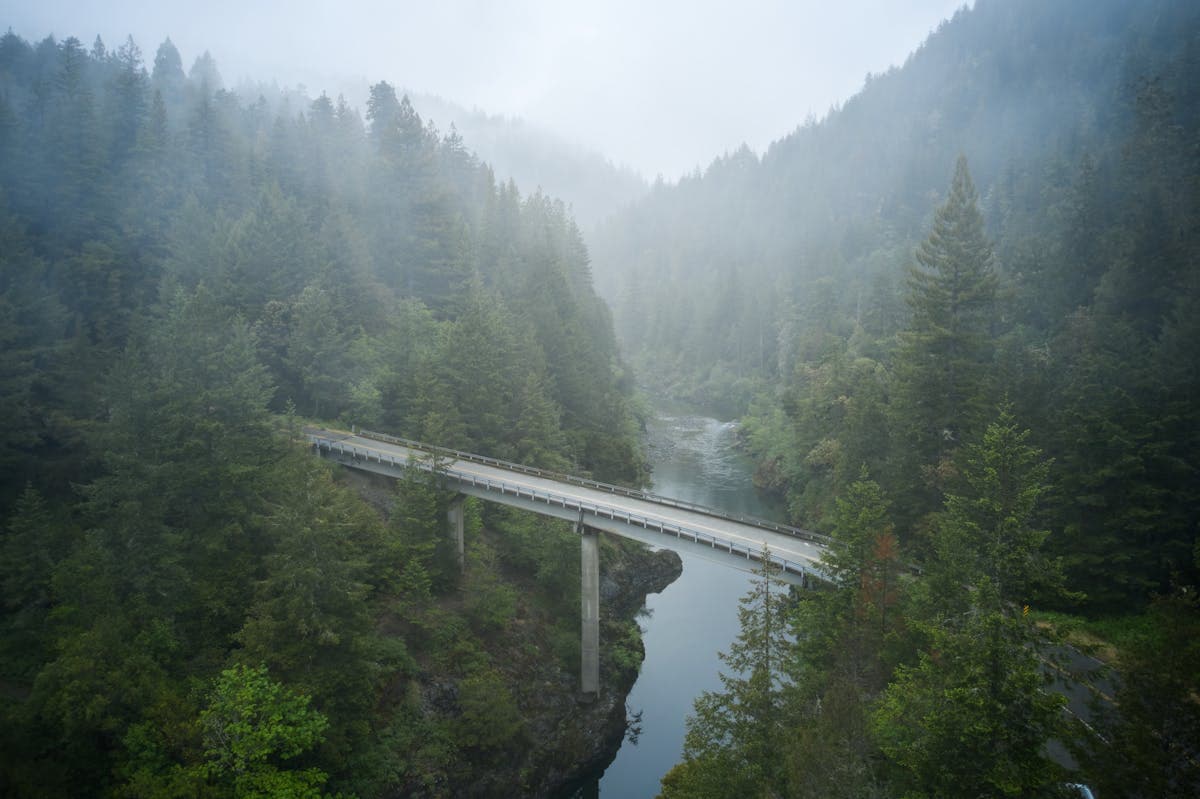
Northern California's North Coast rivers offer classic steelhead water amid towering redwoods.
The Major Rivers
Smith River
The Smith is California's last wild river - undammed, free-flowing, and home to the state's largest steelhead. The California state record (27 lbs 4 oz) came from the Smith near the Highway 101 bridge in 1976, and fish over 20 pounds are caught every season.
What makes it special:
- Trophy potential unmatched in California
- Crystal-clear water when conditions are right
- Clears quickly after storms due to bedrock bottom
- Fish average around 10 lbs, with 15-20 lb fish caught regularly
When to go: December through April. Fish begin entering after the first significant rains in late November or December. Prime time is typically January through March.
Flow window: Ideal flows are generally between 1,500-4,000 CFS. Track Smith River flows on RiverReports. The river clears faster than other coastal systems because it's carved down to bedrock.
The challenge: The Smith runs high and colored for much of winter. You need to time your trip between storms when the river drops into shape. When it's right, it's exceptional. When it's not, you're waiting.
Key Access Points:
| Location | Access Type | Notes |
|---|
| Forks River Access | Boat ramp | Free public ramp at confluence of main stem and South Fork; Forest Service operated |
| Mary Adams Peacock Bar | Bank/wade | Mile marker 11.9 on Hwy 199; well-known starting point for main stem fishing |
| Jedediah Smith Campground | Bank/wade | Good bank access; near state park |
| Slant Bridge | Boat ramp | Mile 0.25 on South Fork Road; Middle Fork access with restrooms |
| Mouth of Myrtle Creek | Bank access | Mile marker 7.2 on Hwy 199 |
| Hardscrabble Creek | Bank access | Mile marker 11.1 on Hwy 199 |
Drift Boat Floats: Most guided trips focus on the main stem below the confluence of the Middle and South Forks. The river has broad, sweeping runs perfect for swinging flies. Expect Class I-II water with occasional log hazards.
Trinity River
The Trinity is arguably the most consistent steelhead river in Northern California. Unlike the coastal rivers, it rarely blows out completely because Trinity Lake absorbs storm flows. This makes it the most reliable option when coastal rivers are blown out.
What makes it special:
- Fishable year-round (with seasonal restrictions on some sections)
- Both summer-run and winter-run steelhead
- The 25-mile section from Lewiston Dam to Junction City offers the best fishing
- Fish average 4-8 lbs, with 10-12 lb fish not uncommon
When to go:
- Summer-run steelhead: September through November (peak in November)
- Winter-run steelhead: December through April
Flow window: The upper river fishes best between 300-1,000 CFS. Flows are dam-controlled, so they're predictable. At 450-550 CFS (typical winter flows), wading is comfortable and fish spread out nicely.
Key Access Points:
| Location | Access Type | Notes |
|---|
| Old Lewiston Bridge | Boat ramp/wade | Upper boundary of main fishing; fly-only section starts at dam |
| Bucktail Hole | Bank/wade | Named run with good holding water |
| Big Flat River Access | Boat ramp | Popular put-in/take-out |
| Steel Bridge | Boat ramp/camp | BLM campground; major take-out point |
| Indian Creek | Bank/wade | Just outside Douglas City; good wade access |
| Sky Ranch | Bank access | Junction City area |
Popular Drift Floats:
- Old Lewiston Bridge to Steel Bridge: Classic float through the upper canyon. About 8-10 river miles, full day.
- Steel Bridge to Indian Creek: Lower float near Douglas City. Class I-II water with some brush hazards.
- Bucktail Float to Steel Bridge: Shorter morning or afternoon option.
Most of the upper 25 miles is accessible by drift boat. Guides typically cover 10+ miles per day. Wade fishing is possible throughout, but a drift boat gives you far more water.
Klamath River
The Klamath flows over 250 miles from Oregon through the Klamath National Forest to the Pacific, with steelhead access expanding since the 2024 dam removals. It's big water with strong runs of both summer and winter fish. Highway 96 parallels the river for about 60 miles, providing excellent access.
What makes it special:
- Excellent swing water with classic steelhead runs
- Good numbers of fish, especially in the middle and lower sections
- Can produce exceptional dry fly fishing for steelhead in fall (fish will take skated flies)
- Fish average 4-8 lbs, with occasional fish to 10 lbs
When to go:
- Lower river (below Weitchpec): July through September for summer-run fish
- Middle river (Orleans to Happy Camp): September through November - this is prime time
- Upper river (above Happy Camp): November through February. With the 2024 dam removals (Iron Gate, Copco 1 & 2, J.C. Boyle), steelhead now have access to historic upper river habitat for the first time in over a century
Flow considerations: The river fishes best when flows at Orleans drop to around 2,500 CFS or below. At 4,000+ CFS, fish push upriver quickly and fishing becomes difficult. Post-dam-removal flows are more natural but less predictable than the old regulated regime.
Key Access Points:
| Location | Access Type | Notes |
|---|
| Ti-Bar | Boat ramp/camp | North of Orleans; gravel ramp (4WD recommended); dispersed camping with vault toilet |
| Big Bar | Boat ramp | Just north of Orleans; popular put-in |
| Blue Heron | Bank access | South of R. Lyle Davis Bridge |
| Dolan Bar | Boat ramp | Mid-river access |
| Green Creek | Boat ramp | Between Orleans and Happy Camp |
| Capell Creek | Boat ramp | Upstream from Weitchpec |
Floating vs. Wading: Bank access is limited on the middle river, so drift boaters have a significant advantage. The stretch between Happy Camp and Orleans is considered the best steelhead water. Highway 96 follows the river with wade access, but you'll cover far more water by boat.
Where to Stay: Most anglers base out of Happy Camp - it's central to the best fishing and has basic services.
Eel River
The Eel is the third-largest drainage in California and offers some of the best classic spey water on the West Coast. The river is lined with old-growth redwoods and holds runs of wild steelhead that average 8-10 lbs, with fish to 16 lbs common and 20-pounders caught each year.
What makes it special:
- Miles of perfect swing water through redwood forests
- Trophy potential - 20 lb fish are caught each year
- Wild, uncrowded character
- Historic importance in steelhead fly fishing history - this is where West Coast steelheading began
When to go: Late December through March. Fish can show as early as late November with good storms, but prime time is January through March.
The challenge: The Eel's low gradient and heavy sediment load mean it muddies up fast and can hold color for extended periods. Timing is everything - you need to hit the window between storms when water is dropping and clearing to fishable visibility (2+ feet).
Key Fishing Areas:
- Fortuna area: Best spot for shore anglers. Fish stack up here before running upstream. Most boat fishing happens near Fortuna.
- South Fork Eel: Major tributary with its own excellent steelhead runs. Fishable from Richardson's Grove downstream.
- Van Duzen River: Tributary that offers excellent fishing, especially when the main Eel is too high or colored.
- Fulmore Hole: Near the river mouth; primarily a shad spot but holds steelhead early season.
Access Notes: Shore access is easy with spots along the river throughout the system. However, the best coverage comes from drift boat fishing. Most fishing occurs from Richardson's Grove all the way downstream to Rio Dell. Base yourself in Fortuna, Garberville, or Rio Dell for the main stem.
Drift Boat Logistics: The lower sections near Fortuna are prime drift water. The Van Duzen is a good alternative when the main Eel is off-color. Expect a more challenging timing game than the Trinity - the Eel requires watching conditions closely.
Mad River
The Mad is one of the most accessible steelhead rivers in Northern California, running right through Arcata and Blue Lake. It's popular with bank anglers and offers good fishing within an 18-mile stretch from the ocean to Mad River Fish Hatchery.
What makes it special:
- Easy access with multiple public entry points
- Good numbers of hatchery fish supplementing wild runs
- Fishable at lower flows than coastal rivers
- Great for anglers new to the region
- Fish run 6-10 lbs, with some reaching 20 lbs
When to go: December through March, with peak fishing typically in January and February.
Flow window: The Mad starts fishing around 8 feet (approximately 1,500 CFS) near Arcata. It's subject to low-flow closures at 200 CFS - check before you go.
Key Access Points & Fishing Holes:
| Location | Access Type | Notes |
|---|
| Mad River County Park | Bank access | McKinleyville; estuary section near ocean |
| Hiller Park | Bank access | McKinleyville; lower river |
| North Bank Road | Bank access | Runs between Hwy 101 and Hwy 299; multiple pull-offs with access to good runs |
| Blue Lake Bridge | Bank/wade | Town of Blue Lake; heavily fished but productive |
| Mad River Fish Hatchery | Bank access | 18 miles from ocean; fish stack up below the ladders - this is ground zero |
| Bair Road Access | Bank/wade | Access to one of the best steelhead runs on the river; deep pools |
| Pamplin Grove | Bank/wade | Tranquil, less crowded spot with good fish-holding water |
| Humboldt County Pumping Station | Bank access | Off West End Road; look for "Recreational Visitor Parking" sign; gates close at sunset |
Best Approach: The riffles and runs immediately downstream from the hatchery in Blue Lake are the most heavily fished - and for good reason. Fish concentrate here. For more solitude, try Bair Road or Pamplin Grove. The flat below Blue Lake Bridge also holds fish consistently.
Wading vs. Boat: This is primarily wade-fishing water. The lower 18 miles from the hatchery to the ocean offers the best fishing. Unlike the Eel or Smith, you don't need a drift boat to be successful here.
Understanding Flows and Timing
Unlike tailwaters, these rivers are driven by rain. Your success depends heavily on timing your trip around storm cycles.
The Ideal Window
For most North Coast rivers, you want:
- Rising water: Fish move upriver with new rain
- Dropping, clearing water: The sweet spot - fish are settled and feeding water is getting into shape
- Green to clearing visibility: 2-4 feet of visibility is often ideal
Flow Resources
Check these gauges before planning your trip:
| River | USGS Gauge | Fishable Range |
|---|
| Smith River | 11532500 (Crescent City) | Dropping below 10 ft, clearing |
| Trinity River | 11530000 (Lewiston) | 300-1,000 CFS |
| Klamath River | 11523000 (Orleans) | Under 2,500 CFS ideal |
| Eel River | 11477000 (Scotia) | Varies; needs visibility |
| Mad River | 11481000 (Arcata) | 800-2,000 CFS; closes at 200 |
Check real-time California river flows on RiverReports before your trip.
Water Temperature and Technique Selection
Water temperature is the single biggest factor in choosing your approach. Steelhead behavior changes dramatically with temperature.
| Water Temp | Fish Behavior | Best Technique |
|---|
| Below 40°F | Sluggish, tight to bottom | Deep nymphing, slow presentations |
| 40-45°F | Moderately active, will move short distances | Nymphing or slow-swung flies |
| 45-55°F | Active, aggressive - ideal range | Swinging flies, waking dries |
| 55-65°F | Active but may seek cooler water in afternoon | Morning/evening swinging |
| Above 65°F | Stressed, seeking thermal refuge | Stop fishing - fish welfare at risk |
The sweet spot is 45-55°F. In this range, fish are lively, willing to chase flies, and will move several feet to grab a well-presented swing.
Techniques That Work
Swinging Flies (The Classic Approach)
Swinging flies with a two-handed Spey rod is the traditional and most satisfying way to target steelhead on the North Coast. You're covering water efficiently, searching for that explosive grab.
Basic approach:
- Cast across and slightly downstream (45-degree angle)
- Mend as needed to control swing speed
- Let the fly sweep across the current
- Fish often grab at the "hang down" - let your fly hold below you before recasting
- Take two steps downstream, repeat
When to swing:
- Water temperatures above 45°F (this is critical)
- Visibility of 2+ feet
- Classic runs with walking-speed current and 3-6 foot depth
- Summer/fall fish are most responsive; winter fish need warmer days
Nymphing and Indicator Fishing
When water is cold (below 45°F) or fish aren't responding to swung flies, dead-drifting nymphs and egg patterns under an indicator is often more productive.
Setup:
- Strike indicator set at 1.5-2x water depth
- Lead fly: Larger weighted pattern (stone, egg, or heavy nymph)
- Dropper: Smaller bead-head nymph or egg, 16-24" below
When to nymph:
- Cold water conditions (below 45°F) - winter steelhead often require this
- Off-colored water where fish can't see a swung fly at distance
- Fish holding tight to bottom in deeper pools
- Smith River in particular, where guides nymph heavily through winter
Summer-Run Techniques
Summer and fall steelhead on the Trinity and Klamath are often more aggressive and willing to move for flies. Water temperatures in the 50s make fish lively and eager. This is the time for:
- Floating lines with unweighted flies
- Waking and skating dry flies (Bombers, muddlers) - yes, steelhead will eat on top
- Lighter sink tips and smaller patterns
- More surface-oriented presentations
Fish these systems through early September for the most aggressive fish of the year. By mid-late summer, watch water temps carefully - if they approach 70°F, fish early morning only or give the fish a break.
Fly Selection
Intruder-Style Flies (Swinging)
Modern intruders and tube flies are the go-to for swinging:
- Black and Blue Intruder: Clear to slightly off-color water
- Orange and Black Intruder: Off-colored water, low light
- Pink and White Intruder: Fresh fish, lower river
- Muddler Minnow: Classic pattern for waking and swinging
Sizes: 1.5-3" profiles on Spey hooks or tubes
Traditional Patterns (Swinging)
Classic patterns still produce:
- Silver Hilton
- Green Butt Skunk
- Purple Peril
- Boss (various colors)
- Freight Train
Nymphing Patterns
- Glo Bugs (#8-12, various colors): Year-round producers
- Sucker Spawn: Natural egg cluster imitation
- Black Stonefly Nymph (#4-8): Especially on the Trinity
- Copper Beaded Assassin: Versatile nymph pattern
- San Juan Worm (#8-12): Effective year-round
Color Selection Guide
| Condition | Recommended Colors |
|---|
| Clear water | Black and blue, purple, sparse patterns |
| Off-colored | Orange, pink, chartreuse, larger profiles |
| Low light | Black, purple, darker colors |
| Fresh fish | Brighter colors, pink, orange |
Gear Recommendations
Spey Rods (Two-Handed)
The North Coast is classic Spey country. Two-handed rods give you the casting efficiency needed to cover big water all day.
Recommended setup:
- Rod: 12'6" to 13'6" Spey rod, 7-8 weight
- Line: Scandi or Skagit head depending on conditions
- Tips: Assortment of sink tips (T-8, T-11, T-14) plus floating
- Leader: 4-6 feet of 10-12 lb maxima or fluorocarbon
Single-Hand Rods
If you're not ready for Spey casting:
- Rod: 9-10' single-hand, 7-8 weight
- Line: Weight-forward floating or sink-tip
- Leader: 9' tapered to 0X-2X, or level mono
Switch Rods
A good compromise for varied conditions:
- Rod: 11' switch rod, 6-7 weight
- Line: Scandi compact or short Skagit
Essential Accessories
- Waders: Breathable chest waders with studded boots (rocks are slick)
- Wading staff: Essential on bigger rivers
- Rain gear: This is the North Coast - expect rain
- Fingerless gloves and warm hat: Winter fishing is cold
- Forceps/hemostats: For barbless hook removal
- Large rubber net: 20"+ bag for big fish
Regulations (2025)
California steelhead regulations are specific and strictly enforced. Know the rules before you go.
License Requirements
- California Sport Fishing License: Required for all anglers 16+
- Steelhead Report Card: Required for anyone fishing for steelhead in anadromous waters ($9.98)
- Recording: You must record the month, day, location, fish kept, and fish released immediately when done fishing
- Return deadline: Report cards must be returned to CDFW by January 31 of the following year
Hatchery vs. Wild Fish
- Hatchery steelhead: Missing adipose fin (healed clip). Can be retained where regulations allow.
- Wild steelhead: Adipose fin intact. Must be released immediately on most waters.
River-Specific Rules
Regulations vary significantly by river and even river section. Check the CDFW Supplemental Regulations for:
- Season dates (many sections have closed periods)
- Barbless hook requirements
- Bait restrictions (many waters are artificial only)
- Daily bag and possession limits
- Low-flow closures
Trinity River fly-only section: The section immediately below Lewiston Dam is restricted to fly fishing only, April 1 through September 15.
Safety Considerations
River Hazards
- High water: These rivers can rise rapidly during storms. If conditions look marginal, don't wade deep.
- Cold water: Hypothermia is a real risk. Dress in layers, carry extra dry clothes.
- Slick rocks: Studded boots and a wading staff are essential, not optional.
- Remote access: Some stretches are miles from the nearest road. Tell someone your plan.
Weather
The North Coast gets significant rainfall from November through March. Pack rain gear for every trip, even if the forecast looks clear.
Hiring a Guide
For first-timers, a guide is worth the investment. These rivers are big, and local knowledge about current conditions, access, and technique makes a huge difference.
Recommended Guide Services
Multi-River Specialists:
River-Specific:
Expect to pay: $500-650 per day for 1-2 anglers, including drift boat or raft and all tackle.
Access and Logistics
Getting There
- Nearest major airports: Sacramento (SAC), Redding (RDD), or Arcata/Eureka (ACV)
- Driving from San Francisco: 4-5 hours to the Trinity, 5-6 hours to the Smith
Accommodations
Trinity River area:
- Lewiston (small town, limited services)
- Weaverville (more amenities, 15 minutes from river)
- Douglas City and Junction City (river-side options)
Smith River area:
- Crescent City (closest town with full services)
- Gasquet (small community near the river)
Klamath River area:
- Orleans, Happy Camp, Klamath (small communities with basic services)
- Yreka (larger town, upper Klamath access)
Eel River area:
- Garberville, Fortuna, Ferndale (southern Humboldt)
- Blue Lake, Arcata (Mad River access)
Using RiverReports
Before your trip, check:
- California river flows for real-time conditions
- Historical flow data to understand whether current conditions are high, low, or normal
- Weather forecasts - you need to time these trips around storm cycles
The key to North Coast steelhead success is timing. These rivers can go from unfishable to perfect in 48 hours. Watching flows and planning accordingly is half the battle.
Beginner vs. Advanced Considerations
Best Rivers for Beginners
- Mad River: Easy bank access, good hatchery fish numbers, close to Arcata services. You can walk from your car to good water.
- Trinity River (upper section): Consistent flows, accessible wading, and forgiving conditions. The most predictable fishing.
- Smith River: Trophy hunting requires timing between storms and the patience to wait for conditions. When it's on, it's as good as steelhead fishing gets.
- Eel River: Classic spey water but demands reading conditions carefully. High reward, higher difficulty.
- Klamath River (middle section): Big water that rewards boat access and the ability to cover miles of runs.
Boat vs. Wade
| River | Can You Wade Fish It? | Is a Boat Better? |
|---|
| Smith | Yes, with good access points | Yes - covers more water |
| Trinity | Yes - very wadeable | Yes, but not required |
| Klamath | Limited bank access | Strongly recommended |
| Eel | Yes, in accessible areas | Yes - best coverage |
| Mad | Yes - primarily wade water | Not necessary |
Quick Reference
| River | Best Months | Target Flow | Optimal Access | Average Size | Trophy Potential |
|---|
| Smith | Dec-Apr | 1,500-4,000 CFS, clearing | Drift boat or Hwy 199 pullouts | 10 lbs | 20+ lbs |
| Trinity | Sep-Apr | 300-1,000 CFS | Drift boat or wade | 4-8 lbs | 10-12 lbs |
| Klamath | Jul-Feb | Under 2,500 CFS | Drift boat preferred | 4-8 lbs | 10+ lbs |
| Eel | Dec-Mar | Visibility 2+ ft | Drift boat or shore near Fortuna | 8-10 lbs | 20+ lbs |
| Mad | Dec-Mar | 800-2,000 CFS | Bank access - very wadeable | 6-10 lbs | 15+ lbs |