St. Joe River
Fishable
Flow~362 CFS
Trendcontinuing to drop toward late-summer lows
Clarityclear
Temp~62-66°F lower sections, ~56-59°F above Avery
Hoppers #10-14smaller hoppers #14 with beadhead droppercarpenter ants #12-16beetles #14-18
| What | When | Key Numbers |
|---|---|---|
| Clearwater (B-run steelhead) | Oct-Mar (peak Oct 15-Nov 9 C&R) | 4,000-5,000 CFS ideal; 10-13 lb avg; largest in lower 48 |
| St. Joe River | July-Sept | 50-100 CFS ideal; native westslope cutthroat; 12-16" avg |
| Kelly Creek | July-Sept (road opens mid-July) | C&R only, barbless; double-digit fish days possible |
| Lochsa River | Aug-Oct | Wild & Scenic; native cutthroat only; Hwy 12 access |
| ID License | Required 14+ | $98/season + $33 steelhead permit (non-res) |
| Road conditions | Call before Kelly Creek | North Fork Ranger: (208) 476-4541 |
Most fly fishers drive straight through the Idaho Panhandle on their way to Montana. That's a mistake.
Northern Idaho holds some of the last strongholds of native westslope cutthroat trout in the lower 48. The St. Joe River, designated Wild & Scenic for 66 miles, runs through roadless wilderness filled with cutthroat that have never seen a hatchery truck. Kelly Creek. Idaho's second catch-and-release water, protected since 1970, produces double-digit fish days of 12-16 inch cutthroat when conditions are right. And the Clearwater River system holds the largest summer-run steelhead south of the Canadian border. B-run fish that average 10-13 pounds and can exceed 20.
This is not destination fishing in the traditional sense. There are no famous fly shops on every corner, no guides with Instagram followings. What you'll find instead is wild water, abundant fish, and the kind of solitude that's increasingly rare in the West.
The trade-off: access requires planning. Some of the best water sits hours from the nearest town. Roads close seasonally. Runoff pushes well into June. But if you're willing to work for it, Northern Idaho offers some of the most authentic wild trout and steelhead fishing left in the country.
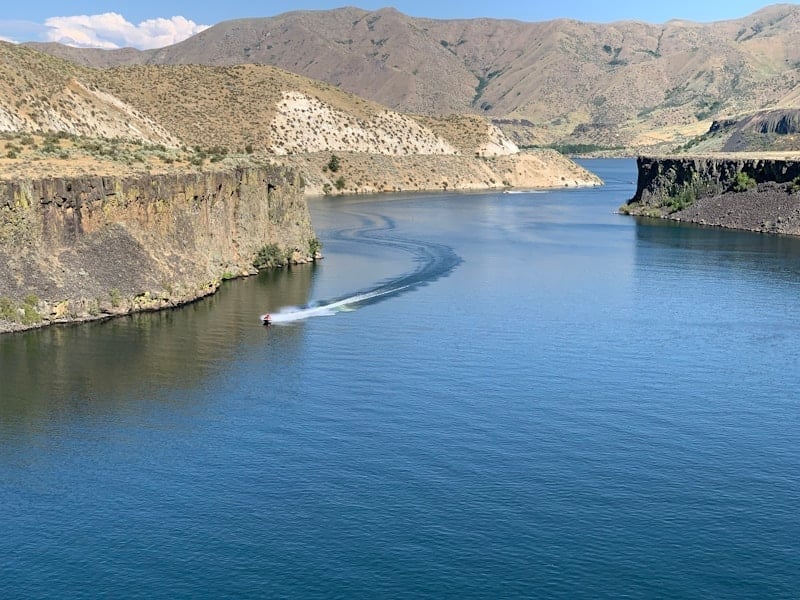
Idaho's Clearwater country, where the largest steelhead in the lower 48 still run
Northern Idaho is remote. Plan your driving accordingly.
| From | To Orofino | To Kelly Forks | To St. Maries | To Wallace |
|---|---|---|---|---|
| Spokane, WA | 2.5-3 hours (145 mi) | 4-5+ hours | 1.5 hours (62 mi) | 2.5 hours (115 mi) |
| Missoula, MT | 4+ hours (175 mi) | 5-6 hours | 3.5 hours | 2 hours |
| Boise, ID | 5-6 hours (254 mi) | 7+ hours | 6+ hours | 5.5 hours |
Critical note for Highway 12: There are no services between Lowell and Powell, a 70-mile stretch. Fill up in Lowell. Cell service is spotty to nonexistent along most of this corridor.
| River | Target Species | Best Season | Character |
|---|---|---|---|
| Clearwater River | Steelhead (B-run), rainbow, cutthroat | Oct-Mar (steelhead), June-July (trout) | Big water, spey fishing, 60+ miles accessible |
| St. Joe River | Westslope cutthroat | July-September | Wild & Scenic, roadless upper section |
| Selway River | Westslope cutthroat | Mid-June-September | Remote wilderness, permit required for float |
| Kelly Creek | Westslope cutthroat | July-September | Catch-and-release only, barbless hooks |
| North Fork Clearwater | Westslope cutthroat, bull trout | July-September | Barbless hooks, remote |
| North Fork Coeur d'Alene | Westslope cutthroat | July-November | Catch-and-release cutthroat, dry fly water |
| Lochsa River | Westslope cutthroat, steelhead | Aug-October (trout) | Wild & Scenic, Highway 12 access |
The Clearwater is Idaho's premier steelhead fishery. Formed at the confluence of the Lochsa and Selway Rivers near Lowell, it flows 76 miles to join the Snake River at Lewiston. Highway 12 parallels the entire river, providing exceptional access; you can literally drive the road and stop when you see fishy-looking water.
The Clearwater produces two distinct steelhead runs:
A-Run Fish (June-August arrival)
B-Run Fish (Late August-September arrival, peak October)
The B-run is why anglers travel here. These aren't your average steelhead; they're ocean-going rainbows that rival salmon in size and power. Local wisdom holds that the first 12 miles from the Snake confluence (95 Bridge to Casino section) hold the majority of fish, as steelhead stack up before pushing further upstream.
The Clearwater is big water. Summer flows run around 20,000 CFS during runoff, unfishable for most purposes. Optimal steelhead fishing happens when flows drop and stabilize in fall.
| Flow (CFS) at Orofino | Conditions | What to Expect |
|---|---|---|
| Under 3,000 | Low water | Some holes become too shallow; fish concentrated |
| 4,000-5,000 | Prime steelhead | Best visibility, fish active, ideal swing water |
| 5,000-7,000 | Good fishing | Standard fall conditions, fish holding in runs |
| Over 7,000 | High flows | Water too fast for most productive holes |
| Over 20,000 | Runoff | Summer conditions, wait for October |
Check Clearwater River flows at Orofino for current conditions. October typically brings the magic window of 4,000-5,000 CFS with stable, clear water.
Unlike many Western rivers, the Clearwater doesn't have a detailed run-by-run breakdown publicly available. Local guides and experienced anglers know the specific holding water. What we can tell you:
Key Named Spots:
Access Strategy: Eight boat ramps span the 60 miles from Orofino to Lewiston, spaced roughly 6 miles apart, perfect for half-day or full-day floats. The recommendation from local guides: "Drive Route 12 and stop when you see fishy-looking water." With the highway paralleling the river for 76 miles, you have countless pullouts and bank access points.
Guided steelhead floats typically run 7-9 hours, departing between 7-9 AM depending on conditions. With boat ramps every 6 miles, you can customize your float length:
| Float Type | Distance | Time | Notes |
|---|---|---|---|
| Half-day drift | 6-8 miles | 4-5 hours | One ramp to the next |
| Full-day drift | 12-15 miles | 7-9 hours | Standard guided trip |
| Multi-ramp day | 18+ miles | 8+ hours | Long day, experienced anglers |
The Clearwater's moderate gradient and consistent depth make it excellent drift boat water. Jet boats also run the entire stretch year-round.
| Period | Regulations | Notes |
|---|---|---|
| July (catch-and-release) | C&R only | Early A-run fish arriving |
| August-October 14 | 2 fish limit (adipose-clipped only) | B-run peak October |
| October 15-November 9 | Catch-and-release only | Prime B-run fishing |
| November 10-December | 2 fish limit | Late season |
| January 15-February 28 | Open | Best winter steelhead fishery in the US |
Important: Only adipose-clipped (hatchery) steelhead may be harvested. Wild fish must be released. Barbless hooks required throughout the Clearwater drainage.
Spey Fishing (Preferred Method)
The Clearwater is spey country. The broad, shallow runs and consistent depths favor two-handed rods and swung flies.
Fly Selection
The Clearwater Secret: This river is famous for bringing steelhead to the surface, even in winter. Waking flies and skaters can produce when fish are active. Don't be afraid to throw surface patterns even in cold conditions.
Don't overlook the Clearwater for trout. Rainbows and cutthroat are available from late May through mid-July, and again mid-September through October. During July and August, warm water (can reach 60°F+) pushes trout into the cooler Lochsa and Selway tributaries.
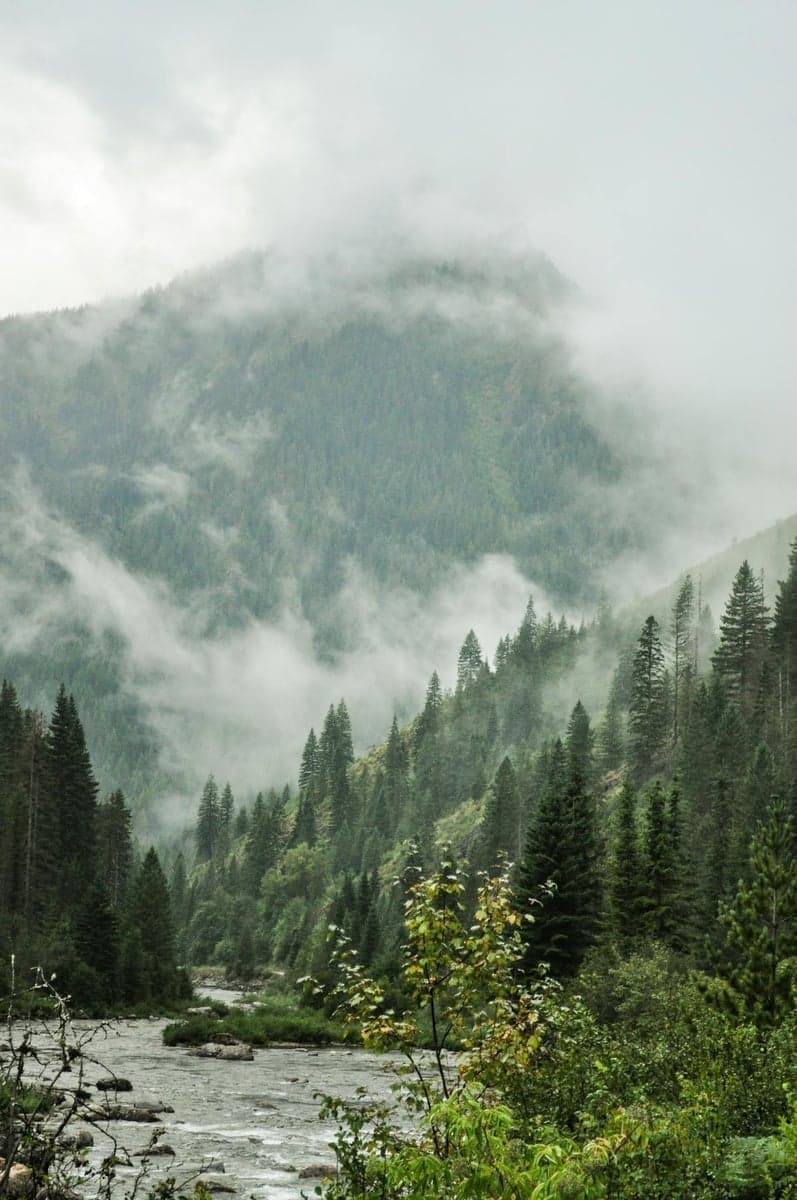
The St. Joe is a blue-ribbon fishery for native westslope cutthroat, with 66.3 miles designated Wild & Scenic. The lower section (39.7 miles) is accessible by road; the upper wild section (26.6 miles) requires hiking. Locals call it "The Shadowy Joe" for the dense cedar forests that shade much of the river.
This is classic northern Rocky Mountain freestone: cold, clear water tumbling through old-growth cedar forests. The St. Joe runs through some of the most remote country in the lower 48. Average cutthroat run 12-16 inches, with fish over 20 inches possible in the wilder upper reaches.
The fish are native westslope cutthroat, identifiable by the distinctive red-orange slash below the jaw. These are wild fish with no hatchery influence, making them both special and worth protecting.
| Flow (CFS) at Calder | Conditions | What to Expect |
|---|---|---|
| Under 50 | Very low | Technical fishing, fish concentrated in pools |
| 50-100 | Excellent | Prime wade conditions, fish spread through runs |
| 100-200 | Good | Comfortable wading, higher water |
| 200-500 | Elevated | Wade edges only, focus on slower water |
| Over 500 | High/runoff | Wait for drop |
Check St. Joe River flows at Calder for current conditions. Around 90 CFS is ideal for walk-and-wade fishing.
St. Joe River Scenic Byway (Highway 50) runs 89 miles from St. Maries to the Montana state line, providing the primary access corridor.
Key Access Points:
| Section | Distance | Time | Notes |
|---|---|---|---|
| Calder to Shadowy St. Joe | 12-16 miles | 7-9 hours | Full day guided float |
| Avery to St. Joe City | 5-15 miles | Varies | Depending on water levels |
| Packsaddle to St. Joe City | 38 miles | 2+ days | Multi-day trip |
Commercial guided floats typically meet at the Calder boat ramp (90 minutes from Coeur d'Alene) between 7-9 AM and are off the water by 3-6 PM.
The Wild Section: The upper 26.6 miles is roadless wilderness. Access requires hiking from Spruce Tree Campground upstream. This is where you'll find the biggest cutthroat and the most solitude, but plan for a multi-day trip.
| Pattern | Size | When |
|---|---|---|
| Stimulator | 8-12 | June-September |
| Elk Hair Caddis | 12-16 | Year-round |
| Parachute Adams | 14-18 | Year-round |
| Chubby Chernobyl | 8-12 | July-September |
| Royal Wulff | 12-16 | Attractor dry |
| Hare's Ear Nymph | 12-16 | Year-round |
| Prince Nymph | 12-16 | Year-round |
| Hopper patterns | 8-12 | August-September |
Tip: St. Joe cutthroat are aggressive dry fly eaters. Start with a Stimulator or Chubby and work down if needed. Don't overlook the near bank: many anglers wade in and cast across, missing fish holding close to shore.
Kelly Creek may be Idaho's best-kept secret. Designated catch-and-release in 1970, only the second such designation in the state, this 23-mile stream runs through the Clearwater National Forest and holds exceptional populations of native westslope cutthroat.
On good days, experienced anglers report double-digit fish counts. Cutthroat average 12-16 inches, with 20+ inch fish possible. The stream is wadeable, accessible by road for the first 10 miles, and the catch-and-release regulations have maintained robust fish populations for over 50 years.
That said, don't expect guaranteed success. Fish counts vary with conditions, pressure, and timing. The "15-20 fish days" you read about online represent good days with experienced anglers, not a baseline expectation.
These regulations are strictly enforced. Respect them; they're why the fishing is this good.
Getting to Kelly Creek requires serious planning. This isn't a day trip from Spokane.
The Route: From Pierce, Idaho, take Forest Service Road 250 approximately 45-48 miles to Kelly Forks.
Road Conditions (CRITICAL, check before going):
Seasonal Access:
Alternative Access: If FR 250 from Pierce is closed, you can reach Kelly Creek via Superior, MT using FSR 255 through Deception Saddle, but this adds significant time and complexity.
CALL BEFORE YOU GO: North Fork Ranger District: (208) 476-4541 or (208) 476-8288. Get current road, campground, and trail conditions. Water levels and road access vary significantly year to year.
Cell Service: Expect no cell service at Kelly Forks or along most of FR 250. Plan accordingly.
Kelly Forks Campground (14 sites) sits at the confluence with the North Fork Clearwater. This serves as base camp for most anglers. A campground host is present May-October.
Kelly Forks Cabin is available for year-round rental through the Forest Service, excellent for groups or winter access.
Upstream Access: The road parallels the first 10 miles of Kelly Creek from Kelly Forks. Beyond that, hiking trails provide access to upper sections where pressure drops significantly.
| Hatch | Timing | Patterns |
|---|---|---|
| Salmonflies | Mid-June | Stimulators, Sofa Pillows (size 4-8) |
| Golden Stoneflies | Late June-July | Golden Stones (size 8-10) |
| Yellow Sallies | July-August | Yellow Sally dries (size 14-16) |
| PMDs | July-August | PMD Comparaduns (size 16) |
| Caddis | July-September | Elk Hair Caddis (size 10-14) |
| Tricos | August-September | Trico spinners (size 20-22) |
| BWOs | September-October | Blue Winged Olive (size 16-20) |
Key Insight: Mid-June (when the road opens and salmonflies hatch) is prime time, big bugs bring big fish to the surface. But honestly, Kelly Creek fishes well all summer. An Elk Hair Caddis in size 12 will catch fish from July through September.
While you're in Kelly Creek country, don't pass by the North Fork Clearwater. This is spectacular water: readily wadeable, with excellent fish populations. Many fish exceed 15 inches.
North Fork Regulations:
The Lochsa deserves more than a footnote. This Wild & Scenic river flows 70+ miles from the Bitterroot Range to join the Selway at Lowell, offering excellent cutthroat fishing and some of the most dramatic scenery in Idaho.
The Lochsa holds native westslope cutthroat exclusively:no stocking, all wild fish. Typical size runs 10-15 inches, with occasional larger fish. The river fishes best in late summer and fall when flows drop and water clears.
Best Months: August, September, October, when water is low and clear. Spring runoff (through most of June in typical years, later in big snow years) makes the river unfishable for fly fishing.
| Conditions | What to Expect |
|---|---|
| Peak runoff (May 15-June 15) | Unfishable for fly fishing |
| Late June-July | Dropping, may be wadeable by late July |
| August-October | Prime conditions: low, clear water |
Note: The Lochsa is also a Class III-IV whitewater river with 60+ rapids, including 25 Class IV and 2 Class V rapids. Peak whitewater season is late May to mid-June, the opposite of prime fishing time.
Highway 12 parallels the entire river, providing excellent access:
| Access Point | Mile Marker | Notes |
|---|---|---|
| Knife Edge | Mile 107 | River access, parking, bathrooms |
| Split Creek | Mile 111 | Parking lot access |
| Fish Creek | Mile 119 | Boat ramp, bathrooms, emergency call box |
| Wilderness Gateway | Mile 122 | Campground, boat access |
| Nine Mile | Mile 130 | Parking lot access |
| White Pine | Mile 138 | Parking lot access |
Campgrounds along Highway 12: Jerry Johnson, Wendover, Whitehouse, Powell
Powell (off Highway 12, 13 miles west of Lolo Pass) offers the only services in this stretch:
Tributaries: Warm Springs Creek, White Sand Creek, and Killed Colt Creek receive less pressure than the main stem and hold plenty of cutthroat. Worth exploring if you want solitude.
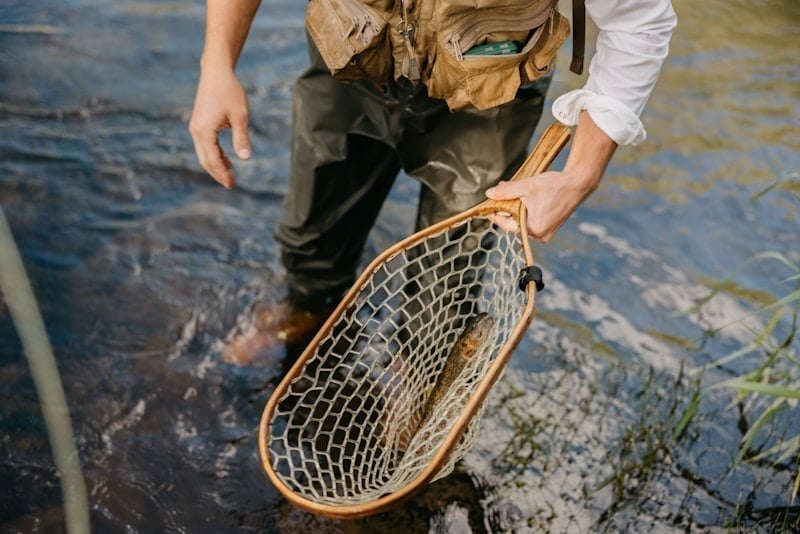
Westslope cutthroat, the native trout that define Northern Idaho fishing
The Selway is the crown jewel of Northern Idaho wilderness fishing, and the hardest to access. This 100-mile river flows through the heart of the Selway-Bitterroot Wilderness, one of the most remote areas in the lower 48. If you're willing to work for it (and win a permit lottery), the Selway offers wild westslope cutthroat in the 16-20 inch range with almost no fishing pressure.
Most Northern Idaho rivers are accessible by road. The Selway is not. The fishable wilderness section runs 47 miles from Paradise to Selway Falls, with no road access anywhere along the way. This remoteness means:
Option 1: Selway Falls Road Corridor (Walk-and-Wade)
The only road-accessible fishing is along Forest Road 223, which runs 21 miles from Lowell to Selway Falls. This corridor offers:
Important closure: The section from Selway Falls cable car upstream to Selway Falls Bridge at Meadow Creek is closed to fishing. Wade fishing focuses on the section downstream of the cable car.
Option 2: Multi-Day Wilderness Float (Permit Required)
The 47-mile wilderness section requires a permit during the control season (May 15 - July 31). This is one of the hardest river permits to obtain in the West:
If you don't win the lottery, four permitted outfitters offer commercial trips. Expect 5-6 day trips with significant cost.
Outside permit season: You can float without a permit before May 15 or after August 1, but spring conditions are extremely dangerous (cold water, high flows, Class V rapids) and August water may be too low.
| Hatch | Timing | Notes |
|---|---|---|
| Skwalas | May | Season opener |
| Salmonflies/Golden Stones | Mid-June | Big dry fly action |
| Hoppers | July | Prime time |
| PMDs/Caddis | July-August | Evening hatches |
| October Caddis | September-October | Season closer |
Rattlesnakes: The Selway drainage has significantly more rattlesnakes than the Lochsa. Some anglers report seeing more rattlesnakes on a single Selway trip than on all other river trips combined. Watch where you step and where you put your hands.
Remoteness: If something goes wrong on a wilderness float, you're days from help. Flipped rafts have traveled 15 miles downstream before recovery. Everyone in your group needs swift water rescue skills and survival knowledge.
Whitewater: The "Moose Juice" section below Moose Creek features continuous Class IV/V rapids at high water. Selway Falls itself is Class VI, don't miss the take-out.
The North Fork Coeur d'Alene delivers excellent cutthroat fishing in a more accessible setting than the remote Clearwater tributaries. Located 40 minutes from Coeur d'Alene city, this is your best option if you want quality fishing without committing to a multi-hour drive on forest roads.
Above Yellow Dog Creek:
The North Fork runs clear and cold through forested canyon country. Cutthroat average 9-12 inches, with fish to 21 inches reported. The special regulations have maintained healthy populations, these are wild fish in wild water.
| Hatch | Timing | Notes |
|---|---|---|
| Skwala Stones | March-April | Pre-runoff, famous hatch |
| March Browns | March-April | Mixed with Skwalas |
| BWOs | March-May, Sept-Oct | Overcast days best |
| Salmonflies | Mid-June | Water must reach 54-56°F to trigger |
| Golden Stones | Late June-July | 1-2 weeks after salmonflies |
| Green Drakes | May-June | Sporadic but excellent when they happen |
| PMDs | June-August | Morning/evening |
| Caddis | June-September | Evening hatches strong |
| October Caddis | Sept-October | Famous hatch, large orange patterns essential |
October Caddis Note: The fall October Caddis hatch is legendary on North Idaho streams. These large, orange insects trigger aggressive feeding. Size 8-10 orange Stimulators or dedicated October Caddis patterns are must-haves for fall fishing.
Northern Idaho fishing often means remote conditions. Take these hazards seriously.
All Northern Idaho rivers run cold:typically 50-60°F even in summer, colder during runoff. Cold water wicks body heat 25 times faster than air at the same temperature. Hypothermia can occur in as little as 10 minutes in cold water, even among strong swimmers.
Spring runoff (May-June) is especially dangerous: high flows combined with snowmelt-cold water create life-threatening conditions. High water and cold water together have killed anglers.
Precautions:
Grizzly bears have returned to the Kelly Creek and Lochsa/Selway drainages for the first time since 1946. This is grizzly country, carry bear spray and know how to use it. Make noise while moving through brush. Store food properly.
Black bears, moose, elk, and wolves are also common throughout the region.
Rattlesnakes: Common in the Selway drainage. The Lochsa is nearly rattlesnake-free. Rattlesnakes become more common as you move down the Clearwater toward Lewiston, where the drier, lower-elevation terrain is prime rattlesnake habitat.
Kelly Creek and the Lochsa corridor are extremely remote. Cell service is unavailable for most of these areas. The nearest hospital is:
Plan for self-rescue: Carry a satellite communicator (InReach, Zoleo, etc.) if fishing remote water. Know basic first aid. Tell someone your float plan and expected return time.
| Month | Best Options | Notes |
|---|---|---|
| March-April | North Fork CDA (Skwalas) | Pre-runoff window, weather dependent |
| May | Limited options | Heavy runoff on most waters |
| June | Upper Clearwater tributaries | Runoff subsiding, salmonflies starting mid-month |
| July | Kelly Creek, St. Joe, Lochsa (late) | Prime cutthroat season begins |
| August | Kelly Creek, St. Joe, N.Fork CDA, Lochsa | Peak dry fly fishing |
| September | All cutthroat waters, early steelhead | Fish still active, October Caddis begins |
| October | Clearwater (B-run steelhead) | Prime steelhead, flows optimal at 4,000-5,000 CFS |
| November-December | Clearwater steelhead | Late season, weather dependent |
| January-February | Clearwater steelhead | Best winter steelhead in the US |
Northern Idaho has real weather. Plan accordingly:
Non-resident costs (2025):
| Water | Special Rules |
|---|---|
| Clearwater drainage | Barbless hooks required for salmon/steelhead |
| Kelly Creek | Catch-and-release only, no bait, barbless |
| North Fork CDA (above Yellow Dog Cr) | No bait, barbless, C&R cutthroat |
| St. Joe River | No harvest of slashed (cutthroat) trout |
| Lochsa (above Wilderness Gateway) | Catch-and-release only |
Bull Trout: Listed as threatened. Must be released immediately if caught. No intentional fishing.
Always verify current regulations at Idaho Fish and Game.
Northwest Outfitters (Coeur d'Alene)
Castaway Fly Fishing
Silver Bow Fly Shop
Fins & Feathers
Wallace Fly Shop
White Pine Outfitters
North40 Outfitters
| Trip Type | Price Range |
|---|---|
| Half-day wade | $300-400 |
| Full-day wade | $450-550 |
| Full-day float (steelhead) | $500-700 |
Includes equipment and flies. Gratuity (15-20%) customary.
Best Western Lodge at River's Edge
Helgeson Hotel & Suites
Konkolville Motel
Kelly Forks Campground
Kelly Forks Cabin
Dispersed Camping
Lochsa Lodge (Powell)
Powell Campground
Multiple hotels and vacation rentals. 40-minute drive to North Fork CDA fishing.
| Pattern | Sizes | Purpose |
|---|---|---|
| Stimulator (yellow/orange) | 8-12 | Stonefly adult, attractor |
| Elk Hair Caddis | 10-14 | All-purpose caddis |
| Parachute Adams | 14-18 | Mayfly imitation |
| Chubby Chernobyl | 8-12 | Attractor, hopper |
| Royal Wulff | 12-16 | High-vis attractor |
| PMD Comparadun | 16 | Pale morning dun |
| BWO | 16-20 | Blue winged olive |
| October Caddis | 8-10 | Fall essential |
| Hare's Ear Nymph | 12-16 | General nymph |
| Prince Nymph | 12-16 | Attractor nymph |
| Hopper | 8-12 | August-September |
| Pattern | Sizes | Notes |
|---|---|---|
| Green Butt Skunk | 4-6 | Classic producer |
| Purple Peril | 4-6 | When in doubt, purple |
| Blue Charm | 4-6 | Traditional hairwing |
| Undertaker | 4-6 | Dark water |
| Intruder (various) | 2-6 | Articulated option |
| Bomber | 4-6 | Surface/waking |
| Morrish Tube Skater | 4-6 | Surface presentation |
| October Caddis Skater | 6-8 | Fall surface |
Northern Idaho fire season (July-October) can affect access and fishing conditions.
Check before you go:
Wildfire smoke can impact fishing, low-light conditions may improve dry fly fishing, but heavy smoke can suppress insect activity and make conditions unpleasant.
Northern Idaho fishing often means being hours from help. Pack accordingly.
| Water | Type | Best For | Difficulty | Access |
|---|---|---|---|---|
| Clearwater River | Large freestone | Steelhead (B-run) | Intermediate-Advanced | Highway 12, excellent |
| St. Joe River | Freestone, Wild & Scenic | Native cutthroat | Beginner-Intermediate | Highway 50 |
| Selway River | Wilderness freestone | Large cutthroat | Advanced (permit required for float) | FR 223 or wilderness permit |
| Kelly Creek | Small freestone | C&R cutthroat | Beginner-Intermediate | FR 250 (remote, check conditions) |
| North Fork Clearwater | Freestone | Cutthroat | Intermediate | FR 250 |
| North Fork CDA | Freestone | Cutthroat, dry fly | Beginner-Intermediate | Highway 4 |
| Lochsa River | Wild & Scenic | Cutthroat | Intermediate | Highway 12 |
Weekly flow updates and fishing intel.
© 2026 RiverReports, Inc.