Middle Provo reading approximately 205 CFS at Charleston with Jordanelle releasing 317 CFS upstream—irrigation diversions pulling water through the corridor as usual for late-August peak summer. Flows holding steady in the 200-230 CFS range depending on gauge location. These are comfortable wading flows with fish well-distributed through runs, seams, and pool tails. Orvis guides reporting the Middle 'has been a little more consistent' than the Lower this week with both nymphing and dry-dropper techniques performing well. Morning water temps reading 59°F and climbing through the day. TEMPERATURE WARNING: afternoon surface temps pushing into the 65-68°F stress zone—plan morning sessions and be off the water by 1-2pm on sunny days. Afternoon thunderstorms can bring relief and trigger BWO activity. Green Drakes DONE since early July. PMDs (#16-18) on their last legs for the season—still producing on edges in late-morning windows from 9am-noon but hatches are thin and sporadic now. Sparkle Duns #18-20 still draw occasional rises but don't build a trip around PMDs at this point. Trico spinner falls (#20-24) now a SIGNIFICANT morning event in smoother glassy sections—pods of risers sipping spinners between 7-9am, especially on the Lower Middle near Charleston. This is technical fishing requiring 7X tippet and precise presentations. CADDIS AND TERRESTRIALS ARE THE HEADLINE STORY: Orvis reporting 'lots of fish on the edges eating ants and caddis.' Elk Hair Caddis, CDC Caddis, and X-Caddis #18-20 producing through the afternoon-to-evening window. Terrestrials (ants #16-20, beetles #14-18, hoppers #8-12, crickets #10-14) are the primary afternoon patterns—hopper-dropper rigs along grassy banks generating the most consistent action from noon through evening. BWOs (#20-22) hatching on cloudy days and during afternoon thunderstorms. Nymphing remains the most consistent all-day method—Rouse's J-Dub Sow Bug #18-20 or standard sow bugs #16-20 as point fly with Tungsten Split Case PMD #20 or RS2 #18-22 trailing. Black Zebra Midge #20 producing well as a dropper. Magic Midge #22 worth having. Euro/tight-line rigs effective in pocket water. DRY-DROPPER RIGS the most versatile all-day technique—hopper or caddis dry with sow bug or Flashback Hares Ear #18-22 trailing 18-20 inches below, particularly along grassy banks. Water clarity excellent—6X-7X tippet essential, 7X on flat water and for Trico work. Moss Monster (filamentous algae) present in slower sections—annoying but not a dealbreaker, just clean flies frequently. Pressure moderate but weekends still busy—River Road lots filling by 7:30am. Best windows: dawn-9am for Trico spinners and midge/BWO nymphs in soft seams; afternoon-dusk for caddis and terrestrials.
Lower Provo running at 445 CFS out of Deer Creek—flows have eased slightly from mid-August highs (462 CFS) and are expected to hold in the 400-450 CFS range as irrigation demand begins its late-summer taper. This is still moderate-to-high water for the canyon section with fish pushed to edges, behind structure, in drop-offs, and along foam lines. Wading is challenging—crossing the river is difficult at this volume, so plan to fish one bank and work seams and softer water along the edges. Orvis guides reporting the Lower is 'poppin' this week—fish actively feeding on edges. Water temp 50°F at the dam release but CRITICAL TEMPERATURE WARNING: afternoon temps below Olmstead Diversion and near Vivian Park still reaching 67-68°F by mid-afternoon. Bring a stream thermometer and check water temperature every hour—if surface temps hit 68°F, stop fishing immediately. STATUS SET TO CAUTION due to afternoon temperature stress risk. Fish the Lower Provo in MORNING ONLY during hot weather—be on the water at dawn and off by noon. ANTS AND CADDIS ARE THE MAIN EVENT: Orvis confirming 'lots of fish on the edges eating ants and caddis'—ants #16-20 (black/cinnamon) tight to canyon walls and Elk Hair Caddis #18-20 producing the most consistent surface takes. Trico spinner falls (#20-24) continuing as a significant morning event—pods of risers sipping spinners in smoother water from 6:30-9am, especially below Sundance. 7X tippet and #22-24 Trico Spinner patterns. PMDs effectively done on the Lower—occasional sparse emergence but not worth targeting. Caddis (#18-20) emerging throughout the day—CDC Caddis, X-Caddis, and Elk Hair Caddis #18-20 the best surface patterns. Nymphing remains the most productive method overall—Rouse's J-Dub Sow Bug #18-20 or standard sow bugs #16-20 as point fly with RS2 #18-22 or Flashback Hares Ear #18-22 trailing. At 445 CFS use heavier rigs (2-3 split shot) and focus on inside seams, eddy lines, and slower water behind boulders. Terrestrials the primary afternoon dry fly option along canyon walls—ants, beetles, hoppers, and crickets all drawing strikes tight to the bank. Moss Monster (filamentous algae) present—clean flies frequently in slower sections. BWOs (#20-22) hatching on cloudy days. Access disputes persist—stick to clearly public corridors and UDOT-marked access points. Best window dawn-noon due to afternoon temperature concerns.
🎣 TACTICS RIGHT NOW
Dry Fly
Elk Hair Caddis #16-18 (afternoon-evening workhorse—caddis and ants now THE top dry fly game per guide reports)Ant #16-20 (black/cinnamon—fish on the edges keying on antsthe #1 terrestrial right now)CDC Caddis #18-20X-Caddis #18-20Corn-fed Caddis CDC #20 (tan/olive)Trico Spinner #20-24 (SIGNIFICANT morning event—spinner falls strengthening in glassy water7X tippet required)Hopper #8-12 (grassy banks all afternoon)Beetle #14-18 (black)Cricket #10-14 (black)Sparkle Dun #18-20 (occasional PMD risers but hatches are thin now)Parachute BWO #20-22 (cloudy days and thunderstorm windows)Griffith's Gnat #18-20
Nymph
Rouse's J-Dub Sow Bug #18-20 (hot fly—the guide-favorite sow bug pattern right now)Sow Bugs #16-20 (grey/tan/rainbow—all-day producerthe Provo staple)RS2 #18-22 (black/olive—producing consistently as a trailer)Flashback Hares Ear #18-22 (effective dropper in dry-dropper rigs)Tungsten Split Case PMD #20Stealth Link Mercer PMD #20Magic Midge #22 (worth having in the box)Egan's Thread Frenchie Jig Olive #12Juju Baetis Tungsten #22Pheasant Tail Tungsten #20-22Egan's CDC Rainbow Warrior #22Caddis Larva/Pupa #16-18Midges #22-24 (Bling Midge/WD-40/Zebra Midge)Zebra Midge #20 (black—hot dropper)San Juan Worm #12-14 (red)
Middle Provo at 205 CFS at Charleston—comfortable wading flows with fish well-distributed. Jordanelle releasing 317 CFS upstream with irrigation diversions dropping flows through the section. Morning water temps 59°F and climbing through the day. TEMPERATURE WARNING: afternoon surface temps pushing into the 65-68°F stress zone on hot days—fish mornings and be off by 1-2pm. Orvis guides reporting 'Middle has been a little more consistent' this week with nymphing and dry-dropper both producing well. Two main windows now: dawn-9am for Trico spinner falls in glassy water (pods of risers, 7X tippet, technical) and midge/BWO nymphs in soft seams; afternoon-dusk for caddis and terrestrials—ants and caddis are THE dry fly game right now per guide reports, with hopper-dropper rigs along grassy banks the most versatile technique. PMDs effectively over for the season—don't plan around them. Nymphing remains the best all-day method—Rouse's J-Dub Sow Bug #18-20 or standard sow bugs as point fly with RS2 #18-22 or Flashback Hares Ear #18-22 trailing. Lower Provo at 445 CFS out of Deer Creek—flows easing slightly from mid-August. Orvis reporting the Lower is 'poppin' with fish actively feeding on edges. CAUTION: afternoon temps hitting 67-68°F below Olmstead—fish mornings only and bring a thermometer. Trico spinners active 6:30-9am on the Lower. Moss Monster (filamentous algae) present on both sections—clean flies frequently. Pressure moderate but weekends still busy—River Road lots filling by 7:30am. Best window dawn-noon on both sections during hot weather. Use 6X fluoro for nymphing, 6X-7X for dries, 7X for Trico work.
FORECASTLate-August fishing now fully in its end-of-summer groove. PMDs are effectively done—don't plan trips around them. The dry fly game has shifted decisively to caddis and terrestrials: guide reports confirm fish keying on ants and caddis along edges on both Middle and Lower sections. Trico spinner falls continue as the strongest morning dry fly opportunity and will build further through September—pack #20-24 Trico Spinner patterns and plan early mornings. Terrestrials (hoppers, ants, beetles, crickets) remain peak and will stay productive through September. The Rouse's J-Dub Sow Bug has emerged as the hot nymph pattern—get some in #18-20 if you don't have them. Critical watch: water temperature. Hot weather pushing afternoon temps into the danger zone, especially on the Lower Provo where readings of 67-68°F persist near Vivian Park. Morning-only sessions essential—dawn to noon is the responsible window. Afternoon thunderstorms remain a wildcard that can trigger BWO activity. Moss Monster (filamentous algae) present on both sections—annoying but manageable, just clean flies frequently. Middle Provo flows likely to hold in the 200-230 CFS range before easing in September as irrigation demand tapers. Lower Provo expected to gradually drop from 445 CFS as late-season demand subsides. Upper Provo in prime summer shape—brook trout and cutthroats in the upper reaches, terrestrials and caddis active. Mirror Lake Highway fully open and providing a good escape from canyon heat and pressure. Looking ahead: BWOs will return in force come October, and brown trout aggression builds through September into fall pre-spawn. Early fall (mid-September) often brings the most pleasant fishing of the year—thinner crowds, cooling temps, and active fish. Weekday mornings remain your best bet for quality water on the Middle.
Why the Provo
The Provo River is Utah's most accessible blue-ribbon trout fishery. Fifteen minutes from Park City, thirty minutes from Salt Lake City, the river holds 2,500 to 3,500 fish per mile - browns, rainbows, and the occasional cutthroat. Two tailwater sections below Jordanelle and Deer Creek reservoirs mean stable flows year-round, consistent water temperatures (35-55°F), and fish that stay active even when freestone rivers blow out.
The trade-off: this is a pressured river. On summer weekends, the River Road parking lots fill by 8am and you'll share water with other anglers. But 25+ miles of public access means you can find breathing room if you're willing to walk past the first few bends.
The Provo's clear water and abundant hatches reward careful presentations and light tippets.
Three Rivers in One
The Provo is divided into three distinct sections, each with its own character. Understanding the differences helps you pick the right water for conditions and skill level.
Upper Provo
Location: Washington Lake to Jordanelle Reservoir, accessed via Mirror Lake Highway (UT-150) near Kamas
Character: Classic freestone stream through the Uinta-Wasatch-Cache National Forest. Small water, pocket fishing, eager fish. Brook trout and cutthroats dominate the upper reaches; browns and rainbows appear as you move downstream toward Jordanelle. The section near Woodland has a beautiful rust-brown color from the substrate and is filled with insect life - pools, riffles, and runs aren't deep but they hold fish.
Best times: Pre-runoff (March-April) and post-runoff (late June through October). Summer heat pushes trout to higher elevations where water stays cold - this is your escape valve when the Middle Provo is crowded and hot.
Access: Public National Forest land along Highway 150, with multiple pullouts. Rock Cliff Recreation Area on Jordanelle's east shore provides parking, restrooms, and easy access where the Provo enters the reservoir.
What to expect: Fish average 8-12 inches, with occasional larger browns in deeper pools. Technical pressure is lower, but fish can be skittish in small, clear water. Good for beginners and those who want solitude.
Middle Provo
Location: Jordanelle Dam to Deer Creek Reservoir (12 miles)
Character: This is where most anglers focus - and for good reason. A restored tailwater with stable flows, cobblestone bottom, and consistent temperatures. The Provo River Restoration Project added four miles of meanders and in-stream structure, creating excellent holding water. The river flows through cottonwoods in the tranquil Heber Valley, with a pastoral feel very different from the canyon below.
Named spots like "Lunker Lane" near the dam and the water around "Rickety Bridge" hold nearly 3,000 fish per river mile. Average browns run 12 inches, with 18-inch-plus specimens caught year-round.
Best times: Year-round fishing. The Buffalo midge hatch starts mid-March, Green Drakes run May-July, and fall brings aggressive pre-spawn browns. Winter midging (10am-3pm) can be surprisingly productive.
Access: Seven designated public access points with parking and vault toilets, managed by the Utah Mitigation Commission. See detailed access section below.
What to expect: Browns and rainbows averaging 12-16 inches, with fish over 20 inches present. Heavy pressure during major hatches - plan to fish weekdays or arrive before 7am on weekends.
Lower Provo
Location: Deer Creek Dam to Utah Lake (Provo Canyon)
Character: Tailwater flows through a steep limestone canyon. Larger fish on average than the Middle Provo, fed by prolific populations of sow bugs, scuds, and midges. The change in pH from the limestone makes this section a "shrimp buffet" for trout. Blue-winged olives in spring, PMDs in summer.
The pocket water from Bridal Veil Falls down to the diversion dam at the canyon bottom fishes well. Near the LDS Motion Picture Studio at 1230 North in Provo, there's a water diversion with a pool below a small waterfall where fish stack up.
Best times: March-April before crowds arrive. Early morning and late evening in summer to avoid both heat and people.
Access: Pullouts along US-189 through Provo Canyon. Lower Provo River Park provides the main access near Vivian Park. Important access note below.
What to expect: Trophy-class rainbows and browns - the rainbows here average larger than anywhere else in Utah. Technical fishing in clear water with educated fish.
⚠️ Lower Provo Access Warning
As of 2024, portions of the Lower Provo River are in legal limbo. Certain landowners along the upper reaches of Provo Canyon have begun confronting anglers who are fishing in the river, claiming the water is not public. While state and local law enforcement have not recognized these claims - and no angler has been charged with trespass for being in the water - the situation creates uncertainty.
What this means for you:
Many guide services are avoiding the Lower Provo entirely until the issue is resolved
If you fish the Lower, access only from clearly public areas (UDOT land, marked access points)
Do not cross private dry land to reach the river
If confronted, remain calm and contact Utah DWR (801-538-4700)
The Utah Stream Access Coalition is working to establish the Lower Provo as navigable water (which would allow public use up to the high-water mark), but litigation takes time. Until resolved, the Middle Provo offers less contentious fishing with similar quality.
Reading the Flows
The Provo's tailwater sections run at controlled flows from Jordanelle and Deer Creek dams. This is both a blessing (fishable year-round) and a complication (optimal flows depend on what section you're fishing and what you want to do).
Middle Provo Flow Guide
Flow (CFS) at Charleston
Conditions
What to Expect
Under 100
Very low
Fish concentrated in pools, extremely spooky, technical
130-200
Winter/low-water normal
Very wadeable anywhere, focused fishing, 4-6 ft nymph rigs
250-350
Good fishing flows
Wade-friendly throughout, fish spread out, ideal for beginners
350-500
Prime hatch conditions
Best Green Drake and PMD activity, some deeper wading
500-700
Higher flows
Manageable wading, stick to edges and slower runs
Over 700
Difficult wading
Fish from the bank or consider a drift boat; flows this high rare
Current flows on the Middle Provo typically run 130-150 CFS in winter, rising during irrigation season (May-September). Track Provo River flows at Charleston for current conditions.
Lower Provo Flow Guide
Flow (CFS) below Deer Creek
Conditions
Under 100
Very low - limits float traffic, concentrated fish
Key insight: Unlike freestone rivers, the Provo doesn't blow out with spring runoff. Reservoir releases control flows, making this a reliable option when other Utah waters run high and muddy.
Water Temperature
The Provo's tailwater character means stable temperatures year-round:
Season
Typical Temps
What It Means
Winter
35-42°F
Slow metabolism, midday midge windows, fish deep
Spring
42-54°F
Activity increases, Buffalo midges and BWOs active
Summer
50-55°F (morning) to 60-68°F (afternoon)
Best fishing early/late; stop fishing if temps exceed 68°F
Fall
45-55°F
Prime conditions, aggressive pre-spawn browns
Critical threshold: When surface temperatures reach or exceed 68°F, trout become stressed and are more vulnerable to exhaustion, disease, and death after catch-and-release. Summer afternoons on the Middle Provo regularly hit this threshold. Check temps and fish mornings or wait for cooler evenings.
Optimal insect activity: Most mayflies and midges become active when water hits 50-54°F, which typically happens mid-morning in spring and fall. This is when you'll see the best surface activity.
The Hatch Chart
The Provo's productivity comes from consistent, overlapping hatches throughout the year. The tailwater environment keeps temperatures stable enough for insects to hatch even in winter.
Winter (December-February)
Midges (#20-26): The main game. Hatches start when sun warms the water, typically 11am-2pm. Look for fish rising in slower pools and tailouts.
Fish small midge clusters (Griffith's Gnat) or individual adults. Egg patterns and sow bugs produce below spawning browns through January.
Expect sporadic dry fly opportunities on warmer days - yes, dry fly fishing in Utah winter is real.
Spring (March-May)
The Buffalo Midge (#16-20): This is the Provo's signature hatch and the first major emergence of the year. Named 35 years ago from Strawberry Reservoir, the pupa has a distinctive hump on its back like a buffalo silhouette.
Timing: Mid-March through April, starting around 12:30pm and lasting 1-3 hours
Colors: Black is most common; also brown, olive, and gray
Key insight: About 90% of rises target midges with the shuck still attached - they want emergers, not duns
Overcast days produce longer, more intense hatches
The Middle Provo has the strongest and most consistent Buffalo midge activity of any Utah river
Blue-winged Olives (#16-20): March through May, heaviest on overcast afternoons. The BWO hatch runs concurrent with late Buffalo midges in April.
Caddis (#12-14): Start showing in May, build through summer.
Golden Stoneflies (#6-10): May through July on Upper Provo and some Middle sections.
Summer (June-August)
Green Drakes (#10-14): The marquee hatch. June and July on the Middle Provo. Fish get aggressive and crowds arrive. This is the closest thing to a "must-fish" window on the Provo.
Pale Morning Duns (#14-16): June through August, often overlapping with Green Drakes. Best in morning and evening.
Yellow Sallies (#14-16): June through August, particularly productive on the Middle Provo.
Caddis (#12-14): All summer long, strongest evening activity.
Terrestrials (#6-16): Hoppers, ants, beetles from June through October. Hopper-dropper rigs work well along grassy banks.
Fall (September-November)
BWOs (#18-22): Return in force October-November, especially overcast days between 11am-2pm.
Brown trout spawn: October-November. Fish egg patterns but avoid disturbing active redds (light gravel patches with paired fish).
Midges: Transition back to winter patterns by late November.
Rigging for the Provo
The Provo's clear water and pressured fish demand finesse. Here's what works:
Nymph Rig Setup
Leader/Tippet: The guides say it every report: 6X minimum, often 7X. The clear water and educated fish see everything. Run 9ft leader to 4-5ft of 5X, then a tippet ring, then 6X or 7X to your flies.
Depth: Typical indicator depth is 4-6 feet for most Middle Provo runs. Adjust based on the specific water you're fishing - the cobblestone bottom creates variable depths.
Weight: Light is the theme. One to two #6 split shot on 6X tippet is often enough. The fish aren't in heavy water - they're in moderate runs and pools. Over-weighting spooks fish and snags bottom.
Standard Rig:
Point fly: Sow Bug (#18-20) or larger attractor
Dropper (18" below): Thread midge (#22-26) or Zebra Midge
Colors that work: black, cream, red, olive, iron gray
Dry Fly Setup
9ft 5X leader with 2-3ft of 6X tippet
For midge clusters: 7X tippet, size 18-22 flies
During Green Drake hatch: can get away with 5X
Euro Nymphing
Euro/tight-line nymphing is productive on the Provo, especially in the pocket water sections. The clear water makes sighters visible, and the technique helps detect subtle takes from educated fish. Run light flies and expect to downsize from what you'd use on freestone water.
Streamer Fishing
Best in early spring (pre-runoff) and fall (pre-spawn). 4X fluorocarbon, strip-and-pause retrieve. The big browns respond to leeches and buggers in the deeper runs.
Flies That Work
Nymphs (year-round staples)
Sow Bug (#18-22, peacock or gray) - The Provo's bread-and-butter pattern. The limestone-influenced pH creates ideal conditions for these crustaceans.
Scud (#16-18, orange or olive) - Same reason as sow bugs
RS2 (#18-22, black or olive) - Year-round producer
Pheasant Tail (#16-20)
Zebra Midge (#20-24)
Thread Midge (#22-26, black/cream/red/olive)
San Juan Worm (#12-14, red) - Always productive
Egg patterns (#14-18) - Essential during and after brown trout spawn (Oct-Jan)
Green Drake Cripple (#10-14) - For the June/July hatch
PMD Comparadun (#14-16)
Sparkle Dun (#18-20, peacock)
Stimulator (#10-14, green or yellow)
Streamers
Woolly Bugger (#8-12, olive or black)
Slumpbuster - Effective on larger browns
Leech patterns (#10-14)
Winter tip: Fish small. Midges #22-26, sow bugs #20-22, thread midges in black, cream, red, and gray. The trout are eating tiny food - match it. If you're not getting refusals, you're probably not small enough.
Access Points
Middle Provo Access Sites (North to South)
The Provo River Restoration Project created seven designated access areas along the 12-mile Middle Provo corridor. All have parking lots with vault toilets and information signs.
1. Below Jordanelle Dam
First access downstream from the dam
Smaller parking area, less crowded
Good water in the first mile below the reservoir
"Lunker Lane" area nearby
2. River Road North
From Highway 40, take River Road southwest about 1/4 mile to cross the Middle Provo
First dirt road on your left after crossing leads to parking with vault toilets
The most popular access point - expect company
15-20 vehicle capacity; fills by 8am on summer weekends
3. River Road South
Same approach as River Road North
After crossing the river, first paved parking on your right
Vault toilets, good water in both directions
Walk downstream to escape the crowds at River Road North
4. Cottonwood
From River Road, head north on Old Highway 40 for approximately 2 miles
Dirt road on your left leads to parking with vault toilets
Less pressure than River Road sites
Good midge water in the cottonwood-lined section
5. Midway Junction
Access downstream from Highway 40 near Midway junction
Moderate pressure
6. Legacy Bridge
Where Midway Lane (SR-113) crosses the Middle Provo
Critical regulatory boundary: Special regulation water (artificial only, 2 under 15") ends here
Downstream of Legacy Bridge is general regulation water (bait allowed, 4 trout any size)
Parking available near the bridge
7. Charleston
Near where Center Street crosses before Deer Creek Reservoir
Access to lower Middle Provo
Good fall fishing as browns stage before the spawn
Less pressure than upper access points
Upper Provo Access
Mirror Lake Highway (UT-150): Multiple pullouts along the highway provide National Forest access. Highway typically open late May through October (snow-dependent).
Rock Cliff Recreation Area: East shore of Jordanelle, parking, day-use areas, and restrooms where the Provo enters the reservoir.
Walk-in Access (Jordanelle upstream 3/4 mile): Requires authorization number from Utah DWR for private land access. Call ahead.
Woodland area: Transition water between upper freestone and the reservoir. Beautiful character, moderate pressure.
Lower Provo Access
Note the access disputes mentioned above before planning to fish the Lower.
Lower Provo River Park: Near Deer Creek Reservoir, main put-in for floaters. Parking, restrooms.
Vivian Park: Take-out for float trips, walk-in access for anglers.
Canyon View Park: Lower in the canyon, accessible.
Provo Canyon pullouts: Various spots along US-189, limited parking. UDOT owns parcels adjacent to the river that provide legal access, though some are poorly marked.
Bridal Veil Falls area: Good pocket water, scenic, can be crowded with tourists.
Important: Stay within designated public corridors. Some stretches between access points cross private land. If you don't see public access signage, assume it's private.
Regulations
Regulations vary by section - know which water you're fishing. These are current as of 2025; verify before your trip as regulations can change annually.
Middle Provo (Jordanelle Dam to Legacy Bridge)
Artificial flies and lures only
Limit: 2 trout under 15 inches
This is the special regulation stretch - most of the prime Middle Provo water
Middle Provo (Legacy Bridge to Deer Creek Reservoir)
General regulations apply
Bait fishing permitted
Limit: 4 trout of any size
Lower Provo (Deer Creek Dam to Olmstead Diversion)
Artificial flies and lures only
Limit: 2 trout under 15 inches
Lower Provo (Olmstead to I-15)
General regulations apply
Bait permitted
Special Notes
Northern pike: No limit, must kill immediately (invasive species management)
Walleye: Closed to possession March 1 through first Saturday in May
Suckers: Must be released immediately (June sucker - endangered species protection)
A valid Utah fishing license is required. Non-resident licenses available online. Check current regulations before fishing.
Float Fishing
The Lower Provo offers a mellow float option for anglers who want to cover more water - though see access notes above regarding current disputes.
The run: Lower Provo River Park to Vivian Park (approximately 4.5 miles)
Difficulty: Class I with one Class II railroad trestle obstacle
Time: 2-3 hours fishing pace, 1-2 hours recreational pace
What to know:
Water temperature stays cold (45-55°F) year-round - the float is more comfortable in a raft or kayak with a floor than an inner tube
The railroad trestle about 2/3 down the run is the main obstacle. This old Heber Creeper trestle has caused accidents including broken bones. Many floaters portage on river right - there's an easy out before the trestle and put-in below. Scout it your first time.
Season runs May through September
Several outfitters offer guided float fishing trips
This is primarily a recreational tubing run, so expect company on summer weekends. Fish early (put in by 7am) or late (put in at 4pm) to have water to yourself.
Guide Services
If you're new to the Provo or want to accelerate your learning curve, local guides know exactly where fish are holding on any given day. They also navigate the access situation and can take you to productive water without uncertainty.
Good spot for local intel and current fly selection
Call ahead for conditions: they'll tell you what's working
A half-day guided trip typically runs $300-500 and includes all equipment, flies, and instruction. Worth it for first-timers to learn the water - a good guide shows you spots and patterns that take years to figure out on your own.
Timing Your Trip
Best Times to Fish
Spring (March-May)
Buffalo midge hatch starts mid-March - some of the best dry fly fishing of the year
BWOs build through April-May
Fewer crowds than summer (except during peak Buffalo midge)
Pre-runoff on Upper Provo
Water temps warming into productive range (42-54°F)
Summer (June-August)
Green Drake and PMD hatches bring the best dry fly fishing
Also brings the most pressure - fish weekdays or shoulder hours (before 9am, after 5pm)
Watch water temps: stop fishing if temps exceed 68°F (common in afternoon)
Upper Provo provides escape from canyon crowds and heat
Terrestrials productive along grassy banks
Fall (September-November)
Brown trout aggression as spawn approaches (best dry fly streamer fishing)
Return of BWOs in October
Crowds thin after Labor Day - some of the most pleasant fishing of the year
Avoid walking through spawning redds (light gravel patches with paired fish)
Egg patterns produce well
Winter (December-February)
Midge fishing midday (10am-3pm)
Very light pressure - you might have the river to yourself
Fish hold in deeper runs and pools
Sleep in - bugs don't get active until the sun warms things up
Some of the most technical, rewarding fishing on the river
Time of Day
Winter: Fish 10am-3pm when midges hatch and water warms slightly
Spring/Fall: Midday (11am-2pm) is best for BWO and midge activity
Summer: Early morning (before 9am) and evening (after 5pm) to avoid heat and crowds; mid-day is often dead
Hazards
Cold water: The Provo runs 35-55°F year-round due to dam releases. This is cold enough to cause hypothermia if you fall in and stay wet. Dress for immersion - waders are essential except on the hottest summer days, and bring a change of clothes.
Slick rocks: Cobblestone bottom is notoriously slippery. Felt soles or studded rubber (Korkers-style) provide better traction than plain rubber. A wading staff isn't overkill, especially at higher flows or if you're not familiar with the bottom.
Heat stress on fish: Summer afternoon water temps can exceed 68°F. At these temperatures, catch-and-release mortality increases significantly. Check water temp and stop fishing if it's too warm. The fish will thank you, and you'll have better fishing in the future.
Spawning fish: During brown trout spawn (October-November), avoid wading through obvious redds - the light-colored gravel patches where fish are actively spawning. These are future fish. If you see a pair of browns on a redd, give them wide berth.
Crowds: This is a popular fishery. On summer weekends, River Road parking lots fill by 8am. Have a backup plan (Upper Provo, Weber River, small streams) or fish weekday mornings. Cottonwood and Charleston access points see less pressure.
Private land and access disputes: The Middle Provo public corridor is well-marked, but the Lower Provo situation is contentious. See warning above. When in doubt, stay in the water and access only from clearly public areas.
Nearby Options
If the Provo is crowded, conditions are off, or you want variety:
Weber River - 20 minutes from Park City. Wild brown trout fishery with excellent caddis hatches (the "Mother's Day Caddis" is famous here too). Less pressure than the Provo with similar drive time. Good alternative when the Middle Provo is packed.
Small streams - The Uinta Mountains hold dozens of small streams with brook trout, cutthroats, and eager fish that see few anglers. Ask at local fly shops for current conditions - they'll point you to accessible options without giving away the secrets.
Strawberry Reservoir - 45 minutes from Park City. Trophy-class cutthroats and rainbows in a stillwater setting. Different experience than stream fishing but worth it if you want to bend a rod on big fish.
Green River (below Flaming Gorge) - 2.5 hours from Park City. Outstanding tailwater with even bigger fish than the Provo. Worth the drive for a full day or overnight trip.
Frequently Asked Questions
Can you fish the Provo River right now?
Yes, the Provo River is open to fishing year-round under Utah's general regulations. Check the live USGS flow gauges on this page to see current CFS and water temperature for the Upper, Middle, and Lower sections before heading out. Flows below 300 CFS on the Middle Provo are ideal for wade fishing.
Where are the best fishing spots in the Provo River?
The Middle Provo between Jordanelle Dam and Deer Creek Reservoir is the most productive section, holding 2,500–3,500 trout per mile. The tailwater below Jordanelle offers the densest fish populations. The Lower Provo through Provo Canyon provides easier wade access and consistent nymphing, especially near the public access points listed above.
What are the current fishing conditions in the Middle Provo River?
Check the live Middle Provo flow gauge on this page for real-time CFS and water temperature data. The hatch chart above shows what's currently emerging by month. During summer, expect PMDs, caddis, and terrestrials. Fish early or late to avoid afternoon heat and angler pressure.
What is the current fishing report for the Upper Provo River?
The Upper Provo in the Uinta Mountains fishes best July through September when snow runoff subsides. Flows are typically lower and more wadeable than the Middle section. Small attractor dries and beadhead nymphs work well on the smaller water. Check the Upper Provo gauge on this page for current conditions.
What's on the menu
Everything this river feeds, by month. Filter by bug, category, or fly size, and switch the axis to see what comes off at what time of day. Pulled from our western hatch and forage guide.
Taller and darker means heavier emergence. Hover any row for how long it lasts, how much the timing moves, and what to tie on.
Window vs shapeTwo different things are stacked on each row. The window is specific to these rivers, taken from fly shop and outfitter hatch charts, guide reports, and our own river guides. The shape of the curve is the insect's typical emergence profile from published sources, drawn across that window. It models a normal year, not this year. Dashed bars mean we have timing but no sourced emergence profile, so no curve is drawn.The three categoriesHatches are aquatic insect emergences. Terrestrials are land insects that end up in the water: hoppers, ants, beetles, spruce moths, cicadas. Forage is everything else on the menu, from mysis and sowbugs to crayfish, eggs, sculpins, and mice. Forage is available whether or not anything is emerging, so it sits outside the “how much is on” totals, which measure bug activity only.
Compare against the flow tables above to pick the right section
Watch the trend over several days - stable or dropping flows often fish better than rising water
Note the time of year for temperature considerations
The Provo's tailwater nature means flows are more predictable than freestone rivers, but it's still worth checking conditions 24 hours before you drive. Irrigation season (May-September) brings higher, more variable flows than winter.
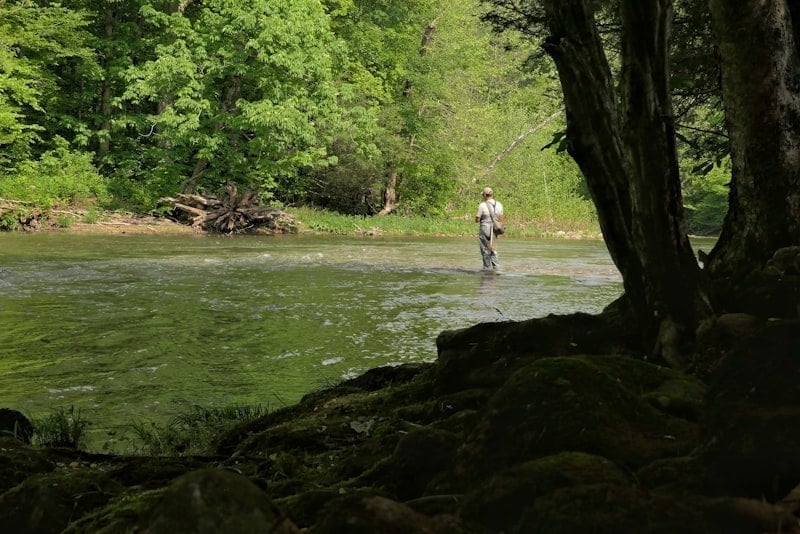 The Provo's clear water and abundant hatches reward careful presentations and light tippets.