Flows stabilizing near 985 CFS as of Aug 24 (Orvis), down slightly from 1,020 CFS on Aug 22 (NMDGF weekly report). Flows have been variable through August, swinging between 500 and 1,020 CFS as BOR manages releases to maintain minimum 500 CFS near Shiprock—up from 860 CFS on Aug 3 (Fisheads) and 850 CFS on Aug 7 (About Trout). Still wadeable at current flows but felt soles or studded boots essential on algae-slick substrate—deeper wading required near 1,000 CFS. NMDGF recently stocked Quality Waters with sub-catchable rainbow trout; big wild brown trout also present, some potentially record-class (NMDGF, Aug 22). Water clarity 3-5 feet visibility; slightly turbid from monsoon rainwater entering Navajo Lake but clearing quickly between storms (Orvis, Aug 24; San Juan Fly Fishing, Jul 28). Water temp steady at 42°F at dam release, reaching ~44°F in Quality Waters during warmest part of the day—a major advantage over other western rivers dealing with heat stress (Orvis, Aug 24). Fishing has been excellent with the rare 'do everything' day possible: start with streamers early, transition to nymphing, finish with dry flies (About Trout, Aug 7; Orvis, Aug 24). August remains one of the best dry-fly months and one of the least windy times of the year. Midge hatches strongest from 11 AM daily; BWOs active noon to 5 PM on cloudy afternoons (size 22, gray-blue coloring); evening caddis and PMD activity on the lower river (Orvis, Aug 24). Terrestrial season in full swing—hoppers, beetles, and ants producing on the lower river and Simon Canyon. Fish feeding just below the surface on midges—use minimal weight (#7 shot) with only 1-2 feet between indicator and flies (Fisheads, Aug 3). Afternoon air temps reaching 90s°F with monsoon rain chances most afternoons. Abe's Motel and Fly Shop open with lodging and supplies (San Juan Fly Fishing, Jul 28). NMDGF officers actively checking Quality Waters—licenses, barbless hooks, and two-fly limit enforced.
🎣 TACTICS RIGHT NOW
Dry Fly
August remains one of the best dry-fly months on the San Juan and one of the least windy times of the year (About TroutAug 7). Fish rising throughout the river eating midges and Baetis at 985 CFS. Griffith's Gnat #18 (black/olive) for midge clusters in flat tailouts—midges hatching strongest from 11 AM daily. Parachute Adams #20-24 and Comparaduns #20-22 for Baetis risers on overcast afternoons—BWOs active noon to 5 PMsize 22 with gray-blue coloring (OrvisAug 24). Gray Foreandaft #22-24 another effective BWO option (San Juan Fly FishingJul 28). Terrestrial season in peak form: Rosenbauer Parachute Beetle #10-24 (black)Cartoon Hopper #4-8and Black Ants #12-16 all producing on the lower river and Simon Canyon (FisheadsAug 3). Cloudy days producing bigger hatches—realistic insect imitations worth throwing (OrvisAug 24). Evening caddis and PMD activity on the lower river. Best dry-fly water at Texas Hole bottom and Lower Flats where slower currents concentrate rising fish. Use 6X-7X mono tippet for dries with long leaders (12-15'). At ~985 CFSfocus dry-fly efforts on softer water along seamsin tailoutsand along banks where fish stack up out of the heavier current.
Nymph
Flows elevated at ~985 CFS (OrvisAug 24)—well above the classic 300-500 CFS sweet spot but fishing very well with fish feeding aggressively subsurface. Key depth strategy from About Trout (Aug 7): early morning fish the lower third of the water columnas bugs activate work flies through the middleand later in the day when you see backs and tails fish as shallow as 6 inches below the surface. Key insight from Fisheads (Aug 3): use minimal weight (#7 shot) with only 1-2 feet between indicator and fliesleader about 4 feet from indicator to weightadjust in 8-inch increments for deeper holes. Worm and egg patterns remain top producers: Vernille SJ Worm #8-14 (brown/black/natural) or Lynch's Double Dot Egg #18 as lead attractordrop to Rojo Midge #20-22 (gray/olive/brown)Mono Midge #20-22 (black/olive/brown)Black Zebra Midge #20-24Juju Baetis Tungsten #22Mark's Mojo Midge #18-22midge larvae #16-24Red Larva #16-20Olsen's Hare's Ear Blowtorch #20-28or Foam Wing RS2 #18-24 (FisheadsAug 3; OrvisAug 24; San Juan Fly FishingJul 28). Use 4X fluorocarbon to lead fly5X fluorocarbon to dropper—switch to mono for surface work (OrvisAug 24). Bunny Leech #6-8 worth swinging through deeper runs as a streamer optionespecially early mornings—June through mid-October is peak streamer season (About TroutAug 7). Wading requires more care at ~985 CFS—felt soles or studded boots essentialdeeper wading expected. Target riffles and hole tail-outs for baetis nymphs.
Fishing excellent with the rare August 'do everything' day possible (About Trout, Aug 7; Orvis, Aug 24). Early morning (7-10 AM): best streamer window—Bunny Leeches #6-8 in deeper runs, peak streamer season runs through mid-October. Also prime nymphing before the hatch builds. Be on the water by 7 AM as fish can go lock-jawed in midday glare on bluebird days. Mid-morning to midday (10 AM-2 PM): peak midge hatch activity from 11 AM with fish rising in flat tailouts and seams. Transition from nymphing to dries as the hatch builds (Orvis, Aug 24). Early to late afternoon (noon-5 PM): BWO hatches firing on overcast/cloudy days—size 22 with gray-blue coloring. Terrestrials (hoppers, beetles, ants) producing on the lower river during warm afternoons. Evening: caddis and PMD activity on the lower river near Simon Canyon. Cloudy days extend the dry-fly window all day—welcome afternoon monsoon clouds for bigger hatches. Texas Hole mornings still require early arrival on weekends—peak summer tourist season. Afternoon air temps in the 90s°F with monsoon storm potential—stay hydrated, bring sun protection and rain gear. NMDGF officers actively patrolling—licenses, barbless hooks, two-fly limit enforced.
FORECASTFlows appear to be stabilizing after peaking at 1,020 CFS on Aug 22 (NMDGF)—Orvis reported 985 CFS on Aug 24. BOR had steadily increased flows through August from 860 CFS early in the month. Flows have ranged between 500 and 1,020 CFS as BOR manages releases for downstream minimums near Shiprock. Expect flows to hold near current levels or ease slightly as monsoon season wanes into September. Water clarity 3-5 feet—slightly turbid from monsoon runoff entering Navajo Lake but clearing quickly between storms. No major environmental release spikes (5,000+ CFS) expected. Summer hatch diversity remains excellent: midges all day (strongest from 11 AM), BWOs on overcast afternoons, evening caddis and PMDs on the lower river. Terrestrial season (hoppers, beetles, ants) fully underway and productive through September on the lower river and Simon Canyon. NMDGF recently stocked Quality Waters with sub-catchable rainbows—big wild brown trout also present. As fall approaches in September, expect crowds to thin, Baetis hatches to intensify, and some of the best fishing of the year. Dam release water temp stays a constant 42°F regardless of conditions—the San Juan remains a reliable cold-water refuge when other western rivers are stressed by summer heat. Monsoon storms likely through late August—bring rain gear, watch for lightning, but welcome clouds for bigger hatches. Abe's Motel and Fly Shop open for the season.
Before You Go
You've heard the stats: 15,000 trout per mile. Fish averaging 17 inches. The San Juan River below Navajo Dam is, by the numbers, one of the most productive trout fisheries in North America.
But those numbers hide something important: these fish have PhD's in fly refusal. They've seen every pattern in your box, presented by thousands of anglers before you. The San Juan will humble you - and that's precisely why serious fly fishers keep coming back.
This isn't a place where you tie on an elk hair caddis and start catching fish. It's a place where you learn to fish size 24 midges on 7X tippet and celebrate when you finally crack the code.
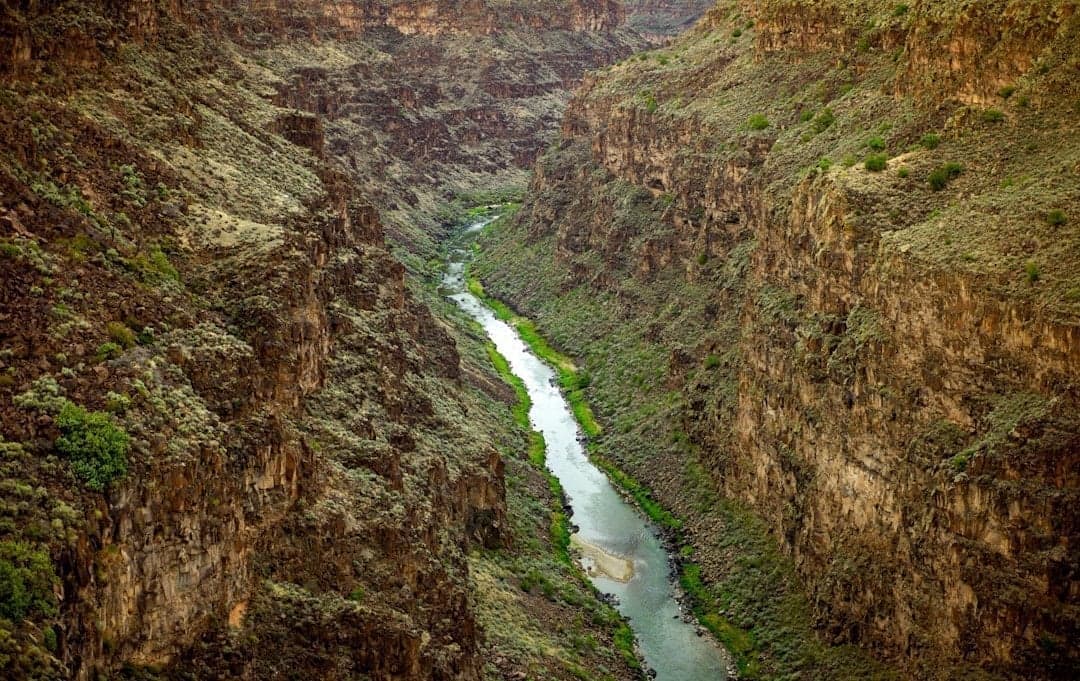
The San Juan's crystal-clear tailwater demands precise presentations and small flies.
Why the San Juan is Different
The Navajo Dam, completed in 1963, transformed the San Juan from a warm, muddy desert river into a cold-water trout factory. Water released from the bottom of the 402-foot dam stays a constant 42-46°F year-round, creating ideal conditions for rainbow and brown trout.
The result is a tailwater with staggering biomass. The 3.75 miles of Quality Waters below the dam hold an estimated 15,000+ trout per mile - mostly rainbows, with a healthy population of browns. These fish grow fat on a diet dominated by one thing: midges.
Year-round midge hatches - sometimes multiple per day
Blue-winged olive hatches in spring and fall
Fish that have seen it all and require technical presentations
The Quality Waters: Where to Fish
The first 3.75 miles below Navajo Dam are designated "Quality Waters" by New Mexico Game and Fish. This is catch-and-release only, artificial flies with single barbless hooks. Two flies maximum.
Texas Hole
The most famous (and crowded) spot on the river. A narrow gap funnels swift current into an 8-foot-deep pool where trout stack up in impressive numbers. The warmer water here supports more diverse insect life than the upper reaches.
Parking: 3.8 miles upstream from the Hwy 173/511 intersection
Why fish here: Highest fish concentration, best mayfly activity
The catch: Gets crowded, especially weekends. Arrive before sunrise for the best spots.
Upper Flats
Upstream from Texas Hole, the river spreads out and slows down. This is where you'll find some of the biggest fish - and the most technical fishing. Shallow, clear water means spooky fish that demand long, fine leaders and perfect drifts.
Parking: 4.4 miles upstream from the intersection
Why fish here: Trophy potential, less crowded
The catch: Harder wading, more technical presentations required
Lower Flats & Simon Canyon
Below Texas Hole, the river widens and meanders. More caddis activity here than upstream, along with scuds and aquatic worms. The Simon Canyon section is the warmest water in Quality Waters, supporting the most diverse bug life.
Parking: 2.7 miles upstream from the intersection
Why fish here: More insect variety, solitude
The catch: Longer walk from parking, fewer fish per mile than Texas Hole
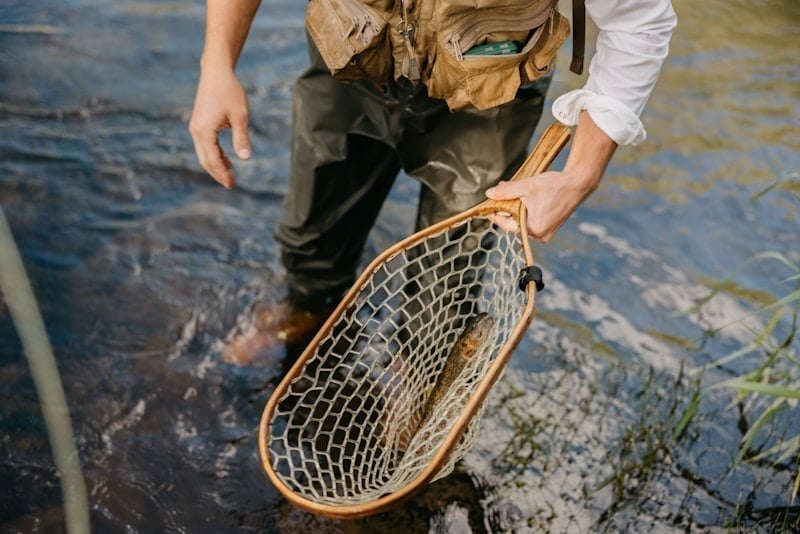
San Juan rainbows average 17 inches, with plenty of fish pushing 20+.
Understanding San Juan Flows
Unlike freestone rivers, the San Juan's flow is controlled by Navajo Dam releases. This means consistent, predictable conditions - but you still need to know what the numbers mean.
Flow (CFS)
Conditions
Under 250
Low water - fish concentrated, easier wading, more pressure on fish
300-500
Ideal range - normal operations, fish spread out, good wading
500-800
Higher water - deeper wading, fish pushed to banks
Over 1,000
Spring peak releases - difficult fishing, limited access
Current flows run around 300-350 CFS most of the year. Spring environmental releases can spike to 5,000 CFS for up to 60 days, mimicking natural conditions for native fish recovery downstream.
Forget your standard trout box. The San Juan is midge water, and you'll fish smaller flies here than anywhere else.
Midges (Year-Round, All Day)
The San Juan has reliable midge hatches every day - typically one mid-morning and another in the afternoon. These are your bread-and-butter flies:
Midge Larva (#22-28, black, cream, olive) - dead drifted deep
Zebra Midge (#20-24) - the universal San Juan pattern
RS2 (#22-24, gray) - poly wing emerger that works as both nymph and dry
Black Midge Cluster (#18-24) - for fish eating adults on the surface
Griffith's Gnat (#18-22) - when fish are on mating clusters
Blue-Winged Olives (Spring & Fall)
When baetis hatch on overcast days, the fishing can be exceptional:
Parachute Adams (#20-24, gray) - simple and effective
Sparkle Dun (#22-24) - emerger pattern
Pheasant Tail (#18-22) - standard nymph for baetis
Attractor Patterns
Not as critical here as other rivers, but worth having:
San Juan Worm (#14-18, red, orange, tan, brown) - the river's namesake pattern
Scuds (#16-18, olive, tan) - especially in Simon Canyon
Egg patterns (#16-18, peach, pink) - work year-round
The Tiny Fly Problem
If you've never fished #24-28 flies, prepare for frustration. A few tips:
Use fluorocarbon tippet (6X-7X) - it sinks and is less visible
Keep your flies clean - algae buildup kills the drift
Carry a magnifier - you'll need it to thread these hooks
Use a small strike indicator - standard bobbers spook fish in this clear water
Seasonal Patterns
Spring (March - May)
Baetis hatches kick into gear on cloudy afternoons. Look for rising fish in slower water, especially on overcast days. As water temps climb, fish become more active and willing to chase streamers.
Best approach: Morning nymphing with midge larvae, afternoon dry-fly fishing during BWO hatches.
Summer (June - August)
Peak tourist season brings crowds, but also the best dry fly action. Terrestrials (ants, beetles, hoppers) work in Simon Canyon. Midge hatches continue reliably. Water temps stay cold, so fish remain active all day.
Best approach: Early mornings for solitude, late afternoons for midge hatches. Fish early or miss the crowds.
Fall (September - November)
Many consider this the best time to fish the San Juan. Crowds thin, cottonwoods turn gold, and fish feed aggressively before winter. Baetis hatches return with intensity.
Best approach: All-day fishing is productive. September is prime time for dry flies.
Winter (December - February)
This is when you'll have the river to yourself. Water temperature stays constant, fish still eat, and the crowds disappear. The cold air doesn't mean cold water - the tailwater stays in the mid-40s year-round.
Best approach: Nymph deep with midge patterns. Fish are slower but definitely feeding. Heavy tippets, big flies, patient presentations.
Techniques That Work
Nymphing (The Primary Game)
Most of your fish will come subsurface. The standard San Juan rig:
Lead fly: San Juan Worm or larger midge (#18-20)
Dropper: Small midge pupa or RS2 (#22-26), 12-18" behind the lead
Tippet: 4X to the lead fly, 5X-6X to the dropper
Indicator: Small, visible, easy to move for depth adjustments
Key technique: Get your depth right and let the fly drift naturally without drag. Mend constantly. These fish have seen a million bad drifts.
Euro Nymphing
The San Juan is excellent euro nymphing water. The clear, consistent flows let you read fish reactions. Use 10.5-11' 2-4 weight rods to reach across currents without putting line on the water.
Dry Fly Fishing
When fish are rising - and they do rise - the dry fly fishing can be outstanding. Keys to success:
Long, fine leaders: 12' or longer, ending in 6X-7X
Mono tippet (not fluoro) - floats better
Precise casting: Put the fly in the fish's feeding lane, not 3 feet away
Watch your shadow: These fish spook at everything
Gear Recommendations
Rod: 9' 4-weight or 5-weight, fast action for mending and distance
Alternative: 10-11' euro nymphing rod (2-4 weight) for tight-line techniques
Reel: Simple click-and-pawl or disc drag - you're not running fish into the backing here
Line: Weight-forward floating line. Consider a long-leader-specific taper for delicate presentations.
Leaders:
Nymphing: 9' 4X tapered, add tippet sections as needed
Dry fly: 12-15' 5X or 6X tapered, with fluorocarbon tippet for nymphs, mono for dries
Essential Accessories:
Magnifying threader (you'll need it for size 24+ flies)
Small strike indicators (yarn, small bobbers)
Hemostats for barbless hook removal
Rubber mesh net
Polarized sunglasses - essential for sight fishing in clear water
Regulations
The Quality Waters (first 3.75 miles below the dam) have specific rules:
Catch and release only - all trout must be returned immediately
Artificial flies only - single, barbless hook
Maximum 2 flies per line
Valid New Mexico fishing license required
Below the Special Trout Waters, regulations shift to statewide rules with bag limits. Check New Mexico Game and Fish for current regulations.
Access & Logistics
Getting There
The San Juan is in the northwest corner of New Mexico, about 26 miles east of Farmington. From Albuquerque, it's roughly 3 hours. From Denver, about 6-7 hours via Durango.
Nearest towns:
Navajo Dam (closest, limited services)
Aztec (15 miles, more amenities)
Farmington (30 miles, full services)
Parking Areas
Three main access points within Quality Waters:
Upper River: 4.4 miles from Hwy 173/511 intersection
Texas Hole: 3.8 miles from intersection
Lower Flats: 2.7 miles from intersection
Parking can fill early on weekends. Arrive before sunrise for Texas Hole access.
A guided day runs $400-500 and is worth it for first-timers. The guides know exactly what's working and can cut your learning curve dramatically.
Common Mistakes
Fishing too heavy: Light tippet (6X-7X) and small indicators are essential
Ignoring fly cleanliness: Algae on your fly kills the drift - check constantly
Casting too far: Most fish are closer than you think
Wrong depth: If you're not occasionally ticking bottom, you're too high
Arriving late: Texas Hole fills up by 8am on weekends
Underestimating the cold: Even in summer, that 42°F water chills you fast
What's on the menu
Everything this river feeds, by month. Filter by bug, category, or fly size, and switch the axis to see what comes off at what time of day. Pulled from our western hatch and forage guide.
All regions
San Juan
Everything
Everything
Across the year
Any size
JanFebMarAprMayJunJulAugSepOctNovDec
Southwest Colorado
Midge#20-28
Animas, San Juan
Scuds#14-18Forage
San Juan
Sowbug#12-16Forage
Animas, San Juan
San Juan Worm#12-16Forage
San Juan
BWO#22-26
San Juan
PMD#16-18
San Juan
Crayfish#4-8Forage
Animas, San Juan
Eggs#14-18Forage
Animas, San Juan
How much is onSouthwest Colorado, added up
Category
Terrestrial
Forage
Peak weeks
How dependable
Dependable
Weather dependent
Roll of the dice
Taller and darker means heavier emergence. Hover any row for how long it lasts, how much the timing moves, and what to tie on.
Window vs shapeTwo different things are stacked on each row. The window is specific to these rivers, taken from fly shop and outfitter hatch charts, guide reports, and our own river guides. The shape of the curve is the insect's typical emergence profile from published sources, drawn across that window. It models a normal year, not this year. Dashed bars mean we have timing but no sourced emergence profile, so no curve is drawn.The three categoriesHatches are aquatic insect emergences. Terrestrials are land insects that end up in the water: hoppers, ants, beetles, spruce moths, cicadas. Forage is everything else on the menu, from mysis and sowbugs to crayfish, eggs, sculpins, and mice. Forage is available whether or not anything is emerging, so it sits outside the “how much is on” totals, which measure bug activity only.
Historical flow comparisons to understand current conditions
Weather forecasts - overcast days bring better dry fly action
The San Juan's tailwater nature means stable, predictable flows. Unlike freestone rivers, you won't wake up to blown-out conditions. But checking flows helps you understand fish positioning and wading access.
 The San Juan's crystal-clear tailwater demands precise presentations and small flies.
 San Juan rainbows average 17 inches, with plenty of fish pushing 20+.