⭐ Pere Marquette River
Best Bet
Flow800 CFS
Trendstable
Clarityclear
Tempmid-30s°F
egg patternsnymph rigswax worms
| What | When | Key Numbers |
|---|---|---|
| Fall run (best fishing) | Late Oct – Dec | Water temps 45-55°F; aggressive fish fresh from the lake |
| Winter fishing | Jan – Feb | Water temps 33-40°F; slow presentations, warm spells trigger movement |
| Spring run | Mar – May | Water temps 40-55°F; spawning fish plus drop-backs |
| Pere Marquette (MI) | Year-round | 600-1,200 CFS ideal; flies-only on best stretch |
| Salmon River (NY) | Oct – May | 350-750 CFS ideal wading; above 1,600 CFS consider rescheduling |
| Grand River (OH) | Oct – Apr | 250-450 CFS ideal; 1-2 week clearing time after floods |
| Guided drift boat trip | Book 2-3 months ahead | $400-600/day for 1-2 anglers |
| Fly shop | Betts Guide Service | (231) 301-4967, Baldwin, MI (Pere Marquette) |
Great Lakes steelhead are rainbow trout that migrate from the lakes into tributary rivers to spawn, the same species as Pacific steelhead, transplanted to the Great Lakes basin starting in the late 1800s. Today, all five Great Lakes support steelhead runs, sustained by aggressive stocking programs across eight states and Ontario. Michigan alone stocks over a million yearling steelhead annually.
What makes this fishery special is accessibility. Unlike West Coast steelhead rivers that often require long drives into remote canyons, Great Lakes tributaries flow through farmland, state parks, and small towns. Many are wadeable creeks rather than big rivers. You can park your car, walk five minutes, and be casting to chrome-bright fish averaging 6-10 pounds that spent the summer gorging in open water.
The trade-off: these are generally smaller rivers with lower flows than their Pacific counterparts. Steelhead here are spookier, more pressured, and often require lighter tackle and more precise presentations. That's part of the appeal: it's technical fishing that rewards attention to detail.
Great Lakes steelhead fishing breaks down into distinct regions, each with its own character.
Michigan has more steelhead rivers than any other Great Lakes state, with tributaries flowing into Lakes Michigan, Huron, and Superior. The west Michigan rivers (Pere Marquette, Muskegon, Manistee, White, and Little Manistee) are the heart of the fishery.
Premier rivers:
Upper Peninsula: Rivers like the Two Hearted, Huron, and Ontonagon drain into Lake Superior. Fishing is more remote and technical; high water and rough terrain are the norm. These are wading-only rivers with limited road access. The Two Hearted is a multi-day hiking/camping destination. UP streams typically fish best in spring (April-May) as snowmelt subsides, and again briefly in fall before freeze-up. Expect to earn your fish, but the solitude and wild fish make it worthwhile.
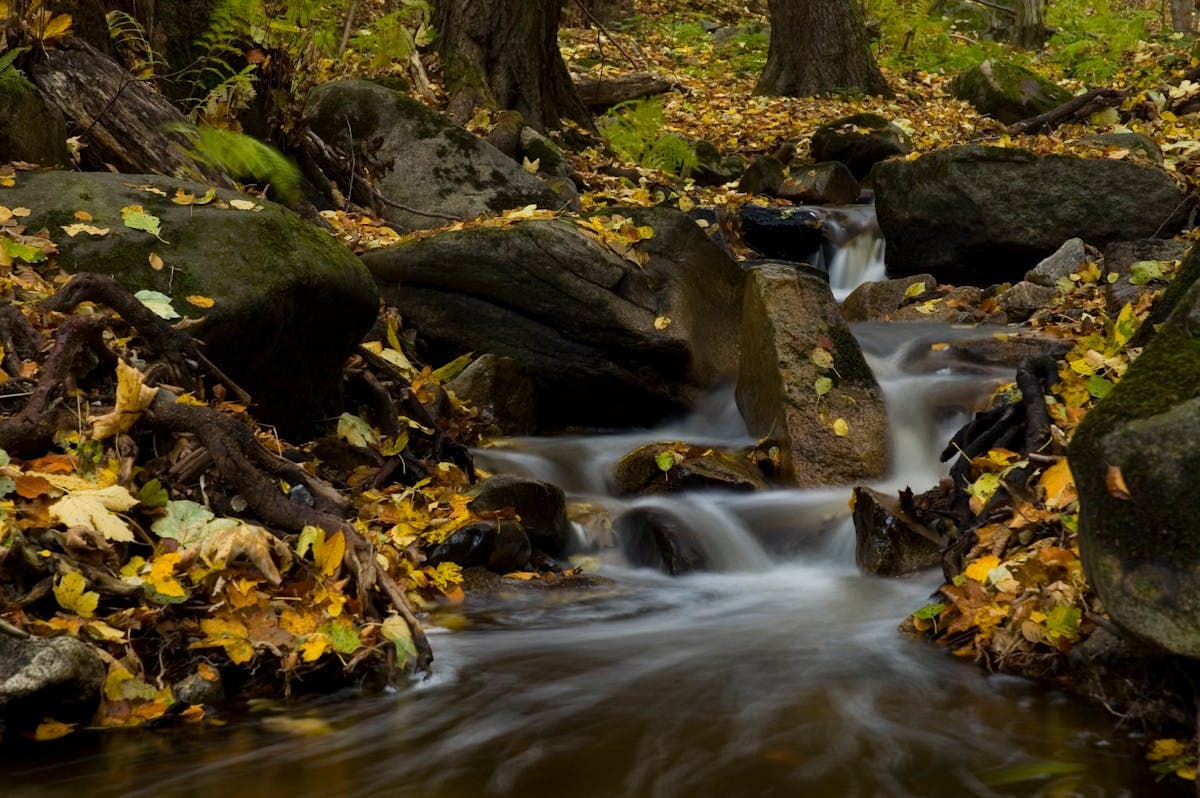
A typical Great Lakes steelhead tributary. Small, rocky creeks like this can hold surprising numbers of chrome fish after a fall rain event.
Michigan stocks over 1 million yearling steelhead annually across its hatchery system. Thompson State Fish Hatchery produced 1.17 million fish (steelhead and Chinook salmon combined) in 2024. The state also stocks roughly 30,000 Skamania steelhead (a summer-run strain from Indiana) for a bonus July-August fishery on the St. Joseph River and select Lake Michigan tribs.
Regulations: Michigan recently reduced daily limits on key rivers. The Pere Marquette, Muskegon, Manistee, Little Manistee, White, Betsie, and others now have a one steelhead per day limit, down from the previous three. Check current regulations before you go, as rules vary by stream type.
"Steelhead Alley" refers to the southern Lake Erie tributaries stretching from Cleveland, Ohio to Buffalo, New York. It's arguably the most accessible steelhead fishing in the country, with dozens of small creeks within a few hours' drive of major metro areas. Most of these are small to medium streams, though some regularly exceed 1,000 CFS during fall, winter, and spring runoff.
Ohio rivers:
The Ohio DNR also stocks 55,000 steelhead into the Vermilion River annually.
Pennsylvania rivers:
Western New York:
Track Lake Erie tributary conditions on RiverReports for Ohio, Pennsylvania, and New York.
Timing in Steelhead Alley: The eastern Ohio tributaries fish well in both fall and spring, while central Ohio tributaries tend to fish best in spring. October through December is prime for the fall run; March and April are the spring window. The Mountain Laurel Guide Service hatch chart has excellent run timing detail for the region.
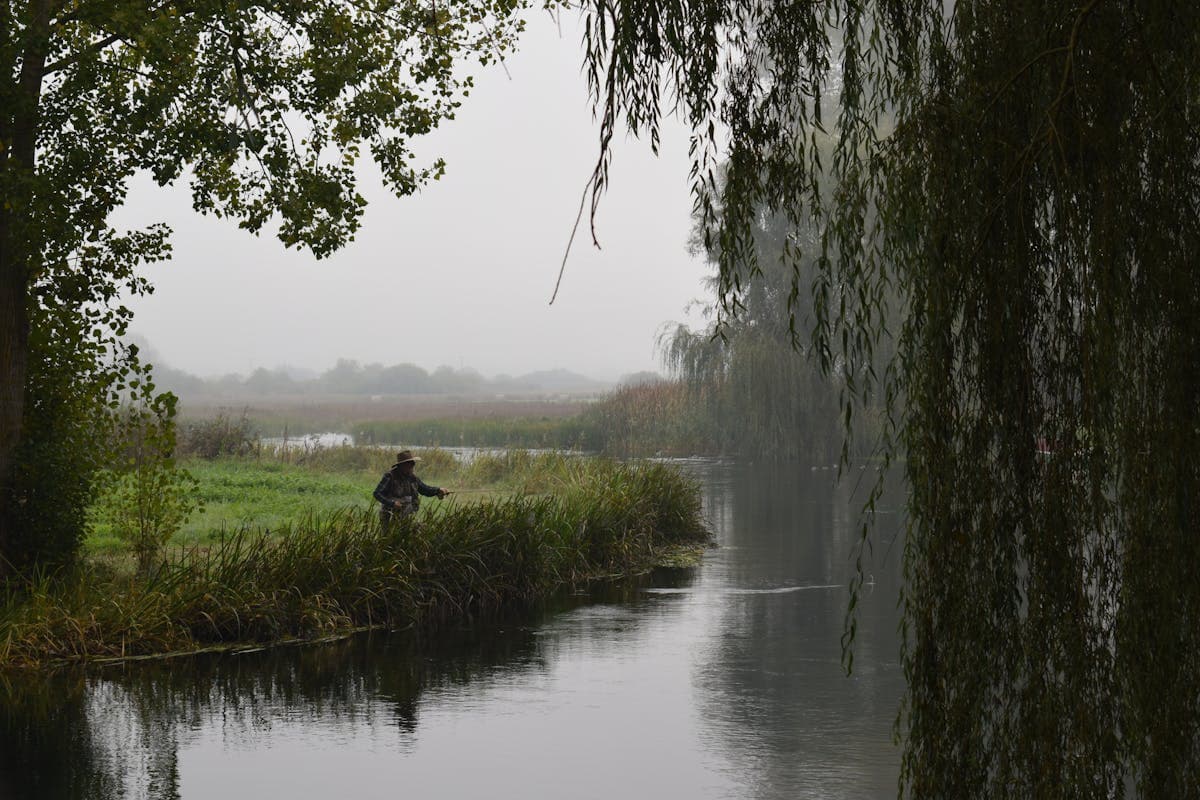
An angler wading a misty tributary during the fall steelhead run. Overcast, drizzly days like this push fresh fish upstream.
New York's Lake Ontario tributaries offer some of the largest individual steelhead runs in the Great Lakes. The NYSDEC reports that over 25 steelhead streams have public fishing access, with runs potentially exceeding 30,000 fish per year on the largest systems.
Salmon River: The Main Event
The Salmon River near Pulaski, NY is the most famous steelhead fishery east of Michigan. Ideal wading flows are 350-750 CFS at the Pineville gauge. Experienced anglers fish up to 1,000 CFS from the bank and somewhat higher from drift boats. Above 1,600 CFS, consider rescheduling. Visibility drops and wading becomes dangerous.
Key access points include:
Other Lake Ontario tributaries:
New York stocks Washington-strain steelhead, a winter-run variety originally from Washington State. Fish enter tributaries starting mid-September, with peak migration in late October through November. Spawning runs mid-March through late April, with post-spawn "drop-back" fish feeding heavily into mid-May. According to the NYSDEC, steelhead prefer areas with moderate to fast flow at 3-4 feet of depth, and optimal activity occurs at water temps of 45-58°F. On sunny days, fishing is best at first light and the last hour before dark.
The Lake Superior tributaries in Wisconsin and Minnesota offer a different steelhead experience: smaller, more remote streams with wild and stocked fish. These are almost exclusively wading fisheries, and the fish tend to be smaller (3-6 lbs) than their Lake Michigan or Erie counterparts.
Wisconsin:
Minnesota: Minnesota's North Shore of Lake Superior has roughly 60 streams and rivers, with about 20 supporting substantial steelhead runs. The Knife River, Brule River, and Sucker River are the primary destinations. Spring (April-May) is the best window as ice melts and fish move upstream. These streams are small (many you can cast across) and run high and fast with snowmelt. Timing is critical; too early and they're frozen, too late and fish have spawned and dropped back. The Baptism and Poplar Rivers are worth exploring if the primary streams are crowded. Check Minnesota tributary flows on RiverReports.
Ontario has more steelhead shoreline and more steelhead rivers than any single U.S. state. The fishery spans Lakes Ontario, Erie, Huron, and Superior.
Lake Huron tributaries: The Saugeen River, Maitland River, and Nottawasaga River are well-known destinations with both wild and stocked fish. Cool, rainy October weather draws fish in; dry conditions delay the run. Late October through December is the optimal targeting window on most Lake Huron rivers. Many streams have seasonal winter closures to protect spawning fish, though lower pool sections often remain open year-round.
Lake Ontario tributaries: The Credit River near Toronto and Ganaraska River near Port Hope are easily accessible from the GTA. The Wilmot Creek, despite being less than 20 feet wide at its mouth, gets runs exceeding 15,000 steelhead, making for incredibly concentrated fishing in tight quarters. The Humber River and Bronte Creek also see good returns.
Lake Superior (Ontario): Remote rivers like the Michipicoten, Steel, and Cypress offer wilderness steelhead fishing with minimal pressure. Access can be challenging. Spring is the primary window as ice clears.
Important: Ontario has seasonal closures on many rivers to protect wild spawning trout. Check Ontario fishing regulations before planning a cross-border trip. You'll also need a separate Ontario fishing license.
One of the most important pieces of trip-planning information is knowing what flow level produces good fishing on your target river. Here are the key numbers for the most popular Great Lakes steelhead waters:
| River | Ideal Wading CFS | Drift Boat Range | Blown Out / Unsafe |
|---|---|---|---|
| Pere Marquette (MI) | 600-1,200 | 600-2,000 | Above 2,000 for wading |
| Muskegon (MI) | 2,200-2,500 | 1,500-4,000 | Above 4,000 for wading |
| Salmon River (NY) | 350-750 | Up to 1,000+ | Above 1,600 |
| Grand River (OH) | 250-450 | N/A (small boats only) | Floods; 1-2 weeks to clear |
| Elk Creek (PA) | Low-moderate | N/A (wade only) | After heavy rain; clears quickly |
These numbers are guidelines. Experienced anglers may fish above or below these ranges depending on the specific section, their comfort level, and water clarity. Check conditions on RiverReports before driving.
Choosing the right approach depends on the river, the conditions, and your experience.
These rivers have enough width, depth, and current for a proper drift boat float. Many have established launches and take-outs.
Pere Marquette River: The quintessential Great Lakes drift boat fishery. The classic float is Green Cottage to Gleason's Landing , a 4.7-mile stretch that takes roughly 1.5 hours of float time (a full day of fishing). Both sites are USFS access points with boat ramps, parking, and restrooms. A $5 day-use fee is required. Green Cottage is launch-only (difficult take-out). The flies-only stretch runs from M-37 to Gleason's, and this is where most guided trips focus.
Muskegon River: The 35-mile tailwater below Croton Dam is best fished from a drift boat. Bank access is limited to a few spots just below the dam. Drift boats let you cover the long runs and deep pools that hold the most fish. Typical floats run 6-8 hours.
Manistee River: Good drift boat water from the mouth to Tippy Dam. Several access points along the way allow half-day or full-day floats.
Salmon River (NY): Drift boats run the upper sections above Pulaski, particularly effective during high water when bank fishing becomes limited.
Most Steelhead Alley creeks and Lake Superior tributaries are too small for drift boats.
Finding steelhead in a Great Lakes tributary comes down to water temperature, flow level, and understanding where fish hold in different conditions.
Steelhead want three things: current relief, depth, and security. Any spot that offers all three is worth fishing.
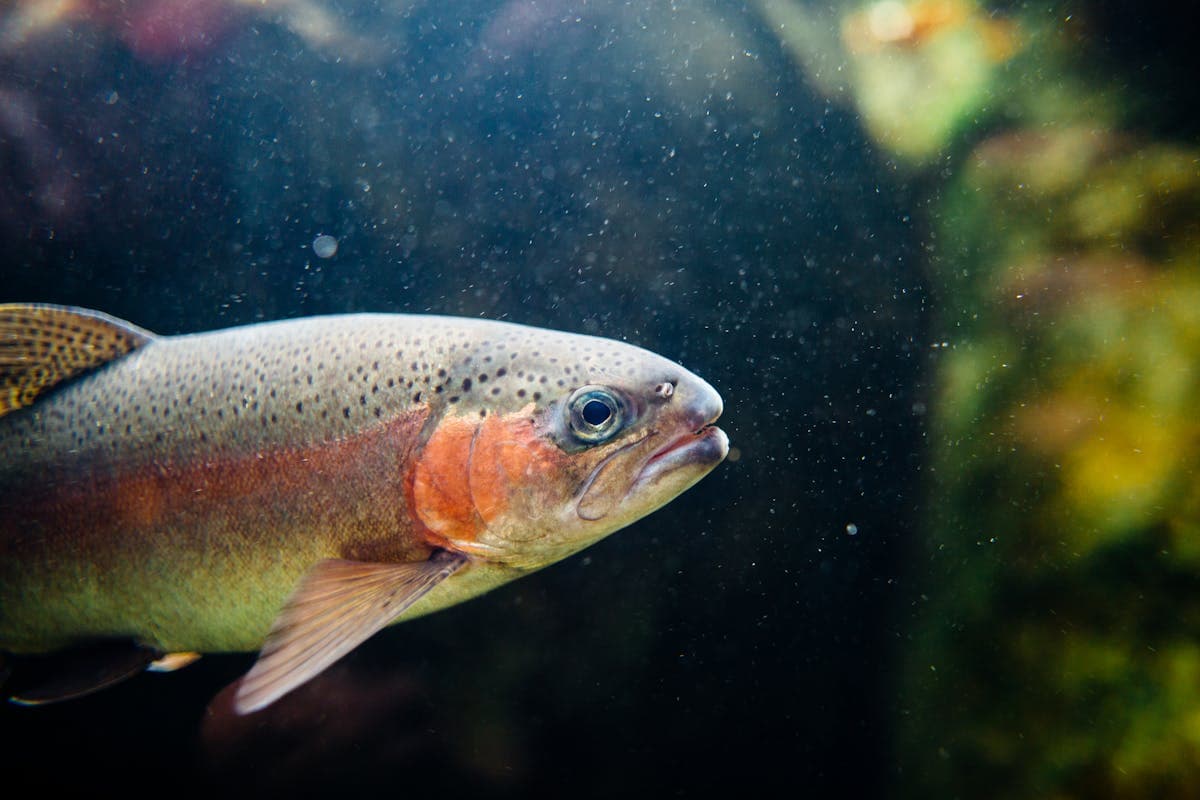
A rainbow trout (the same species as steelhead) in its element. Keep fish in the water during release to maximize survival.
High, stained water (6-10 inches visibility): Fish the inside bends, the downstream half of pools, and any backwater or eddy where silt settles and visibility improves. Steelhead in high water seek slow zones rather than fighting heavy current. Focus on inside bends past the halfway point of the bend, estuary "frog water" areas, and the edges of classic wintering pools.
Normal flows: Fish can be almost anywhere. Work the water methodically: pools, runs, riffles, bends. Variety in a section matters: a stretch with multiple pool-riffle-run sequences will hold more fish than a long, uniform flat.
Low, clear water: Steelhead concentrate in the deepest available water and under overhead cover. Approach quietly, use longer leaders, and downsize your flies. Fish early morning and late evening when light levels are low. Steelhead have a well-documented aversion to bright light and will hunker down in midday sun.
Three approaches dominate Great Lakes steelhead fly fishing: nymphing, swinging, and egg patterns. Most fish are caught on the first and last.
Nymphing accounts for the majority of fly-caught Great Lakes steelhead. Two main styles:
Indicator nymphing: A 9-10 foot rod in 7-8 weight, a thingamabobber or yarn indicator, split shot, and a two-fly rig. The classic setup is an egg pattern as the point fly with a beadhead nymph (size 10-14) dropped 18-24 inches off the bend. Adjust depth constantly; your flies need to be ticking bottom.
Euro nymphing: Increasingly popular on Great Lakes tributaries, especially smaller creeks. A 10-11 foot 3-4 weight euro rod with a tight-line setup lets you make quick, short drifts through pockets and seams. On many Steelhead Alley creeks, you can fish significantly more efficiently with a euro rig than any other method.
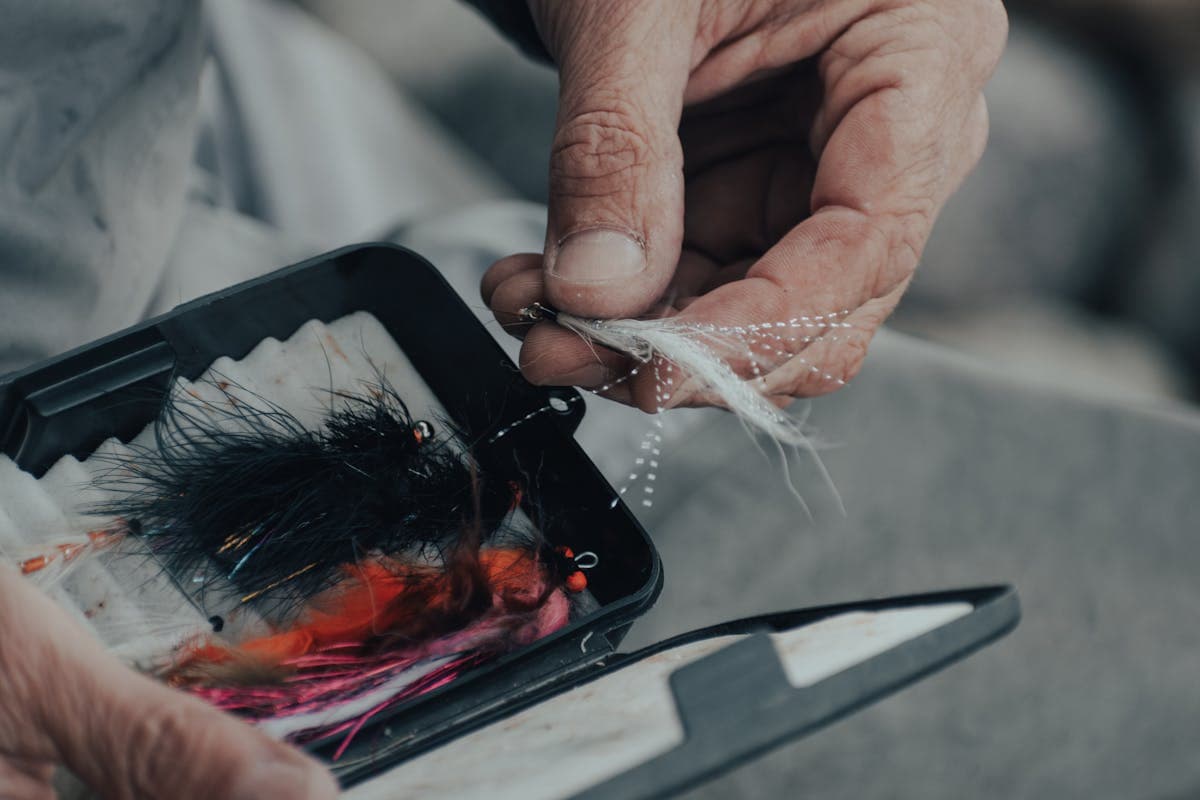
Picking the right pattern matters. In stained water go bright (chartreuse, hot orange); in clear water go small and natural (white, pale pink, peach). The difference between getting bit and getting skunked often comes down to color.
Key nymphing flies:
Swinging streamers with a spey or switch rod is less productive but arguably the most exciting way to catch Great Lakes steelhead. When a steelhead commits to a swung fly, the take is electric.
Equipment: An 11-foot 7-weight switch rod is the standard setup for Great Lakes rivers, as recommended by Fishwest. These rivers are generally smaller than West Coast steelhead water, so a shorter skagit head to throw sink tips is the norm. Since Great Lakes fish typically travel lower in the water column than western steelhead, shorter and more dense sink tips are the way to go. T-7 to T-14 in 5, 8, and 10-foot lengths cover most situations.
Technique: Cast down and across at roughly a 45-degree angle. Follow your fly with your rod tip as the current creates a belly in the line, swinging the fly across the current. Keep your rod tip slightly ahead of the line, horizontal to the water, pointed downriver. Cover water methodically, taking a few steps downstream between casts.
Best swinging flies:
Best rivers for swinging: The Pere Marquette, Muskegon, and Manistee in Michigan; Cattaraugus Creek and Grand River (OH) in Steelhead Alley.
Centerpin fishing deserves more than a footnote. It's arguably the dominant steelhead technique across Steelhead Alley and Ontario, and for good reason. A centerpin reel is a large (4-5.5 inch) free-spool reel that sits on a single pin with precision bearings, allowing incredibly long, drag-free drifts that no spinning reel or fly rod can match.
Basic setup:
Why it works: The free-spool reel lets you present bait under a float with extreme precision over long distances. You can make a "J-shaped drift" that keeps your offering in the strike zone far longer than any other method. It's particularly effective in the deeper pools and runs where steelhead hold in colder water.
Best baits for centerpinning: Roe (egg sacs), plastic beads (6-12mm, particularly in pink and orange), small plastic worms, and jig flies. Trout Unlimited has a good primer on the technique.
Egg patterns are so effective they deserve special attention. Color selection matters more than most anglers realize, and it should change with water conditions:
The "clown egg" (multi-colored) is a staple pattern that works across conditions.
As Fly Fisherman Magazine documents, Great Lakes steelhead become surprisingly hatch-oriented in spring. Little black stoneflies (Allocapnia) hatch in March, creating blizzard-like emergences on warmer days. Steelhead feed on the small dark nymphs more than the surface adults. Tie them in sizes 14-18 and fish them near the bottom. When spawning fish dislodge caddis larvae from the streambed, drop-back steelhead positioned downstream gorge on the drifting food.
On the Pere Marquette, drop-back steelhead will even feed selectively on Hexagenia mayflies during the right timing window, one of the few opportunities to sight-fish rising steelhead on a dry fly.
Understanding when steelhead move is the single most important factor in planning a trip. Temperature drives everything.
Steelhead begin staging near tributary mouths in September. As water temperatures cool into the 50s°F, fish push upstream on rain events. The peak window is late October through November, when water temps settle into the 45-55°F range. At these temperatures, steelhead are highly active. They'll hold in fast water like riffle heads, runs, and tail-outs, and aggressively take well-presented flies.
Key triggers for fall migration:
According to Great Lakes Angler, perfect run conditions start with normal water levels combined with moderate rain. Dramatic level increases or drops both hurt fishing. If the water is cloudy or rain pocks the surface, steelhead will migrate during daylight hours. During low, clear conditions, movement happens primarily at night and during low-light periods.
As water temperatures drop into the 30s°F, movement slows considerably. Fish hold in deep pools, wintering holes, and slow "frog water" (estuary areas and wide, dish-shaped pools). Brief warming spells (even a degree or two) will bring fresh fish into tributaries throughout winter.
Winter steelhead in the Great Lakes often spawn in water temperatures of 36-38°F, earlier than many anglers expect. This is the time for slow, patient presentations: wax worms, small spawn bags, or tiny egg patterns fished on bottom. Bait consistently outperforms artificials when water is under 39°F.
The bite picks up as water temperatures consistently reach 40°F. As temps climb into the high 40s and low 50s, steelhead become increasingly active, then begin spawning. Post-spawn "drop-back" fish feed aggressively on their way back to the lake, offering some of the most exciting fishing of the year through mid-May.
Spring is also when insect hatches start. Little black stoneflies emerge in March, followed by caddis and mayflies. Drop-back steelhead can become surprisingly selective feeders during these hatches.
| Water Temp | Fish Behavior | Where to Find Them |
|---|---|---|
| 50-55°F | Most active, roaming freely | Riffle heads, runs, tail-outs, fast water |
| 45-50°F | Active in pockets around fast water | Runs with moderate to steep grades |
| 41-45°F | Active but concentrated | Pool heads, moderate runs |
| 37-40°F | Slow, staging near wintering holes | Pool heads, transitional water |
| Below 37°F | Lethargic, tight to bottom | Deep pools, inside bends, "frog water" |
| Component | Nymphing | Swinging |
|---|---|---|
| Rod | 9-10 ft, 7-8 wt (single hand) or 10-11 ft, 3-4 wt (euro) | 11-13 ft, 7-8 wt switch or spey |
| Reel | Smooth disc drag, 100+ yards backing | Matching large-arbor with 150+ yards backing |
| Line | Floating with long leader | Skagit head with interchangeable sink tips |
| Leader | 9-12 ft tapered to 2X-3X fluorocarbon | Short (3-4 ft) fluorocarbon |
| Tippet | 4-8 lb fluorocarbon | 10-12 lb fluorocarbon |
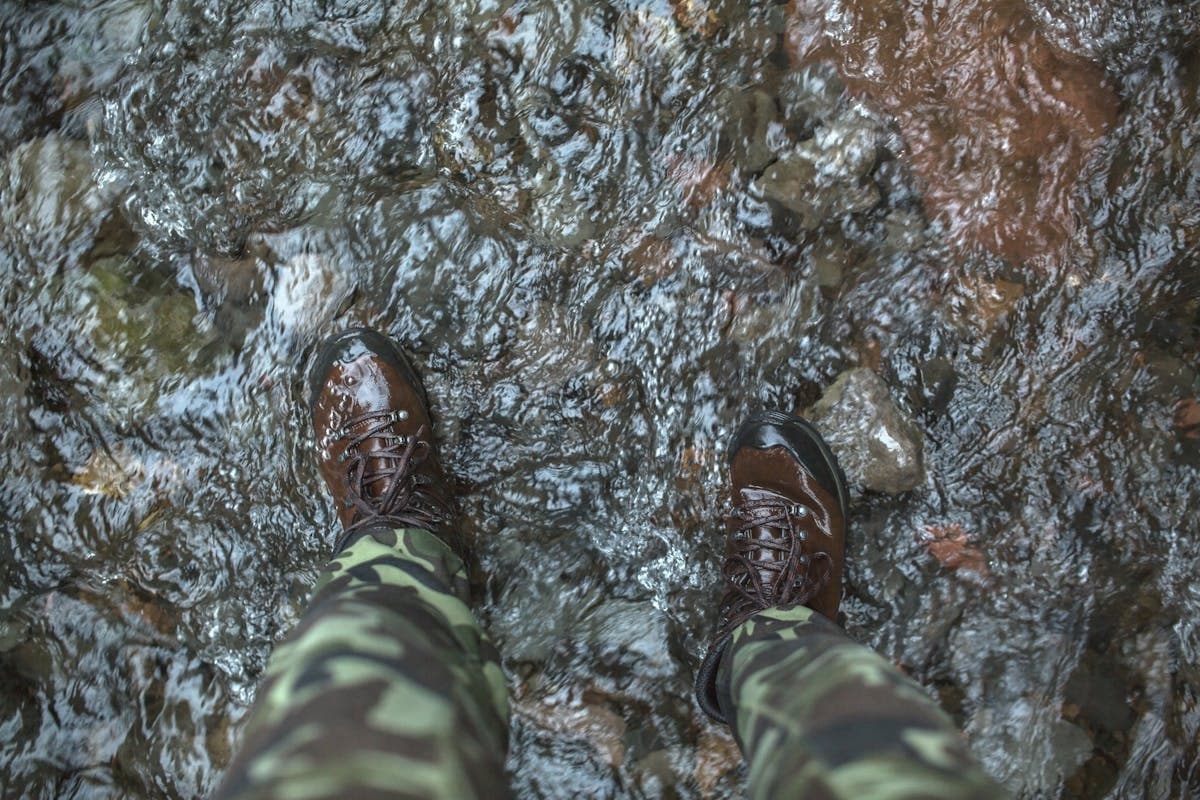
Proper wading gear is a safety requirement, not optional. Studded boots, wading belt, and a staff are the minimum for Great Lakes tributaries.
Proper wading gear isn't optional; it's a safety requirement:
Great Lakes steelhead fishing happens during the coldest, wettest months of the year. Take it seriously.
Popular spots (the Salmon River in New York, Elk Creek in Pennsylvania, and the Sixth Street Dam in Grand Rapids) get extremely crowded during peak runs. Give other anglers space, be aware of casting room, and consider fishing weekdays or exploring less popular tributaries. On combat-fishing stretches, low-holing (cutting in below another angler) is the fastest way to ruin everyone's day.
Your best bet for a first trip: late October through mid-November during the fall run. Fish are aggressive, weather is tolerable, and you'll hit peak migration on most tributaries. Spring (late March through April) is the second-best window, with bonus insect hatches and drop-back fish.
A guided drift boat trip is the fastest way to learn Great Lakes steelhead water. Expect to pay $400-600 per day for 1-2 anglers, including all gear and flies.
Reputable options:
Each state requires its own fishing license. There is no multi-state Great Lakes fishing license.
Great Lakes steelhead populations are under pressure in some systems. Michigan cut its daily limit for a reason. Even where harvest is legal, consider releasing wild fish:
Great Lakes steelhead fishing is flow-dependent. A rain event can turn a dead river into prime steelhead water in 24 hours. Conversely, a river that was fishing well can blow out overnight.
Track tributary flows in real-time on RiverReports:
What to watch for:
Compare current flows against historical averages on RiverReports to understand whether a river is running high, normal, or low for the time of year. That context matters more than the raw CFS number. 500 CFS on the Salmon River is perfect, while 500 CFS on the Muskegon is too low.
The best time depends on whether you want fall or spring fish. The fall run peaks from late October through November, when water temperatures settle into the 45-55 degree range and steelhead are aggressive and chrome-bright. Spring fishing peaks in March and April, when spawning runs are in full swing and post-spawn drop-back fish feed heavily on hatching insects. For a first trip, late October through mid-November offers the best combination of fish numbers, cooperative weather, and active fish behavior.
The Pere Marquette River in Michigan is widely considered the top Great Lakes steelhead river for fly fishing, with its flies-only catch-and-release section and classic drift boat water. The Muskegon River (MI) produces excellent spring fishing, the Salmon River in New York offers the largest individual runs in the eastern Great Lakes, and the Grand River in Ohio is the best Steelhead Alley option for spey and switch rod anglers. For beginners, the Rocky River near Cleveland offers easy access within Cleveland Metroparks.
Egg patterns account for roughly 75 percent of fly-caught Great Lakes steelhead. Carry Glo Bugs and Sucker Spawn in pink, orange, chartreuse, and clown colors, adjusting size and brightness to water clarity. Beyond eggs, beadhead stonefly nymphs (sizes 8-14), Pheasant Tails (12-16), and caddis larvae round out the subsurface game. For swinging, Intruders in black/blue or orange/black, Egg Sucking Leeches, and sculpin patterns cover most conditions.
Not necessarily. Many of the best Steelhead Alley tributaries in Ohio and Pennsylvania, including Elk Creek, the Rocky River, and the Chagrin River, are wade-only fisheries. Minnesota's North Shore streams and Michigan's Upper Peninsula rivers are also wading-only. However, on larger rivers like the Muskegon, Pere Marquette, and Manistee in Michigan, a drift boat gives you access to far more water and is the standard approach for guided trips. If you are hiring a guide on a Michigan river, expect a drift boat trip.
Weekly flow updates and fishing intel.
© 2026 RiverReports, Inc.