Chasing Hoppers: The Best Grasshopper Fishing in the Western US
Quick Reference
| River | State | Peak Hopper Window | Best Fly Sizes | Float or Wade |
|---|---|---|---|---|
| Yellowstone | MT | Late July – September | #4-10 | Float (drift boat/raft) |
| Madison | MT | Late July – September | #6-12 | Both |
| Big Hole | MT | Mid-July – September | #4-8 | Both |
| Beaverhead | MT | August – September | #8-12 | Float preferred |
| South Fork Snake | ID | August – September | #8-12 | Float (drift boat) |
| Henry's Fork | ID | July – September | #8-14 | Wade (most sections) |
| Upper Green | WY | July – October | #8-12 | Wade |
| North Platte (Miracle Mile) | WY | August – September | #8-12 | Both |
| Yakima | WA | Mid-July – September | #8-12 | Float preferred |
| Arkansas | CO | Mid-August – September | #8-12 | Both |
| Gunnison | CO | August – September | #8-12 | Both |
| Roaring Fork | CO | August – September | #8-12 | Both |
Why Hopper Fishing Is Worth Planning a Summer Around
There is a stretch of the western fly fishing season when everything lines up: the runoff is over, the rivers have dropped and cleared, the sun is high, and the fields lining every bank are buzzing with grasshoppers. That window (roughly late July through September) is hopper season. For a lot of anglers, it is the best time to be on the water, period.
Hopper fishing is surface fishing with big, visible flies. There is no squinting at a size 22 midge. You tie on a foam pattern the size of your thumb, slap it against a grassy bank, and wait for a violent take. The fish that eat hoppers tend to be the aggressive, larger trout holding in prime feeding lanes near the banks. When the conditions are right (a hot afternoon with a stiff crosswind pushing real grasshoppers into the current), even cautious browns will abandon their skepticism and crush a well-placed fly.
This guide covers the best rivers for hopper fishing across the western US, with practical details on timing, flies, techniques, and trip planning.
How Hopper Season Works
Grasshoppers hatch in spring as tiny nymphs and grow throughout the summer. They typically reach adult size (large enough to interest a trout) by mid to late July in most western valleys. The fishing gets better as the season progresses because the bugs get bigger and more of them end up in the water.
What Triggers Good Hopper Days
Three factors determine whether a given afternoon will produce:
- Heat. Warm temperatures (above 75°F) get grasshoppers moving and jumping. Cool, overcast days are slow.
- Wind. This is the single biggest variable. A steady crosswind blowing from grassy banks toward the river knocks real hoppers into the current, training fish to look up. The best hopper days are hot and windy.
- Time of day. Hopper activity builds through the morning as dew burns off and temperatures climb. Expect slow mornings and peak action from midday through late afternoon. Plan accordingly. There is no reason to be on the water at dawn during hopper season.
When Hopper Season Peaks by State
| State | Season Start | Peak | Season End |
|---|---|---|---|
| Montana | Mid-July | August | Late September |
| Idaho | Late July | August | September |
| Wyoming | Late July | August – September | October |
| Colorado | Late July | August | September |
| Washington | Mid-July | August | Late September |
| Oregon | Late July | August | September |
These dates shift a week or two depending on elevation and year. Higher-elevation rivers start later. Hot, dry summers push the season earlier and extend it longer.
Early and Late Season Adjustments
Early season (mid-July): Hoppers are still small. Drop down to size 10-14 patterns and fish them more subtly. The aggressive bank-slapping presentation works better once the bugs are full-sized. Fish may not yet be conditioned to eat hoppers, so a hopper-dropper rig (with the nymph doing most of the work) tends to outproduce a straight hopper.
Late season (late September – October): Hoppers are dying off and getting sluggish. Fish smaller, darker patterns: tans and browns rather than bright greens. The surviving naturals move slowly on cool mornings, so dead-drifting works better than twitching. In Wyoming, hopper fishing extends later into October than elsewhere because the high desert stays dry, but expect fewer fish looking up compared to the August peak.
The Best Hopper Rivers, State by State
Montana: The Hopper Capital
Montana is where hopper fishing became a religion. The combination of wide valleys, grassy rangeland along the banks, persistent afternoon winds, and large populations of aggressive trout makes this the default destination for hopper chasers. Track Montana river conditions on RiverReports to time your trip.
Yellowstone River
The Yellowstone through Paradise Valley is arguably the best hopper river in the country. Miles of grassy banks, constant wind funneling up the valley, and a healthy population of browns and cutthroats that have been conditioned to eat hoppers create nearly perfect conditions from late July through September.
This is primarily a float river. The Yellowstone is big and powerful, with most of the best banks bordered by private land. A drift boat or raft lets you cover water efficiently and access the prime lies along the banks. If it is your first time, hiring a guide is worth the investment. The Yellowstone has tricky currents and the best runs are not always obvious.
Key details:
- Best sections: Livingston to Big Timber (Paradise Valley)
- Access: Public boat ramps at Carter Bridge, Mallard's Rest, Pine Creek, Grey Owl, Loch Leven. Ramps are spaced roughly every 5 miles between Gardiner and Livingston, enough to plan half-day or full-day floats.
- Float logistics: Mallard's Rest to Pine Creek is about 3 miles and takes roughly an hour, a short evening float. Grey Owl to Mallard's Rest (the "Bird Float") is one of the most scenic sections, with the Absaroka Range in full view. Plan a full day for longer Paradise Valley floats. Most fly shops in Livingston arrange shuttles.
- Fish: Brown trout, Yellowstone cutthroat, rainbow trout. Fish average 14-18 inches with bigger browns available.
- Flies: Size 4-8 foam hoppers. Yellow Dog Flyfishing recommends the Morrish Hopper and Henneberry Hopper for this water.
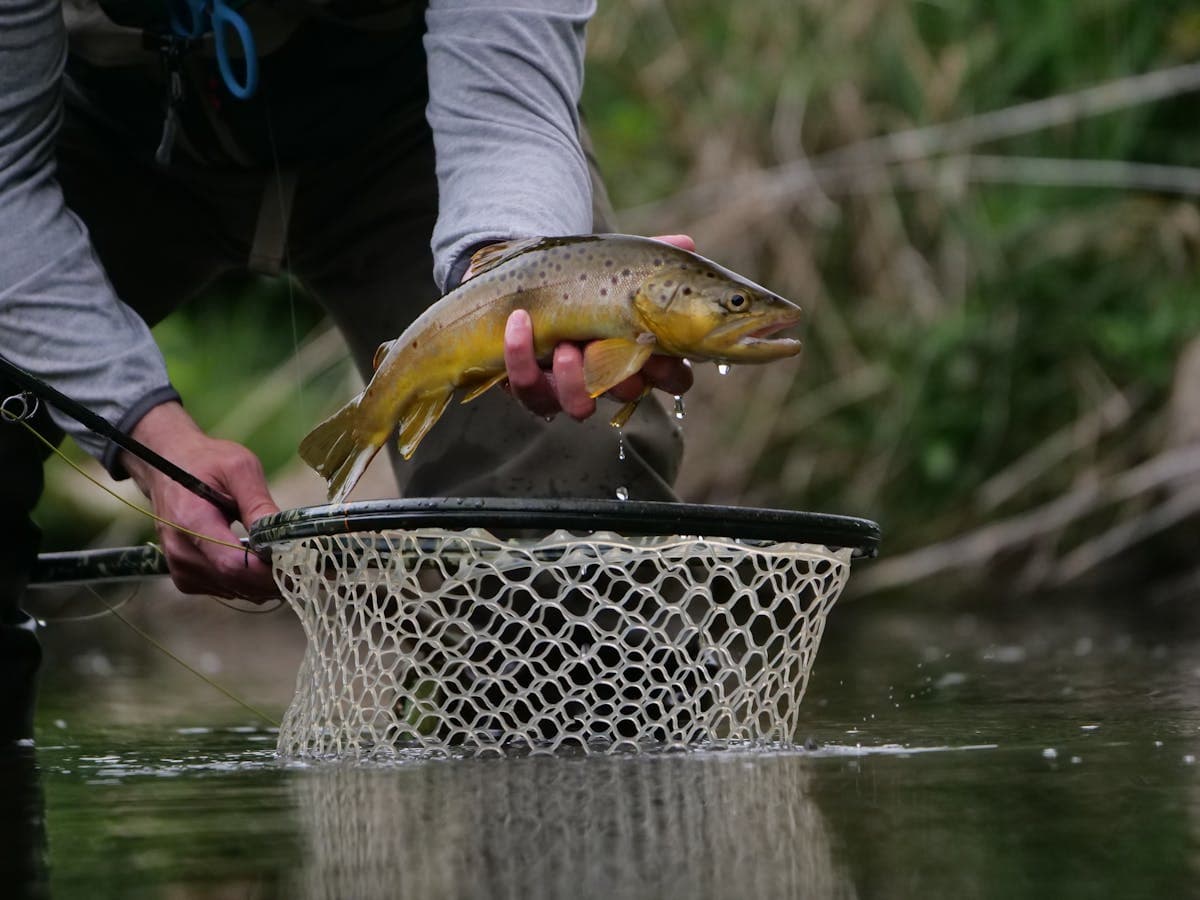
A brown trout netted after eating a hopper pattern along a grassy bank
Madison River
The upper Madison between Quake Lake and Ennis Lake is a riffle-run river that fishes beautifully with hoppers from late July through September. The wade fishing is accessible, and there is plenty of public access.
A local trick from Montana Angler: start the morning with nymphs, then switch to a hopper-dropper rig around 10am. As afternoon heats up, fish the straight hopper. Also watch for the spruce moth hatch in early August near Lyons Bridge, where trout key in on moths falling from the evergreens.
Key details:
- Best sections: Three Dollar Bridge to Ennis; below Quake Lake
- Access: Extensive public access along Highway 287. Three Dollar Bridge (40 miles south of Ennis) is a Trust for Public Lands site with 4 miles of river frontage and good wade access where the West Fork enters.
- Wade-only zones: Quake Lake to Lyons Bridge, and Ennis Bridge to Ennis Lake are wade-only (no float fishing). Below Lyons Bridge, float angling is permitted. This is where the "50-mile riffle" begins.
- Float logistics: Lyons Bridge to McAtee Bridge is the most popular float section. Most Ennis fly shops arrange shuttles. A full-day float covers 8-10 miles.
- Fish: Brown and rainbow trout, with occasional whitefish
- Flies: Size 6-10 hoppers. Try a Purple Thunder Thighs Hopper with a Red Three Dollar Dip dropper.
- Water tip: Morning water temps around 60°F on the Madison mean early fishing is actually best before heat pushes temps up. Check the Madison River flows on RiverReports before heading out.
Big Hole River
The Big Hole flows through hay meadows and cattle ranches that breed enormous grasshopper populations. On a hot, windy afternoon, more hoppers end up in the river than on any other water in the state. The fish know it. Big Sky Fishing notes that hoppers, crickets, ants, beetles, and even spiders all contribute to what trout eat on summer afternoons here.
Key details:
- Best sections: Divide to Melrose; Wise River to Divide
- Access: Multiple FWP fishing access sites. The Melrose area has good public access. Divide Bridge, Browne's Bridge, Melrose Bridge, and Glen FAS all have boat ramps.
- Float logistics: Divide to Melrose is a popular full-day float (roughly 15 miles). Wise River to Divide is shorter and less pressured. Local fly shops arrange shuttles.
- Fish: Brown trout, rainbow trout, brook trout, and rare arctic grayling. The Big Hole is the last river in the lower 48 with a native grayling population. Handle them gently and release quickly.
- Grayling note: When summer temps spike, FWP may restrict fishing on the upper Big Hole specifically to protect grayling. These restrictions can overlap with peak hopper season. Check Montana FWP closures before driving to the upper river.
- Flies: Size 4-8 hoppers, plus spruce moth and beetle patterns
- Guided trips: Sunrise Fly Shop in Twin Bridges runs float trips through prime hopper water.
Beaverhead River
The Beaverhead near Dillon is a tailwater that fishes best with precision presentations: smaller hoppers and lighter tippets than the other Montana rivers on this list. The fish are educated and selective but will eat hoppers, especially in the less-pressured stretch between Barretts Diversion Dam and Dillon.
Key details:
- Best sections: Barretts Dam to Dillon (shallower, easier wading); Pipe Organ to Anderson Lane
- Access: FWP access sites at Grasshopper, Henneberry, and Pipe Organ
- Fish: Large brown and rainbow trout, with fish over 20 inches common
- Flies: Size 8-12 hoppers with precise presentations. Hopper-dropper rigs with small nymphs are deadly.
- Guide tip: Anderson & Platt Outfitters in Dillon specializes in Beaverhead floats.
Idaho: Cutthroat Country
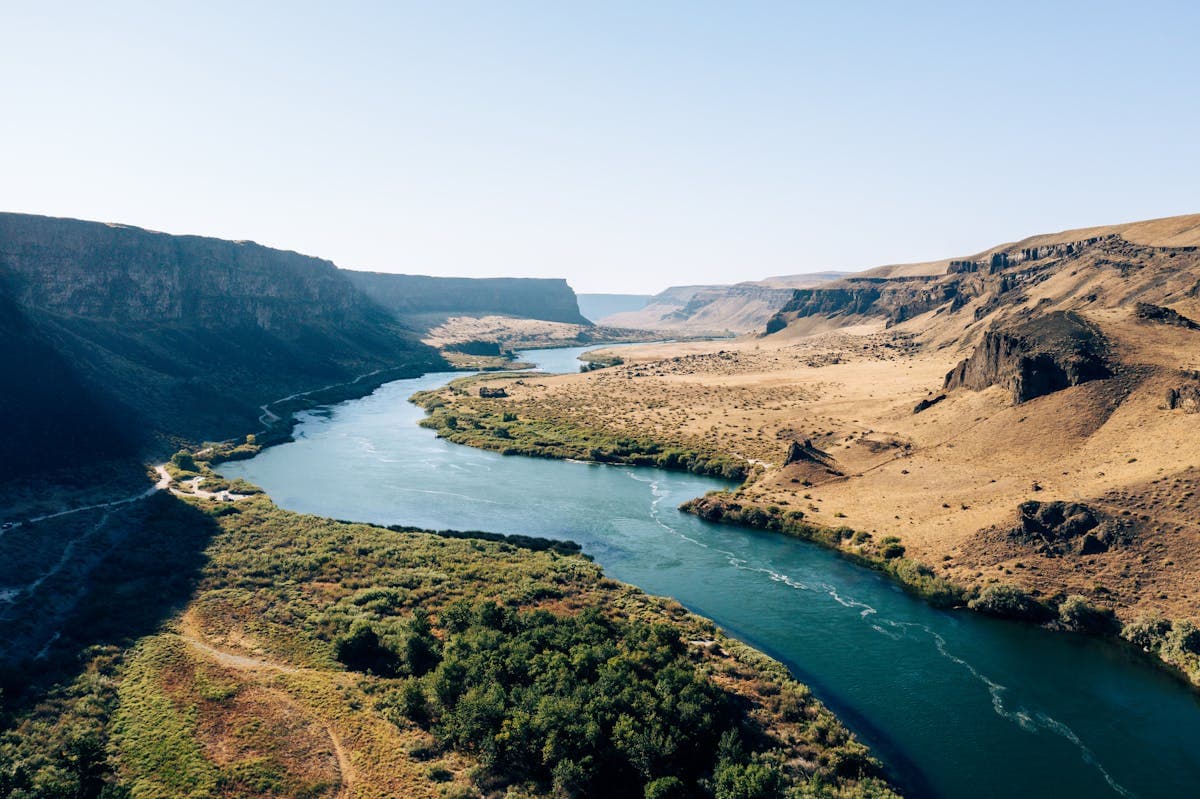
Idaho's river canyons hold native cutthroat in remote water with far less pressure than Montana
Idaho's major rivers combine native cutthroat trout (which tend to be aggressive surface feeders) with remote canyons and less fishing pressure than Montana. Check Idaho river flows on RiverReports for current conditions.
South Fork of the Snake River
The South Fork below Palisades Dam is one of the premier cutthroat rivers in the West. After the famous salmonfly hatch fades in late June, the river transitions into terrestrial mode. By August, uncountable numbers of hoppers line the brushy banks, and the fish (Yellowstone cutthroat, fine-spotted cutthroat, browns, and rainbows averaging 15-25 inches) are looking up.
The South Fork's dry fly diversity is hard to match anywhere in the Rocky Mountain West, and August hopper fishing is a big reason why. The hopper-dropper rig is the standard setup here: a foam hopper on top with a beadhead nymph trailing 18-24 inches below.
Key details:
- Best sections: Palisades Dam to Conant (12 miles, full-day float); Conant to Byington (roughly 25 miles through the canyon, an overnight trip or very long day). The Byington to Twin Bridges stretch (7 miles) is a good half-day option.
- Access: Bureau of Land Management and Caribou-Targhee National Forest land. Conant has a two-lane boat ramp, bathrooms, and a large parking area. Byington is a full-service ramp. Both fill up on summer weekends. Arrive early.
- Float logistics: Conant to the Wolf Flat takeout is 18-20 miles and takes 6-7 hours. The Conant-to-Byington canyon float adds another 3-4 hours beyond Wolf Flat. Shuttles through the canyon are long drives, so budget time or book with an outfitter who handles logistics.
- Fish: Yellowstone cutthroat, fine-spotted cutthroat, brown trout, rainbow trout
- Flies: Size 8-12 Fancy Pants Hopper, Morrish Hopper, Chubby Chernobyl. Fly Fish Food recommends twitching the hopper with micro-mends to trigger strikes.
- Regulations: Check Idaho Fish & Game for current limits. Cutthroat are often catch-and-release.
Henry's Fork of the Snake River
The Henry's Fork is famous for its technical spring-creek-like sections (the Railroad Ranch in particular), but it also offers productive hopper fishing in its freestone reaches. From July through September, grasshoppers, ants, and beetles become a significant food source along the grassy banks.
Key details:
- Best sections: Warm River to Ashton (freestone, good hopper water); Box Canyon
- Access: Public access along Highway 20 and at BLM sites
- Fish: Large rainbow trout, some browns and cutthroats
- Flies: Size 8-14 hoppers. The fish here are selective, so natural-toned patterns (tan, olive) outperform bright colors.
- Regulations: Catch-and-release only for trout June 15 – November 30. Barbless hooks and flies only.
Wyoming: Big Fish, Wide Open Spaces
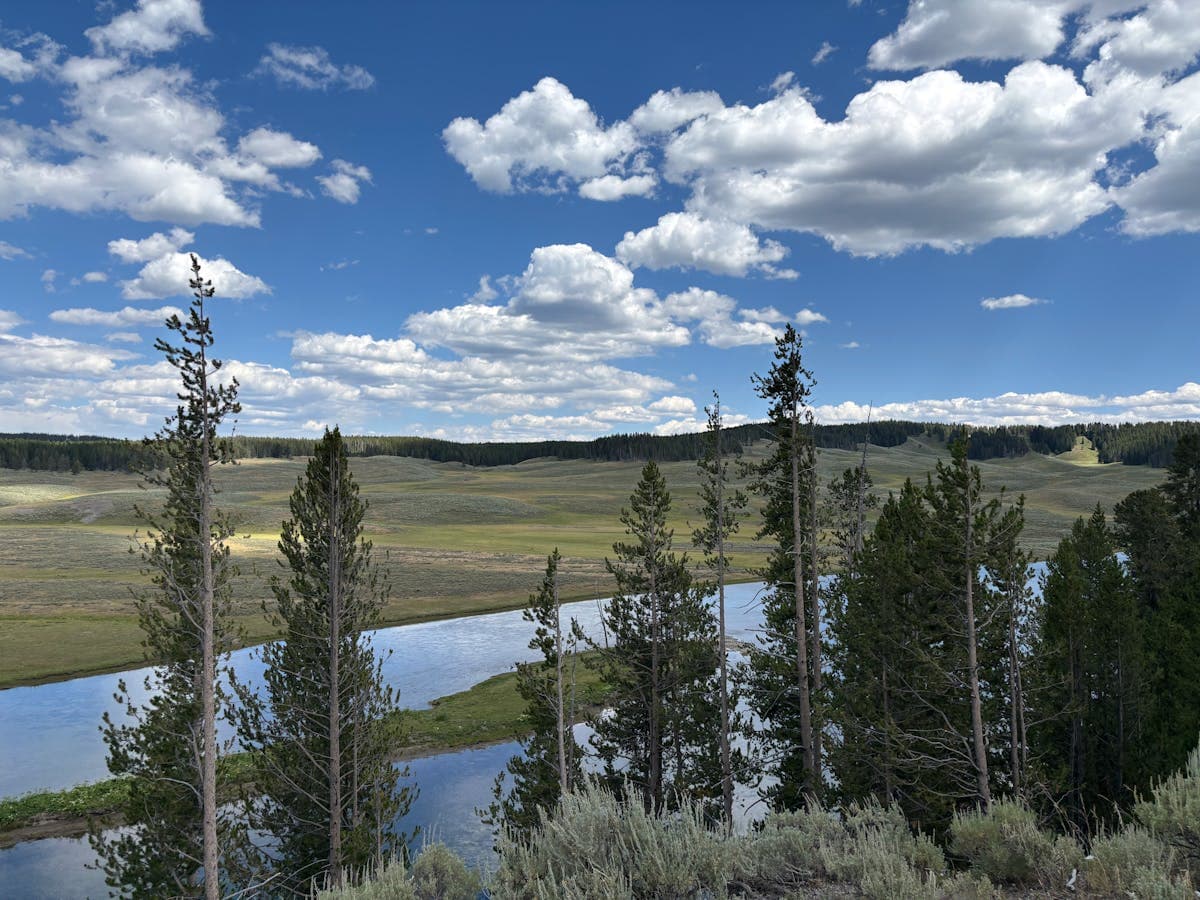
Wide river valley near Yellowstone — sagebrush, open meadows, and wind pushing hoppers into the current
Wyoming's rivers see less pressure than Montana's and hold some surprisingly large trout. The state's ranching landscape creates ideal hopper habitat. Track conditions on RiverReports Wyoming page.
Upper Green River
The upper Green River near Pinedale flows through sagebrush flats below the Wind River Range. The 12-mile Warren Bridge public access stretch is managed by the BLM and provides excellent hopper fishing from July through October.
Key details:
- Best sections: Warren Bridge BLM area (12 miles of public water)
- Access: Warren Bridge is 21 miles north of Pinedale on Highway 191
- Fish: Brown trout, with some reaching trophy size in the deeper undercut banks
- Flies: Size 8-12 hoppers, pheasant tail nymph dropper
- Local shop: Two Rivers Fishing Co. in Pinedale for current reports and flies
North Platte River – Miracle Mile & Grey Reef
The North Platte's famous sections offer hopper fishing that's unique among western tailwaters. The Miracle Mile, a seven-mile stretch below Seminoe Reservoir, holds roughly 3,200 trout per mile according to Wyoming Game and Fish electrofishing surveys, with some of the largest trout in the lower 48 states.
Key details:
- Best sections: Miracle Mile (below Seminoe Reservoir); Grey Reef (below Alcova Reservoir)
- Access: Public access along the Miracle Mile; Grey Reef Anglers offers guided floats
- Fish: Brown trout, rainbow trout. Fish over 20 inches are common.
- Flies: Size 8-12 hoppers, transitioning to smaller patterns as the season progresses
- Tip: Morning fishing shuts off around noon on the Mile; hopper action picks up mid-afternoon
Colorado: High-Altitude Hopper Season
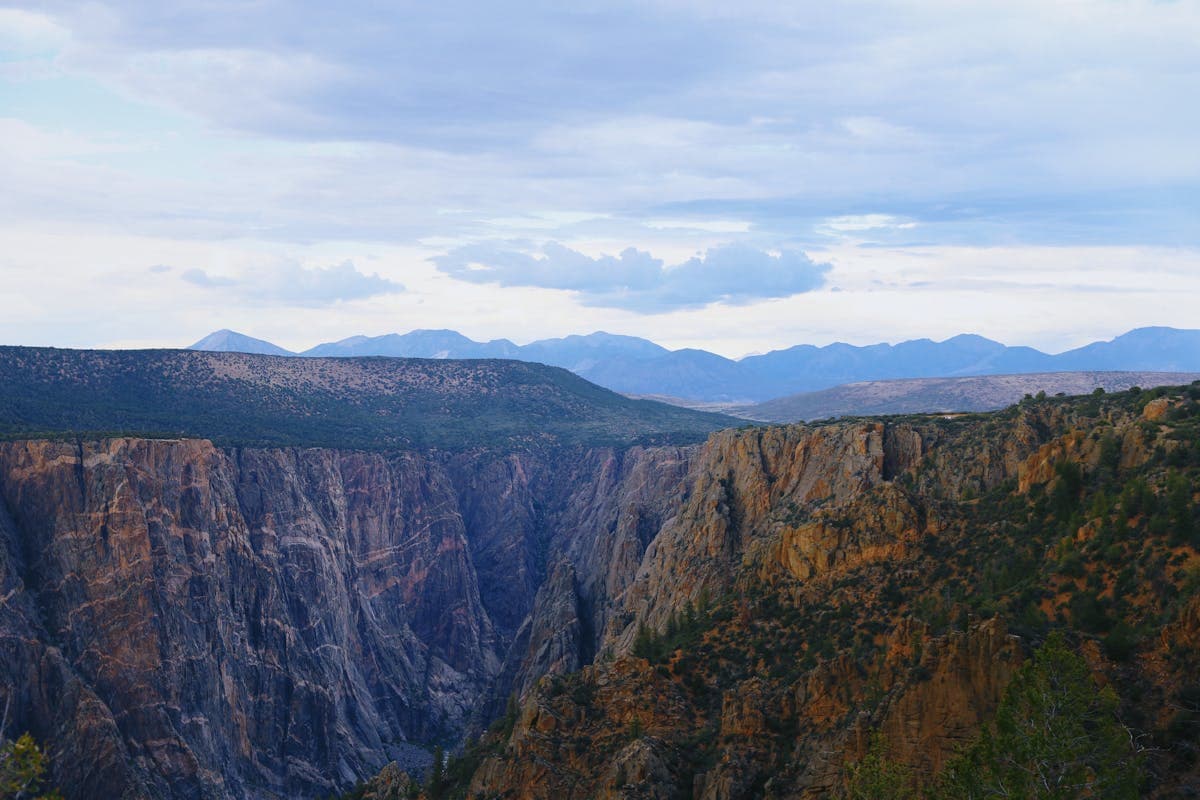
The Black Canyon of the Gunnison — Colorado's most dramatic river canyon and solid hopper water
Colorado's higher elevations mean hopper season starts a bit later, but the dry, sunny climate creates excellent terrestrial conditions through August and September. Monitor flows on RiverReports Colorado page.
Gunnison River
The upper Gunnison between Almont and the Black Canyon offers solid hopper-dropper fishing through August and September. Three Rivers Resort in Almont recommends a "hopper-double-dropper" setup: a foam hopper trailed by two nymph droppers at different depths. The technique works because the Gunnison's varied depths let you cover fish holding at multiple levels with a single rig.
Key details:
- Best sections: Almont to Gunnison; upstream of Blue Mesa Reservoir
- Access: Public access points throughout the valley. The town of Gunnison has convenient river access, and the stretch near Almont where the East and Taylor rivers merge is a popular starting point.
- Ideal flows: 200-350 CFS for easy wading; 350-500 CFS is still wadeable but more challenging. Above 500 CFS, switch to a drift boat. Check the Gunnison flows on RiverReports.
- Fish: Brown and rainbow trout
- Flies: Size 8-12 Morningwood Hopper, Chubby Chernobyl, Amy's Ant. Local tip from Pat Dorsey Fly Fishing: the Gunnison valley wind picks up reliably around 1pm, so plan your hopper fishing accordingly.
Roaring Fork River
The Roaring Fork between Basalt and Carbondale widens after the Frying Pan River joins, creating the kind of broad, riffly water that fishes well with hoppers. By August, terrestrials are the dominant surface pattern. The stretch flows through ranch country with grassy banks that breed healthy hopper populations, and the river sees less boat traffic here than closer to Aspen.
Key details:
- Best sections: Basalt to Carbondale (wider, good hopper banks); below the Frying Pan confluence
- Access: Multiple public access points along Highway 82. Basalt and Carbondale both have convenient put-ins.
- Ideal flows: 700-2,500 CFS for floating. Below 700, floating gets scrappy. Wade fishing is best at lower flows. Check the Roaring Fork flows on RiverReports.
- Fish: Brown and rainbow trout. Artificial flies and lures only from upper Woody Creek Bridge to the Frying Pan confluence, with a 2-fish limit (16-inch minimum).
- Flies: Size 8-12 hoppers, ants, and beetles. Chubby Chernobyl with a small nymph dropper is the standard rig.
- Nearby: Alpine Angling in Carbondale posts regular fishing reports and runs guided floats.
Arkansas River
The Arkansas between Buena Vista and Salida is Colorado's most underrated hopper water. It's a freestone river with fast pocket water, and the browns that live here are aggressive bank feeders. After runoff clears in early July and augmented rafting flows end around August 15, the river drops into prime shape for hopper-dropper fishing along grassy edges.
Key details:
- Best sections: Buena Vista to Salida (the "upper Arkansas"); below Salida through Browns Canyon
- Access: At least 10 boat ramps and numerous wade access points managed by the Arkansas Headwaters Recreation Area. This is heavily managed public water, and access is rarely an issue.
- Ideal flows: 280-500 CFS for wade fishing and small-boat floating. Late summer typically settles into the 280-330 CFS range with clear water and mid-50s to low-60s°F temperatures. Check Arkansas River flows on RiverReports.
- Fish: Brown trout primarily, with some rainbows. The Ark's browns are responsive to hoppers, producing non-stop dry-dropper action on a good day.
- Flies: Size 8-12 hoppers and Chubbys with orange scud or Perdigon droppers. Double-dry setups work too: a small hopper leading a Parachute Adams or flying ant.
- Local shops: ArkAnglers has fly shops in both Buena Vista and Salida with the largest local fly selection. UpRiver Fly Fishing is another solid guide service based in Buena Vista.
Washington & Oregon
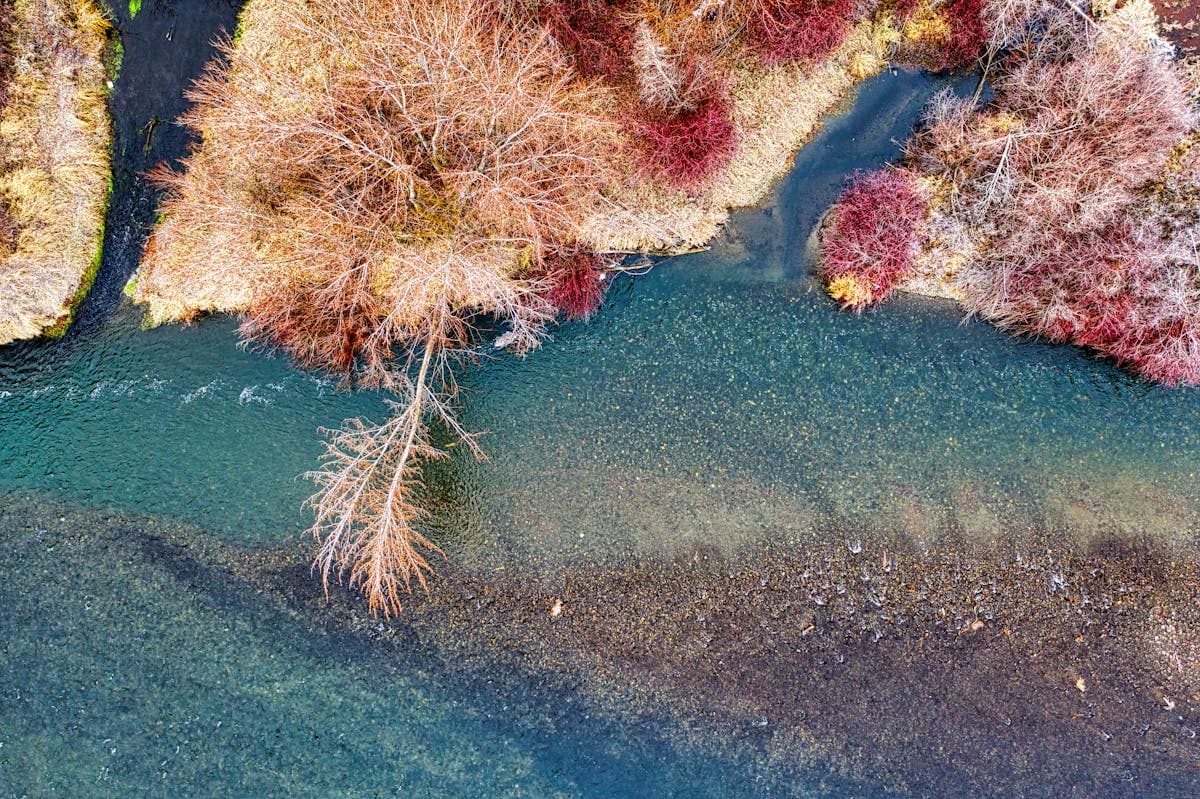
The Yakima River canyon in Washington — a sleeper hopper destination with strong wild rainbows
Yakima River, Washington
The Yakima between Ellensburg and the canyon section is a sleeper hopper destination. When flows hit 4,000-6,000 CFS in summer, wading gets tough, but the drift boat hopper fishing turns excellent as high water pushes trout to the banks. Red's Fly Shop calls the Yakima's hopper-dropper game "the standard summertime rig."
Key details:
- Best sections: Upper Canyon (float); Ellensburg area
- Access: Public boat ramps at Ringer, Umtanum, and Squaw Creek
- Fish: Wild rainbow trout (Yakima "bows" are strong, acrobatic fighters)
- Flies: Size 8-12 hoppers in yellow, peach, orange, and tan. Chubby Chernobyl or foam hopper trailed by a Flashback Pheasant Tail.
- Track flows on RiverReports Washington page
Deschutes River, Oregon
The lower Deschutes is better known for its caddis and stonefly hatches, but hopper patterns can be effective from late July through September, particularly along the grassy banks in the lower canyon. The Fly Fishers Place recommends fishing the banks with terrestrials during afternoon sessions.
Key details:
- Best sections: Warm Springs to Trout Creek (top drift boat run)
- Access: BLM access points. Some sections require a Boater's Pass.
- Fish: Redside rainbow trout (wild, strong fish averaging 12-16 inches)
- Flies: Size 8-12 hoppers, often fished in combination with caddis and stonefly patterns
- Check the Deschutes flows on RiverReports
Flies and Gear
The Five Essential Hopper Patterns
You could fish an entire summer with these five patterns and never need another:
-
Chubby Chernobyl (#6-10). The workhorse. Originally designed as an ant on Utah's Green River in the late 1980s, it evolved into the universal foam terrestrial. Floats like a cork, visible at distance, and doubles as an indicator for dropper rigs. Carry in tan, gold, and purple.
-
Morrish Hopper (#8-12). The most realistic profile of any foam hopper. Hatch Magazine calls it the "go-to on western rivers, particularly the South Fork of the Snake." Its natural shape and muted colors fool educated fish.
-
Fat Albert (#8-12). Multiple foam layers give it excellent buoyancy and a realistic hopper profile. Good for casting into wind, since the extra mass helps turn over a leader.
-
Dave's Hopper (#8-12). The classic deer-hair hopper that has been catching trout since the 1950s. Doesn't float as long as foam patterns, but the silhouette is unbeatable on pressured water.
-
Thunder Thighs (#8-10). A Montana guide favorite, especially on the Madison and Yellowstone. The rubber-leg profile triggers aggressive takes. Try it in purple for an attractor or tan for a natural match.
Color Selection
Natural tones outperform bright colors in most situations. Tan, olive, light peach, and grey are the safest bets. Save the bright pink and chartreuse for cloudy days or fast, broken water where visibility is the priority.
The Hopper-Dropper Rig
This is the single most productive setup during terrestrial season. Here's how to set it up:
- Leader: 7.5-foot 2X or 3X monofilament
- Hopper: Tie directly to the leader with a clinch knot
- Dropper tippet: 18-24 inches of 4X or 5X fluorocarbon, tied to the bend of the hopper hook
- Dropper fly: Small beadhead nymph (Pheasant Tail, Prince Nymph, Lightning Bug) in sizes 14-18
Adjust the dropper length based on depth. In shallow riffles along banks, 12-18 inches is plenty. In deeper runs, extend to 3-4 feet.
The dry fly is your strike indicator. Watch it closely. Any hesitation, dip, or sudden movement means set the hook. Fish will take the nymph about 60% of the time early in the season, shifting to 50/50 or even favoring the hopper as the summer wears on and more naturals are in the water.
Rod and Line
A 9-foot 5-weight rod handles most hopper fishing situations. On big rivers like the Yellowstone where you're throwing size 4 foam flies with a dropper into the wind, step up to a 6-weight. A weight-forward floating line with an aggressive front taper helps turn over the bulky flies.
Technique: How to Fish Hoppers
Presentation
Forget everything you learned about delicate presentations. Hopper fishing rewards aggressive casts. Montana Angler advises slightly overpowering the forward cast to make the fly "plop" on the surface. A real grasshopper landing in a river isn't quiet about it. That splash gets the attention of nearby trout.
Where to Cast
Target these water types in order of priority:
- Grassy undercut banks. The primary zone. Cast within a foot of the bank, as close as you dare.
- Foam lines and back eddies near banks. Where naturals collect.
- Behind boulders in riffles. Trout hold here in low water and will eat hoppers drifting overhead.
- Mid-river seams and glides. Often overlooked. As rivers drop in summer, trout move off the banks and into mid-river structure. As Montana Angler notes, targeting these spots means less competition from other anglers who are all focused on the banks.
Adding Motion
A dead-drifted hopper catches fish. A twitching hopper catches more. Real grasshoppers kick and swim aggressively when they hit water, and selective trout notice the difference. Use a micro-mend combined with a very short strip to make the fly twitch every few seconds. Just before you pick up to recast, gently lift the rod tip and skate the fly. This last-second motion often triggers an explosive take.
The Hook Set
Hopper takes vary from violent splashes to subtle sips. On aggressive eats, set immediately. On slow, quiet takes, where you see a nose slowly push the fly under, pause a full second before setting. The fish needs time to close its mouth around the bulky fly. Quick sets on slow takes are the most common cause of missed hopper fish.
When Hoppers Aren't Working
Not every day in August is a hopper day. Cool fronts, overcast skies, and calm mornings can shut the bite down completely. If you've driven hours to fish and the hoppers aren't producing, here's what to do instead.
Backup Strategy #1: Smaller Terrestrials
Before you abandon the surface entirely, downsize. Trout that are ignoring size 8 hoppers will often eat a size 14 ant or a small beetle. Ants in particular are on the water in huge numbers during summer, and fish eat them confidently because they can't escape. Try a double-dry rig: a visible hopper up front (as a sighter) with a small black ant trailing 18 inches behind.
Backup Strategy #2: Nymph Rigs
On cool, overcast mornings (and most mornings during hopper season, before the sun heats things up), nymphing is the better play. Switch to a standard two-nymph rig under an indicator, or keep the hopper-dropper setup but fish it more deliberately through deeper runs and seams. Pheasant Tails, Hare's Ears, and Perdigons in sizes 14-18 cover most situations. Early and late season (when hoppers are small or dying off), subsurface fishing often outproduces the dry.
Backup Strategy #3: Streamers
Overcast, rainy days that kill hopper activity are actually prime streamer conditions. Low light gets big fish moving. Tie on a Woolly Bugger, Sculpzilla, or Circus Peanut and strip it through the banks, undercuts, and deeper pools. The same aggressive browns that smash hoppers on sunny days will chase streamers when the barometer drops.
Backup Strategy #4: Move to a Tailwater
If freestone rivers are running warm and hopper fishing is shut down by heat restrictions, tailwaters remain fishable. The Beaverhead (MT), Miracle Mile (WY), and Frying Pan (CO) all maintain cool temperatures regardless of air temp. Tailwaters may not produce the same explosive hopper eats, but they fish consistently when everything else is struggling.
Planning a Summer Hopper Trip
The Classic Montana Loop (7-10 Days)
A summer hopper road trip through southwest Montana covers the greatest density of quality hopper water in the West:
- Bozeman (base camp, 2-3 days): Fish the upper Madison and Yellowstone. Float the Yellowstone through Paradise Valley with a guide. Fins & Feathers in Bozeman can set up guided trips and supply current reports.
- Ennis (2 days): Wade the Madison between Three Dollar Bridge and Ennis Lake. Evening hopper fishing along the grassy banks is hard to beat.
- Dillon (2-3 days): Float the Beaverhead and Big Hole. The Big Hole's wide meadow sections produce the most consistent hopper activity.
- Twin Bridges (1-2 days): Fish the Ruby and Jefferson as bonus rivers if time allows.
Idaho Add-On (3-4 Days)
Drive from Bozeman east through Yellowstone to the Snake River valley:
- Swan Valley/Irwin (2-3 days): Float the South Fork of the Snake. Book a guided float with WorldCast Anglers for access to the best cutthroat water.
- Last Chance/Island Park (1-2 days): Wade the Henry's Fork below Island Park Reservoir.
Budget and Booking
- Guided float trips: $500-$700/day for 1-2 anglers, including lunch and flies
- Book by: March or April for prime August dates. Montana guides fill up fast.
- DIY savings: Many of these rivers fish well from the bank. A rental car, a box of hoppers, and a fishing license gets you on the water for a fraction of guided rates.
- Licenses: Montana nonresident: ~$86 (2-day) or ~$111 (season). Idaho nonresident: ~$98 (season). Wyoming nonresident: ~$102 (season). Buy online before your trip.
Important Summer Safety Considerations
Hoot-Owl Restrictions
Montana FWP implements "hoot-owl" restrictions when river temperatures hit 73°F for three consecutive days. These closures prohibit fishing from 2pm to midnight to protect stressed trout. During the 2025 season, hoot-owl restrictions affected the Madison, Big Hole, Beaverhead, Jefferson, Ruby, Shields, Smith, and Sun rivers. Those are essentially the same rivers you want to fish for hoppers.
What this means for your trip:
- Check for current restrictions before driving to any river. Monitor conditions on RiverReports.
- When restrictions are in effect, fish early. Be on the water by 7am and plan to be off by 1:30pm.
- Water temps above 68°F cause catch-and-release mortality to spike. Even without formal restrictions, consider stopping when temps climb.
- Carry a stream thermometer. If the water reads above 67°F, move to a colder river or call it a day.
Rattlesnakes and Heat
You're walking through tall grass along river banks in July and August. Wear boots (not sandals), watch where you step, and stay hydrated. Temperatures in Montana's river valleys regularly exceed 90°F during peak hopper season.
Using RiverReports
Track real-time flows for every river in this guide on RiverReports. For hopper fishing, flows matter less than on other fisheries (you're fishing the banks, not trying to match a hatch), but knowing whether a river is blown out from a thunderstorm or dropping into prime late-summer shape helps you decide where to go on a given day.
Key state pages for planning a hopper trip:
Compare flows across multiple rivers to find which ones are fishing best, and use the historical data to see whether current levels are above or below average for the date. Low-to-normal summer flows generally produce the best hopper fishing because fish are concentrated and holding closer to the banks.
River Intel Weekly
Weekly flow updates and fishing intel.
© 2026 RiverReports, Inc.