Tippet vs Leader Explained: Size Chart & the Divide-by-3 Rule
Stop overthinking it - here's what you actually need to know
Greg Lamp
December 11, 2025
11 min read
Last summer my wife and I were fishing the Arkansas near Salida. After a couple hours, she was getting frustrated - her tippet kept breaking, her knots kept failing, and she'd caught exactly one fish. Finally she asked me, "What am I doing wrong?"
I looked at her setup. "You're fishing 6X."
"What are you fishing?"
"3X."
She was pissed I hadn't told her sooner. So I'm telling you right now.
If you're new to fly fishing, the whole leader and tippet thing is confusing. You've probably stood in a fly shop staring at spools of what looks like the same clear fishing line wondering what the difference is and which one you need.
Here's the good news: it's simpler than people make it seem.
Leader and Tippet Are Basically the Same Thing
Both leader and tippet are monofilament or fluorocarbon line that connects your fly line to your fly. The difference? How they're packaged and used.
A leader comes pre-tapered - thicker at one end (where it attaches to your fly line) and thinner at the other (where your fly goes). You buy it as a single piece, usually 7.5 to 9 feet long. A typical leader costs $5-8.
Tippet is a spool of un-tapered line at a single diameter. It's cheaper - around $5-8 for 25+ yards of line.
Here's the key insight: tippet extends your leader so you don't have to replace the whole thing.
Every time you change flies, you cut off a few inches of line. Tie on enough flies and your 9-foot leader becomes a 6-foot leader. Instead of buying a new $7 leader, you tie on some tippet from a $6 spool that lasts all season.
That's it. That's the whole relationship.
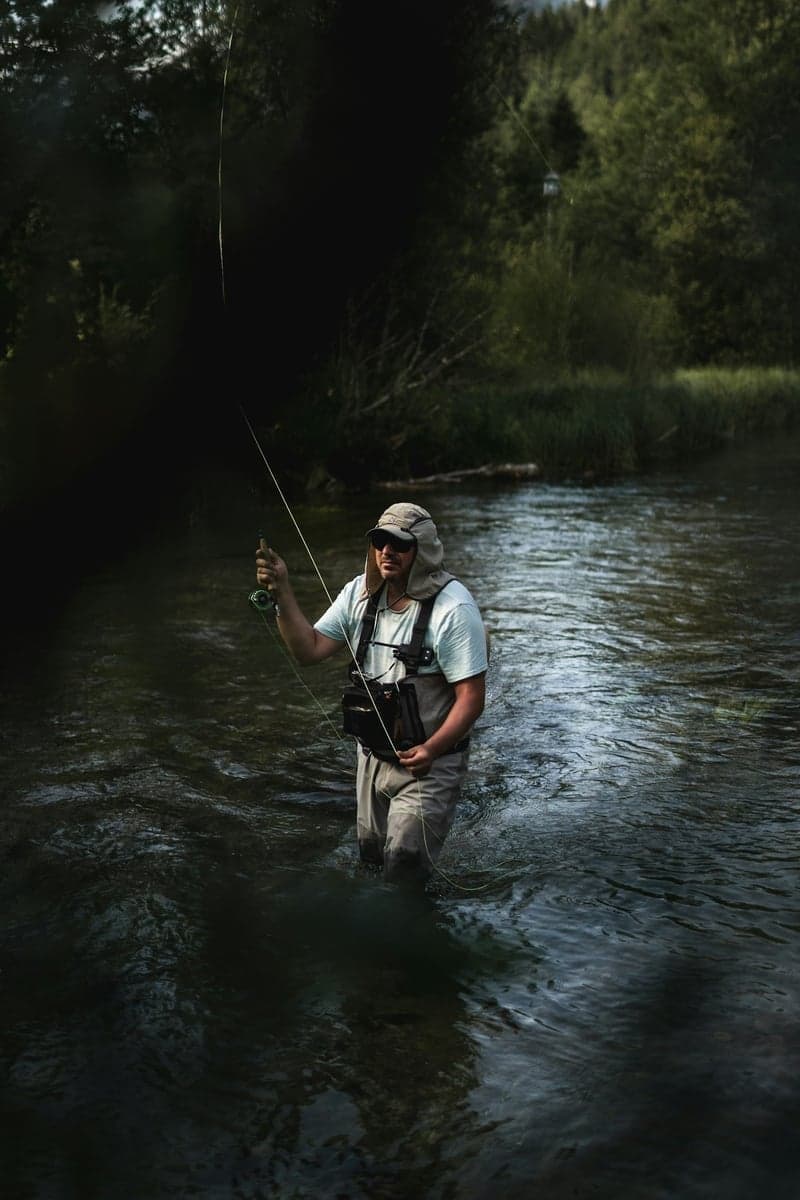
Spend less time fussing with gear, more time with your line in the water
What About Tippet Sizes?
Tippet comes in sizes like 3X, 4X, 5X, 6X. The higher the number, the thinner the line.
| Size | Diameter | Pound Test | Best For |
|---|---|---|---|
| 0X-2X | .010-.009" | ~10-13 lb | Big streamers, bass bugs, salmon flies, heavy nymphs in fast water |
| 3X | .008" | ~8 lb | Streamers, hoppers, stoneflies, big attractors like Chubby Chernobyls (#4-10) |
| 4X | .007" | ~6 lb | Dry flies, nymphs, most situations - Elk Hair Caddis, Parachute Adams, Pheasant Tails (#10-16) |
| 5X | .006" | ~5 lb | Smaller dries and emergers - BWOs, RS2s, small Para-Adams (#14-20) |
| 6X | .005" | ~3 lb | Tiny flies on ultra-clear tailwaters - midges, micro-mayflies (#18-24) |
| 7X | .004" | ~2 lb | Masochists, competition anglers, and people who enjoy re-tying in the cold |
For a visual, 4X tippet is about as thick as a human hair. 6X is significantly thinner.
Notice the fly size ranges overlap? That's because there are no hard rules here. I fish size 14 Parachute Adams on 4X all the time. This is a rule of thumb, not gospel. Don't stress over it.
The Beginner Trap: Using Tippet That's Too Light
Here's where most beginners go wrong: they use tippet that's way too thin.
I watched this play out on Deckers last spring. A guy in brand-new waders was fishing 6X because the fly shop told him that's what you use on the South Platte. Over an hour, I watched him break off three times, spend probably 30 minutes re-rigging, and catch exactly zero fish. Meanwhile, I was fishing 4X a hundred yards upstream, caught four rainbows, and never had to re-tie once.
Walk into any fly shop and ask what tippet to buy, they'll probably say 5X or 6X. The logic is that thinner line is less visible to fish, so you'll get more strikes. And that's true - on paper.
But here's what actually happens when you fish with 6X:
-
You can't tie knots. 6X is like tying thread. Your fingers fumble. The wind blows. You waste 10 minutes tying what should take 30 seconds.
-
Your line breaks constantly. 6X snaps when you set the hook too hard, when your fly catches a branch, when a decent fish runs.
-
You spend half your day re-rigging. Between break-offs and knot failures, you're constantly rebuilding your setup instead of fishing.
-
Your fly isn't in the water. If your fly isn't in the water, you're not catching fish. Period.
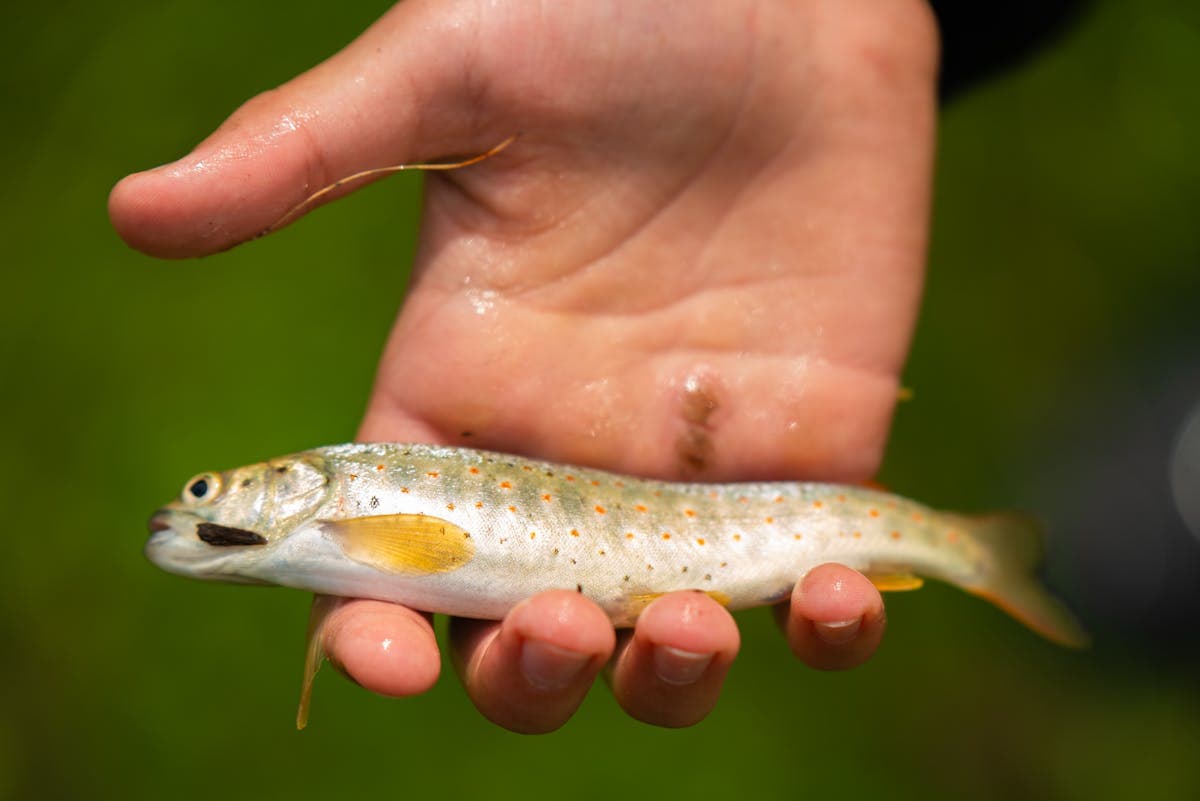
You catch fish when your fly is in the water, not when you're untangling line
Why Heavier Tippet Catches More Fish (For Beginners)
I know this sounds backwards, but stick with me.
3X or 4X tippet will help you catch more fish as a beginner. Here's why:
Easier to tie. A clinch knot in 4X takes 15 seconds. In 6X, it takes a minute and might fail anyway. Faster knots mean more casts.
Fewer break-offs. When you set the hook like you're trying to yank a bass out of heavy cover (everyone does at first), 4X forgives you. 6X snaps.
Less frustration. You came to fish, not to curse at monofilament. When gear works reliably, you have more fun. When you have more fun, you fish longer and learn faster.
The fish don't care as much as you think. Most of the trout you catch as a beginner won't be Ph.D.-level selective feeders on microscopic mayflies. They'll be reasonably hungry fish willing to eat a reasonably presented fly. The difference between 4X and 6X matters less than having your fly drift naturally.
The "Technical Fishery" Myth
Read enough fly fishing blogs and you'll see it everywhere: "This is a super technical fishery. You need 6X minimum, match the hatch perfectly, and present with surgical precision."
You'll also read content from people who fish professionally or compete on national teams. They're always talking about 6X and 7X tippet. And for them, it makes sense - they're fishing for a living and every fish matters.
But here's the thing: that's just not necessary for the vast majority of us.
Think about it like a math equation. How many fish you catch depends on: how much time your fly is in the water, how long you're willing to stay out fishing (which is directly tied to how much fun you're having), and how much time you're wasting re-rigging. If you're fishing 7X and spending 10 minutes re-tying every time you break off that double nymph rig, you're not fishing as much as I am with my 3X-4X setup and bigger flies.
Even on a "technical" tailwater, I might actually catch more fish than you. And I'm definitely having more fun - especially when it's freezing. Nobody wants to stand in 30-degree weather dicking around with light tippet, fumbling knots with numb fingers, and re-rigging every 15 minutes. That just sucks.
The pros can afford to optimize for every edge because it's their job. You're out here to enjoy yourself and catch some fish. Those are different goals.
What You Actually Need to Start
Keep it simple. Here's your shopping list:
- One 9-foot 3X tapered leader - Rio, Scientific Anglers, or Umpqua all make good ones ($5-8)
- One spool of 3X tippet - To extend your leader when it gets short
- One spool of 4X tippet - For slightly smaller flies or calmer water
Why 3X instead of 4X? You can always add finer tippet to the end of a 3X leader, but you can't go thicker. Starting heavier gives you more flexibility. Want a 4X leader? Just tie 2 feet of 4X tippet to your 3X leader and now you have a 10-foot 4X leader. Magic.
That's it. Three items. Under $25 total. I personally use Rio Powerflex for tippet - it's affordable and knots well - but any name brand works fine. If you want to save a few bucks, grab a 3X/4X/5X variety pack - you'll have everything you need for a season.
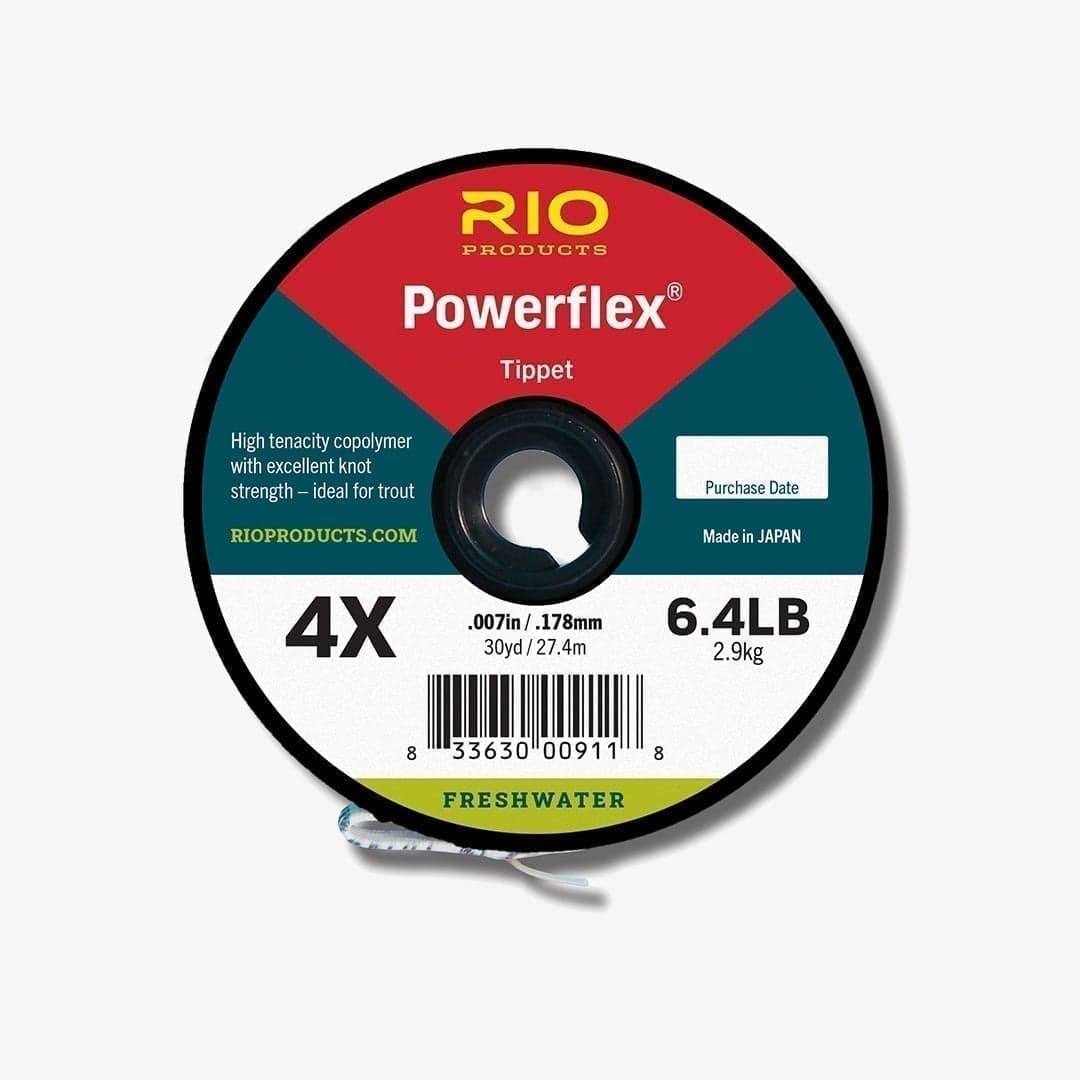
Rio Powerflex tippet - your summer bread and butter for creek and river fishing
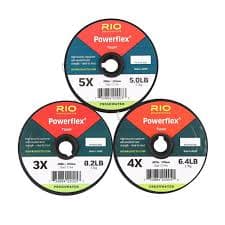
A 3X/4X/5X variety pack covers most situations and saves money
When your leader gets down to about 6 feet from cutting off fly changes, add 18-24 inches of tippet with a surgeon's knot or blood knot. Both are easy to learn. (If you want to cheat, there's also a tool that ties blood knots for you - used to cost a penny, now it's a nickel since pennies aren't really a thing anymore.)
Do You Need Fluorocarbon?
If you're reading this post, probably not.
Fluorocarbon tippet is more expensive, stiffer, and harder to knot than regular monofilament. The main benefits - it sinks faster and is supposedly less visible underwater - matter most in very specific situations: nymphing in ultra-clear tailwaters, fishing to pressured fish that have seen it all, or when you're throwing streamers and want your fly to get down fast.
For creek fishing, freestone rivers, and most beginner situations? Mono is fine. It's easier to work with, cheaper, and the fish won't know the difference.
Save the fluoro for later when you're chasing 20-inch browns on the Frying Pan and need every edge you can get. Right now, focus on getting your fly in front of fish.
When to Eventually Use Lighter Tippet
Once you've got your casting down and your knots reliable, you might want 5X for:
- Smaller dry flies (#16-20)
- Clear, slow water where fish can study your fly
- Highly pressured tailwaters like the South Platte or San Juan
And 6X for:
- Ultra-technical tailwater fishing
- Micro-flies (#20-24)
- Fish that have seen every pattern in the book
But that's down the road. For now, 3X-4X handles 90% of beginner situations on freestone rivers, stocked streams, and most Western trout water.
Quick Reference
New to fly fishing? Start with a 3X leader and 3X tippet. Don't overthink it.
Leader getting short? Add tippet instead of buying a new leader.
Wind blowing? Stick with 3X (or even 2X) so you can turn over your fly.
Fish refusing your fly? Maybe go down to 5X, but first check your drift. Bad presentation spooks more fish than thick tippet.
Losing lots of flies to break-offs? You're probably using tippet that's too light for your skill level, setting the hook too hard, or both.
Resources
- Orvis Knot Tutorials - Video guides for essential knots
- Trout Unlimited's Guide for Newbies - General getting-started info
- Top 10 Beginner-Friendly Rivers in Colorado - Great places to practice with your new gear
The best way to learn this stuff is time on the water. Grab some 3X, tie on a fly, and go fishing. You'll catch fish, learn what works, and eventually develop your own preferences. But you'll never develop preferences sitting at home reading about tippet sizes.
Before you head out, check current conditions for your local river. If you're planning a trip to a new spot, set up a flow alert so you know when flows are fishable. Nothing ruins a day like showing up to a blown-out river.
Now go get your line in the water.
Frequently Asked Questions
Do you need both a leader and tippet?
Not always. A fresh leader works fine on its own. The thin end is already the right diameter for tying on a fly. But after you swap flies a few times and cut back the thin end, you need to add tippet to extend the leader. Otherwise you'd burn through expensive leaders every trip.
Is a leader the same as a tippet?
They're both monofilament or fluorocarbon, but a leader is tapered (thick to thin) while tippet is a uniform diameter. The leader transfers casting energy from your fly line to the fly. The tippet is the final, nearly invisible section where you actually tie the fly on. Think of the leader as the engine and the tippet as the last few feet of stealth.
What tippet and leader should I use?
Divide your fly size by 3 for the X rating. A size 12 fly uses 4X, a size 18 uses 6X. Start with a 9-foot 4X or 5X leader and matching tippet for most trout fishing. Go heavier (3X) in fast water or with bigger flies, lighter (6X) for spring creeks and picky fish.
How long should tippet be for trout?
Add 18 to 24 inches of tippet to your leader. In clear, slow water like spring creeks, go longer (up to 3 feet) for a more natural drift. In faster or stained water, 12 to 18 inches is plenty. Check current river conditions to gauge water clarity before you head out.
Get River Intel Weekly
Flow updates and fishing intel delivered every Thursday.
River Intel Weekly
Weekly flow updates and fishing intel.
© 2026 RiverReports, Inc.