Quick Reference
| What | When | Key Numbers |
|---|
| Henry's Fork (dry fly) | June 15 - October | 300-600 CFS Box Canyon; Ranch opens June 15 |
| South Fork Snake | Year-round (salmonflies late June) | 5,000+ trout/mile; 900-1,200 CFS winter wade |
| Silver Creek | Late May - October | Spring-fed 52-56°F; PMDs June-July |
| Middle Fork Salmon | July - September (permit required) | Catch-and-release, barbless only; 6-day float |
| Clearwater steelhead | September - April | B-run fish averaging 10-13 lbs, up to 20+ |
| Fly shop | Henry's Fork Anglers | (208) 558-7525, Last Chance, ID |
| License | Year-round | Resident $30.50; Non-resident $108 (age 14+) |
Flow~720 CFS
Trendfalling
Clarityclear
Temp55°F
Tungsten Split Case PMD #20Compara-Dun PMD #16-20PMD Sparkle Dun #16-18Parachute BWO #20-22
Flow~9,500 CFS
Trendfalling
Clarityslightly off
Temp59°F
Bionic Hopper Tan #12Bionic Hopper Purple #12Dave's Hopper #8-12Bionic Ant #10-14
Flow~451 CFS
Trendfalling
Clarityclear
Temp60°F
Bionic Hopper Tan #12Bionic Hopper Purple #12Bionic Ant 2.0 Black #16Bionic Ant 2.0 Brown #12
Flow~4,500 CFS
Trendfalling
Claritygood
Temp65°F
Steelhead season open—early arrivals: Intruder (black/purple) #2String Leech (chartreuse/white) #4Egg Sucking Leech #4-6 (resident trout: Dave's Hopper #8-12Bionic Ant #10-14
🎣 TACTICS RIGHT NOWDry FlyThe Ranch in excellent late-summer form—PMDs still the headline hatch (prime window 10 AM-1 PM) with Mahoganies now a strong presence and BWOs appearing on cooler overcast mornings. Headhunting style: stealthy approacheslong leaders to 6X minimumthin sparse CDC patterns. Compara-Dun PMD #16-20Mahogany Dun Parachute #14-16Parachute BWO #20-22. Terrestrials the dominant story statewide: Bionic Hopper Tan #12Dave's Hopper #8-12Bionic Ant 2.0 Black #16Foam Beetle #12-14 productive along grassy banks on every river (prime terrestrial window 1-5 PM). Corn-Fed Caddis CDC Tan #20 and Elk Hair Caddis #14-16 still the money flies at dusk from Box Canyon through Ashton. Silver Creek at ~93 CFS—Trico hatch in full swing mornings shifting to late morningCallibaetis duns and spinners #14-16 afternoonsBaetis #20-24 throughout. Kilpatrick Bridge closed through Jan 4 for construction—access from east side restricted. South Fork Snake: BWOs and PMDs producing 6-9 AM on calm water before wind buildsYellow Sally and PMD peak 9 AM-12 PM in back eddies. Salmon River at ~451 CFS—very lowclear water ideal for sight-fishing with attractor driesspruce moths (mornings)and hoppers (afternoons). Spawning salmon mitigations in effect. Kelly Creek in prime summer form with cutthroat eager on Chubby Chernobylshoppersantsand beetles. St. Joe excellent on caddisPMDsBWOsand terrestrials. Fish mornings and evenings—midday heat still shutting down surface activity on most watersthough cooler fall temps arriving.
NymphHenry's Fork Box Canyon at ~720 CFS—flows at their lowest of the summerseams tight and wade access excellent. Rubberlegs on point with Tungsten Split Case PMD #20Zebra Midge #18-22 (black/red)and Stealth Link Mercer PMD #20 as droppers. Vary depth and weight to match current conditions. Dry-dropper rigs also productive through the canyon. South Fork Snake at ~9500 CFS and falling: Pat's Rubber Legs #4-8 (tan/brown) on pointStraggle Stone #10-12 and Tungsten Split Case PMD #20 as droppers. Concentrate on back eddiesshaded banksand softer seams—heat still pushing fish to cooler lies. Best nymphing window before 10 AM and after 5 PM. Salmon River at ~451 CFS—very lowclear water ideal for sight-nymphing with Pheasant Tail #14-18Copper John #14-16Prince Nymph #12-16 under attractor dries. Note spawning salmon mitigations in effect—check with local shops or SNRA headquarters. Northern Idaho tributaries in excellent late-summer shape: Kelly Creek at fishable summer flows with Chubby Chernobyls and stone patterns with droppersSt. Joe and NF Clearwater low and clear—light nymph rigs with Pheasant Tail and Copper John droppers under terrestrial dries.
StreamerDouble Bunny (black) #4-6 remains the top streamer on South Fork Snake at ~9500 CFS—slow strips along shaded banks with sinking tips essential in the heat. Kreelex (black) #4-6 and Dungeon #4 in black/white/olive effective. Fish streamers early morning and late evening when water temps are coolest and fish most aggressive. Box Canyon on the Henry's Fork at ~720 CFS—streamers productive along structure and deeper runsespecially during low-light periods. Warm River to Ashton section: streamers effective mornings before water warms. Salmon River at ~451 CFS—very lowclear water for sight-casting streamers to deeper liesbut mind spawning salmon mitigations. Olive/black woolly buggers #4-6 and sculpin patterns effective. Northern Idaho tributaries at low summer flows—small streamers through deeper pools and undercut banks on Kelly CreekSt. Joeand NF Clearwater.
FORECASTIdaho transitioning from late summer to early fall. Rivers dropping, cooling, and clearing as overnight temps trend cooler—trout becoming increasingly aggressive on revitalized hatches. Henry's Fork Box Canyon at ~720 CFS and still falling—expect continued decline into September, with the best wade access of the season. Cool overnight lows (upper 30s) creating excellent morning windows before sunny mid-70s afternoons. The Ranch fishing well on PMDs, Mahoganies, and BWOs with terrestrials dominant across all sections. South Fork Snake at ~9,500 CFS and falling—Palisades below 40% and dropping. Expect flows to continue declining into more comfortable wade-friendly levels through September. Heat easing but still warm—dawn and dusk windows remain most productive. Salmon River at ~451 CFS at late-summer base—spawning salmon mitigations in full effect. Very low, clear water rewards stealth—check with local shops or SNRA headquarters before heading out. Silver Creek at ~93 CFS with Kilpatrick Bridge closed through Jan 4 for construction—access from east side restricted. Tricos, Callibaetis, and Baetis the primary hatches. Steelhead season open on the Clearwater but counts still low—the real fishing starts late September. Kelly Creek, St. Joe, and NF Clearwater all fishing well for cutthroat on terrestrials and attractor dries. Middle Fork float season in final weeks. Looking ahead: September will bring cooler nights, a BWO resurgence, Trico spinners, early fall brown trout activity, Hecuba (Red Quill) emergence on the Big Wood, and improving steelhead returns on the Clearwater. Carry a thermometer on every outing—Idaho relies on voluntary angler restraint during warm periods.
Why Idaho
Idaho holds more than 26,000 miles of rivers and streams, 3,100 miles of navigable whitewater (more than any other state in the Lower 48), and trout water that ranges from technical spring creeks to wild backcountry cutthroat streams you can have entirely to yourself. The federal government owns roughly 62% of the land, which means public access is genuinely good compared to most western states.
The fishing divides into three broad regions. Eastern Idaho is the marquee draw: the Henry's Fork, South Fork Snake, Silver Creek, and Teton River attract anglers from around the world. Central Idaho holds the Salmon River drainage and the legendary Middle Fork, plus the Big Wood and South Fork Boise near Sun Valley. Northern Idaho is quieter, wilder, and home to the Clearwater's steelhead runs, the St. Joe's wild cutthroat, and Kelly Creek's catch-and-release paradise.
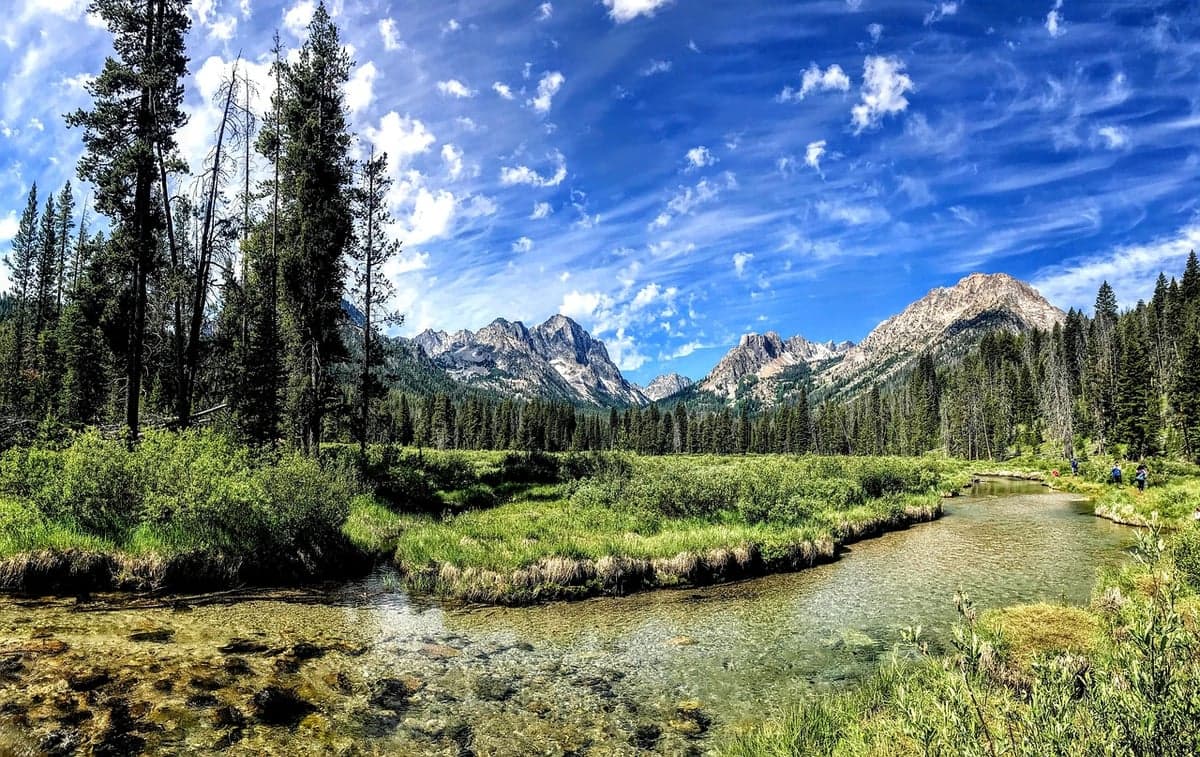
The Sawtooth Wilderness in central Idaho, where the Salmon River begins its journey through some of the most remote country in the Lower 48
Seasons and Runoff
Idaho's fishing calendar revolves around snowmelt. Here's what to expect:
Spring (March - May): Tailwaters fish well through spring while freestone rivers are running high and off-color. The South Fork Snake below Palisades Dam and the South Fork Boise below Anderson Ranch Dam both offer reliable fishing when everything else is blown out. Steelhead fishing on the Clearwater runs through April.
Early summer (June): The big transition. Salmonflies hatch on the South Fork Snake in late June, one of the most anticipated events in western fly fishing. The Henry's Fork Ranch section opens June 15. Freestone rivers in the mountains are still high but dropping. The Middle Fork Salmon is typically too high until late June or early July.
Peak summer (July - August): Prime time statewide. PMDs, Green Drakes, caddis, and terrestrials are all in play. Water temperatures are comfortable, hatches are reliable, and backcountry streams are accessible. This is when the Middle Fork Salmon float trips run, Kelly Creek road opens (usually mid-July), and Silver Creek's evening rises are at their best.
Fall (September - October): Cooler air, smaller crowds, and aggressive fish. Brown trout get territorial before their fall spawn, making streamers deadly on the South Fork Snake. BWOs return on most rivers. Steelhead start entering the Clearwater system in September. Many anglers consider this the best time to be in Idaho.
Winter (November - March): The tailwaters keep producing. The South Fork Snake fishes year-round with excellent winter nymphing at low, clear flows. Steelhead fishing on the Clearwater peaks in late fall and early spring.
Eastern Idaho: The Marquee Water
Eastern Idaho is where most visiting anglers start, and for good reason. The concentration of quality trout water within a short drive of Idaho Falls or Jackson Hole is hard to match anywhere in the country.
Henry's Fork of the Snake River
The Henry's Fork is one of the most storied trout rivers in North America. Starting at Big Springs and running roughly 127 miles to its confluence with the Snake River near Rexburg, it flows through volcanic terrain, ranch land, and canyon walls.
The river splits into three distinct reaches:
- Box Canyon (below Island Park Dam): Fast pocket water with 300-600 CFS flows. Less technical than the Ranch, with good populations of rainbow and brown trout. Nymphs and streamers work well here year-round.
- The Railroad Ranch (Harriman State Park): The flat, spring-creek-like section that made the Henry's Fork famous. Selective rainbow trout sip tiny mayflies on glassy water. Opens June 15 and fishes best through September. This is some of the most technical dry fly fishing in the world.
- Below Mesa Falls: Bigger water, less pressure, and good brown trout populations. Floatable in a drift boat with adequate flows.
Peak hatches include Green Drakes (late June), PMDs (June-July), Flavs (July), and Tricos (August). BWOs bookend the season in spring and fall.
For deeper coverage of this region, see the Southeastern Idaho fly fishing guide.
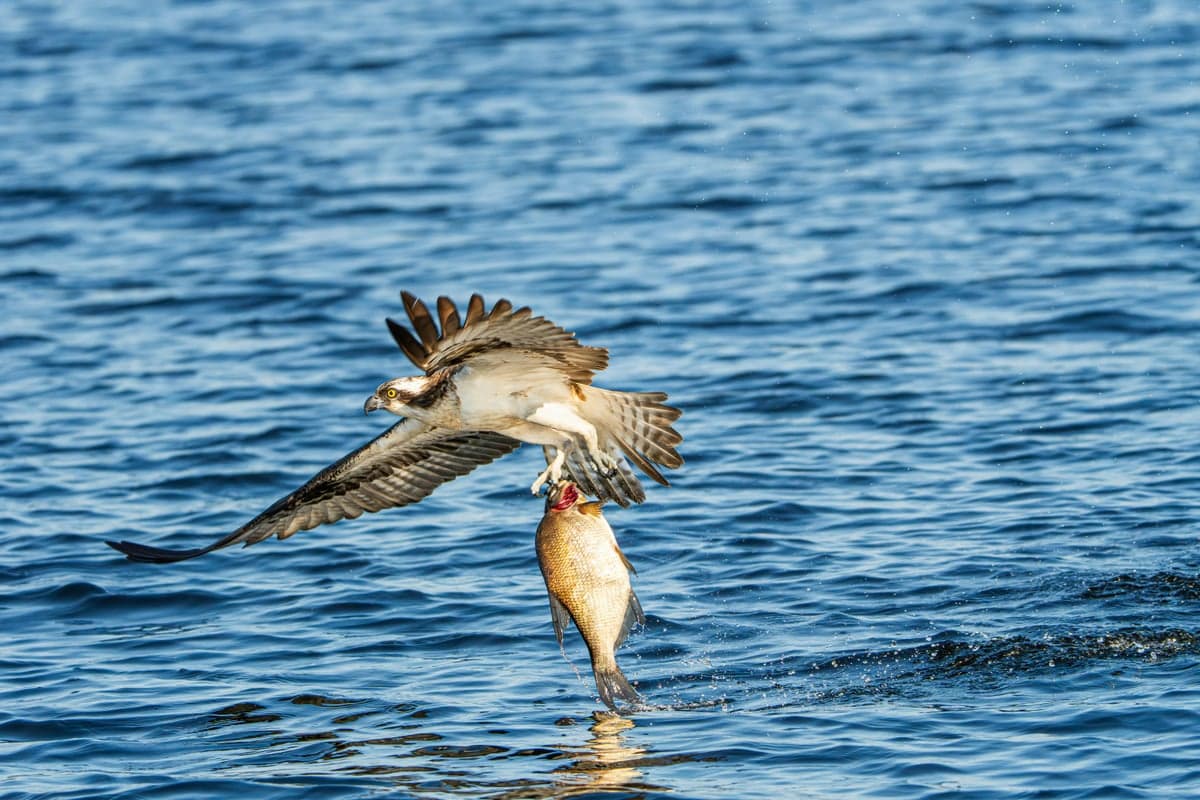
An osprey snatches a fish from the water, a common sight along Idaho's fish-rich rivers
South Fork of the Snake River
The South Fork runs 66 miles from Palisades Dam to its confluence with the Henry's Fork near Rexburg. It holds one of the densest trout populations in the West, with Idaho Fish and Game surveys showing more than 5,000 trout per mile in some sections, including native Yellowstone cutthroat, rainbow, brown trout, and hybrids.
The river is primarily floated by drift boat through a deep basalt canyon. Wade access is limited but exists at a few key spots. Key seasons:
- Late June: Salmonfly hatch. Big stoneflies bring the largest fish to the surface. Chubby Chernobyls, Sofa Pillows, and Stimulators in size 4-8.
- July - August: PMDs, caddis, and terrestrials. Classic dry fly and dry-dropper fishing.
- Fall: Streamer season. Brown trout are aggressive pre-spawn. Woolly Buggers and Sculpzillas in olive and black.
- Winter: Excellent nymphing at 900-1,200 CFS. Midges and small nymphs under an indicator.
No cutthroat harvest is permitted on the South Fork. Rainbow trout and hybrids have no bag limit.
Silver Creek
Silver Creek near Sun Valley is a spring-fed stream with gin-clear water, heavy weed growth, and picky trout. It's managed as a preserve by The Nature Conservancy and offers catch-and-release fishing with barbless flies only.
Water temperatures hold steady at 52-56°F year-round thanks to spring inputs. This makes hatches predictable but the fish are educated. PMDs are the headline hatch (June-July), followed by Tricos (August) and BWOs (September-October). Expect 14-18 inch rainbow and brown trout that will punish a sloppy cast.
Silver Creek Outfitters in Ketchum is the go-to local shop for guided trips and current conditions.
For more on this region, see the Central Idaho fly fishing guide.
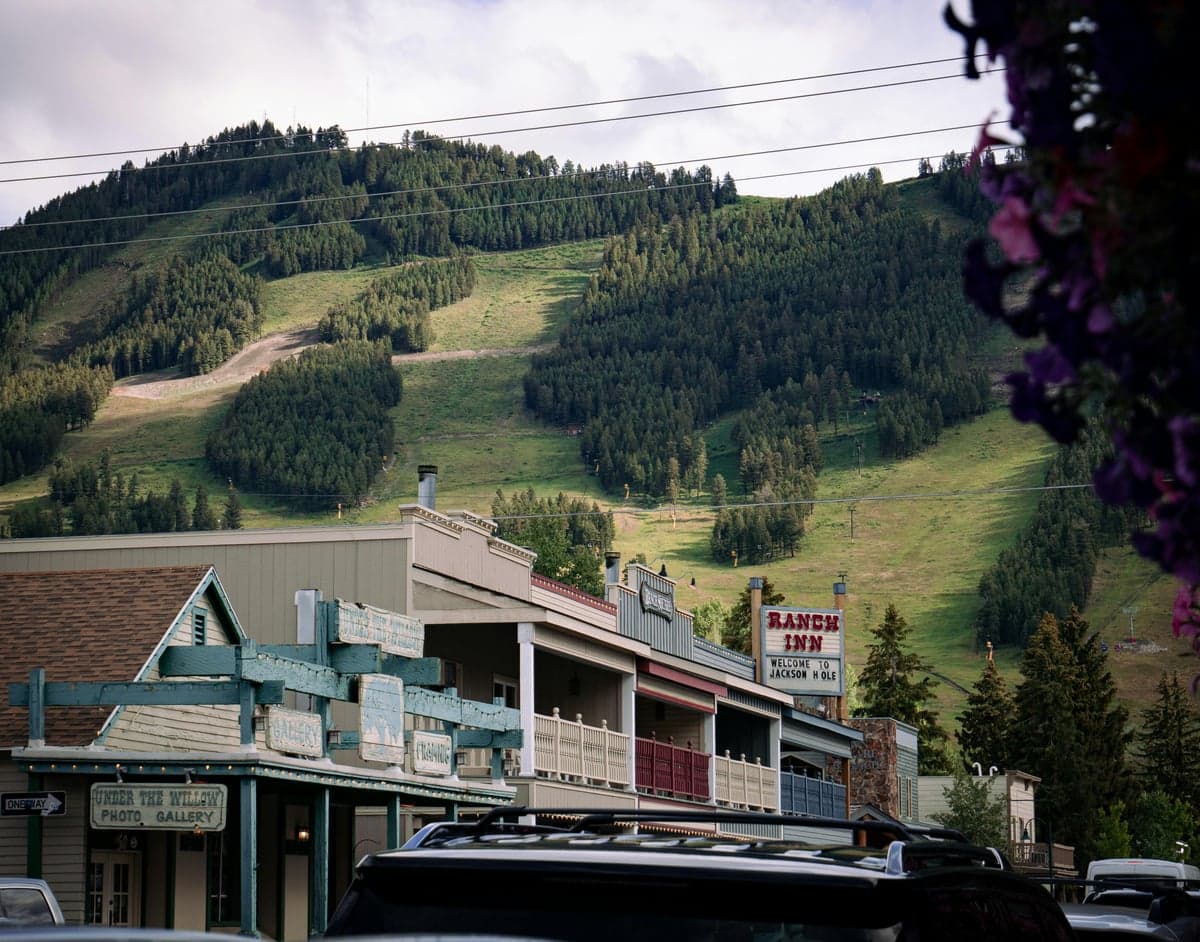
A mountain town main street near Idaho's fishing country, where fly shops and outfitters are never far away
Central Idaho: Wilderness Water
Central Idaho is defined by the Frank Church-River of No Return Wilderness, the largest contiguous wilderness in the Lower 48 at 2.37 million acres. The rivers here are wild, remote, and accessed primarily by float trip, bush plane, or long hikes.
Middle Fork of the Salmon River
The Middle Fork flows 104 miles from near Stanley to its confluence with the Main Salmon. It cuts through Impassable Canyon, one of the deepest gorges in the United States. This is catch-and-release, single barbless hook, wild water that has been managed without stocking since 1973.
The Middle Fork holds one of America's healthiest populations of native westslope cutthroat trout. The fish are surface-oriented and respond eagerly to dry flies, making this some of the best dry fly water in the country. Stonefly, caddis, and mayfly hatches are prolific through summer.
Float permits are required year-round. Only seven parties can launch per day. The U.S. Forest Service Four Rivers Lottery opens December 1 through January 31 each year. In 2025, nearly 19,800 people applied for 351 private permits. If you can't win the lottery, outfitted trips run $4,950-$6,500 per person for a 6-day trip through companies like Solitude River Trips and Boundary Expeditions.
Float season typically runs July through September, after spring runoff subsides.
Main Salmon River
The Main Salmon, known as the "River of No Return," offers multi-day float trips through rugged canyon country with Class III-IV rapids. OARS runs 6-day trips for $2,299-$3,109, and ROW Adventures offers similar itineraries with fishing options. The fishing is good (cutthroat, rainbow, and steelhead in fall), but the river experience, including sandy beach camps and natural hot springs, is the real draw.
Big Wood River
The Big Wood flows 137 miles from the Boulder Mountains near Galena Peak through Sun Valley, Ketchum, Hailey, and Bellevue. It's a classic freestone river, small enough that you'll never need a drift boat, with wild rainbow, brown, and brook trout throughout. No stocking here. Idaho Fish and Game manages it as a wild trout fishery.
The upper river above Ketchum is fast, narrow, and boulder-strewn, perfect for pocket water nymphing. The 25-mile stretch from the North Fork confluence through Sun Valley to Bellevue is the most popular: long runs, fast riffles, and deep pools that hold 12-14 inch rainbows with 18+ inch fish mixed in. Brown trout get bigger in the lower sections near Bellevue.
Hatches follow a reliable schedule: BWOs in March through June and again September through November, PMDs and Green Drakes in June, caddis from June through August, and terrestrials through summer. Fall Mahogany Dun hatches make September one of the best months on the river.
Lost River Outfitters in Ketchum and Silver Creek Outfitters both guide the Big Wood and can put you on less-pressured water away from the highway corridor.
South Fork of the Boise River
The tailwater below Anderson Ranch Dam near Featherville holds some of the largest rainbow trout in the state. Cold, consistent releases keep water temperatures ideal. The river fishes well from April through October, with the best window in spring and fall when fewer anglers are on the water.
Access is straightforward by road for the upper reach. Below Danskin Bridge, the canyon section requires floating and is more challenging.
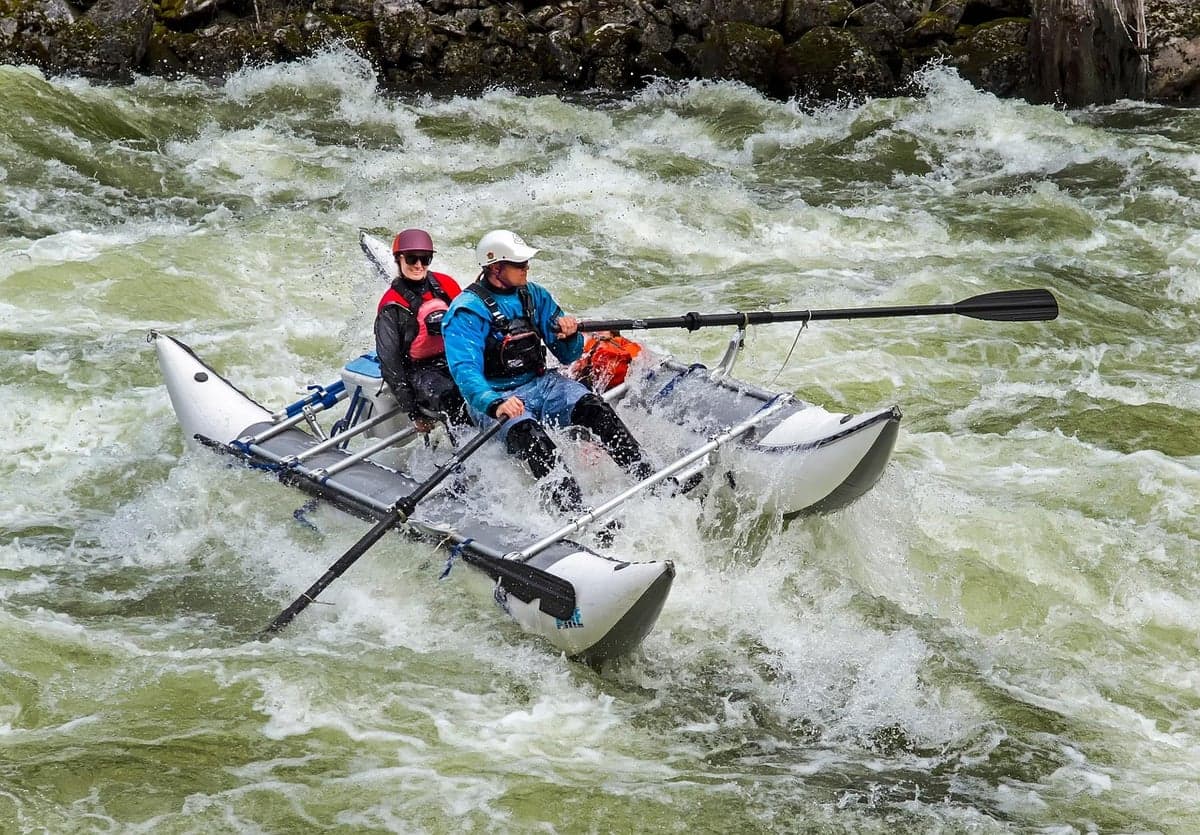
Whitewater rafting on an Idaho river. The state holds more navigable whitewater miles than any other in the Lower 48.
Northern Idaho: Steelhead and Cutthroat
Northern Idaho is the state's sleeper region. Less crowded, harder to reach, and utterly wild. The rivers here drain steep, forested mountains and hold native westslope cutthroat trout and the largest summer-run steelhead south of the Canadian border.
Clearwater River
The Clearwater forms at the confluence of the Lochsa and Selway Rivers near Lowell and flows 76 miles to join the Snake at Lewiston. Its B-run steelhead average 10-13 pounds and can exceed 20. The fall/spring steelhead seasons (September-April) draw a dedicated following.
Steelhead regulations require barbless hooks in the Salmon and Clearwater drainages. The daily limit is 3 fish during spring season (January-April) and 2-3 in fall (September-December).
The drive from Lowell to Powell, 70 miles through the Bitterroot Mountains along the Lochsa, has no services and limited cell reception. Bring fuel, food, and a plan.
Kelly Creek
Kelly Creek has been managed as catch-and-release since 1970, making it one of Idaho's longest-running conservation success stories. The creek is a tributary of the North Fork Clearwater, running through dense forest with water so clear you can count every stone on the bottom.
When conditions are right, double-digit fish days of 12-16 inch westslope cutthroat are possible. The road doesn't open until mid-July, and the fishing season is short (roughly July through early October). Artificial flies and lures only, no bait.
Selway River
The Selway is arguably Idaho's most pristine fishery and its hardest to reach. It flows 100 miles through the Selway-Bitterroot Wilderness with no road access along its fishable 47-mile wilderness section from Paradise to Selway Falls. This is catch-and-release, barbless-only water holding wild westslope cutthroat in the 16-20 inch range with almost zero fishing pressure.
Getting on the Selway means winning a permit lottery or booking with one of only four permitted outfitters, including Hughes River Expeditions and ARTA River Trips. The Bitterroot National Forest limits launches to one party per day during the control season. The Selway is a serious commitment of time and effort, but the reward is fishing water that looks and fishes the way Idaho did a hundred years ago.
St. Joe River
Designated Wild and Scenic for 66 miles, the St. Joe runs through roadless wilderness filled with cutthroat that have never seen a hatchery truck. The river is accessible by road for its lower reach, and ROW Adventures offers single-day float trips ($145) for a taste of the backcountry.
For detailed coverage of these rivers, see the Northern Idaho fly fishing guide.
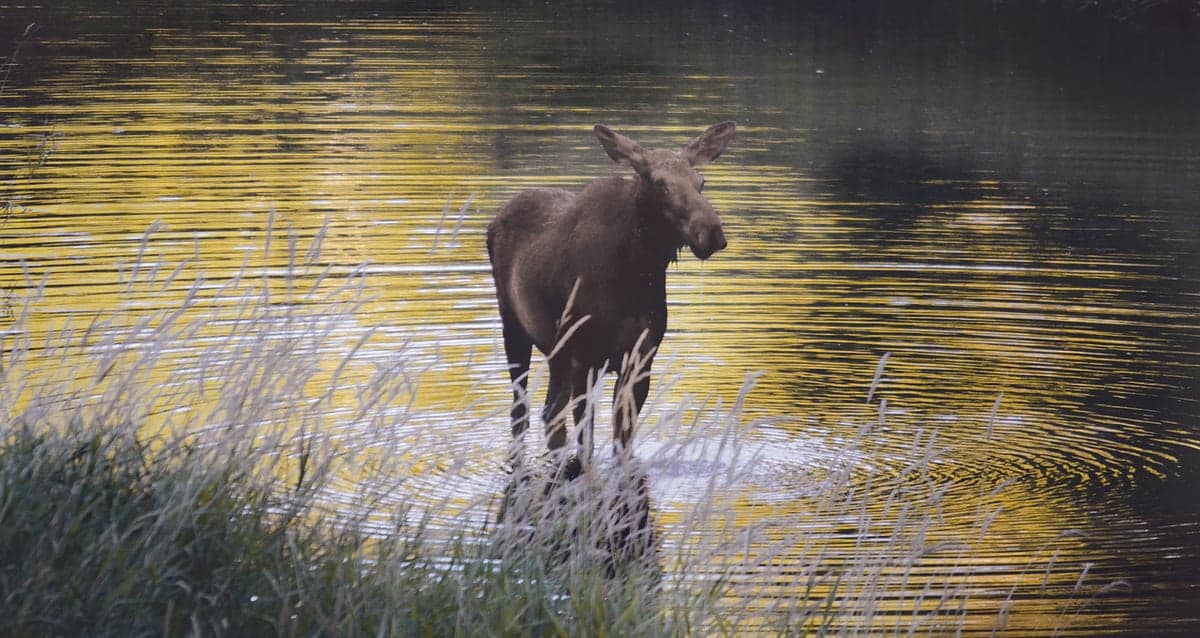
A moose browses in the reeds along an Idaho river. Moose, elk, deer, and osprey are regular companions on the water.
Statewide Hatch Chart
Idaho's major hatches follow a general progression from spring through fall. Exact timing varies by elevation, latitude, and water temperature.
| Hatch | When | Where | Flies |
|---|
| Blue-Winged Olive (BWO) | March-May, Sept-Oct | Statewide | Parachute BWO #18-20, RS2 #20-22 |
| Skwala Stonefly | March-April | Bitterroot, lower rivers | Skwala Dry #8-10, Rubber Legs #8 |
| Salmonfly | Late June | South Fork Snake, Salmon drainage | Sofa Pillow #4-6, Chubby Chernobyl #6 |
| Golden Stonefly | June-July | Most freestone rivers | Stimulator #8-10, Yellow Sally #14-16 |
| Pale Morning Dun (PMD) | June-August | Henry's Fork, Silver Creek, statewide | Compara-Dun #16-18, Sparkle Dun #16 |
| Green Drake | Late June-July | Henry's Fork, Big Wood, Salmon River | Parachute Drake #10-12, Green Drake Emerger #12 |
| Caddis | June-September | Statewide | Elk Hair Caddis #14-18, X-Caddis #16 |
| Trico | August-September | Silver Creek, Henry's Fork | Trico Spinner #20-22, CDC Cluster #18 |
| Terrestrials | July-September | Statewide | Dave's Hopper #8-12, Ant #14-18, Beetle #14 |
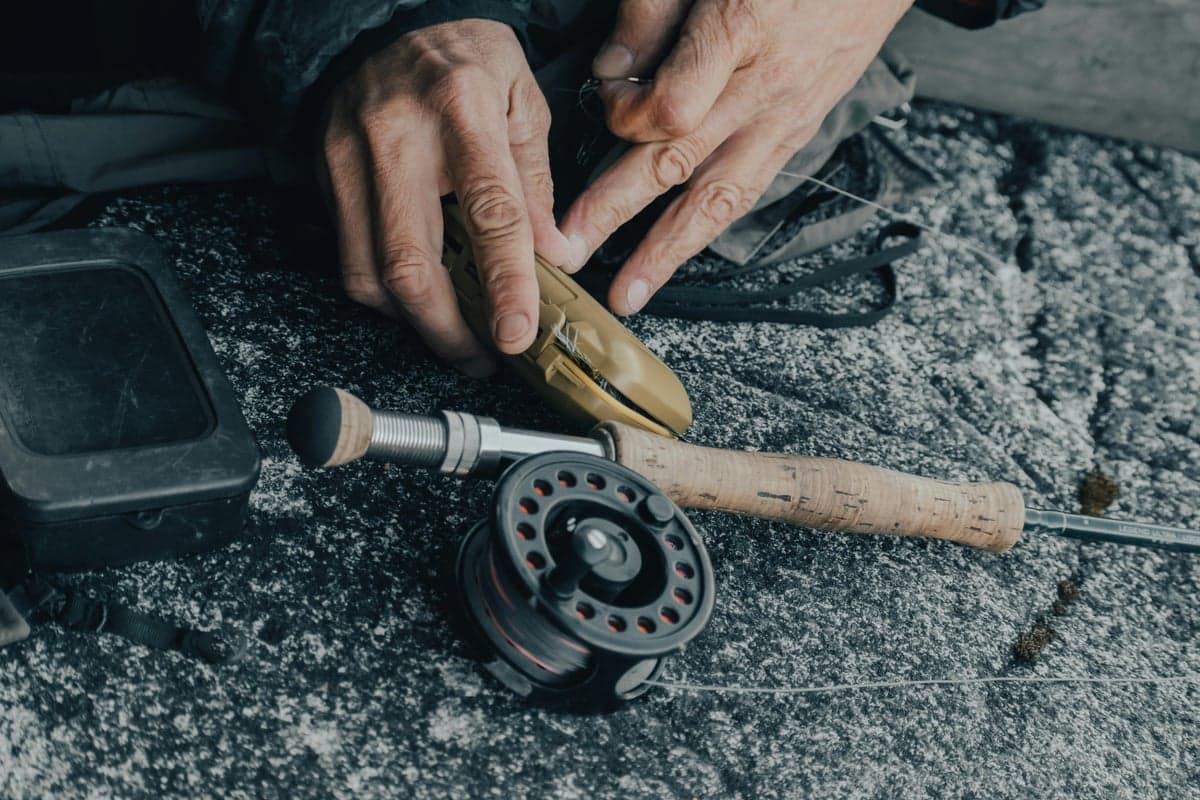
Rigging up streamside. A 9-foot, 5-weight rod covers most Idaho trout fishing.
Gear Recommendations
Idaho fishing spans a wide range of water types. Here's what to bring:
Trout (most rivers): 9-foot, 5-weight rod with floating line. This handles 90% of Idaho's trout fishing. Bring a 6-weight if you plan to throw big stonefly dries or streamers on the South Fork Snake.
Steelhead (Clearwater): 9-foot, 7 or 8-weight rod with a good drag and 150-200 yards of backing. Sink-tip lines for swinging flies in deeper runs.
Wading: Felt-soled waders are still legal in Idaho, though rubber soles with studs are increasingly popular. The cobbled bottom of the South Fork Snake and the slick basalt of the Clearwater both demand good traction.
Essential flies to pack:
- Elk Hair Caddis #14-18
- Chubby Chernobyl #6-14
- Pheasant Tail Nymph #14-18
- Copper John #14-16
- Zebra Midge #18-22
- Woolly Bugger #6-8 (olive and black)
- Compara-Dun #16-20
Regulations Overview
Idaho's fishing regulations vary by region and water. A few key points that apply statewide:
- License required for anyone 14 or older. Resident: $30.50/year. Non-resident: $108/year. Purchase through GoOutdoorsIdaho.com.
- General trout limits vary by region, typically 6 per day in lakes and 2-6 in rivers depending on the area. The Clearwater region allows only 2 trout per day in rivers.
- Barbless hooks required for salmon and steelhead in the Salmon and Clearwater drainages and the Snake River below Hells Canyon Dam.
- Catch-and-release waters include Kelly Creek, sections of the Henry's Fork, and the Middle Fork Salmon. Artificial flies and lures only.
- No cutthroat harvest on the South Fork Snake and many other waters. Check Idaho Fish and Game's 2025-2027 rules for your specific destination.
- Steelhead permits are separate from the standard fishing license and required for anyone targeting steelhead or salmon.
Regulations change frequently. Always check the current rules before your trip.
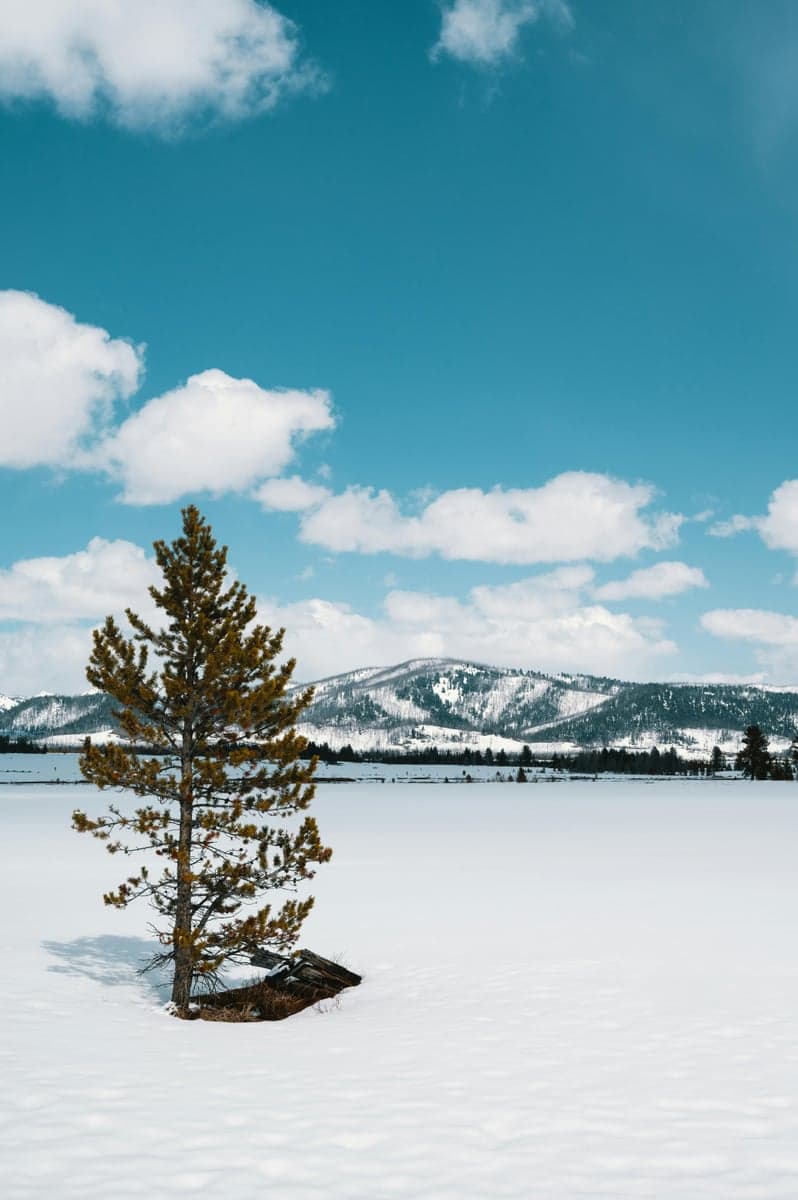
The Sawtooth Range near Stanley, Idaho in winter. Tailwater fisheries stay productive even when the mountains are buried in snow.
Guided Trips and Lodges
Idaho has a strong outfitter culture, and hiring a guide is the most efficient way to learn a new river.
Eastern Idaho lodges:
- Three Rivers Ranch near Warm River was one of the first Orvis Endorsed Lodges (1974) and has won Orvis Lodge of the Year. 6-night packages start around $7,500 per person. Open May through October.
- South Fork Lodge on the South Fork Snake offers all-inclusive packages with drift boat access.
- Henry's Fork Lodge puts you within walking distance of the Railroad Ranch.
- TRR Outfitters operates fly shops in Last Chance, Driggs, and Boise with guided trips on most eastern Idaho rivers.
Central Idaho:
Multi-day rafting with fishing:
- OARS runs 6-day Main Salmon trips ($2,299-$3,109).
- ROW Adventures offers Middle Fork ($3,590), Main Salmon ($2,470), and Hells Canyon ($2,090) trips with fishing add-ons.
Book summer guided trips by March if possible. Prime dates on popular rivers sell out early.
Safety and Hazards
Idaho's rivers are beautiful, but they demand respect:
- Spring runoff: Most freestone rivers run dangerously high from late April through June. Cold, fast water with heavy debris. Stay off the water unless you know exactly what you're doing.
- Remote access: Central and northern Idaho have long stretches with no cell service, no gas stations, and no help nearby. The 70-mile Lochsa corridor between Lowell and Powell has no services at all.
- Wildlife: Moose and bears are present along most Idaho rivers. Carry bear spray in backcountry areas. Give moose a wide berth, especially cows with calves.
- Hypothermia: Water temperatures stay cold (36-50°F) through early summer on most rivers. Waders with proper layering are essential even on warm days.
- Permit requirements: The Middle Fork Salmon requires a float permit year-round. Some other rivers in the wilderness have seasonal requirements.
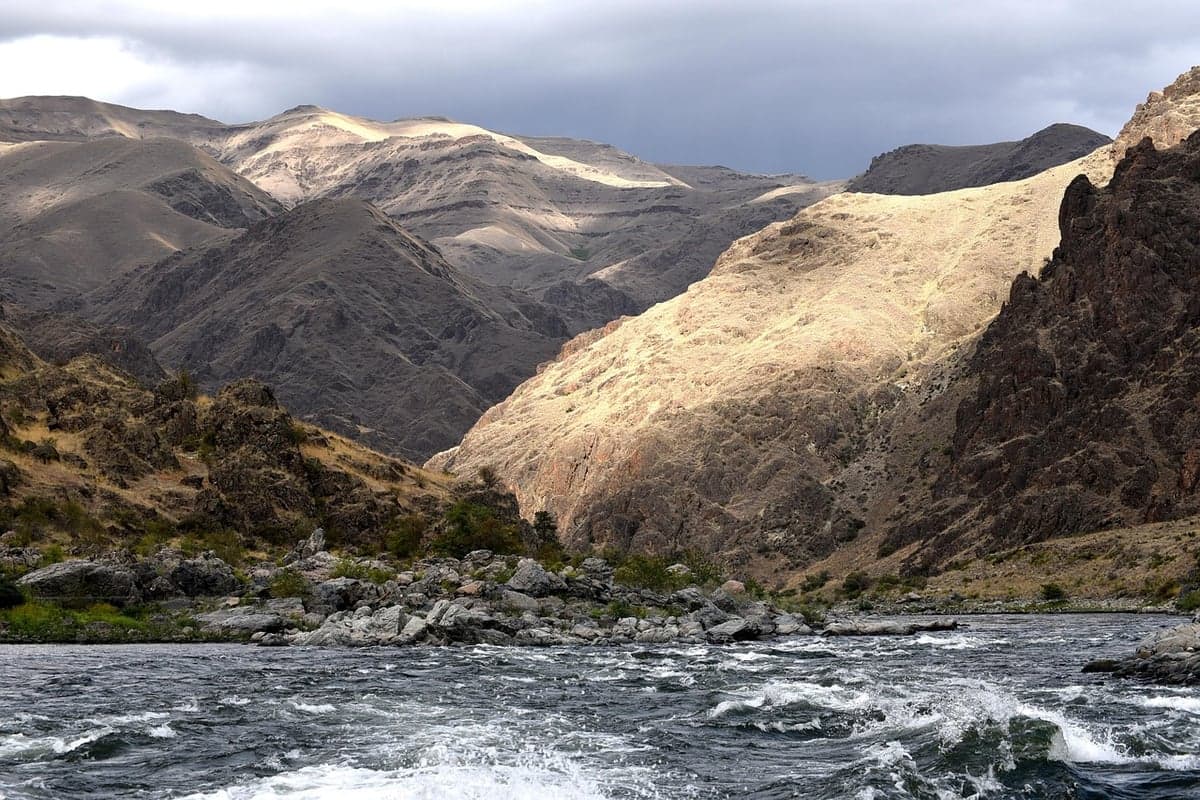
Hells Canyon on the Snake River, the deepest canyon in North America and home to Class III-IV whitewater
Frequently Asked Questions
Where is the best fly fishing in Idaho?
The Henry's Fork near Island Park and the South Fork of the Snake River near Swan Valley are Idaho's top fly fishing destinations. The Henry's Fork is known for technical dry fly fishing, while the South Fork holds 5,000+ trout per mile. Silver Creek near Sun Valley offers exceptional spring creek fishing. Check current Idaho river flows to plan your trip.
Is Idaho or Montana better for fly fishing?
Both states offer excellent fly fishing, but Idaho provides more wilderness solitude and uncrowded water. The Middle Fork Salmon, Selway, and backcountry cutthroat streams see far fewer anglers than Montana's popular rivers. Montana edges ahead on total miles of blue-ribbon water.
What is the best time to fly fish in Idaho?
Late June through September is prime for most Idaho rivers once spring runoff subsides. The Henry's Fork Ranch section opens June 15. Clearwater steelhead run September through April. Silver Creek's best PMD hatches occur in June and July.
Do you need a guide to fly fish in Idaho?
No. Most Idaho rivers have excellent public access at designated fishing access sites. However, float trips on the South Fork Snake, Middle Fork Salmon, and Henry's Fork Box Canyon benefit from guide knowledge of channels and boat launches.
Using RiverReports
Idaho's rivers change constantly with snowmelt, dam releases, and weather. Track real-time flows on RiverReports for Idaho to plan your trip:
- Before you drive: Check current CFS readings against the ideal ranges listed above. A river that fished perfectly yesterday can blow out overnight after a warm spell.
- Compare rivers: If your target river is running high, RiverReports lets you quickly scan alternatives. The tailwaters (South Fork Snake, South Fork Boise) are your best bet when freestone rivers are unfishable.
- Track trends: A river that's been dropping for three days is usually better than one that's spiking, even if the absolute CFS is similar. Watch the trend arrows.
- Seasonal planning: Use historical flow data to identify your window. The best fishing on most Idaho rivers falls in a predictable band between runoff dropping and fall freeze-up.
For regional coverage, see:
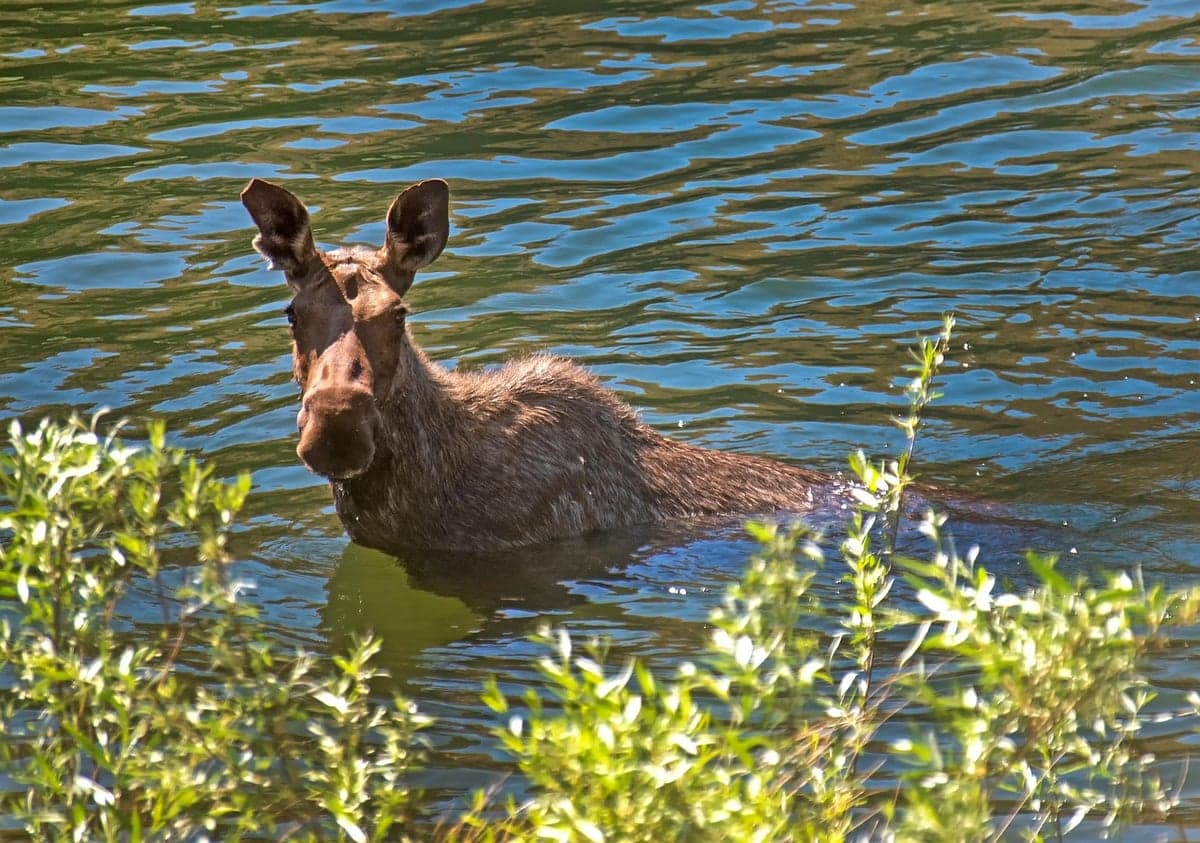
A cow moose wading an Idaho river. You will share the water with wildlife here, and that is part of the appeal.