Quick Reference
| What | When | Key Numbers |
|---|
| Snake River float fishing | July-October | 1,500-3,000 CFS ideal; ~1,000 trout/mile |
| Jackson Lake Dam tailwater | Year-round | 350-7,000 CFS; wade fishing, lake trout bonus |
| South Fork Snake (Idaho) | June-October | 4,700+ trout/mile; 45 min from Jackson |
| Flat Creek | Aug 1-Oct 31 | Flies only; catch-and-release cutthroat |
| Guided trips | Book March for July | $650-850/day (1-2 anglers) |
| Fly shop | Snake River Angler | (307) 733-3699, Jackson |
Flow~5,310 CFS at Moose (148% of mean—still big water but steadily dropping toward prime fall levels); dam releases tapering as irrigation season winds down; Hoback and Gros Ventre at late-summer base flows
Trendfalling
Clarity4-5 feet at Moose (excellent—fish visible along banks and in seams); ice-clear 6+ feet below dam to Pacific Creek; clear to good through the canyon; no turbidity issues on main Snake
TempNo thermal restrictions in effect—voluntary closures lifted Aug 14 after cooler weather arrived; comfortable temps allow fishing through early-to-mid afternoon on most days; dam tailwater remains the coolest section and fishable all day
Bionic Hopper #12 (tan and purple—still the top producer on cutbanks and grassy edges)Bionic Ant #12-16 (black #16brown #12—deadly on foam lines and eddies)Chubby Chernobyl #10-14 (hopper-dropper anchor)
Flow~10,250 CFS at Irwin (down from 12,000 CFS earlier in the week; Palisades Reservoir at ~39% capacity, continuing seasonal drawdown)
Trendfalling
Clarityimproving—upper sections still showing some turbidity as reservoir drops; lower sections clearer with 3-4 feet visibility; clarity improving as flows decrease
Tempwarm on hot afternoons (air highs 90-92°F forecast)—fish early and late; cooler mornings providing good windows; fish pushing to shaded banks and slower current through midday on hot days
Pat's Rubberlegs #6 (tungstentan & brown—deep nymph anchor)Olsen's Straggle Stone Brown #12 (effective stonefly nymph)Split Case PMD Nymph #20 (tungsten—keying on emergers)
🎣 TACTICS RIGHT NOWDry FlyBionic Hopper #12 (tan and purple—still the top producer on cutbanks and grassy edges; the dominant dry fly)Bionic Ant #12-16 (black #16brown #12—deadly on foam lines and eddies; pair with hoppers for a one-two punch)Chubby Chernobyl #10-14 (hopper-dropper anchor—rubber legs trigger strikes; top of hopper-dropper rigs on South Fork)Schroeder's Parachute Hopper #8-12 (grassy banks)Purple Haze #14-18 (cutthroat love purple—excellent visibility)PMD #16-18 (afternoon emergers on both rivers)Parachute BWO #18-22 (building steadily as days shorten—overcast afternoons on main Snake; triggered by cloud cover and rain on South Fork)Mahogany Dun #16 (emerging on both rivers—watch for them with afternoon showers)CDC Caddis #20 (tan and olive—evening flights 6-8pm)Elk Hair Caddis #14-18 (evening standard)Hecuba Drake #6-10 (increasing on main Snake—late afternoon opportunities)Mutant Stone #8-10 (adults present—morning activity on South Fork)Griffith's Gnat #18-22 (midge clusters in foam lines)—terrestrials still dominate but autumn hatches building noticeably. Flat Creek fishing well for sight-fishing cutthroat. Yellowstone Park waters mostly reopened
NymphPat's Rubberlegs #6 (tungstentan & brown—deep slot anchor 7-10am on both rivers; also the go-to dropper under hoppers/Chernobyls on South Fork to imitate Mutant Golden Stone nymphs)Frenchie #12 (tungsten jig—hot pattern for morning nymph rigs)Olsen's Straggle Stone Brown #12 (effective stonefly nymph on South Fork)Split Case PMD Nymph #20 (tungsten—South Fork fish keying on emergers)Perdigon #14-18 (tungsten—top dry-dropper dropper)Pheasant Tail Jig #14-18 (tungsten bead—consistent)Hare's Ear #14-16 (searching pattern)Higa's SOS #16-20 (emerger—dam section)Caddis Emerger #16-18 (evening—6-8pm in riffles and tailouts)San Juan Worm #12-14 (red—deep runs). Morning nymphing (7-10am) remains productive—fish deep slotsbucketsand shaded runs before the terrestrial window opens. Hopper-dropper with small rubberlegs dropper is the hot rig on the South Fork right now. On the South Forkset indicators deep—fish holding tight to bottom at 10250 CFS
StreamerDouble Bunny #4-6 (strip low and slow along shaded banks—both rivers)Sparkle Minnow #4-8 (slow strips with pauses through deeper runs)Small Minnow Streamers #6-8 (smaller profiles surprisingly productive on South Fork—new development)Sculpzilla #4-6 (maintain depth)White Streamers #4-6 (below Jackson Lake Dam for lake trout—sink-tip lines)Kreelex #4-10 (lake trout below dam)Clouser Minnow #4-6 (dam section)—streamers becoming more effective daily as late August transitions toward fall. South Fork guides reporting surprisingly good streamer results with smaller minnow patterns. Afternoon thunderstorms will boost streamer action on both rivers. Target shaded banksdeeper poolsand structure. On the main Snakestreamers work well below Pacific Creek and through deeper channels. Lake trout active below dam on white patterns
FORECASTLate August transition—one of the most versatile fishing windows of the season. All voluntary closures lifted Aug 14. Main Snake at ~5,310 CFS (148% of mean) with excellent clarity and no thermal restrictions—flows continuing to drop toward prime fall levels. Hecuba drakes showing increased activity with more expected through early September. BWO and Mahogany Dun hatches building noticeably as days shorten—the early-fall pattern is taking hold. Terrestrial fishing (hoppers, ants, beetles) still dominates but autumn hatches are the story to watch. Streamer fishing improving daily on both rivers—smaller minnow profiles surprisingly effective on the South Fork. Flat Creek, Cottonwood Creek, and Blacktail Springs continue fishing well. South Fork at ~10,250 CFS and dropping as Palisades (39% capacity) draws down—clarity improving. Yellowstone Park waters mostly reopened. September promises some of the best fishing of the year—lower flows, cooler water, aggressive pre-winter feeding, and thinner crowds.Mixed conditions ahead—warm days (highs near 90°F) with afternoon thunderstorms possible through the weekend. The extreme early-August heat has broken, but hot afternoons remain a factor on the South Fork. Morning and evening fishing windows are comfortable. Afternoon storms will boost streamer action and trigger Mahogany Dun and BWO hatches. Days are noticeably shorter—sunrise later, sunset earlier—which concentrates fish feeding and builds toward the excellent fall BWO and caddis hatches. The seasonal trend is firmly toward cooling. September is just around the corner with lower flows, cooler temps, and outstanding fishing ahead.
Overview
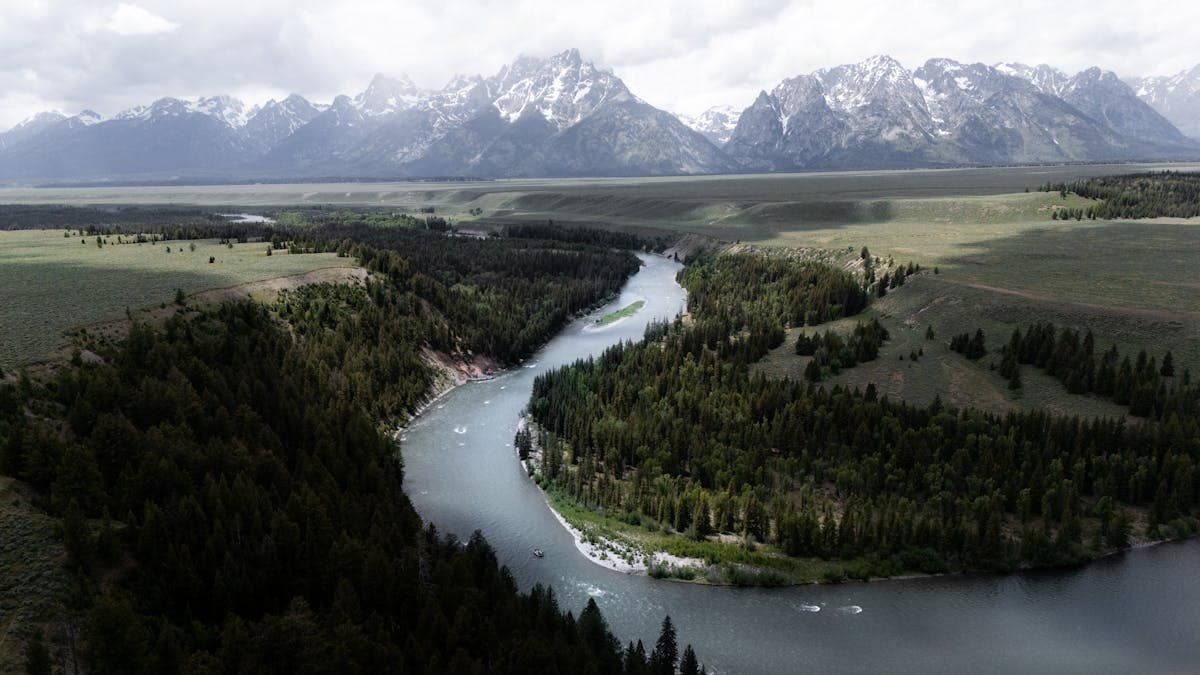
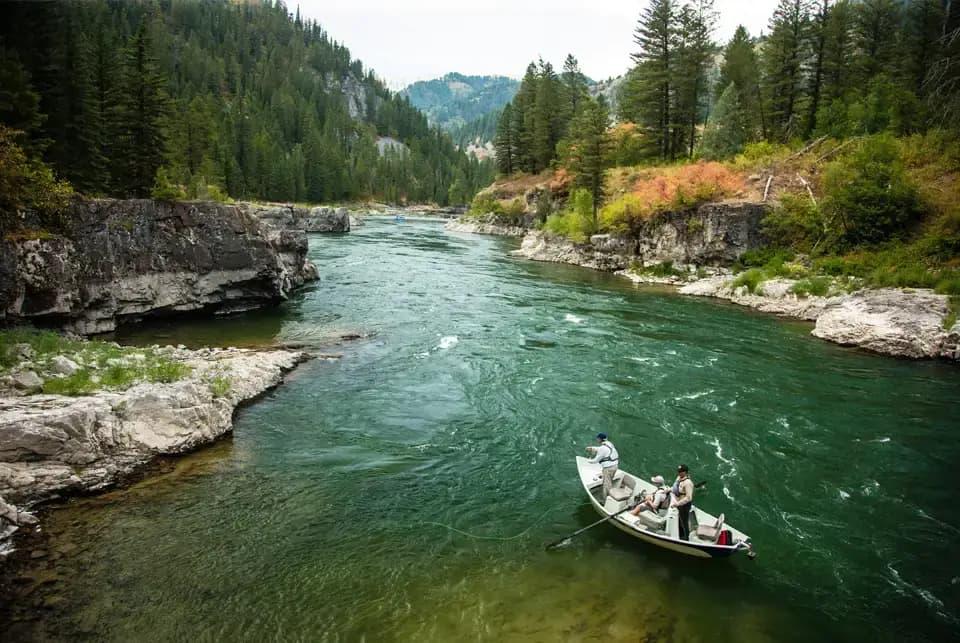
The Jackson Hole valley sits at the confluence of some of the finest cutthroat trout water in the Rocky Mountain West. The Snake River flows from Jackson Lake through Grand Teton National Park and into the Snake River Canyon, offering everything from technical dry fly fishing to family-friendly floats with the Tetons as backdrop.
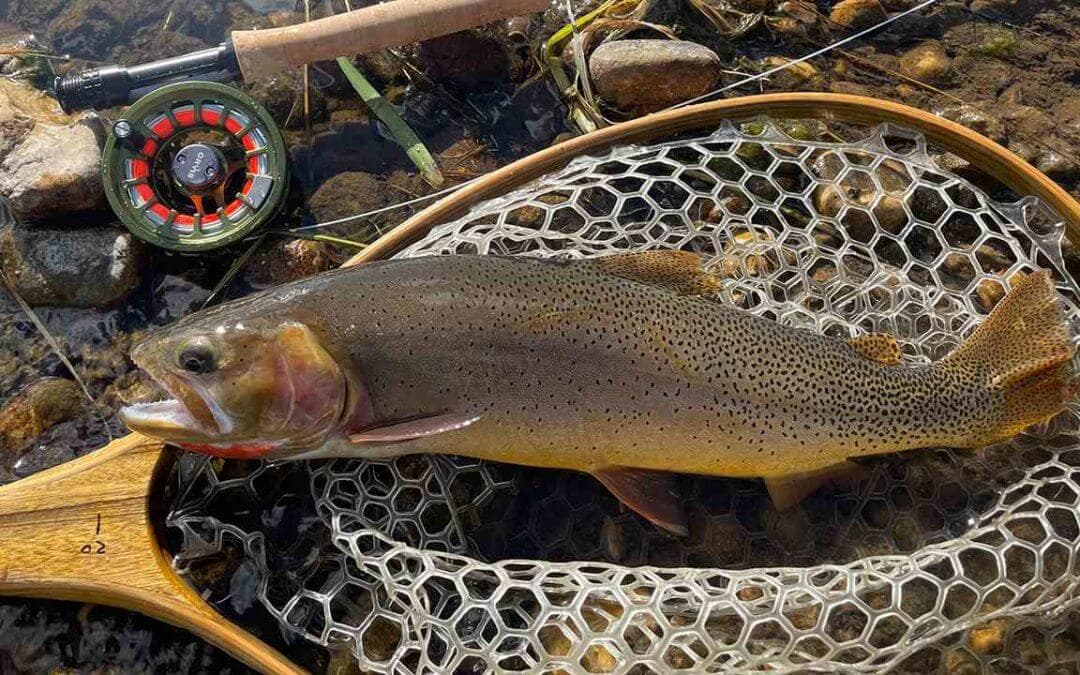
What makes this area exceptional: it's one of the last strongholds of the Snake River fine-spotted cutthroat trout, a subspecies found nowhere else. These fish are marked by spots smaller than any other western trout, a sprinkling of pepper across their flanks, and they're absolute dry fly eating machines. Wyoming Game and Fish surveys consistently show around 1,000 trout per mile in the main Snake, with fish averaging 12-16 inches and occasional specimens reaching 20+ inches.
Beyond the main Snake, Jackson serves as a hub for exceptional fishing within an hour's drive: the South Fork of the Snake in Idaho (over 4,700 trout per mile, some of the highest densities in North America), technical spring creeks like Flat Creek, and smaller tributaries like the Gros Ventre and Hoback that fish well when the main river runs high.
Important: Cell service is limited throughout Grand Teton National Park and virtually nonexistent on the river between boat launches. Download offline maps before your trip and consider a satellite communicator (Garmin InReach) for emergencies. Coverage improves near Jackson Lake Lodge, Signal Mountain, and Moose, but don't count on making calls from your drift boat.
Snake River fine-spotted cutthroat - note the distinctive pepper-like spotting pattern found nowhere else
Flow Windows
The Snake River's character changes dramatically with seasonal flows. Check Wyoming river flows on RiverReports before planning your trip.
| Flow (CFS) | Conditions |
|---|
| Under 500 | Winter flows; slow fishing, target warmest hours |
| 500-1,500 | Prime wade fishing - clear water, accessible gravel bars |
| 1,500-3,000 | Ideal float fishing - good current, manageable speed |
| 3,000-5,000 | High but fishable from boat; experienced rowers only |
| Over 5,500 | Runoff conditions; muddy, fast; fish tributaries instead |
Runoff timing: Spring runoff typically begins in early May and peaks in early June. The Snake usually clears and fishes well by early July, though high snowpack years can push this into mid-July. By late September, flows often drop below 1,000 CFS, creating excellent wade fishing conditions.
Snake River Sections
Jackson Lake Dam to Pacific Creek (5 miles)
The most accessible and beginner-friendly section. Below the dam, the river flows slowly through a low-gradient stretch ideal for wading.
Character: Calm tailwater; stable cobble bottom; excellent bank access
Best for: Beginners, wade fishing, targeting lake trout that move up from Jackson Lake
Access: Parking at Jackson Lake Dam via inner park road from Moose entrance (24 miles north)
Special note: This stretch stays fishable during runoff when the rest of the Snake is blown out
Regulations: Artificial flies and lures only from gauging station to Wilson Bridge. All cutthroat released November 1 - March 31.
Pacific Creek to Deadman's Bar (10 miles)
The river picks up speed and begins braiding. Swift current requires intermediate floating skills.
Character: Class I-II; braided channels; route-finding required
Best for: Float fishing; experienced rowers
Hazards: Strong currents push into side channels blocked by logjams
Deadman's Bar to Moose Landing (10 miles)
The most challenging and most productive fishing stretch in Grand Teton National Park. This is classic Snake River water: fast, braided, with clear Teton views.
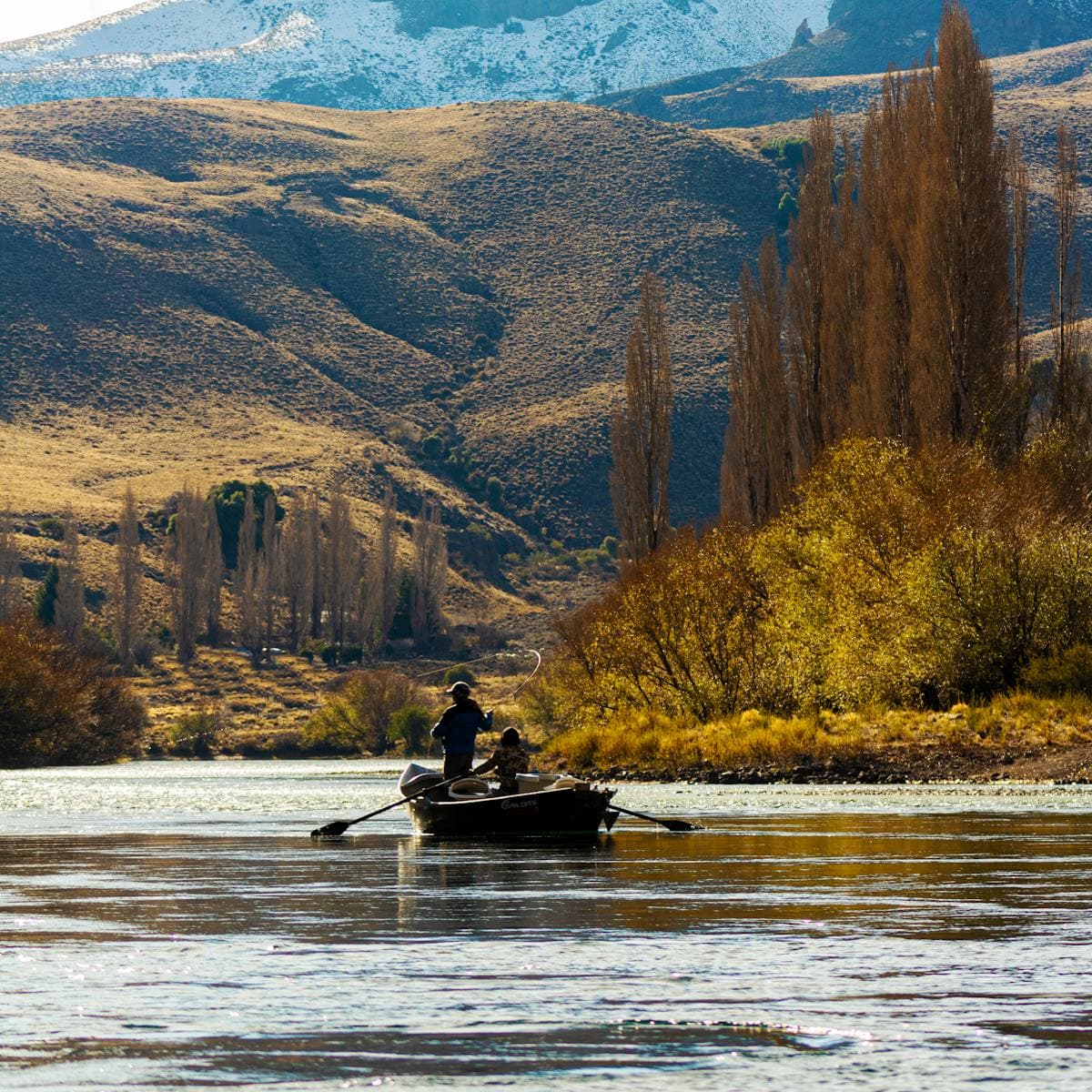
Float fishing the Snake - drift boats navigate braided channels while anglers work the banks
Character: Class II; steep gradient; complex braiding
Best for: Float fishing with experienced guide or rower
Hazards: Logjams, obscured channels, fast current; many accidents occur here
Access: Deadman's Bar put-in; Moose Landing takeout
Float time: 4-6 hours depending on flow and fishing stops
Moose to Wilson (14 miles)
Technical floating continues through this long stretch. Good fishing but requires advanced boating skills.
Character: Class II; similar challenges to Deadman's-Moose
Access: Moose Landing put-in; Wilson Bridge takeout
Bonus: This stretch has the largest congregation of bald eagles in Wyoming
Wilson to South Park (13 miles)
A longer, mellower float. Good for families with some boating experience. Below the South Park Bridge, the river consolidates into a single channel for a few miles, making it easier to navigate than the braided sections upstream.
Character: Class I-II; easier navigation
Float time: 2-4 hours
Wade Fishing Access (Below the Park)
While the Snake is primarily a float fishery, several spots offer quality wade fishing, especially at lower flows (under 1,500 CFS) in September and October.
Wilson Bridge: The best wade access on the lower Snake. Park at the Wilson boat ramp (take Hwy 22 west from Jackson, cross the Snake, turn right on Hwy 390, then right again toward the river). The levy system provides bank access both upstream and downstream:
- East bank: Walk upstream from the bridge for roughly a mile of fishable water
- West bank: Access both up and downstream; the levy road lets you cover significant water on foot
South Park Bridge: Popular primarily as a float launch, but the tailwaters of Flat Creek enter here and can hold larger fish staging in the deeper water. Limited parking; arrive early.
Astoria Bridge area: Some bank access exists, though more limited than Wilson. Better as a float takeout than a wade destination.
Tip: Wade fishing the Snake requires respect. Even at lower flows, the current is powerful and the cobble bottom uneven. Use a wading staff and don't push into water above your knees until you know the river.
Snake River Canyon (8 miles)
The whitewater section. Put in at West Table Boat Ramp, take out at Sheep Gulch. Class III rapids including Lunch Counter, Big Kahuna, and Champagne.
Best flow for whitewater: 6,000-12,000 CFS (excellent surfing and hole riding)
Fishing note: Possible to fish this section at lower flows, but most anglers come for the whitewater
Tributaries & Nearby Waters
Flat Creek
A technical spring creek flowing through the National Elk Refuge, just minutes from downtown Jackson. This is demanding sight-fishing to educated cutthroat in gin-clear water, some of the most challenging dry fly fishing in Wyoming.
Season: August 1 - October 31 (lower section through Refuge)
Regulations: Artificial flies only; Wyoming's first fly-fishing-only stream
Fish: Snake River fine-spotted cutthroat, some reaching 20+ inches
Character: Slow, clear, spooky fish; requires stealth and precision
The challenge: These fish see anglers every day of the short season. They're leader-shy and quick to spook. Expect to crawl, make long casts with fine tippets (5X-6X), and present small flies (#16-20) delicately. A dragging fly means a refusal. Success here is earned.
Best approach: Spot fish first, then plan your approach. Stay low, move slowly, and don't wade if you can avoid it. Tiny terrestrials (#18-20 ants, beetles) and small mayfly patterns work best. This isn't hopper-dropper water.
Upper Flat Creek (above McBride Bridge) opens May 1 - November 30 with less restrictive regulations and easier fish.
Gros Ventre River
A roughly 60-mile tributary flowing through the Gros Ventre Wilderness east of Jackson. The upper sections above Slide Lake offer excellent small-stream fishing for cutthroat and brook trout.
Season: April 1 - October 31
Best fishing: End of runoff (late June/early July) through August
Access: Gros Ventre Road east from Kelly; public access at Crystal Creek Campground and between Crystal Creek confluence and Upper Slide Lake
Character: Freestone; mix of pocket water and meadow sections
Caution: Ford carefully; unstable bottom. Bear country. Carry spray.
Hoback River
A 55-mile Snake River tributary that clears earlier than the main river. Excellent option during runoff or for beginners.
The Hoback River - clears 2-3 weeks before the Snake, making it a prime early-season option
Season: April 1 - October 31
Fish: Snake River cutthroat, 8-16 inches; larger fish move up from the Snake in spring and fall
Access: Numerous pullouts along Highway 189/191 from Hoback Junction south; best access in Hoback Canyon
Character: Fast riffles, pocket water; easy wading
Why fish it: Clears 2-3 weeks before the Snake; less pressure; excellent dry fly water
Salt River (Star Valley)
An 84-mile river flowing through Star Valley, about 1.5 hours south of Jackson. Excellent brown trout fishing, especially in October during the spawning run.
Season: Year-round (ice-free in many sections)
Fish: Brown trout (10-25 inches, especially fall), cutthroat, rainbow
Best time: October brown trout run from Palisades Reservoir
Access: Wyoming Game and Fish has public easements signed along Highway 89 near Thayne, Etna, Freedom, and Alpine Junction
Character: Mix of slow meadow water and swift riffles
South Fork of the Snake River (Idaho)
The crown jewel, 45 minutes west of Jackson. This tailwater below Palisades Dam holds some of the highest trout densities in the West and arguably offers better fishing than the Wyoming Snake itself. The river has hosted international fly fishing competitions for good reason.
The South Fork of the Snake - over 4,700 trout per mile make this one of the most productive tailwaters in the West
Fish population: Idaho Fish and Game surveys show 4,700+ trout per mile, with peak estimates exceeding 6,300 fish/mile at the Conant monitoring reach, higher than nearly any other river in the region.
Fish: Yellowstone cutthroat (primary), rainbow, brown trout; 15-25 inches common. The South Fork is managed to preserve native cutthroat, with regulations aimed at reducing rainbow abundance.
Prime time: Early June (salmonfly hatch) through October
License note: You need an Idaho fishing license, not Wyoming. Available online at Idaho Fish and Game or at fly shops in Victor, ID.
South Fork Flow Windows
| Flow (CFS) | Conditions |
|---|
| 900-1,500 | Winter/low flows; excellent wade fishing access |
| 1,500-3,000 | Prime fishing flows - technical sight nymphing, pocket water |
| 5,000-8,000 | Good float fishing; manageable current |
| 8,000-12,000 | Ideal float fishing - foam lines and edges fish well |
| Over 20,000 | Spring runoff; fast and dangerous |
Unlike the Wyoming Snake, the South Fork is a true tailwater. Flows depend on Palisades Dam releases rather than weather. Conditions can change quickly; check before you go. Watch for rapidly changing water levels and avoid being caught on exposed gravel bars.
South Fork Sections & Access Points
The BLM boating guide provides detailed maps. Key access points from upstream to downstream:
| Access Point | River Mile | Facilities | Notes |
|---|
| Palisades Dam | 0.0 | Concrete ramp, restroom, camping | Start of fishable water |
| Palisades Creek | 2.2 | Concrete ramp, restroom | IDFG site |
| Spring Creek | 12.2 | Concrete ramp, restroom | USFS; popular launch |
| Conant | 14.2 | Concrete ramp, restroom, visitor center | Last ramp before Canyon section |
| Cottonwood/Fulmer | 28.0 | Concrete ramp, restroom | Long dirt road access |
| Wolf Flat | 35.1 | Bank launch only, no facilities | BLM; free |
| Byington | 39.0 | Concrete ramp, restroom, dump station | End of scenic canyon |
South Fork Float Sections
Palisades Dam to Spring Creek (12 miles): 4-5 hours. Upper river character; excellent technical water.
Spring Creek to Conant (7 miles): 6-7 hours with fishing. Last easy access before the Canyon. The Conant boat ramp is well-developed with a fly shop nearby.
Conant to Cottonwood, The Canyon Section (14 miles): Overnight float required. This is the heart of the South Fork: remote, scenic, and exceptional fishing. Sixteen designated campsites between Conant and Byington (first-come, first-served). You'll need a free self-issue overnight permit from any boat ramp.
Wolf Flat to Byington (4 miles): Quick 2-hour float for afternoon fishing.
Wolf Flat to Heise Bridge (12 miles): Solid 5-hour fishing day on the lower river.
South Fork Hatches
The salmonfly hatch (early June) is legendary. Those 2-3 inch stoneflies bring fish to the surface aggressively. Following hatches continue through October: golden stones, PMDs, caddis, hoppers (late summer), and October caddis. The diversity keeps dry fly fishing productive all season.
Seasonal Fishing Guide
Pre-Runoff (March - Early May)
Fish are hungry after winter, and the Snake remains clear before snowmelt hits. Expect smaller hatches but willing fish.
Hatches:
- Blue-winged Olives (#18-20)
- Midges (#20-24)
- March Browns/Rhithrogenia (#12-14)
- Skwalla Stoneflies (#8-10)
- Early Caddis
Strategy: Fish midday when water warms. Nymph rigs with small mayfly patterns; occasional dry fly opportunities on cloudy days.
Runoff (May - Late June)
The Snake runs high and muddy. This is the time to explore tributaries.
Where to fish:
- Jackson Lake Dam tailwater (stays fishable)
- Hoback River (clears first)
- Gros Ventre River (upper sections)
- Alpine lakes (ice-out fishing)
Prime Season (July - August)
The Snake clears and the hatches arrive in force. This is Jackson Hole at its finest.
July Hatches:
- Golden Stoneflies (#8-12) - follow the salmonfly hatch
- Yellow Sallies (#14-16)
- PMDs/Pale Morning Duns (#16-18) - late morning to early afternoon
- Caddis (#14-18) - evening activity
- Gray Drakes (#10-12) - sporadic but exciting
August Hatches:
- Hoppers, beetles, ants - work the willowed banks
- Yellow Sallies continue
- Caddis (#16-18)
- Tricos (#20-24) - early morning spinners
Strategy: Float fishing at its peak. Hopper-dropper rigs are deadly along grassy banks. PMD nymphs below hoppers produce well in riffles.
Fall (September - October)
Many locals consider this the best time to fish Jackson Hole. Crowds thin, fish feed aggressively, and the Tetons wear autumn colors.
September Hatches:
- Blue-winged Olives (#18-22) - afternoon hatches on cloudy days
- Mahogany Duns (#16)
- Streamers become increasingly effective
- Terrestrials on warm afternoons
October Hatches:
- October Caddis (#8-10) - large orange-bellied caddis
- BWOs continue
- Snake/Hecuba Drakes (#6-10)
- Midges (#20-24)
Strategy: Lower flows mean excellent wade fishing access. Cutthroat become aggressive before winter. Streamers draw large fish. October brown trout run on the Salt River.
Fly Box Essentials
Snake River fine-spotted cutthroat are aggressive surface feeders. Local guides note that red and purple flies seem to trigger strikes. Something about those colors gets these fish fired up. Don't be afraid to go big and bold on attractor patterns.
Dries
| Pattern | Size | Notes |
|---|
| Gold Chubby Peanut | #8-12 | Local favorite; foam body, rubber legs, high visibility |
| Pink Micro Chubby (Miss Piggy) | #12-14 | Downsized Chubby for wary fish in clear water |
| Chubby Chernobyl | #10-14 | All-around attractor; hopper-dropper anchor |
| Snake River Beetle | #12-16 | Jackson Hole staple; deadly in slow slicks and eddies |
| Yellow Stimulator | #12-16 | Golden stone/yellow sally imitation |
| Parachute Adams | #14-18 | Match anything gray |
| Elk Hair Caddis | #14-18 | Tan and olive; evening standard |
| Schroeder's Parachute Hopper | #8-12 | August essential |
| Dave's Hopper | #8-12 | Classic grasshopper pattern |
| Parachute BWO | #18-22 | Fall mayfly |
| Purple Haze | #14-18 | Excellent visibility; cutthroat love purple |
| Royal Wulff | #12-16 | Classic attractor; Double Humpy also works |
Nymphs
| Pattern | Size | Notes |
|---|
| Pat's Rubberlegs | #6-10 | Black/brown; stonefly nymph |
| Pheasant Tail | #16-18 | Mayfly standard |
| Hare's Ear | #14-16 | General searching pattern |
| Zebra Midge | #18-22 | Year-round producer |
| RS2 | #18-22 | Emerger pattern |
| San Juan Worm | #12-16 | Red; high water standby |
| Higa's SOS | #16-20 | Effective emerger |
Streamers
| Pattern | Size | Notes |
|---|
| Woolly Bugger | #6-10 | Olive and black |
| Slumpbuster | #4-6 | Sculpin imitation |
| Kreelex | #4-10 | Flash minnow; lake trout love it |
Gear Recommendations
Rods & Lines
- Primary setup: 9' 5-weight or 6-weight rod. The Snake is big water with afternoon wind; don't undergun it.
- Dry fly/late summer: 9' 4-weight for lower flows and smaller patterns
- Lines: Weight-forward floating; 9' leaders in 3X-4X
Wading
- July-August: Wet wading possible on warm afternoons
- Early season/Fall: Breathable waders essential; water stays cold
- Boots: Felt or rubber with studs; slippery cobble
Float Fishing
- Craft: Most floats done from drift boats; rafts work but less maneuverable
- PFDs: Required for all passengers
- Skills: Class II whitewater skills minimum for Deadman's to Moose section
Access & Logistics
Grand Teton National Park
All Snake River fishing in the park requires a Wyoming fishing license. No park-specific fishing permit needed.
Key regulations:
- Artificial flies and lures only (Snake River from gauging station to Wilson Bridge)
- 3 trout daily limit; max 1 over 16"; max 1 cutthroat over 12"
- All cutthroat released November 1 - March 31
- Floating tributaries within the park is prohibited
Boat launches:
- Jackson Lake Dam
- Pacific Creek
- Deadman's Bar
- Moose Landing
Below the Park (Teton County)
- Wilson Bridge - good wade access above and below bridge; levy provides bank access
- South Park Bridge - popular float hub
- West Table Boat Ramp - canyon whitewater put-in
- Sheep Gulch - canyon takeout
Licenses
Wyoming licenses available at local fly shops or online at Wyoming Game & Fish. Nonresident daily license: ~$14; Annual: ~$102 plus $15 conservation stamp.
Guided Services
Float fishing the Snake requires local knowledge of channels, hazards, and holding water. A guide is strongly recommended for first-time visitors.
Guide Services
Snake River Angler - (307) 733-3699 - snakeriverangler.com
- Full-service fly shop in Jackson
- More permits than any other outfitter in Jackson Hole
- Snake River, Green River, Yellowstone National Park waters
WorldCast Anglers - 1-800-654-0676 - worldcastanglers.com
- Located in Victor, ID (27 miles from Jackson)
- Permitted on South Fork, Snake, Teton, Henry's Fork
- Excellent South Fork fishing reports
High Alpine Anglers - highalpineanglers.com
- Lake boat trips for trophy trout
- Full-day: $1,175 (2-4 people)
Trip Rates (Typical)
| Trip Type | Duration | Price Range |
|---|
| Half-day float | 4-5 hours | $595-725 |
| Full-day float | 8+ hours | $750-850 |
| Lake boat trip | Full day | $1,175 |
Rates typically include gear, flies, lunch (full day), and transportation.
Hazards
River Hazards
Logjams/Strainers: The Snake's braided channels accumulate downed timber, especially on outside bends after high water. Strainers are the primary hazard. If swimming, turn onto your stomach and climb over. Never go under.
Cold water: Even in summer, snowmelt keeps water cold. Hypothermia risk exists with any prolonged immersion.
Braided channels: What looks like the main channel may dead-end at a logjam. Float with someone who knows the river, or scout from shore.
Weather
Afternoon thunderstorms are common July-August. Lightning is the primary danger. Get off the water by early afternoon if storms are building.
Wildlife
Grizzly bears inhabit the valley, especially along tributaries. Carry bear spray when fishing the Gros Ventre, Hoback, or any backcountry water.
Moose frequent willow-lined streams. Give them wide berth. They're more dangerous than bears.
Water Temperature
Trout stress above 65°F; mortality risk increases above 68°F even with careful handling. Carry a stream thermometer and stop fishing during afternoon heat waves in July.
Seasonal Summary
| Month | Flows | Conditions | Best For |
|---|
| March-April | 350-500 CFS | Pre-runoff; clear, cold | Tailwater, patient anglers |
| May-June | 3,000-7,000+ CFS | Runoff; muddy | Tributaries, alpine lakes |
| July | 2,000-3,500 CFS | Clearing; prime hatches begin | Float fishing, stoneflies |
| August | 1,500-2,500 CFS | Prime season | Hoppers, PMDs, evening caddis |
| September | 800-1,500 CFS | Best fishing | Wade fishing, dry flies, streamers |
| October | 500-1,000 CFS | Fall colors; aggressive fish | BWOs, streamers, Salt River browns |
Using RiverReports
Plan your Jackson Hole trip with real-time data:
- Wyoming river flows - check Snake River conditions
- Compare current flows to seasonal averages
- Set flow alerts for your target window
- Check the 7-day forecast to time your trip
The Snake's flows are controlled by Jackson Lake Dam releases, so conditions can change based on irrigation demands and reservoir management. Check flows within 24-48 hours of your trip.
For nearby fishing destinations, see our Pinedale, Wyoming guide covering the Green River and New Fork. For Yellowstone waters, check Wyoming rivers.