Chagrin River
Fishable
Trendstable
Clarityclear
Temp75°F
Topwater Popper #6-8 (chartreuse/white)Deer Hair Diver #4-6White Zonker #6-8Clouser Minnow #8-12 (orange/pink/peach)
| What | When | Key Numbers |
|---|---|---|
| Fall steelhead run | Late Oct – Dec (peak Nov-Dec) | 150-350 CFS ideal; fish 4-10 lbs; Little Manistee strain |
| Winter holding fish | Dec – Feb | Water temps 33-40°F; nymphing most productive; 11am-3pm best window |
| Spring run | Mar – Apr (peak mid-Mar to mid-Apr) | Aggressive fish in 45-52°F water; egg patterns and streamers |
| USGS gauge | 04209000 at Willoughby | 264 sq mi watershed; clears in 2-3 days after rain |
| Guided trips | Chagrin River Outfitters | $400-550/day (1-2 anglers); (440) 247-7110 |
| License | Ohio fishing license required | 2 steelhead daily (Sept-May); 5 daily (May 16-Aug 31) |
The Chagrin River is arguably the most popular steelhead river in Ohio's "Steelhead Alley", and for good reason. It puts legitimate steelhead fishing within a 30-minute drive of downtown Cleveland. You can eat breakfast in Willoughby, be wading at Daniels Park by 8am, and hook a chrome-bright 7-pounder before lunch. No bush plane, no overnight float, no wilderness permit. Just interstate, suburbs, shale, and steelhead.
The river originates in the farm country of Geauga County and flows north through a series of shale-bottomed gorges, wooded metroparks, and suburban communities before emptying into Lake Erie at Eastlake. The Ohio Division of Wildlife stocks it annually with Little Manistee strain steelhead smolts from the Castalia hatchery: part of the roughly 450,000 fish distributed across six Lake Erie tributaries each year. Those smolts spend two to four years growing fat in the lake, returning as 4- to 10-pound fish from late October through April. Fish over 12 pounds show up every season, though they are the exception, not the rule.
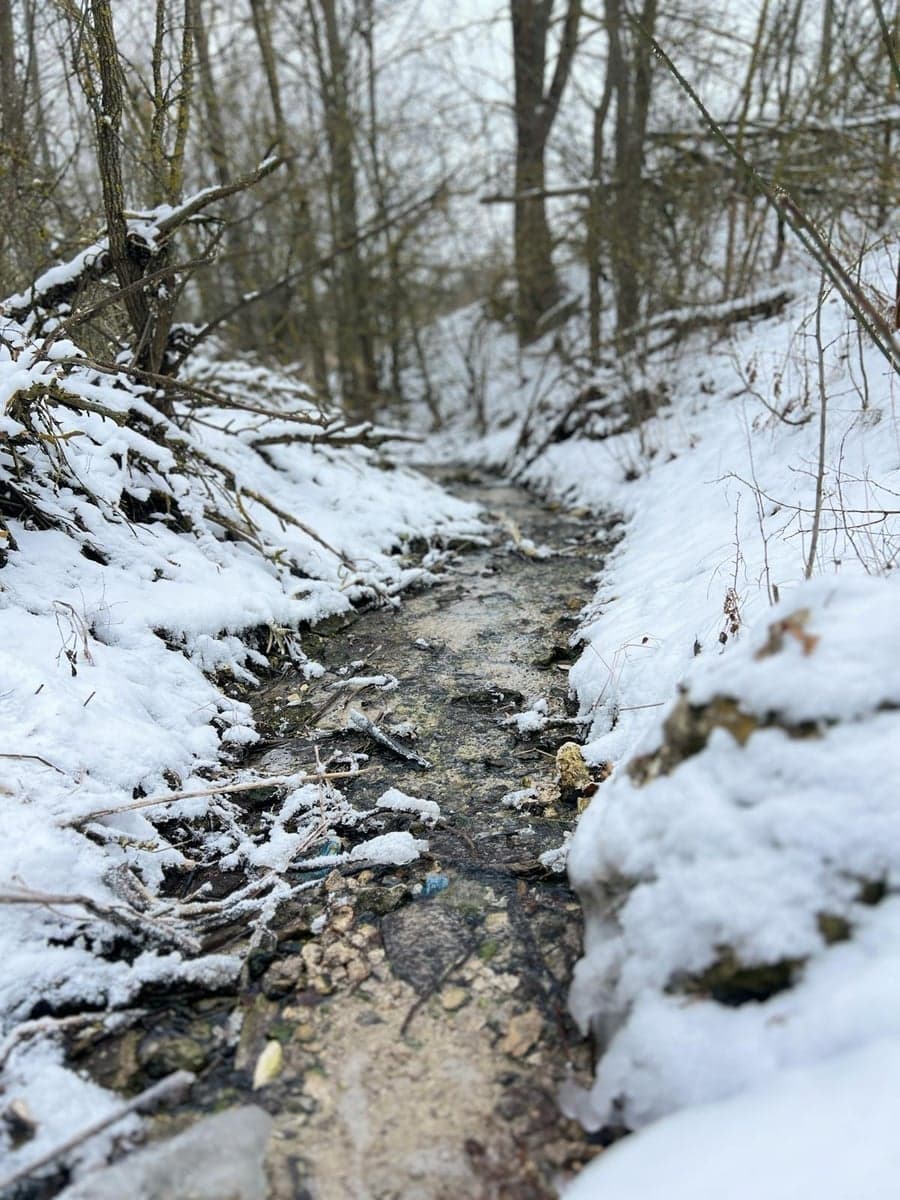
The river itself is Class I water, easy to wade on a shale and gravel bottom, with a moderate gradient that creates a steady progression of riffles, runs, and pools. It runs tea-stained after rain, clearing to a distinctive green-grey tint at fishable levels. The shale substrate is notoriously slick, so studded or felt-soled boots are not optional; they are essential. Rubber-soled boots are a recipe for a swim.
If you have fished tailwaters out west, adjust your expectations. This is rainfall-driven fishing. You cannot plan a trip three weeks out and count on conditions. Instead, you check the gauge obsessively, wait for the river to drop into shape after a rain event, and go when the numbers are right. That flexibility is the price of admission. But it also means that on any given Tuesday in November, you might have excellent steelhead water nearly to yourself, something the Saturday-morning crowds at Daniels Park never experience.
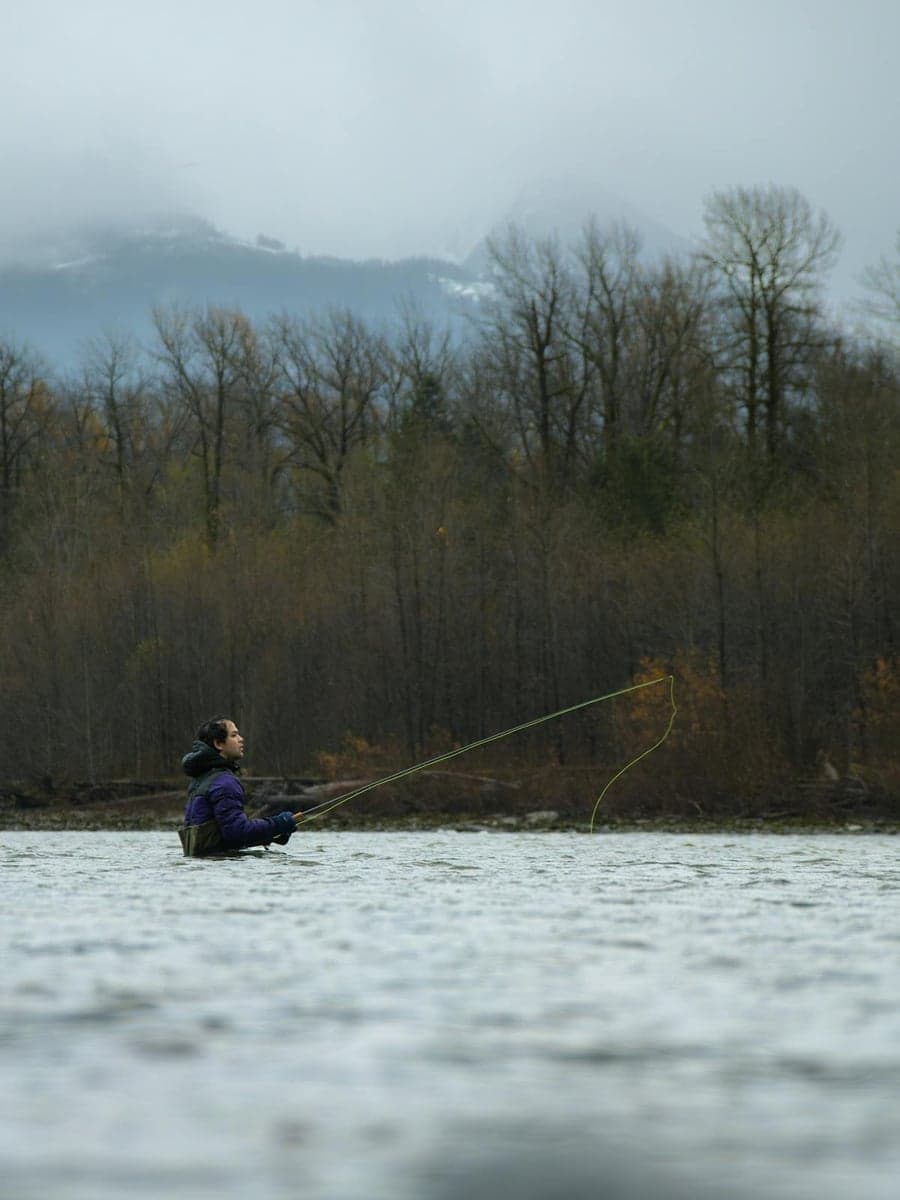
The Chagrin River offers classic wadeable steelhead water within 30 minutes of downtown Cleveland — shale-bottomed runs and pools that fish well at 150-350 CFS.
The single most important skill for Chagrin River steelhead fishing is reading the flow chart. The river is entirely rain-driven with a 264-square-mile watershed, which means it spikes fast after storms and clears relatively quickly: typically 2-3 days, faster than the Grand River but slower than the Ashtabula.
The USGS gauge at Willoughby (04209000) is your primary reference. Here is what the numbers mean for fishing:
| CFS Range | Conditions | Fishing Approach |
|---|---|---|
| Under 100 | Very low, clear water | Fish are spooky and lock-jawed; long leaders (12'+), small flies (#14-18), 5X-6X fluorocarbon; limited productivity |
| 100-200 | Low to moderate, prime nymphing water | Indicator nymphing at its best; fish are accessible in pools and runs; comfortable wading throughout |
| 200-350 | Moderate, ideal all-around range | Best window for swinging streamers through tailouts; nymphing remains productive; fish spread through the system |
| 350-500 | High but fishable for experienced waders | Wading becomes challenging; fish pushed to softer water along banks and in eddies; heavier flies and split shot needed |
| Over 500 | Blown out: unfishable | Water too high, fast, and colored; wait for it to drop; dangerous wading conditions |
The sweet spot is 150-350 CFS. This is where the Chagrin fishes best, enough water to hold fish comfortably in the runs and pools, enough clarity for them to find your fly, and safe enough to wade without white-knuckling every step.
The most productive fishing happens on the falling limb of the hydrograph, when flows are dropping after a rain event. Here is the typical pattern:
Fresh steelhead push upriver with rising water. As the river drops and clears, those fish settle into holding lies: the heads and tailouts of pools, seams along current breaks, and deeper runs. That settling period is when they are most catchable.
Check real-time Chagrin River flows on RiverReports before every trip. Even a 30-minute drive is not worth it if the river is at 2,000 CFS.
Water temperature is the second variable (after flow) that determines how you should fish. The USGS Willoughby gauge also reports water temperature. Here is what the numbers mean on the Chagrin:
| Water Temp | Fish Behavior | Best Approach |
|---|---|---|
| Below 36°F | Nearly dormant; tight to bottom; barely feeding | Slow, deep nymphing only; small flies; extreme patience |
| 36-42°F | Sluggish but will eat if the fly drifts past their nose | Indicator nymphing; dead drift eggs and nymphs right on the bottom |
| 42-48°F | Moderately active; will move short distances for food | Nymphing remains best; can start swinging streamers on warmer afternoons |
| 48-55°F | Active and aggressive, the sweet spot | All techniques work; swinging is most productive; fish chase flies |
| Above 55°F | Spawning behavior dominant; less feeding | Fish spawning gravel carefully; leave actively spawning fish alone |
In winter (December through February), the Chagrin typically runs 33-40°F. That narrow 11am-3pm window when water temps nudge upward by even a degree or two is real; it concentrates the productive fishing time and is worth building your day around.
The Chagrin River has excellent public access through a series of Cleveland Metroparks, Lake County Metroparks, and Ohio DNR-designated steelhead fishing areas. Steelhead can be found anywhere from the dam in Gates Mills north to the lake during the run, but certain sections consistently fish better than others.
The lowest reach of the river from Lake Erie upstream through Eastlake and into Willoughby. This is where fish enter first in fall and where the last spring-run fish stage before heading back to the lake.
| Access Point | Location | Notes |
|---|---|---|
| Eastlake Seawall | Lake Erie mouth | First staging area; best in early fall and late spring; can be crowded |
| Borac's Landing | Eastlake | Boat ramp access; lower river pools |
| Chagrin River Park | Eastlake/Willoughby | 237-acre Lake Metroparks park; three entrances (Reeves Rd, Rural Dr, Erie Rd); good wading access to multiple runs |
Character: The lower river is wider and slower with deeper pools. Fish concentrate here early and late in the season. Spinning anglers outnumber fly fishers in this stretch, especially near the mouth.
The most popular fly fishing water on the Chagrin. This stretch runs through a wooded corridor with consistent riffles, runs, and pools at a moderate gradient, classic steelhead water.
| Access Point | Location | Notes |
|---|---|---|
| Daniels Park | Willoughby (Lake Metroparks) | Premier access; park off Daniels Park Dr; walk downstream to the weir pool (the most popular spot on the entire river) and the East Branch confluence; excellent runs both up and downstream |
| Todd Field | Willoughby (Lake Metroparks) | Park near the baseball fields; fish the deeper pools upriver and downriver; noticeably less crowded than Daniels on weekdays; good holding water in the bends |
| Mitchell's Mill | Off Mitchell Mills Rd | Access to East Branch confluence area; 4.7 miles of Class II water on the East Branch upstream; limited parking |
| Gilson Park | Willoughby | Additional wading access between Daniels Park and the lower river; smaller parking area |
Character: Shale-bottomed runs averaging 2-4 feet deep with pools to 6 feet. The water here has the best combination of holding water and wadeable structure. The East Branch confluence at Daniels Park is the single most productive spot on the Chagrin, fish funnel through the confluence where two flows meet, creating a natural staging area. The weir pool just downstream holds fish consistently through the season and is the first place most anglers head. Arrive early on weekends, parking at Daniels fills fast by mid-morning during peak season.
Insider tip: If Daniels Park is crowded, walk upstream past the East Branch confluence. Most anglers fish within a few hundred yards of the parking lot. A 10-minute walk upstream puts you on productive water with far fewer people.
The upper river above the Gates Mills dam offers a different experience: less pressured, more intimate, with crystal-clear water flowing through North Chagrin Reservation.
| Access Point | Location | Notes |
|---|---|---|
| Gates Mills Dam | Gates Mills | Fish hold below the dam; limited access due to private property surrounding it |
| North Chagrin Reservation | Cleveland Metroparks | 2,140 acres; 7 miles of fishable water; crystal clear riffles, pools, and gravel runs; easy wading |
| South Chagrin Reservation | Cleveland Metroparks | Upstream section; less steelhead penetration but beautiful water; smallmouth in summer |
Character: Narrower, shallower, and clearer than the middle and lower sections. The North Chagrin stretch is characterized by clean gravel runs and is easier to wade than the shale-dominated lower river. Fish that make it past the Gates Mills dam are typically the strongest of the run, rewarding water for anglers willing to walk.
The East Branch of the Chagrin is an underrated option. It is Class II water running 4.7 miles from Mitchell Mills Road downstream to its confluence with the main stem at Daniels Park. It is narrower and shallower than the main river, sees significantly less angling pressure, and holds fish throughout the steelhead season.
The East Branch fishes best at lower flows when fish have pushed up from the main stem. It is ideal for anglers who prefer solitude and lighter tackle, a 9-foot 6-weight rod works well here.
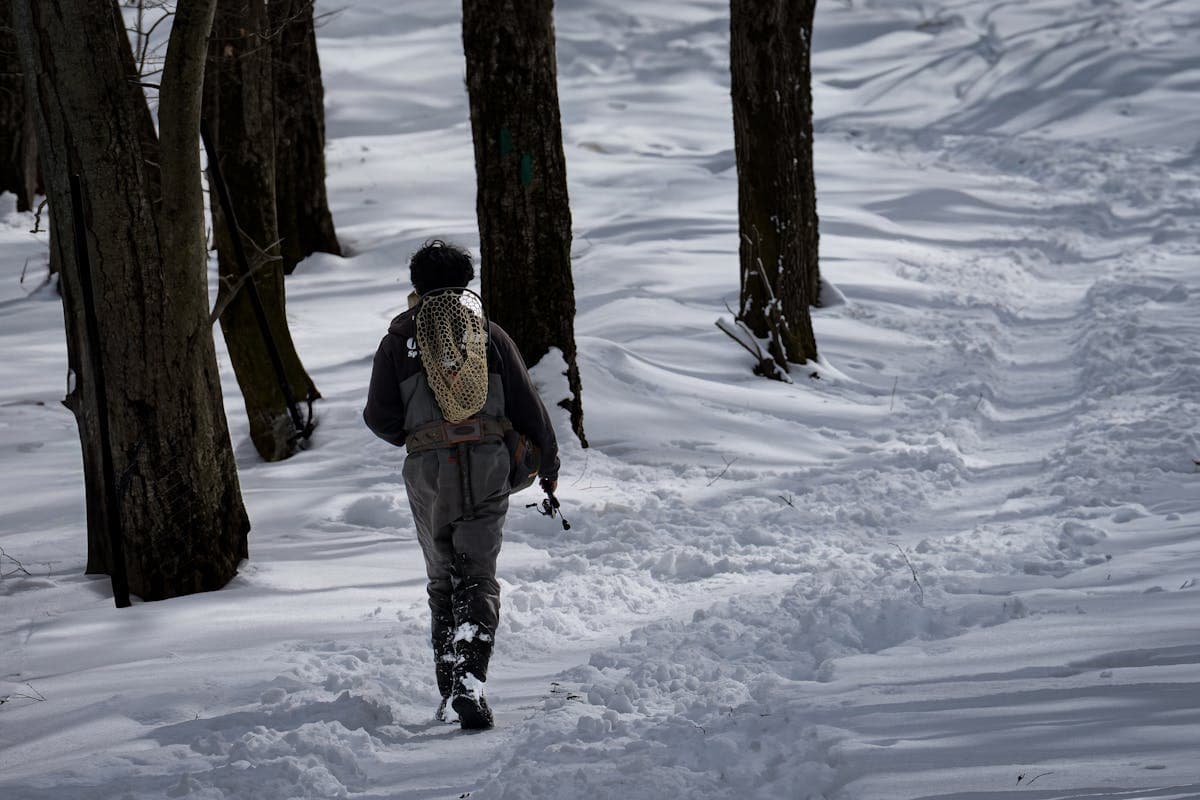
Winter steelhead fishing on the Chagrin - when water temps drop into the 30s, the 11am to 3pm warming window becomes the most productive fishing time
The Chagrin's steelhead season begins when the first significant fall rains raise water levels and cool temperatures enough to trigger fish movement from Lake Erie into the tributaries. This typically happens in late October, though some years fish show earlier.
October: Scout runs and early arrivals. Fish tend to hold in the lower river near the mouth and in Chagrin River Park. Numbers are low but fish are chrome-bright and aggressive.
November: The main push. As water temperatures drop through the 50s and into the 40s, fish move steadily upstream through the middle river sections. Daniels Park and Todd Field start fishing well. This is the month when numbers peak in the system.
December: Peak fishing on the middle and upper sections. Fish are distributed throughout the river from Gates Mills to the lake. Water temperatures in the mid-30s to low 40s slow fish metabolism, nymphing under an indicator becomes the dominant technique.
Fall tactics: Fresh fall-run fish are often aggressive enough to chase streamers. Swing White Zonkers (#6-8), Egg-Sucking Leeches (#6-8), or Woolly Buggers (black, olive) through the tailouts of pools on a down-and-across presentation. When fish are less willing, switch to dead-drifted egg patterns under an indicator.
Winter steelhead fishing on the Chagrin is a game of patience. Water temperatures regularly drop into the 33-38°F range. Fish hold tight to the bottom in deeper pools and move very little for food. The good news: they are still there, and they will eat.
Best window: 11am to 3pm on overcast days, when water temperatures may nudge upward by a degree or two. That small thermal bump can mean the difference between lockjaw and a willing fish.
Winter tactics: Dead-drift nymphing is the primary game. Fish Glo Bugs (#8-12) or Sucker Spawn (cream, chartreuse, or pink) as a lead fly, dropping to a smaller Pheasant Tail (#14-16), stonefly nymph (#10-14), or Zebra Midge (#16-18) as a trailer, 16-24 inches below. Set your indicator at 1.5-2x the water depth. Present the flies through the deepest slots and at the heads of pools where fish stack up in cold water.
Winter is also when the Chagrin sees the least pressure. If you are willing to brave the cold, you may have entire sections to yourself, a rarity on this river.
The spring run is the second major push of steelhead into the Chagrin, and many anglers consider it the best fishing of the year. Water temperatures climb through the 40s into the low 50s, fish become aggressive, and fresh chrome fish mix with overwintered holdovers creating a density that rewards persistence.
March: Early spring-run fish begin arriving as water temps push past 40°F. Holdover fish from the fall run are also active, moving toward spawning gravel. Both nymphing and swinging flies produce well.
April: Peak spring action. Fish are aggressive in water temps of 45-52°F, the ideal steelhead range. Egg patterns remain productive as spawning activity increases. By late April, most fish have spawned and are dropping back to the lake.
Spring tactics: This is the most versatile time to fish the Chagrin. Nymphing with egg patterns (Glo Bugs, Sucker Spawn, beads) remains the most consistent method. But warmer water means fish will chase: swing streamers (White Zonkers, Clouser Minnows, Woolly Buggers) through runs and tailouts with more confidence than in winter. On warmer days above 45°F, try swinging unweighted intruders or marabou patterns on a floating line with a short sink tip.
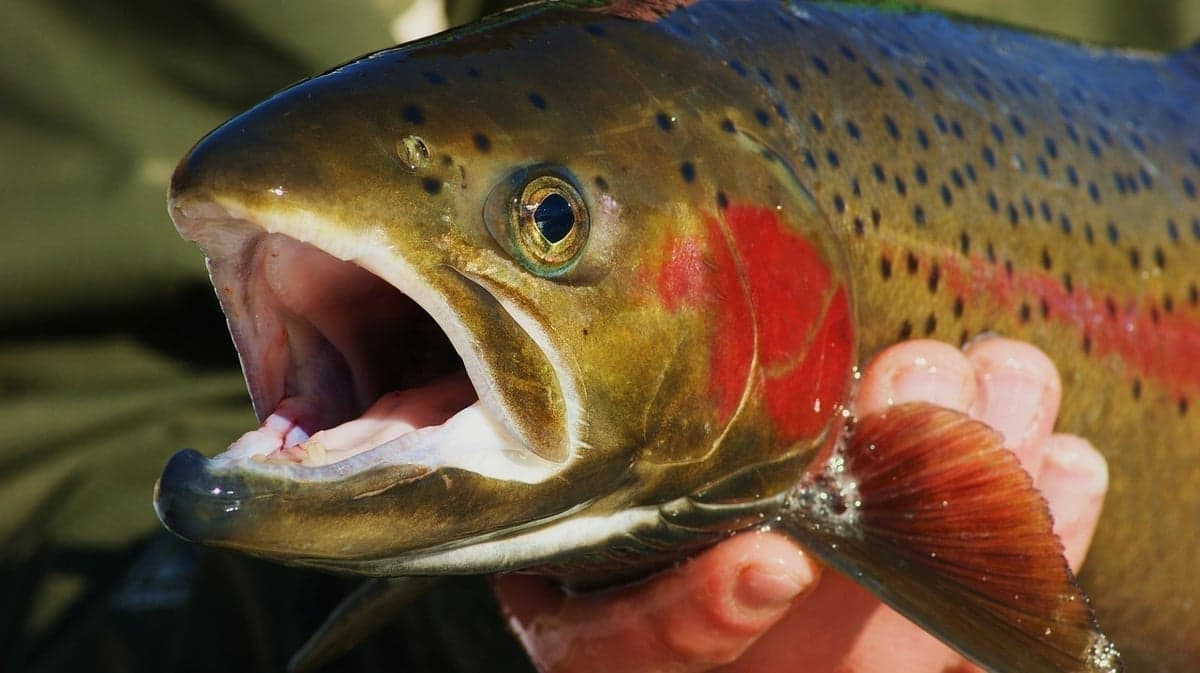
A steelhead in the net — the Chagrin River produces fish averaging 4-10 pounds, with occasional trophies pushing past 12.
On the Chagrin, nymphing under an indicator accounts for the majority of steelhead caught by fly anglers. The technique is straightforward but demands attention to depth, drift speed, and fly selection.
Standard rig:
Key technique: Cast upstream at a 45-degree angle, mend immediately to get the flies down, and follow the indicator downstream with your rod tip. The drift should be dead: no drag, no tension. The indicator should move at the same speed as the surface current. If it is not occasionally hesitating or ticking bottom, add weight. Steelhead hold near the bottom, and a fly drifting 6 inches above them will be ignored.
When water temperatures climb above 42-45°F and flows are in the 200-350 CFS range, swinging streamers and wet flies becomes a viable and rewarding approach. This is not the dominant technique on the Chagrin (nymphing is), but it connects with aggressive fish, especially fresh arrivals and spring-run fish.
Setup:
Approach: Cast across and slightly downstream at a 45-degree angle. Mend to control the swing speed: slower in cold water, faster in warmer conditions. Let the fly sweep across the current through the run. Fish often grab at the end of the swing when the fly hangs directly below you. Take two steps downstream, repeat.
The Chagrin's moderate width (40-60 feet in most sections) makes it manageable water for switch and Spey rods. You do not need a 13-foot Spey rod here, a 10-11 foot switch rod covers the water efficiently without being overkill.
Euro nymphing (tight-line nymphing) works well on the Chagrin, particularly at lower flows (100-200 CFS) when fish are in defined lies and you need precise presentations without the disturbance of an indicator landing overhead.
Setup: 10-11 foot, 3-4 weight euro nymphing rod with a sighter section (colored mono) and two weighted nymphs on 4X-5X fluorocarbon. Lead the flies through the drift by maintaining contact with the rod tip: no indicator, no slack. You feel the take directly.
This technique excels in the North Chagrin Reservation's clear, shallow water where fish are wary and indicators spook them.
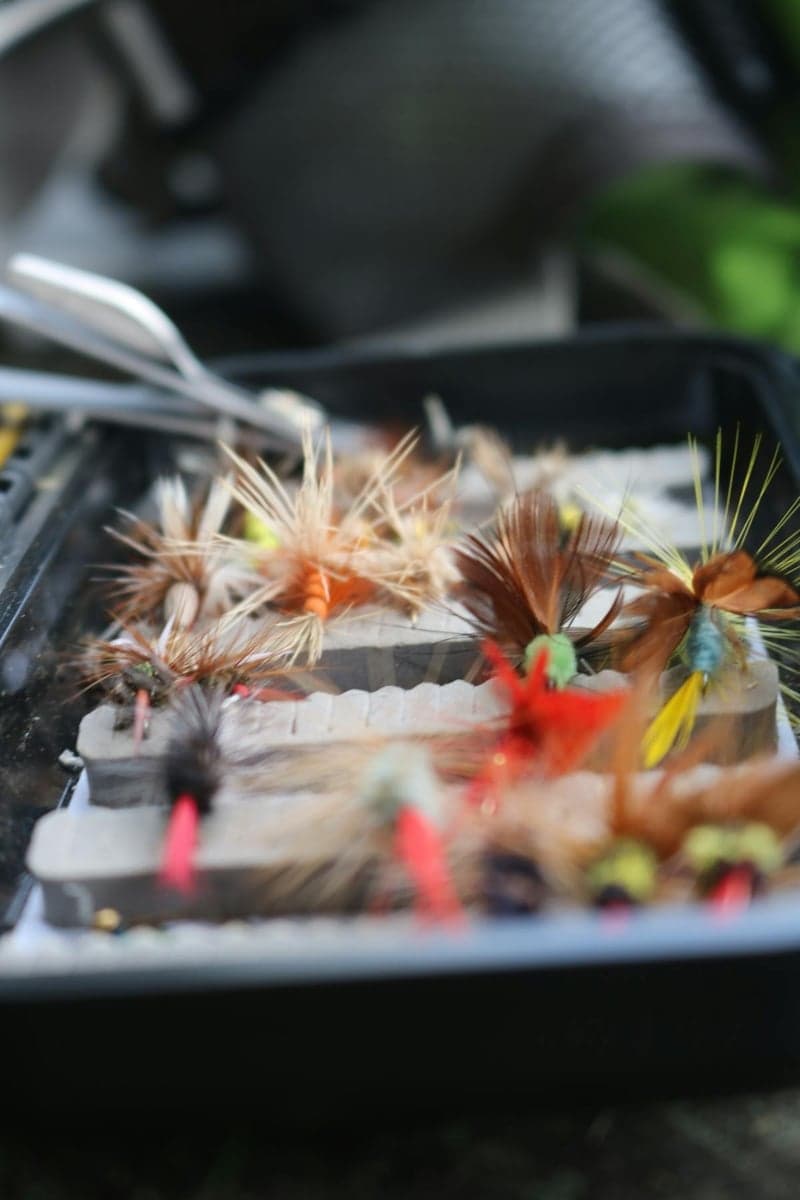
A well-stocked steelhead fly box - egg patterns, nymphs, and streamers cover the Chagrin's seasonal range from fall chrome to spring spawners
| Pattern | Size | Color | When |
|---|---|---|---|
| Glo Bug | 8-12 | Oregon cheese, chartreuse, pink, peach | Year-round; the most reliable Chagrin pattern |
| Sucker Spawn | 10-14 | Cream, pink, chartreuse | Year-round; excellent in spring |
| Bead (soft plastic or glass) | 8-10mm | Orange, pink, peach, chartreuse | Year-round; highly effective under indicator |
| Clown Egg | 8-12 | Multi-color | Fall and spring when multiple species spawning |
| Pattern | Size | Notes |
|---|---|---|
| Pheasant Tail | 12-18 | Reliable trailer behind eggs |
| Bead Head Prince Nymph | 6-14 | Versatile; works as lead or dropper |
| Hare's Ear | 12-16 | General purpose; good in stained water |
| Black Stonefly Nymph | 8-12 | Effective year-round on all Steelhead Alley rivers |
| Zebra Midge | 16-20 | Winter dropper pattern |
| Copper John | 12-16 | Heavy; good for getting down in faster water |
| Pattern | Size | When |
|---|---|---|
| White Zonker | 6-8 | Year-round; the local favorite |
| Woolly Bugger (black, olive, white) | 4-8 | Year-round; swing or strip |
| Egg-Sucking Leech | 4-8 | Fall and spring; aggressive fish |
| Orange/Pink Clouser Minnow | 8-12 | Spring; emerald shiner imitation |
| Bunny Leech | 4-8 | Larger profile for stained water |
| Condition | Recommended Colors |
|---|---|
| Clear water (under 150 CFS) | Natural colors: cream, tan, olive; smaller sizes; sparse patterns |
| Green-grey (150-250 CFS) | Chartreuse, pink, orange; standard sizes |
| Stained (250-400 CFS) | Bright colors: hot pink, chartreuse, orange; larger profiles |
| Off-color (dropping from high) | Hot colors; beads and eggs; maximum visibility patterns |
This is the workhorse setup for 90% of Chagrin River fishing. A 10-foot 7-weight is the most versatile choice, long enough for mending and indicator nymphing, strong enough to handle big fish, and the extra foot of length helps with line management.
The switch rod gives you the versatility to make two-handed Spey casts for swinging while also handling single-hand indicator nymphing. It is the ideal Chagrin River one-rod solution for anglers who want to do both.
Ohio steelhead regulations apply to all Lake Erie tributaries including the Chagrin River. The key rules:
Lake Erie tributary regulations apply on the Chagrin River from the mouth upstream to the State Route 283 bridge. Above that line, statewide inland fishing regulations apply.
Always check the current Ohio Division of Wildlife regulations before your trip, regulations change annually.
Most fly anglers on the Chagrin practice catch-and-release (though harvest is legal within the daily limit). Proper handling matters, these fish need to survive the encounter and continue their spawning run.
The Chagrin gets crowded, especially at Daniels Park and Todd Field on weekends from November through March. A few unwritten rules keep things civil:
| CFS | Wading Difficulty |
|---|---|
| Under 150 | Easy, wade anywhere with basic caution |
| 150-250 | Moderate, standard wading; watch footing on shale |
| 250-350 | Challenging, stick to slower water; deeper runs may be unwadeable |
| 350-500 | Difficult, experienced waders only; stay near banks |
| Over 500 | Dangerous, do not wade |
The Chagrin River is in Lake and Cuyahoga Counties in northeast Ohio, with the main fishing areas centered around Willoughby, approximately 20 miles east of downtown Cleveland.
| Shop/Guide | Location | Phone | Specialty |
|---|---|---|---|
| Chagrin River Outfitters | Chagrin Falls | (440) 247-7110 | Steelhead guided trips ($400-550/day), Steelhead 101 clinics, fly tying classes; the local authority |
| Mad River Outfitters | Columbus | (614) 451-0363 | Statewide guide service; steelhead, trout, smallmouth |
| Covered Bridge Outfitters | Conneaut | (440) 256-6556 | Orvis-endorsed; steelhead lodge and drift boat trips |
| The Steelhead Guide | Cleveland area | (440) 773-8064 | 30+ years guiding Lake Erie steelhead |
Willoughby, Mentor, and Chagrin Falls all have hotels and short-term rentals within 10-15 minutes of the best water. Cleveland proper has the widest selection of accommodations and restaurants.
Weekdays are dramatically less crowded than weekends, especially at high-traffic spots like Daniels Park and Todd Field. If you can swing a Tuesday or Wednesday trip, you will have sections to yourself that would be shoulder-to-shoulder on Saturday.
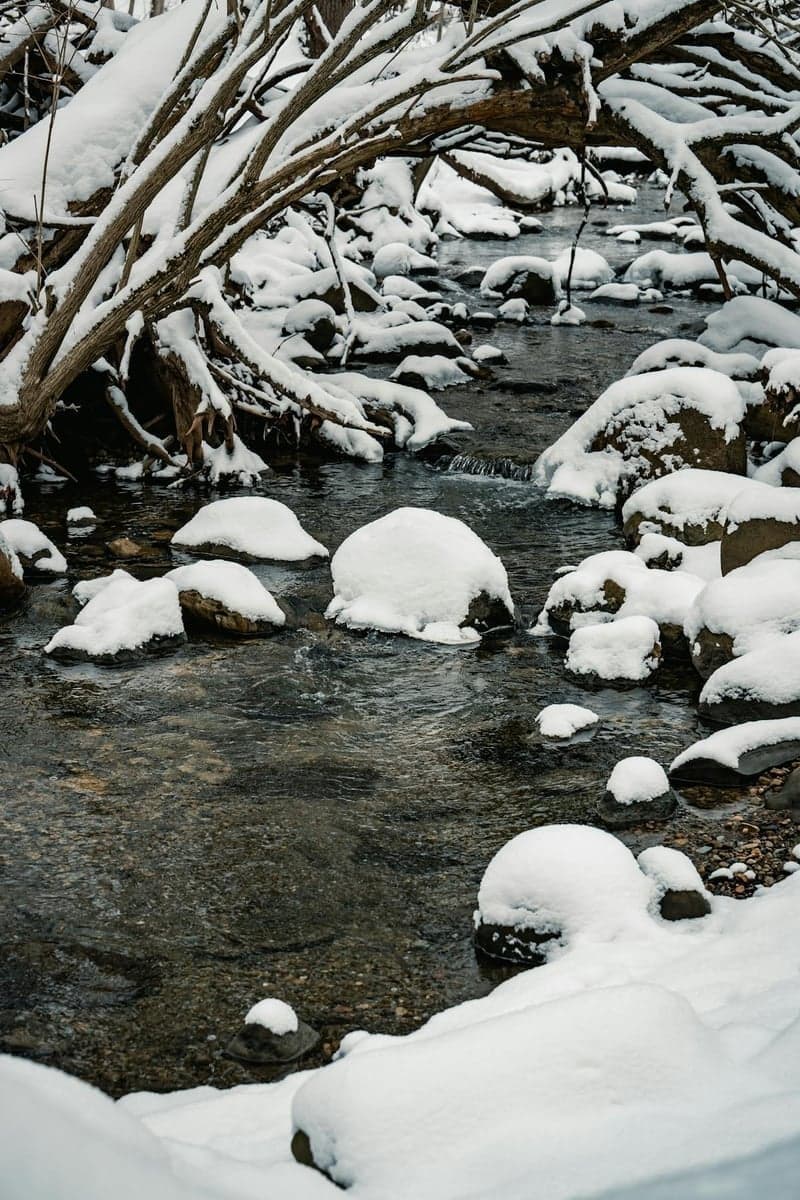
The Chagrin's shale gorge in winter - ice shelves form along the banks during cold snaps, and the tea-stained water clears to its characteristic green-grey at fishable levels
The Chagrin is one of six stocked Lake Erie tributaries that together form Ohio's "Steelhead Alley." If the Chagrin is blown out or crowded, consider these alternatives:
| River | Character | When to Fish Instead |
|---|---|---|
| Rocky River | Urban, easy access through Cleveland Metroparks; 150-250 CFS ideal | When Chagrin is too high, the Rocky has a smaller watershed and can drop faster |
| Grand River | Biggest watershed (705 sq mi); best for float fishing; 250-400 CFS ideal | When you want to fish from a drift boat; best in spring |
| Conneaut Creek | State Scenic River designation; 200-350 CFS ideal; smallest watershed | Clears first after region-wide storms |
| Vermilion River | Shale gorges; 100-200 CFS ideal; excellent spring run | When northeast tribs are crowded; less fishing pressure |
| Ashtabula River | Smallest watershed (137 sq mi); clears fastest | When everything else is blown out |
For a comprehensive look at all of these rivers plus Ohio's trout streams and smallmouth fisheries, see our Ohio Fly Fishing guide.
The Chagrin and its Steelhead Alley neighbors are part of a broader Great Lakes steelhead fishery that stretches from Minnesota through New York. For context on how Ohio's tributaries compare to Michigan, Pennsylvania, and New York waters, see our Great Lakes Steelhead Fishing guide.
Fishing too high in the water column: This is the number one mistake. Steelhead hold near the bottom, especially in cold water. If your indicator is not occasionally ticking or hesitating, your flies are too high. Add split shot until you feel bottom contact.
Going when the gauge says not to: Enthusiasm is not a substitute for fishable conditions. At 800 CFS, the Chagrin is a brown, dangerous mess. Check RiverReports before you drive.
Arriving late on weekends: Daniels Park parking lot fills by 9am on November and December Saturdays. If you are not there by first light, you are fighting for leftovers. Or better yet, go on a weekday.
Using rubber-soled boots: The shale bottom will put you on your back. Felt or studs are mandatory.
Fishing the same pool all day: Steelhead hold in specific lies, but they also move, especially on warming trends. If a run is not producing after 30-45 minutes of thorough coverage, move to the next one. Covering water beats camping.
Ignoring the East Branch: Most anglers stay on the main stem. The East Branch holds fish, sees less pressure, and fishes well at lower flows. It is a 5-minute drive from Daniels Park.
Underestimating winter cold: A morning that starts at 25°F air temperature with 34°F water will humble you fast. Neoprene gloves, hand warmers, and spare dry clothes in the truck are not luxuries.
What is the best flow for steelhead fishing on the Chagrin River?
The ideal range is 150-350 CFS at the USGS Willoughby gauge (04209000). Below 150, fish get spooky in the clear water. Above 350, wading becomes difficult and visibility drops. The sweet spot for most anglers is 180-280 CFS: comfortable wading, good visibility, and fish that are settled into lies. Check real-time Chagrin River flow on RiverReports before your trip.
When is the best time to fish the Chagrin River for steelhead?
The two peak periods are mid-November through mid-December (fall run) and mid-March through mid-April (spring run). The spring run often produces the most aggressive fishing because water temperatures are climbing into the 45-52°F range where steelhead are most active. Winter (January-February) fishing is productive but requires patience and a tolerance for cold.
How long does the Chagrin take to clear after rain?
Typically 2-3 days, depending on the intensity of the rain. A light, steady rain might keep the river fishable. A heavy system dumping 1-2 inches will blow it out for 2-3 days. The hydrograph on RiverReports shows you the trajectory, look for a steadily dropping line approaching 350 CFS.
Where is the best public access on the Chagrin?
Daniels Park (Lake Metroparks, Willoughby) is the most popular and productive public access point. Todd Field is a close second with less weekend pressure. Both are in the middle section that holds the most consistent steelhead water.
Do I need a guide for the Chagrin River?
Not necessarily, the Chagrin is very wadeable and has excellent public access. But if you are new to steelhead fly fishing, a guided trip with Chagrin River Outfitters ($400-550/day) will cut your learning curve dramatically. They know the current conditions, productive water, and which techniques are working on any given day. They also offer "Steelhead 101" clinics for anglers who want to learn the fundamentals before booking a full guide day.
What is the daily limit for steelhead on the Chagrin?
Two trout/salmon per day (aggregate) from September 1 through May 15, and five per day from May 16 through August 31. No minimum size limit. Most fly anglers practice catch-and-release, but harvest is legal within these limits.
Can I fish the Chagrin River year-round?
Yes. Ohio has no closed season for steelhead on Lake Erie tributaries. Steelhead are present from late October through April. In the off-season (May-September), the Chagrin holds smallmouth bass, rock bass, and panfish.
Before every trip, check:
The Chagrin River flow chart is your most important tool. A steelhead trip planned around the calendar alone is a gamble. A trip planned around the gauge is a strategy. Watch the hydrograph, learn the 2-3 day clearing pattern, and fish the drop.
| Item | Specification | Notes |
|---|---|---|
| Rod | 9-10' 7-8 wt (single-hand) or 10-11' 6-7 wt (switch) | 10' 7wt is the most versatile single choice |
| Reel | Large arbor, disc drag | Steelhead will run; you need backing capacity |
| Line | WF floating | Skagit compact for switch rod |
| Leader | 9' tapered to 2X-3X | Step down to 5X-6X in clear water |
| Tippet | 3X-5X fluorocarbon | Lots of it; shale eats tippet |
| Egg patterns | Glo Bugs, Sucker Spawn, beads #8-14 | Most reliable category year-round |
| Nymphs | PT, Prince, Hare's Ear, stonefly #10-18 | Trailer behind eggs |
| Streamers | White Zonkers, Woolly Buggers #4-8 | For swinging in warmer water |
| Indicators | Thingamabobber, yarn | Multiple sizes for varying depth |
| Split shot | BB and #4 | Essential for getting down |
| Net | Large rubber mesh, 20"+ bag | For safe steelhead handling |
| Wading boots | Studded or felt soles | Non-negotiable on Chagrin shale |
Weekly flow updates and fishing intel.
© 2026 RiverReports, Inc.