
America's Most Technical Spring Creeks: A Fly Fisher's Guide
Quick Reference
| Creek | Location | Access | Avg. Trout/Mile | Best Months | Rod Fee |
|---|---|---|---|---|---|
| Silver Creek | Picabo, ID | Public (Nature Conservancy preserve) | ~5,100 | Jun–Oct | Free |
| Armstrong Spring Creek | Livingston, MT | Private (rod fee) | ~3,000+ | Jun–Oct | ~$250/day |
| DePuy Spring Creek | Livingston, MT | Private (rod fee) | ~3,000+ | Jun–Oct | ~$250/day |
| Nelson's Spring Creek | Livingston, MT | Private (rod fee) | ~3,000+ | Jun–Oct | ~$250/day |
| Letort Spring Run | Carlisle, PA | Public | ~1,500 | Apr–Oct | Free |
| Mossy Creek | Bridgewater, VA | Delayed harvest (public) | ~2,000 | Mar–Jun, Sep–Nov | Free |
What Makes Spring Creeks Different
Spring creeks are not rivers. That distinction matters more than anything else you'll read here.
A freestone river collects runoff: snowmelt, rain, whatever falls from the sky. Its flows spike and crash. Its temperatures swing with the seasons. Its trout live opportunistic lives, grabbing whatever tumbles past because the next meal is uncertain.
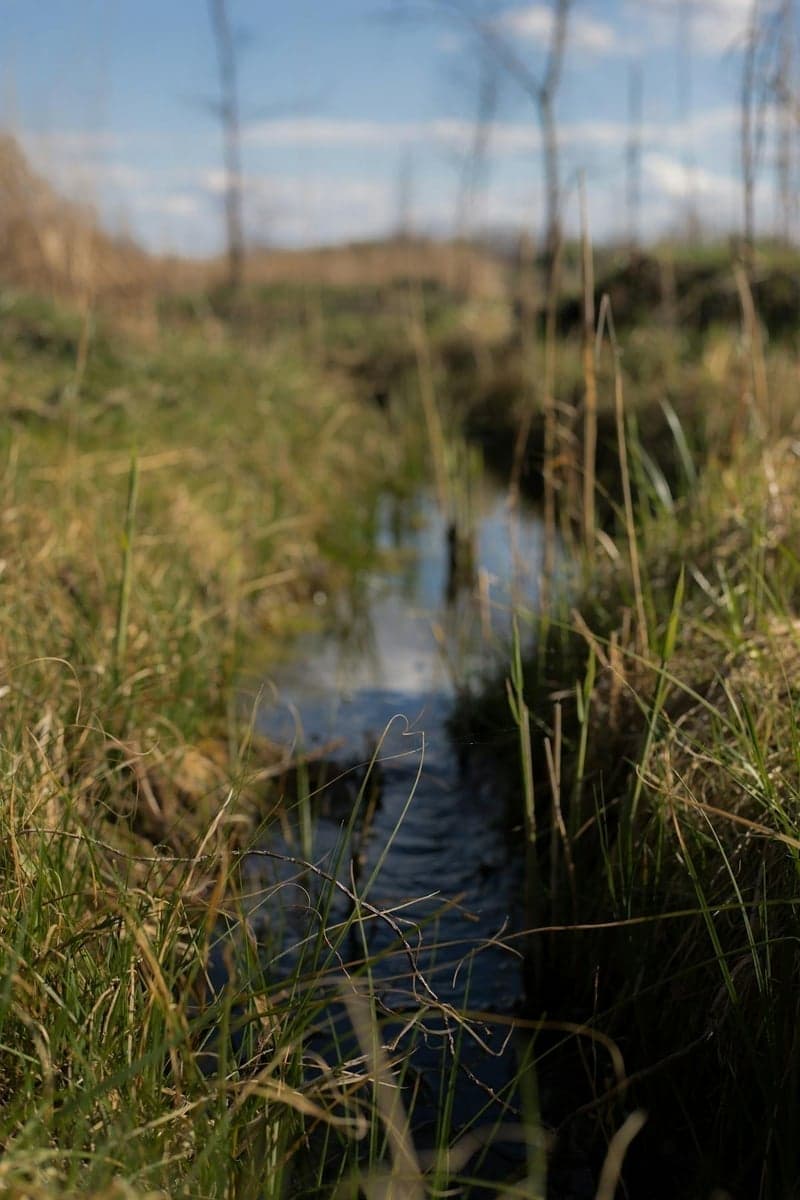
A spring creek is fed by groundwater pushing up through limestone or volcanic rock. The water arrives at a constant temperature, typically 50 to 55 degrees Fahrenheit, year-round. Flows barely fluctuate. The chemistry is alkaline and mineral-rich, which drives explosive weed growth, which shelters enormous invertebrate populations, which feeds trout that never go hungry.
This is the central problem. A trout that sees ten thousand mayflies in a morning doesn't need your imitation. It can afford to be impossibly selective, inspecting every drift, refusing anything that drags, spooking at a shadow or a misplaced footstep. The water is gin-clear and pancake-flat. There's no broken current to hide your leader, no riffle to mask your approach.
Spring creek trout are not smarter than freestone trout. They're just richer. And rich trout are picky trout.
The creeks profiled here represent the highest expression of that challenge. Each one has broken good anglers. Each one has also produced moments of perfection: a size 20 pale morning dun drifting six inches without drag, a nose rising, and the softest take you'll ever feel.
Silver Creek, Idaho
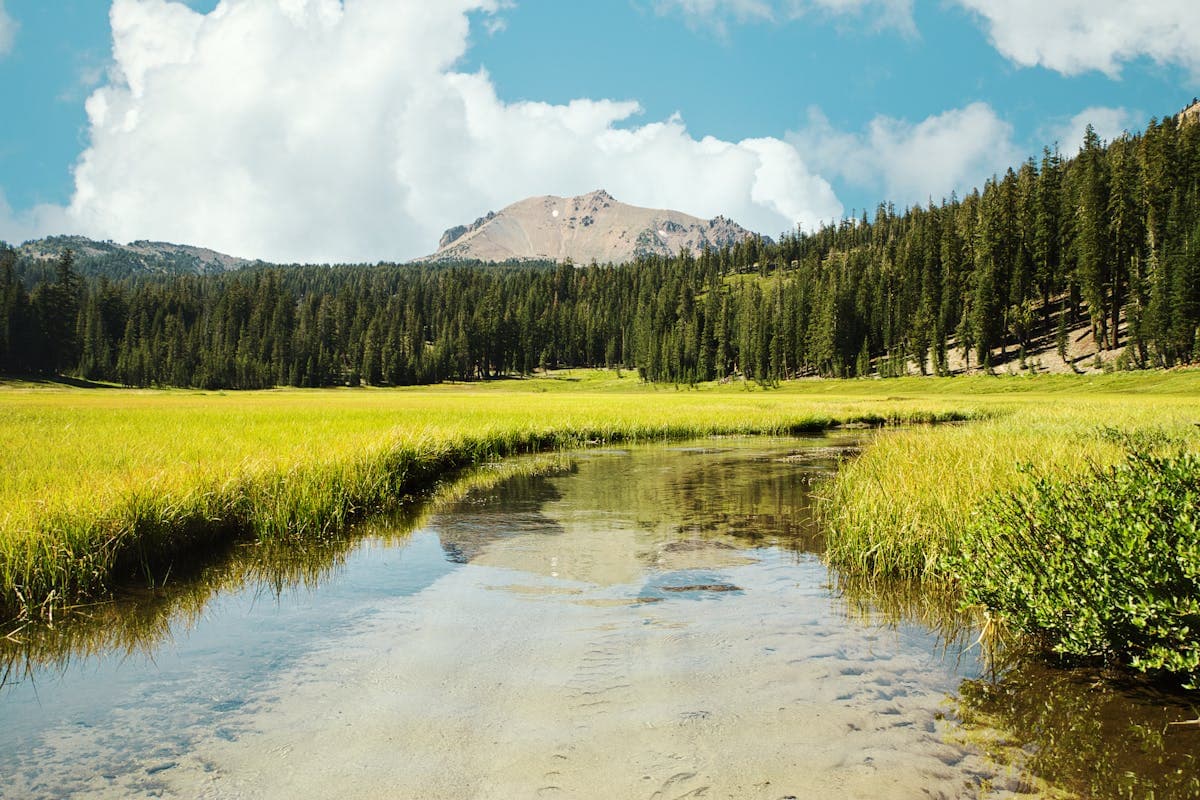
A meadow creek with mountain backdrop in central Idaho — the kind of open, flat landscape that defines Silver Creek
The Creek
Silver Creek emerges from a network of springs near Picabo, Idaho, at the southern edge of the Wood River Valley. The main creek and its tributaries (Stalker Creek, Loving Creek, Grove Creek, and Point Creek) meander through 900 acres of the Nature Conservancy's Silver Creek Preserve before joining the Little Wood River. The setting is high desert at 4,800 feet: sagebrush flats, cottonwood bottoms, and the distant Boulder Mountains framing every cast.
The creek itself is deceptively calm. Most of it runs two to four feet deep over dense beds of aquatic vegetation (elodea, water buttercup, and watercress) so thick it creates channels and slots that concentrate feeding fish. The substrate is volcanic silt and gravel, and the water is so clear you can count spots on a rainbow at forty feet. Surface current barely registers; you're looking at water that moves at walking speed through channels that might be eight feet wide or eighty.
Silver Creek holds roughly 5,100 trout per mile, a density that would be extraordinary on any water. The population is split between rainbows (dominant, averaging 14 to 18 inches with fish over 20 common) and brown trout that tend toward the larger end. Brook trout appear in some tributaries.
What Makes It Uniquely Difficult
Silver Creek's reputation as the most technical dry-fly water in America comes down to four factors: clarity, current speed, bug density, and wind.
The clarity means fish see you long before you see them. Wading creates pressure waves in the soft bottom that trout feel through their lateral lines. The standard approach is to spot a riser from distance, plan a route that keeps the sun at your back, and wade with glacial patience.
The slow current magnifies drag. On a fast freestone, a fly might drift three seconds before micro-drag sets in. On Silver Creek, trout watch your fly for fifteen or twenty feet of drift. Any deviation (a slight pull from a crosscurrent, a leader belly, a tippet that catches a weed bed) and the fish simply stops rising.
The bug density means fish key on a specific insect at a specific life stage. When pale morning duns are hatching, a trout might eat a hundred naturals in an hour. Your fly needs to be the right size, the right profile, the right color, and it needs to arrive at the right moment in a dead-drift window measured in inches.
And then there's the wind. Silver Creek sits in an open valley, and afternoon winds are notorious, with steady 15 to 25 mph gusts that make casting a 6X tippet to a rising fish somewhere between difficult and impossible. Plan to fish mornings. Serious Silver Creek anglers are on the water at dawn and off it by early afternoon. The wind also pushes hatches earlier in the day and can shut down surface activity entirely on exposed sections.
Key Hatches
| Hatch | Timing | Notes |
|---|---|---|
| Blue-winged olives | Mar–May, Sep–Nov | Best on overcast days; sizes 18–22 |
| Pale morning duns | Jun–Aug | The signature hatch; sizes 16–20 |
| Tricos | Jul–Sep | Morning spinner falls; sizes 20–24 |
| Callibaetis | Jun–Sep | Stillwater sections and backwaters; sizes 14–16 |
| Terrestrials (ants, beetles, hoppers) | Jul–Sep | Afternoons when hatches are sparse |
Access, Regulations, and Logistics
Silver Creek is open to the public through the Nature Conservancy's Silver Creek Preserve. Access is free, but the preserve enforces strict rules: catch-and-release only, barbless hooks, no wading in certain sensitive sections during nesting season (varies annually). The preserve visitor center is staffed seasonally and provides maps of open sections. Parking is limited, and the preserve gets crowded on summer weekends, especially during PMD season in July. Arrive early (before 8 a.m.) on weekends or fish midweek if you can. When no hatch is happening, nymphing weed channels with small pheasant tails or soft hackles can be productive, and swinging emergers in the film during transitional periods often draws strikes from fish that won't commit to a dry.
Nearby fly shops: Silver Creek Outfitters in Ketchum (about 30 minutes north) is the go-to for current conditions, fly selection, and guided trips on the creek. Lost River Outfitters in Ketchum is another option.
Regulations: Idaho Fish & Game manages the fishery. Check current special regulations, as some sections have specific gear and harvest restrictions beyond the preserve's rules.
Getting there: Picabo is about 25 miles south of Sun Valley/Ketchum on US-20. The preserve is well-signed off the highway.
For a broader look at central Idaho's fisheries including Silver Creek, see our Central Idaho fly fishing guide.
Paradise Valley Spring Creeks, Montana
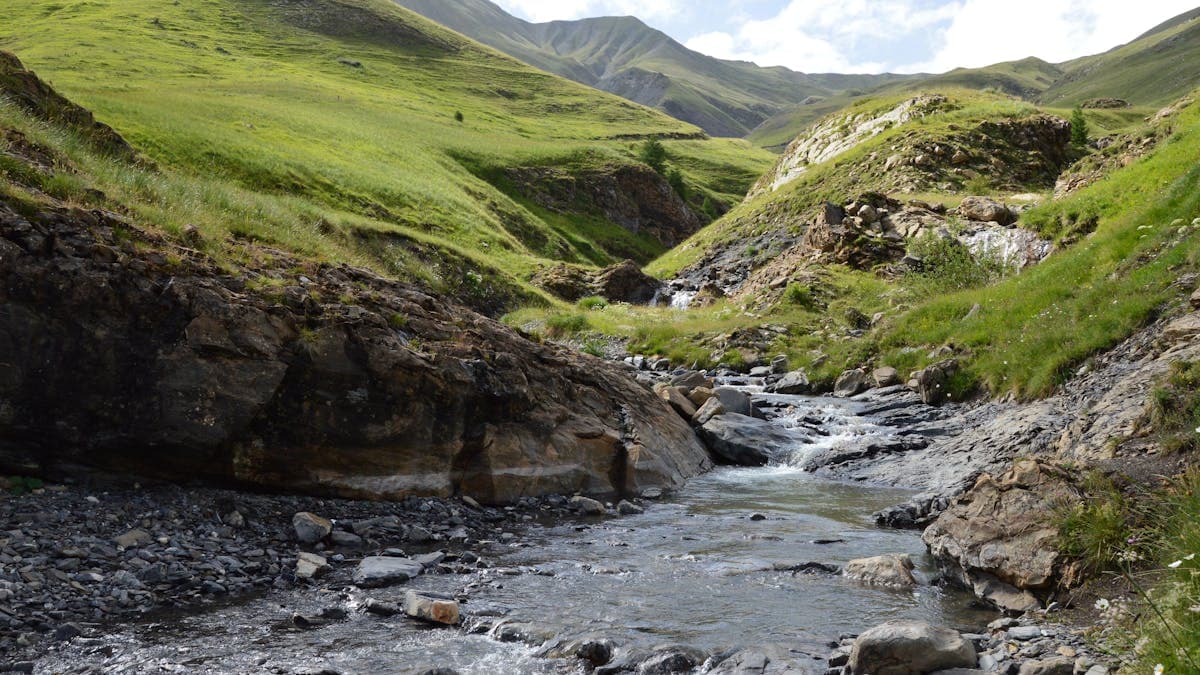
A mountain creek winding through green valley — the character of Montana's Paradise Valley spring creeks
The Valley
Paradise Valley runs south from Livingston to Yellowstone National Park, with the Yellowstone River threading its center and the Absaroka Range rising to the east. Along the valley floor, three spring creeks (Armstrong, DePuy, and Nelson's) emerge from the same limestone aquifer that feeds the Yellowstone's gravels. They flow parallel to the river, a few hundred yards apart in places, through private ranch land that has been managed for trout fishing since the 1960s.
These creeks share a geology and a character. All three are gin-clear, weed-rich, and loaded with trout that see dozens of anglers each season. All three charge a rod fee for access. And all three produce some of the most demanding, and rewarding, dry-fly fishing in the Rocky Mountain West.
They're discussed together because that's how anglers experience them. You book a day on Armstrong, or DePuy, or Nelson's, depending on which has availability, which is fishing best, and what your budget allows. Many anglers fish all three over the course of a trip. The creeks are different enough in character that each one teaches you something new.
Armstrong Spring Creek
Armstrong is the most famous of the three and the one most anglers fish first. It flows through the O'Hair Ranch for roughly three miles, with the upper section tending toward narrow channels (fifteen to twenty feet wide) and the lower section opening into wider pools and flats.
Armstrong's trout population is extraordinary. Surveys have shown over 3,000 fish per mile, with browns and rainbows in roughly equal numbers and an average size that skews toward 14 to 17 inches. Twenty-inch fish are present but not common.
The creek is known for its pale morning dun hatch (June through August) and its trico spinner falls (July through September), both of which produce the kind of blanketing surface activity that makes spring creek fishing addictive. The weed beds create defined feeding lanes, and experienced anglers learn to read which channels hold the best fish.
Rod fee is approximately $250 per day (confirm current rates before booking). Limited to a set number of rods per day to manage pressure. Book through the ranch or through Livingston-area fly shops.
DePuy Spring Creek
DePuy flows through the DePuy Ranch adjacent to Armstrong and offers roughly three miles of fishable water. The character is slightly different: DePuy tends toward wider, shallower flats in its upper sections and deeper, more defined channels below. Some anglers find DePuy's open flats more challenging because the fish have wider sight lines and more room to inspect your drift.
The trout population rivals Armstrong's. Browns may be slightly more dominant here, and DePuy has a reputation for producing larger individual fish, not as a guarantee, but as a possibility that keeps anglers coming back.
DePuy's hatches mirror Armstrong's calendar, with PMDs and tricos as the headline events. The creek also fishes well with terrestrials in late summer and can produce excellent blue-winged olive fishing in spring and fall.
Rod fee is approximately $250 per day. Same booking model as Armstrong: limited rods, advance reservation recommended.
Nelson's Spring Creek
Nelson's is the smallest and least pressured of the three, flowing through private land about two miles east of the others. It's narrower than Armstrong or DePuy, with tighter channels and more overhanging vegetation, giving it a more intimate feel.
Nelson's trout tend to be somewhat more aggressive than their neighbors', likely a function of lower angling pressure. The creek fishes well with slightly larger flies and doesn't always demand the extreme refinement that Armstrong and DePuy require. That said, it's still a spring creek, and the fish are still spring creek trout.
Rod fee is approximately $250 per day. Nelson's can be a good choice when Armstrong and DePuy are booked or when you want a change of character.
Key Hatches (All Three Creeks)
| Hatch | Timing | Notes |
|---|---|---|
| Blue-winged olives | Apr–May, Sep–Nov | Sizes 18–22; best on cool, overcast days |
| Pale morning duns | Jun–Aug | The main event; sizes 16–18 |
| Tricos | Jul–Sep | Early morning spinner falls; sizes 20–24 |
| Caddis | Jun–Aug | Sporadic but productive; sizes 14–18 |
| Terrestrials | Jul–Sep | Hoppers, ants, and beetles on warm afternoons |
Logistics
Booking: Rod fees for all three creeks can be booked through Livingston fly shops: Dan Bailey's, Hatch Finders, and George Anderson's Yellowstone Angler are the most established. Booking well in advance (weeks to months for peak season) is essential.
Getting there: Livingston is on I-90, about 25 miles east of Bozeman. The spring creeks are 10 to 20 minutes south of town along East River Road.
Regulations: Montana Fish, Wildlife & Parks manages these fisheries. Catch-and-release is standard on all three creeks regardless of state regulations.
When the dry fly isn't working: All three creeks fish well subsurface. Small nymphs (sizes 18–22 pheasant tails, RS2s, and WD-40s) drifted through weed channels produce fish between hatches, and emerger patterns fished in the film can be deadly during the transition between nymph activity and a full-blown hatch. Don't feel locked into dries. Some of the biggest fish in these creeks rarely look up.
Nearby alternative water: If the spring creeks are booked or you need a change of pace, the Yellowstone River flows through the center of Paradise Valley and offers completely different fishing: big water, streamers, hoppers, and nymphs. It's an ideal complement to a spring creek day and doesn't require a rod fee.
For more on the Paradise Valley area, including the Yellowstone River and other nearby water, see our Bozeman & Southwest Montana guide. For context on where these creeks rank among Montana's most challenging water, see Montana Fly Fishing Rivers Ranked by Difficulty.
Letort Spring Run, Pennsylvania
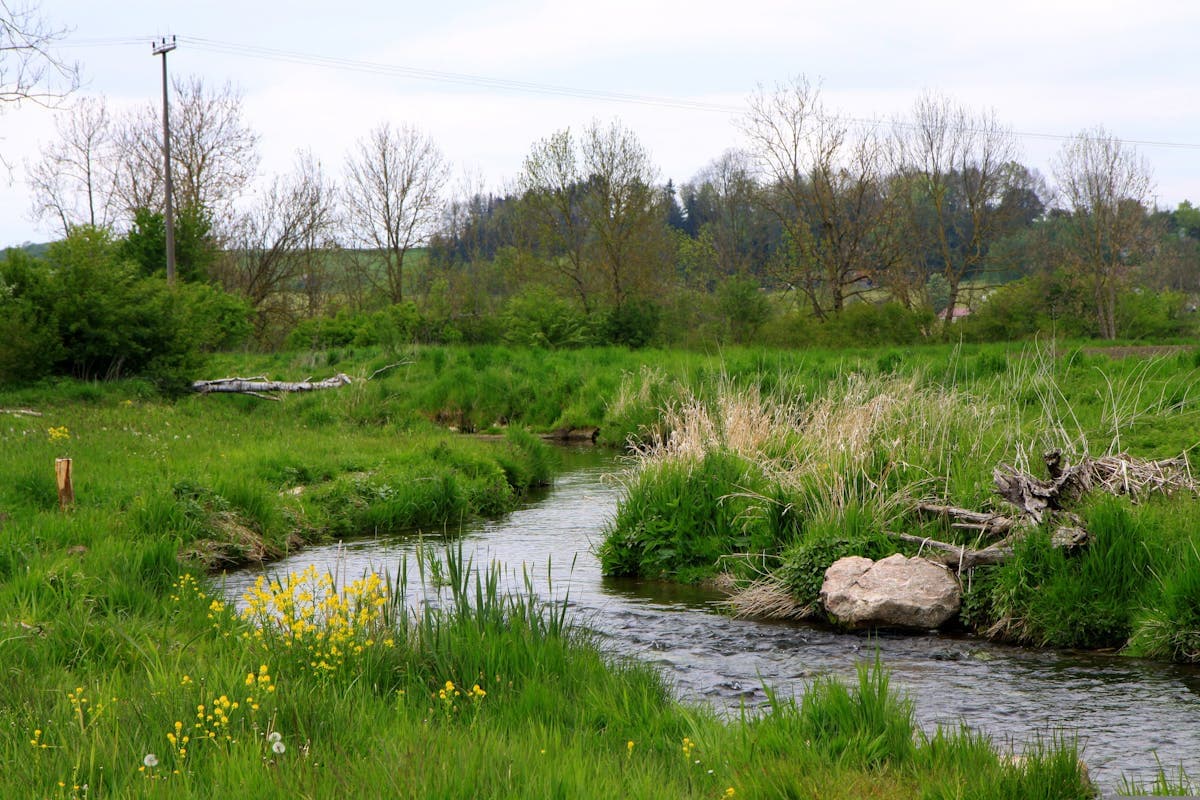
A clear spring-fed stream flowing through green pastoral landscape — the character of Pennsylvania's limestone spring creeks
The Creek
The Letort Spring Run rises from limestone springs in the Cumberland Valley just south of Carlisle, Pennsylvania, and flows about seven miles before joining the Conodoguinet Creek. It's a small stream, fifteen to thirty feet wide in most places and rarely deeper than three feet, winding through farmland, suburban backyards, and patches of watercress and elodea that choke the channel in summer.
The Letort is not a wilderness experience. Houses line parts of the bank. A railroad runs nearby. You'll hear traffic. None of that matters. What matters is that this humble little stream in south-central Pennsylvania is where American spring creek fishing was invented.
The History
In the 1940s and 1950s, a group of anglers centered in Carlisle (Charlie Fox, Vince Marinaro, Ed Koch, and others) began studying the Letort's trout with a rigor that had never been applied to American fly fishing. Marinaro's A Modern Dry-Fly Code (1950) and Fox's Rising Trout (1967) were born on this creek. These weren't guidebooks. They were scientific investigations of what trout eat, how they eat it, and why conventional flies failed.
The Letort anglers developed terrestrial fishing as a discipline. They pioneered ant, beetle, and cricket imitations when the fly fishing world was still fixated on mayflies. They refined midge techniques. They introduced the concept of "fishing the film," presenting flies in the surface tension where emergers and spent spinners collect. They proved that American trout, on American water, could be as selective as any English chalk stream brown.
Every spring creek angler in America, whether they know it or not, is fishing in the tradition these men established on the Letort.
What It's Like Now
The Letort still holds trout, with wild browns in its upper reaches, stocked fish supplementing the population in its lower sections. Siltation from development and agriculture has degraded some stretches, and the trout density doesn't approach what it was in Fox and Marinaro's era. But the character of the fishing hasn't changed: clear water, spooky fish, tiny flies, and the need for stealth.
The Heritage section (roughly from the springs downstream to Bonny Brook Road) is the most celebrated stretch. It's catch-and-release, fly-fishing-only, and holds the creek's best wild brown trout. The banks are open enough for casting, and the weed beds create the defined feeding lanes that spring creek anglers look for.
Fishing the Letort today is an act of pilgrimage as much as angling. You're standing where Marinaro knelt in the grass, watching a brown trout sip ants. The creek is smaller than you imagined. The fish are warier than you expected. It is exactly as it should be.
Key Hatches
| Hatch | Timing | Notes |
|---|---|---|
| Blue-winged olives | Mar–May, Oct–Nov | Sizes 18–22; the creek's most reliable mayfly |
| Sulphurs | May–Jun | Sizes 16–18; evening hatches can be excellent |
| Tricos | Jul–Sep | Morning spinner falls; sizes 22–26 |
| Terrestrials (ants, beetles, crickets) | Jun–Oct | The Letort's signature fishing; sizes 14–22 |
| Midges | Year-round | Sizes 22–28; essential in winter |
Access and Logistics
Access: Several public access points exist along the Letort, mostly through the Borough of Carlisle's parks and easements. The Heritage section has designated parking and access along Bonny Brook Road and Letort Park.
Regulations: Pennsylvania Fish & Boat Commission designates portions as Catch and Release, Fly-Fishing Only. Check current regulations for specific section boundaries.
Nearby fly shops: Yellow Breeches Outfitters in Boiling Springs (about 10 minutes south) covers the Letort and other Cumberland Valley limestone streams. TCO Fly Shop in Carlisle is another option.
Getting there: Carlisle is on I-81 in south-central Pennsylvania, about 20 miles west of Harrisburg. The creek is accessible from town.
Between hatches: The Letort fishes well with small nymphs and emergers when nothing's rising. Tiny midge larvae (sizes 24–28) dead-drifted along weed edges can move fish, and scud patterns work in the deeper slots. The upper meadow section near the springs can be marshy and tough to approach. Wear boots with good ankle support and expect soft ground.
Check Pennsylvania conditions on RiverReports for flow data on nearby monitored streams.
Mossy Creek, Virginia
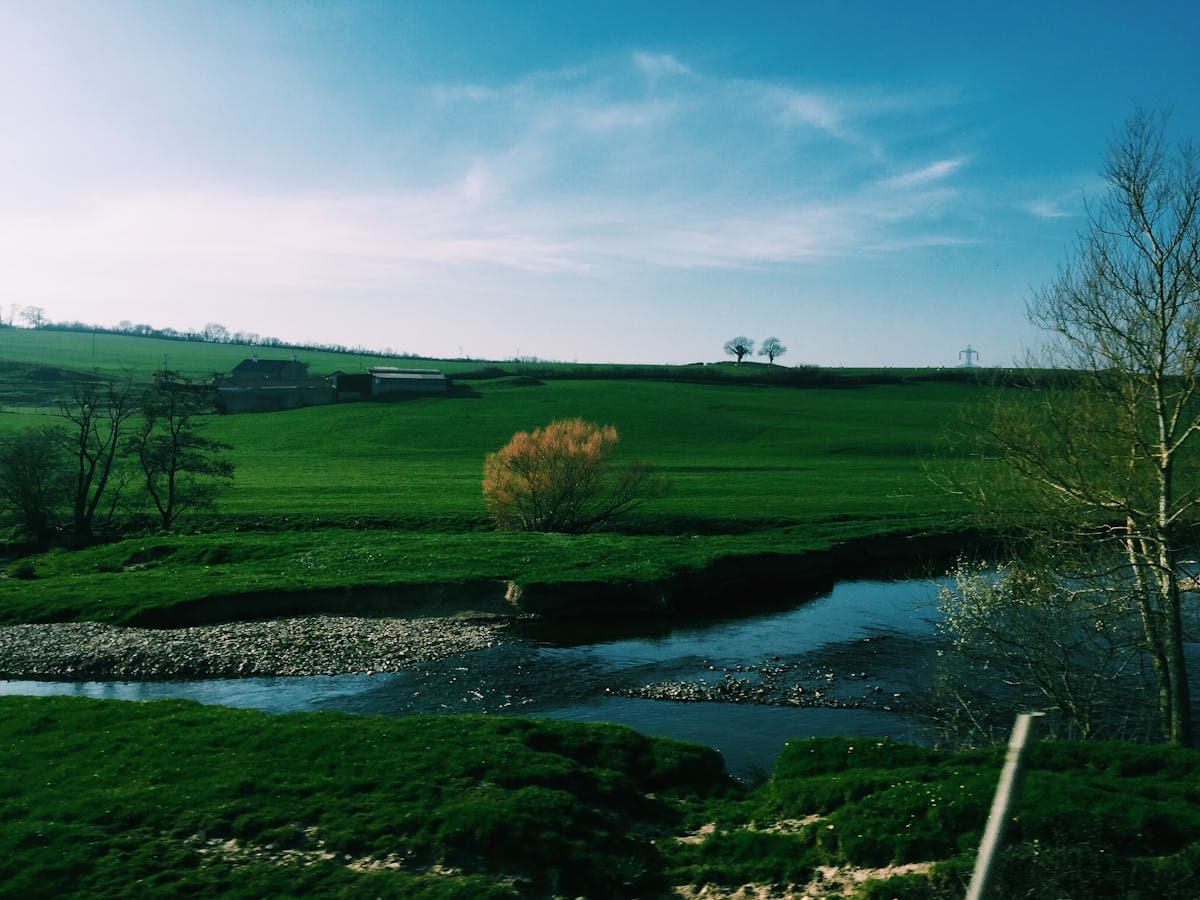
Green pastoral fields and a quiet creek in Virginia's valley country — the landscape surrounding Mossy Creek
The Creek
Mossy Creek is a spring-fed limestone stream in the Shenandoah Valley near Bridgewater, Virginia. It flows for about five miles through open farmland: rolling pasture, fence lines, and the kind of Shenandoah Valley scenery that makes you understand why people settled here. The creek is small, typically ten to twenty feet wide, with a mix of riffles, undercut banks, and glassy pools that hold surprisingly large trout.
The Virginia Department of Wildlife Resources manages a 1.2-mile delayed-harvest section on Mossy Creek that has become one of the most respected technical fisheries on the East Coast. During the delayed-harvest season (October through May), the section is catch-and-release with artificial lures only. Trout are stocked, but the spring creek conditions (clear water, steady temperatures, abundant insect life) produce fish that behave like wild trout within weeks of stocking. Holdover fish that survive multiple seasons are as wary as any brown trout in the country.
Why It Matters
Mossy Creek fills an important niche: it's the best technical spring creek experience available on public water east of the Mississippi. The Letort has history but has suffered from development pressure. Many Pennsylvania and New York spring creeks are posted or degraded. Mossy Creek is well-managed, publicly accessible, and actively maintained as a quality fishery.
The creek is also a proving ground. East Coast anglers who want to develop spring creek skills before traveling to Silver Creek or the Paradise Valley creeks come to Mossy Creek to learn. The lessons transfer: the same approach to drag-free drifts, the same need for light tippet and careful wading, the same requirement to read the water and find feeding fish before casting.
Key Hatches
| Hatch | Timing | Notes |
|---|---|---|
| Blue-winged olives | Mar–May, Oct–Nov | Sizes 18–22; reliable on cloudy days |
| Sulphurs | May–Jun | Sizes 16–18; the creek's best mayfly hatch |
| Terrestrials | Jun–Sep | Ants and beetles work well along grassy banks |
| Midges | Year-round | Sizes 22–26; essential in winter months |
| Caddis | Apr–Jun | Sporadic but worth watching for; sizes 14–18 |
Access and Logistics
Access: The delayed-harvest section is accessed from a VDWR parking area on Route 747 (Mossy Creek Road) south of Bridgewater. The boundaries are well-marked with signs.
Regulations: Delayed-harvest rules apply October 1 through May 31 (catch-and-release, single-hook artificial lures only). June through September allows harvest under general regulations. Check current VDWR regulations for exact dates and limits.
Nearby fly shops: Mossy Creek Fly Shop in Harrisonburg (about 20 minutes north) is the local authority on the creek and other Shenandoah Valley streams.
Getting there: Bridgewater is on Route 42, about 10 miles south of Harrisonburg in the central Shenandoah Valley.
Between hatches: Mossy Creek responds well to small nymphs: pheasant tails, zebra midges, and scud patterns fished under an indicator or tight-lined through the deeper pools. The riffles at the top of the delayed-harvest section concentrate fish and are more forgiving than the glassy flats downstream.
Check Virginia conditions on RiverReports for flow data on monitored streams in the region.
Where to Start
If you've never fished a spring creek, don't start with Silver Creek or Armstrong. The learning curve is steep and the rod fees are expensive tuition for getting skunked.
Mossy Creek is the best entry point. It's free, public, well-marked, and the delayed-harvest section holds enough fish that you'll get opportunities even while making mistakes. The riffles in the upper section are more forgiving than classic spring creek flats, and you can practice the approach without burning through a $250 rod fee.
Nelson's Spring Creek is the most forgiving of the Paradise Valley trio. The fish are somewhat less pressured, the creek tolerates slightly less refined presentations, and if you're going to spend money on a rod fee, Nelson's gives you the best chance of success on your first spring creek trip out West.
The Letort is worth a day if you're in south-central Pennsylvania, but go for the experience and history rather than expecting banner fishing. The trout density isn't what it once was, and the creek rewards patience over productivity.
Silver Creek and Armstrong/DePuy are where you go once you've put in time on easier spring creek water. They'll still humble you, but you'll understand why.
The Spring Creek Approach
Spring creek fishing doesn't require special equipment. It requires a different mindset.
The most important shift is from casting to observation. On a freestone river, you might walk to a promising run, cast a hopper-dropper rig into it, and cover water efficiently. On a spring creek, you walk slowly along the bank (not in the water, along it) and you watch. You're looking for rises, for subtle dimples in the surface film, for the shadow of a tail fanning over weed beds. Finding the fish comes before everything else.
Once you've found a feeding trout, the approach matters more than the fly. Stay low. Move slowly. Plan your route so your shadow doesn't cross the fish. Take a position downstream or to the side. Spring creek trout are particularly alert to movement upstream, which is where predators come from.
Leaders are long and tippets are light. Twelve to fifteen feet of leader is standard, with 5X to 7X tippet depending on fly size and trout wariness. The goal is separation between the fly line and the fly, because spring creek trout have learned that the thick thing landing on the water means the small thing isn't food.
The cast is less important than the drift. A mediocre cast that lands the fly in the right lane with two feet of drag-free float will catch more fish than a beautiful cast that drags after six inches. Mend before the fly lands. Use reach casts. Feed slack. Do whatever it takes to let the fly travel at the speed of the current, nothing more and nothing less.
And then: patience. Spring creek trout refuse flies. They refuse good flies presented well. They refuse for reasons you'll never understand. The fish that ignored your fly fifteen times might eat it on the sixteenth drift, or might not eat it at all. The angler who succeeds on spring creeks is the one who accepts refusal as information, adjusts, and tries again without frustration.
It's the most humbling fishing in America. It's also the most rewarding.
Using RiverReports
Track conditions on spring creek fisheries and nearby monitored streams:
- Idaho: Idaho stream conditions, monitor flows on the Wood River and Big Wood River near Silver Creek
- Montana: Montana stream conditions, Yellowstone River flows near Livingston indicate general valley conditions
- Pennsylvania: Pennsylvania stream conditions, monitor Cumberland Valley streams near the Letort
- Virginia: Virginia stream conditions, Shenandoah Valley and nearby watershed data
For detailed destination planning, see our Central Idaho guide and Bozeman & Southwest Montana guide.
River Intel Weekly
Weekly flow updates and fishing intel.
© 2026 RiverReports, Inc.