Where to Go Fishing: Access Maps, Flow Data & Hidden Spots
Quick Reference
| Factor | What to Look For | Key Numbers |
|---|---|---|
| Water size | Creeks and small rivers you can wade across | 50-200 CFS ideal for small water |
| Visibility | Clear enough to see 12+ inches into the water | Wait if it's chocolate brown |
| Best times | Overcast days, early morning, or evening | Avoid 11am-3pm in summer |
| Movement | Change spots every 10-15 casts | Fish facing upstream - approach from below |
| Access types | Walking paths, town parks, state wildlife areas | Look for tire tracks and worn paths |
Key Principle: The catch-22 of fly fishing is that nobody wants to give away spots, but beginners need specific locations to succeed. The solution isn't finding secret honey holes - it's learning to read obvious signs and fish accessible water better than everyone else.
The Beginner's Catch-22
You're new to fly fishing. You walk into a fly shop and ask the most natural question in the world: "Where should I go fishing?"
The answer you get is something like "Go anywhere on Boulder Creek" or "The whole section through town fishes fine."
This is not helpful.
For beginners, "anywhere" is a big place. The reality is that some spots hold fish and some don't. More realistically, some spots hold catchable fish and some don't. You can hammer the water for hours in the wrong spot and catch nothing, while someone a hundred yards upstream is landing fish after fish.
I don't patronize that fly shop anymore.
How to Actually Get Good Information
Here's the trick to getting real intel from fly shops: don't ask where to go. Instead, show up with a plan and ask for an opinion.
Before you visit the shop, do some preliminary research. Pick 2-3 specific locations you're considering. Maybe you found a walking path in town that follows the river, or noticed a park with good access on Google Maps, or saw a stretch mentioned on a forum.
Then ask something like: "Hey, I'm thinking of fishing Blue Creek either on the in-town section by the amphitheater or just above Blue Creek Park. Do you fish there ever?"
This approach works for three reasons:
- You've shown you did homework - The shop employee now knows you're not asking them to do your thinking for you
- You're asking about specific locations - They can give specific advice instead of vague generalities
- You're asking about their personal experience - You're not explicitly asking "where's the secret spot?" You're asking if they've fished the places you're already planning to go
The response you'll often get is something like: "Oh yeah, I love the park. Nobody thinks to go there because it's in town but it actually fishes great."
That's actionable. That's what you came for.
What Kind of Water to Start On
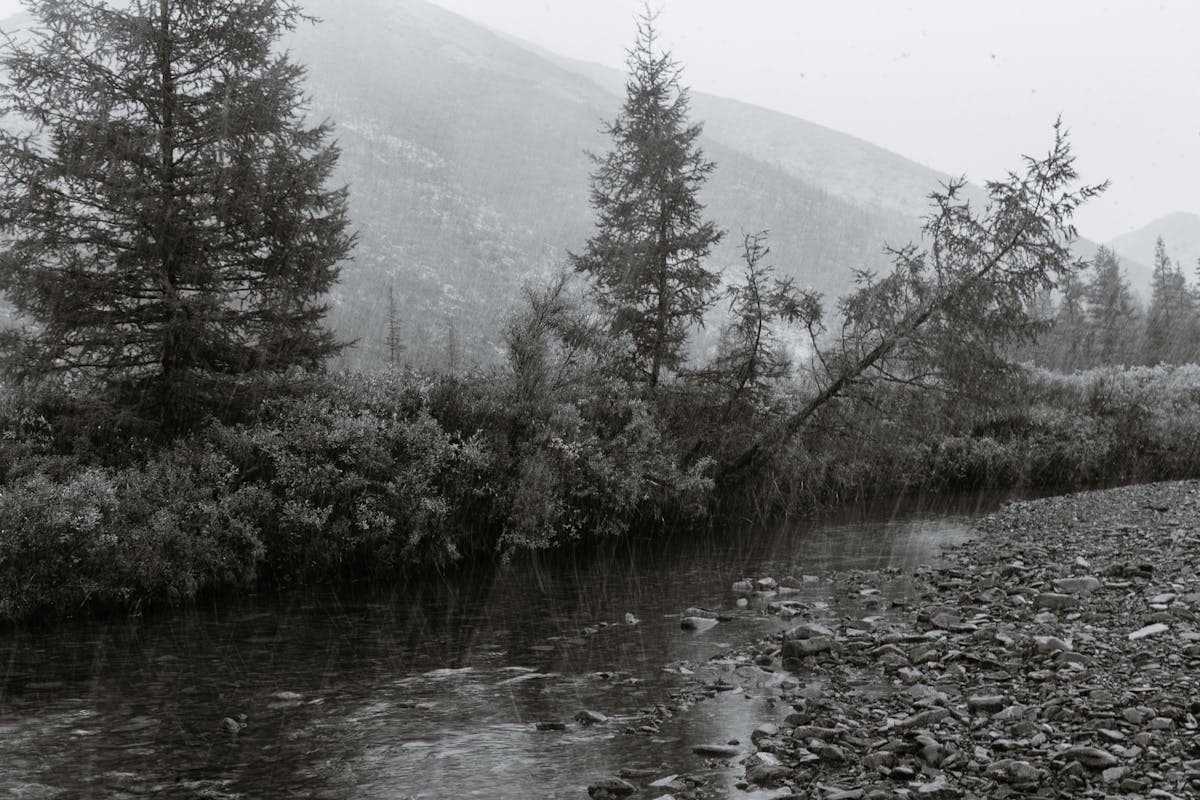
Small mountain creeks like this are perfect for beginners - easy access, forgiving fish, and variety within walking distance
Think Small
I'm going to assume you're fairly new to the sport if you're reading this. In that case, fish a creek, small river, or small lake.
Since "small river" is relative, here's my definition: a river with at least one stretch you can wade across.
Large rivers get a lot of press in magazines and on Instagram. But what you'll find is that the people praising those rivers:
- Know what they're doing (and have for years)
- Own boats
If you don't own a boat, rivers like the Missouri or the main stem of the Yellowstone are much harder to fish well. I was fishing the Missouri below Holter Dam once - I made my casts, nothing was happening, and when I decided to move I realized it was a quarter-mile walk to get to the next piece of interesting water.
You'll find yourself in similar situations fishing large reservoirs from shore.
Creeks, small rivers, and small lakes offer two things that are paramount for beginning anglers:
- Variety - You can fish ten different types of water in an hour
- Accessibility - You can walk to the next spot in 30 seconds
The Walking Path Secret
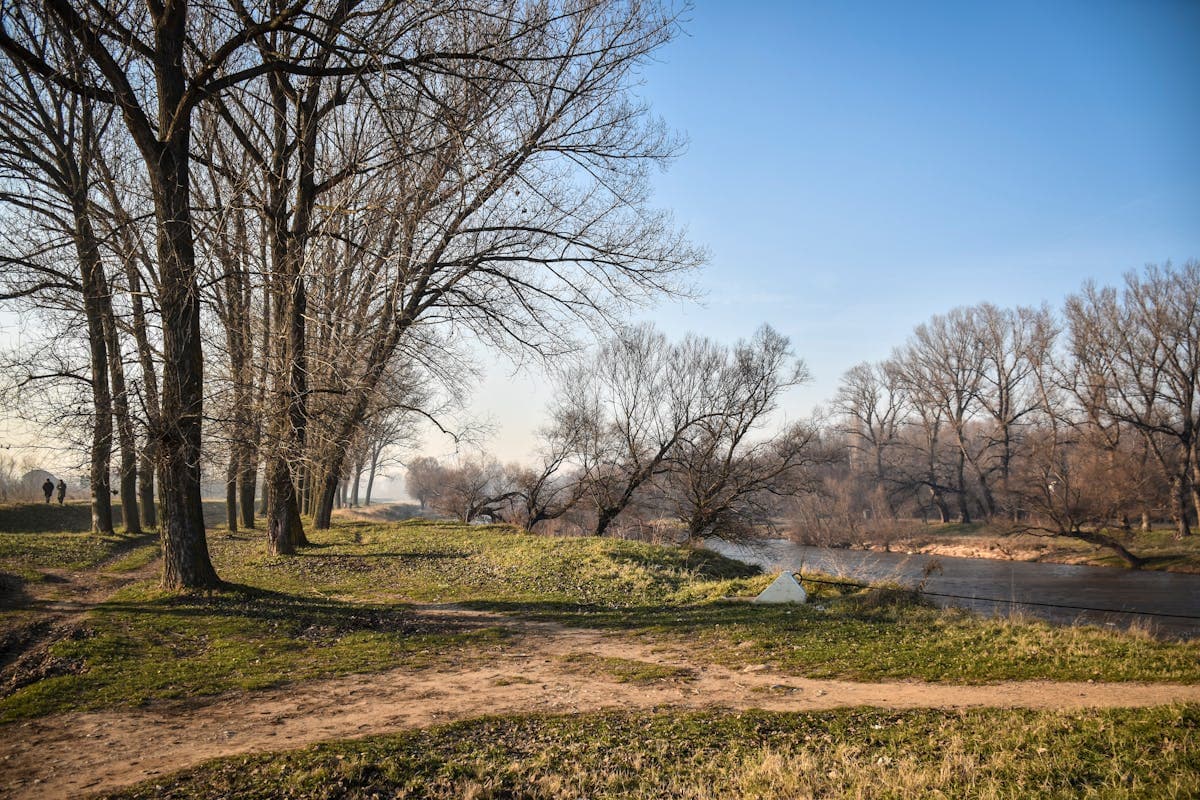
Riverside trails like this are goldmines for beginners - easy parking, easy access, and fish that don't see as much pressure as you'd think
One of my favorite ways to find beginner spots: look for walking or biking paths that follow rivers.
These paths have everything you want:
- Ample parking
- Easy access (there's a path!)
- Typically underfished (people assume town water is fished out)
- Built-in entertainment for non-fishing companions
That last point matters more than you think. If you're fishing while your spouse walks the dog, everyone's happy. At minimum, you'll make someone smile at the idyllic scene of you fishing while they walk Fido.
Because these aren't hidden, secret spots, people are more willing to share information about them. The secrecy premium on a city park stretch is zero - so folks will actually tell you what's working.
Beginner-Friendly Water Types (With Examples)
Here are five types of water that consistently produce for new anglers. I've included specific examples, but the patterns apply anywhere.
1. Town Stretches with Trail Access
These are the walking paths I mentioned earlier - but here are specific examples to illustrate what to look for:
| State | Example Water | Why It Works |
|---|---|---|
| Colorado | Boulder Creek through Boulder | 5+ miles of bike path, multiple parking areas (Eben G. Fine Park, Central Park), surprisingly good fishing despite foot traffic |
| Montana | Rock Creek near Missoula | Pulloffs every half mile along Highway 10, clear freestone creek, 10-15 inch fish |
| Oregon | Deschutes through Bend | Urban water that fishes better than you'd expect, good access from parks |
| Idaho | Big Wood River in Ketchum | Trail follows the river, mountain town setting, consistent fish |
2. State Wildlife Areas and Public Access Points
Most states maintain wildlife areas specifically for fishing access. They're free (or cheap with a license), clearly marked, and designed for anglers.
How to find them:
- Search "[Your State] State Wildlife Areas fishing"
- Check your state's Division of Wildlife website for access maps
- Look for brown "Public Fishing" signs along highways
Why they work:
- Usually stocked or naturally productive
- Clear parking and access points
- Less pressure than famous destination waters
3. Tailwaters Below Small Dams
Water below dams runs colder and more consistent than freestone streams. This creates excellent habitat and predictable flows.
Examples:
- South Platte below Cheesman (Colorado) - famous but crowded
- Frying Pan below Ruedi (Colorado) - more accessible stretches than people think
- San Juan below Navajo (New Mexico) - technically challenging but fish everywhere
- Bighorn below Afterbay (Montana) - elite tailwater but beginner sections exist
The key insight: Tailwaters are famous because they're consistently good. The crowded "quality" sections get all the attention, but there's usually fishable water upstream and downstream of the famous stretches. Ask fly shops about "the less pressured sections" of well-known tailwaters.
Tailwater safety note: Dam releases can change flows rapidly. If you're fishing a tailwater, check the release schedule before you go, and be aware that rising water means it's time to move to shore. Some dams sound sirens before releases; know if yours does.
4. Small Freestone Creeks in National Forests
These are often overlooked because they're not famous, but they're perfect for learning.
What to look for:
- Creeks 10-20 feet wide
- Forest Service roads that parallel the water
- Named on a map but not in magazine articles
Advantages:
- Fish are less educated
- Short casts, simple presentations
- You can cover a mile of water in an afternoon
- Mistakes are forgiven - fish are hungry
How to find them: Search your National Forest's website for "fishing" or look for creeks on the forest map. Almost any creek big enough to name holds trout in mountain country.
5. Lakes with Inlet/Outlet Streams
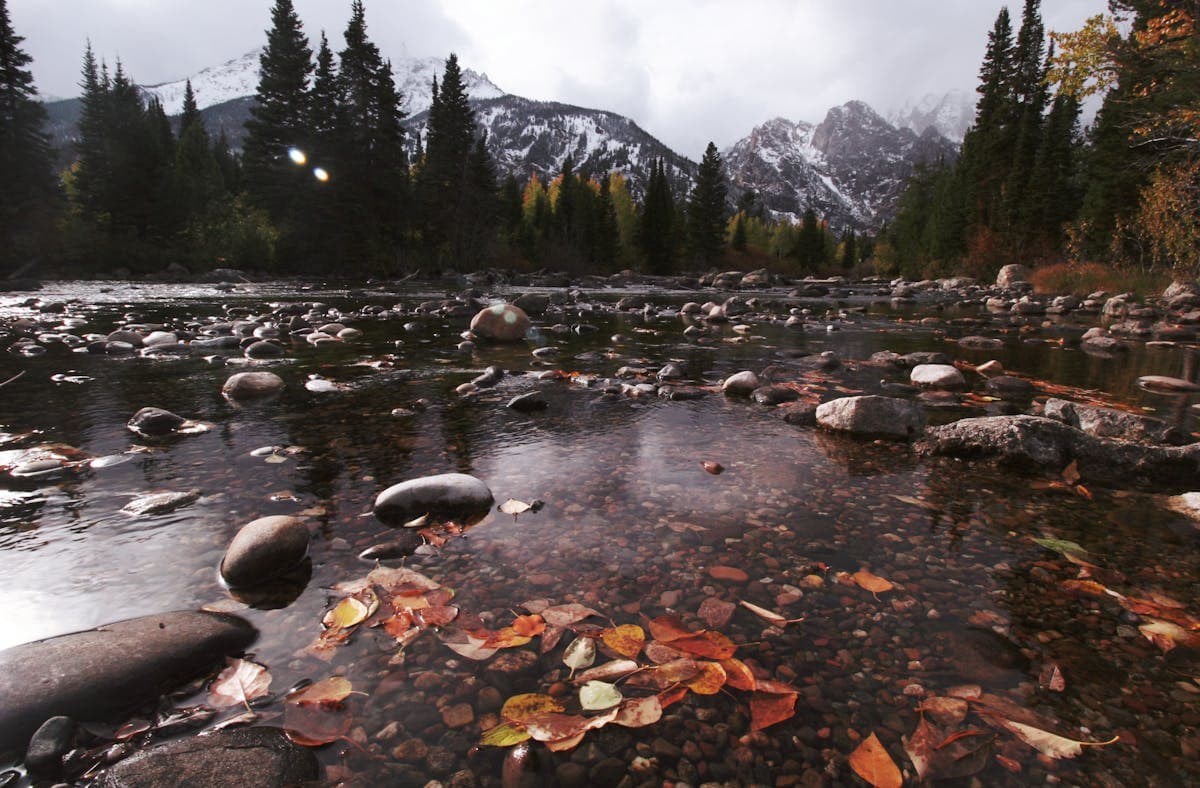
Where streams meet lakes, trout congregate - these zones are beginner-friendly because fish are concentrated and visible
High lakes where streams enter or exit are natural fish highways. Trout congregate where moving water meets still water.
Why they're good for beginners:
- Fish are concentrated in specific zones
- You can sight-fish in clear water
- Less casting required - shorter distances work
- Hiking in means less competition
Target zones:
- Where inlet streams enter the lake (especially in spring)
- Where outlet streams leave the lake (especially in fall)
- Drop-offs within casting distance of shore
- Weed edges where fish cruise
Checking Conditions Before You Go
Before driving to any water, spend 5 minutes checking conditions. This single habit will save you more frustration than any other advice in this guide.
The Flow Check
Use RiverReports to check current flows on your target water. Here's what to look for:
| Your Water Type | Target CFS | Red Flags |
|---|---|---|
| Small creek (< 20 ft wide) | 30-100 CFS | Over 200 CFS or rising rapidly |
| Medium creek (20-40 ft wide) | 50-200 CFS | Over 400 CFS or muddy color |
| Small river (wadeable) | 100-400 CFS | Over 600 CFS or 3x normal flows |
| Tailwater | Varies widely | Check local guides for ideal ranges |
The key numbers to note:
- Is the flow rising, falling, or stable? Stable or slowly falling is best.
- How does current flow compare to the median for this date? Within 50% of median is typically fishable.
- Was there recent rain upstream? Rain 24-48 hours ago often means off-color water arriving.
The Weather Check
Weather affects fish behavior more than most beginners realize.
| Condition | Effect on Fishing | Your Move |
|---|---|---|
| Overcast, stable barometer | Best conditions - fish active all day | Go fishing |
| Sunny, calm | Fish less active, especially midday | Fish early morning or evening |
| Light rain | Often excellent - bugs active, fish feeding | Go fishing (stay safe) |
| Heavy rain | Runoff incoming, fish hunker down | Wait 24-48 hours |
| Cold front (25°F+ drop) | Fish sluggish for 1-2 days | Slow down, fish deep |
| Post-cold front, clear | Tough fishing, fish spooky | Low expectations, nymph deep |
When to Bail
Part of finding good water is knowing when any water is bad water. Here's when to call an audible:
Definitely bail if:
- Water visibility is less than 6 inches (you can't see your boots in knee-deep water)
- Flows are 3x or more above normal
- The river is bank-to-bank and pushing hard
- Flash flood warnings are active anywhere in the watershed
Consider bailing if:
- Flows jumped 50%+ overnight (something changed upstream)
- Water temperature exceeds 67°F (stressed fish, mortality risk)
- Heavy rain is forecast in the next 2 hours
- Lightning within 10 miles
What to do instead:
- Scout access points for your next trip
- Drive to a different watershed with better conditions
- Fish a tailwater (dam releases are more predictable)
- Get lunch and try again in the evening
Best Times to Fish
Time of Year
For beginners, spring and fall are the sweet spot. Here's why:
| Season | Beginner Rating | Why |
|---|---|---|
| Spring (Apr-May) | Good | Runoff can be challenging, but pre-runoff (April) and post-runoff (late May/June) offer hungry fish |
| Summer (Jun-Aug) | Fair | Fish are in predictable spots but picky; best early morning and evening only |
| Fall (Sep-Oct) | Excellent | Flows stable, water cooling, fish feeding heavily before winter |
| Winter (Nov-Mar) | Challenging | Fish less active, technical presentation required, short windows of productivity |
My recommendation: If you're new, target September through mid-October. Stable flows, moderate temperatures, active fish, no crowds after Labor Day.
Time of Day
| Time | Summer | Spring/Fall |
|---|---|---|
| Dawn-9am | Prime time | Good |
| 9am-11am | Good | Prime time |
| 11am-3pm | Slow (wait for evening) | Still fishable |
| 3pm-6pm | Good | Prime time |
| 6pm-dark | Prime time | Good |
The pattern: In summer, fish the edges of the day. In spring and fall, you have more flexibility - fish are active through midday. In winter, fish the warmest part of the day (11am-3pm).
How to Pick a Specific Spot
Look for Signs of Use
Don't try to be completely original. Other anglers have already found the good spots. Your job is to find evidence of that.
Good signs:
- Pulloffs with plenty of tire marks
- Parking lots with 1 or 2 rod vaults on cars
- Beaten-down paths to the water
- Worn spots on the bank where people clearly fish
What you're looking for: Not the most popular spot (that might be overcrowded), but evidence that some people fish there regularly and presumably catch fish.
Know What You Find Enjoyable
Before picking where to go, ask yourself what you want from the day:
Are you really there for fishing, or is it about the setting?
- If you want an alpine lake experience, the fishing is a bonus - you're really on a hike
- If you want to catch lots of fish, that alpine lake might frustrate you
What defines success for you?
- Lots of fish?
- One really big fish?
- Being somewhere beautiful?
- Learning something new?
This isn't your job - it's a hobby. Do it in a way you'll find rewarding.
Are you fishing with someone who doesn't fish?
- If your spouse doesn't fish, go somewhere with something for everyone
- Town paths, parks with other activities, scenic areas with trails
- Don't be selfish
Once You're There: Move Around
Here's something I see constantly with new anglers: they find one pool and hammer it for hours.
Think about what you're doing on the 37th cast to the same fish. You are trying to get an animal that does not think to change its mind.
Trout don't really change their minds.
This is why:
- The first cast always has the highest take rate
- When you put on a new fly, you often get a strike on the first cast
The Movement Rule
If you've made 10-15 good casts to a spot and haven't had any interest, move.
I'm not saying move 5 feet. I'm saying move to completely different water:
| If You've Been Fishing... | Try... |
|---|---|
| Deep water | Shallow water |
| Fast water | Slow water |
| Near rocks | The middle of the river |
| The head of a pool | The tail of a pool |
| Pocket water | A long flat run |
You never know what will work until you try it. And the fish you haven't cast to yet are infinitely more likely to eat than the fish that just watched your fly drift by 15 times.
The 80/20 of Finding Fish
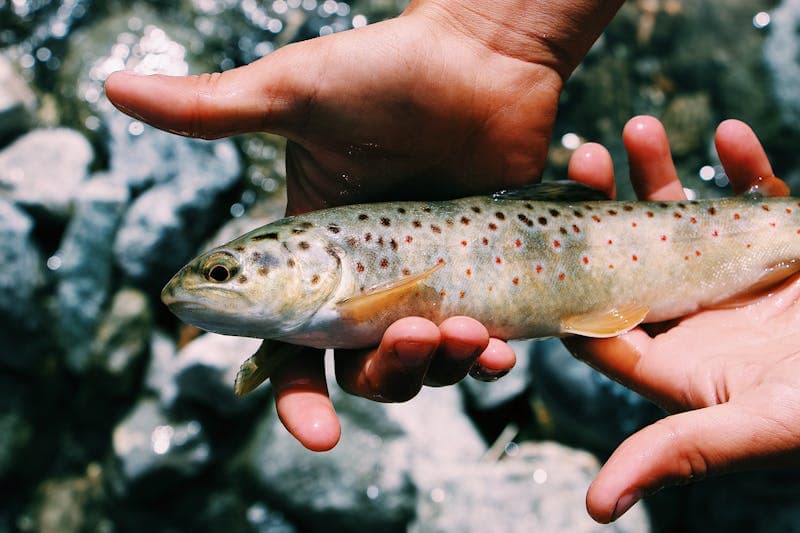
The payoff for finding good water - a healthy trout from a small mountain stream
Most of the time, fish are in predictable locations. Here's what to look for:
Structure and Cover
Trout need:
- Protection from current - They don't want to fight the full force of the river all day
- Protection from predators - Overhead cover like undercut banks, logs, or deep water
- Access to food - They want food to drift past without working too hard
Spots that provide all three:
- Where fast water meets slow water (current seams)
- Behind large rocks
- Under undercut banks
- At the heads and tails of pools
- In deeper runs along the bank
The "Edge" Principle
Fish live on edges. The edge between:
- Fast and slow water
- Deep and shallow water
- Light and shadow
- Main current and slack water
When you're looking at the river, look for edges. That's where the fish are.
Common Beginner Mistakes
Mistake 1: Fishing the Most "Fishy Looking" Spot
That beautiful, deep pool in the middle of the river? Every angler who's ever walked by has fished it. Those fish have seen everything.
Meanwhile, that skinny, unimpressive riffle 50 yards downstream? Most people walk right past it. Those fish haven't seen a fly in weeks.
Fish the water everyone walks past.
Mistake 2: Starting Too Far Upstream
Work your way upstream, not down. When you wade, you stir up sediment that flows downstream. If you walk upstream first and then fish down, you're fishing through water you just muddied.
Plus, trout face upstream. If you approach from downstream, you're sneaking up behind them.
Mistake 3: Ignoring the Water at Your Feet
Don't wade straight into the river. Fish are often holding in the shallow water along the bank - right where most anglers stomp through on their way to the "good" water.
Before you wade, make a few casts to the near water. You might be surprised.
Mistake 4: Fishing Through Bad Conditions
Sometimes the answer is "not today."
If you show up and:
- Water visibility is less than 6 inches (chocolate brown from recent rain)
- Flows are 3x or more above the median for this date
- You can't safely wade across riffles that normally look crossable
- Fish are visibly stressed and skittish in low, warm water
Don't force it. Go get lunch, scout other access points, or call it a day. Part of finding good water is recognizing when conditions make any water bad water.
Mistake 5: Not Having a Backup Plan
The access point you planned on is packed with anglers. The creek you drove an hour to reach is blown out. The weather changed.
Always have Plan B and Plan C. Before you leave:
- Identify at least two other waters in the general area
- Check flows on all of them
- Know where parking/access is for each
This turns disappointment into adventure. "Well, X didn't work out, but I've always wanted to try Y anyway."
Putting It All Together
Pre-Trip Checklist
Before you head out, run through this list:
- Checked flows on target water (and backup options)
- Checked weather forecast (morning and afternoon)
- Know where parking is for each option
- Have your fishing license (and any required stamps)
- Identified backup water if Plan A doesn't work
- Told someone where you're going and when you'll be back
The Process
Here's my process for finding a new spot to fish:
- Research online - Look at Google Maps satellite view for access points, paths along rivers, parking areas
- Identify 2-3 options - Don't put all your eggs in one basket
- Visit a local fly shop - Ask for opinions on your specific options, buy some flies
- Scout in person - Drive by your spots before committing, look for other anglers and water conditions
- Start fishing the edges - Work the obvious structure first
- Move frequently - If 10 casts gets nothing, find new water
- Take notes - What worked, what didn't, what you want to try next time
The goal isn't to find the one perfect secret spot. The goal is to build a mental map of water you know - where the fish hold at different flows, what hatches happen when, which spots fish best in morning vs. evening.
That knowledge only comes from time on the water. And you can only spend time on the water if you actually go fishing instead of endlessly searching for the "right" place.
So pick a creek. Find an access point. Go fish.
A Note on Safety
Finding water is also about finding safe water. A few basics:
Wading safety:
- Use a wading staff until you're comfortable reading water
- Never wade deeper than thigh-high in moving water until you're experienced
- Felt soles grip rock better; rubber soles with studs work in most conditions
- If you're unsure, don't cross - there's fish on this side too
Wildlife:
- Make noise in bear country
- Know what poison ivy/oak looks like in your area
- Give snakes (and moose) plenty of space
Weather:
- Lightning kills anglers every year - if you hear thunder, get off the water
- Afternoon thunderstorms are predictable in mountain country - plan to be off exposed water by 2pm in summer
- Cold water + cold rain = hypothermia risk even in summer
Being alive tomorrow matters more than catching fish today.
Related Guides
- Understanding River CFS: How to Read Flow Data - Learn to check conditions before you go
- State Fishing Reports - Check current flows on waters near you
Frequently Asked Questions
Is lake fishing easier than river fishing?
Lakes are generally easier for beginners because you don't have to manage current, drag, or wading in moving water. Fish in lakes hold in predictable spots like inlets, drop-offs, and weed edges. Rivers require reading water and positioning, but offer more consistent action once you learn the basics.
What is the easiest fishing for beginners?
Small creeks and ponds are the easiest water for beginners. Look for streams you can wade across; 50-200 CFS is ideal. Stock ponds and state wildlife area lakes are also great starting points. Check RiverReports flow data to find fishable conditions before you go.
What is the 80/20 rule in fishing?
The 80/20 rule means 80% of the fish hold in 20% of the water. Focus on structure: current seams, undercut banks, deeper pools, and spots where fast water meets slow water. Walking past unproductive stretches to reach good holding water is the fastest path to catching fish.
River Intel Weekly
Weekly flow updates and fishing intel.
© 2026 RiverReports, Inc.