Quick Reference
| What | When | Key Numbers |
|---|
| General season | Memorial Day weekend through Oct. 31 | Sunrise to sunset daily |
| Early season (Firehole/Madison/Gibbon) | May 1 through Oct. 31 | Firehole too warm July-Aug |
| Year-round waters | Gardner River (Osprey Falls down), Madison (state line to West Entrance) | Midges, nymphs, small streamers |
| Park fishing permit | Required for all anglers 16+ | 3-day: $18, 7-day: $25, Season: $40 |
| Guided walk-wade trips | Book by March for peak season | $495-$695/day per person |
| Fly shop | Blue Ribbon Flies (West Yellowstone) | 305 Canyon St, West Yellowstone, MT |
FISHABLE
WEST SIDE CLOSED — EAST SIDE PEAK LATE-SUMMER FISHING: The Firehole, Madison, and Gibbon (downstream of Norris Campground) remain fully closed to fishing since July 15 to protect native and wild trout during warm water conditions (NPS). The Madison gauge reads 296 CFS at 73.9°F (23.3°C, USGS Aug 25) — still well above safe levels. Do not fish west-side rivers. EAST SIDE EXCELLENT: Hoot Owl restrictions remain lifted since August 13 — full dawn-to-sunset fishing on all open waters. Recent moisture is triggering fall hatch transitions across the park (Big Sky Anglers, Aug 28). Slough Creek is the premier fishery — fall drakes (Timpanoga hecuba #12) intensifying, with JoJo's Drake Mackerel and Baltz's HiVis Paranymph the go-to patterns (Big Sky Anglers, Aug 28). PMD spinners, caddis, hoppers #12-14, beetles, and ants all producing. First and second meadows fishing well for cutthroats 16-20 inches. Lamar River at 199 CFS (USGS, Aug 25), temp 63.5°F (17.5°C) — cooled notably from 65.1°F last week; rain turbidity from mid-August storms fully cleared and the river is in excellent shape (Big Sky Anglers, Aug 28). Lower flows concentrating fish in deeper runs and pools. Soda Butte Creek also cleared and fishable. Yellowstone River at Corwin Springs 2,020 CFS (USGS, Aug 25), 67.5°F (19.7°C) — temps have cooled slightly from 68.0°F last week, easing below the upper comfort threshold but still worth monitoring during afternoon hours. Nymphs continue to outproduce dries on the Yellowstone — tungsten Buggerlegs, Blow Torch, and Duracell the top subsurface picks (Yellowstone Angler, Aug 25). Hoppers and Chubbies #10-12 remain the top dry patterns. Canyon sections above Lamar confluence fishing clear (Big Sky Anglers, Aug 28). Gardner River open and fishing well with terrestrials and stonefly nymphs. Yellowstone Lake shore fishing productive. Grey Drake hatch concluding on the caldera stretch — morning spinner falls of small mayflies emerging, Copenhaver Spinner #16-18 (rusty/olive) effective (Big Sky Anglers, Aug 28). Fall Baetis beginning to show following cool, wet weather (Big Sky Anglers, Aug 28). Strategy: focus exclusively on east-side fisheries — Slough Creek for intensifying fall drakes and dry fly cutthroats, Lamar for cooled-down terrestrial and drake fishing, Yellowstone River for nymphing (temps improving), and Gardner River for all-day opportunity. West-side rivers remain closed until conditions improve, likely mid-to-late September.Flow199 CFS (USGS, Aug 25)
Trendstable — holding at 199 CFS, down from 261 CFS two weeks ago
Clarityexcellent — fully cleared after mid-August storms
Temp63.5°F (17.5°C, USGS Aug 25)
Hoppers #10-14Dave's Hopper #8-12Henneberry Hopper #10-12Chubby Chernobyl #10-12
FlowYellowstone at Corwin Springs 2,020 CFS (USGS, Aug 25)
Trenddropping slowly — down from 2,040 CFS on Aug 22
Claritygood — canyon sections above Lamar confluence clear (Big Sky Anglers, Aug 28)
Temp67.5°F (19.7°C, USGS Aug 25)
Chubbies #10-12Hoppers #10-14Midnight/Golden Chubby 2.0 #8-10Nocturnal Stone
FlowClosed to fishing since July 15
Trendn/a
Clarityn/a
TempMadison gauge 73.9°F (23.3°C, USGS Aug 25) — Firehole runs warmer due to geothermal inputs
N/A — river closed to protect native and wild trout
Flow296 CFS (USGS, Aug 25)
Trenddropping slowly — down from 303 CFS on Aug 22
Clarityn/a
Temp73.9°F (23.3°C, USGS Aug 25)
N/A — river closed to protect native and wild trout
🎣 TACTICS RIGHT NOWDry FlyHoppers #10-14 (Pavlovich's Sweet DreamsKK's Henneberry HopperDave's Hopper)Chubby Chernobyl #10-12Midnight/Golden Chubby 2.0 #8-10Fall Drakes (Timpanoga hecuba) #12 (JoJo's Drake MackerelBaltz's HiVis Paranymph — intensifying on Slough Creek; Big Sky Anglers Aug 28)Beetles #14-16Ants #14-18 (Heames' Honey Ant)Flying Ants (Heames' Honey Ant)PMD Sparkle Dun #16-18Copenhaver Spinner (rusty/olive) #16-18Elk Hair Caddis #14-18BWO/Baetis #18-20 (fall Baetis beginning; Big Sky Anglers Aug 28)Green/Gray Drakes #12-14 (concluding on caldera stretch)Parachute Adams #14-16 — TERRESTRIAL SEASON + FALL TRANSITION: hoppers and Chubbies remain the primary top-water patterns across all open east-side fisheries; fall drakes intensifying on Slough Creek — the defining dry fly opportunity of late August into September; Grey Drake hatch concluding on the Yellowstone caldera stretchtransitioning to morning spinner falls of small mayflies #16-18 (Big Sky AnglersAug 28); fall Baetis beginning to show following recent moisture and cooler nights — watch for cloudy/rainy day BWO action; overcast days produce the best dry fly conditions on the Lamarstable at 199 CFS with excellent clarity and cooled to 63.5°F; Slough Creek first and second meadows fishing well for sight-casting to cutthroats 16-20 inches on PMDscaddishoppersand fall drakes; Lamar stable low flows concentrating fish in pools — good sight-fishing; west-side rivers CLOSED — no dry fly fishing available on FireholeMadisonor Gibbon
NymphBlow Torch #14-16Duracell #14-16Lil Spanker PT #14-16Pat's Rubberlegs Coffee/Black #6-8Buggerlegs (various colors)Tungsten BuggerlegsBH Prince #14-16Girdle Bug #6-8BH Pheasant Tail #14-18Copper John #14-16Zebra Midge #18-22Soft Hackles #12-18 — nymphs outproducing dries overall on the Yellowstone at 2020 CFS67.5°F (USGSAug 25); tungsten BuggerlegsBlow Torchand Duracell the top subsurface picks (Yellowstone AnglerAug 25); smaller tungsten bead and beadless nymphs taking fish in deeper runs (Yellowstone Angler); Lil Spanker PT a strong addition; Blow Torch and Duracell remain hot for Slough Creek and Lamar cutthroats at stable low flows (199 CFS63.5°F on Lamar); indicator nymphing productive in canyon sections of the Yellowstone above the Lamar confluence where water runs clear (Big Sky AnglersAug 28); short-line nymphing with stonefly and attractor patterns on the Gardner; Soft Hackles #12-18 effective swung through riffles on Slough Creek; BH Prince in various colors productive across all open east-side fisheries; west-side rivers (FireholeMadisonGibbon below Norris) CLOSED since July 15 — do not fish
StreamerOlive Zonker #6-8Olive Leadeye #6-8Home InvaderSilk KittyBH Woolly Bugger #8-10 (olive/black)Sculpzilla #4-6Sparkle Minnow #4Clouser Minnow #6 — streamers productive on the Yellowstone River at 2020 CFSespecially in deeper runs and along banks; Olive ZonkersHome InvadersOlive Leadeyesand Silk Kitties the top streamer picks; strip streamers along Yellowstone Lake shoreline near Gull Point Drive for cutthroats 14-22 inches — lakes remain open sunrise to sunset; Grand Canyon sections fishable with #4-6 Woolly Bugger with #10 dropper; overcast days significantly improve streamer success; Yellowstone at 67.5°F (USGSAug 25) — temps have cooled slightlyimproving streamer fishing viability through more of the day; west-side rivers (FireholeMadisonGibbon) CLOSED — no streamer fishing available on those waters until reopening
FORECASTThe fall transition is underway on Yellowstone's east side, with recent moisture triggering early fall hatches while west-side rivers remain shut down. The Firehole, Madison, and Gibbon have been closed since July 15 — the Madison gauge at 73.9°F (23.3°C, USGS Aug 25) shows temps stubbornly high despite recent cooler weather, so reopening remains unlikely before mid-to-late September. The big story is fall drakes (Timpanoga hecuba #12) intensifying on Slough Creek (Big Sky Anglers, Aug 28) and fall Baetis beginning to show following recent moisture and cooler nights (Big Sky Anglers, Aug 28). The Grey Drake hatch is concluding on the caldera stretch, giving way to morning spinner falls. These fall hatch transitions will accelerate through September. Lamar River is stable at 199 CFS (USGS, Aug 25) with excellent clarity, and water has cooled to 63.5°F (17.5°C) — down from 65.1°F last week, now ideal for all-day fishing. ENCOURAGING TREND ON THE YELLOWSTONE: at 2,020 CFS (USGS, Aug 25) and 67.5°F, temps have eased from 68.0°F last week. The cooling trend, driven by recent moisture and longer nights, should continue improving conditions through early September. Looking ahead to September: watch for the NPS announcement reopening west-side rivers as water cools — the famous fall run of browns and rainbows from Hebgen Lake on the Madison typically begins mid-September. Baetis hatches will restart on the Firehole. On the east side, fall drakes will intensify on Slough Creek, fall Baetis will build on overcast/rainy days, and the Lamar should hold at stable late-season flows with excellent clarity. Strategy for the next two weeks: Slough Creek for intensifying fall drakes and cutthroat dry fly action; Lamar at stable low flows for terrestrials, fall drakes, and emerging Baetis; Yellowstone River nymphing with improving temps; Gardner River for all-day opportunity; begin planning for September's west-side reopening.
Overview
Yellowstone National Park holds roughly 2,500 miles of rivers and streams across 2.2 million acres, and nearly all of it is managed for native fish. The park's fisheries run the full spectrum: thermally heated spring creeks (Firehole), broad meadow streams with rising cutthroats (Slough Creek, Lamar River), steep canyon water requiring serious hiking (Yellowstone River's Grand and Black Canyons), and the largest high-elevation lake in North America (Yellowstone Lake).
The primary species is the Yellowstone cutthroat trout, one of the last genetically pure populations of its kind. All native fish, including cutthroats, mountain whitefish, and Arctic grayling, must be released. Non-native fish (browns, rainbows, brook trout, lake trout) may be harvested, and in some drainages must be killed. This conservation focus is what makes the park's fishing distinct from surrounding waters.
All fishing in Yellowstone is walk-and-wade only. No boats on rivers or streams. No bait, no barbed hooks, no felt-soled waders. You will need a Yellowstone National Park fishing permit ($18 for three days, $25 for seven days, $40 for the season), which replaces any state fishing license while inside the park.
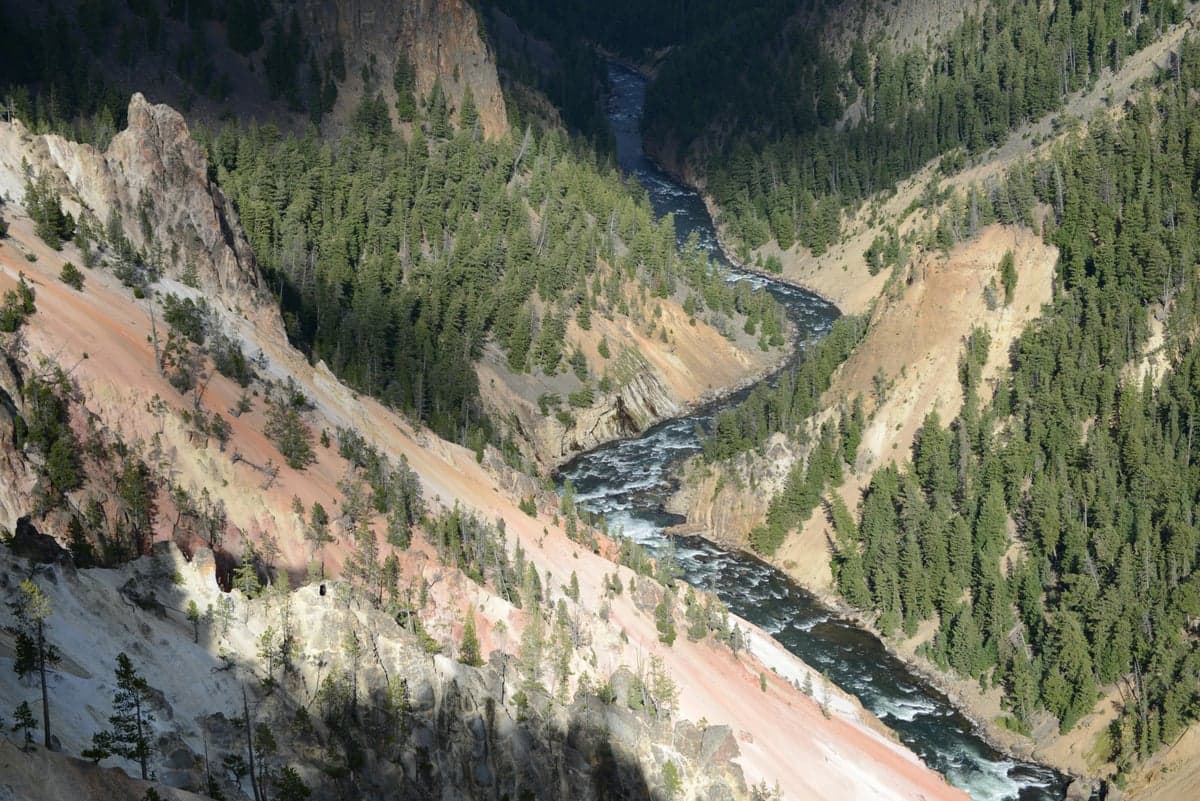
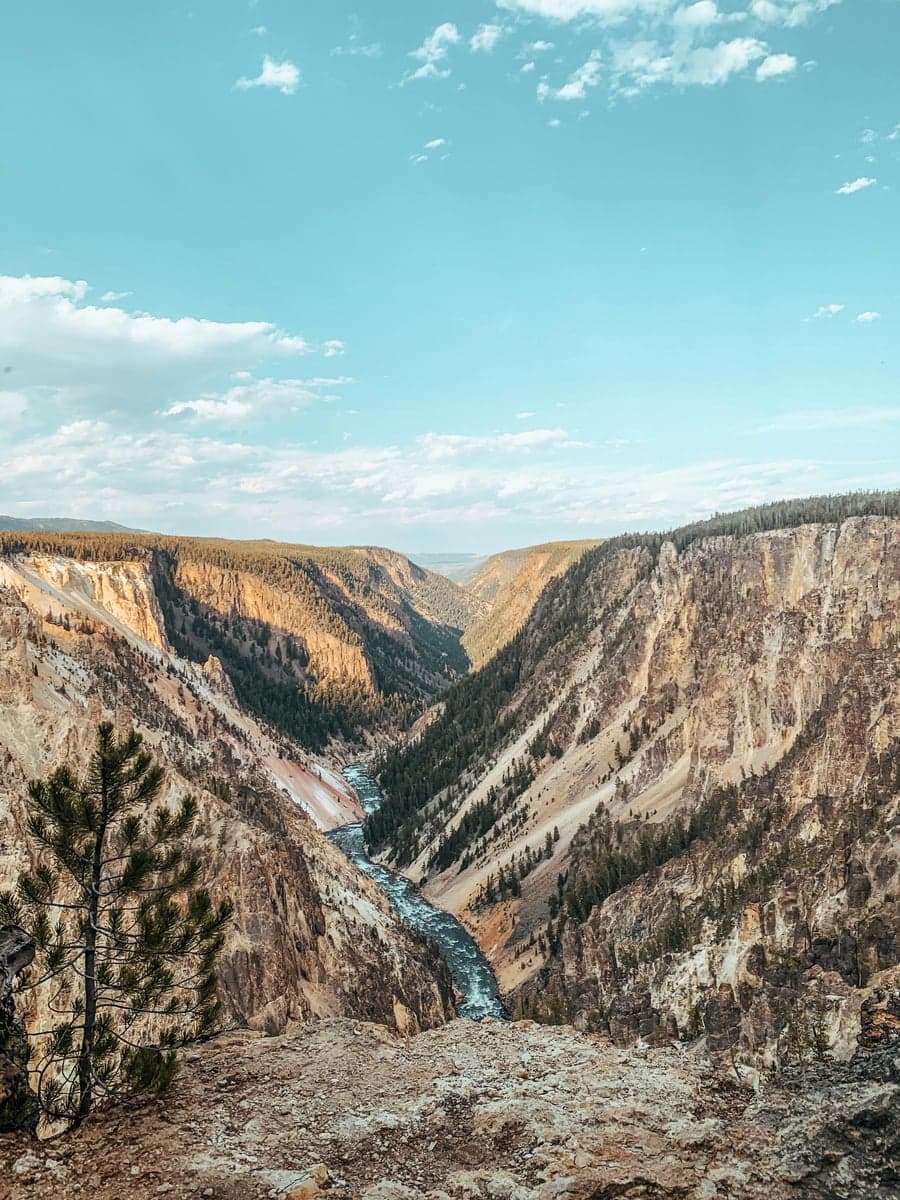
The Grand Canyon of the Yellowstone, where steep trails lead to some of the park's least-pressured cutthroat water
Seasons: When to Fish What
The park's elevation (mostly above 7,000 feet) compresses the fishing calendar compared to surrounding rivers in Montana and Wyoming. Here is a practical month-by-month breakdown.
May and June: Thermal Rivers Come Alive
The general season opens Memorial Day weekend, but the Firehole, Gibbon, and Madison inside the park open May 1. These thermally influenced rivers clear faster than snowmelt-fed streams, making them the first productive fisheries each year.
The Firehole River is the star of early season. Expect caddis, Baetis, and Pale Morning Dun hatches in numbers that Madison River Outfitters describes as "almost unbelievable." By late June, the Firehole warms past trout comfort levels and shuts down until September.
The Gibbon fishes well with nymphs from opening day, with dry fly action picking up mid-June. The Madison inside the park (from the junction of the Firehole and Gibbon down to the West Entrance) offers good fishing immediately after opener, typically lasting about a month before warming.
July: Big Dry Flies, Big Water
July is when Yellowstone really opens up. The Yellowstone River drops into shape during the first week of July, bringing some of the park's most consistent salmonfly and golden stonefly hatches. Montana Angler calls it "some of the most consistent hatches of salmonflies and Golden stoneflies of any river in the world."
The Lamar River clears by mid-July with outstanding hatches of Pale Morning Duns, Green and Gray Drakes, and caddis. Hopper fishing begins late July and runs through September.
August: Backcountry Season
Slough Creek reaches peak condition. The first meadow is a 45-minute hike from the campground trailhead. The second meadow is roughly four miles in. The third meadow, six miles of trail, requires an overnight stay but holds the largest cutthroats, some reaching 22-23 inches.
The Bechler River in the park's southwest corner requires a multi-day backpacking trip but offers solitude and hopper-eating cutthroats with fewer mosquitoes than earlier in summer.
Yellowstone Lake shore fishing is at its best from the June 15 opener through mid-summer. Strip streamers (Clouser Minnows, Woolly Buggers) along the shoreline near Gull Point Drive for cutthroats ranging from 14-22 inches.
September and October: The Quiet Season
Cooler nights revive every fishery. The Firehole reignites with Baetis hatches on cloudy, rainy days, producing pods of rising fish with far fewer anglers around.
The Madison inside the park becomes the main event as lake-run browns and rainbows migrate upstream from Hebgen Lake. These fish average 16-18 inches, with 20+ inch fish showing up regularly in October. Madison River Outfitters recommends egg patterns trailed by baetis nymphs, plus large streamers swung across holding runs.
October can deliver the best trophy fishing of the year, but weather is unpredictable at elevation. Snow, wind, and 30-degree mornings are common. As the locals say, "Often the lousiest weather produces the best fishing."
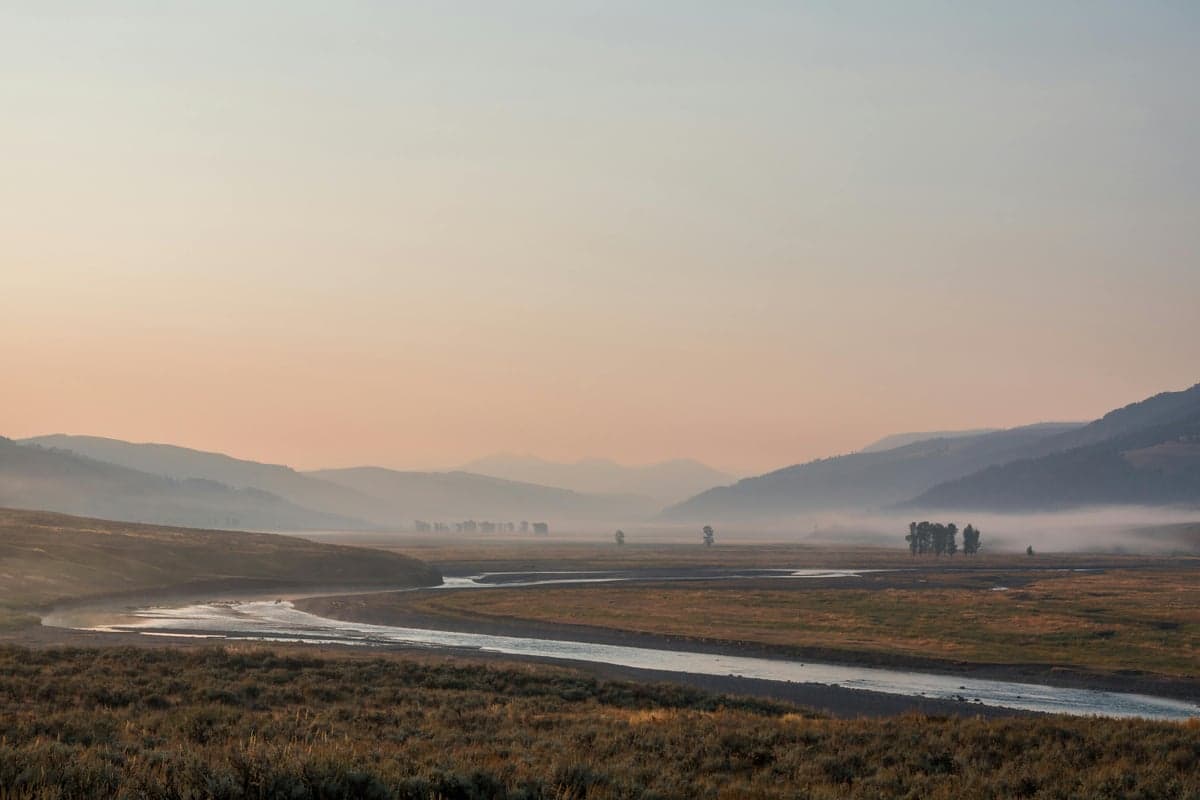
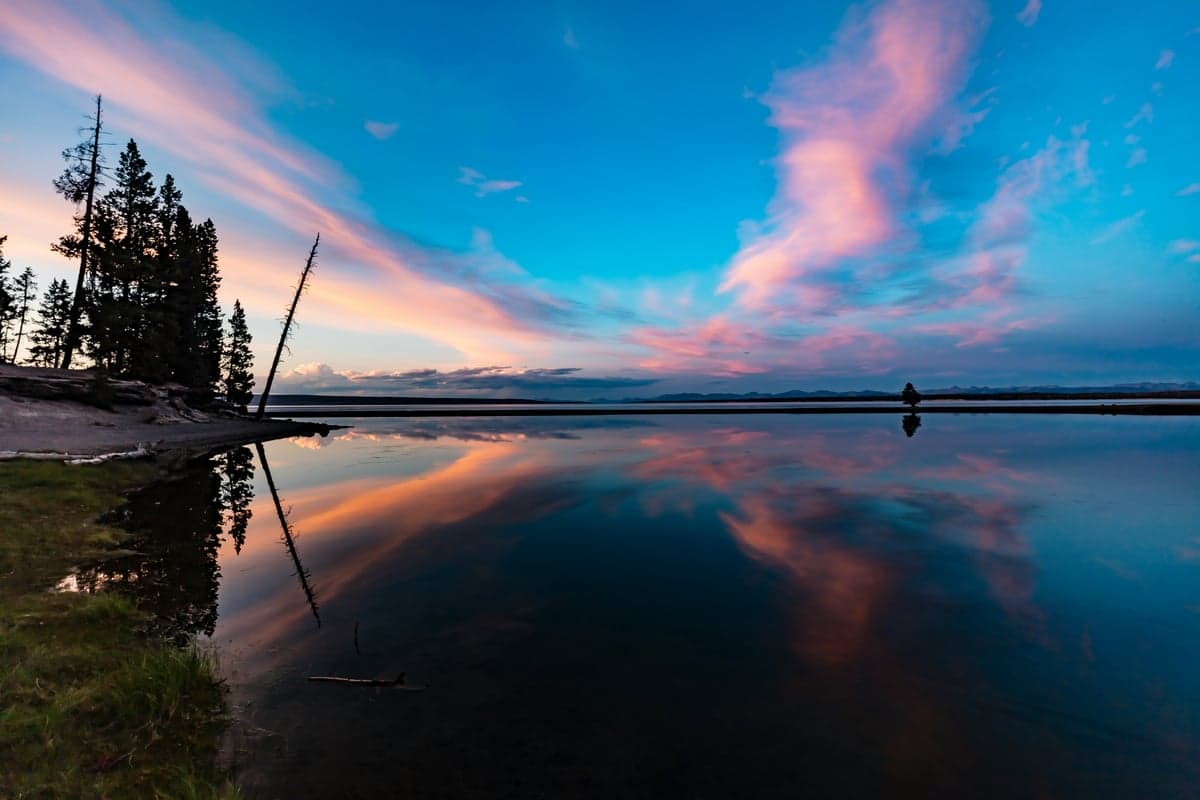
Early morning mist lifts off a Yellowstone valley, the kind of quiet moment that keeps anglers coming back
The Major Fisheries
Firehole River
The Firehole is unlike any other trout stream in the world. It flows through active geyser basins, past mud pots and hot springs, and its thermally heated water produces insect hatches weeks before other park rivers. The trout are predominantly brown and rainbow, averaging 10-14 inches, with the occasional 18-inch fish.
When to fish: May through late June, then September through October. The river gets too warm (above 80°F) in July and August.
Where to fish: The meadow sections between Biscuit Basin and Madison Junction offer the best dry fly water. Firehole Canyon has a brief but intense salmonfly hatch in early June.
Gear: Fly fishing only on the Firehole, Madison, and lower Gibbon. A 9-foot 4-weight rod with 5x-6x tippet handles most situations. Think smaller flies: #16-20 caddis, PMDs, and Baetis patterns.
What to know: You will fish within sight of geysers and thermal features. Stay on established paths near thermal areas. The ground can be dangerously thin near hot springs.
Lamar River and Valley
The Lamar Valley is Yellowstone's "Serengeti," where bison, wolves, and grizzly bears share the landscape with anglers. The river holds strong populations of native Yellowstone cutthroats, with fish in the five-mile valley section from Soda Butte downstream averaging 14-20+ inches.
When to fish: Mid-July through September. The river runs muddy during spring runoff and summer thunderstorms.
Access: The Lamar Bushwack Trail starts 2.5 miles east of Tower Junction on the Northeast Entrance Road, with a one-mile hike to the river. Another access point sits just across the Yellowstone River Bridge, a half-mile hike to the confluence. Upper sections require backcountry hiking or horseback.
Tactics: Hoppers, beetles, and flying ants from late July on. Green and Gray Drakes (#10-12) bring larger fish to the surface. Heavy cloud cover produces the best dry fly conditions.
Critical regulation: All rainbow trout, brook trout, and identifiable cutthroat-rainbow hybrids caught in the Lamar River drainage must be killed. This protects the pure Yellowstone cutthroat population.
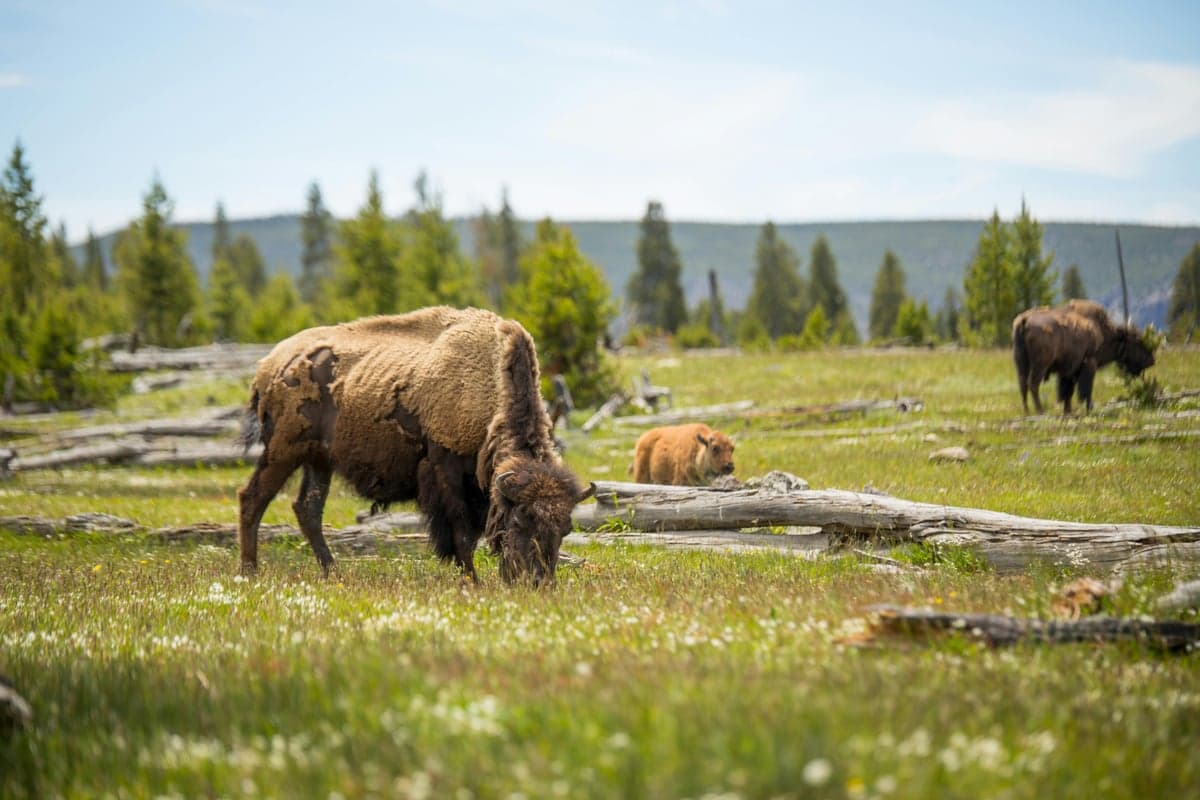
Bison grazing in a Yellowstone meadow. Wildlife encounters are routine, especially in the Lamar Valley and along Slough Creek.
Slough Creek
Slough Creek is the stream most fly anglers picture when they think of Yellowstone. Four distinct meadows connected by short canyon sections hold cutthroats that rise to dry flies with a deliberate, almost slow-motion take. Fish in the upper meadows routinely hit 16-20 inches.
Meadow access:
- Lower Meadow: 1.5 miles from the road below the campground. Holds large rainbows and cuttbows (22-25 inches possible) but receives heavy pressure.
- First Meadow: 2.5 miles from the trailhead at Slough Creek Campground. Starts with a steep climb. Day-trip friendly.
- Second Meadow: 4 miles in. Fewer anglers. Fish averaging 18-20 inches.
- Third Meadow: 8 miles in. Requires an overnight backcountry camp. The largest cutthroats in the system, up to 22-23 inches.
When to fish: Comes into shape around the 4th of July, fishes through mid to late September.
Hatches: Caddis, PMDs, Green and Gray Drakes in July. Hoppers, beetles, and flying ants later in the season.
Wildlife awareness: Bison, wolves, and grizzly bears are frequently spotted in Slough Creek meadows. Carry bear spray and make noise on the trail.
Yellowstone River (Inside the Park)
The Yellowstone River inside the park offers three distinct fishing experiences, all requiring significant hiking.
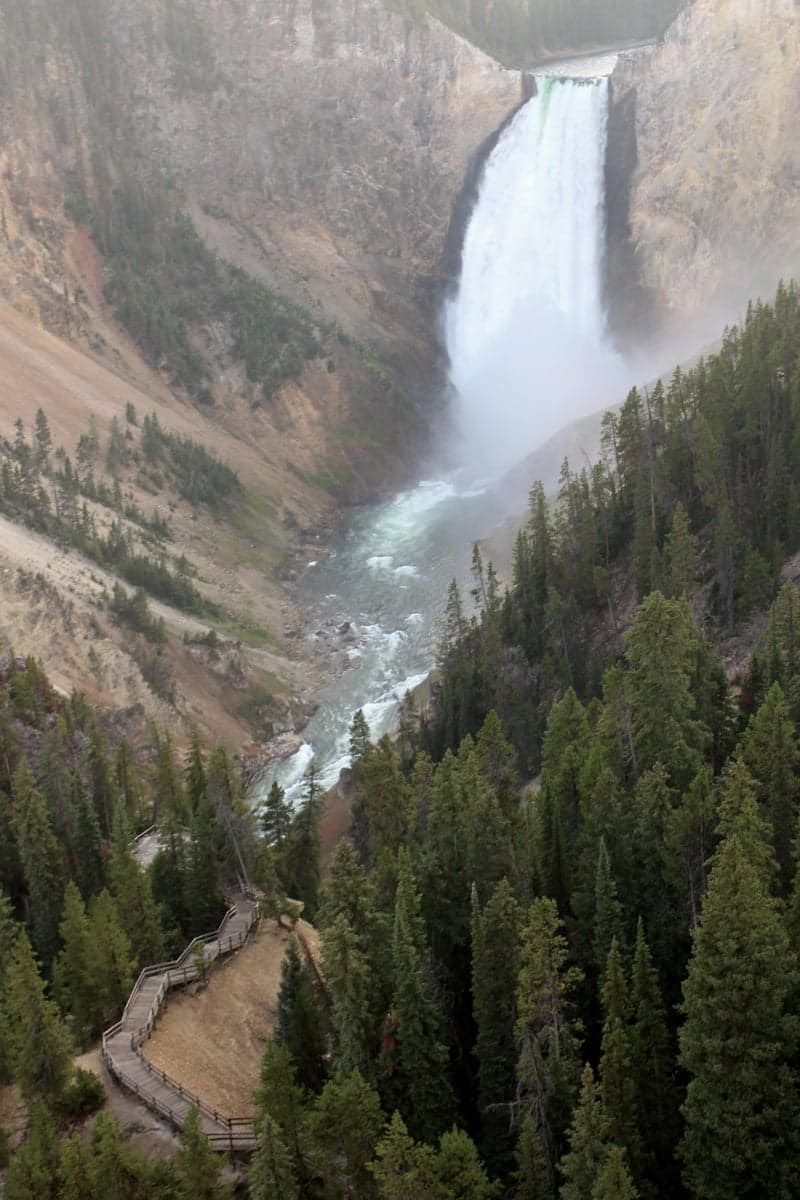
Grand Canyon section (below Yellowstone Falls to Tower Junction): Roughly 15 miles of canyon water holding resident cutthroats largely unaffected by the lake trout problem. The most famous access is Seven Mile Hole, which involves an approximately five-mile hike each way mixed with about four hours of streamside fishing. The cutthroats here, ranging 14-18 inches, are eager and unpressured. Opens early July when water drops.
Black Canyon section (Tower Junction to park boundary near Gardiner): Contains browns and rainbows in its lower reaches alongside cutthroats. Slightly earlier hatches than the Grand Canyon and extended fall fishing. Similar hatches: salmonflies, golden stones, Green Drakes, caddis, and terrestrials.
Yellowstone Lake outlet to Upper Falls: A seasonal spawning run of large cutthroats (often 20+ inches) from the lake. Opens July 15. Most productive in the first few weeks after opening. After the first week of August, the fish return to the lake and action drops off.
Tackle: 9-foot 5-weight rod. 3x tippet for attractor dry flies and stonefly patterns, 4-5x for PMDs and smaller mayflies.
Lower Falls of the Yellowstone River. The Grand Canyon section below these falls holds some of the park's least-pressured cutthroat trout.
Madison River (Inside the Park)
The Madison forms at Madison Junction where the Firehole and Gibbon converge, then flows west to the park boundary at West Yellowstone. Montana Angler describes it as resembling "a big spring creek" with aquatic grasses and sandy bottom.
When to fish: The stretch from Madison Junction to the West Entrance opens May 1. Best early season fishing happens in the first week of June. The lower section (state line to West Entrance) is open year-round.
The fall run: Starting in September, browns and rainbows from Hebgen Lake migrate upstream through the park boundary. By October, this run peaks with fish regularly exceeding 20 inches. Subsurface tactics dominate: soft hackles, streamers, and egg patterns.
Fly fishing only on this water. Check current Madison River conditions on RiverReports before planning your trip.
For a deeper look at the Madison beyond the park boundaries, see our Madison River fly fishing guide.
Gibbon River
The Gibbon flows from Grebe Lake to Madison Junction, offering a mix of species including browns, rainbows, brook trout, and (in Grebe Lake) Arctic grayling. Much of the best water is easily accessed from the road.
When to fish: Opens May 1 on the lower section. Nymphs work from opening day. Dry fly fishing kicks in mid-June with stoneflies and larger caddis patterns.
Best approach: #10 Chubby Chernobyl with a large beadhead Prince Nymph dropper covers a lot of the Gibbon's water well. The lower section (below Gibbon Falls) is fly fishing only.
Yellowstone Lake
The largest high-elevation lake in North America (7,733 feet, 136 square miles) holds native Yellowstone cutthroats and the invasive lake trout that have threatened them since the 1990s.
The conservation story: Since lake trout were first detected in 1994, Yellowstone Forever reports that the suppression program has removed over 4.9 million invasive lake trout through gillnetting. Cutthroat populations are rebounding, with spawning numbers in tributaries increasing and juvenile fish in the lake tripling.
Fishing rules: All lake trout caught in Yellowstone Lake must be killed. It is illegal to release them. If you do not want to keep the fish, puncture the air bladder and drop it into deep water.
Shore fishing: Best from June 15 opener through mid-summer around Gull Point Drive, south of Bridge Bay Marina. Strip streamers (Clouser Minnows, Woolly Buggers #6-8) to cover water and target predatory cutthroats.
Boating: Motorized and non-motorized boats are permitted on Yellowstone Lake with a park boating permit ($20 for 7 days, $30 for the season). All boats require an invasive species inspection. Float tubes are allowed.
Yellowstone Lake shoreline. The park's lake trout removal program has helped cutthroat populations rebound significantly.
Regulations: What You Need to Know
Yellowstone's fishing regulations are stricter than surrounding state waters. The National Park Service publishes updated regulations annually. Here are the essentials:
Permits and Season
- Park fishing permit required for all anglers 16 and older. Available at Recreation.gov or at park visitor centers. State licenses are not valid inside the park.
- Children 15 and under fish free with direct adult supervision or a free permit signed by an adult.
- General season: Memorial Day weekend through October 31, sunrise to sunset.
- Extended season waters: Firehole, Gibbon, and Madison open May 1. Gardner River (Osprey Falls to Yellowstone confluence) and lower Madison (state line to West Entrance) are open year-round.
Gear Rules
- Artificial flies and lures only. All tackle must be lead-free.
- Barbless hooks required (pinch down your barbs).
- Single hook per fly, maximum two flies per leader.
- Fly fishing only on the Firehole, Madison, and lower Gibbon.
- One attended rod per angler.
- Felt-soled waders and boots are prohibited.
Native vs. Non-Native Fish
- All native species must be released: Yellowstone cutthroat trout, mountain whitefish, Arctic grayling.
- Lamar River drainage: All rainbow trout, brook trout, and identifiable hybrids must be killed.
- Yellowstone Lake: All lake trout must be killed.
- Nonnative Trout Tolerance Areas (Firehole, Madison, lower Gibbon): Up to 5 brook trout may be kept. Lewis River system: 5 combined brook/brown/lake trout, maximum 1 brown.
Closures
Some waters have seasonal closures to protect spawning fish or bear management areas. Check the current year's regulations at park entrance stations. The NPS fishing page has the latest closures.
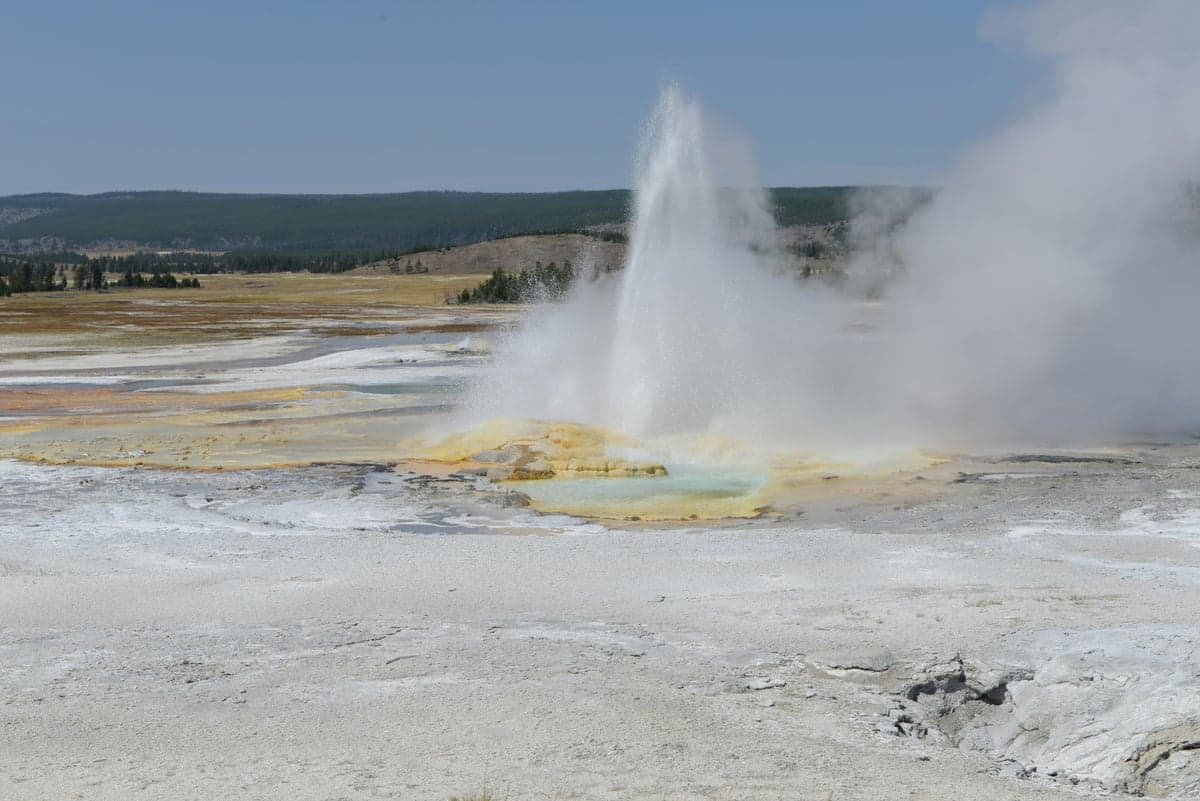
A Yellowstone geyser erupts. The Firehole River flows through active thermal basins, producing some of the earliest hatches in the park.
Hatch Chart
| Hatch | Timing | Size | Best Rivers |
|---|
| Midges | Year-round (peaks Dec-Mar) | #18-22 | Gardner, Madison (year-round sections) |
| Baetis (BWO) | May-June, Sept-Oct | #18-20 | Firehole, Madison, Gibbon |
| Caddis | Late May-July, Sept | #14-18 | All rivers |
| Pale Morning Dun | June-July | #14-16 | Firehole, Lamar, Slough Creek, Soda Butte |
| Salmonfly | Late June-early July | #4-8 | Yellowstone River, Firehole Canyon |
| Golden Stonefly | Late June-July | #6-10 | Yellowstone River |
| Green/Gray Drake | July-Sept | #10-12 | Lamar, Slough Creek, Soda Butte |
| Terrestrials (hoppers, ants, beetles) | Late July-Sept | #8-14 | Lamar, Slough Creek, Yellowstone |
| Callibaetis | July-Aug | #14-16 | Yellowstone Lake, Hebgen Lake |
| Tricos | July-Aug | #18-22 | Hebgen Lake |
Essential fly box: Elk Hair Caddis #14-18, Parachute Adams #14-18, Chubby Chernobyl #10-12, Stimulator #8-12, Pheasant Tail Nymph #14-18, Copper John #14-16, Zebra Midge #18-22, Woolly Bugger #6-10, Dave's Hopper #8-12, Parachute PMD #14-16, BWO Emerger #18-20.
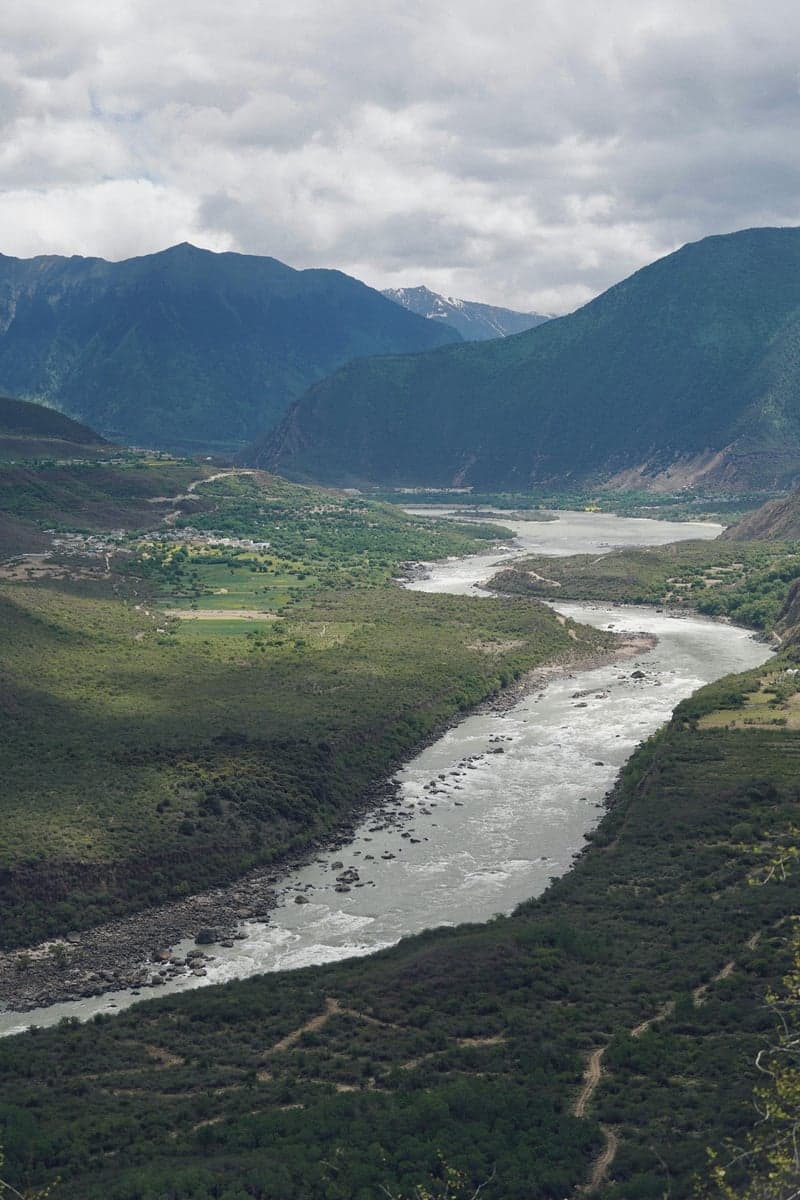
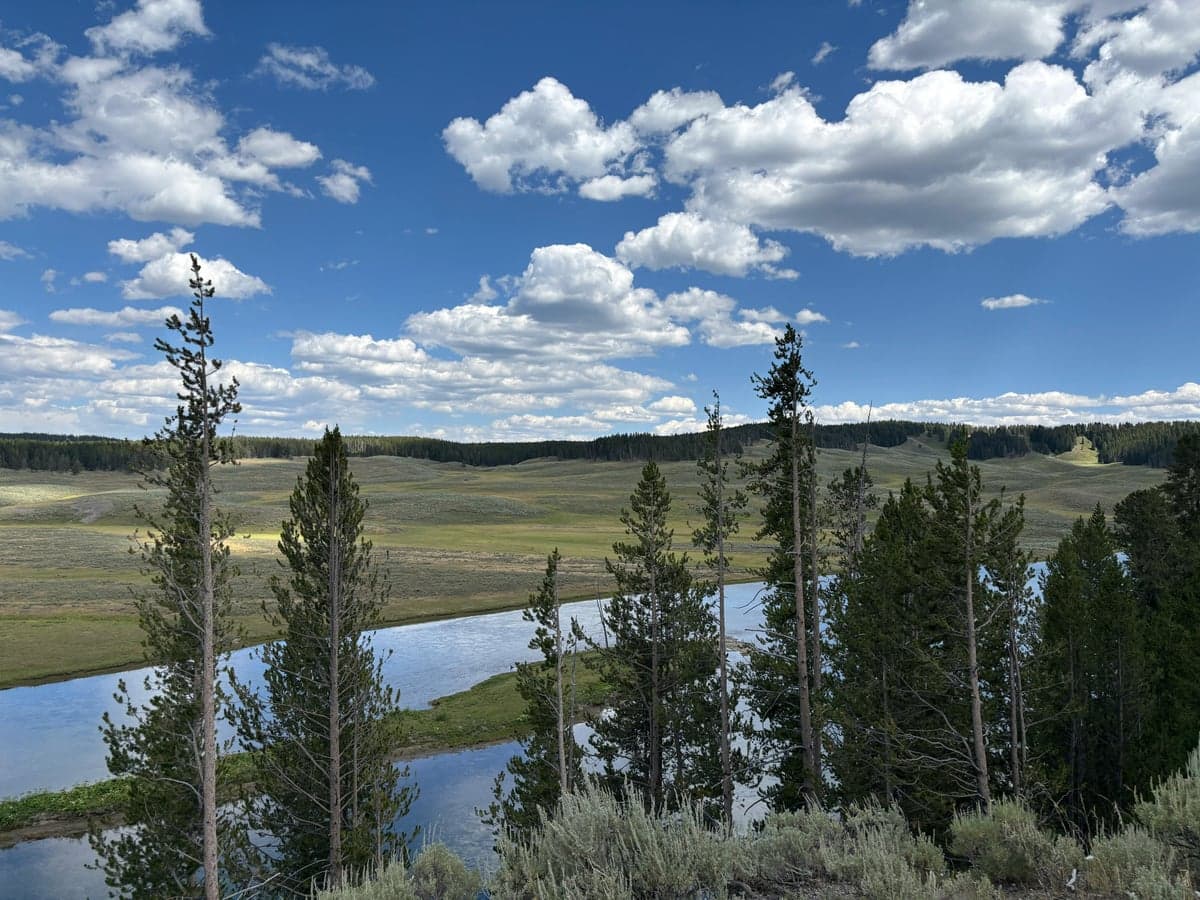
A river meanders through a mountain valley, typical of the meadow water on the Lamar, Slough Creek, and upper Yellowstone
Safety and Hazards
Bears
Yellowstone has both grizzly and black bears throughout the park. Carry bear spray on every fishing trip and know how to use it before you head out. Yellowstone Forever recommends never fishing without bear spray.
Stay at least 100 yards from bears and wolves. Fish with a partner when possible, especially in backcountry meadows like Slough Creek and the Lamar Valley. Make noise in brushy areas and along blind bends.
Dispose of fish entrails in the water, not on the bank. Carcasses on shore attract bears.
Thermal Areas
The Firehole River flows through active geyser basins. Stay on established trails near thermal features. The ground near hot springs can be dangerously thin, and water temperatures near thermal inputs can scald.
Wading
Many park rivers have slick volcanic rock bottoms. Rubber-soled boots with good tread are essential (felt is banned). Wading staffs help on the Yellowstone River and in the Firehole's canyon sections. Water temperatures in spring and early summer are cold enough to be dangerous if you take a swim.
Weather
Elevation means weather changes fast. Snow is possible any month. Afternoon thunderstorms are common July through September. Bring layers, rain gear, and sunscreen even on clear mornings.
Planning Your Trip
Gateway Towns
West Yellowstone, MT is the primary base for anglers fishing the park's western waters (Firehole, Gibbon, Madison). The town has several well-known fly shops:
- Blue Ribbon Flies: Founded by Craig Mathews, a legendary Yellowstone fly shop on Canyon Street. Guided walk-wade trips into the park. Books up 6+ months in advance for peak season.
- Madison River Outfitters: Authorized NPS permittee offering guided trips on park waters and the Madison outside the park.
- Jacklin's Fly Shop: Run by Bob Jacklin, who has been guiding the area for nearly 50 years.
Gardiner, MT provides the closest access to the Yellowstone River's Black Canyon, Gardner River, and the park's north side.
Cooke City/Silver Gate, MT sit near the Northeast Entrance, close to the Lamar Valley and Slough Creek.
The Madison River near West Yellowstone, Montana. The town is the primary base camp for anglers fishing the park's western waters.
Guided Trips
All guides operating inside the park must hold federal permits. Expect to pay $495-$695 per day for walk-wade guided trips. Multi-day horseback pack trips into backcountry waters (Slough Creek's upper meadows, Yellowstone River headwaters, Lamar tributaries) run $550-$750 per person per day through outfitters like Yellowstone Mountain Guides.
Yellow Dog Flyfishing Adventures books backcountry horseback fishing trips through Sunrise Pack Station, an authorized NPS concessioner. Their Slough Creek package runs four days at roughly $2,995 per person.
Lodging
In-park lodges (Old Faithful Inn, Lake Hotel, Roosevelt Lodge) book months ahead for summer. Plan early. The park also has campgrounds, though Slough Creek Campground (the trailhead for Slough Creek fishing) fills quickly.
West Yellowstone, Gardiner, and Cooke City all offer hotels, vacation rentals, and RV parks at lower prices than in-park lodging.
Gear Checklist
- 9-foot 5-weight rod (covers 90% of park fishing)
- 9-foot 4-weight rod for spring creeks and small streams
- Rubber-soled wading boots (no felt)
- Breathable waders
- Bear spray (one per person)
- Park fishing permit
- Polarized sunglasses
- Rain jacket and layers
- Wading staff (optional but recommended for canyon water)
- Leaders: 9-foot 4x and 5x for most dry fly work, 3x for stoneflies and streamers
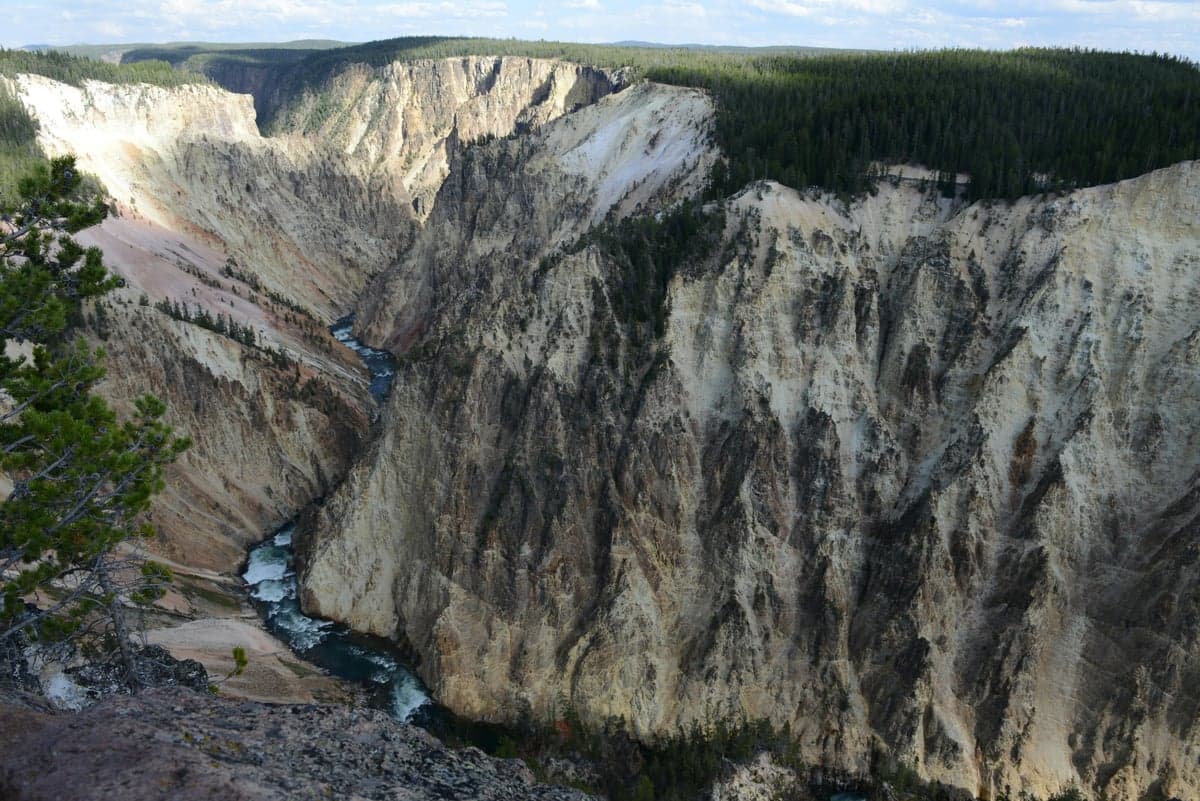
A narrow canyon in Yellowstone. Access to much of the park's best water requires hiking, sometimes on steep trails.
Using RiverReports
Track real-time flows for Yellowstone-area rivers on RiverReports and RiverReports Montana. Before driving to the park, check conditions on the Yellowstone River, Madison, and Gallatin to gauge runoff timing and fishability.
Key things to watch:
- Spring runoff: When flows spike on the Yellowstone River (typically late May through June), focus on the Firehole and Gibbon instead.
- Summer stability: Once flows drop and stabilize in early July, the Yellowstone River and Lamar open up.
- Fall trends: Watch for flow drops on the Madison as Hebgen Lake fish begin their upstream migration.
For nearby fishing options outside the park, check our guides to Jackson Hole, Bozeman, and the Madison River.