Quick Reference
| What | When | Key Numbers |
|---|
| Winter Steelhead | Jan-Apr (peak mid-Mar to early Apr) | 1,800-7,500 CFS fishable; 6-12 lb avg hatchery fish |
| Spring Chinook | Apr-Jun (peak May-Jun) | 10,000-25,000 fish returns; 12-25 lb avg |
| Fall Chinook | Aug-Oct (peak Sep-Oct) | High volume; 15-30 lb avg |
| Coho Salmon | Sep-Nov (peak Oct-Nov) | 8-12 lb avg; aggressive biters |
| Summer Steelhead | Jun-Oct | Smaller numbers; 6-10 lb avg |
| Guided trips | Year-round | $200-400/day; gear fishing focus |
| License | WA license + CRSSE endorsement | Columbia River Salmon/Steelhead Endorsement required since Jan 2026 |
Flow2,330 CFS
Trendstable
Clarityexcellent
Temp53°F
1/4oz marabou jigs in pink/chartreuse/cerise (summer steelhead bobber-and-jig)Blue Fox Vibrax #4 (summer steelhead)Beads 8-10mm natural colors (steelhead)Mepps Aglia #4 (summer steelhead)
🎣 TACTICS RIGHT NOWNymphSummer steelhead bobber-and-jig remains the top bank technique. Fish 1/4 oz marabou jigs in pinkchartreuseor cerise under a slip float with 15 lb fluorocarbon leader. Flows have held 2330-2710 CFS through August — ideal 1800-4000 CFS bank fishing range with excellent wading on gravel bars. With 9-11 feet of visibilityuse 4-5 ft fluorocarbon leaders for finesse presentations. Blue CreekBarrier Dam (both banks open)I-5 Bridgeand Massey Bar all fishable from the bank. Beads in 8-10mm natural colors fished under a float are also producing steelhead. The 1746 recycled summer steelhead at the I-5 launch in Toledo are aggressive and willing to bite active presentations — this is the best bank fishing option on the river. Bank fishing has improved: WDFW creel data for Aug 10-16 shows 47 bank anglers kept 14 steelhead upstream of I-5 Bridgea big jump from prior surveys. Boats still outperform bank rods (23 boats kept 84 steelhead same period) — if you have drift boat accessfloat the middle river with jigs for the best odds. Water temp 52.9-54.3°F means summer-runs are feeding actively through the full day. Note: fall Chinook retention is CLOSED on the Cowlitz — steelheadcohoand sea-run cutthroat are the legal harvest targets. Early coho now in the lower river but biting poorly in the warm water — the late run in September-October will fish better.
StreamerSummer steelhead hardware continues to produce well with 1746 recycled fish stacked at the I-5 launch in Toledo. Blue Fox Vibrax #4 spinnersMepps Aglia #4and small bright spoons (Little Cleo 3/4 oz) are the go-to presentations. Cast and retrieve through runs and tailouts; at 2330-2710 CFS fish are holding in predictable seams and soft water with excellent bank access. Water temp 52.9-54.3°F means summer steelhead are active and chasing through the full day. Boat anglers remain dominant — 84 steelhead kept from 23 boats (73 rods) in the Aug 10-16 WDFW survey upstream of I-5 Bridge. Drifting hardware through the middle river remains the highest-percentage approach. For fly anglersswing Green Butt SkunksPurple Perilsor Intruders on Scandi lines with poly leaders in the morning; switch to Skagit lines with T-8 sink tips during midday. Summer-runs in the 6-10 lb range will chase swung flies through riffles and runs above Blue Creek. With 9-11 feet of visibilitydownsize tippet and fish cleaner presentations than you would in lower-vis conditions. Early coho now entering the lower river but biting poorly in the warmlow water — don't target them specifically yet. Fall Chinook retention is closed on the Cowlitz. Sea-run cutthroat are a growing bonus fishery — small spinners and streamers in the 2-4 inch range will pick them up in the tailouts.
FORECASTThe Cowlitz is in the late-August multi-species transition. Summer steelhead remain the primary fishery with 1,746 recycled to the I-5 launch in Toledo season-to-date (TPU August 17) and 226 at the separator in the most recent 5-day count. The summer-run fishery will taper through September but recycled fish continue stacking and biting aggressively. Early coho have entered the lower river but are biting poorly in the warm, low water — the late coho run arriving in September-October will fish significantly better. Fall Chinook numbers are building at the separator (8 adults, 1 jack) but retention is CLOSED on the Cowlitz — catch-and-release only. Sea-run cutthroat are a growing bonus opportunity (21 at separator) on light tackle. Flows at 2,330-2,710 CFS through August are ideal for bank fishing and should remain stable through dam management. The next 4-6 weeks will bring the coho run into full swing and see overlapping summer steelhead, coho, and sea-run cutthroat — focus on steelhead now and plan a return trip for the coho peak in October.Dam releases have ranged 2,330-2,710 CFS through August — squarely in the ideal 1,800-4,000 CFS bank fishing sweet spot with excellent wading on gravel bars. Visibility 9-11 feet in the dam-controlled middle river. Water temp 52.9-54.3°F — prime feeding range for summer steelhead and comfortable for incoming coho. The lower river below Toledo will have reduced visibility from tributary inputs — fish the middle river from Barrier Dam to Toledo for the best conditions. As September approaches, watch for the first fall rain events which will bump flows and potentially improve coho bite quality as water cools. Watch the Mayfield Dam gauge closely — river flows could change at any time from dam releases and boaters and anglers should remain alert.
Before You Go
The Cowlitz River is one of Washington's most productive and accessible fisheries - and for many Pacific Northwest anglers, it is their introduction to steelhead and salmon fishing. Originating on the flanks of Mount Rainier and Mount St. Helens, the river flows roughly 105 miles before joining the Columbia River near Longview-Kelso. What makes it stand out is simple: it fishes well almost year-round, you do not need a boat to catch fish, and it is a straight shot down I-5 from both Seattle and Portland.
If you have been checking the Cowlitz River fishing report and wondering whether it is worth the trip, the short answer is yes. Two runs of steelhead and two runs of salmon pass through each year, making this a legitimate four-season fishery. The river's dam system - Mossyrock Dam (the tallest dam in Washington at 606 feet), Mayfield Dam, and the Barrier Dam - actually works in the angler's favor. The dams stabilize flows and keep water clarity more consistent than undammed coastal rivers, and the Cowlitz Salmon Hatchery (once the largest salmon hatchery in the world when it opened in 1968) ensures strong returns of hatchery fish available for harvest.
The hatchery releases roughly 7.5 million spring Chinook, fall Chinook, and coho salmon annually. Returning adults are collected at the Barrier Dam's separator, where Tacoma Power and WDFW sort them by species and truck wild fish upstream past the dams to spawn naturally in the upper Cowlitz, Tilton, and Cispus rivers. This means fish concentrate below the Barrier Dam in impressive numbers - and anglers concentrate there too.
If you are used to fly fishing remote rivers for wild steelhead on the Olympic Peninsula or swinging spey flies on Northern California's North Coast rivers, the Cowlitz is a different animal. This is primarily a gear fishery. Shoulder-to-shoulder combat fishing happens at the Barrier Dam during peak runs. But that is part of the culture here, and the fish numbers justify the crowds. On slower days or if you are willing to drift boat the middle and lower river, you can find relative solitude and excellent fishing.
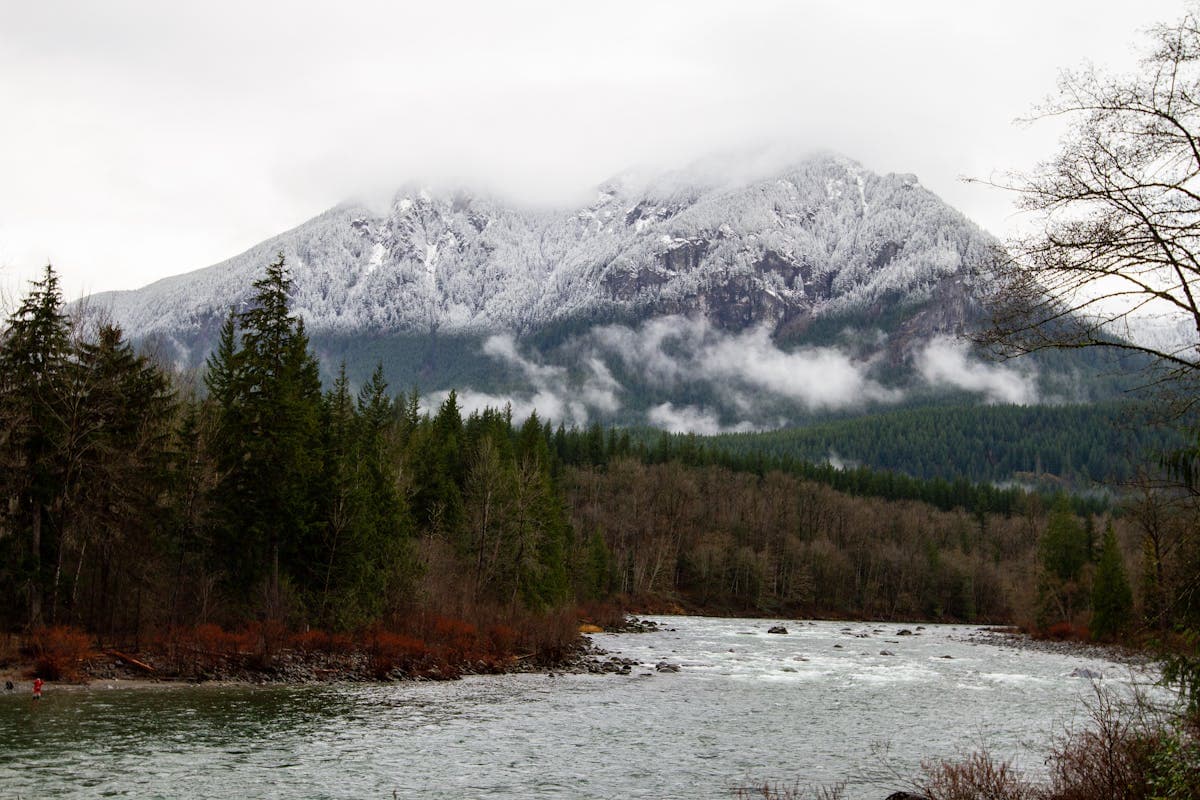
The Cowlitz River valley in Washington offers accessible fishing with Mount Rainier and Mount St. Helens as a backdrop.
River Sections
The Cowlitz can be divided into three distinct fishing zones, each with its own character, access, and target species.
Upper Cowlitz (Above Mayfield Dam)
The upper Cowlitz above Mayfield Dam is primarily trout water. Tacoma Power's trap-and-haul program transports adult salmon and steelhead past the dams and releases them into the upper Cowlitz, Tilton River, and Cispus River to spawn naturally. Fishing here targets resident trout and the occasional stray anadromous fish.
What to expect:
- Rainbow and cutthroat trout fishing
- Access via Highway 12 through Packwood, Randle, and Morton
- Beautiful water in the Gifford Pinchot National Forest
- Less crowded than the lower river
- USGS gauge at Packwood (14226500) and Randle (14231000) for flow info
Best for: Anglers seeking a quieter trout fishing experience away from the salmon and steelhead crowds. Also worth a visit just for the scenery - the upper Cowlitz near Packwood runs through old-growth forest with Mount Rainier looming overhead.
Middle Cowlitz (Barrier Dam to Toledo)
This is the most popular section and where the bulk of salmon and steelhead fishing happens. The Barrier Dam at the Cowlitz Salmon Hatchery near Salkum is the starting point. Fish returning from the ocean hit the Barrier Dam and stack up as they wait to be collected. From the dam downstream through Blue Creek, Ethel, and Toledo, you will find the highest concentration of fish and anglers.
What to expect:
- Highest fish densities in the entire river system
- Bank fishing access at the Barrier Dam, Blue Creek, and multiple WDFW sites
- Popular drift boat floats from Barrier Dam to Blue Creek (about 7 miles) and Blue Creek to Massey Bar
- The Cowlitz Trout Hatchery at Blue Creek is another major access point
- Mix of bank anglers, drift boats, and jet boats
Key landmarks:
- Barrier Dam / Cowlitz Salmon Hatchery: The epicenter. Fish concentrate below the dam year-round during active runs. Boat launch available. Bank fishing on both sides.
- Blue Creek / Cowlitz Trout Hatchery: Major boat launch and bank access. ADA-accessible fishing area. Restrooms on site. Located off Spencer Road about 3 miles east of Jackson Highway.
- Massey Bar: Reached via Spencer Road to Buckley Road. Good boat launch with restrooms. Productive steelhead and sturgeon water.
- Toledo: Newer launch on Augustus Street off State Route 505. Bank access available.
Lower Cowlitz (Toledo to Columbia River)
The lower Cowlitz from Toledo through Castle Rock to the Columbia River confluence near Longview-Kelso is bigger water that benefits from boat access. The Toutle River enters the Cowlitz in this section, adding volume and sometimes turbidity (especially during high-water events that stir up volcanic sediment from the 1980 Mount St. Helens eruption).
What to expect:
- Wider river with longer drifts
- Good fall Chinook and coho fishing as fish move upriver
- Sturgeon fishing opportunities
- More jet boat traffic
- Access at I-5 bridge (Mandy Road, Exit 57), Castle Rock (Al Helenberg launch), and Gearhart Gardens Park in Longview
Flow tip: Turbidity from the Toutle River can make the lower Cowlitz unfishable even when the upper river is clear. The formula locals use: subtract the Toutle River CFS and Mayfield Dam CFS from the Castle Rock gauge reading. If that "net feeder creek" number exceeds 1,000 CFS, expect poor visibility in the lower river.
Understanding Cowlitz River Flow
Understanding the Cowlitz River flow before you leave the house is the single best thing you can do to avoid a wasted trip. The good news: the Cowlitz is far more predictable than most Pacific Northwest rivers thanks to dam-controlled releases. But you still need to know what to look for.
Key Gauges
| Gauge | USGS Site | What It Tells You |
|---|
| Below Mayfield Dam | 14238000 | Dam releases; baseline flow for the middle river |
| At Castle Rock | 14243000 | Total flow including tributaries; lower river conditions |
| At Packwood | 14226500 | Upper river conditions |
| At Randle | 14231000 | Upper river conditions |
Fishable Flow Ranges
The Cowlitz River fishes best between 1,800 and 7,500 CFS at the Mayfield Dam gauge. Here is what different flow levels mean:
| CFS Range (Mayfield Dam) | Conditions | Fishing Quality |
|---|
| Below 1,800 | Low water; fish spooky | Fair - fish hold in deeper pools |
| 1,800 - 4,000 | Ideal range | Excellent - best wading and bank fishing |
| 4,000 - 7,500 | Higher but fishable | Good from boats; bank fishing more limited |
| 7,500 - 10,000 | High water | Marginal - experienced anglers only |
| Above 10,000 | Flood stage approaching | Not recommended |
Why the Cowlitz Holds Its Shape (and Why That Matters)
Here is why the Cowlitz is a trip-planning dream compared to most Pacific Northwest steelhead rivers: Tacoma Power controls the releases from Mayfield Dam for hydroelectric generation and flood management. That means the river rarely spikes catastrophically the way unregulated rivers do. You can check the gauge on Tuesday, plan a Saturday trip, and have reasonable confidence the river will still be fishable when you arrive. Try that on the Hoh or the Skagit and you are rolling the dice.
The catch: the Toutle River and other tributaries below the dams are uncontrolled. Heavy rain can muddy the lower Cowlitz even when dam releases are rock-steady. This is why you need to check both the Mayfield Dam gauge (upper/middle river) and the Castle Rock gauge (lower river) before heading out. If the Castle Rock numbers are way higher than Mayfield, that extra water is coming from muddy tributaries, and the lower river may be off-color.
Turbidity Assessment
Water clarity matters more than flow volume for Cowlitz fishing success. Here is a practical system:
- Clear green water: Ideal. Fish all techniques confidently.
- Slightly off-color (2-3 feet visibility): Still good. Brighter jig colors and larger presentations help.
- Muddy (under 1 foot visibility): Tough fishing. Focus on scent-based presentations (eggs, shrimp) in slower water. Wait for it to clear.
Check the Cowlitz River water level and real-time flow data on RiverReports Washington page before every trip.
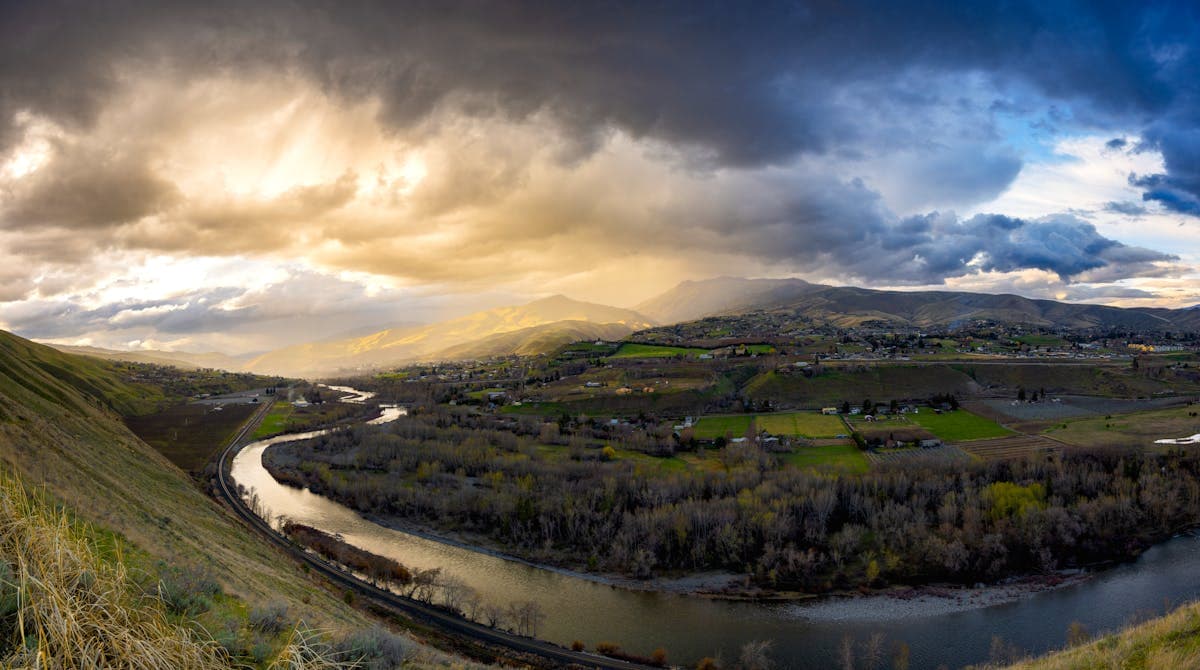
The Cowlitz River valley in Washington - dam-controlled flows make this one of the most predictable fisheries in the Pacific Northwest
Seasonal Run Timing
The Cowlitz is a genuine year-round fishery. Here is what is running and when:
Winter Steelhead (January - April)
The main event. The Cowlitz winter steelhead run typically returns 3,000-5,000 hatchery fish, with the late-run fish making up the bulk of the catch.
Early season (January - mid-February): Fish trickle in. Fishing can be slow but persistent anglers pick up chrome-bright fish. Focus on the Barrier Dam area and the Blue Creek stretch.
Peak season (mid-March - early April): This is when the Cowlitz turns on. The late-run steelhead pour in, and 59% of the sport harvest in recent seasons has come during March and April. March is typically the single best month. The Barrier Dam area becomes a zoo, but for good reason - fish are stacked up.
Late season (mid-April): Numbers taper off but fresh fish still arrive. Less pressure as crowds thin. Good opportunity for bank anglers who prefer elbow room.
Average size: 6-12 pounds for hatchery fish. Wild steelhead must be released.
Spring Chinook (April - June)
Spring Chinook are the Cowlitz's trophy fishery. The river typically sees 10,000-25,000 adults return, and these are big fish averaging 12-25 pounds with the occasional 30-pounder.
April: First fish arrive at the Barrier Dam. WDFW often extends the closed fishing boundary below the dam early in the season to protect broodstock. Check regulations carefully.
May - June: Peak fishing. The Barrier Dam area and the drift from Blue Creek downstream are most productive. Back-bouncing with Spin-N-Glos tipped with coon shrimp is the classic technique.
Important: The 2026 spring Chinook forecast looks promising for the Cowlitz, Kalama, and Lewis rivers. WDFW announced seasons in March 2026 - check current regulations for open areas and retention limits.
Summer Steelhead (June - October)
Summer steelhead provide a bridge between the spring Chinook and fall salmon seasons. The run is smaller than winter steelhead - you will not find the shoulder-to-shoulder crowds of March - but these fish make up for it with aggression. Summer-run steelhead in the 6-10 pound range will chase spinners, hit jigs fished higher in the water column, and even take flies swung through the riffles and runs above Blue Creek.
June - July: Early arrivals. Fish the middle river from Barrier Dam downstream. The upper stretches near Kosmos see less pressure and fish well for summer steelhead.
August - September: Peak summer steelhead activity overlaps with early fall Chinook. Target morning and evening as water temperatures can climb during midday in August.
Techniques: Summer steelhead are more responsive to active presentations than winter fish. Casting spinners (Blue Fox Vibrax size 4), drifting smaller jigs (1/4 oz in brighter colors), and even swinging flies on a switch rod through tailouts can all produce. This is the best season for fly fishing on the Cowlitz.
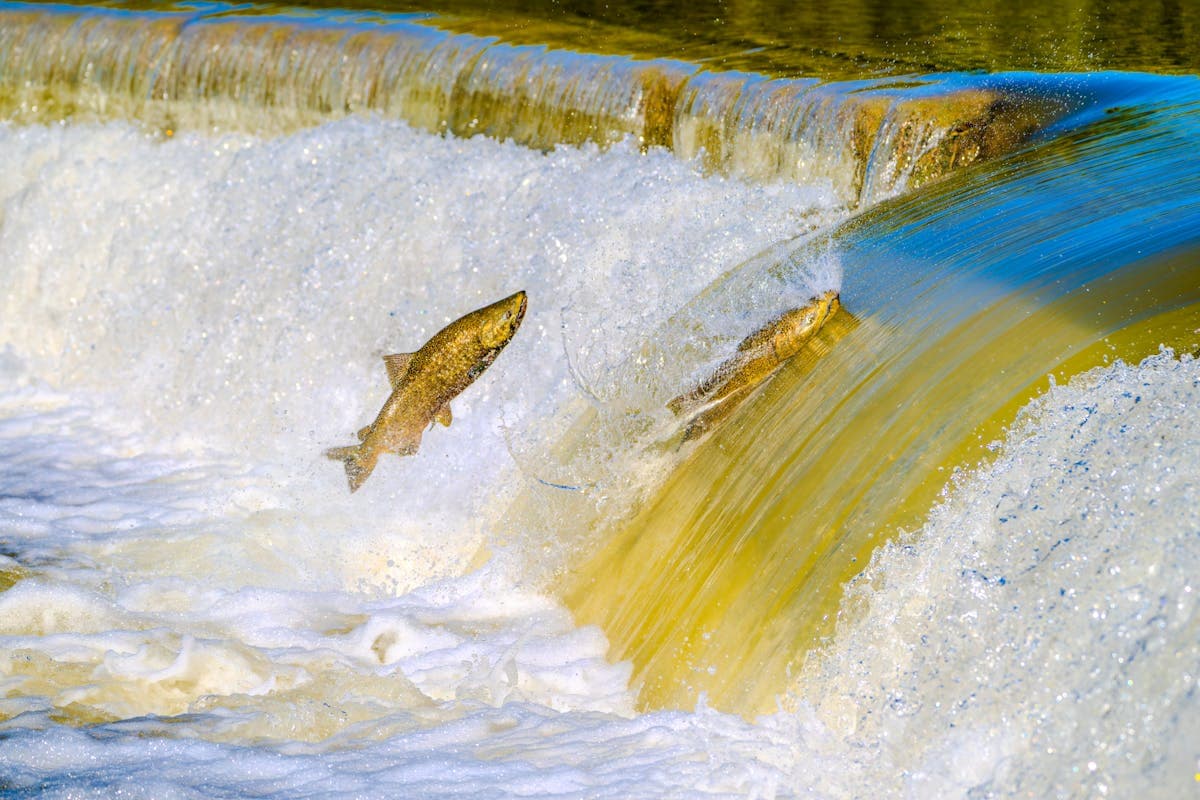
Salmon fighting their way upstream - a common sight on the Cowlitz during the fall runs from August through November.
Fall Chinook (August - October)
Fall Chinook enter the Cowlitz starting in late August, with peak fishing in September and October. These fish average 15-30 pounds and fight hard in the current. The lower river from Castle Rock upstream to the Barrier Dam area fishes well. Fall Chinook respond well to back-bouncing and plunking techniques. Bank anglers at the Barrier Dam do well with Spin-N-Glos and coon shrimp. Drift boat anglers working the middle river can cover a lot of water trolling plugs or back-bouncing.
Coho Salmon (September - November)
Coho overlap with fall Chinook and extend the fall fishing season into November. Averaging 8-12 pounds, coho are aggressive biters that hit jigs, spinners, and eggs readily. The middle river from Blue Creek to Massey Bar is particularly productive.
Month-by-Month Calendar
| Month | Primary Target | Secondary Target | Crowds |
|---|
| January | Winter steelhead | - | Light |
| February | Winter steelhead | - | Moderate |
| March | Winter steelhead (peak) | Early spring Chinook | Heavy |
| April | Winter steelhead / Spring Chinook | - | Heavy |
| May | Spring Chinook (peak) | Summer steelhead | Heavy |
| June | Spring Chinook | Summer steelhead | Moderate |
| July | Summer steelhead | Trout | Light |
| August | Summer steelhead | Early fall Chinook | Light-Moderate |
| September | Fall Chinook (peak) | Coho | Heavy |
| October | Fall Chinook / Coho | - | Heavy |
| November | Coho (late) | - | Moderate |
| December | Early winter steelhead | - | Light |
Access Points and Boat Launches
Complete Access Guide (Upstream to Downstream)
| Location | Type | Directions | Facilities | Best For |
|---|
| Kosmos | Boat launch / Bank | Kosmos Road off Hwy 12, east of Morton | None (Taidnapam Park nearby) | Steelhead, sturgeon |
| Barrier Dam | Boat launch / Bank | Fuller Road, 1 mile south of Salkum | Restrooms, parking | Spring Chinook, steelhead |
| Blue Creek | Boat launch / Bank | Spencer Road, 3 miles east of Jackson Hwy | Restrooms, ADA fishing | Steelhead, salmon (all species) |
| Massey Bar | Boat launch / Bank | Spencer Rd to Buckley Rd, 0.25 mi | Restrooms | Steelhead, sturgeon |
| Toledo | Boat launch / Bank | Augustus Street off SR 505 | Limited | Steelhead, salmon |
| I-5 Bridge | Boat launch / Bank | Mandy Road, Exit 57 off I-5 | WDFW maintained | Steelhead, salmon |
| Winters | Bank | East of I-5 launch | None | Year-round |
| Olequa Creek | Boat launch | Near Vader | Limited | Salmon, steelhead |
| Al Helenberg | Boat launch | Castle Rock | Developed | Fall Chinook, coho |
| Gearhart Gardens | Boat launch | Longview | Developed | Lower river salmon |
Popular Drift Boat Floats
Barrier Dam to Blue Creek (~7 miles): The classic upper drift. Fish the tailout below the dam, then work through runs and pools downstream. Allow a full day. Best for steelhead and spring Chinook.
Blue Creek to Massey Bar (~5 miles): Good half-day float or full day if fishing thoroughly. Mixed water with some excellent bank fishing stops.
Massey Bar to Toledo (~6 miles): Less pressured water. Good fall salmon fishing.
Toledo to I-5 Bridge (~8 miles): Lower river drift. Best during fall salmon runs.
Bank Fishing Hot Spots
For anglers without a boat, these spots consistently produce:
-
Barrier Dam tailrace: The single most popular bank fishing spot on the river. During peak runs, expect company. Get there early (before dawn) to claim a spot during spring Chinook season.
-
Blue Creek / Trout Hatchery: ADA-accessible platform plus extensive bank access. Less intense than the Barrier Dam but still productive.
-
I-5 Bridge area: Walk-in access to several hundred yards of fishable bank. Good for steelhead and fall salmon.
-
Massey Bar: Bank fishing access along the bar. Less crowded than upstream spots.
Gear and Techniques
The Cowlitz is predominantly a gear fishery. Here are the techniques that produce fish, listed roughly in order of popularity.
Bobber and Jig (Most Popular for Steelhead)
Bobber dogging - drifting a jig under a float through holding water - is the dominant steelhead technique on the Cowlitz. It works from the bank and from boats.
Setup:
- Rod: 9-10.5 foot medium-heavy spinning or casting rod
- Reel: Spinning reel with 15-20 lb braided main line
- Leader: 12-15 lb fluorocarbon, 3-5 feet
- Float: Slip float (Thill, Beau Mac, or similar), sized to the jig weight
- Jig: 3/8 oz marabou jig in pink, white, cerise, or chartreuse
- Tip: Add a small piece of sand shrimp or shrimp/prawn to the jig hook for extra scent
How to fish it: Cast upstream and let the float drift naturally through runs, tailouts, and seams. Set the float depth so the jig rides 1-2 feet off the bottom. When the float goes under or moves unnaturally, set the hook.
Drift Fishing (Eggs and Shrimp)
The classic Pacific Northwest steelhead technique. Effective for both steelhead and salmon.
Setup:
- Rod: 8.5-9.5 foot medium or medium-heavy spinning rod
- Reel: Spinning reel with 12-15 lb mono or 20-30 lb braid
- Terminal: Pencil lead (1/4 to 1 oz depending on current) on a slider above a barrel swivel
- Leader: 3-4 feet of 10-12 lb fluorocarbon
- Hook: Size 2-4 octopus hook
- Bait: Cluster eggs (cured salmon or steelhead roe), sand shrimp, or a combination
Plunking (Bank Fishing for Salmon)
Plunking is a waiting game - cast out, set your rod in a holder, and wait for fish to come to you. Highly effective during salmon runs, especially at the Barrier Dam.
Setup:
- Rod: 8-9 foot heavy action casting or spinning rod
- Weight: 3-6 oz pyramid sinker or slinky weight
- Terminal: Spin-N-Glo (size 0-4) tipped with coon shrimp or sardine fillet
- Alternative: Kwikfish or Flatfish plug tied behind a spreader/diver
Back-Bouncing (Boat Technique for Salmon)
The go-to technique for spring Chinook from a drift boat or jet boat.
Setup:
- Rod: 8-9 foot medium-heavy casting rod
- Reel: Level-wind casting reel with 25-30 lb line
- Terminal: 4-8 oz lead ball on a dropper, Spin-N-Glo or bait rig trailing
- Bait: Coon shrimp, egg clusters, or Spin-N-Glo tipped with shrimp
Hardware (Spinners and Spoons)
Casting spinners and spoons works well for aggressive fish, particularly coho and summer steelhead.
Effective lures:
- Blue Fox Vibrax spinners (size 4-5)
- Mepps Aglia (size 4-5)
- Little Cleo spoons (3/4 oz)
- Acme Kastmaster (1/4 - 3/4 oz)
Fly Fishing
Fly fishing is less common on the Cowlitz than on Olympic Peninsula or coastal rivers, but it can be effective, particularly for summer steelhead and in the upper river sections.
Setup for steelhead:
- 7-8 weight single-hand rod or 6-7 weight switch rod
- Sink-tip line or weighted flies
- Egg patterns, leeches, and intruder-style flies
- Indicator nymphing through deeper runs
Best fly fishing water: The stretch above Blue Creek and the upper sections near Kosmos offer the most fly-friendly water with classic runs and moderate depths.
Regulations
Cowlitz River fishing regulations are managed by WDFW and change frequently based on run strength. Always verify current rules before fishing.
License Requirements (as of 2026)
- Washington State Fishing License (required for all anglers 15+)
- Columbia River Salmon and Steelhead Endorsement (CRSSE): Required since January 1, 2026 for fishing salmon and steelhead in the Columbia River system and its Washington tributaries, including the Cowlitz
- Catch Record Card: Required for recording salmon, steelhead, sturgeon, and halibut catches
General Season Rules
- Daily limit: 2 hatchery steelhead OR 2 hatchery salmon (check species-specific limits)
- Wild steelhead: Must be released immediately. Cannot remove fish fully from the water.
- Hatchery fish identification: Missing adipose fin (healed clip) indicates a hatchery fish available for retention
- Barbless hooks: Required for all fishing
- Bait: Allowed in most sections (check specific area closures)
Key Boundary Restrictions
- Barrier Dam closed zone: Fishing is prohibited within 400 feet downstream of the Barrier Dam (boundary was recently moved back from the dam). The upstream boundary extends 1,700 feet above the dam near the water intake. These boundaries may expand during low-return years to protect broodstock.
- Hatchery creek closures: Fishing is prohibited in tributary creeks near both hatcheries
- Seasonal closures: Specific sections may close during spawning periods. WDFW issues emergency rule changes frequently.
Checking Current Regulations
The Cowlitz is one of those rivers where regulations change during the season based on fish returns. Before every trip:
- Call the WDFW SW Washington fishing hotline: 360-902-2500
- Check the WDFW emergency rule changes page
- Download the Fish Washington mobile app for real-time regulation updates
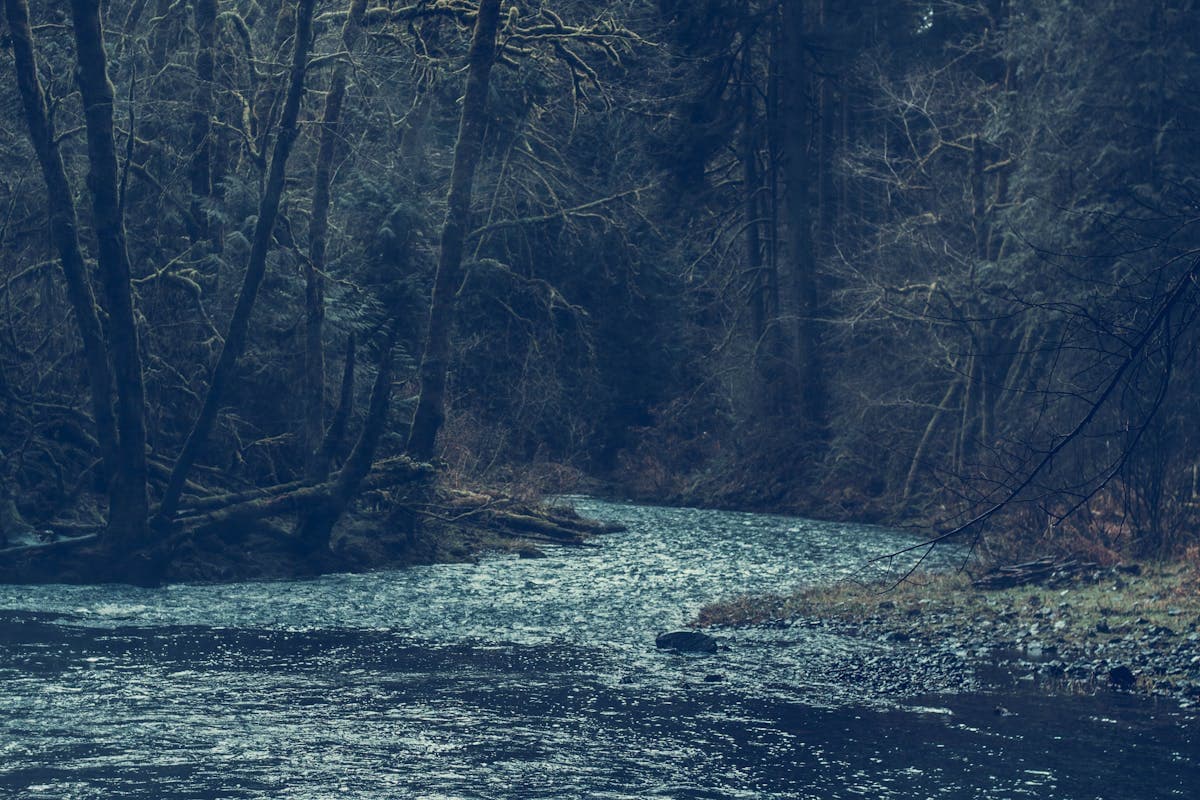
Forested valley along the Cowlitz - the upper river near Packwood runs through old-growth forest with Mount Rainier looming overhead
Hazards and Safety
River Hazards
The Toutle River confluence: When the Toutle is running high, it carries volcanic sediment from Mount St. Helens that can muddy the lower Cowlitz rapidly. This can catch anglers off guard if they launch upstream and float into progressively worse water.
Boat traffic: The Cowlitz sees heavy jet boat and drift boat traffic during peak seasons. Bank anglers should be aware of boat wakes, and boat anglers should watch for wading anglers. Weekends during March-April (steelhead) and September-October (salmon) are the busiest.
Cold water: Even in summer, dam releases keep the Cowlitz cold. Wading beyond knee-deep without proper waders and traction (studded boots or cleats) is risky, especially during higher flows.
Logjams and debris: The lower river can accumulate wood debris, especially after high-water events. Boat anglers should scout ahead and never run blind around bends.
Cell service: Coverage is generally good along the I-5 corridor and in Castle Rock, Toledo, and the Highway 12 towns. Coverage gets spotty between Salkum and the Barrier Dam area, and upstream toward Morton and Packwood can be unreliable depending on your carrier. Download offline maps and let someone know your plans before heading to the upper river.
Combat Fishing Etiquette
If you show up at the Barrier Dam on a Saturday morning in March and wonder if you missed a memo about a fishing tournament, you did not - it is just a normal weekend during peak steelhead season. The crowds are part of the Cowlitz experience, and a little etiquette goes a long way:
- Give other anglers space - 10-15 feet minimum between bank anglers
- Drift your float or bait downstream, not across other anglers' lines
- If plunking, claim a spot and keep your gear within your area
- Respect the rotation if one develops at a popular hole
- Keep hatchery fish quickly; release wild fish immediately and gently
- If someone hooks up near you, reel in and give them room to fight and land the fish
Timing tip: Weekday mornings are dramatically less crowded than weekends. If you can swing a Tuesday or Wednesday trip, you will have far better access to prime spots at the Barrier Dam and Blue Creek. Dawn is the most productive hour at most spots - the bite often slows by mid-morning and picks back up in late afternoon.
Local Tackle Shops
You do not need to show up with a fully stocked tackle box. Several shops along the Cowlitz corridor sell bait, jigs, terminal tackle, and can give you an honest Cowlitz River fishing report for the day.
Barrier Dam Campground & Tackle Shop
- 273 Fuller Road, Salkum, WA 98582
- Open 7 days/week. Fully stocked with bait (fresh live bait weekly), tackle, jigs, eggs, and camping supplies.
- The closest shop to the Barrier Dam fishing area. Good source of current conditions and what is working.
Fish Country Tackle Store
- Located between Ethel and Salkum on Highway 12
- Good selection of local tackle, maps, and current fishing information
- Staff knows the river well - worth asking what is producing before you set up
Blue Creek Bait and Tackle
- Near the Blue Creek boat ramp and Trout Hatchery access
- Convenient stop for bait and last-minute supplies before hitting the water
Pro tip: Buy your cured eggs and sand shrimp at these local shops rather than bringing them from the city. Local shops carry bait prepared for Cowlitz conditions, and the eggs are usually fresher. Most shops also sell pre-tied leader setups if you are new to drift fishing.
Hiring a Guide
A guide is not strictly necessary on the Cowlitz - this is one of Washington's most accessible rivers for do-it-yourself anglers. But if you want to learn the river quickly, a guide accelerates the learning curve significantly.
Recommended Guide Services
Mike's Guide Service
Jones Sport Fishing
- Full-service guide operation for Cowlitz steelhead and salmon
- Covers the Cowlitz as part of a broader Southwest Washington offering
- jonessportfishing.com
Rip Some Lips Guide Service
All Rivers & Saltwater Charters
Top Guides NW
- Columbia, Cowlitz, and Lewis River trips
- Experienced Southwest Washington guide team
- topguidesnw.com
Expect to pay: $200-400 per day for 1-2 anglers, including boat and tackle. Book well ahead for peak steelhead (March) and spring Chinook (May) seasons.
Access and Logistics
Getting There
- From Seattle: 2-2.5 hours south on I-5 to Exit 57 (lower river) or continue to Highway 12 east for middle and upper river access
- From Portland: 1-1.5 hours north on I-5 to Exit 57 or Highway 12
- From Olympia: 1.5 hours south on I-5
The Cowlitz is one of the most accessible destination fisheries in the Pacific Northwest. Its proximity to the I-5 corridor means you can be on the water within 2 hours from either Seattle or Portland.
Key Towns
Castle Rock: Located at Exit 49 off I-5, just above the Toutle River confluence. Gas, food, and lodging. Good base for lower river fishing.
Toledo: Small town on SR 505. Close to middle river access points. Limited services but good boat launch access.
Salkum/Ethel: Tiny communities near the Barrier Dam and Blue Creek. The Cowlitz Salmon Hatchery is the landmark. Limited services - fuel up before you arrive.
Morton/Randle/Packwood: Highway 12 towns for upper river access. Morton has basic services. Packwood is a good base for upper river and trout fishing, and doubles as a gateway to Mount Rainier National Park.
Accommodations
The Cowlitz corridor does not have a major resort or fishing lodge scene like some destination fisheries. Most anglers either:
- Day-trip from Seattle, Portland, or Olympia (the most common approach)
- Stay in Castle Rock or Woodland (I-5 corridor motels and hotels)
- Camp at one of several campgrounds along the river (Taidnapam Park near Mayfield Lake, Ike Kinswa State Park, or Lewis and Clark State Park)
- Rent a cabin or vacation rental in the Randle/Packwood area for upper river trips
Nearby Alternative Rivers
When the Cowlitz is not cooperating (muddy lower river, crowded conditions, or closed boundaries), two nearby rivers offer excellent backup options:
- Lewis River: Just south of the Cowlitz off I-5 (Exit 21). Similar species and timing. The North Fork Lewis below Merwin Dam is a productive hatchery fishery for steelhead and spring Chinook.
- Kalama River: Between the Cowlitz and Lewis on I-5 (Exit 32). Smaller water with good bank access. Late-run winter steelhead overlap with the Cowlitz timing. The Kalama is also an excellent fly fishing river if you want to swing flies for steelhead.
Both rivers are within 30-45 minutes of the Cowlitz, so you can check conditions and switch rivers on the same day if needed.
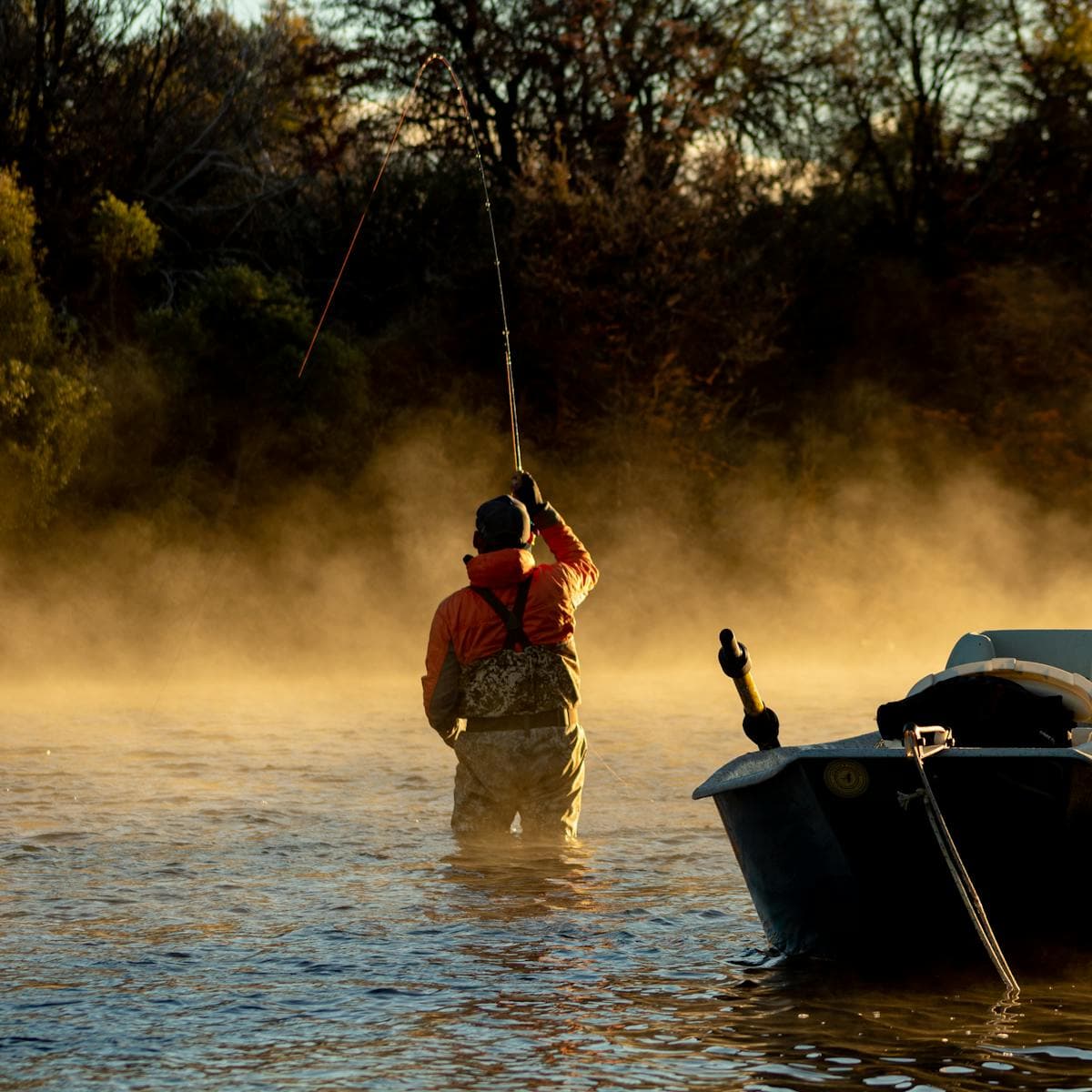
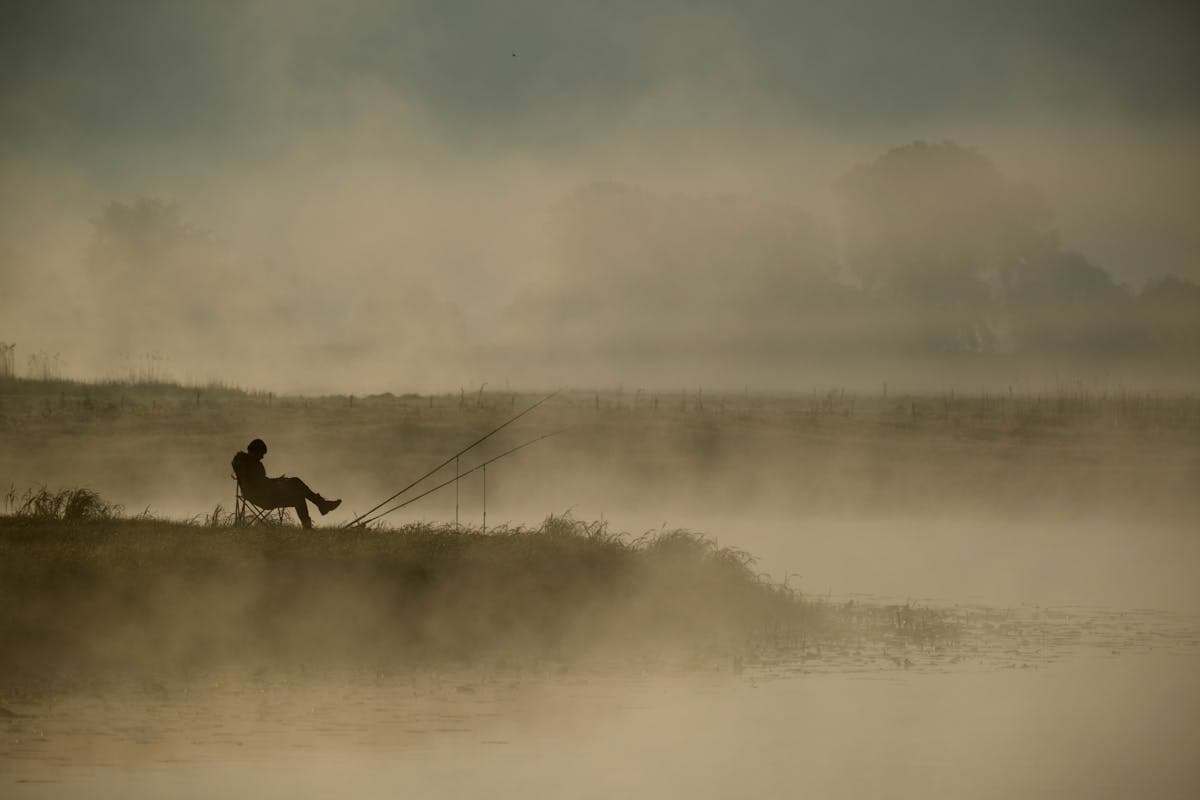
Early morning on the Cowlitz - dawn is the most productive hour at most spots, and weekday mornings are dramatically less crowded than weekends
First-Timer's Recommendation
If this is your first trip to the Cowlitz River, here is how to set yourself up for success:
Best time to visit: Late March for winter steelhead, or mid-May for spring Chinook. Both offer peak fish numbers and consistent conditions.
Where to start: The Blue Creek / Trout Hatchery area is the best entry point for first-timers. It has a developed boat ramp, restrooms, ADA-accessible fishing, and extensive bank access. It is less intense than the Barrier Dam but still productive. If you are comfortable in crowds and want the highest fish density, head straight to the Barrier Dam.
Technique: Start with a bobber-and-jig setup for steelhead (3/8 oz pink or white marabou jig under a slip float). It is the simplest technique to learn and catches plenty of fish. For salmon, bring a plunking rig (Spin-N-Glo with coon shrimp).
Gear to bring:
- 9-10 foot medium-heavy spinning rod
- Spinning reel spooled with 15-20 lb braid, plus a spool of 12-15 lb fluorocarbon for leaders
- Assorted marabou jigs (pink, white, cerise, chartreuse) in 3/8 oz
- Slip floats
- Cured eggs and sand shrimp (available at local tackle shops)
- Waders or waterproof boots (even for bank fishing, the banks can be muddy)
- Net (landing net with rubber bag)
- Washington fishing license, CRSSE endorsement, and catch record card
Realistic expectations: During peak steelhead or salmon runs, catching 1-3 fish per day is a solid outing. Some days you will limit out; other days the fish will not cooperate. The Cowlitz is more of a numbers fishery than a trophy fishery - you are more likely to catch fish here than on most Washington rivers, but the average fish size is modest compared to coastal steelhead rivers.
Using RiverReports
Before every Cowlitz trip, check:
- Washington river flows for real-time Cowlitz River flow at Mayfield Dam and Castle Rock
- Compare current flows to the 1,800-7,500 CFS fishable range
- Look at flow trends - is the river rising, stable, or dropping? Stable or slowly dropping flows fish best.
- Check the Toutle River gauge to assess turbidity risk for the lower river
The Cowlitz's dam-controlled flows make it more predictable than most Washington rivers. Check flows the morning of your trip, and you can fish with confidence that conditions will hold throughout the day.
Frequently Asked Questions
What is the best time to fish the Cowlitz River?
It depends on your target species. For winter steelhead, mid-March through early April is the peak - roughly 59% of the sport harvest comes during those weeks. For spring Chinook, May and June are prime. Fall Chinook and coho peak in September and October. If you can only make one trip per year, late March for steelhead or early October for salmon gives you the best odds.
What is the ideal flow for Cowlitz River fishing?
The fishable range is 1,800-7,500 CFS at the Mayfield Dam gauge (USGS 14238000). The sweet spot for bank anglers is 1,800-4,000 CFS, where wading is comfortable and fish are accessible from shore. Boat anglers can fish effectively up to 7,500 CFS. Above 10,000 CFS, conditions become dangerous and unproductive. Check the Washington flows page for current Cowlitz River water level data.
Do I need a boat to fish the Cowlitz River?
No. The Cowlitz is one of the best bank fishing rivers in Washington. The Barrier Dam tailrace, Blue Creek/Trout Hatchery, I-5 Bridge area, and Massey Bar all offer productive bank access. During peak runs, bank anglers at the Barrier Dam catch as many or more fish than boaters. A drift boat opens up more water on the middle and lower river, but it is absolutely not required.
What is the Cowlitz River steelhead run like?
The Cowlitz supports both winter and summer steelhead runs. Winter steelhead (January-April) are the main draw, with hatchery returns typically in the 3,000-5,000 fish range. The late-run winter steelhead peak in March and early April. Summer steelhead (June-October) are fewer in number but provide warm-weather fishing opportunities. Almost all retention is hatchery fish - wild steelhead must be released.
Is there a Cowlitz River fishing report I can check before my trip?
Yes. Check RiverReports for real-time Cowlitz River flow and water level data. For fishing conditions and what is biting, call the WDFW SW Washington hotline at 360-902-2500, check the WDFW Life Outdoors Report, or stop by the Barrier Dam Campground Tackle Shop or Fish Country Tackle Store for the latest local report. The Tacoma Public Utilities Cowlitz Fish Report also publishes hatchery return counts.
What about sturgeon fishing on the Cowlitz?
The Cowlitz does support a white sturgeon fishery, particularly in the middle and lower river sections around Massey Bar and the Kosmos area. Sturgeon seasons and retention rules are set separately from salmon and steelhead - check WDFW regulations for current open periods and size slot limits. Sturgeon fishing requires patience and heavy tackle (80-100 lb braid, large circle hooks, and smelt or sand shrimp for bait). Most sturgeon fishing on the Cowlitz is catch-and-release during retention closures.
How does the Cowlitz compare to other Washington steelhead rivers?
The Cowlitz is a high-volume hatchery fishery - think numbers rather than trophy-class wild fish. If you want big wild winter steelhead, the Olympic Peninsula rivers or the Skagit system offer larger fish. If you want consistent catches, predictable conditions (thanks to dam-controlled flows), and easy access from the I-5 corridor, the Cowlitz is hard to beat. It is also more beginner-friendly than most Washington steelhead rivers.
Quick Reference
| River Section | Best Months | Target Flow (Mayfield) | Primary Species | Best Access |
|---|
| Barrier Dam area | Mar-Apr (steel), May-Jun (Chinook) | 1,800-7,500 CFS | Steelhead, spring Chinook | Barrier Dam launch/bank |
| Blue Creek to Massey Bar | Year-round | 1,800-7,500 CFS | All species | Blue Creek launch |
| Toledo to I-5 | Sep-Nov | 2,000-7,500 CFS | Fall Chinook, coho | Toledo launch, I-5 bridge |
| Lower (Castle Rock down) | Sep-Nov | Check Castle Rock gauge | Fall Chinook, coho | Al Helenberg launch |
| Upper (above Mayfield) | Year-round | Check Packwood/Randle | Trout, steelhead | Hwy 12 pulloffs |