Quick Reference
| What | When | Key Numbers |
|---|
| Upper Canyon | Year-round (spring & fall best) | 1,000-2,500 CFS ideal; wild rainbows 12-18"; float-only access |
| Ellensburg Section | May-Oct (hoppers Jul-Sep) | 2,000-4,000 CFS; wade & float; easiest access |
| Lower Canyon | Mar-Nov (spring & fall prime) | 2,500-4,500 CFS; fewer anglers; big fish potential |
| Ideal Yakima River flows | Check CFS daily | 1,500-3,500 CFS most sections; reservoir-controlled |
| Guided float trips | Book spring/fall | $450-550/day; Red's Fly Shop |
| License | WA fishing license required | Selective gear rules; catch-and-release for wild trout |
Flow3,220 CFS
Trendstable
Clarityslightly off
Temp62°F
Chubby Chernobyl #8-10 (pink/tan — the top fly right now; hopper-dropper indicator/attractor banged tight to banks; peak terrestrial season with grasshoppers falling from canyon margins all day)Foam Hopper #8-10 (yellow/tan — match the naturals; getting refusals? scale down to #12 or trail a smaller terrestrial behind the hopper)Parachute Ant #14-16 (black — deadly dropper or standalone; trout keying on ants when wind blows them onto the water; often outfishes hoppers on calm afternoons)Yellow Sally #14-16 (yellow — pretty steady activity reported through late August; fish riffles and pocket water)
Flow824 CFS
Trenddropping
Clarityoff-color
Temp80°F
Moto's Minnow #8 (white/grey — strip along structure at first light before water warms; the only realistic shot at fish in these conditions)Woolly Bugger #6-8 (olive/black — slow strip through deeper pools at dawn only; fish are severely stressed)Chubby Chernobyl #8-10 (pink/tan — attractor/indicator for dawn window only; do not fish midday)Pheasant Tail Jig #14-16 (tungsten — drop 18-24" below Chubby at first light)
🎣 TACTICS RIGHT NOWDry FlyChubby Chernobyl #8-10 (pink/tan — the top pattern right now; hopper-dropper indicator banged tight to banks; peak terrestrial season)Foam Hopper #8-10 (yellow/tan — match the naturals falling from canyon margins; scale down to #12 if getting refusals)Parachute Ant #14-16 (black — deadly when wind pushes ants onto the water; often outfishes hoppers on calm days)Yellow Sally #14-16 (yellow — steady activity through late August in riffles and pocket water)PMD #16-18 (pale yellow — scattered morning activity; fish soft-hackle emergers)Elk Hair Caddis #14-16 (tan — afternoon through evening caddis activity remains consistent; fish riffles and tailouts at dusk)Club Sandwich #8-10 (foam terrestrial attractor producing aggressive bank-side eats)
NymphPheasant Tail Jig #14-16 (tungsten — the go-to dropper 18-24" below a hopper or Chubby; match residual mayfly nymphs in the drift)Pat's Stonefly #6-10 (black/brown — reliable weighted point fly through deeper runs and pocket water; the all-day nymph producer)Copper John #14-16 (red/copper — excellent attractor dropper below foam dries; flash triggers strikes in slightly off-color water)Prince Nymph #10-12 (tungsten — versatile attractor through varied water types)Soft Hackle Hare's Ear #14-16 (tan — swing through tailouts during evening caddis activity)Hare's Ear #14-16
StreamerMoto's Minnow #8 (white/grey — early morning along structure before boat traffic; effective in upper canyon)Sparkle Minnow #4-6 (strip slow through deeper runs)Woolly Bugger #6-8 (olive/black — overcast mornings through canyon pools)Sculpzilla #4-6 — streamers most effective at first light or on overcast days; lower river at 80°F is dangerously warm — avoid fishing it entirely; upper canyon at ~3220 CFS creates ideal streamer pockets along eddy lines and current seams
FORECASTUpper canyon reading 3,220 CFS at Umtanum as of August 25 — running at 74% of normal for this date (seasonal average ~4,360 CFS), holding steady through the final weeks of peak irrigation releases. Water temps in the upper canyon around 58-62°F thanks to the cool water bubble — as reservoir levels drop through late summer, the thermocline reaches the outflow, pulling cooler water into the upper canyon. This keeps temps well below stress thresholds and allows all-day fishing. This is the tail end of peak hopper-dropper season — Chubby Chernobyls, foam hoppers, and terrestrial patterns continue producing the best dry fly action of the summer. Grasshoppers are large and winds are frequent enough to put them on the water all day. Yellow sallies remain steady and scattered PMD activity continues in morning riffles. Evening caddis activity continues strong through the tailouts. Air temps in the upper 80s to low 90s — the canyon microclimate keeps water temps manageable but fish early for angler comfort. Flows should begin tapering toward 2,000-3,000 CFS through September as irrigation demand eases — this will be the transition into some of the best wade-and-float fishing of the year and the approach of October Caddis season. The lower river at Kiona remains dangerously warm at approximately 80°F with very low flows around 824 CFS (42% of normal) — avoid fishing the lower river entirely until fall cooling arrives (typically mid-September). Focus on the upper canyon and Ellensburg sections where reservoir releases maintain fishable water temps. September will bring dropping flows, improving clarity, and the first October Caddis adults — book fall guide trips now as October dates fill fast.
Before You Go
The Yakima River is the best wild trout stream in Washington state. That's not marketing - it's the considered opinion of nearly every serious fly fisher in the Pacific Northwest. Flowing 215 miles from Keechelus Lake near Snoqualmie Pass to its confluence with the Columbia River near Richland, the Yakima cuts through basalt canyons, irrigated farmland, and high desert scrubland, holding wild rainbow and cutthroat trout the entire way.
What makes the Yakima special isn't any single thing. It's the combination: a reliable tailwater fishery fed by three major reservoirs, restrictive regulations that have built a robust wild trout population, a diverse and predictable hatch calendar that runs from March through November, and canyon scenery that feels more like Montana than the Interstate 90 corridor.
The catch-and-release regulations have been in place since the 1990s, and the results show. Wild rainbows averaging 12-16 inches are the standard, with plenty of fish pushing 18 inches and occasional 20-inch specimens in the lower canyon. These aren't stocked fish - they're wild, stream-bred trout that fight hard and eat selectively.
If you're coming from the east side of the Cascades or the Seattle metro area, the Yakima is your home water. Ellensburg is two hours from Seattle over Snoqualmie Pass. If you're traveling from farther away, the Yakima deserves a dedicated trip - it's genuinely one of the top trout rivers in the West.
Understanding Yakima River Flows
The Yakima's flow is controlled by three Bureau of Reclamation reservoirs in the upper watershed: Keechelus Lake, Kachess Lake, and Cle Elum Lake. Understanding how these releases work is essential to planning your trip.
Unlike a true freestone river, the Yakima doesn't blow out unpredictably from rainstorms. But unlike a classic tailwater, the flows aren't constant either. The Bureau manages releases primarily for irrigation, not recreation, which creates a distinctive annual flow pattern.
Annual Flow Cycle
| Season | Typical CFS (Umtanum) | What's Happening |
|---|
| Winter (Dec-Feb) | 800-1,500 | Minimum reservoir releases; lowest flows of the year |
| Early Spring (Mar-Apr) | 1,200-2,000 | Gradual increase as snowmelt begins |
| Late Spring (May-Jun) | 2,000-4,000 | Rising flows; irrigation season starts June |
| Summer (Jul-Aug) | 3,500-6,000+ | Peak irrigation releases; highest flows |
| Fall (Sep-Oct) | 2,000-3,500 | Declining as irrigation ends; excellent fishing |
| Late Fall (Nov) | 1,200-2,000 | Dropping to winter levels |
What the Numbers Mean for Fishing
| Yakima River CFS | Conditions |
|---|
| Under 1,200 | Low water - fish concentrated in pools; excellent wading; spooky fish |
| 1,500-2,500 | Ideal range - good wading in most sections; excellent drift boat fishing |
| 2,500-4,000 | Higher water - wade fishing more limited; float fishing remains excellent |
| 4,000-6,000 | Summer irrigation flows - floating only; fish pushed to banks; hopper season |
| Over 6,000 | High water - experienced floaters only; bank-oriented fishing |
The key insight: Summer's high irrigation flows (4,000-6,000 CFS) look intimidating, but they actually create outstanding hopper-dropper fishing from a drift boat. High water pushes trout against the banks where terrestrials land, concentrating fish in predictable feeding lanes. For a deeper explanation of how CFS affects fishing, see our guide to understanding river flows and CFS.
Check real-time Yakima River flows at Umtanum and Yakima River flows at Kiona before every trip.
The Three Sections
The fishable Yakima splits into three distinct sections, each with its own character, access, and seasonal strengths.
Upper Canyon (Easton to Thorp)
The upper canyon runs roughly 20 miles from the Easton Dam downstream through a dramatic basalt canyon to Thorp. This is the most remote and scenic section, accessible primarily by drift boat.
Character: Tight basalt canyon with pocket water, riffles, runs, and deep pools. The river braids in places, creating complex structure. Limited bank access means less fishing pressure.
Fish: Wild rainbow trout, 10-16 inches on average. Cutthroat trout mixed in, especially in tributaries. The occasional larger fish hiding in deep canyon pools.
Best for: Float fishing (this is essentially float-only water). Spring and fall when flows are moderate and hatches are strong.
Access points:
- Easton Dam - Upper put-in (check access; can be restricted)
- Crystal Springs - Popular mid-canyon launch
- Thorp Bridge - Standard take-out for upper canyon floats
Flow notes: The upper canyon fishes best at 1,200-2,500 CFS. Winter minimum flows can make floating difficult in spots.
Ellensburg Section (Thorp to Ringer)
The Yakima opens up as it flows through the Kittitas Valley near Ellensburg. This is the most accessible section with the best wading opportunities and the greatest variety of water types.
Character: Wider valley floor with riffles, glides, and long runs. More agricultural setting than the canyon sections. Some braided channels and side channels hold fish.
Fish: Wild rainbows, 12-18 inches. This section produces some of the river's best-conditioned fish - fat, healthy trout with access to abundant food.
Best for: Wading and floating. Summer hopper fishing. Beginning fly fishers (more forgiving water). May through October.
Access points:
- Thorp Bridge - Upper end
- Reecer Creek Road - Several informal access points
- Ellensburg KOA area - Walk-in access
- Canyon Road Bridge - Popular access point
Flow notes: Wadable at most flows below 3,000 CFS. At summer irrigation flows (4,000-6,000 CFS), this section is best fished from a boat.
Lower Canyon (Ringer to Roza)
Below the Ellensburg valley, the Yakima enters another dramatic basalt canyon that runs roughly 25 miles from Ringer downstream past Umtanum to the Roza Dam. This is the heart of Yakima River fly fishing.
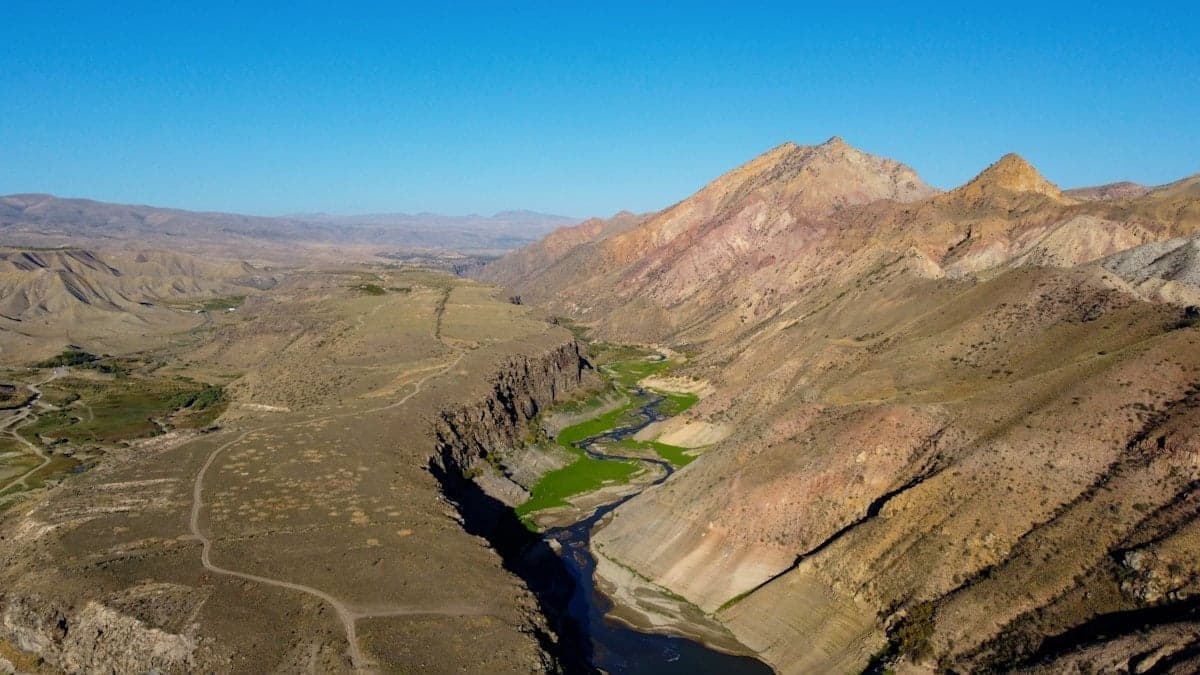
The Yakima River canyon between Ellensburg and Roza Dam - the heart of the fishery and some of the best wild trout water in the Northwest
Character: Deep basalt canyon with classic trout water - long runs, boulder gardens, deep pools, and productive riffles. Railroad tracks parallel the river on one side, BLM land on the other. The canyon creates its own microclimate, staying warmer in winter and cooler in summer than the surrounding plateau.
Fish: The best trout water on the river. Wild rainbows 12-18 inches, with legitimate 20-inch fish in deeper pools and runs. Cutthroat mixed in. This section sees the strongest hatches and holds the highest fish density.
Best for: Float fishing primarily, with some wade access at pullouts. Year-round fishing potential but spring and fall are prime. This is where guides spend most of their time.
Access points (upstream to downstream):
- Ringer Road - Put-in for canyon floats; improved launch
- Umtanum Recreation Area - BLM site with camping, foot bridge, and wade access on the east bank
- Squaw Creek - Mid-canyon take-out/put-in
- Lmuma Creek - Access via BLM road
- Roza Recreation Site - Standard take-out above Roza Dam
Float logistics: The full Ringer-to-Roza float is a long day (roughly 20 river miles). Most anglers break it into shorter sections:
- Ringer to Umtanum: 7-8 miles, half-day to full-day float
- Umtanum to Squaw Creek: 6-7 miles, excellent half-day
- Squaw Creek to Roza: 6-7 miles, afternoon float
Flow notes: The Umtanum USGS gauge (12484500) is your primary reference for this section. Ideal range is 1,500-3,500 CFS.
The Hatch Calendar
The Yakima's hatch calendar is one of its greatest strengths. From March through November, there's almost always something coming off the water.
March - April: Skwalas and March Browns
The season begins when Skwala stoneflies (#8-10) start crawling out of the river in late February and March. These large, dark stoneflies bring fish to the surface for the first significant dry fly action of the year. Fish Skwala dry patterns in the slow margins and foam lines.
By mid-March, March Brown mayflies (Rhithrogena morrisoni, #12-14) start hatching on overcast afternoons. These are big, juicy bugs that trout eat with confidence. The hatch can be sporadic and weather-dependent, but when it's on, the dry fly fishing is outstanding.
Key flies:
- Skwala Stonefly (#8-10, olive/dark body)
- March Brown Comparadun (#12-14)
- Pheasant Tail Nymph (#14-16)
- Hare's Ear (#12-16)
May - June: The Mother's Day Caddis Hatch
This is the event. Starting around Mother's Day and running through early June, the Yakima experiences one of the most prolific caddis hatches in the West. Millions of Brachycentrus caddis (Mother's Day Caddis, #14-16) blanket the river in the late afternoon and evening. Trout go on a feeding frenzy.
The hatch typically starts in the lower canyon and moves upstream over 2-3 weeks. Peak activity hits in the late afternoon through dusk. Fish will eat drifting caddis pupa, emerging adults, and egg-laying adults with equal enthusiasm.
Key flies:
- Elk Hair Caddis (#14-16, tan/olive)
- X-Caddis (#14-16)
- CDC Caddis Emerger (#14-16)
- Soft Hackle Wet Fly (#14-16, partridge and olive/hare's ear)
- Beadhead Caddis Pupa (#14-16, green/tan)
June - July: PMDs and Golden Stones
Pale Morning Duns (Ephemerella, #16-18) begin hatching in June, providing excellent dry fly fishing during cloudy mornings and evenings. The hatch is heaviest in slower water - glides, eddies, and the insides of bends.
Golden stoneflies (#6-8) emerge along rocky banks in June and July. While not as dense a hatch as caddis, they bring big fish to the surface. Fish golden stone dries tight to banks and overhanging brush.
Key flies:
- Parachute PMD (#16-18, pale yellow body)
- PMD Sparkle Dun (#16-18)
- Pheasant Tail Nymph (#16-18)
- Stimulator (#6-8, golden/yellow)
- Pat's Rubber Legs (#6-8, brown/black)
July - September: Hoppers and Terrestrials
When irrigation flows push CFS into the 4,000-6,000 range, the hopper-dropper game takes over. Grasshoppers, ants, and beetles blown onto the water from canyon and agricultural margins become a major food source. This is the Yakima's most accessible fishing - easy to read, aggressive takes, and action all day long.
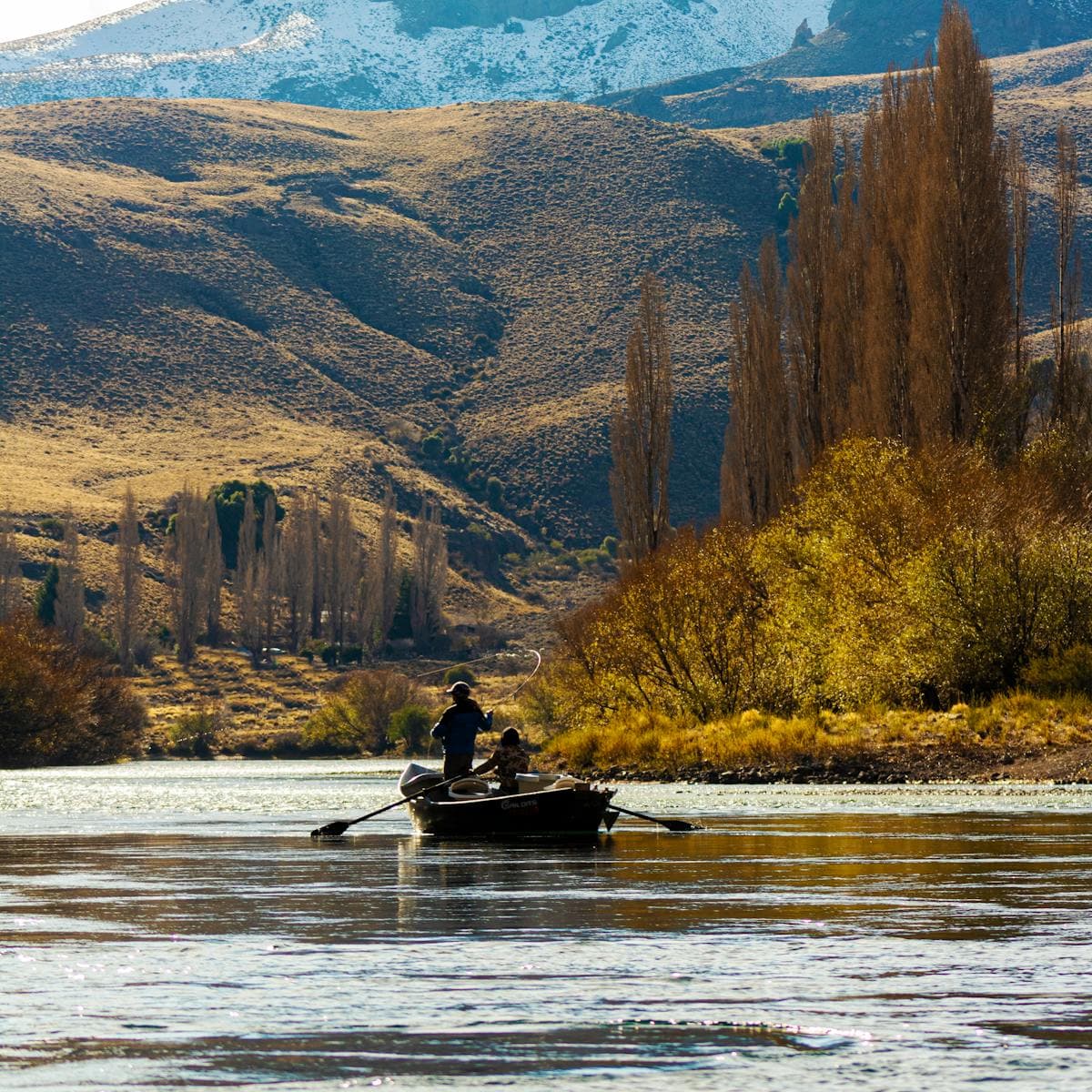
Summer drift boat fishing on the Yakima - when irrigation flows push fish to the banks, hopper-dropper rigs produce all day
Float through the lower canyon banging foam hoppers against the banks. When a 16-inch wild rainbow explodes on a Chubby Chernobyl three feet from shore, you'll understand why people plan entire vacations around Yakima hopper season. The Yakima is one of the top hopper fishing destinations in the western US.
Key flies:
- Chubby Chernobyl (#8-10, various colors)
- Foam Hopper (#8-10, yellow/tan)
- Club Sandwich (#8-10)
- Parachute Ant (#14-16, black or cinnamon)
- Beetle pattern (#14-16, foam)
- Dropper: Beadhead Pheasant Tail or Copper John (#14-18)
September - November: October Caddis and Fall Baetis
The Yakima's fall season is arguably the best time to be on the river. Irrigation releases taper off, flows drop into the ideal 2,000-3,500 CFS range, and the October Caddis hatch begins.
October Caddis (Dicosmoecus, #6-8) are giant, orange-bodied caddis that bring the biggest fish in the river to the surface. The hatch runs from late September through November, with peak activity in October. Fish the large, fluttering adults on the surface or swing soft hackle patterns through runs. This hatch is comparable to the famous October Caddis hatches on rivers like the Deschutes.
Blue-winged olives (Baetis, #18-22) round out the fall season, hatching on cloudy afternoons into November.
Key flies:
- October Caddis Dry (#6-8, orange body)
- Stimulator (#6-8, orange)
- Soft Hackle (#6-8, orange body, partridge hackle)
- Beadhead October Caddis Pupa (#8-10, orange/brown)
- Parachute Adams (#18-20) for fall BWOs
- Blue-winged Olive Comparadun (#18-22)
Complete Hatch Calendar Summary
| Month | Primary Hatches | Fly Sizes | Best Method |
|---|
| Mar | Skwalas, early BWOs | #8-14 | Nymph + dry |
| Apr | March Browns, BWOs | #12-16 | Dry + nymph |
| May | Mother's Day Caddis | #14-16 | Dry, wet, emerger |
| Jun | Caddis, PMDs, Goldens | #6-18 | Dry + dropper |
| Jul | Hoppers, PMDs, ants | #8-18 | Hopper-dropper |
| Aug | Hoppers, terrestrials | #8-16 | Hopper-dropper |
| Sep | Early Oct Caddis, hoppers | #6-12 | Dry, swing |
| Oct | October Caddis, BWOs | #6-22 | Dry, swing |
| Nov | Late Oct Caddis, BWOs | #8-22 | Nymph + dry |
Float Fishing vs. Wade Fishing
Float Fishing (The Primary Method)
Most serious Yakima River fishing happens from a drift boat or raft. The canyon sections have limited bank access, and floating lets you cover miles of productive water in a day.
Advantages:
- Access to the best water in the canyon sections
- Cover more holding water efficiently
- Fish bank-oriented lies at the perfect angle
- Essential during high summer flows (4,000+ CFS)
What you need:
- Drift boat, raft, or pontoon boat
- Two anchors (canyon winds can be fierce)
- Knowledge of the put-in/take-out system
- Shuttle vehicle or shuttle service
Shuttle services:
Wade Fishing
Wade fishing is more limited on the Yakima but absolutely productive in the right spots.
Best wade access:
- Umtanum Recreation Area - Walk across the footbridge to fish the east bank; excellent riffles and runs upstream and downstream
- Ellensburg valley - Multiple road crossings with walk-in access; wadable at flows under 3,000 CFS
- Canyon Road Bridge - Upstream and downstream wading access
- Squaw Creek area - Some bank access near the BLM campsite
Wade fishing tips:
- Fish early morning before drift boats start running through
- Focus on riffles and the heads of runs - boat traffic pushes fish out of the tailouts
- Felt soles or studded boots essential on the basalt cobble
- Wading staff recommended at flows above 2,000 CFS
Techniques That Work
Nymphing
Nymphing is the year-round bread and butter, especially from October through April when hatches are sparse.
Standard Yakima nymph rig:
- Lead fly: Pat's Rubber Legs (#8-10) or larger stonefly nymph
- Dropper: Pheasant Tail (#14-18) or Hare's Ear (#14-16), 18-24" behind
- Indicator: Set at 1.5x water depth
- Weight: Split shot or weighted flies depending on current speed
Euro nymphing: Excellent in the riffled water of the upper and lower canyons. The Yakima's consistent depth and current make it ideal tight-line water. A 10-11' 3-weight nymph rod is the perfect tool.
Dry Fly Fishing
The Yakima's hatches create some of the best dry fly fishing in Washington state. Match the hatch with appropriate patterns, and keep your drag-free drift tight.
Key principles:
- These are wild, educated fish - sloppy presentations get refused
- Long leaders (12-14') and fine tippet (5X for caddis/hoppers, 6X for PMDs/BWOs)
- Upstream presentations for wading; quartering downstream casts from the boat
- During caddis hatches, a slight twitch can trigger strikes (caddis skate on the surface)
Hopper-Dropper
The quintessential Yakima technique from July through September.
The rig:
- Large foam dry fly (Chubby Chernobyl, hopper, Stimulator) as indicator and attractor
- 18-24" of 4X-5X fluorocarbon to a beadhead nymph (#14-18)
- Cast tight to banks, overhanging brush, and rocky structure
- Watch the foam fly - if it dips or moves unnaturally, set the hook
Swinging Wet Flies
An underrated technique on the Yakima, particularly during caddis hatches. Soft hackle patterns swung on a down-and-across presentation can be devastatingly effective during the Mother's Day caddis and October Caddis hatches.
Setup:
- 9' 4-5 weight rod
- Standard floating line
- 9' leader tapered to 4X-5X
- Soft hackle wet flies (#6-16 depending on hatch)
- Cast at 45 degrees downstream, mend to control speed, let the fly swing
Gear Recommendations
Rod: 9' 5-weight is the all-around standard. Bring a 4-weight for spring dry fly work and a 6-weight for summer hoppers in wind.
Reel: Standard trout reel with a smooth drag. Nothing fancy required.
Line: Weight-forward floating line covers 90% of situations. A sink-tip line is useful for streamer fishing in deeper canyon pools.
Leaders:
- Nymphing: 9' 4X tapered, add tippet as needed
- Dry fly: 12-14' tapered to 5X (caddis/hoppers) or 6X (PMDs/BWOs)
- Hopper-dropper: 9' 4X to the dry, 4X-5X to the nymph
Wading gear: Breathable chest waders, felt or studded rubber soles. Wading staff for flows above 2,000 CFS.
Essential accessories:
- Polarized sunglasses (sight fishing in the clear canyon water)
- Wind-resistant hat (canyon winds are real)
- Sunscreen (the canyon reflects heat intensely in summer)
- Two anchors if floating (canyon winds again)
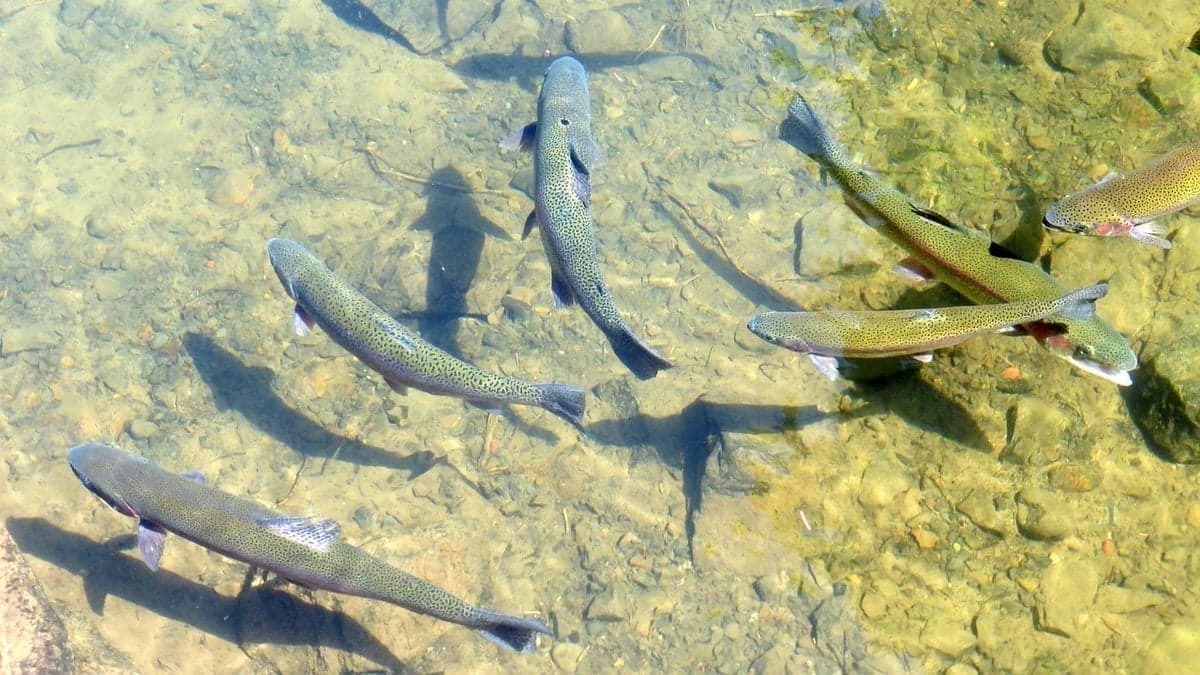
A wild Yakima River rainbow trout - catch-and-release regulations have built one of the strongest wild trout populations in the Pacific Northwest
Regulations
The Yakima River has specific regulations that vary by section. Always check current WDFW regulations before fishing.
Upper River (Keechelus Dam to Roza Dam)
This is the primary trout fishing water, under selective gear rules:
- Catch and release only for wild trout (no adipose fin clip)
- Selective gear rules: Artificial flies and lures only, single barbless hooks
- No bait
- Whitefish: May be retained (check current limits)
Below Roza Dam
Regulations change below Roza Dam. Some sections allow bait and have harvest limits. Check WDFW regulations by section, as rules differ significantly.
License Requirements
- Washington State fishing license required (available at WDFW)
- No additional steelhead/salmon endorsement needed for trout fishing
- Tribal fishing rights: Yakama Nation members fish under separate regulations
Important Notes
- Barbless hooks are mandatory in the selective gear sections
- No treble hooks in selective gear water
- Wild trout must be released immediately - do not remove from water for photos if possible
- Whitefish are present and can be kept in some sections - they're actually good eating
Access & Logistics
Getting There
The Yakima River parallels Interstate 82 and Highway 821 (Canyon Road) through the fishing water.
- From Seattle: 2 hours east over Snoqualmie Pass (I-90) to Ellensburg; another 20 minutes south on Canyon Road to the lower canyon
- From Portland: 4-4.5 hours via I-84 and I-82
- From Spokane: 3 hours west on I-90
- From Yakima: 30 minutes north on Canyon Road to the lower canyon
Town Services
Ellensburg is the base camp for Yakima River fishing:
- Hotels, restaurants, grocery stores, gas stations
- Central Washington University campus adds dining options
- Fly shops (see below)
Yakima offers full city services at the southern end of the fishery.
Cle Elum provides services near the upper canyon sections.
Fly Shops and Outfitters
Red's Fly Shop - Canyon Road, Ellensburg area
- The Yakima's premier fly shop and guide service
- Daily Yakima River fishing reports on their blog
- Full-day guided floats: $450-550/day for 1-2 anglers
- Gear, flies, shuttle coordination, and local knowledge
- Phone: (509) 929-1802
Worley Bugger Fly Co. - Ellensburg
- Full-service fly shop with experienced staff
- Guide trips and walk/wade instruction
- Yakima River fishing reports and hatch updates
- Local fly patterns tied specifically for Yakima hatches
Evening Hatch Fly Fishing - Ellensburg
- Guide service specializing in the Yakima
- Walk/wade and float options
Camping
BLM Recreation Sites (along Canyon Road):
- Umtanum Recreation Area - The primary canyon campsite; vault toilets, day-use and overnight; foot bridge to east bank
- Squaw Creek - Basic BLM campsite with river access
- Lmuma Creek - Primitive camping with canyon access
- Roza Recreation Site - Near Roza Dam take-out
Note: BLM sites are primitive - no water, no hookups. Bring everything you need. Sites can fill on weekends during peak season (May-October).
Commercial campgrounds are available in Ellensburg and along I-82.
Seasonal Planning Guide
| Trip Goal | Best Months | Section | Method |
|---|
| Spring dry fly (March Browns) | Mar-Apr | Lower Canyon | Float |
| Mother's Day Caddis | May-Jun | Lower Canyon | Float + wade |
| PMD fishing | Jun-Jul | Ellensburg, Lower Canyon | Float + wade |
| Hopper-dropper | Jul-Sep | All sections | Float (essential at high flows) |
| October Caddis | Sep-Nov | Lower Canyon | Float |
| Quiet, uncrowded fishing | Nov-Feb | Lower Canyon | Wade + float |
Hazards and Safety
Rattlesnakes
The Yakima River canyon is prime rattlesnake habitat. Northern Pacific rattlesnakes are common on the basalt talus slopes from April through October. Watch where you step when walking to and from the river, especially on hot days. They're most active in the morning and evening when warming up or cooling down on exposed rock.
- Stay on trails when hiking to access points
- Watch your step on rocky shorelines and at put-in/take-out areas
- Don't reach into rock crevices or under ledges
- Dogs are at particular risk - consider leaving them home during warm months
Railroad Tracks
Active Burlington Northern Santa Fe railroad tracks parallel the river through the lower canyon. Trains run frequently and without warning.
- Never walk on or near the tracks
- Be alert when crossing tracks to access fishing water
- Keep gear away from the rail corridor
- Trains are quieter than you expect in the canyon - don't use headphones
Canyon Wind
The Yakima Canyon funnels wind, sometimes violently. Sustained 30+ mph winds are common, especially in spring and fall. This makes casting difficult and can create dangerous conditions for drift boats.
- Carry two anchors (one is not enough in canyon winds)
- Secure all gear in the boat
- Consider canceling float plans in extreme wind - being stuck mid-canyon with gale-force winds is no fun
- Wind typically builds through the afternoon
Wading Safety
The basalt cobble bottom is slick, especially with algae growth in summer.
- Studded boots or felt soles are essential (not optional)
- Wading staff strongly recommended at flows above 2,000 CFS
- Don't cross the river at flows above 3,000 CFS without experience
- Wade upstream whenever possible to maintain footing
Water Temperature
Water temperature affects fish activity and helps you plan your day:
| Season | Water Temp Range | Fish Activity |
|---|
| Winter (Dec-Feb) | 34-40°F | Slow; deep nymphing only; midday warmth triggers brief feeding |
| Early Spring (Mar-Apr) | 40-48°F | Increasing; Skwalas and March Browns trigger surface feeding |
| Late Spring (May-Jun) | 48-55°F | Active; caddis hatches bring aggressive feeding |
| Summer (Jul-Aug) | 55-65°F | Most active; all-day feeding; terrestrials dominant |
| Fall (Sep-Oct) | 48-58°F | Very active; October Caddis and baetis; excellent surface feeding |
| Late Fall (Nov) | 38-48°F | Declining; morning nymphing and afternoon hatches |
Note: Unlike many Pacific Northwest rivers, the Yakima's reservoir releases moderate temperature extremes. Summer temps rarely exceed 65°F in the canyon sections, keeping fish active when other regional rivers shut down from heat. Winter reservoir releases are warmer than natural flow, extending the comfortable fishing season.
Common Mistakes
- Only fishing summer: Spring and fall are arguably better - fewer people, better flows, outstanding hatches
- Wading during high flows: At 4,000+ CFS, you need a boat. Don't risk it.
- Ignoring the swing: During caddis hatches, swinging soft hackles can outfish dries
- Fishing too heavy in clear water: The Yakima runs clear. Fine tippet (5X-6X) and smaller flies often outproduce heavier rigs.
- Not checking flows before driving: The Yakima changes character dramatically with flow. 1,500 CFS is a completely different river than 5,000 CFS. Check flows at Umtanum before you leave home.
- Skipping the canyon for easier water: The Ellensburg section is more accessible, but the lower canyon holds more and bigger fish
- Forgetting wind gear: Canyon winds can make casting miserable. Bring a hat that stays on and practice casting in wind.
Hiring a Guide
A guided float is the best way to experience the Yakima, especially for first-timers. Guides know the put-ins, the seasonal patterns, and where fish are holding on any given day.
What to expect:
- Full-day guided float: $450-550 for 1-2 anglers
- Duration: 8-10 hours on the water
- Typically includes: Drift boat, flies, leaders, and lunch
- You provide: Fishing license, waders, rod (shops can arrange rentals), and gratuity (15-20%)
When to book:
- Spring caddis (May) and fall October Caddis (October) book up months in advance
- Summer hopper season has more availability
- Weekend dates fill first - weekday trips offer better pricing and fewer boats on the water
First-Timer's Recommendation
If this is your first trip to the Yakima:
Best bet: Book a guided float through the lower canyon in late May (Mother's Day Caddis) or early October (October Caddis). These are the signature Yakima experiences.
DIY approach: Drive to the Umtanum Recreation Area on Canyon Road. Walk across the footbridge and wade upstream. Fish nymphs through the riffles and dries during any hatch activity. This is the easiest way to access quality canyon water without a boat.
Gear priority: A 9' 5-weight rod handles everything the Yakima throws at you. Bring a box with Elk Hair Caddis (#14-16), Pheasant Tails (#14-18), hoppers (#8-10), Parachute Adams (#16-20), and Pat's Rubber Legs (#8-10), and you're covered for most situations.
Realistic expectations: On a good day with hatches, expect 15-30 fish, mostly 12-16 inches, with a few pushing 18. On a slow day (wrong time, wrong conditions), you might work for 5-10 fish. The Yakima rewards preparation and timing more than most rivers.
Using RiverReports
Before your trip, check:
The Yakima's reservoir-controlled flows are more predictable than freestone rivers, but checking CFS is still essential for planning what section to fish, whether to wade or float, and what techniques will be most effective.
Winter Fishing on the Yakima
Most anglers ignore the Yakima from December through February, and that's a missed opportunity. Winter flows drop to their lowest levels (800-1,500 CFS), making the river extremely wadable and concentrating fish in predictable pools and runs.
What to expect:
- Water temperatures in the mid-30s to low 40s - fish are sluggish but feeding
- Midday warming (11 AM - 2 PM) is your best window
- Small midge hatches occur on warmer days, bringing occasional rising fish
- Blue-winged olives can hatch on overcast afternoons in December and again in February
- Whitefish are active and aggressively take nymphs all winter
Winter technique: Slow, deep nymphing with small midges (#20-22) and San Juan Worms (#14-16). Indicator fishing with a long drift through deeper pools and tailouts. Set your indicator deeper than you think - winter fish hold near the bottom.
The tradeoff: You'll catch fewer fish (5-10 on a good day), but you'll have miles of canyon water completely to yourself. Canyon Road is empty. No drift boats. Just you, the basalt walls, and wild trout.
Evening light on the Yakima - the canyon creates its own microclimate, extending fishable hours on summer evenings when hoppers are still falling
Practical considerations: Snow and ice on Canyon Road are possible. Check road conditions before driving. Dress in layers - canyon temperatures can swing 25 degrees during the day. Bring hand warmers and a thermos.
Frequently Asked Questions
What are the current Yakima River flows?
Check real-time Yakima River CFS at the Umtanum gauge (USGS 12484500) for the lower canyon and the Kiona gauge (USGS 12510500) for the lower river. Ideal fishing flows are 1,500-3,500 CFS for most techniques. Summer irrigation releases push flows to 4,000-6,000 CFS, which is float-only water but excellent for hopper-dropper fishing. Flows are controlled by Bureau of Reclamation releases from Keechelus, Kachess, and Cle Elum reservoirs.
What is the best time to fly fish the Yakima River?
Spring (late April through June) and fall (September through November) are the prime seasons. The Mother's Day Caddis hatch in May is the river's signature event, and the October Caddis hatch in fall brings the biggest fish to the surface. Summer (July-September) offers excellent hopper-dropper fishing from drift boats. Winter is quiet but fishable for dedicated anglers.
Is the Yakima River catch and release?
The upper Yakima River from Keechelus Dam to Roza Dam is catch-and-release for wild trout under selective gear rules (barbless, artificial only). Below Roza Dam, regulations vary by section and some harvest may be allowed. Mountain whitefish may be retained in some sections. Always check current WDFW regulations before fishing.
Can you wade fish the Yakima River?
Yes, though opportunities are more limited than on some rivers. The best wade access is at the Umtanum Recreation Area (footbridge to the east bank), Canyon Road Bridge, and various access points in the Ellensburg valley. Wading is best at flows under 3,000 CFS. At summer irrigation flows (4,000+ CFS), you need a boat. Studded or felt-soled boots are essential on the slick basalt cobble.
Do you need a drift boat to fish the Yakima?
A drift boat isn't required but gives you access to significantly more water, especially in the canyon sections. Most guide trips are float trips. For DIY wading, focus on the Umtanum area, Ellensburg valley, and Canyon Road Bridge access points. During summer high flows (4,000+ CFS), a boat is essentially mandatory.
What flies should I bring for the Yakima River?
Your essential Yakima fly box should include: Elk Hair Caddis (#14-16), Pheasant Tail Nymph (#14-18), Pat's Rubber Legs (#8-10), Parachute Adams (#16-20), foam hoppers (#8-10) for summer, October Caddis patterns (#6-8) for fall, and soft hackle wet flies (#8-16) for swinging during caddis hatches. Match the hatch calendar to your travel dates and adjust accordingly.
How does the Yakima compare to the Deschutes?
Both are premier Western trout rivers with reservoir-controlled flows and strong hatch calendars. The Deschutes is a bigger river with larger redsides (Deschutes rainbow trout) and a famous salmonfly hatch. The Yakima offers more variety in water types, easier access from Seattle, and arguably better technical dry fly fishing. The Yakima's October Caddis hatch rivals the Deschutes'. If you're in Washington, the Yakima is your river; if you're in Oregon, the Deschutes is.
Quick Reference: What to Bring
| Item | Size/Type | Notes |
|---|
| March Browns | #12-14 Comparadun | Spring |
| Elk Hair Caddis | #14-16 | Mother's Day hatch (May-Jun) |
| PMDs | #16-18 Parachute/Sparkle Dun | Jun-Jul |
| Hoppers | #8-10 foam (Chubby, Club Sandwich) | Jul-Sep |
| October Caddis | #6-8 orange | Sep-Nov |
| Pheasant Tail | #14-18 beadhead | Year-round nymph |
| Pat's Rubber Legs | #8-10 | Year-round lead nymph |
| Soft Hackles | #8-16 (match the hatch) | Swing during caddis hatches |
| Parachute Adams | #16-20 | BWOs and general searching |
| Tippet | 4X-6X | 4X for hoppers, 6X for small dries |
Track real-time Yakima River flow conditions. For more Pacific Northwest destinations, check our Olympic Peninsula steelhead guide, hopper fishing guide for the western US, and Washington state river conditions. New to reading flow data? Our guide to understanding river CFS and flows breaks it down.