Upper Yellowstone (Gardiner)
Fishable
Flow2,400 CFS
Trenddropping
Clarityclear
Temp58°F
Hopper #10Chubby Chernobyl #8Pheasant Tail #14Copper John #16
| What | When | Key Numbers |
|---|---|---|
| Salmonfly hatch | Late June to early July | Sizes 4-8; river needs to drop below 10,000 CFS and clear |
| Hopper fishing | Late July through September | Sizes 8-12; wind improves the bite |
| Ideal wading flows | July through October | 1,500-2,500 CFS at Livingston; above 4,000 gets challenging |
| Float fishing | Late June through October | Most sections fishable below 10,000 CFS |
| Guided trips | Book by March for July | $500-725/day for 1-2 anglers |
| Fly shop | Dan Bailey's | (406) 222-1673, 209 W Park St, Livingston |
| Fly shop | Yellowstone Angler | (406) 222-7130, 5256 US-89 S, Livingston |
The Yellowstone River is America's longest undammed river, running 671 miles from its headwaters in the Absaroka Range through Yellowstone National Park and across the plains of eastern Montana to the Missouri River. The fishing water that matters to trout anglers covers roughly 150 miles from Gardiner through Paradise Valley to Big Timber, with the most popular stretch concentrated in the 50-mile corridor between Yankee Jim Canyon and Livingston.
What makes the Yellowstone different from Montana's other famous trout rivers is its size and its wildness. There is no dam controlling flows, no release schedule to monitor, no tailwater predictability. The river runs on snowmelt, and that makes it both powerful and unpredictable. Spring runoff can push flows above 25,000 CFS near Livingston, turning the river into a churning, chocolate-brown freight train. By late June, it typically clears and drops into fishable shape, and from there through October, it's one of the best trout rivers in the West.
The river holds native Yellowstone cutthroat trout (the species the park was named for), along with introduced brown trout, rainbow trout, and abundant Rocky Mountain whitefish. By biomass, there are actually more whitefish in the Yellowstone upstream from Livingston than there are trout. Cutthroats dominate the upper river near Gardiner and through the park. Browns grow largest in the middle and lower sections, where undercut banks and deeper structure suit their ambush-feeding style. Rainbows fill the riffles and faster water, particularly around the Livingston town stretch.
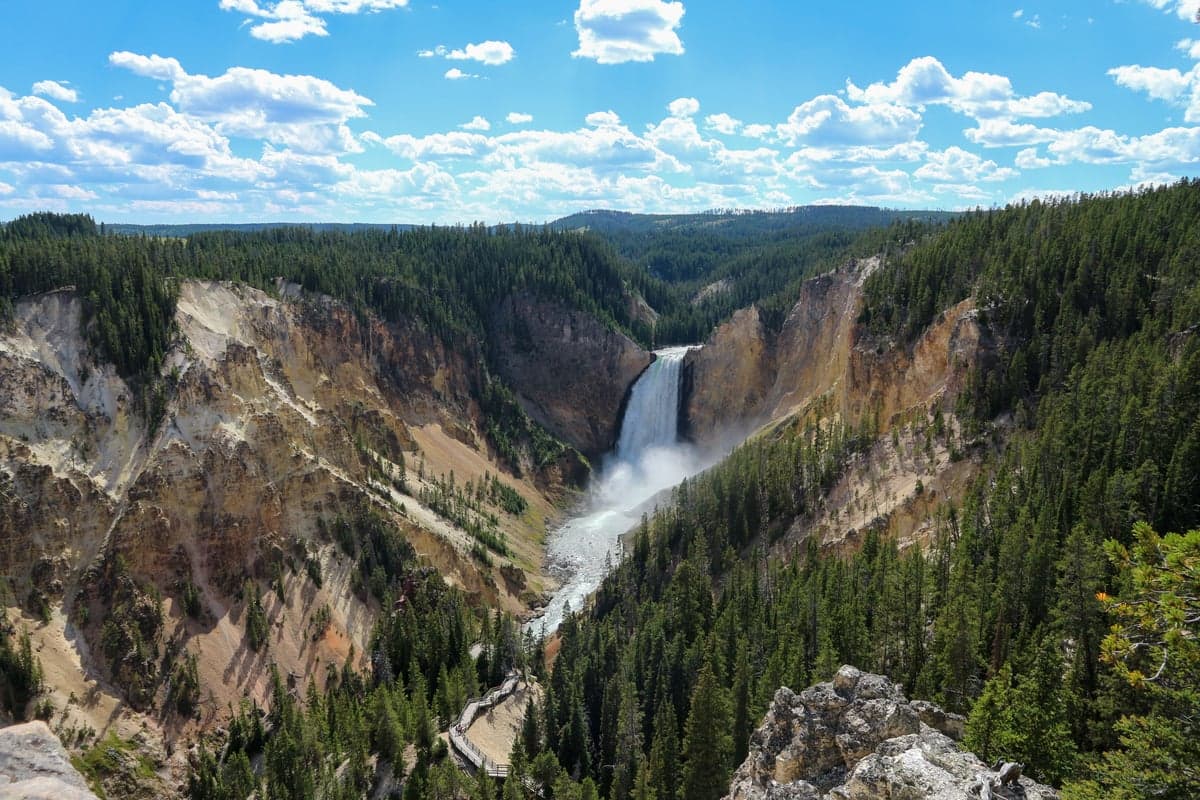
Lower Yellowstone Falls drops 308 feet into the Grand Canyon of the Yellowstone, where the river begins its journey north into Paradise Valley
The fishable Yellowstone flows north from Yellowstone National Park into Montana, carving through Paradise Valley between the Absaroka Range to the east and the Gallatin Range to the west. Livingston (population roughly 8,000) sits at the valley's north end where the river bends east, and is the primary staging town. Gardiner, at the park's north entrance, anchors the upper end.
There are over 20 official Fishing Access Sites (FAS) between the park boundary and Livingston, with access points roughly every five miles. Below Livingston, access points spread out to every 10 miles or so.
Upper River: Gardiner to Point of Rocks
Upper Paradise Valley: Point of Rocks to Grey Owl
Lower Paradise Valley: Grey Owl to Livingston
Livingston Area
Most anglers floating the Yellowstone use a shuttle service rather than running two vehicles. B&G River Shuttles is the primary shuttle operator in Paradise Valley. Call ahead during peak season (July/August), as they book up on busy mornings. Typical shuttle cost runs $60-100 depending on distance.
For wade fishing, parking at most FAS sites is free and generally adequate on weekdays. Weekends during salmonfly season can fill the lots at popular sites like Grey Owl and Mallard's Rest by mid-morning. Arrive early or consider less popular access points like Chicory or Dan Bailey FAS.
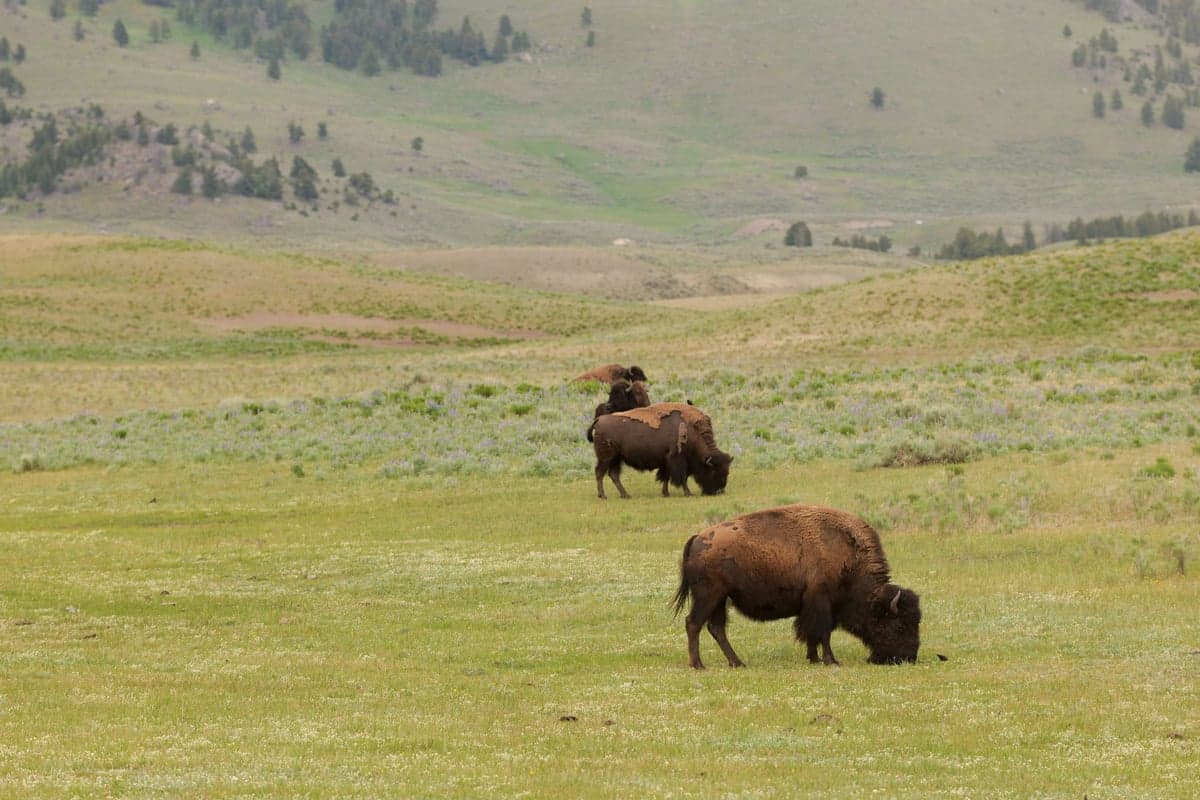
Bison graze the grasslands bordering Yellowstone National Park, a common sight for anglers driving through Paradise Valley
Understanding flows on the Yellowstone requires thinking bigger than most trout rivers. This is a large, powerful, undammed system where "normal" flows run several thousand CFS.
Seasonal Flow Pattern (at Livingston gauge)
| Season | Typical CFS | What to Expect |
|---|---|---|
| Winter (Dec-Mar) | 1,000-2,000 | Cold, clear, low. Nymphing and streamer weather. |
| Spring runoff (Apr-Jun) | 5,000-25,000+ | Blown out. Peak is typically mid-June. Not fishable above 10,000. |
| Post-runoff (late Jun-Jul) | 3,000-8,000 | River clears. Salmonfly hatch fires. Fishing improves daily. |
| Summer (Aug-Sep) | 1,500-3,500 | Prime conditions. Clear water, wadeable flows, terrestrials. |
| Fall (Oct-Nov) | 1,500-2,500 | Excellent. Brown trout spawning, fall baetis, fewer anglers. |
Flow Thresholds (at Livingston)
The "magic number" that many local guides cite is around 5,000 CFS. At that flow, both floating and wading become productive, the water has typically cleared, and the salmonfly hatch is either underway or about to begin.
Track current flows on RiverReports to plan your trip timing.
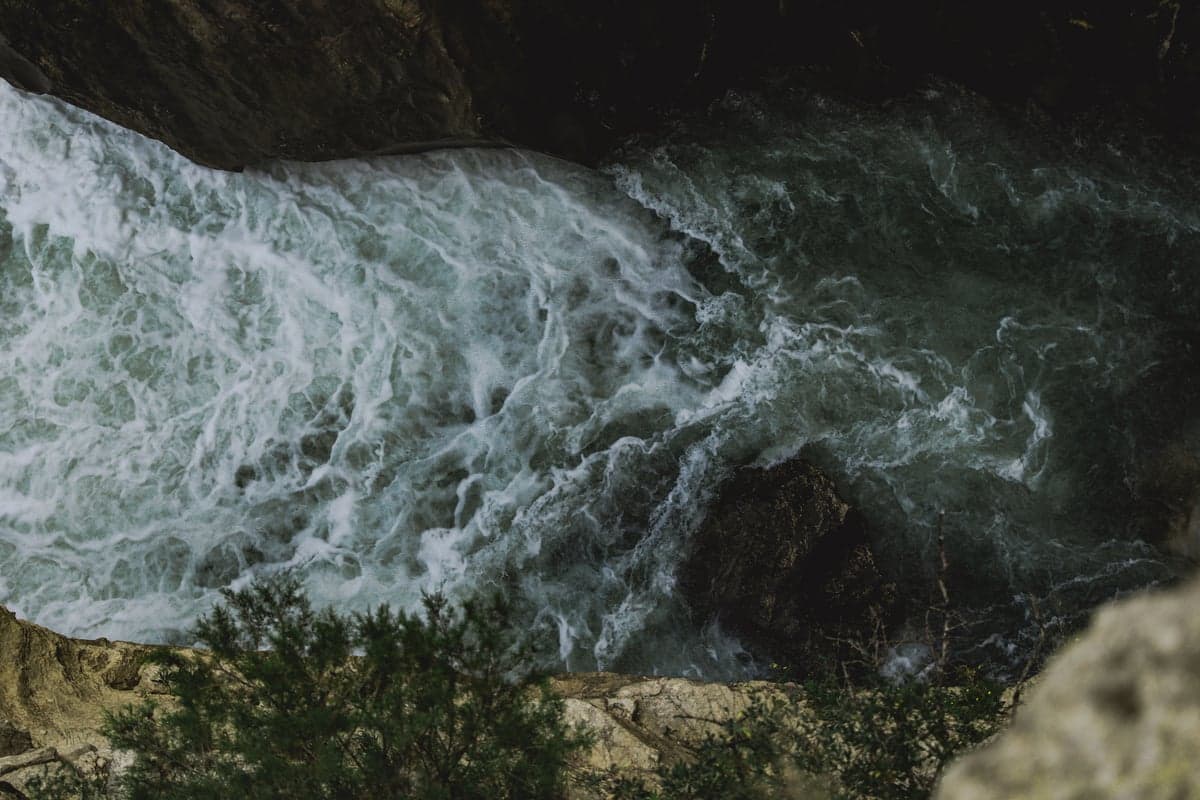
Aerial view of a river canyon with whitewater, similar to the Yellowstone's Yankee Jim Canyon where Class III-IV rapids challenge rafters and kayakers during high water
The Yellowstone is best understood as a series of distinct sections, each with its own character, difficulty, and fishing style.
Character: Fast, constricted canyon with the biggest whitewater on the floatable Yellowstone. Named for Yankee Jim George, who ran a toll road through the canyon in the 1800s until a railroad negotiator showed up with whiskey and convinced him to sign away his rights.
Difficulty: Class II-III at normal flows, Class III-IV during high water. The first rapid, "Yankee Jim's Revenge," has flipped plenty of rafts, including large commercial ones. Big Rock Rapid features a house-sized boulder splitting the current. Boxcar Rapid, at the canyon's narrowest point with sheer rock walls, is the most committing.
Fishing: Cutthroats and rainbows in complex boulder-filled currents. Best fished when flows drop below 5,000 CFS, typically mid-July onward. Not a beginner float.
Safety: At extreme flood levels, the hydraulics between cliff walls become dangerous. Scout from the highway before committing. Rafts are recommended over drift boats through the canyon.
Character: The river opens up as it enters the valley proper. Pocket water and pools give way to broader riffles as gradient decreases. Mountain views improve with every mile downstream.
Difficulty: Class I-II. Manageable for intermediate rowers.
Fishing: Mix of cutthroats and rainbows with some browns. Good early-season water because the gentler flows clear first after runoff.
Character: Wide, braided channels with gravel bars, cottonwood banks, and the Absaroka Range filling the eastern skyline. This is the section that makes Paradise Valley one of the most photographed fly fishing corridors in the country.
Difficulty: Class I. Suitable for beginning floaters at normal flows.
Fishing: The Grey Owl to Mallard's Rest "bird float" is one of the most popular guided floats on the entire river. Big browns hold along undercut banks and in deep pools. Rainbows work the riffles. Dry fly fishing is excellent through this section from July onward.
Notable float: Grey Owl FAS to Mallard's Rest FAS. Allow 5-6 hours. Bring a camera.
Character: River begins transitioning from mountain valley to plains character. Multiple channels, gravel shelves, seams, and eddies create complex water.
Difficulty: Class I. Straightforward floating.
Fishing: Carter's Bridge to Mayor's Landing is the classic "town float." This stretch holds the highest rainbow trout counts on the entire Yellowstone River, plus trophy-sized browns. Fish spawning habitat around gravel bars and channel transitions.
Character: Lower gradient with fewer pools but larger individual fish. The river widens into classic plains water with cottonwood-lined banks and agricultural land.
Difficulty: Class I. Easy floating.
Fishing: Lighter pressure, bigger browns, and excellent hopper fishing in late summer when wind blows grasshoppers off the banks. Fall baetis hatches can produce rising fish that rarely see a fly. Worth exploring if you want to avoid the crowds in Paradise Valley.
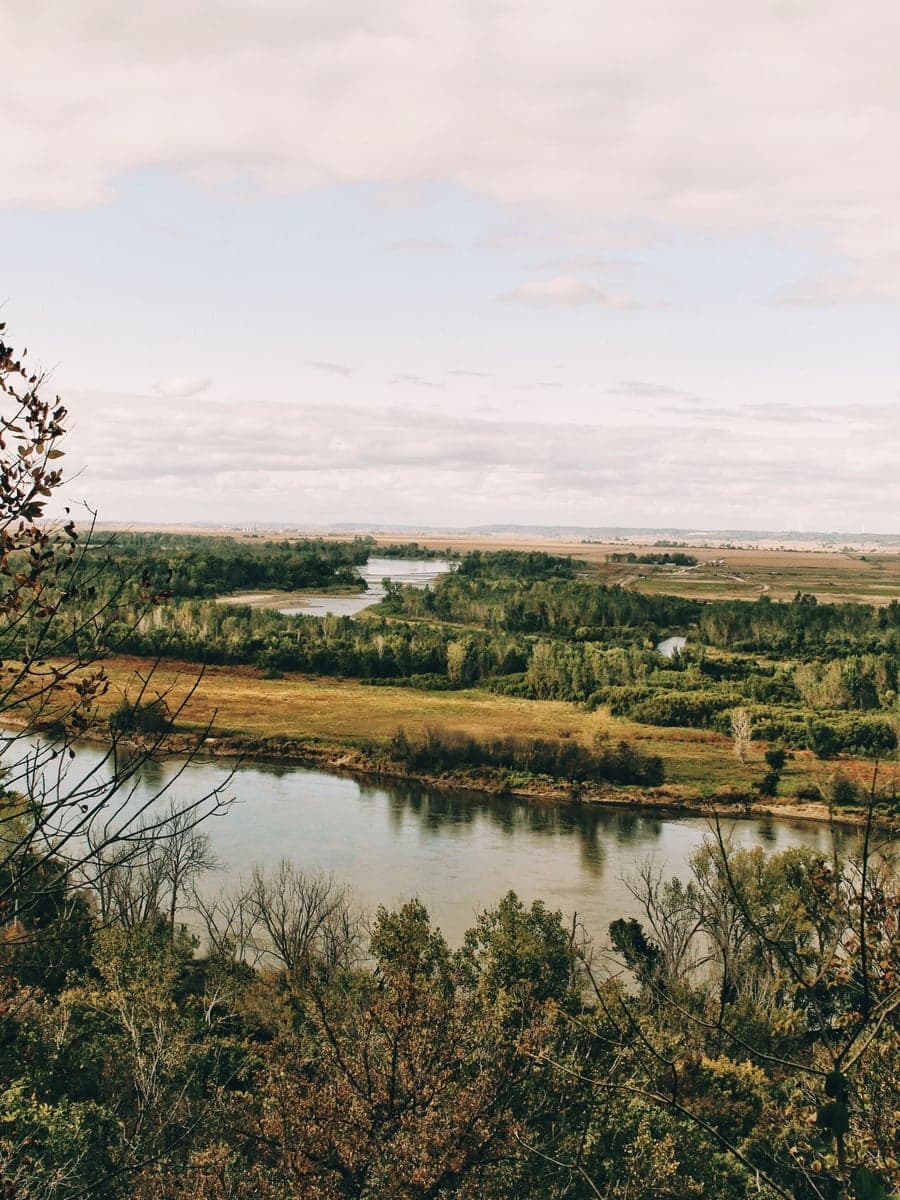
Below Livingston the Yellowstone spreads into plains water, with cottonwood-lined banks and hay ground running down to the edge. This is the hopper water, and it sees a fraction of the traffic Paradise Valley does.
The Yellowstone's hatch calendar is one of the most diverse in Montana. Because the river is undammed, insect populations cycle with natural seasonal rhythms rather than the artificial conditions created by bottom-draw dams.
Spring on the Yellowstone is a waiting game. Snow is melting, water is rising, and the river spends weeks at unfishable levels. But the edges of the season offer real opportunities.
Early spring (March-April): Streamer fishing targets large brown trout staging in slower water. Midge hatches on bluebird days can bring fish to the surface in February and March. BWO (Blue Winged Olive) hatches start in late March and continue through May, strongest on overcast days with scattered showers.
March Browns (mid-April through May): A sporadic but rewarding hatch. March Browns (sizes 10-14, mostly 12) emerge when water temperatures reach 43-47 degrees F on overcast days with light wind. Not a blanket hatch, but when conditions align, fish respond enthusiastically to these larger mayflies.
Late spring (May): The Mother's Day Caddis hatch is the most intense emergence of the year. Huge clouds of caddisflies fill the air around the first week of May, though runoff can limit the fishable window. If you hit the timing right (water temps around 54 degrees F, before runoff goes nuclear), this can be extraordinary fishing.
Flies: Woolly Bugger #6, Sculpzilla #4, Zebra Midge #18-22, BWO Parachute #16-20, March Brown #12, Elk Hair Caddis #14-16.
This is the event. The Yellowstone's salmonfly hatch is one of the most anticipated moments in Western fly fishing, drawing anglers from across the country. These giant stoneflies (Pteronarcys californica, 2-3 inches long) crawl out of the river, dry their wings, and crash-land back onto the surface in clumsy, fluttering catastrophes that drive trout into a feeding frenzy.
The hatch typically fires when water temperatures reach 54-58 degrees F and the river drops below 10,000 CFS with at least 8-12 inches of visibility. Timing depends entirely on runoff, which makes it the hardest hatch in Montana to predict. Some years it comes in late June; other years, early July.
On large systems like the Yellowstone, the hatch migrates upstream, advancing a few miles each day. This means you can follow the front for two to three weeks, always fishing where the bugs are freshest and the trout are least educated.
Key salmonfly tactics:
Flies: Chubby Chernobyl #6-8, Sofa Pillow #4-6, Pat's Rubberlegs #6 (as nymph trailer), Improved Golden Stone #8-10.
For more on chasing salmonflies across the West, see our salmonfly hatch timing guide.
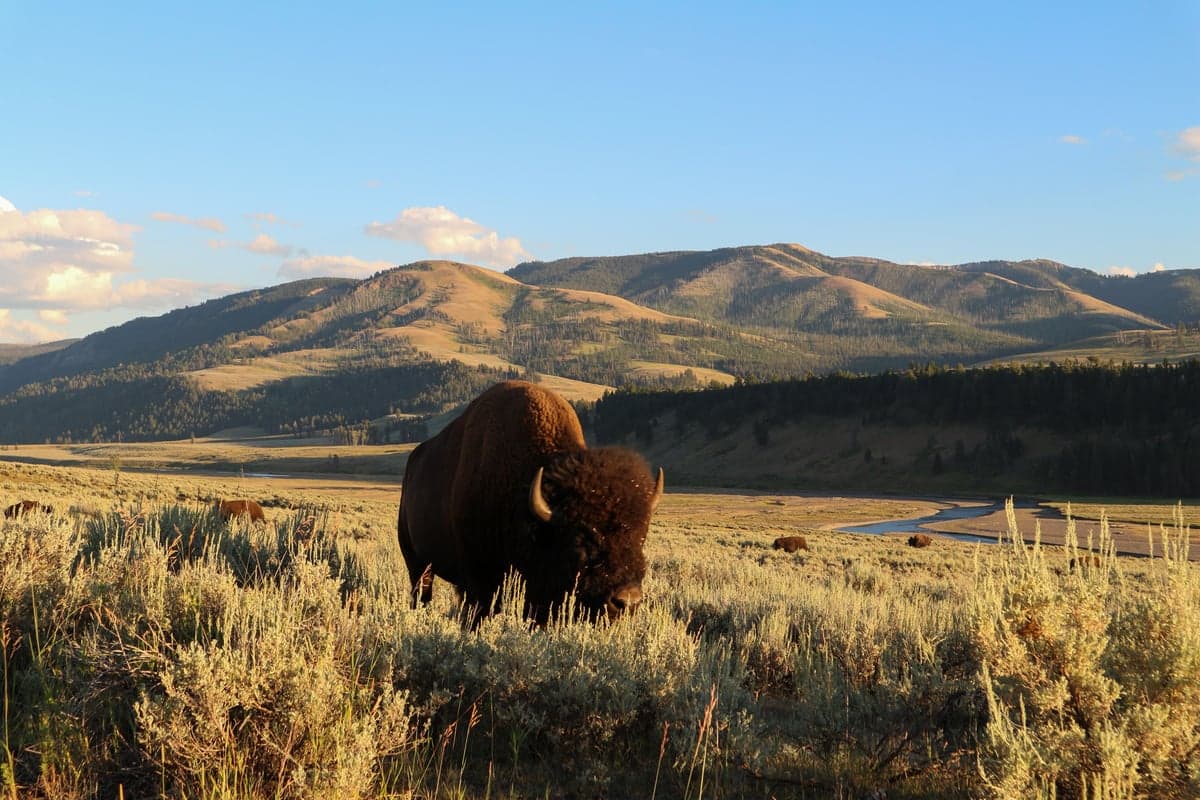
Bison graze in Yellowstone's Lamar Valley. The park's northern herds regularly wander into upper Paradise Valley, where anglers share the landscape with wildlife
Once the stonefly excitement fades, summer settles in with consistent, less frantic fishing. This is when the Yellowstone becomes a hopper river.
Terrestrials (late July onward): Grasshoppers, ants, and beetles become the primary surface food. By late July, hopper patterns are the top dry fly option. Natural colors (gray, tan, olive) tend to outperform bright pink and chartreuse. Wind is your friend: it blows hoppers off the banks and triggers aggressive takes.
PMDs (Pale Morning Duns, late June through July): These size 14-16 mayflies hatch when water temps hit 58 degrees F. Best in the riffles and runs of the upper river.
Yellow Sallies (late June through early August): Often mistaken for caddis or small PMDs. Sizes 10-12 nymphs are more important than the adults.
Tricos (late summer): Tiny mayflies (sizes 18-22) that hatch at sunrise and fall as spinners by mid-morning. Productive on quieter water when you can match the spinner fall.
Flies: Foam Hopper #8-10 (tan/gray), Dave's Hopper #8, Parachute Adams #14-16, PMD Sparkle Dun #16, Copper John #14-16, Pheasant Tail #14.
Fall is the Yellowstone's best-kept secret. Crowds thin dramatically after Labor Day, water temps cool, and the fishing improves.
Fall BWOs (mid-September through October): Overcast afternoons trigger dense BWO hatches. The combination of cooler temps and diminished angling pressure means trout that have been harassed all summer start looking up again.
October Caddis (late September through October): Sporadic but large (sizes 8-10). Worth carrying a few orange-bodied caddis patterns.
Streamers for pre-spawn browns: September and October are prime time for targeting large brown trout on streamers. They become aggressive and territorial as spawning season approaches. Olive and black articulated streamers swung through deep runs can produce the biggest fish of the year.
Flies: BWO Parachute #18-20, October Caddis #8, Woolly Bugger #4-6, Galloup's Dungeon #6, Copper John #14, Pheasant Tail #16.
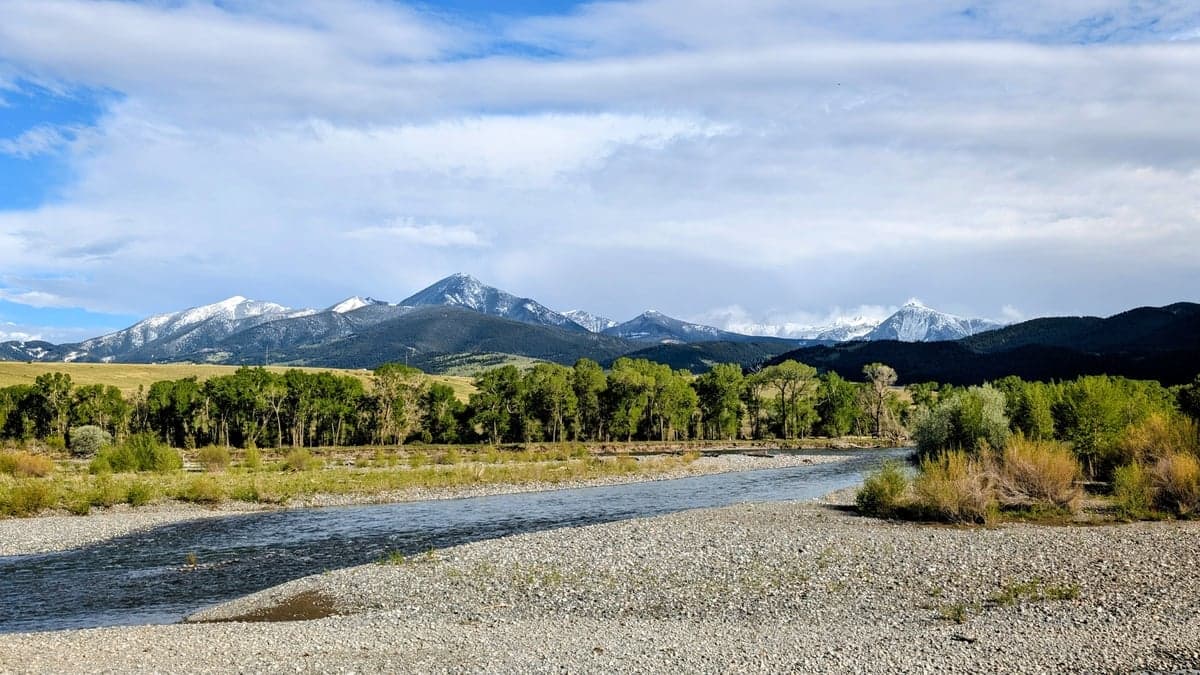
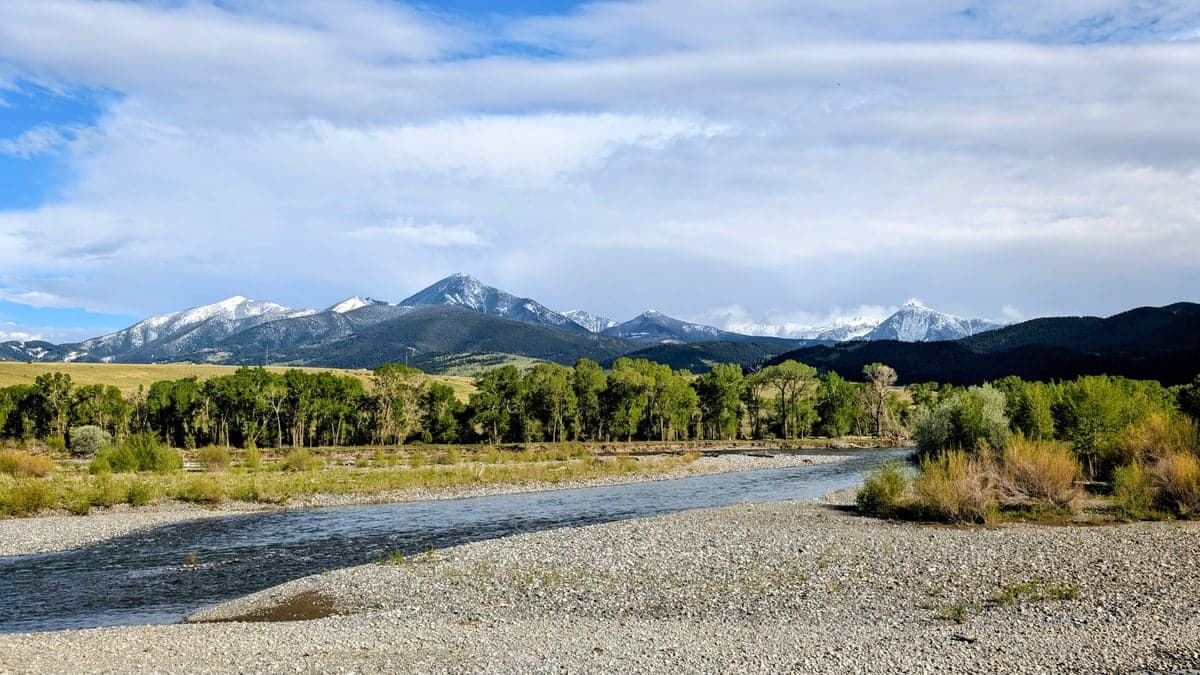
The Yellowstone near Livingston, with the Absarokas behind it. September through October brings turning banks, fewer crowds, and some of the year's best fishing.
The Yellowstone is fishable year-round, though winter demands commitment. Flows drop to 1,000-2,000 CFS, water temperatures hover in the 30s, and ice can form along the banks.
Tactics: Nymphing with small midges (#18-22) and streamers in deep, slow pools. Fish the warmest part of the day (11am-3pm). Midge hatches on sunny, calm days can bring fish to the surface.
Reality check: This is cold, slow fishing. Guides freeze in their boats. Bring hand warmers, dress in layers, and lower your expectations. But if you catch a brown trout on a dry fly in January, you will remember it forever.
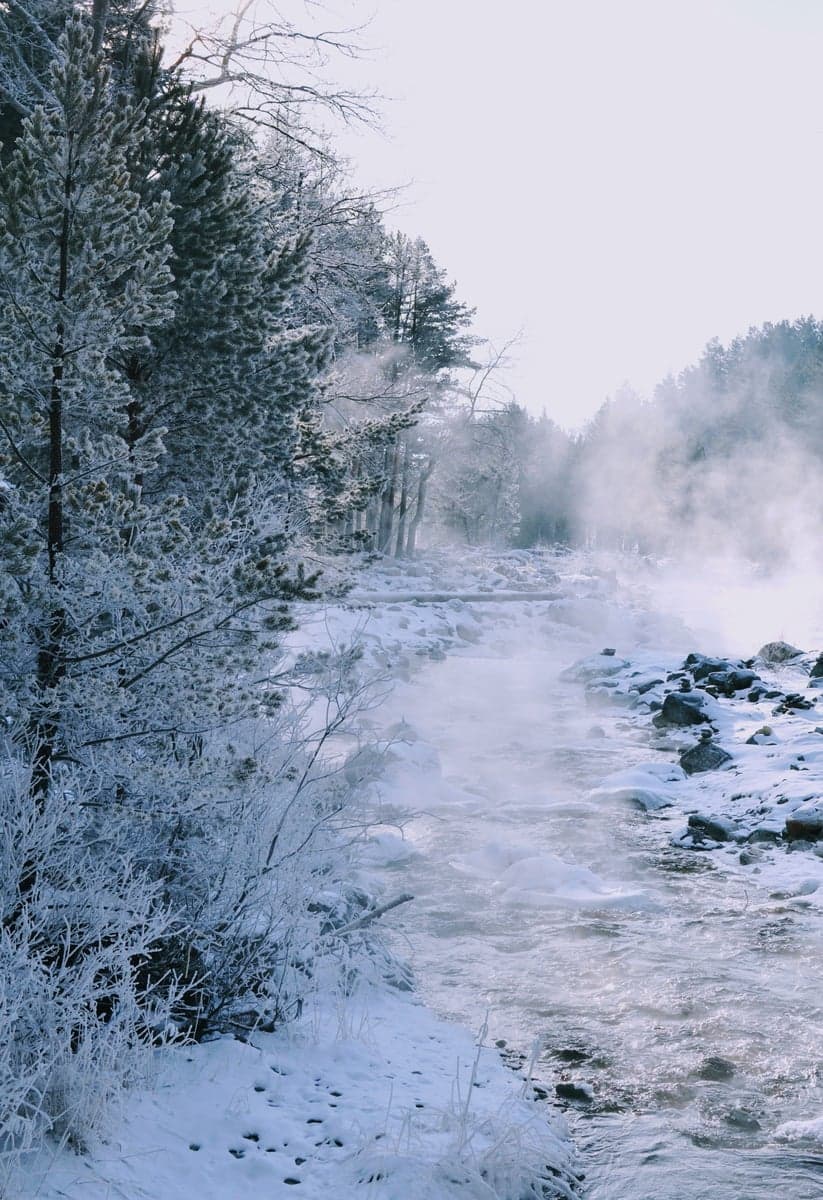
Winter on the Yellowstone: frosted trees line the banks while the river runs low and clear, a stark contrast to summer's bustling scene
In June 2022, heavy rain combined with rapid snowmelt sent the Yellowstone to historic flood levels. The event was devastating: homes swept off foundations, roads destroyed, bridges lost (including the Carbella Bridge), and Yellowstone National Park closed for weeks. The flood caused roughly $29 million in property damage across the region.
For the river itself, the flood was a reset. Channels shifted, new side channels opened, old holding water disappeared, and gravel bars reformed in different locations. Fishing access sites were damaged and boat ramps destroyed. Montana Fish, Wildlife & Parks has been rebuilding access infrastructure, but some sites have changed permanently.
For anglers, the practical impact is that the Yellowstone's channels shift more from year to year than they used to, and some pre-flood fishing knowledge no longer applies. New channels have created new holding water, and some formerly productive runs are now shallow gravel bars. Local guides note that the river now requires higher flows (around 3,300 CFS versus the old 2,000 CFS threshold) to launch jet boats for fish population surveys, because the channels have redistributed.
The fish themselves came through remarkably well. Trout populations rebounded quickly, and some biologists suggest the flood actually improved habitat diversity by creating the kind of complex channel structure that trout thrive in.
Montana FWP conducts electrofishing surveys on the Yellowstone, though the 2022 flood complicated standard monitoring methods. Recent findings include:
FWP and Montana State University are collaborating on ongoing population studies using PIT tags (Passive Integrated Transponders) to track individual fish. This research is adapting to the river's post-flood channel changes.
Data context: trout densities on the Yellowstone are generally lower than on tailwater fisheries like the Bighorn or Missouri. The trade-off is a more diverse, wild fishery where the overall experience (scenery, solitude, hatches, wildlife) is the draw rather than pure numbers.
The Yellowstone demands respect. A few things to keep in mind:
Spring runoff: Peak flows can exceed 25,000 CFS. The river is genuinely dangerous at these levels. Cold, fast, debris-laden water can kill. Do not wade during runoff. Do not float unless you have significant whitewater experience.
Yankee Jim Canyon: Even at moderate flows, the canyon contains Class III rapids that have flipped commercial rafts. "Yankee Jim's Revenge" has a deceptive breaking wave that catches experienced boaters off guard. At high water, the canyon is solid Class IV. Scout from the highway before running it. Drift boats are not recommended through the canyon; use rafts or catarafts.
Channel changes: The river's course shifts year to year, especially since the 2022 flood. Submerged logs, new gravel bars, and altered channels can surprise even experienced floaters. Run any unfamiliar section cautiously the first time.
Thermal stress: During hot summers, afternoon water temperatures can climb into the mid-to-upper 60s (F), stressing trout. Montana FWP may impose hoot-owl restrictions (fishing closures from 2 PM to midnight) on sections of the river. Check current Montana closures before fishing, and consider voluntarily stopping by early afternoon when temps are high.
Rattlesnakes: Present in rocky areas along the river, particularly in the upper sections. Watch where you step.
Private land: While all Montana rivers are navigable and public below the high-water mark, adjacent land is often private. Stay within the high-water mark when wading, and use designated access sites for entry and exit.
Livingston deserves its own mention because it is more than a place to sleep before a float. There is an actual fishing culture here.
Dan Bailey's Fly Shop, founded in 1938, is one of the oldest and most storied fly shops in the country. Dan Bailey, a Kentucky transplant, opened shop on Main Street for $25 a month in rent and built a mail-order fly business that shipped 750,000 hand-tied flies annually at its peak. The shop is still downtown on Park Street.
The town is home to three of the best known spring creeks in the country: DePuy's, Armstrong's, and Nelson's. These private, gin-clear creeks require a daily rod fee (typically $100-200/day) and challenge even experienced anglers with complex hatches and highly selective trout. They are worth a day if your budget allows.
Beyond fishing, Livingston punches well above its weight. Two breweries, multiple restaurants serving Montana-raised bison and fresh trout, a thriving arts scene, and historic saloons line Park Street. The Murray Bar has a dedicated display of fly fishing photos and artifacts from the local guiding community. For a town of roughly 8,000 people, it has remarkably good food and culture.
Craft beer taps at a local brewery. Livingston and the greater Paradise Valley area have a better food and drink scene than a town this size has any right to
Livingston is the most practical base for fishing the mid and lower Paradise Valley. Hotels, motels, vacation rentals, and several RV parks provide options across price ranges. The town's restaurants and shops make it comfortable for multi-day trips.
Emigrant and Pray (mid-valley) put you closer to the upper sections and the salmonfly action. Chico Hot Springs, about 30 miles south of Livingston, is a local favorite for soaking tired muscles after a long day of wading.
Gardiner works best if you are splitting time between the park and the upper Yellowstone. Lodging options are more limited and can be expensive during peak park season (July/August).
Camping: Canyon Campground operates year-round inside Yankee Jim Canyon on a first-come, first-served basis. Tom Miner Campground is a good Forest Service option in the upper valley. Several of the FAS sites along the river allow camping. During peak season, claim a spot early.
The Yellowstone has a deep bench of experienced outfitters. A few worth knowing:
Most outfitters provide all gear (rods, reels, waders, flies) and a catered lunch. If you are a beginner, guided float trips are the best way to experience the river. The guides manage the boat while you fish, and float trips accommodate all experience levels.
Booking: For the salmonfly hatch (late June/early July), book by March. Summer weekends fill by April. Fall trips are easier to book on shorter notice.
Montana fishing regulations apply to the Yellowstone River outside of Yellowstone National Park.
License requirements:
Important: A Montana fishing license is NOT valid inside Yellowstone National Park. If your trip includes park waters, you need a separate National Park Service fishing permit ($40 for 3 days, $55 for 7 days, $75 for season).
Yellowstone River-specific regulations:
Always check Montana FWP's current closures page before heading out, as regulations can change mid-season based on conditions.
The Yellowstone is the headliner, but the surrounding area offers exceptional alternative options:
The Bozeman area sits at the intersection of the Yellowstone, Madison, and Gallatin drainages, making it one of the best base camps in the West for accessing multiple blue-ribbon rivers.
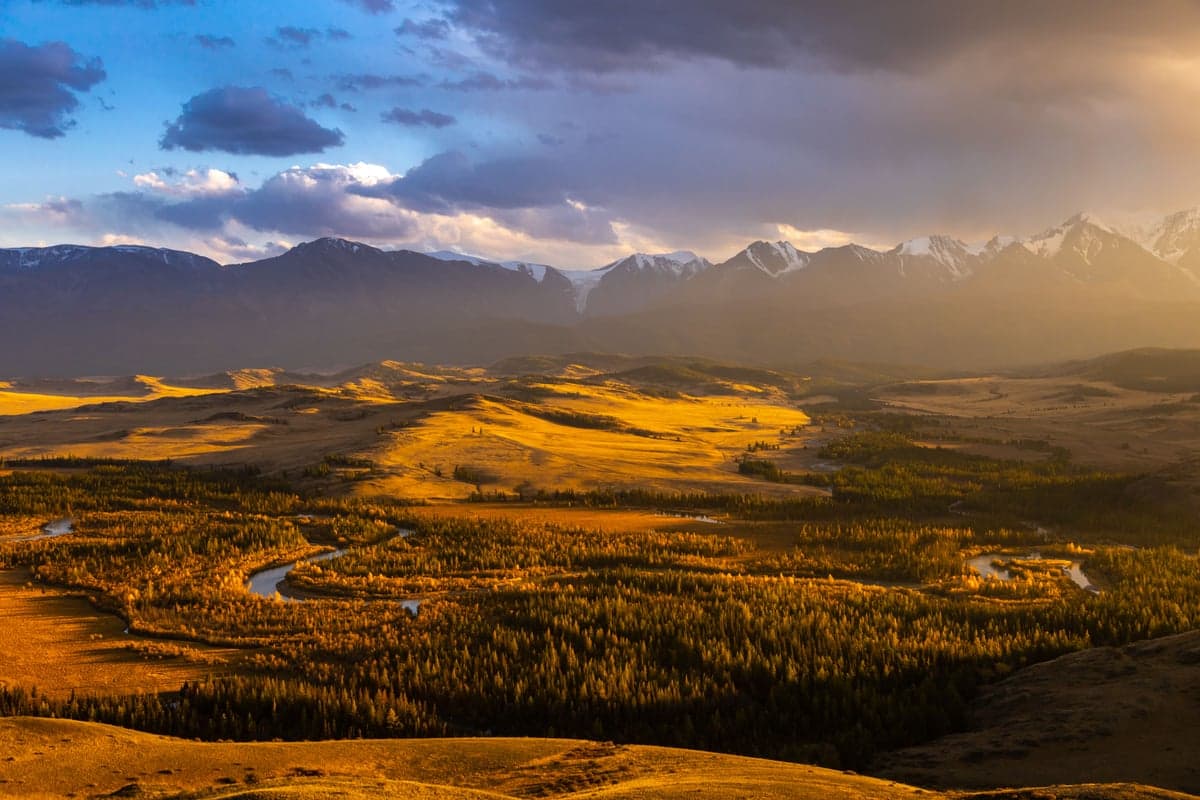
Sunset light warms the mountains and valley terrain. Paradise Valley earned its name honestly, and evenings here are as memorable as the fishing
Everything this river feeds, by month. Filter by bug, category, or fly size, and switch the axis to see what comes off at what time of day. Pulled from our western hatch and forage guide.
The Yellowstone's undammed character makes flow monitoring essential. Unlike tailwaters with predictable release schedules, this river changes with every rainstorm and every warm day that accelerates snowmelt.
Key gauges on RiverReports:
How to use the data:
The Yellowstone is a river that rewards patience and preparation. Check the flows, read the conditions, and time your trip around the river's natural rhythm rather than trying to force it. That is what makes fishing an undammed river both challenging and deeply rewarding.
Weekly flow updates and fishing intel.
© 2026 RiverReports, Inc.