What's On the Menu: The Ultimate Western Hatch and Forage Guide
Every hatch, terrestrial, and forage item worth knowing across 11 western regions, filterable by river, month, and fly size
Riley Thompson
August 26, 2026
14 min read
Show up a week late and the hatch you planned six months around is over. Show up a week early and it hasn't started. This is the reference that stops that from happening.
Below: everything trout eat across 11 western regions and 40+ rivers, filterable by region, river, food, and fly size. Not just hatches. Terrestrials get their own category, and so does forage: mysis flushed through a dam, crayfish, eggs during the spawn, sculpins, leeches, and mice after dark.
Or ignore every word of it and drift a squirmy worm under an Oros. We are not going to sit here and pretend that doesn't out-fish the rest of us on most days.
Timing comes from fly shop and outfitter hatch charts for the named rivers, published guide reports, entomology references and emergence studies, and our own river guides, cross-referenced where sources disagreed.
Work backwards: pick a week, find a river
Hatch charts answer "when is this bug on?" That is the wrong question if you already know your dates. The usual situation is the reverse: you have a week off in late June and no idea where to point the truck.
How to read it
Most hatch charts draw every bug as a flat bar, which is the least useful thing they could do. A midge bar spanning twelve months tells you nothing, and a salmonfly bar covering all of June hides the fact that the whole thing is over in about a week wherever you happen to be standing.
So this one draws the shape. Salmonflies read as a spike. Caddis read as a plateau you can show up to whenever. PMDs peak hard and then hang around all summer. Hoppers ramp late. The dot next to each bug tells you how much the timing moves year to year, and hovering a row gives you how long it lasts, what shifts it, and what to tie on.
What's covered. 39 food sources in three categories:
- Hatches (24) — Midge, Winter Stonefly, Skwala, March Brown, BWO, Mother's Day Caddis, Salmonfly, Golden Stone, Yellow Sally, Green Drake, Flav, Brown Drake, Gray Drake, Pink Albert, Damselfly, Callibaetis, Caddis, PMD, Trico, Nocturnal Stone, Water Boatman, Western Red Quill, Mahogany Dun, October Caddis
- Terrestrials (5) — Hopper, Ants and Beetles, Flying Ants, Spruce Moth, Cicada
- Forage (10) — Mysis, Scuds, Sowbug, San Juan Worm, Crayfish, Sculpin, Leeches, Eggs, Mice, and the pre-spawn Streamer window
Two caveats worth stating plainly. Windows shift two to three weeks in either direction with the water year: a heavy snowpack pushes everything later, a low-snow year moves it earlier and compresses it. And the curve shapes are per-insect emergence profiles from published sources laid over each river's own window, so they describe a normal year, not this one. Track flows on RiverReports in the weeks before you go.
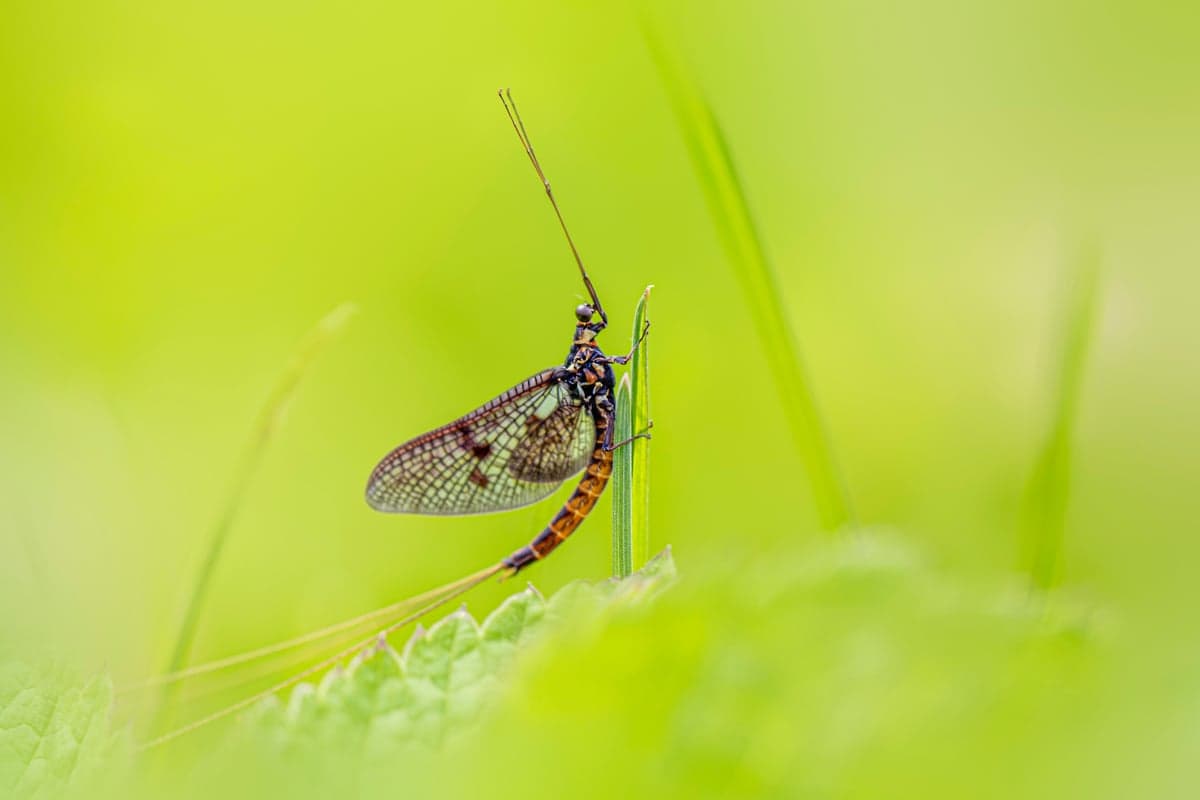
Mayflies like this one are the foundation of western dry fly fishing. Knowing when they hatch on your target river is half the battle.
Regional notes
What the grid can't tell you: which rivers are worth the drive for a given bug, what flows to want, and where the hatch is the whole reason to go.
Colorado Front Range
Colorado's Front Range tailwaters fish year-round thanks to bottom-release dams that keep water temperatures between 38-52°F. The South Platte system is the backbone here.
The Mother's Day caddis hatch on the Arkansas River near Salida and Buena Vista is the event that kicks off Colorado's dry fly season. It builds through late April and peaks around mid-May. Evening caddis swarms can turn the air thick with bugs, and fish slash at anything that looks remotely like an Elk Hair Caddis. On a good evening near Hecla Junction, a size 16 Elk Hair will draw a strike a cast for an hour.
The South Platte's trico hatch at Spinney Mountain and Elevenmile Canyon is the other one worth timing. From late July through September, spinner falls blanket the water between 7 and 10 AM. Bring size 22-24 spinner patterns and 6X tippet. The fish are not forgiving.
For a deeper dive into Colorado timing, see our month-by-month Colorado fly fishing guide.
Colorado Western Slope
The Western Slope runs on a different calendar. Higher elevation, bigger water, and longer winters mean hatches start later and run longer. The Frying Pan, Roaring Fork, and Gunnison are the marquee rivers.
The Frying Pan's green drake hatch is the long one. While most rivers see drakes for a few weeks, the Pan can produce green drake activity from late June through October, sometimes into Halloween. Fish the Pan at 90-150 CFS for ideal wade conditions during the hatch. On the Roaring Fork, 400-900 CFS gives you enough water to float but still lets wade anglers work the edges.
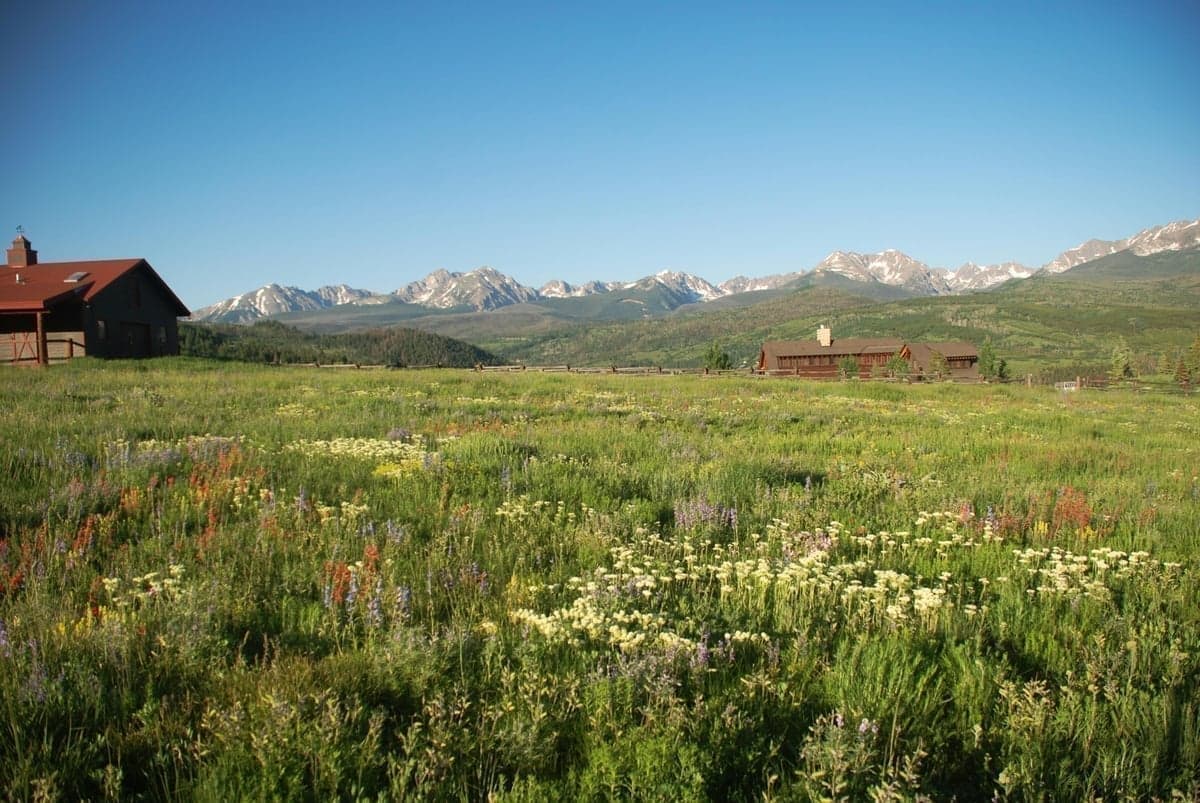
Colorado's mountain towns sit at the junction of wildflower meadows and trout water, making July the peak month for both
Southwest Colorado
The Animas runs through Durango and fishes a compressed version of the western Colorado calendar: a brief June salmonfly window, goldens right behind it, then caddis all summer. The San Juan below Navajo Dam is the outlier on this whole chart. Its BWOs run 22-26, its midges go to 28, and scuds and annelids matter more than any hatch. If you fish it like a freestone you will have a bad day.
Southwest Montana
This is big-bug country. The Madison, Gallatin, Yellowstone, and Big Hole rivers are large freestones that support massive stonefly populations. The salmonfly hatch here draws more planned trips than anything else on the western calendar.
On the Madison, salmonflies typically start near Ennis Lake around June 20-23 and the hatch moves upstream over the following two weeks. The golden stones follow right behind, sometimes overlapping. If you can line up your trip for late June, you may hit both plus PMDs all in the same day. Late June on the Madison is, frankly, the best week of dry fly fishing in the lower 48.
The Yellowstone's salmonfly hatch is less predictable because it depends on runoff clearing. In high-water years, the hatch can fire while the river is still too murky and high to fish effectively. You need the Yellowstone to drop below about 8,000 CFS before it's really wadeable. Check Montana flows daily starting mid-June to catch the window.
Don't overlook hopper season here. August on the Madison and Yellowstone is when locals fish. The crowds thin out after July, and fat grasshoppers blow into the river on every afternoon breeze. A size 8 foam hopper with a Pheasant Tail dropper is about as fun as fly fishing gets.
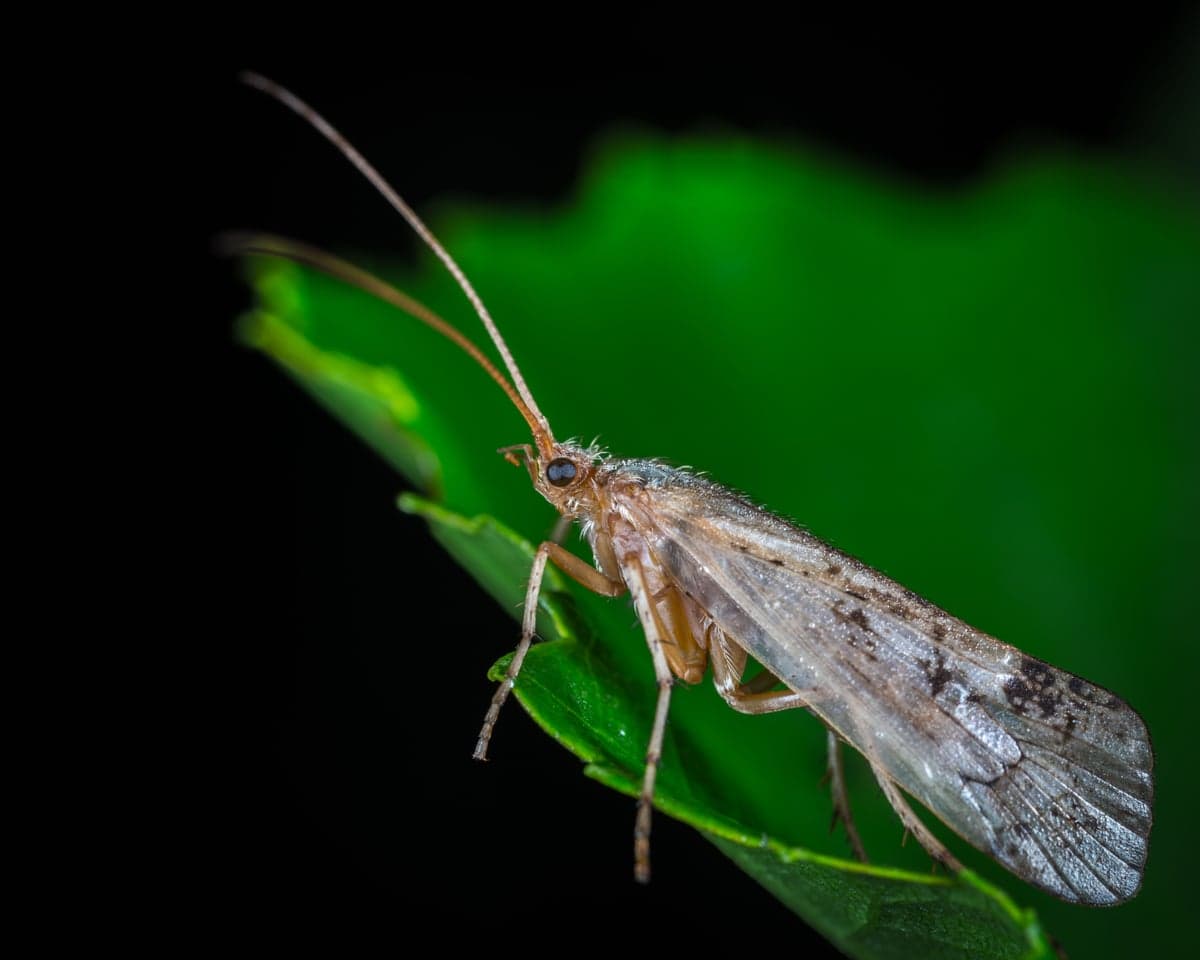
Caddisflies are the workhorses of western rivers. Multiple species hatch from May through September on nearly every trout stream
Central Montana
The Missouri and Bighorn are tailwater fisheries with insect populations that rival anywhere in the country. The Missouri below Holter Dam holds an estimated 5,000 trout per mile, and its trico spinner falls run for months.
The Missouri's trico hatch is worth planning a trip around. From late July through September, spinner falls start between 7 and 9 AM. On hot days, get to the water by 6 AM. The spinners mate in the air, fall spent on the surface, and create a blanket of tiny mayflies that the trout gorge on. Fish in the spinner fall long enough and you'll watch 20-inch rainbows sipping size 22 flies like they're eating popcorn. Use 5X or 6X tippet with Trico spinner patterns (size 20-22, spent wing) and expect refusals until you get the drift right.
The Bighorn below Yellowtail Dam is a 13-mile tailwater that fishes well from March through November. PMDs are the headline hatch from June through August, with morning emergences that build through mid-morning. The Bighorn's consistent flows (typically 2,500-4,500 CFS in the upper river) create predictable lies and wading conditions. For more on both rivers, see our best tailwaters guide.
Yellowstone National Park
Park water runs on its own schedule because the season does. The Firehole fishes early and then gets too warm; the Lamar and Slough Creek come into shape after runoff and turn into the best terrestrial fishing in the region by August. Callibaetis on the stillwater sections is a hatch you will not find on most freestone charts. Check park regulations and seasonal closures before planning around any of it.
Idaho
Idaho's spring creeks and tailwaters produce some of the most technical dry fly fishing in the West. The Henry's Fork, Silver Creek, and South Fork of the Snake each have distinct characters.
The Henry's Fork's green drake hatch at Harriman State Park is the most famous dry fly event in Idaho. The park opens June 15, and the drakes usually start within days. Overcast, humid weather extends the hatch and improves your odds. On sunny days, the emergence may last only an hour. Fish 800-1,200 CFS in the Ranch section for the best conditions.
Silver Creek near Sun Valley is a spring creek that demands precision. PMDs and tricos dominate the summer calendar, and the flat, clear water means these fish see every imperfection in your leader and presentation. Size 18-20 PMDs on 6X fluorocarbon, downstream presentations. Plan to miss a lot of fish your first trip. That's normal. Silver Creek is grad school for dry fly anglers, and it'll make you better everywhere else you fish.
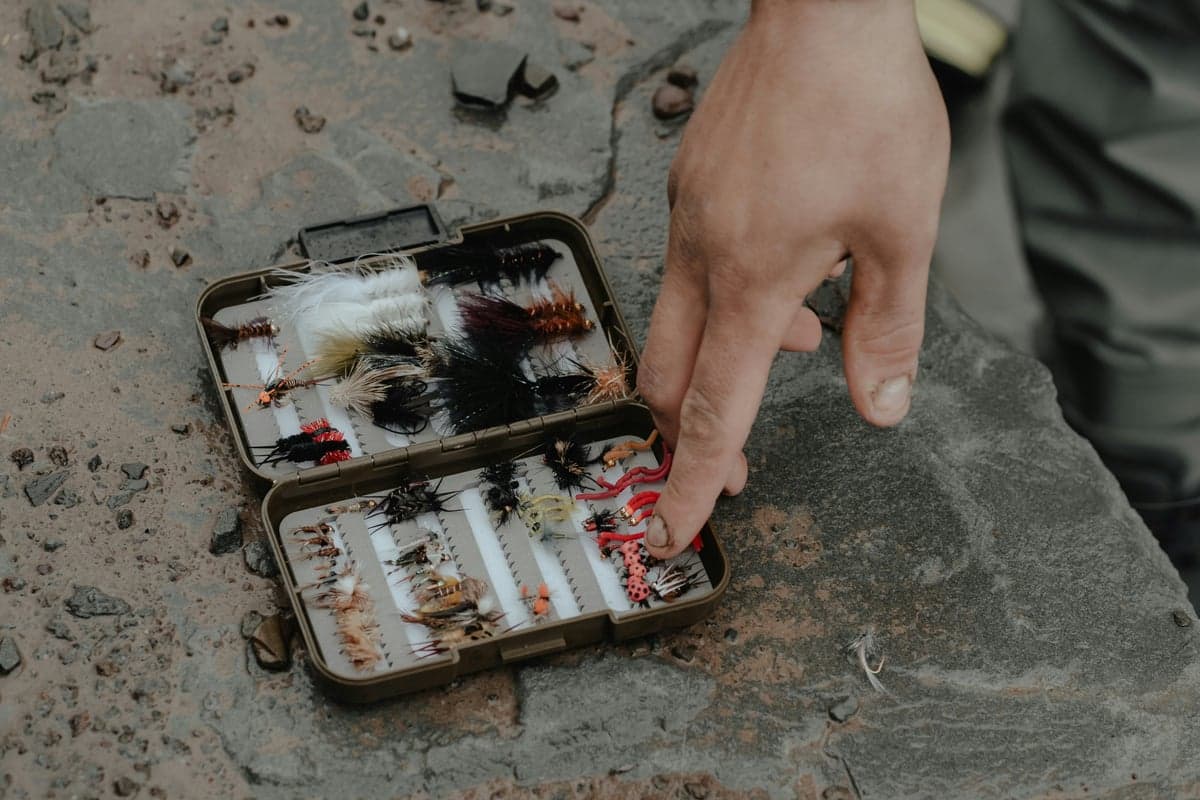
A well-organized fly box covers the spectrum from size 6 stoneflies to size 24 midges. Western hatch diversity demands range.
Northern Idaho
This is Skwala country, and it is the reason the season here starts before runoff instead of after it. The St. Joe, Coeur d'Alene, and Selway run Skwalas and March Browns together in March and April, then go through the standard stonefly progression in June. What sets the region apart is the back end: October caddis in September and October is a genuine event, and large orange patterns are not optional.
Wyoming
Wyoming's contributions include the North Platte, the upper Green River, and access to Yellowstone Park waters. The Miracle Mile section of the North Platte (between Pathfinder and Seminoe reservoirs) is one of the most productive tailwater reaches in the West.
The Miracle Mile's golden stonefly hatch runs roughly from Memorial Day through late June. Fish Stimulators and golden stone patterns in sizes 8-10 through the riffles. The PMD hatch overlaps by late June and carries through August, making midsummer one of the most productive times on the North Platte.
Utah
Utah's Green River below Flaming Gorge Dam is a tailwater that fishes 365 days a year. Water temperatures hold between 48-52°F near the dam, and the river supports massive populations of trout through sections A, B, and C.
The Green River's cicada hatch in early May is unique to this fishery. Most years, cicadas appear along the banks of the upper sections and become a primary food source for several weeks. Trout eat them aggressively, and the fishing can be exceptional on dry cicada patterns in size 8-10.
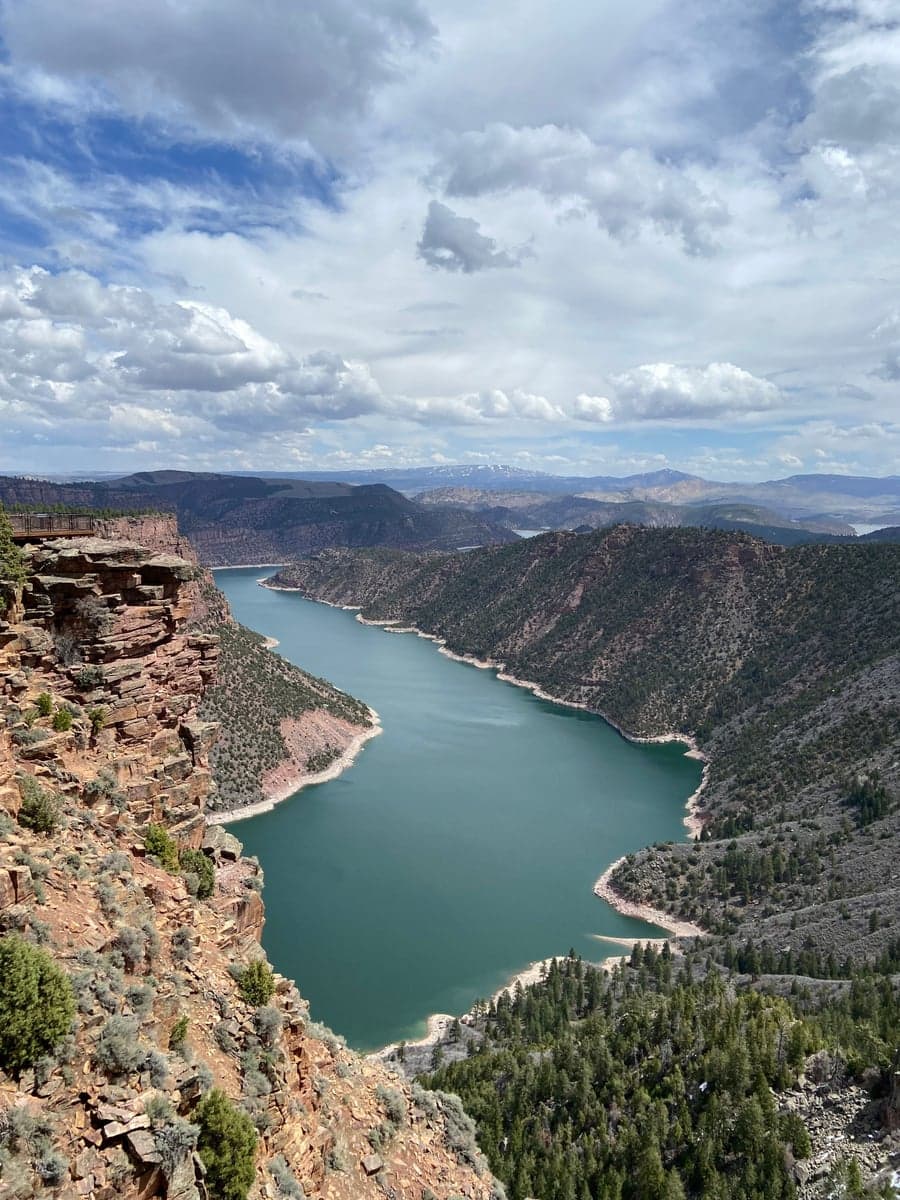
Flaming Gorge Reservoir feeds the Green River tailwater below. The cold, deep releases keep the trout water at 48-52 degrees all year.
Oregon Cascades
The Deschutes runs its salmonflies earlier than the Rockies, mid-May into early June, and closes the year with October caddis. The Metolius is a green drake river for one month in June and a technical PMD river the rest of the summer. The Crooked is the tailwater insurance policy: midges year-round, BWOs from January, and mahogany duns in the fall.
Using Flows to Predict Hatch Timing
Hatch charts give you the baseline, but flow data tells you what's actually happening in a given year. Here's how to read it:
Higher-than-average spring flows mean a heavy snowpack winter. Runoff takes longer to clear, and hatches that depend on warming water (salmonflies, PMDs, green drakes) start later. If a river normally peaks in late May but is still rising in mid-June, add two to three weeks to the hatch chart dates.
Lower-than-average flows mean an early spring. Hatches compress and overlap more than usual. In low-water years, you might hit salmonflies, green drakes, and PMDs all in the same week on the same river.
Sudden flow drops on tailwaters (like when dam operators reduce releases) can trigger concentrated emergences. Midges and BWOs on the South Platte or Green River often hatch heaviest when flows drop and stabilize after a period of higher water.
Track the rivers you're targeting on RiverReports and watch for these patterns. Save your target rivers to favorites and set alerts for the CFS ranges that correspond to your target hatch.
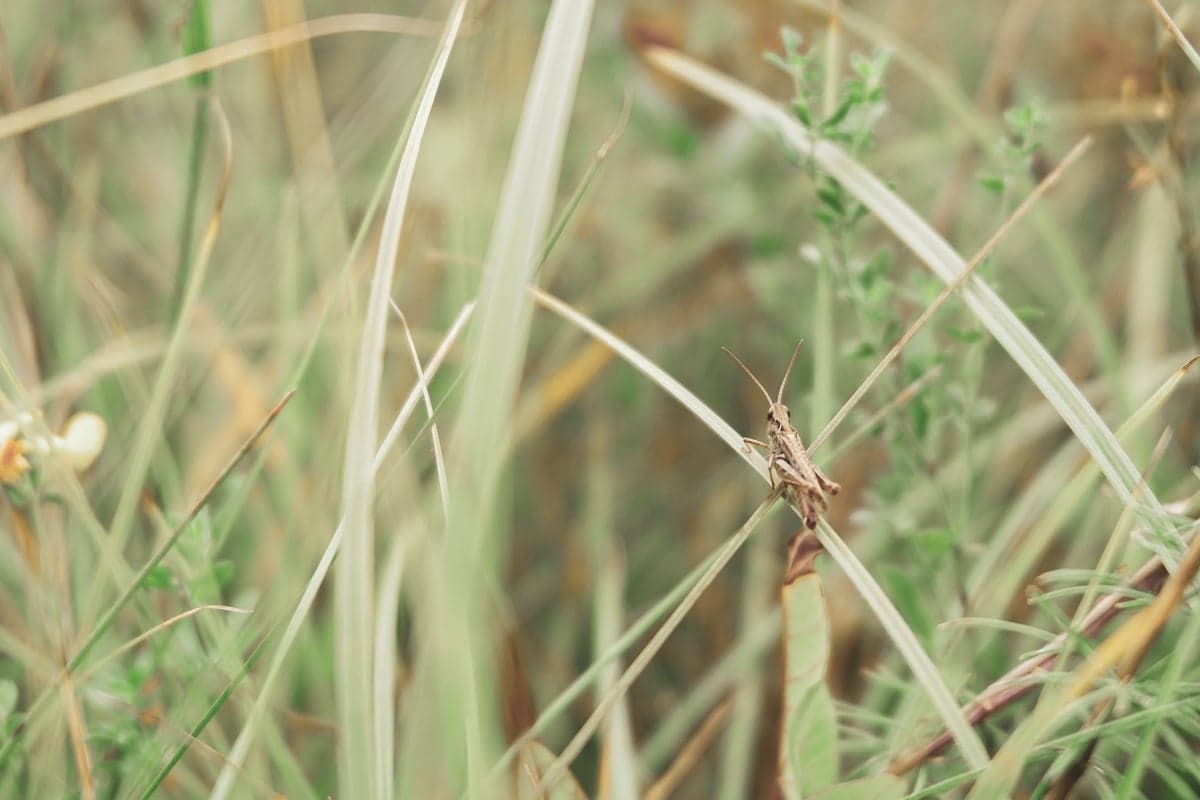
By late July, grasshoppers are full-sized and falling into rivers all afternoon, especially on windy days
Quick Fly Pattern Reference
Rather than carry 500 patterns, here's what actually covers the major western hatches:
BWO: Parachute Adams (18-20), RS2 (20-22), CDC BWO Emerger (18-20)
PMD: Sparkle Dun (16-18), Pheasant Tail nymph (16-18), CDC PMD Emerger (16)
Caddis: Elk Hair Caddis (14-16), X-Caddis (14-16), Peacock Caddis (16)
Salmonfly: Chubby Chernobyl (6-8), Pat's Rubber Legs (6-8), Norm's Stone (4-6)
Golden Stone: Yellow Stimulator (8-10), Golden Stone nymph (6-8)
Green Drake: Parachute Green Drake (10-12), Green Drake Cripple (10), Sparkle Dun olive (12). For more detail, see our complete green drake guide.
Trico: Trico Spinner (20-22), CDC Trico Cluster (18-20)
Hopper: Dave's Hopper (8-10), Foam Hopper (6-8), Club Sandwich (8)
The Honest Truth About Hatch Charts
Every chart, including this one, is an approximation. The river doesn't read the schedule. A warm spring can start salmonflies on the Madison weeks ahead of the dates above; a cold, wet July can push the Frying Pan's green drakes back into August.
2026 made the point better than any of this. A low-snowpack winter followed by a hot, dry summer scrambled the calendar across Colorado and the rest of the West: hatches came early where they came at all, windows compressed and overlapped, and by midsummer Montana had 24 waterways under hoot owl restrictions, which closes the afternoon regardless of what is emerging. A chart built on normal years is exactly the wrong tool for a year like that.
What these charts do is give you a starting point. Combine them with real-time flow data, local fly shop reports, and weather forecasts, and you'll be in the right place at the right time more often than not.
The anglers who consistently hit hatches don't commit to one river months out. They watch three or four, track conditions through the spring, and go when it lines up. The people who miss by a week are usually the ones who booked in February.
RiverReports flow alerts make that tracking easier. Set alerts on your target rivers for the CFS ranges that correspond to your target hatch windows. When conditions align with the chart, clear your schedule and go.
Frequently Asked Questions
When do BWOs hatch on western rivers?
Blue Winged Olives have two main seasons on most western rivers: spring (March through May) and fall (September through November). They hatch best on overcast, drizzly days when water temps are in the 45-55°F range. Tailwaters like the South Platte and Bighorn see BWOs nearly year-round.
What is the best month for dry fly fishing out West?
July is the best overall month for hatch diversity. PMDs, green drakes, golden stones, and early hoppers all overlap on most western rivers. June is best for salmonflies on Montana's big rivers. August and September are prime for tricos and hopper-dropper fishing.
When do salmonflies hatch in Montana?
Salmonflies typically hatch from late June through mid-July on Montana's big rivers. The hatch starts near Ennis Lake on the Madison around June 20-23 and moves upstream. On the Yellowstone, expect them in Paradise Valley first before the hatch pushes into the park.
Get River Intel Weekly
Flow updates and fishing intel delivered every Thursday.
River Intel Weekly
Weekly flow updates and fishing intel.
© 2026 RiverReports, Inc.