Cheesman Canyon
Fishable
Flow115-120 CFS
Trendstable
Claritygin clear
TempMid-50s to low 60s (carry a thermometer)
Parachute Adams #20-24Trico Spinner #20-24Black Beauty #20-22Grey RS2 #20-22
| What | When | Key Numbers |
|---|---|---|
| Sight nymphing | Year-round, best 10am-3pm | 6X-7X fluoro, 9-12 ft leaders, #20-26 |
| Midge fishery | Nov-Mar (the canyon's quiet season) | Winter releases often 50-75 CFS |
| Baetis / BWO | Mar-May, Sep-Nov | Overcast afternoons, best just after 1pm |
| Ideal flow | Any month | 250-400 CFS; above ~700 CFS wading gets dangerous |
| The hike | Every trip | 25-35 min to first water; 3.5 mi of trail upstream |
| Regulations | Always | Catch and release, flies and lures only, all wild trout |
| Guided trips | Book by Feb-Mar for summer | Permit-limited inside the canyon; call for rates |
| Fly shop | Angler's Covey | (719) 471-2984, Colorado Springs |
| Fly shop | Flies & Lies | Deckers, closest shop to the trailhead |
Most trout water asks you to read a run and cover it. Cheesman Canyon asks you to find one fish, watch it, and make one good presentation. That is the whole game, and it is why three miles of public water carries a reputation this size.
The skill the canyon rewards is not distance casting and it is not fly selection. It is spotting, and then not blowing it. Everything below is ordered that way: how to find a fish and fish to it, then the mistakes that cost you the ones you find, then what you have to walk to get there, then the pools, the bugs, and the rules.
Denver Water can pull from three depths behind Cheesman Dam: a spillway at the top, a mid-level jet valve about 60 feet down, and valves at the bottom. They blend them to control downstream water temperature. Spillway water runs over 60°F, the jet valve is around 50°F, and the bottom valves deliver low 40s. Two things fall out of that. The outflow is filtered reservoir water rather than the sediment-carrying freestone runoff you get on most Colorado rivers in June, so the canyon stays clear while everything around it is the color of coffee. And it holds usable trout temperatures through a Colorado August when nearby freestones cannot.
The canyon is cut through Pikes Peak granite at roughly 6,500 feet, and that pale bed is the other half of it. Add direct overhead sun and a canyon running mostly east to west, and you can stand on a boulder and count fish.
Clarity, not CFS, decides your day. When the canyon is clear you can sight fish, and sight fishing is how good anglers catch fish here. When something upstream puts color in it, the canyon becomes a guessing game and the advantage swings to nobody.
Rigging up at the water's edge is the first mistake. Walk the bank, stay back from it, and look. Polarized lenses in amber or copper decide whether you spend the day fishing to trout or fishing to water. Once you have a fish, watch it long enough to learn its feeding rhythm and its lane. Most Cheesman fish will not move eighteen inches for a fly, so a drift outside the lane does not count as a drift.
You can stand roughly 15 to 20 feet from a spotted Cheesman trout and get many casts at it before it either eats or refuses, which is unusual for fish this pressured. What ruins it is being seen. Cast from behind a boulder when you can. Kneel when you cannot. Watch your shadow, which in a canyon with midday overhead sun swings around in ways you do not expect. Approaching from directly upstream and drifting flies down to the fish is a legitimate option here and worth having in the bag.
Cheesman trout appear to have learned to distrust the hardware, not just the fly. Two adjustments that experienced canyon anglers make:
Set your indicator depth at about twice the water depth and adjust it every few fish rather than every hour. Nine to twelve feet of leader tapered to 6X fluorocarbon covers most days, and 7X is the answer when they are refusing rather than ignoring.
This is the single most repeated piece of Cheesman advice and it is right. The takes are subtle enough that your indicator often never moves. What moves is the trout: a small shift sideways, a lift, or a flash of white as the mouth opens. If you can see the fish, set on the fish.
The most common failure and the most fixable. Your fly line landing over a spotted trout ends that fish for the day. Position so your line lands off to the side, use a reach cast or a side cast, and if the angle only works by casting over the fish, move.
Anglers walk into position out of habit. In Cheesman, entering the water pushes a wake and a shadow into the exact zone you are trying to fish. Fish from the bank or from a rock whenever you can, and when you must be in the water, get in slowly, well downstream, and stay low.
Blind-nymphing a good-looking seam is a reasonable tactic on most rivers. Here it mostly means you drift over spooked fish and never know it. If you cannot see a fish, spend the time looking before you spend it casting.
Two hours without a take makes people tie on something bigger and more visible. The canyon punishes that. The correct move is the other direction: smaller fly, longer leader, finer tippet, better drift. Shop advice on this water is consistent about downsizing progressively rather than casting the same rig over and over.
This is not a beginner river, and pretending otherwise wastes people's days.
Cheesman is Gold Medal water, meaning it sustains at least 60 pounds of trout per acre with a meaningful share of fish over 14 inches, and it is entirely wild. There is no stocking above the Wigwam Club. CPW runs annual electrofishing surveys here with crews of 15 to 20 people, and in one surveyed 300-foot section biologists collected an estimated 600 to 700 fish, the largest around 21 inches. Browns dominate the lower canyon and the mix evens out as you move upstream, with occasional cutthroat and cutbow hybrids. Shop reports describe browns commonly in the 13 to 15 inch range with fish to 17 inches.
Every one of them was born in the river, has survived a fire and two decades of sediment, and has seen more artificial flies than most trout see in three lifetimes. Pat Dorsey, who has guided this water longer than almost anyone, puts it plainly: if you can catch fish here, you can fool fish anywhere.
If any of that sounds like a bad time, the same drainage has water that will treat you better. Eleven Mile Canyon offers similar scenery with roadside access and far more forgiving fish. Deckers, a couple of road miles downstream from the trailhead, has pocket water, riffles, and a stretch of river where a slightly imperfect drift still gets eaten. Both are better places to learn, and both are covered on the South Platte River hub page. If your tippet vocabulary is still forming, start with the leader and tippet primer.
There are two separate Gold Medal reaches here, not one continuous stretch, and they are split by a private club that owns the river in between. Each reach has its own rules, and standing in the wrong one with the wrong intentions is a citation.
Cheesman Dam downstream to the upper Wigwam Club boundary (the canyon):
In between: the Wigwam Club is private and closed to the public. It has been a private fishing club since Frederick Bonfils bought Henry Gill's ranch in 1920, and the trail's name comes from that same Gill. The club posts its boundaries and has installed fences across the river. Do not fish it and do not float through it.
Lower Wigwam Club boundary downstream to Scraggy View Picnic Ground (Deckers):
The contrast is not arbitrary. Cheesman's catch-and-release rule is what allows a wild, unstocked population to carry the density and the average size it does under this much pressure. Deckers can support a limited harvest because it receives some supplemental stocking and gets a different mix of pressure. Details on that stretch are on the Deckers guide.
You need a Colorado fishing license plus a Habitat Stamp if you are 18 to 64. Verify the current rules on the CPW South Platte page before each season; regulations on this drainage have changed before.
Cheesman is a tailwater, so the release schedule rather than the snowpack sets the flow. On most rivers the CFS number tells you whether you can fish at all. Here it tells you where the fish will be sitting and how close you can get to them.
| Condition | CFS | What it does to the fishing |
|---|---|---|
| Winter release | 50-75 | Fish concentrate hard. Pure sight fishing, 7X, tiny flies. Wading is trivial; the trout are the problem. |
| Low and technical | 100-200 | Deep slots and shaded pockets hold the fish. Tailouts empty out. Every footstep counts. |
| Historically ideal | 250-400 | Fish spread into riffles and tailouts, broken surface hides your mistakes, presentations get more forgiving. |
| High but fishable | 400-700 | Work the edges and soft seams. Heavier rigs. Crossing the river becomes a real decision. |
| Hazardous | 700+ | Wading is dangerous on the granite. Bank fishing and protected pockets only. |
Typical seasonal releases run 50-75 CFS from November into February, 150-300 in spring, anywhere from 250 to 900 in summer depending on the water year, and 125-300 in fall. Those are patterns, not promises. Denver Water changes releases for demand, for maintenance, and for temperature, and a flow that was perfect yesterday can be different this morning. Pull up current Cheesman flows on RiverReports the morning you leave, because forty minutes down the Gill Trail is a bad place to learn the release doubled overnight. If CFS as a concept is still fuzzy, the guide to reading river flows is worth ten minutes.
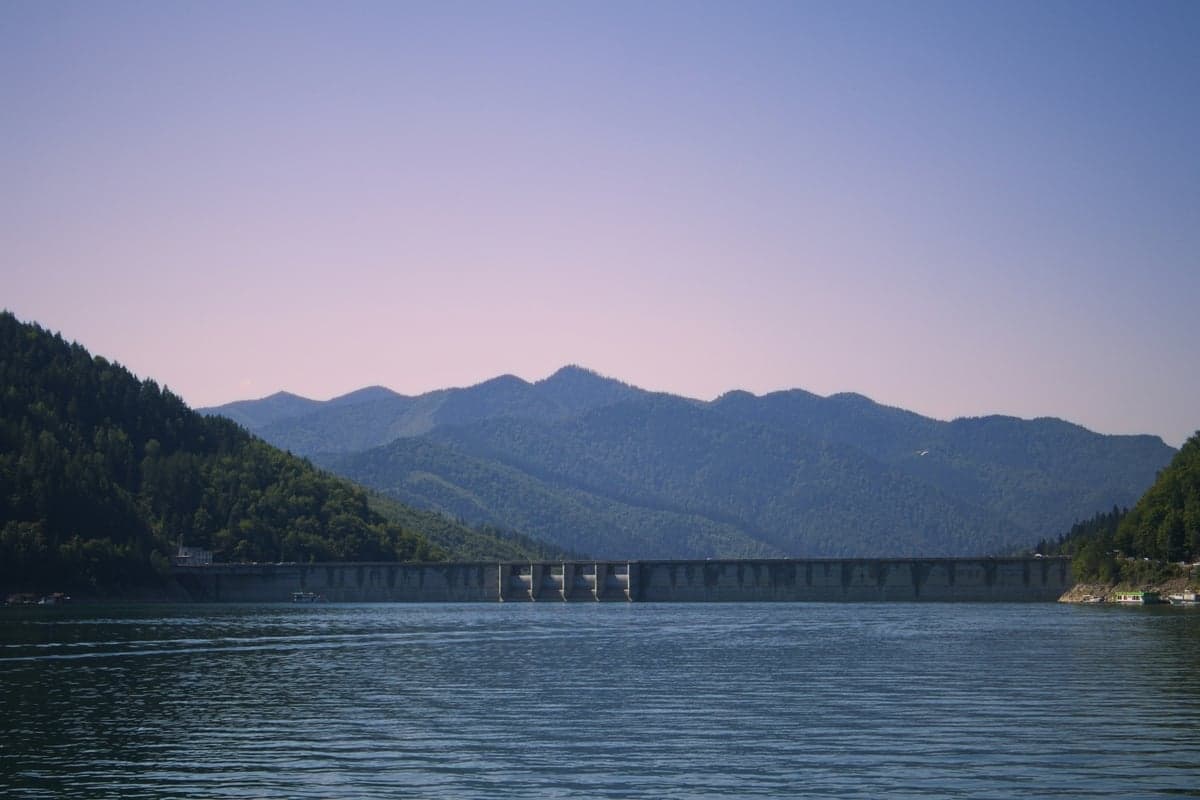
A dam holding back a mountain reservoir. What matters below Cheesman is that it draws from three depths, which is why the canyon holds trout-friendly temperatures through a Colorado August.
There is no road to the river in Cheesman Canyon. Everything you fish, you walk to, and the walk is the single biggest factor shaping who you share the water with. The rule holds every day of the year: the further you walk, the fewer people you see.
The Gill trailhead sits on County Road 126, about 22 miles south of Pine Junction off US 285, or roughly 2.5 miles west of the Deckers bridge. The Forest Service lists it at 6,548 feet. Vault toilet, no drinking water, no fees, no overnight parking.
The lot is small and it fills. On summer weekends it is often full by 7am, and on holiday weekends earlier. Do not park along the road shoulder when the lot is full; the Forest Service asks you to park in designated spaces only and tickets get written. The overflow option is Wigwam Campground about 1.3 miles west, which adds a meaningful walk to a day that already has one.
From the lot you drop toward the creek, cross the road, and then climb. The first water most anglers reach is the Family Hole area at the bottom of the canyon, roughly 25 to 35 minutes in depending on how much you are carrying. Above the first river access the trail forks at a posted Anglers sign into a high route and a low route. The high route stays above the river and moves faster. The low route drops toward the water and gives you access to individual pools.
The trail runs about 3.5 miles upstream toward the gauging station below the dam, and it is not uniform. The Forest Service description of Gill Trail #610 is honest about it: the first half is easy walking, the second half up toward the gauging station is moderately difficult, and the final three quarters of a mile involves loose decomposed granite on steep slopes where you will use your hands. Trail-mapping data puts the whole route around 4.8 miles with roughly 900 feet of climbing and 330 feet of loss. Worn felt soles are miserable on that surface, which is why most regulars carry their waders and boots rather than hiking in them.
Budget 30 to 45 minutes each way for the lower canyon, and closer to two hours if you are walking all the way to the top from the lower lot. There is an upper access from County Road 211 to Cheesman Reservoir parking that puts you 45 minutes to an hour from the gauging station over aggressive terrain, which is the shorter way to reach the very top.
The Family Hole and the water immediately around it absorb most of the day-trip pressure because it is the first fishable water and the shortest carry. Many regulars deliberately walk 35 to 40 minutes past that just to get clear of it. Angler density drops sharply above there, and the upper canyon near the gauging station can be genuinely empty even in July.
The tradeoff is that you are committing. There is no shortcut back, you will not have cell service, and the climb out at the end of a long day is real. The Hayman Fire in 2002 burned roughly 138,000 acres around the reservoir and canyon, which means large stretches of the walk have no shade at all. Carry more water than you think you need.
The Pawnee montane skipper, a federally threatened butterfly, exists only in the Pikes Peak granite of the South Platte drainage, in open ponderosa woodland between 6,000 and 7,500 feet. That is exactly the ground the Gill Trail crosses, and the Hayman Fire burned 96 percent of the Cheesman subpopulation's habitat. Volunteers from the Cutthroat Chapter of Trout Unlimited, Denver Water, and the Forest Service rebuilt the trail with rock walls and erosion control and closed a mess of social trails to protect it. Stay on the designated trail and do not cut switchbacks.
Cheesman has roughly 21 named pools, most of them christened decades ago by the late Tuck Skier and his fishing partners. Anglers talk about the canyon in these names, shop reports use them, and knowing a few makes a fishing report legible. Detailed maps are posted at the trailhead and available from local fly shops.
That is rough upstream order, not a mileage list. The trail wanders, the pools sit at different distances from the two possible trailheads, and the numbers people quote vary. Read the map posted at the trailhead or ask at a shop for exact positions.
From about mid-March, large Kamloops rainbows push upstream out of the Wigwam Club water. Steel-blue fish, commonly 22 to 27 inches and occasionally over eight pounds. The migration zone runs from the Family Hole up to Emerald Pool and, in some years, as far as Cattle Crossing. A micro chartreuse egg trailed by a flashy midge or baetis nymph is the standard rig. Resident browns and rainbows spawn later, peaking in May and June because the dam keeps water temperatures in the 40s. Learn to recognize a redd and walk around it.
On July 31, 2023, an afternoon thunderstorm dropped close to three inches of rain on the canyon in under an hour. It pushed something on the order of 20,000 cubic yards of decomposed granite into the river, and Pat Dorsey documented at least 20 sediment fans, some reaching two thirds of the way across the channel. Pools that had been eight to ten feet deep could be walked across. Hell's Half Acre, Rainbow Pool, Blitz, Cattle Crossing, Emerald Pool, the Meat Hole, the Ice Box, and the Family Hole were all filled in to some degree. Peanut Rock was buried outright. By Dorsey's account the flood cost the canyon a year class and most of that season's young-of-year, though CPW reported no fish kill.
Big releases in June 2024 did a lot of repair work. Denver Water pushed outflows to nearly 1,000 CFS, and Dorsey reported that several feet of granite slide was swept out in about three hours. The canyon has been fishing well since. But if you last fished Cheesman before 2023, some of the pools you remember have a different shape and a different depth now. Read the water in front of you rather than the water in your memory.
That was the second rebuild in twenty years. Hayman's sediment killed a reported 70 percent of the adult fish in the South Platte below the reservoir and recovery took five or six years. The canyon comes back, but it is not invulnerable, and the catch-and-release rule is a large part of why it keeps managing it.
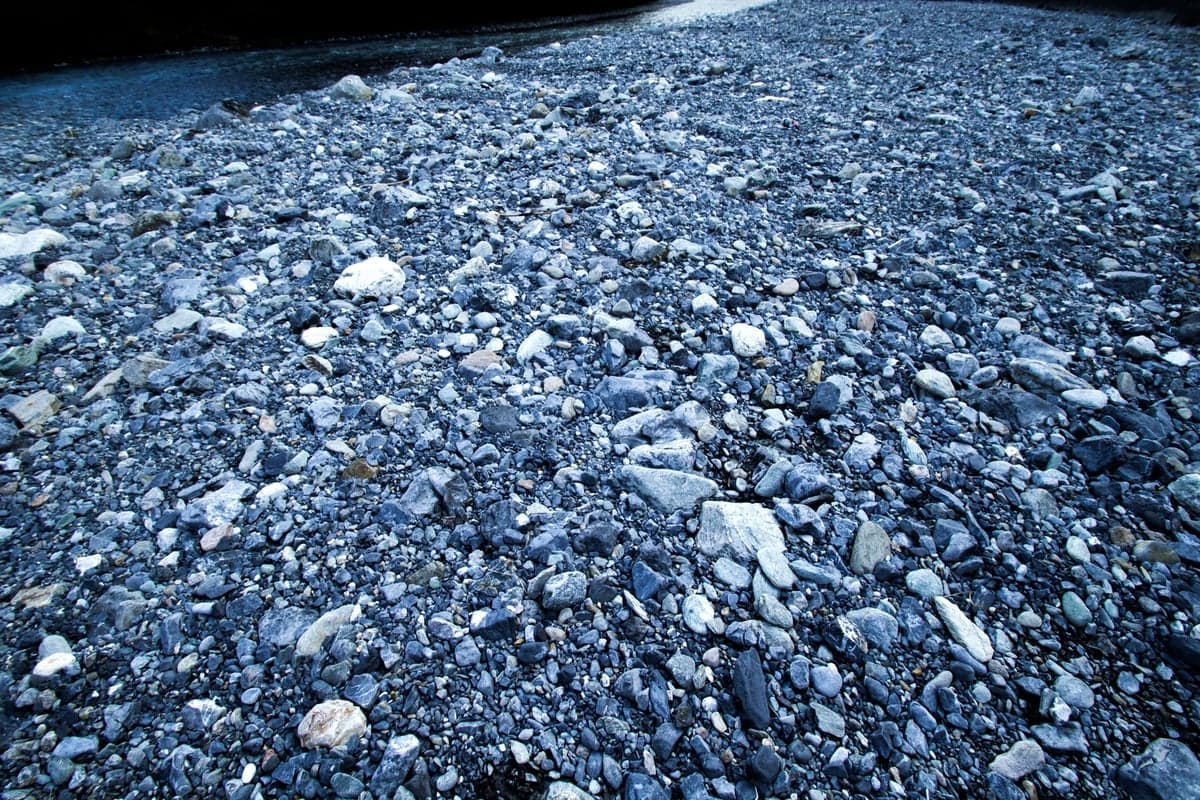
Sorted cobble and gravel along a river margin. Decomposed granite is what the 2023 storm moved into Cheesman by the cubic yard, and what the 2024 flushing releases pushed back out.
Midges are the constant. They hatch every month, and from November through March they are effectively the entire menu. Two sizes often come off at once in spring, which is why locals fish a #18 lead with a #22 or #24 trailer.
Patterns that show up on every canyon report: Black Beauty and Flashback Mercury Black Beauty (#20-26), Top Secret Midge (#20-24), Mercury Midge (#22), Blood Midge (#22-24), Chocolate Thunder (#20-22), Bling Midge (#20-22), Miracle Midge (#20-24). Dries: Parachute Adams (#22-26), Matt's Midge (#22), Griffith's Gnat (#20-24).
Blue-winged olives are the second pillar and the reason the best canyon days are often the worst-looking ones. Overcast and drizzly beats bluebird. April is the peak spring window and the fish will feed exclusively on mayflies for a couple of hours when it happens, strongest just after 1pm. Baetis return in September and build through October and November, which is also when brown trout stage before the spawn and the canyon offers the one good streamer window it has. Crowds thin sharply after Labor Day, and many regulars think October is the best month in there.
Baetis nymphs are strong swimmers and trout will move a foot and a half to intercept them, one of the few times a Cheesman fish will actually chase. Use less weight than feels right and let the flies swing at the tailouts. Patterns: Stalcup's Baetis (#20-22, tied thin and sparse), Jujubaetis (#20), Mercury Baetis (#20), Chocolate Foam Wing Emerger (#20), Sparkle Wing RS2 (#20-22), Barr's Emerger. Dries: Sparkle Dun BWO, Parachute BWO (#18-22).
Tricos start in late June and produce spinner falls from first light through mid-morning into August, fished with a #20-24 organza or CDC spinner. Sparse PMDs and caddis come off midday: Sparkle Dun PMD (#16-20), Buckskin Caddis (#18-20), Barr's Graphic Caddis (#14-18), plus Yellow Sallies (#12-16) in early summer. Terrestrials matter more than most people expect, with Amy's Ant (#10-14), Parachute Ant (#18), and Black Beetle (#16) along grassy banks and undercut ledges. Dorsey's UV Scud in olive or orange (#14-16) is one of the very few larger patterns that works here year-round.
Winter is the season Cheesman people talk about when nobody else is listening. Releases drop to something like 50 to 75 CFS from November into February, which concentrates fish into predictable water and makes them easy to spot. Midges hatch all winter, the canyon walls block the worst of the wind, and it is entirely possible to spend a January weekday in there and see nobody.
The January fly fishing roundup and the Denver Front Range guide cover nearby alternatives when the canyon road is bad.
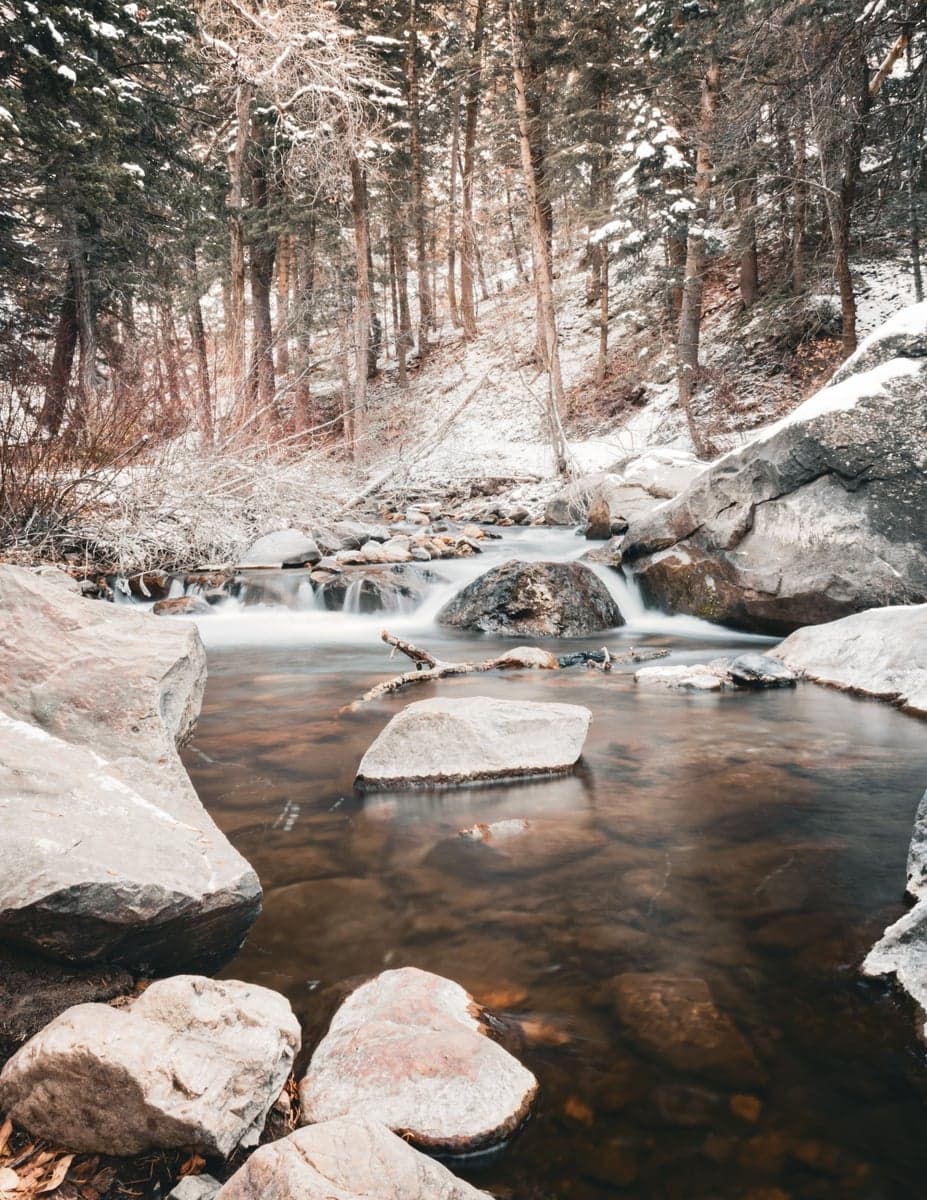
Winter releases drop into the 50-75 CFS range and concentrate fish in the deeper slots. The fishing window is roughly 10am to 3pm, and the crowds mostly disappear.
The granite, and depth you cannot read. The whole canyon is a boulder field, the boulders are slick, and the clarity that makes sight fishing possible also makes the river look shallower and slower than it is. A wading staff earns its keep here more than on most water. Felt grips wet granite better than most rubber, though check current Colorado rules on felt soles before you buy. Be conservative about crossings over 400 CFS and do not cross above 700.
Distance from help. You are 30 to 45 minutes of walking from a trailhead that is itself 20-plus miles from the nearest town, with no cell service. A twisted ankle is a long, slow exit. Tell someone your plan.
Storms in a granite slot. The storm that reshaped the pools in 2023 lasted under an hour. A narrow granite canyon funnels that water fast and gives you nowhere to climb above it in a hurry, so watch the sky from about 1pm on and start the walk out early rather than late.
Where you put your hands. Prairie rattlesnakes range up to roughly 9,500 feet in Colorado in montane woodland and riparian habitat, which describes the Gill Trail corridor at 6,500 feet exactly. The scrambly upper sections, where you are pulling yourself up on rock, are where you are most likely to reach somewhere you should not. The Forest Service also flags scattered poison ivy along the trail, which is easy to miss when you are watching the river instead of your feet.
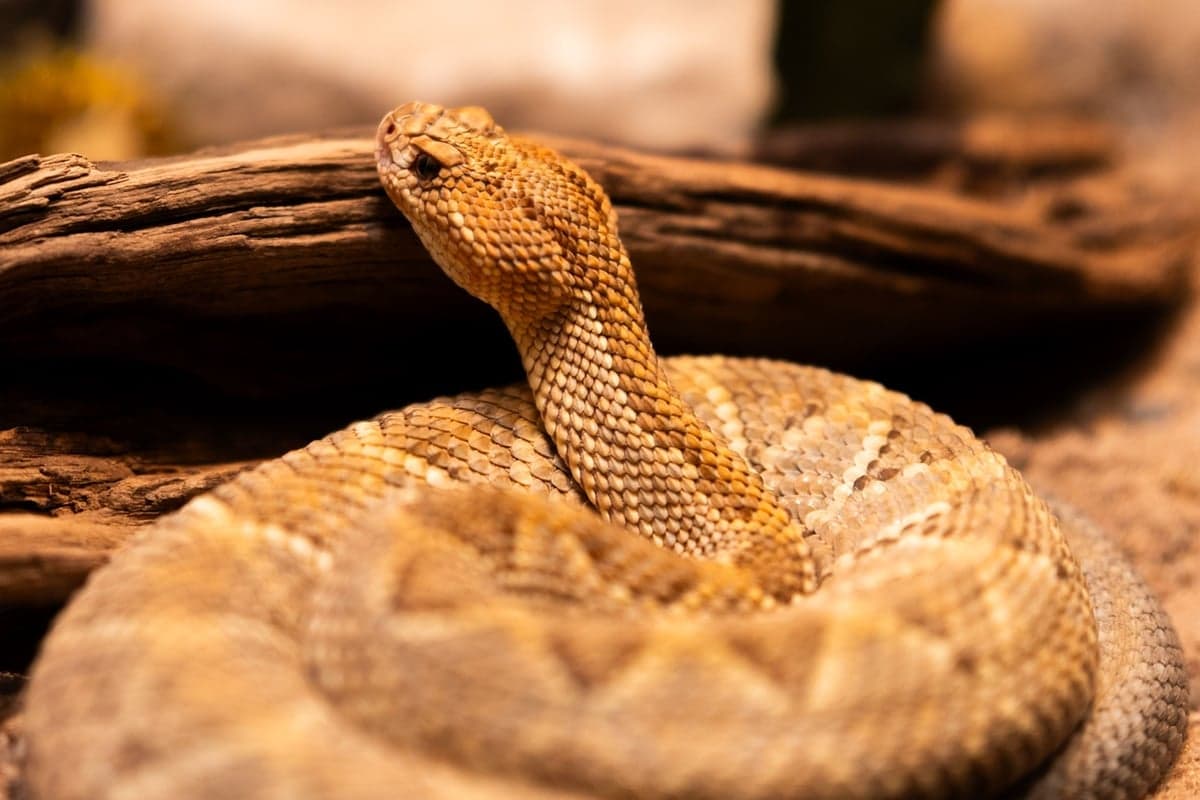
Rattlesnakes are active in warm months at these elevations. The scrambly upper sections of the Gill Trail are where you are most likely to put a hand somewhere you should not.
Cheesman Canyon is a wading fishery, full stop, and the reasons are worth stating so nobody gets curious.
American Whitewater rates Cheesman Reservoir to Deckers as a Class IV, 6.6-mile run and describes the first 0.4 miles below the dam as river-wide sieves that are mandatory to portage. Beyond that there is a Class III+ rapid with a sieved entrance and undercut boulders throughout. The final three miles to Deckers are inaccessible because of the Wigwam Club's river fences, which forces a mandatory hiking exit. AW's own assessment is that the whitewater does not justify the logistics.
If you want to paddle this drainage, the Deckers section below the club is mostly Class II with the Deckers Chutes rapid as the notable feature. That is the runnable water.
Guiding inside Cheesman Canyon is permit-limited, which is unusual and worth knowing when you book. Angler's Covey in Colorado Springs, (719) 471-2984, states it is one of only two outfitters permitted to guide the canyon, and Minturn Anglers also books trips inside it. Neither posts a public day rate, so call. For a price anchor, South Platte Fly Shop in Woodland Park lists full-day wade trips at $450 for one angler and $550 for two. Summer dates book months ahead. What you are buying is not casting instruction; it is somebody who knows which pool holds fish at today's release.
For conditions, Blue Quill Angler in Evergreen and South Platte Fly Shop both post Cheesman-specific reports, and Flies & Lies in Deckers is closest to the trailhead and the one to call if you want to know what the water looked like this morning. Pat Dorsey's site remains the deepest single source of canyon-specific knowledge on the internet.
Four distinct experiences sit within an hour of each other.
| Water | Character | Best for |
|---|---|---|
| Cheesman Canyon | Wild, clear, technical, hike-in | Sight fishing, experienced anglers, solitude |
| Deckers | Roadside pocket water and riffles | Easier access, more forgiving fish, a 2-fish limit |
| Dream Stream | Open meadow spring creek between reservoirs | Big migratory fish, wind, no cover |
| Eleven Mile Canyon | Scenic canyon with road access | Beginners, families, easy days |
The South Platte hub page covers the system, and the technical spring creeks guide lines up comparable water elsewhere.
How long is the hike into Cheesman Canyon?
Roughly 25 to 35 minutes from the Gill trailhead to the first fishable water near the Family Hole. The trail continues about 3.5 miles upstream toward the gauging station, with the final three quarters of a mile on loose decomposed granite that takes hands in places. Budget 30 to 45 minutes each way. Vault toilet at the trailhead, no drinking water anywhere in the canyon.
What are the fishing regulations in Cheesman Canyon?
Artificial flies and lures only, and all trout returned to the water immediately, from Cheesman Dam down to the upper Wigwam Club boundary. Gold Medal water, entirely wild, no stocking. Below the club, the Deckers water allows a two-fish bag at 16 inches or longer. The club itself is private.
What flows are best for Cheesman Canyon?
The historically ideal range is 250 to 400 CFS. Below about 150 it is a pure sight game on 6X and 7X. Above roughly 700 wading gets hazardous on the granite. Clarity matters more than flow, because the canyon is a spot-a-fish-and-cast-to-it fishery at almost any release.
Is Cheesman Canyon good for beginners?
No. It is wild, catch-and-release, gin clear, heavily pressured, and it usually demands #20 to #26 flies on 6X or 7X fluorocarbon with 9 to 12 foot leaders. Eleven Mile Canyon and Deckers are better places to learn.
When is the canyon least crowded?
Winter weekdays, when it can be genuinely empty. In any season the crowd is a function of how far you walk rather than what time you arrive: the Family Hole absorbs most of the pressure because it is the shortest carry, and density falls off hard above it.
Twelve months of Cheesman bugs in one view. Filter by insect, category, or hook size, and flip the axis for time of day. Built from our western hatch and forage guide.
Cheesman runs on a release schedule, not a snowmelt curve, so the number can change between Saturday and Sunday. Look at the South Platte below Cheesman gauge the morning you leave rather than the night before. What you are reading for is which day you are getting: 50 to 200 CFS is the pure spotting game, 7X and the smallest flies you own; 250 to 400 is the range the canyon is famous for; over 700 means rethinking every crossing. If flow reading is new to you, start with the CFS guide.
Weekly flow updates and fishing intel.
© 2026 RiverReports, Inc.